
Documentaries › Story 2
| Story 2 |
Napoleon: Larger Than Legend
Was Napoleon really short? Follow a Corsican outsider from schoolboy to emperor, and weigh the famous rumour about his height against the measurements, the cartoons and the empire he actually built.
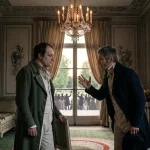
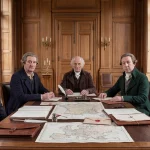
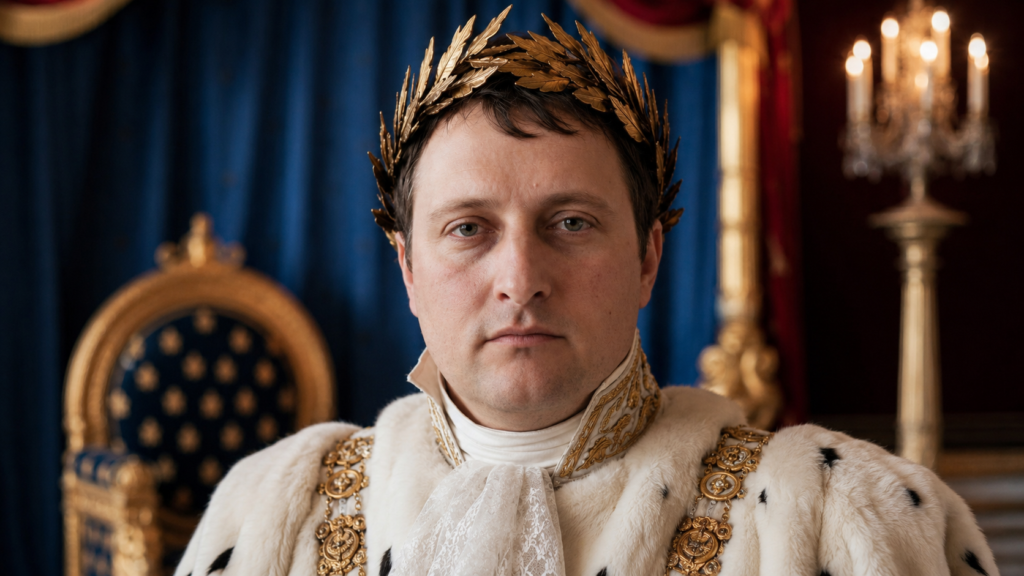
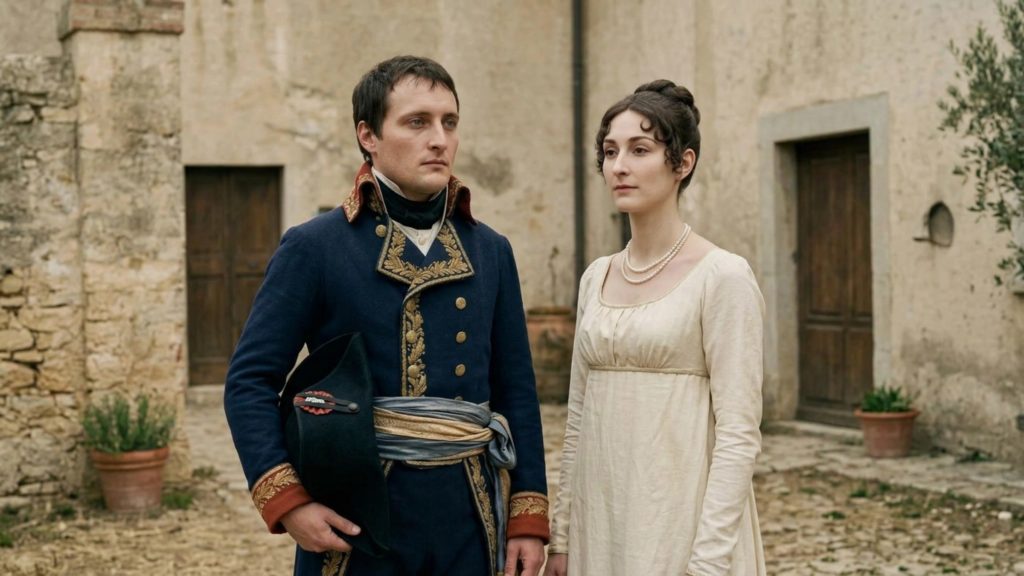
Napoleon in his study, bicorne in hand and campaign maps spread at his elbow — the working emperor behind the caricature.
About This Story
What’s covered
Napoleon Bonaparte was born at Ajaccio in Corsica on 15 August 1769, in the very year the island passed to France[1]. By 1804 the Consulate had been converted into a hereditary Empire, with Napoleon at its head[2, p. 273]. Yet the image that travelled furthest was not the emperor but the caricature: a tiny, stamping tyrant. At his death in 1821 his height was recorded as five feet two inches, but in French measure, which works out at roughly 1.69 metres[3]. This documentary follows four stories: the outsider's rise, the campaigns in Italy and Egypt, the empire and its redrawn map, and the long fall from Spain to Waterloo. It is a tale of ambition, but also of who gets to draw the picture. Along the way it asks how a rumour drawn in ink came to outweigh a measurement written down by the people who stood beside him.
Watch
See the story on YouTube
The Story
How the Story Unfolds
A Corsican Boy in France
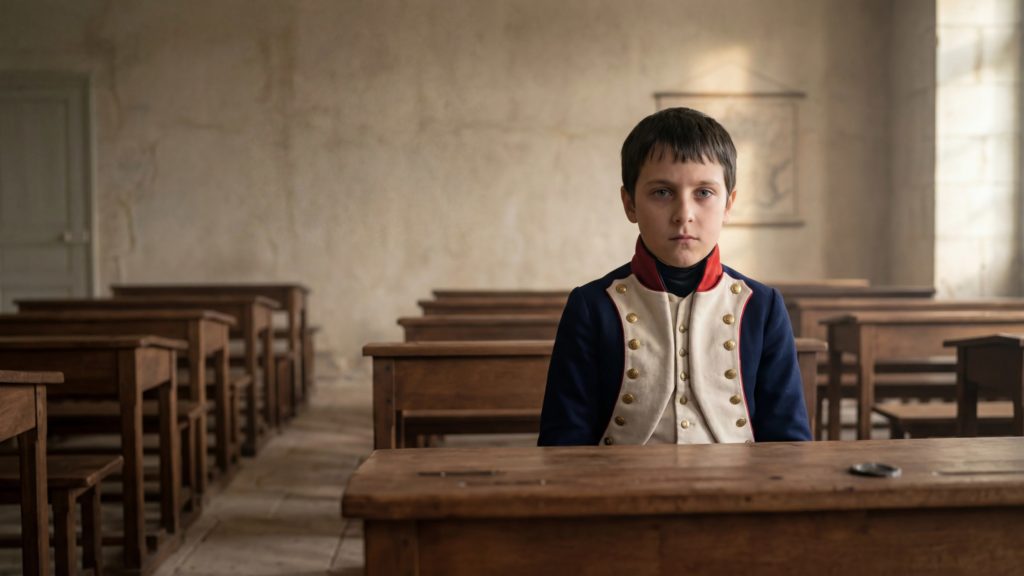
Corsica had passed from Genoese to French rule in 1768, and Napoleon was born at Ajaccio on 15 August 1769, on an island still working out which country it belonged to[4, p. 28]. He trained as a cadet at the royal military school of Brienne from 1779 to 1784[5]. An inspector's report described the boy as in excellent health, mild and thoughtful, and distinguished in mathematics, though weak in drawing, music and dancing[6]. It recorded his height as four feet ten inches ten lines, which one reference work converts to about five feet three inches in English measure[6]. At the siege of Toulon he first met Paul Barras, who later sat in the Directory and had the discernment to see what an able general could be worth[6]. In spring 1796 that Directory sent an untested twenty-six-year-old general to Italy, to a front meant to be secondary[7][8].
Italy, Egypt and a Famous Stone
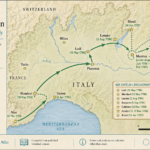
The Italian campaign worked because Napoleon kept the Austrian and Piedmontese armies from ever fighting him together, knocking Piedmont out of the war within weeks[8]. At the bridge of Lodi on 10 May 1796, one reference work records, his soldiers first called him the Little Corporal[6]. The settlement at Campo Formio afterwards redrew Italy's map before Paris had fully signed off[1]. In 1798 he sailed for Egypt with a corps of scientists beside his soldiers[9], and founded an institute in Cairo as soon as the city fell[10]. On 1 August 1798 Nelson found the French fleet anchored in Aboukir Bay[11, p. 89]; the naval disaster that followed cut the French troops in Egypt off from Europe[12]. In 1799 a French officer found the trilingual Rosetta Stone near the town of Rosetta[13, p. 41]. Its hieroglyphic, demotic and Greek texts later helped scholars work out how to read ancient Egyptian writing[13, p. 41].
From Brumaire to the Imperial Crown
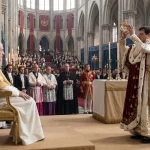
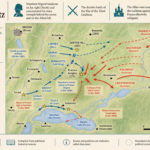
On 9 November 1799 a decree of the Ancients placed General Bonaparte in command of the forces of the capital, and that night three temporary Consuls were named: Bonaparte, Sieyès and Ducos[14][14]. Sieyès, a sitting Director, had recruited the general to supply the force his own plan lacked[15]. The Civil Code became law on 21 March 1804[6]. Pope Pius VII then travelled from Rome to consecrate the new emperor[16], and Napoleon placed the crown on his own head, as had been agreed beforehand[16]. On the first anniversary of his coronation, 2 December 1805, he dangled a weak flank and a false offer of peace before two emperors at Austerlitz[17][17]. Soult's corps then took the Pratzen Heights[18]. The victory cleared the way for Napoleon to reorganise western Germany into the Confederation of the Rhine[19], and in 1806 Francis II gave up the title of Holy Roman Emperor himself[20][2, p. 273].
From the Spanish Ulcer to Waterloo
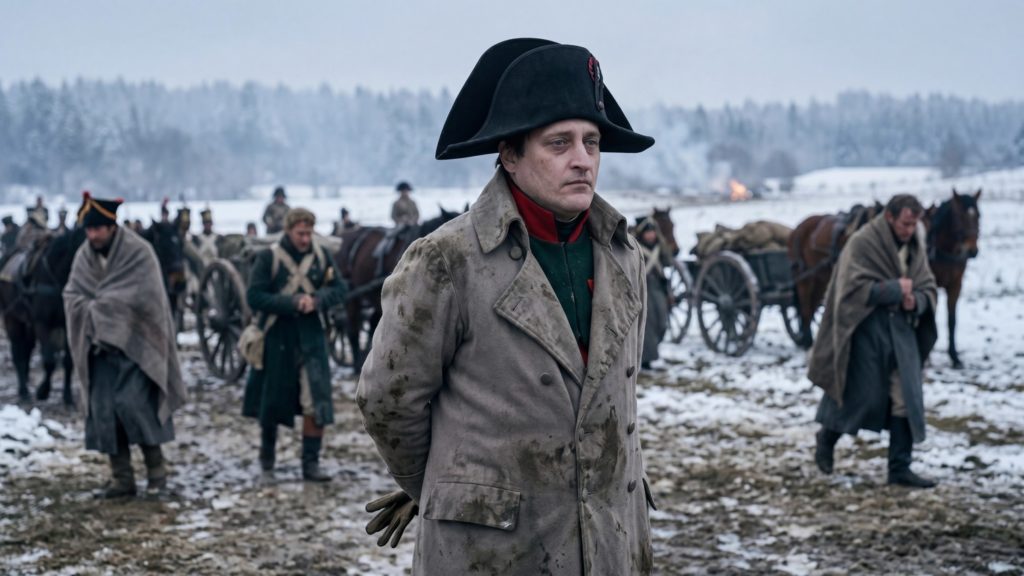
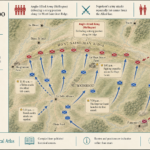
In 1808 Napoleon swapped a king Spain barely tolerated for his own brother[21], and guerrilla bands kept re-forming behind French lines[22, p. 366]. He later reportedly lamented that the Spanish ulcer had destroyed him[23, p. 28]. On 24 June 1812 he crossed the Niemen into Russia, entered Moscow on 14 September and left it on 19 October[24, p. 312]; in the abandoned capital there was no government left to negotiate with, and Alexander never sent the peace overture Napoleon waited for[25]. In 1814 the allies let him keep the imperial title and granted him sovereignty over Elba[26][27, p. 274]. In March 1815 he slipped away with a few hundred men and landed near Cannes[28]. At Waterloo on 18 June 1815 his plan depended on beating Wellington before Blücher's Prussians could rejoin the fight[29], but by mid-afternoon the Prussians were arriving on his exposed right flank[30, p. 38]. He abdicated on 22 June[31] and died at Longwood on Saint Helena on 5 May 1821[32, p. 301].
Historical Context
What was going on
The height question shows how a measurement can mislead. After Napoleon's death he was recorded at five feet two inches four lines in French units, about 1.686 metres, while an English upholsterer who measured him alongside General Montholon recorded five feet seven inches, about 1.70 metres[3]. The French foot was the longer of the two[33, p. 401]. Thierry Lentz of the Fondation Napoléon puts the average Frenchman at about 1.60 metres and the Guard's grenadiers at never under 1.76 metres[34]. British printmakers made size a weapon. A 1920 reference work credits James Gillray with coining ‘Little Boney’[6], and an etching published in 1803 shows Napoleon in the hand of George III[34]. His more durable reputation rests on law. The Civil Code opened by declaring that every Frenchman would enjoy civil rights[35, p. 204], yet its family provisions kept the husband in authority over the wife[36, p. 225]. It was afterwards called the Code Napoleon[37, p. 135], and a modern study notes that its egalitarian ethos kept strengthening the idea of a law-governed state after the empire collapsed in 1815[38, p. 4]. The caricature shrank the man; the law outlived the empire.
Quick Facts
The essentials
Quick Facts
The Little Corporal Nickname
It sounds like a jibe, but the Little Corporal began in his own ranks. One reference work says his soldiers first used the name at the bridge of Lodi on 10 May 1796[6], and the Fondation Napoléon records it as a nickname from his soldiers[34]. Affection, not arithmetic, Roger.
Roger Meets Little Boney
Roger gleefully points out that ‘Little Boney’ has an author. According to a 1920 reference work, James Gillray coined it[6], and a hand-coloured etching of 1803 shows Napoleon so labelled in the hand of King George III[34]. Keith suspects the artist was rather proud of himself.
Wellington's Actual Words
The famous line is ‘a damn close-run thing’, but the recorded wording is better. The day after Waterloo, Wellington told Creevey that it had been ‘a damned nice thing — the nearest run thing you ever saw in your life’[39, p. 121]. Roger approves of the swearing. Keith prefers the accuracy.
Keith Measures Nelson and Churchill
Keith has checked Roger’s boast. One 1902 account sets Nelson at five feet six beside Captain Foley's six feet two[40], and the International Churchill Society's editors give Churchill as five feet six[41]. Same height, Roger, just not five-four.
Waterloo Was a Team Effort
Do not hand Wellington the whole trophy, Roger. Blücher's army had fought Napoleon at Ligny only two days earlier[42, p. 99], then marched to Wellington's aid instead of retreating[43, p. 11]. Waterloo was an allied victory, Keith, not a solely British one[44, p. 12].
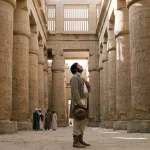
Soldiers, forty centuries look down upon you from the summit of the Pyramids.
Napoleon, in his address to the army before the Battle of the Pyramids, 21 July 1798, as quoted in A Dictionary of Napoleon and His Times (1920)[6]
It shows Napoleon appealing to the antiquity of the Pyramids to steady his army before the battle.
Who Is in This One?
The people you'll meet
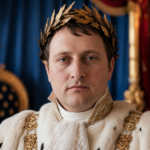


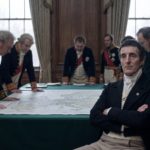
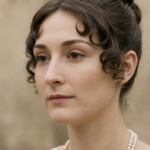



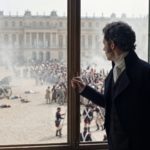

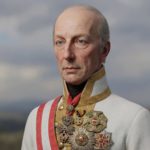

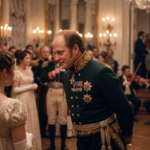
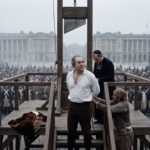






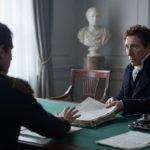










Timeline
How it unfolded
15 August 1769
Birth of Napoleon Bonaparte
Napoleon Bonaparte was born at Ajaccio in Corsica, in the very year when the island passed to France.[1]
1 August 1798
Battle of the Nile
Nelson's fleet found the French fleet lying in Aboukir Bay, on the coast of Egypt, on 1 August 1798.[11, p. 89] The naval disaster that followed cut the French troops in Egypt off from Europe.[12]
9 November 1799
Coup of 18 Brumaire
The 18th Brumaire fell on 9 November 1799, according to Henry Adams.[45] A decree of the Ancients placed General Bonaparte in command of the forces of the capital, and that night three temporary Consuls were appointed, Bonaparte, Sieyes and Ducos.[14][14]
21 March 1804
Civil Code Becomes Law
On 21 March 1804 the Civil Code became law, after its drafts were discussed in council and expounded to the legislature.[6] It is the code that later became known as the Napoleonic Code.[46]
2 December 1805
Battle of Austerlitz
On the first anniversary of his coronation Napoleon lured the combined armies of Francis and the Tsar into trying to turn his right and then hurled an attack on their centre, and his victory was decisive.[19] Fraser describes how Soult's corps seized the Pratzen heights, which the Allies had left unoccupied in their haste to attack the French right.[18]
24 June 1812
Invasion of Russia
Napoleon crossed the Niemen on 24 June 1812, entered Moscow on 14 September and left it on 19 October, and left the remains of the Grand Army on 5 December.[24, p. 312] According to Henty, 610,058 armed men crossed the Niemen towards the end of June and only 16,000 repassed it with weapons on 13 December.[47]
18 June 1815
Battle of Waterloo
Napoleon defeated Blucher at Ligny on the 16th and was beaten on the 18th by Wellington at Waterloo, finally abdicating on the 22nd, according to Warwick.[31]
5 May 1821
Death of Napoleon at Longwood
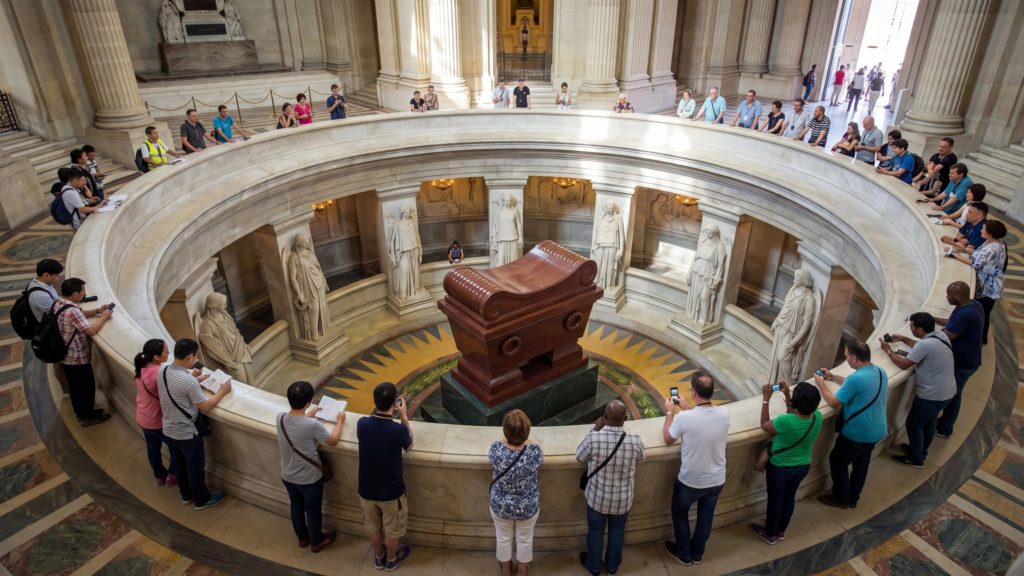
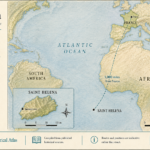
Napoleon died on Saturday 5 May 1821 at Longwood on Saint Helena, where he had been lodged since being brought to the island in October 1815.[32, p. 301][48]
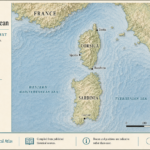
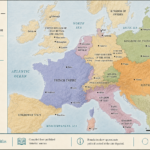
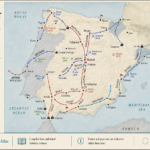
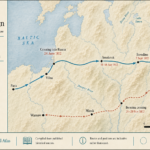
Where Is That?
The maps used in this story
What Happens in This One?
The moments it covers















Myth-buster
Think you know this one?
Keith, five foot two! That is the fact, plain as a bicorne. The great Emperor of the French stood five foot two, a pocket-sized conqueror, and Britain's cartoonists simply drew what they saw. Five foot two, Keith. Tiny. Hand him a box to stand on and a very loud drum.
Roger, ‘five foot two’ is real, but it is French feet and French inches. His recorded height was five feet two inches four lines in that older French measure, which an article on the Fondation Napoléon's site works out at about 1.686 metres, and an English-measure reading gave five feet seven[3]. So the number stands, Roger, but ‘tiny’ does not. Wrong ruler, not a short emperor.

Officially, Roger, if you believe the pamphlets, Napoleon unlocked the hieroglyphs. Well, he supplied the stone. A French officer found the trilingual Rosetta Stone in 1799[13, p. 41], but Dr Young's translations came in 1818 and Champollion's in 1822, with Young's work helping Champollion[13]. Soldiers found it. Scholars read it.
Keith, you are being very stingy. Soldiers found it, scholars read it, and who sent the soldiers and the scholars, eh? No Napoleon, no stone, no Champollion. I call that unlocking. He just let other people turn the key. Credit where it's due, Keith, even if the stone ended up in a British museum.

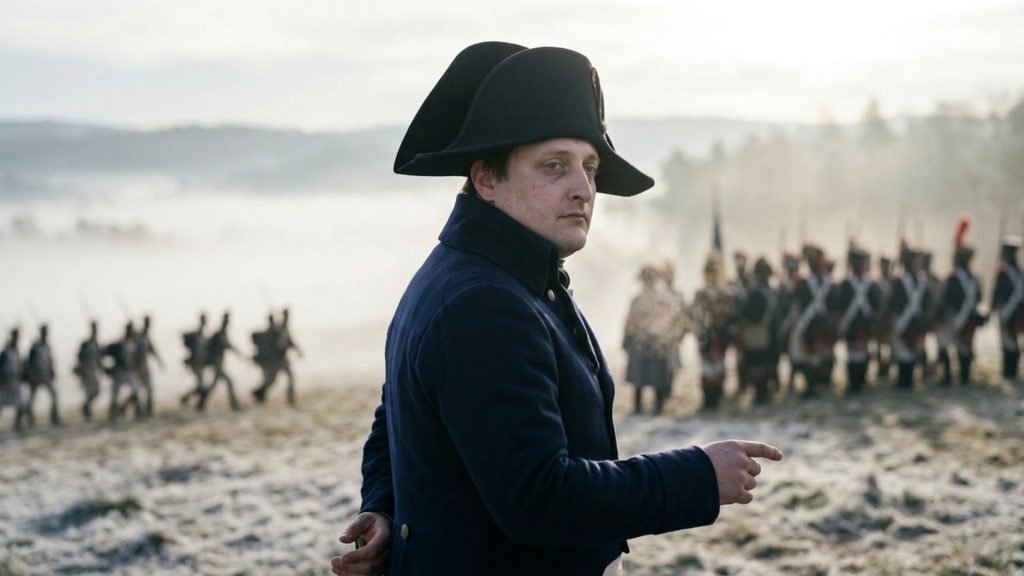
Keith, listen to this. Napoleon spent a night alone inside the Great Pyramid and came out pale and silent, shaken by something he saw in the dark. A mystical vision, Keith, in a pharaoh's tomb! Nobody knows what he saw, which is exactly why it's so thrilling.
Roger, ‘nobody knows what he saw’ has a simpler answer. His secretary Bourrienne says he never quitted Napoleon's side in the desert, and that Napoleon never entered the Great Pyramid at all, sending someone in to report back[37, p. 135]. Bourrienne's memoirs are a contested source, mind. But a vision needs a visitor, Roger.

Where Does It Happen?
The places you'll visit







Dig Deeper
Copy any prompt below into your favourite AI chat to keep exploring.
Explain how the French foot and the English foot differ in length, and why that mismatch made Napoleon's recorded five feet two inches look tiny to British audiences.
Walk me through how comparing the hieroglyphic, demotic and Greek texts on the Rosetta Stone let Young and Champollion work out the phonetic values of hieroglyphs.
Explain how the Napoleonic Code combined the Revolution's promise of equal civil rights with a family law that kept the husband in charge.
Debate whether a caricature can ever be undone once it has outlived its target, using Napoleon's height as the test case.
Debate who deserves most credit for reading the Rosetta Stone: the French officer who found it, Young who translated it, or Champollion who made it speak.
Debate which left the deeper mark on Europe: Napoleon's battlefield victories, or the legal code that outlasted his empire.
Convince me that ‘Little Boney’ was history's first viral meme, and tell me which parts of the joke the evidence refuses to support.
Pitch me the Rosetta Stone as the world's most inconvenient group project, with a Greek, a demotic and a hieroglyphic contributor who never met.
Roleplay Napoleon presenting his new Civil Code to a sceptical committee of lawyers who think battles were more fun than paperwork.
Further Reading
Where to read more
Was Napoleon small? (Bullet Point #15)
A short Fondation Napoléon article by Thierry Lentz (2018) that sets Napoleon's measured height in French units against the average height of his contemporaries, the Guard and the 1803 caricature.
Why look at this: The documentary's central question in a few paragraphs: Keith's correction of the five-foot-two figure and the tall Guard grenadiers are set out here by the foundation that curates the Napoleonic record.
https://www.napoleon.org/en/history-of-the-two-empires/articles/was-napoleon-small/Was Napoleon a good pupil? (Bullet Point #25)
A brief Fondation Napoléon article by Thierry Lentz (2019) on Napoleon's schooling, weighing the legend of the brilliant cadet against what the evidence shows about his marks and habits.
Why look at this: The first story quotes a school inspector's report praising the boy's mathematics; this article shows how far the schoolboy legend survives when historians check the record.
https://www.napoleon.org/en/history-of-the-two-empires/articles/bullet-point-25-was-napoleon-a-good-pupil/Battle of Waterloo
The National Army Museum's illustrated overview of 18 June 1815, with a timeline, objects from the collection and eyewitness accounts of the fighting.
Why look at this: Roger and Keith stress that Waterloo was won by an alliance; this page follows the Prussians' mid-afternoon arrival on Napoleon's flank and the failure of the Imperial Guard's final attack.
https://www.nam.ac.uk/explore/battle-waterlooThe Rosetta Stone (Napoleon and the Scientific Expedition to Egypt)
A page from the Linda Hall Library's digital exhibition on the French expedition, covering the stone's discovery in 1799, its three scripts, the rival work of Young and Champollion, and its reproduction in the Description de l'Égypte.
Why look at this: Keith's correction that soldiers found the stone but scholars read it is documented here, including Champollion's reliance on printed reproductions rather than the stone itself.
https://www.lindahall.org/experience/digital-exhibitions/napoleon-and-the-scientific-expedition-to-egypt/15-the-rosetta-stone/The Battle of Austerlitz and the Principles of War
An article on the Fondation Napoléon site by Jack Sigler (2011) that follows the fighting on the Pratzen Heights at Austerlitz and tests it against the U.S. Army's principles of war.
Why look at this: The map beat in the episode shows the Allies thinning their centre to attack the French right; this article follows what happened on the Pratzen Heights once they had done so.
https://www.napoleon.org/en/history-of-the-two-empires/articles/the-battle-of-austerlitz-and-the-principles-of-war/The Battle of the Nile, 1 August 1798 (Nicholas Pocock, 1808)
A Royal Museums Greenwich collection entry for Nicholas Pocock's oil painting of the battle, with a museum account of Captain Foley's ship rounding the head of the anchored French line.
Why look at this: Nelson's attack on the anchored French fleet is the hinge of the Egypt story; the museum's account of how the British ships passed round and between the French ships explains how it was done.
https://www.rmg.co.uk/collections/objects/rmgc-object-12005La taille de Napoléon (Marcel Dunan, Revue de l'Institut Napoléon, 1963)
A short 1963 article, republished by the Fondation Napoléon in French, that sets out the post-mortem measurements from Marchand's memoirs and the English upholsterer Darling's reading, with the arithmetic converting each to metres.
Why look at this: This is the underlying evidence for the episode's height question: the French-unit and English-unit figures are laid side by side, along with the British caricatures that exploited the legend.
https://www.napoleon.org/histoire-des-2-empires/articles/la-taille-de-napoleon/Code civil des français (édition originale, 1804)
The scanned original official edition of the Civil Code, printed in Paris by the Imprimerie de la République in 1804, digitised by the Bibliothèque nationale de France on Gallica.
Why look at this: The context section describes the Code's opening promise of civil rights and its family-law provisions; here is the 1804 text itself, in French, to read article by article.
https://gallica.bnf.fr/ark:/12148/bpt6k1061517/f3.texteImageThe Waterloo Dispatch (British Library, Add. 69850)
A Waterloo 200 page on Wellington's handwritten dispatch of 19 June 1815 to Earl Bathurst, held by the British Library, with a photograph of the manuscript and a link to the full text.
Why look at this: Wellington's own account, written the night after the battle, is the official record of the day; read it beside the ‘damned nice thing’ remark in the Fun Facts to see how a private remark and a public report differ.
https://ageofrevolution.waterlooassociation.org.uk/200-object/waterloo-dispatch-at-british-library-with-notes-in-wellingtons-hand/Sources
- BookThe French revolution from 1789 to 1815 by M. Mignet and James Westfall Thompson ↑
- BookA short history of Europe, from the fall of the Eastern empire to the dissolution of the Holy… by Charles Sanford Terry. Page 273. ↑
- Websitenapoleon.org: La taille de napoleon ↑
- BookSouth-eastern France Including Corsica: Handbook for Travellers by Karl Baedeker (Firm Karl Baedeker. Page 28. ↑
- BookNapoléon Ier à l'École Royale Militaire de Brienne d'après des documents authentiques et inédits. 1779-1784 by Alexandre ASSIER ↑
- BookA dictionary of Napoleon and his times by Hubert N.B Richardson ↑
- BookLife of Napoleon Bonaparte, Volume II. by Walter Scott ↑
- BookNapoleon's Campaigns in Italy 1796-1797 and 1800 by R.G. Burton ↑
- BookTalleyrand, a biographical study by Joseph McCabe ↑
- BookRelation des campagnes du Général Bonaparte en Égypte et en Syrie by Louis-Alexandre Berthier ↑
- BookThe Life of Nelson, Volume 1 by A. T. Mahan. Page 89. ↑
- DocumentCatholic Encyclopedia (1913)/Napoleon I (Bonaparte) ↑
- BookThe Nile. Notes for travellers in Egypt by E. A. Wallis Budge. Page 41. ↑
- BookThe French revolution : a historical sketch by Walter Geer ↑
- BookLe Dix-huit Brumaire (French) by Jacques Bainville ↑
- BookNapoleon and his coronation by Frédéric Masson and Frederic Cobb ↑
- BookThe Memoirs of Baron Thiebault Vol II by Paul Charles Francois Adrien Henri Dieudonne Thiebault ↑
- BookThe war drama of the Eagles : Napoleon's standard-bearers on the battlefield in victory and defeat from Austerlitz… by Edward Fraser ↑
- BookA short history of Europe from the dissolution of the Holy Roman empire to the outbreak of the… by Charles Sanford Terry ↑
- DocumentAbdication of Francis II, Holy Roman Emperor ↑
- BookLife of Napoleon Bonaparte, Volume III. by Walter Scott ↑
- BookA history of the Peninsular War, Vol. 2, Jan.-Sep. 1809 : From the battle of Corunna to the… by Charles Oman. Page 366. ↑
- BookHistory of the war in the Peninsula and in the south of France from the year 1807 to… by William Francis Patrick Napier. Page 28. ↑
- BookThe confidential correspondence of Napoleon Bonaparte with his brother Joseph, sometime king of Spain : selected and translated… by Emperor of the French Napoleon I and King of Spain Joseph Bonaparte. Page 312. ↑
- BookMemoirs of General Count Rapp First Aide-de-Camp to Napoleon by Jean Rapp ↑
- BookRecollections of Caulaincourt Duke of Vicenza Vol. 2 by Armand-Augustin-Louis de Caulaincourt ↑
- BookHistory of the Captivity of Napoleon at St Helena Vol. 1 by William Forsyth. Page 274. ↑
- BookTravels in France during the years 1814-15 by Sir Archibald Alison and Patrick Fraser Tytler ↑
- BookBlücher and the uprising of Prussia against Napoleon, 1806-1815 by Ernest F. Henderson ↑
- BookAn historical sketch of the campaign of 1815 by Captain Batty. Page 38. ↑
- BookNapoleon and the end of the French revolution by Charles F. Warwick ↑
- BookA gift of Napoleon; being a sequel to Letters of Captain Engelbert Lutyens, orderly officer at Longwood, Saint… by Lees Knowles. Page 301. ↑
- BookReports of the secretary of the treasury of the United States, prepared in obedience to the Act of…. Page 401. ↑
- Websitenapoleon.org: Was napoleon small ↑
- BookThe Code Napoleon; or, The French Civil Code by George Spence. Page 204. ↑
- BookThe French Civil Code (as amended up to 1906) by Eric Blackwood Wright. Page 225. ↑
- BookMemoirs of Napoleon Bonaparte — Complete by Louis Antoine Fauvelet de Bourrienne. Page 135. ↑
- WebsiteNapoleon Bonaparte and the Origins of Modern Europe. Page 4. ↑
- BookNapoleon and Waterloo, the emperor's campaign with the Armée du Nord, 1815; a strategical and tactical study by Archibald Frank Becke. Page 121. ↑
- BookNelson and his captains: sketches of famous seamen by W. H. Fitchett ↑
- Websitewinstonchurchill.org: Winston churchill the largest human being of our time ↑
- BookThe campaign of 1815, chiefly in Flanders by Walter Haweis James. Page 99. ↑
- BookWaterloo lectures: a study of the campaign of 1815 by Charles Cornwallis Chesney. Page 11. ↑
- BookGreat commanders of modern times and The campaign of 1815 by William O'Connor Morris. Page 12. ↑
- BookHistory of the United States of America, Volume 1 (of 9) : $b During the first administration of… by Henry Adams ↑
- BookMemoirs Of Napoleon Bonaparte - I And Ii by Louis Antoine Fauvelet De Bourrienne ↑
- BookBattles of the nineteenth century, vol. 1 of 7 by Archibald Forbes G. A. Henty ↑
- Document1911 Encyclopædia Britannica/St Helena ↑