
Kléber trained and worked as an architect before the Revolutionary Wars — shown here drafting building plans with a pair of compasses, the trade he practiced before ever putting on a uniform.
French general; commander of the Army of the Orient in Egypt (1799-1800)
A French general was left in command of the army in Egypt when Napoleon returned to France in 1799, and privately called him a "little scoundrel" for it — then went on to win one of the campaign's most decisive victories entirely on his own[1, p. 3][2].
Bio
Who they were
Jean-Baptiste Kléber was born at Strasbourg; sources disagree on the exact year, giving both 1750 and 1753[3, p. 62][1, p. 3]. Strasbourg at the time sat on the eastern edge of France, a border region shaped by both French and German influences. Detailed material on Kléber's family background or childhood was not found in the library material searched for this pipeline, and that gap is flagged here rather than filled with invented detail.
Kléber joined the army and supported the Revolution once it began, serving under General Dumouriez during the early revolutionary wars[1, p. 3][4]. He rose steadily through the revolutionary army's ranks to general of brigade, and by September 1795 held the senior post of general-in-chief of the Army of the Interior[1, p. 3]. He resigned that command in 1796, but returned to active service two years later when he accompanied Napoleon Bonaparte on the French expedition to Egypt in 1798, where he was made a senior commander[1, p. 3].

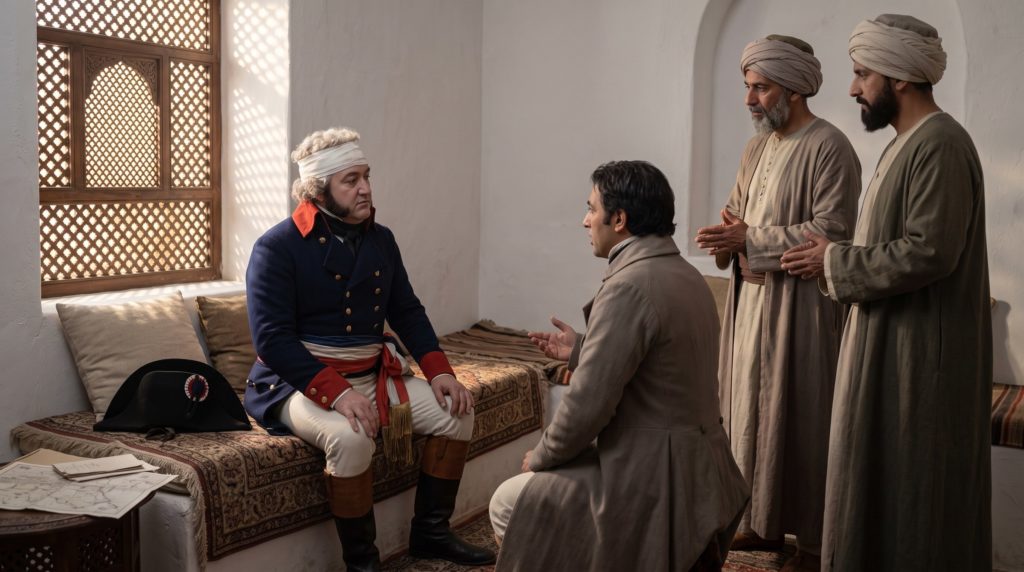
When Napoleon left Egypt in 1799 to return to France, Kléber was left in charge of the French army there, a decision he resented; he was later recorded describing Napoleon as the "little scoundrel" who had left the army behind[2]. Commanding in Egypt alone, Kléber won a decisive victory over Ottoman forces at the Battle of Heliopolis on 20 March 1800, and used it to retake Cairo from a rebellion that had broken out against French occupation[1, p. 3].
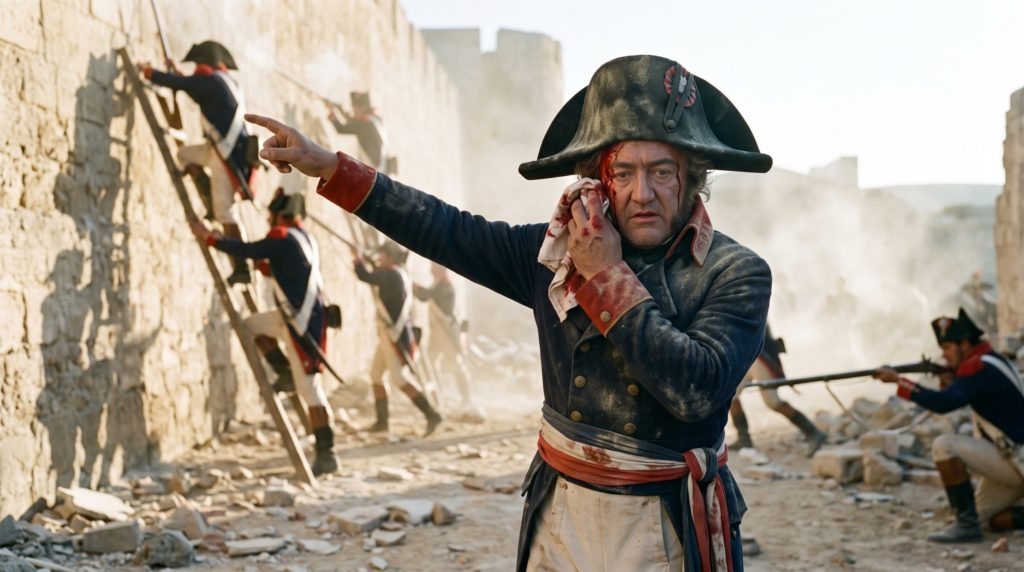
Kléber did not long survive his victory at Heliopolis. On 14 June 1800 he was assassinated in Cairo, stabbed by a young Turk named Soleyman, described in sources as a religious fanatic[5, p. 189][3, p. 62]. Command in Egypt passed to other French officers in the aftermath; the library material gathered here does not detail exactly how command was reorganized immediately afterward, and that gap is flagged rather than filled in.
Kléber is remembered as one of the more capable and independent-minded French generals of the revolutionary period — someone who could hold and even extend French military gains without Napoleon's direct supervision, as his victory at Heliopolis after Napoleon had already left Egypt demonstrates[1, p. 3]. His hometown of Strasbourg later commemorated him: sources describe a monument connected to his memory in the city[5, p. 189]. Within the broader story of the Egyptian campaign, his command represents the period after Napoleon's departure, when the expedition had to survive on its own.
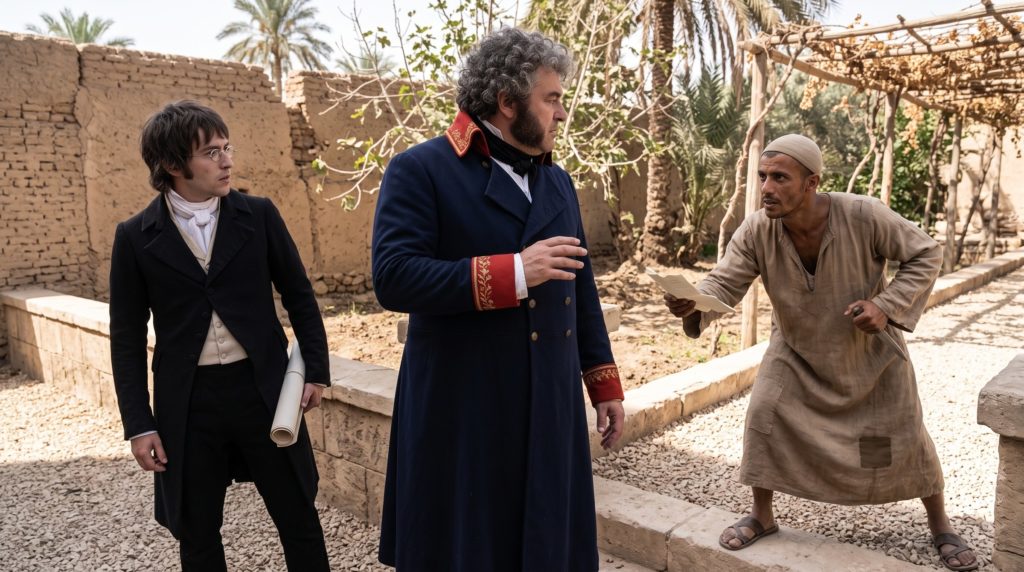
Kléber's private assessment of Napoleon, recorded after he was left in command in Egypt, was strikingly blunt for the period: he is quoted describing Napoleon to a colleague as "that little scoundrel Bonaparte"[2]. That a senior general would speak so dismissively about the man who would soon rule France — bluntly enough that Napoleon's own circle later recorded the remark — says something about how genuinely aggrieved Kléber felt at being left behind.
Legacy & Reputation
What’s the verdict?
Kléber’s reputation has always sat partly in Napoleon’s shadow, even though his Egyptian command produced one of the campaign’s cleanest military successes. Because he served the Republic and then technically the Consulate rather than surviving to serve the Empire, later Napoleonic mythmaking had less reason to elevate him compared with generals who remained loyal through Napoleon’s later years. His private bitterness toward Napoleon, recorded in later memoir literature, complicates any simple reading of him as just another loyal subordinate[2].
Myth-buster
Think you know this one?
The Egyptian campaign of 1798–1801 is often remembered purely as one of Napoleon’s own achievements. In fact, its most decisive victory, at Heliopolis in March 1800, was won by Kléber after Napoleon had already left Egypt[1, p. 3].
Quick Facts
The essentials
Quick Facts
Roger would like you to know…
After Kléber's death, Napoleon had a medal struck in his honour, surnaming him "the French Hercules" for his stature and intrepidity, and noting that he had braved death a thousand times in the field[6].
Keith checked the sources…
Kléber did not die in battle. He was assassinated at Cairo on the 14th of June, 1800, stabbed by an attacker while commanding the French army he had inherited from Napoleon himself[6].
History has added a footnote…
Napoleon rated Kléber among his very best officers, contrasting him with fellow general Desaix: Kléber's gifts, he said, were the talent of nature, while Desaix's were entirely the result of education and effort[6].
Roger has a theory…
Kléber was born in Strasbourg on 9 March 1753, decades before anyone could have guessed he would end up commanding the entire French army in Egypt[1, p. 3].
Keith would like to clarify…
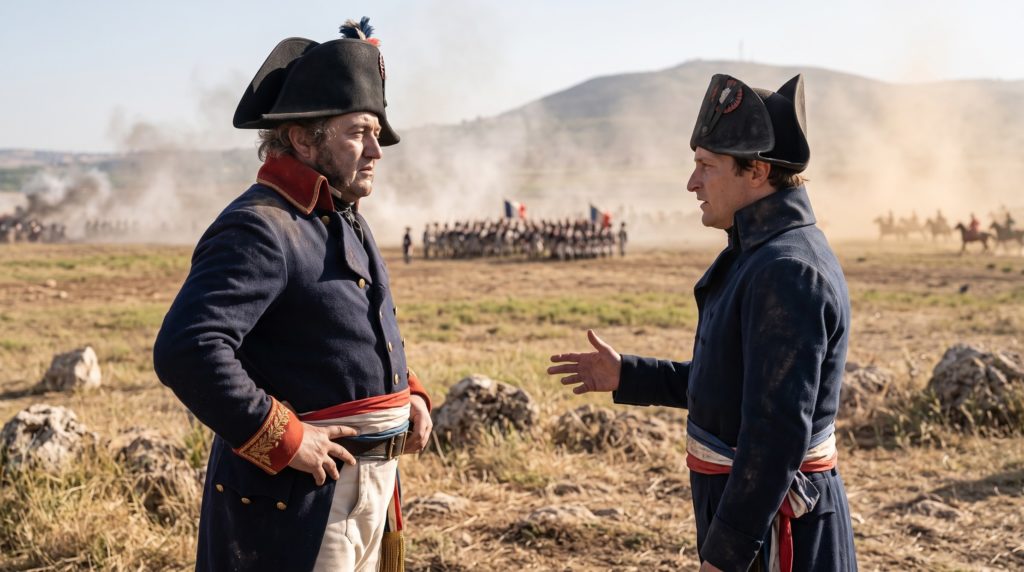
Kléber's most celebrated victory in Egypt came at the Battle of Heliopolis, fought amid the ruins of the ancient city against an Ottoman force sent to retake the country from France[7, p. 179].
One for the Ageonauts…
Kléber's career was not an unbroken string of victories. Early on, during the brutal civil war in the Vendée, his forces were defeated by the royalist Vendéen army at Torfou in 1793[8].
Roger insists this matters…
When Napoleon slipped away from Egypt to return to France, it was Kléber he left in charge of the entire army, a command Kléber held for less than a year before his assassination brought it to an abrupt end[9].
Keith has spotted the problem…
After his assassination, Kléber's body was embalmed and shipped back to France with full honours, rather than being buried where he had fallen in Egypt[6].
This sounds invented, but…
Kléber's memory outlived the century he died in. Sculptors later commemorated him in stone, including a statue recalling the moment he and his men reached the top of the ramparts under fire[10].
A small fact with a very large consequence…
Napoleon called Kléber's death an irreparable loss to France, praising him as a man of the brightest talents and the greatest bravery, high praise from an emperor not usually generous with compliments[6].
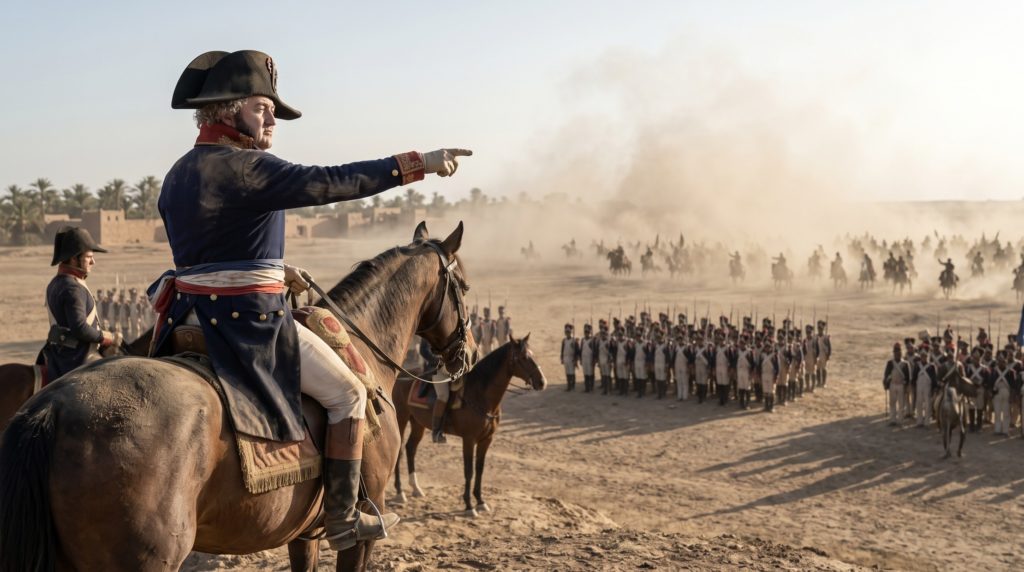
Soldiers! One answers such insolence only with victories; prepare to fight.
Jean-Baptiste Kléber, order of the day to the French army in Egypt, March 1800 (translated from the French)[11]
Issued after Admiral Lord Keith refused to honour the Convention of El-Arish, which would have let the French leave Egypt; Kléber instead led his army to victory at Heliopolis on 20 March 1800.
Timeline
How it unfolded
9 March 1753
Birth of Jean-Baptiste Kléber
Kléber was born at Strasbourg, the son of a mason, and was educated as an architect before turning to military service.[1, p. 3]
23 April 1794
Promoted general of division
After enlisting in the Volunteers of the Haut-Rhin in 1792 and being made a general of brigade in 1793, Kléber was promoted general of division and went on to command Jourdan's left at Fleurus.[1, p. 3]
2 July 1798
Wounded in the assault on Alexandria
Having accompanied Napoleon to Egypt, Kléber marched on Alexandria at three in the morning of 2 July 1798 after the landing, and was struck in the head by a ball while heading the attack.[12, p. 135][1, p. 3]
23 August 1799
Napoleon leaves Kléber in command of Egypt
Bourrienne dates Bonaparte's embarkation for France to 23 August 1799, leaving the army to Kléber's command; Kléber succeeded Napoleon in command in Egypt that year and was displeased at the hasty way the duty was thrust upon him.[12, p. 135][1, p. 3][6]
24 January 1800
Convention of El Arish
Kléber agreed with Turkish plenipotentiaries and Sir Sidney Smith that the French should evacuate Egypt and that his army should be shipped home unmolested.[6] The convention was signed on board Smith's ship on 24 January 1800, though Britain refused to ratify it.[13]
20 March 1800
Victory at Heliopolis
With the convention broken off, Kléber took up arms again and beat the Grand Vizier's army near the ruins of Heliopolis, after which he worked to reconcile Egypt's inhabitants to French rule.[6]
Dig Deeper
Copy any prompt below into your favourite AI chat to keep exploring.
Explain what happened to the French army in Egypt after Napoleon secretly left General Kléber in command in 1799.
What does it say about leadership that Napoleon could walk away from an army and still come out of it more popular than the general left holding it together?
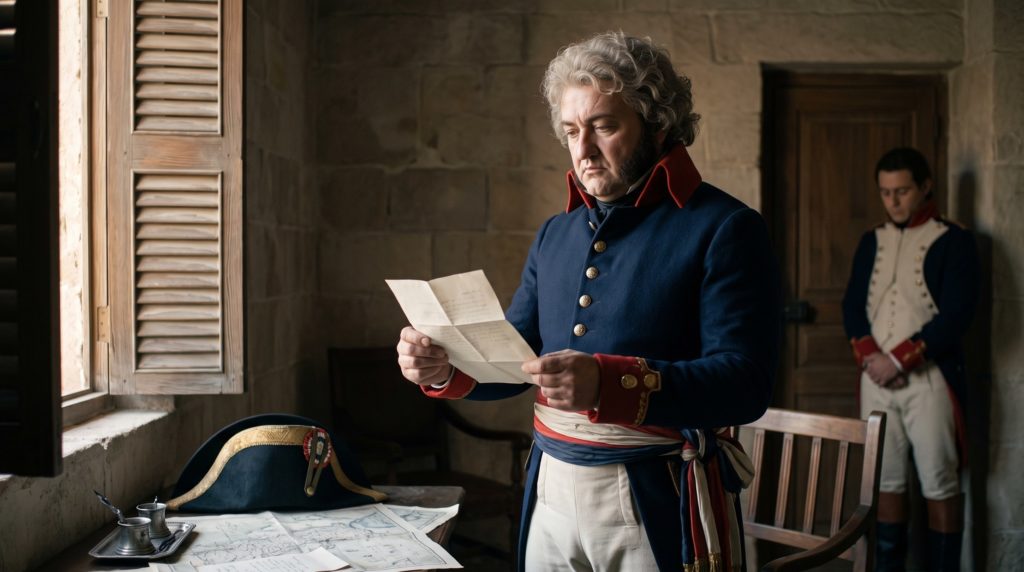
Roleplay General Kléber's reaction to opening his mail and discovering he's now in charge of an entire abandoned army.
Further Reading
Where to read more
Jean-Baptiste Kleber (Encyclopaedia Britannica)
Britannica's biography of Kleber, from his early career as an architect through his command of French forces in Egypt and his assassination in Cairo in 1800.
Why look at this: Notes that Kleber trained and worked as an architect before turning to a military career — an unusual background for the general Napoleon left in sole command of the entire Egyptian campaign.
https://www.britannica.com/biography/Jean-Baptiste-KleberJean-Baptiste Kleber (napoleon-empire.org)
A fuller biography covering Kleber's Vendee campaign, his victory at Fleurus, his command in Egypt after Napoleon's departure, and the circumstances of his assassination on 14 June 1800.
Why look at this: Details the actual assassination — Suleiman al-Halabi posing as a petitioner with a hidden dagger — and Kleber's state funeral and 1840 memorial statue in his native Strasbourg, the endpoint of a career largely overshadowed by Napoleon's own account of the campaign.
https://www.napoleon-empire.org/en/personalities/kleber.phpJournal autographe du general Kleber (Bibliotheque nationale de France, via Gallica)
Kleber's own handwritten notebook of detached notes and reflections, including his personal opinion of Bonaparte as general and First Consul, held and digitized by the BnF.
Why look at this: This is Kleber's own private assessment of Bonaparte, in his own hand — a rare direct window into what the general left holding Egypt actually thought of the man who abandoned the campaign to seize power in Paris.
https://gallica.bnf.fr/ark:/12148/bpt6k44271t.texteImageRelated
Keep exploring




Can be seen in
Where this shows up

References
Sources
Sources
- BookThe principal speeches of the statesmen and orators of the French Revolution, 1789-1795 by Henry Morse Stephens. Page 3. ↑
- BookMemoirs Of Napoleon Bonaparte - I And Ii by Louis Antoine Fauvelet De Bourrienne ↑
- BookThe History of Paris from the earliest period to the present day : containing a description of its…. Page 62. ↑
- BookA History Of The French Revolution Vol Ii by H Morse Stephens ↑
- BookMusée de sculpture antique et moderne; ou, Description historique et graphique du Louvre et de toutes ses parties… by Charles Othon Frédéric Jean Baptiste Clarac. Page 189. ↑
- BookLife of Napoleon Bonaparte, Volume II. by Walter Scott ↑
- BookMemoirs of the Duke of Rovigo (M. Savary) Vol. 1 by Anne-Jean-Marie-René Savary duc de Rovigo. Page 179. ↑
- DocumentCatholic Encyclopedia (1913)/French Revolution ↑
- BookHistory of the wars occasioned by the French revolution, from the commencement of hostilities in 1792, to the… by C. H Gifford ↑
- BookLa Place de l'Étoile et l'Arc de Triomphe; la construction de l'Arc de Triomphe et ses ornements; les… by Henri Gaston Duchesne ↑
- Websitenapoleon.org: La convention del arish et la bataille dheliopolis ↑
- BookMemoirs of Napoleon Bonaparte — Complete by Louis Antoine Fauvelet de Bourrienne. Page 135. ↑
- BookThe Life of Nelson, Volume 2 by A. T. Mahan ↑