
Story › Napoleon: Larger Than Legend › Part 4 of 6
| Part 4 of 6 |
What really destroyed Napoleon's army in Russia?
Winter is guilty, just not in the way you think.
About This Part
What’s covered
This is chapter 4 of 6 of Napoleon: Larger Than Legend, and it asks what really destroyed Napoleon’s army in Russia. The invasion began on 24 June 1812[1, p. 20], and one reckoning puts the first two lines of that army at 614,000 men[2, p. 95]. By 14 December, Sir Robert Wilson wrote, its central body could muster only four hundred infantry and six hundred cavalry[1, p. 20]. Napoleon himself blamed the climate[3, p. 403], and the snow did come, on 6 November by Ségur’s account[4, p. 1]. This video weighs that excuse against the record: a trade war that pushed Napoleon east, a vast army sent into a country that could barely feed it, a bloody victory at Borodino, a burnt capital and a retreat to the Berezina. Its question is simple. How much of the disaster was already done before winter arrived?
Watch
See the part on YouTube
The Story
How the Story Unfolds
Why Napoleon Marched East
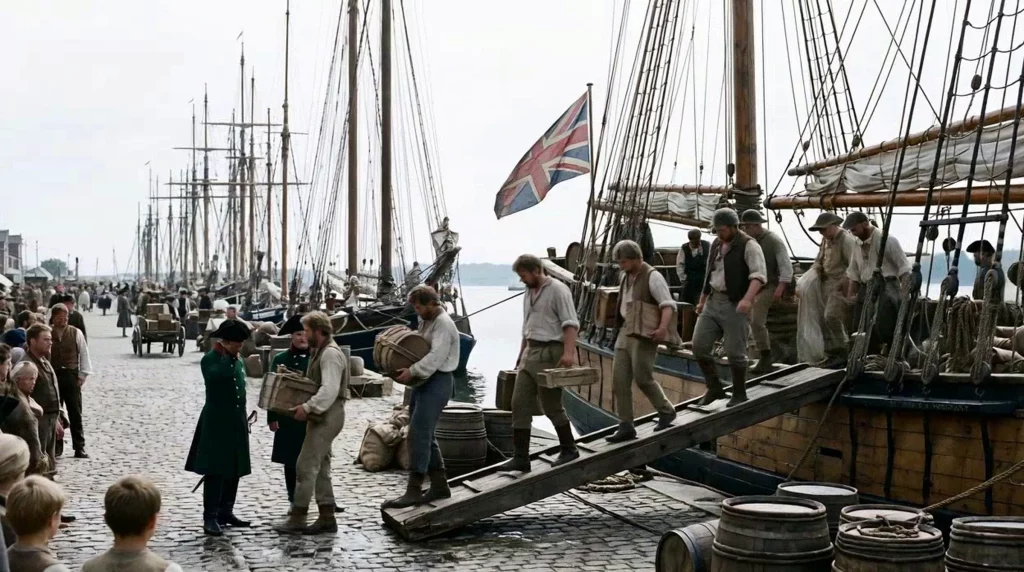
Napoleon’s weapon against Britain was a trade ban. His Berlin decree of 21 November 1806 declared the British Isles in a state of blockade[5, p. 158], and prohibited all trade or communication with them[6, p. 824]. Russia was meant to help enforce it, but in autumn 1810 Alexander declined to confiscate a flotilla of ships trading in the Baltic under neutral flags[6, p. 103]. The Czar then threw down the gauntlet, in Mahan’s words, by opening his harbours to neutral ships bringing colonial produce[7]. Spain had already become a second problem. In June 1808 Napoleon proclaimed his brother Joseph King of Spain and the Indies[8], yet Charles Oman noted that every village without a French garrison would be a focus of active resistance[9, p. 366]. Napoleon later said bitterly that the Spanish ulcer had destroyed him[10].
A Huge Army in a Hungry Land
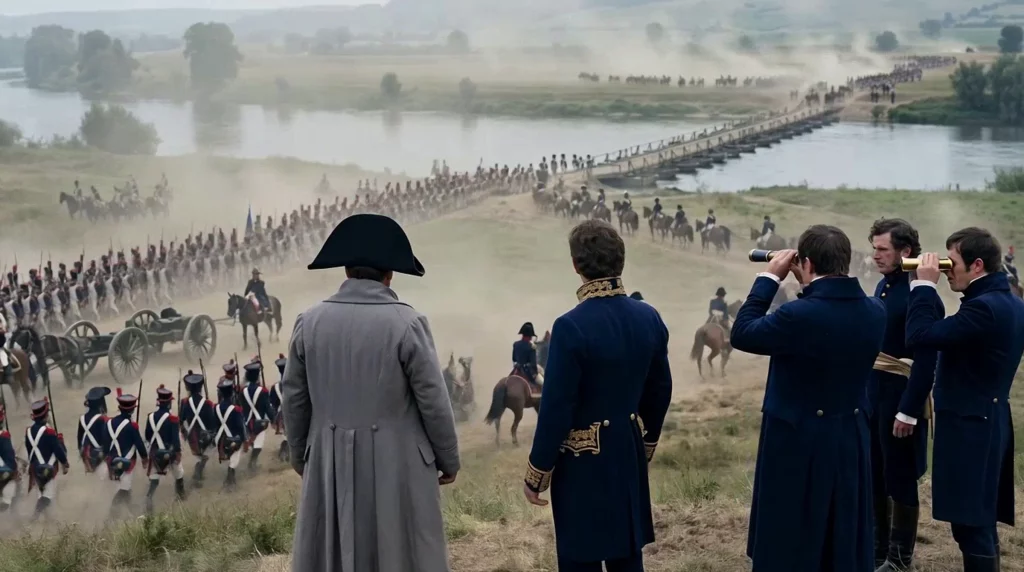
On 24 June 1812 French bridges crossed the Niemen with only a few Cossacks in sight[1, p. 20]. It was not an army of Frenchmen alone. Edward Foord counted about 302,000 French and ‘New French’ beside 190,000 Germans and Swiss, 90,000 Poles and Lithuanians and 32,000 others[2, p. 95], and the Russians called it the army of twenty nations[11]. The Russians kept falling back rather than give the decisive battle, and J. Holland Rose notes that jealousy of Barclay’s protracted retreat later cost him his command[12]. Ségur wrote that Napoleon pushed 400,000 men forward with twenty days’ provisions into a country that could not have fed the 20,000 Swedes of Charles XII[4, p. 1]. Dysentery and typhus followed, striking the Germans first: of 22,000 Bavarians who crossed the Oder, only 11,000 reached the Dvina, though they had never been in action[4, p. 1]. Walter Scott judged that Napoleon lost nearly 100,000 men in June and July without a blow struck[13].
Borodino and the Burning of Moscow
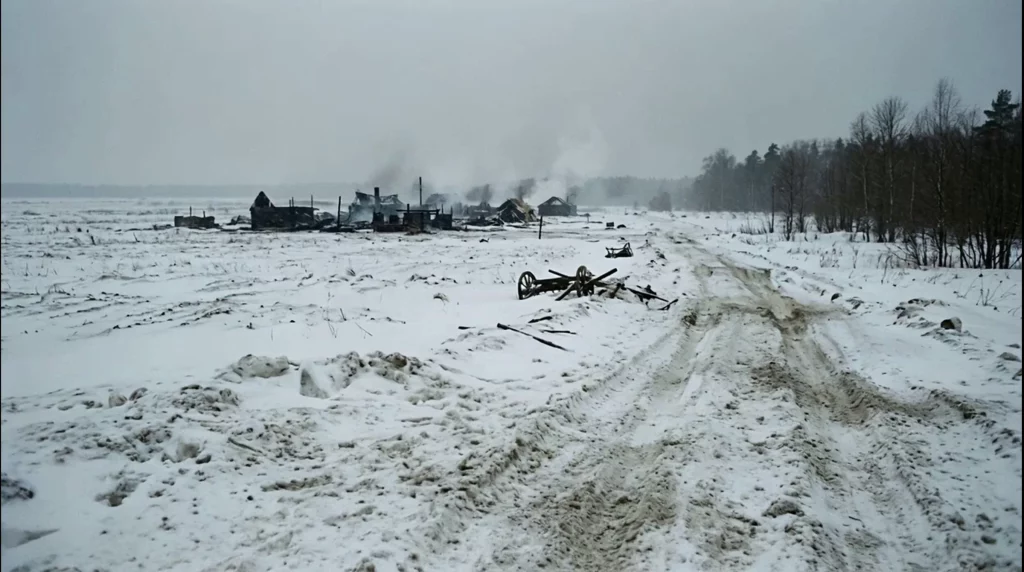
Napoleon fought the battle of Borodino on 7 September and entered Moscow on 14 September[14, p. 312]. Ségur wrote that the victory he had pursued so eagerly and bought so dearly was incomplete[4, p. 1], and that the Russian fires burning on the heights beyond Mojaisk showed how little the enemy were discouraged[4, p. 1]. He had looked to Moscow for peace, glory and the expenses of the war[4, p. 1]. Then the fires began. Sergeant Bourgogne recalled that the regiments, including the Young Guard under Marshal Mortier, fought them for thirty-six hours[15], but that Rostopchin had removed all the hand-pumps[15], and Ségur says the fire engines were carried off[4, p. 1]. Caulaincourt noted that no proposals had reached Napoleon at the gates of Moscow[3, p. 403], yet on 19 October Napoleon was still telling Rapp that he hoped Alexander would make peace[16]. Rose reckons he set out that day with 115,000 men[12].
The Long Walk Home
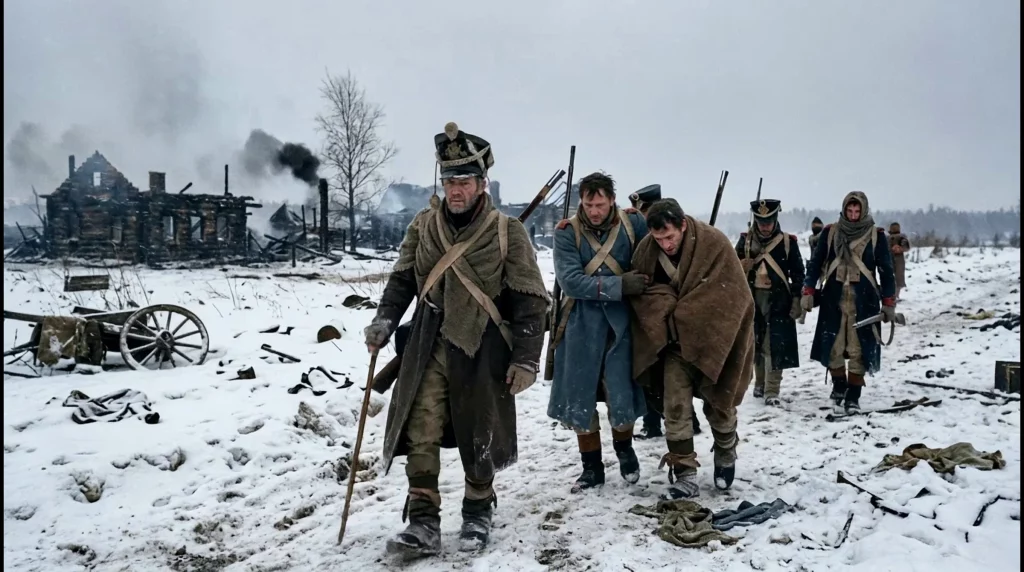
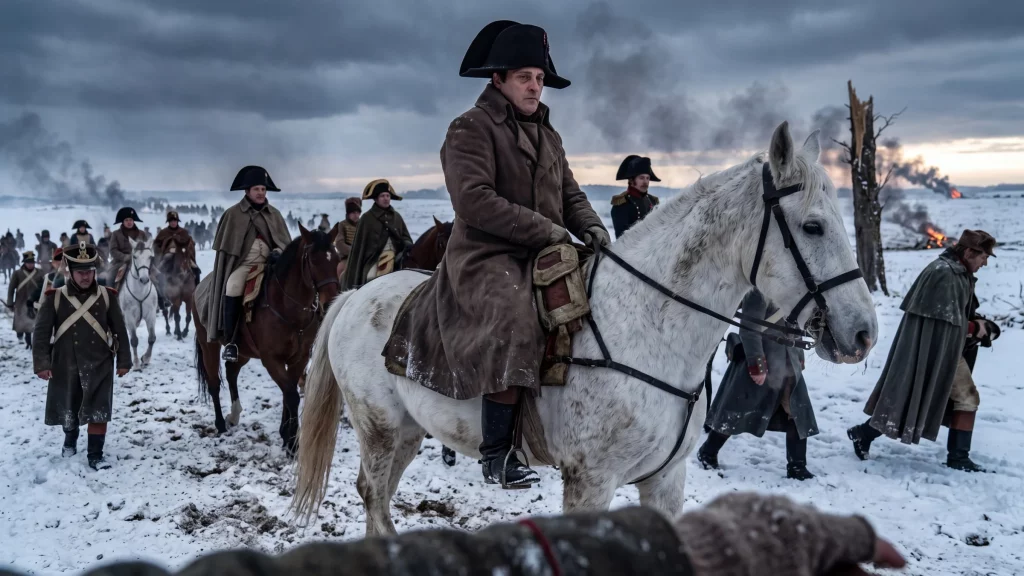
Leaving Moscow on 19 October, Napoleon told Rapp that the fine weather proved his star was still shining[16]. It did not last. Caulaincourt found the cold already intense by 29 October[3, p. 403], and Ségur records the snow on 6 November[4, p. 1]. Platov’s Cossacks harried the columns, and Ney’s six thousand men had to form squares again and again to protect their stragglers[3, p. 403]. The army crossed the Berezina on 26 November[14, p. 312]. Bourgogne wrote that the second bridge, for the artillery and cavalry, broke soon afterwards, and a great many perished[15]. Ségur describes more than sixty thousand Russians attacking eighteen thousand weakened Frenchmen, weighed down by more than fifty thousand stragglers, sick and wounded[4, p. 1]. By 14 December, Wilson said, only nine guns remained of more than eight hundred[1, p. 20].
Historical Context
What was going on
The campaign grew out of a system meant to bring Britain to terms, launched by the Berlin decree of 21 November 1806[5, p. 158]. At Tilsit Napoleon and Alexander made peace, but Walter Scott found the seeds of their later quarrel in that treaty itself, not least over Poland[13]. Caulaincourt recalled that after Erfurt in autumn 1808 the two monarchs parted full of mutual distrust[3], and that Alexander complained that Napoleon winked at French violations of the blockade while insisting Russian ports be closed tighter than ever[3]. Alfred Mahan argued that the strain of the system turned Spain against it in 1808 and Russia in 1810[7]. The cost of 1812 came quickly. On 30 December Yorck concluded the convention of Tauroggen, which declared the Prussians neutral[2, p. 95], and the wreck of the Grande Armée lost 16,000 or 17,000 soldiers as a result[2, p. 95]. After the defeat at Leipzig, Charles Terry wrote, the Confederation of the Rhine collapsed and the French occupation of Germany was at an end[17].
Quick Facts
The essentials
Quick Facts
The Tsar’s Kamchatka Warning
Alexander did not hide his plan, Keith. General de Caulaincourt recalled the Tsar saying that if the fighting went against him he would retire to Kamchatka rather than sign humiliating treaties, because his climate and his winter would fight on his side[3, p. 403]. Retreat was the strategy, not the accident.
How Big Was the Army, Really?
Roger loves a round 600,000, but Baron de Marbot saw another return. A state scored with notes in Napoleon’s hand showed 325,000 men actually present at the Niemen, 155,000 of them French[18]. Caulaincourt’s edition speaks of six hundred thousand entering Russia[3, p. 403]. Check what is being counted.
Colic and Cold Before the Snow
The attrition began in June, Roger. Marbot recalled that a storm made the weather very cold, the horses had to eat wet grass, and the army lost some thousands of men from acute colic[18]. One biographer of Alexander put the dead horses at ten thousand[19].
Sixty Pontoons Burnt at Orsha
Sir Robert Wilson records that two complete sets of pontoons, sixty in all, were abandoned and burnt at Orsha for want of horses[1, p. 20]. At the Berezina he judged that saving only fifteen would have let a bridge go up in two or three hours[1, p. 20]. A planning failure, not a weather one.
First Frost, 27 October
Keith has checked the thermometer. In Sir Robert Wilson’s narrative, the weather first turned cold on the night of 27 October, four degrees below freezing, while the days still continued sunny and fine[1, p. 20]. Winter arrived late, Roger. The hunger and fatigue had been marching with the army for months.
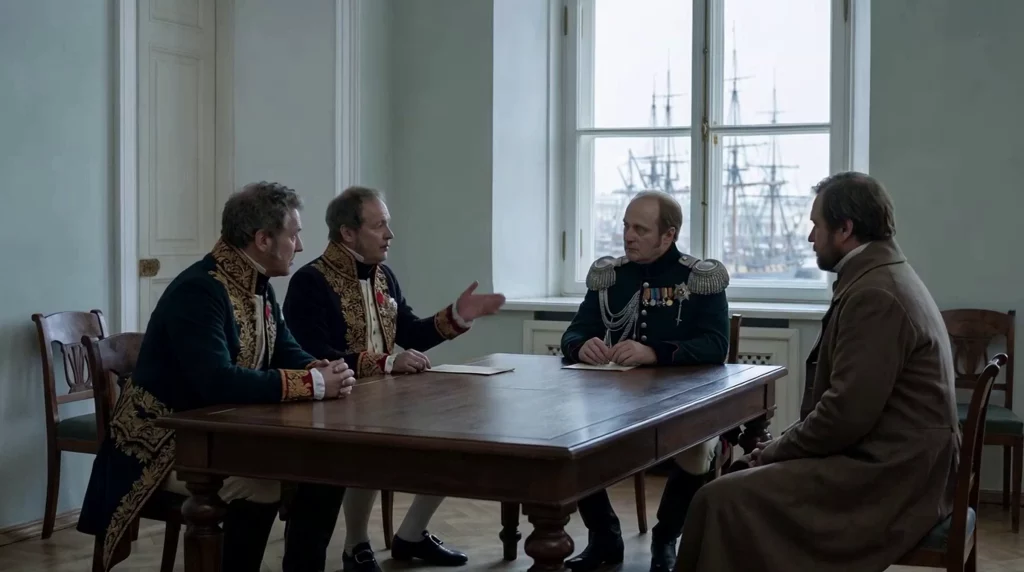
We are victims of the climate. The fine weather tricked me. If I had set out a fortnight sooner, my army would be at Witepsk
Napoleon Bonaparte, as recorded by General de Caulaincourt in his memoirs of the Russian campaign
Caulaincourt heard Napoleon attribute his reverses solely to the climate while travelling home with him from the army at the end of 1812, and wrote it down[3, p. 403].
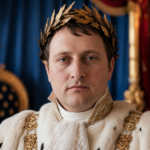
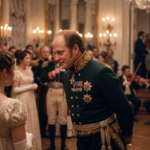

Timeline
How it unfolded
21 November 1806
Berlin Decree Blockades Britain
Napoleon launched the Berlin Decree on 21 November 1806[20, p. 603]. It declared the British Isles in a state of blockade and prohibited trade in British goods, the policy later called the Continental System.[6, p. 824]
7 July 1807
Treaty of Tilsit
France and Russia concluded the Treaty of Tilsit on 7 July 1807[17]. Segur calls it the date of Russia's submission to the continental system, which Alexander later strained.[4, p. 1]
6 June 1808
Napoleon Gives Spain to Joseph
Napoleon proclaimed on 6 June 1808 that the crown of Spain was transferred to his brother Joseph[21]. Napier records the later phrase about the Spanish ulcer as an expression of deep anguish that escaped Napoleon in misfortune.[22, p. 28]
31 December 1810
Alexander's Ukase Breaks with the System
Alexander I offended Napoleon by issuing the ukase of 31 December 1810, which virtually allowed colonial goods into Russia[20, p. 603]. In June 1811 Napoleon complained to Caulaincourt that admitting neutral ships to Russian ports infringed the Continental System.[3, p. 403]
June - July 1812
Supply and Disease Thin the Ranks
After the Niemen crossing, not a third of the provisions needed had arrived, according to Ashton[23]. Henty describes shoeless regiments, daily horse deaths, full hospitals, and dysentery and typhus thinning the ranks before any great battle.[24]
24 June 1812
Grande Armee Crosses the Niemen
The French crossed the Niemen in the small hours of Wednesday 24 June 1812[25, p. 55]. The Grande Armee was multinational, with units from annexed countries and contingents from states allied with Napoleon.[26, p. 2]
7 September 1812
Battle of Borodino
The Catholic Encyclopedia calls Borodino, on 7 September 1812, an extremely bloody victory that opened the road to Moscow[27]. Foord notes the Russian army was still steadily retiring on Moscow afterwards, so the war went on.[2, p. 95]
14 September - 19 October 1812
Moscow Entered and Burned
Napoleon entered Moscow on 14 September 1812, and the city burned between 14 and 16 September[28]. On 19 October he told Rapp he hoped Alexander would make peace, although Rapp warned of a severe winter.[16]
26 - 29 November 1812
Crossing of the Berezina
Trestle bridges were built over the ice-choked Berezina, with preparations begun on 25 November[20, p. 603], and Pradt dates the crossing to 28-29 November[28]. Warwick describes Russian artillery sweeping fugitives into the icy water while stragglers were left to the Cossacks.[29]
3 December 1812
The 29th Bulletin
Napoleon dictated the famous 29th Bulletin at Molodechno on 3 December 1812, acknowledging, in Oman's words, the wreck of his project and the ruin of his army, and left for Paris on 5 December[30, p. 753]. Morfill reports frost reaching 30 degrees Reaumur beyond the Berezina[31, p. 178].
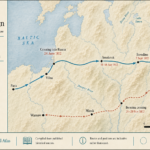
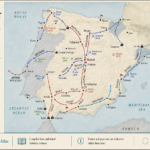
What Happens in This One?
The moments it covers
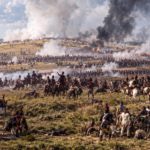
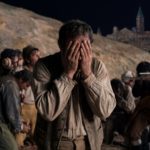
Myth-buster
Think you know this one?
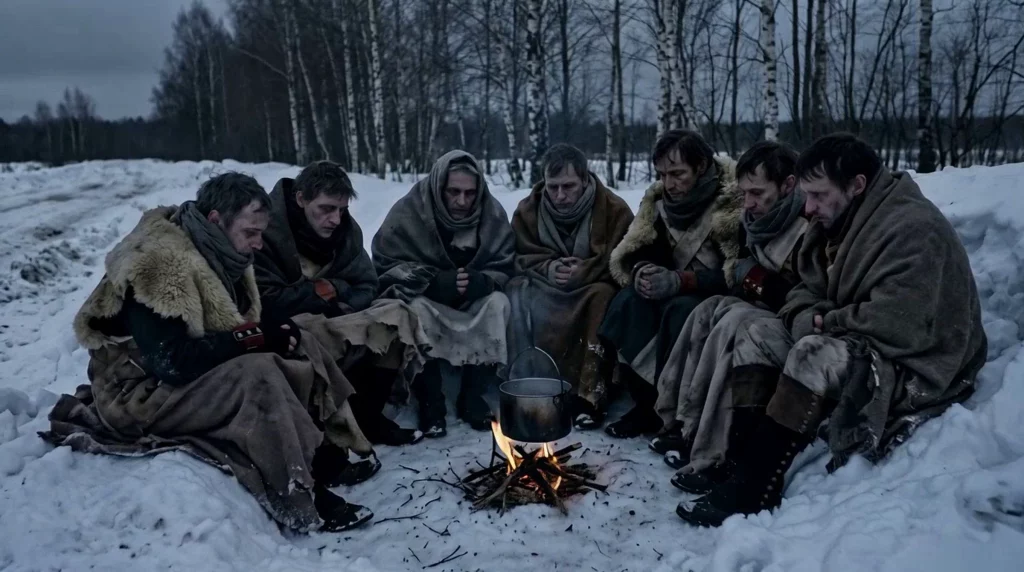
Keith, it was General Winter, plain and simple! Napoleon marched into Russia with the greatest army Europe had ever seen, and the Russian snow wiped it out. Frozen toes, frozen muskets, frozen everything. Winter beat him, Keith. Winter, and nothing else. Case closed, pass the mittens.
Winter was real, Roger, and Ségur dates the snow to 6 November[4, p. 1]. But ‘winter and nothing else’ skips the summer. Walter Scott judged that nearly 100,000 men were lost in June and July, before a blow was struck[13], and Ségur says half of 22,000 Bavarians were gone before the Dvina without ever fighting[4, p. 1]. Winter finished the job, Roger. It did not start it. Keep the mittens.

Keith, everybody knows Napoleon burned Moscow! He marched in, the Tsar would not surrender, so he lost his temper and torched the whole city out of pure spite. One angry emperor, one giant bonfire, and the Russians left shivering outside. Villain behaviour, Keith. Textbook villain behaviour.
Spite does not fit the sources, Roger. Ségur says Moscow’s walls enclosed all Napoleon’s hopes, peace included[4, p. 1]. Bourgogne wrote that Rostopchin, the governor, had removed all the hand-pumps[15], and Montesquiou’s journal records Wolzogen noticing that carriages in Rostopchin’s party were the fire-engines of Moscow[32, p. 40]. Who lit which fire is still argued, Roger. But nobody torches the prize he came for.

Keith, six hundred thousand Frenchmen marched into Russia! Six hundred thousand sons of France, all swaggering over the Niemen in their bearskins. And hardly any of them came home. What an army, Keith. Pure France, start to finish, and then Winter ate it.
‘Frenchmen’ is doing a lot of work there, Roger. Foord’s count of 614,000 in the first two lines has about 302,000 French and ‘New French’, the rest being Germans, Swiss, Poles, Lithuanians, Italians and others[2, p. 95]. Tarbell says the popular figure of 678,000 is exaggerated, though certainly over half a million entered Russia[11]. Figures vary, Roger, but ‘pure France’ it was not.

Where Does It Happen?
The places you'll visit
Dig Deeper
Copy any prompt below into your favourite AI chat to keep exploring.
What happened to Napoleon's army at the Berezina river?
Walk me through how an army of hundreds of thousands fed its men and horses day by day in 1812, and why a retreating enemy made that so hard.
Explain how Napoleon’s engineers tried to get the army across the Berezina in November 1812 with Russian forces closing in, and what went wrong at the bridges.
How did a trade ban on British goods push Napoleon into Russia?
Debate whether the Russian campaign was lost by bad logistics or by bad judgement, and what that says about the difference between planning a battle and planning a campaign.
Debate whether crossing the Berezina was a brilliant escape for Napoleon or proof that his campaign in Russia had already been lost.
Did tin buttons really help doom Napoleon's army?
Challenge me to plan breakfast for a city that has to walk, then grade my menu against what Napoleon’s army actually faced marching toward Moscow.
Tell me 3 other famous river crossings in history where an army’s survival depended on bridge-builders working fast under enemy pressure.
Further Reading
Where to read more
A close-up on: the Continental System or Blockade - Fondation Napoléon
A short Fondation Napoléon explainer on the Berlin Decree of 21 November 1806, which declared a blockade of the British Isles and barred British goods from the continent, with links to the decree text and a period caricature.
Why look at this: Roger calls the Continental System a trade ban meant to shut British goods out of Europe, and Keith jokes about the sign. This page gives the decree behind that joke, and the reason it mattered when Russia stopped playing along.
https://www.napoleon.org/en/history-of-the-two-empires/close-up/a-close-up-on-the-continental-system-or-blockade/The Emperor's samovars - National Army Museum
A four-minute National Army Museum article that uses two of Napoleon's samovars as a way into the 1812 campaign, covering Russian scorched-earth tactics, a supply system too weak for the army, Borodino, burned Moscow and the retreat.
Why look at this: It backs the script's supply thread in a few paragraphs: villages and crops burned, a huge army that could not be fed, and a retreat from a burned Moscow with winter closing in. A quick museum-backed recap, with a surprising object at the end.
https://www.nam.ac.uk/explore/emperors-samovarsThe French Army crossing the Berezina on 28 November 1812 - Fondation Napoléon
A short Fondation Napoléon page on an anonymous watercolour and gouache held at the Musée de l'Armée in Paris, explaining the Berezina crossing, General Eblé's two bridges, the burned bridges and why the river's name became a French byword for disaster.
Why look at this: Roger says the army has to fight its way across the Berezina under fire. This page puts a nineteenth-century image and a short account beside that line, and notes that the crossing saved the army while nearly ten thousand people were left on the far bank.
https://www.napoleon.org/en/history-of-the-two-empires/paintings/the-french-army-crossing-the-berezina-on-28-november-1812/Napoleon's Invasion of Russia - World History Encyclopedia, Harrison W. Mark
A free encyclopaedia article of roughly 3,000 words on the whole 1812 campaign: the supply train, horse losses, typhus, Borodino, the Moscow fire, the retreat and the Berezina, with army-strength figures and a list of sources.
Why look at this: The best single page for Keith's three problems before the snow. It gives its own account of supply failure, disease and deserters costing the army about a hundred thousand men before the first major battle, which is this video's central claim. Figures vary between sources.
https://www.worldhistory.org/Napoleon's_Invasion_of_Russia/Battle of Borodino - Napoléon & Empire, Didier Grau and Lionel A. Bouchon
A very long free battle study by the Napoléon & Empire association, drawing mainly on Alexander Mikaberidze's book on Borodino: the forces, the fighting on 7 September 1812, the casualties, Kutuzov's withdrawal and the French entry into Moscow.
Why look at this: Keith says a win that does not end the war is not the win Napoleon needed. This page shows why: the French held the field, the Russian army was not destroyed, and the Tsar still did not ask for peace. It gives casualty estimates to compare.
https://www.napoleon-empire.org/en/battles/borodino.phpNapoleon's Russian Campaign: The Retreat - Fondation Napoléon
A dated Fondation Napoléon timeline from the occupation of Moscow to the end of the retreat: Napoleon's decision to leave, the evacuation, Maloyaroslavets, the Berezina crossing near Studienka, estimated losses, and the typhus deaths at Vilna.
Why look at this: After Keith says he was promised winter, Roger has the army leave Moscow in the middle of October. This timeline gives the day-by-day dates for that long walk home and an estimated cost for the Berezina crossing, so you can follow each stage.
https://www.napoleon.org/en/history-of-the-two-empires/timelines/napoleons-russian-campaign-the-retreat/Napoleon's 29th Bulletin of the Grande Armée, 3 December 1812 - The Napoleon Series
The full English text of the army's official bulletin from Molodetschno, in John Voltmer's translation of a London collection of 1816, where Napoleon admits the disaster to the French public and gives his own account of the weather and the Berezina.
Why look at this: This is the primary source for the winter excuse. Napoleon himself writes that a cold that suddenly came on made the army's situation miserable, then ends by saying his health had never been better. Read it against Keith's line about a very tidy excuse.
https://www.napoleon-series.org/research/government/c_bulletin.htmlHistory of the Expedition to Russia, by General Count Philip de Ségur - Project Gutenberg
Free full text of the English translation of the memoir by a general who served under Napoleon, with books on the Niemen crossing and its storm, the march to Moscow, the burning of the city, the retreat and the passage of the Berezina on 27 November.
Why look at this: An eyewitness account lets you test Roger's lines about the long march and the Berezina crossing against someone who was there. Ségur wrote after the event and with his own slant, so read it as testimony, not as the final word.
https://www.gutenberg.org/ebooks/18113The Campaign of 1812 in Russia, by Carl von Clausewitz (John Murray, 1843 translation) - clausewitzstudies.org
A free scanned PDF of about 300 pages (a large file) of the first English translation of Clausewitz's study of 1812, by an officer who took part on the Russian side, with a Review of the Campaign that tallies both armies.
Why look at this: The Review of the Campaign counts both armies by late July 1812 and judges that the French had already lost at least a quarter of their men to stragglers, sick and battle casualties. That is the video's thesis, in a professional soldier's own words.
https://clausewitzstudies.org/readings/1812/Clausewitz-CampaignOf1812inRussia-EllesmereTranslation.pdfSources
- BookNarrative of Events during the Invasion of Russia by Napoleon Bonaparte and the Retreat of the French Army… by Sir Robert Thomas Wilson. Page 20. ↑
- BookNapoleon's Russian campaign of 1812 by Edward A Foord. Page 95. ↑
- BookWith Napoleon in Russia: The Memoirs of General de Caulaincourt Duke of Vicenza by Armand-Augustin-Louis de Caulaincourt. Page 403. ↑
- BookHistory of the Expedition to Russia Undertaken by the Emperor Napoleon in the Year 1812 by Philippe-Paul de Ségur. Page 1. ↑
- BookThe armed neutralities of 1780 and 1800, a collection of official documents preceded by the views of representative… by James Brown Scott. Page 158. ↑
- BookThe continental system : an economic interpretation by Eli F. Heckscher. Pages 103, 824. ↑
- BookThe influence of sea power upon the French revolution and empire, 1793-1812 (vol 2) by A. T. Mahan ↑
- BookNapoleon's Letters to Josephine, 1796-1812 by Emperor of the French Napoleon I ↑
- BookA history of the Peninsular War, Vol. 2, Jan.-Sep. 1809 : From the battle of Corunna to the… by Charles Oman. Page 366. ↑
- BookThe Great duke by William Henry Fitchett ↑
- BookA life of Napoleon Bonaparte; with a sketch of Josephine, empress of the French by Ida M. Tarbell ↑
- BookThe Life of Napoleon I (Complete) by J. Holland Rose ↑
- BookLife of Napoleon Bonaparte, Volume IV. by Walter Scott ↑
- BookThe confidential correspondence of Napoleon Bonaparte with his brother Joseph, sometime king of Spain : selected and translated… by Emperor of the French Napoleon I and King of Spain Joseph Bonaparte. Page 312. ↑
- BookMemoirs of Sergeant Bourgogne 1812-1813 by Adrien Jean Baptiste Francois Bourgogne ↑
- BookMemoirs of General Count Rapp First Aide-de-Camp to Napoleon by Jean Rapp ↑
- BookA short history of Europe from the dissolution of the Holy Roman empire to the outbreak of the… by Charles Sanford Terry ↑
- BookThe Memoirs of Baron de Marbot by Jean-Baptiste-Antoine-Marcelin de Marbot ↑
- BookAlexander I. Emperor of Russia ; or, a sketch of his life.. by Hannibal Evans Lloyd ↑
- BookCambridge Modern History Vol.9 (napoleon) by A.w. And Prothero Ward. Page 603. ↑
- BookJoseph Bonaparte by John S. C. Abbott ↑
- BookHistory of the war in the Peninsula and in the south of France from the year 1807 to… by William Francis Patrick Napier. Page 28. ↑
- BookEnglish caricature and satire on Napoleon I by John Ashton ↑
- BookBattles of the nineteenth century, vol. 1 of 7 by Archibald Forbes G. A. Henty ↑
- WebsiteNapoleon's campaign of 1812 and the retreat from Moscow. Page 55. ↑
- WebsiteMovement in Times of War: Russian Campaign French Campaign 1812-1814. Page 2. ↑
- DocumentCatholic Encyclopedia (1913)/Napoleon I (Bonaparte) ↑
- BookThe Congress of Vienna by Dominique de Pradt ↑
- BookNapoleon and the end of the French revolution by Charles F. Warwick ↑
- BookA history of the Peninsular War, Vol. 6, September 1, 1812-August 5, 1813 : The siege of Burgos… by Charles Oman. Page 753. ↑
- BookA History of Russia from the Birth of Peter the Great to the Death of Alexander II by William Richard Morfill. Page 178. ↑
- BookA journal of the Russian campaign of 1812, tr. by W. Knollys by Raymond Eymery P.J . Montesquiou-Fezensac. Page 40. ↑