
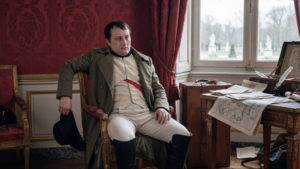
Talleyrand lounges with his cane in an ancien regime salon, the aristocratic cleric-turned-diplomat who served every French regime from Louis XVI to Louis-Philippe.
French Foreign Minister and Diplomat
The bishop-turned-diplomat who helped steer the French Revolution's aftermath, served Napoleon as foreign minister, then quietly worked to bring him down — and somehow kept his job through five different French governments.[1]
Bio
Who they were
Charles-Maurice de Talleyrand-Périgord was born in Paris on 2 February 1754[2], into an ancient noble family from the Périgord region[3]. As the eldest son he might have expected a military career, but a lameness that stayed with him for life[2] — its exact cause is not settled in the available sources — pushed his family to steer him toward the Church instead. He was ordained a priest in 1779[4], a career he had little personal enthusiasm for.
Talleyrand's rise came through the Church's political side rather than its spiritual one. He became Bishop of Autun[3] just before the French Revolution erupted, then sat on the Committee of the Constitution helping draft the Revolution's new constitutional framework[3]. He supported bringing the Church under state control, a step that put him at odds with Rome; the Pope eventually excommunicated him[2, p. 104]. Having effectively abandoned his clerical career, he pivoted fully into revolutionary and then Napoleonic politics, trading a bishop's mitre for a diplomat's portfolio.
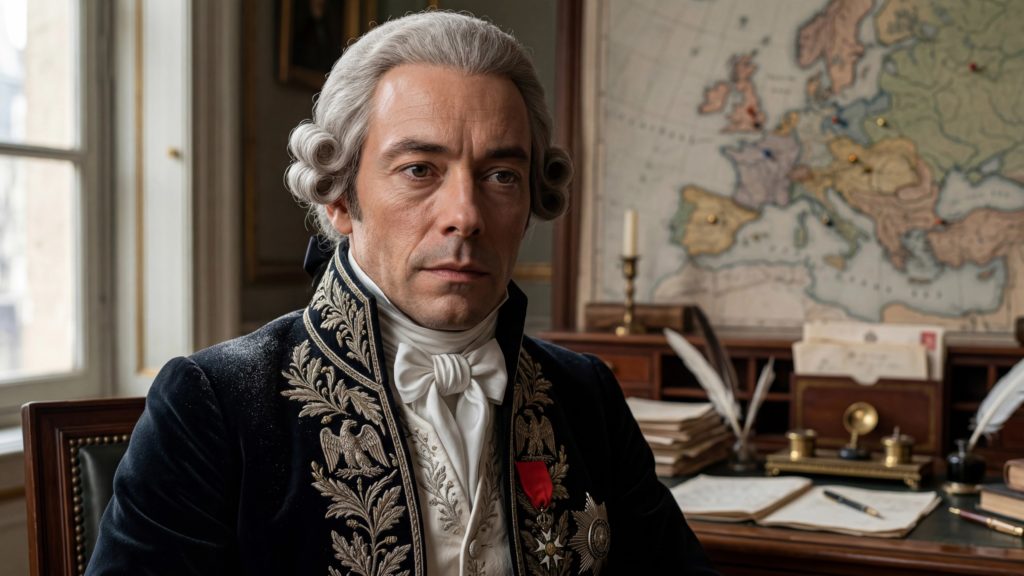
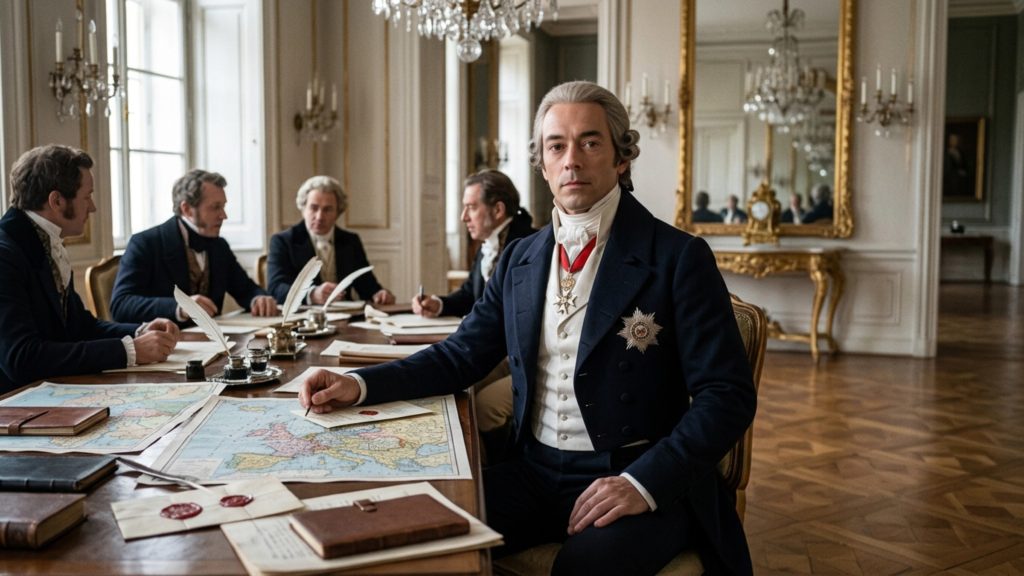
Talleyrand became France's foreign minister, serving first the Directory and then Napoleon[1], who rewarded him with grand titles, including Prince of Benevento[1]. As Napoleon's wars dragged on, Talleyrand grew uneasy and began maneuvering toward the other side. His defining moment came at the Congress of Vienna in 1814–1815[5], the great postwar conference redrawing Europe's map. Representing a defeated France, he argued for the "principle of legitimacy" — restoring the old ruling royal families to their thrones[1] — and used it to win France a seat at the table as an equal, not a prisoner of war.
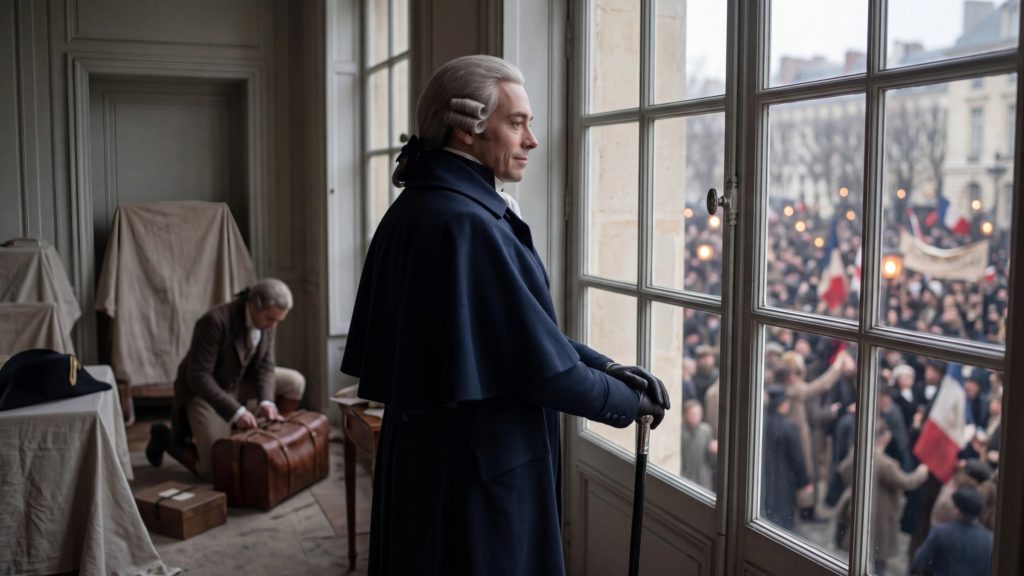
Talleyrand kept serving French governments after Vienna, working under the restored monarchy during the provisional government of 1814[6]. He later retired from frontline politics but remained an influential figure in Parisian society. He died in Paris in 1838, reconciled with the Catholic Church shortly before his death[7, p. 46] — a final turn for a man who had spent much of his career at odds with Rome.
Talleyrand's real legacy is less about any single achievement than about a style of diplomacy: pragmatic, self-interested, and remarkably durable. He served the monarchy, the Revolution, the Directory, Napoleon's empire, and the restored Bourbon monarchy in turn — a survival record few figures of the era can match. His insistence at Vienna that a defeated nation still deserved a voice in shaping the peace became an influential model for later peace conferences, and his career is still cited as the classic case study of a diplomat who outlasted every regime he served.[5]
Talleyrand carried a lifelong lameness that excluded him from the military path his noble birth would normally have guaranteed him[2], redirecting him into the Church instead — and from there into the political career he became famous for. It's a striking irony: a childhood injury ended up shaping the entire course of European diplomacy.
Legacy & Reputation
What’s the verdict?
Napoleon predicted that posterity would grant Talleyrand no more room than a line noting that he served every government, swore many oaths of allegiance and deceived Napoleon himself. His biographer Loliée, writing in 1911, argued that history refused to ratify that summary judgment and instead gave breadth and weight to the part Talleyrand played[2, p. 356]. Reforms he urged in his address to the Electors of Autun were eventually placed on the statute book by successive constitutional governments[2, p. 56].
Myth-buster
Think you know this one?
Talleyrand is often remembered simply as a cynical turncoat who betrayed every master he served; in fact, he pursued the same broad diplomatic goal — a stable balance of power in Europe — across multiple regimes, which is arguably why so many different governments kept re-hiring him.[6]
Quick Facts
The essentials
Quick Facts
Roger would like you to know…
Long before he was Europe's most notorious diplomat, Talleyrand was a Catholic bishop — appointed Bishop of Autun in the years just before the Revolution tore through France[3]. A career change from cathedral to chancellery that few clergymen have ever matched.
Keith checked the sources…
Talleyrand backed seizing Church property during the Revolution and was formally excommunicated for it[4]. He didn't reconcile with Rome until his deathbed in 1838[5] — a nearly fifty-year excommunication, even by his standards of patience.
Roger said it. Keith checked it…
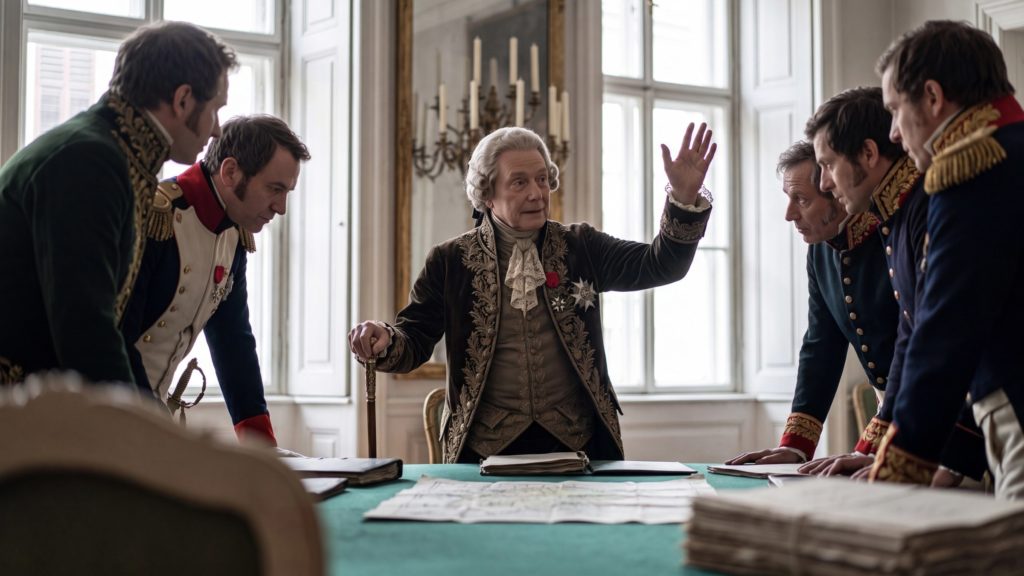
At the 1814–15 Congress of Vienna, Talleyrand walked in representing a defeated France and still talked his way to the table with the victorious powers[5]. Somehow, France left the conference with its old frontiers more or less intact.
Keith remains unconvinced…
After Napoleon had the Duke of Enghien executed in 1804, someone in Paris supposedly muttered, 'It's worse than a crime, it's a blunder'[8, p. 268]. The line usually gets pinned on Talleyrand, though historians still argue over whether it was really his or a rival's.
This sounds invented, but…
When the monarchy returned in 1815, the writer Chateaubriand watched Talleyrand and the regicide Fouché walk into the king's chamber arm in arm, and described the sight as 'vice leaning on the arm of crime'[1]. Restoration Paris did not do subtlety.
Roger has a theory…
Talleyrand's long-term companion, Catherine Grand, was installed at the Hôtel de Galliffet and eventually became his wife[2, p. 204]. She was famous for her beauty and notorious for her lack of conversation — Society never quite worked out what the empire's shrewdest mind saw in her.
Keith has spotted the problem…
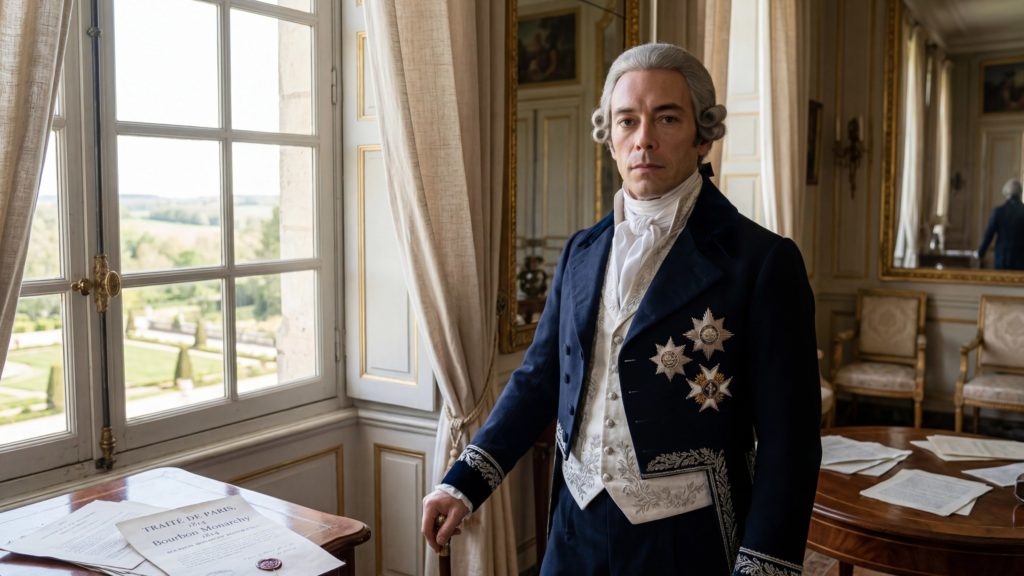
Talleyrand was made Minister of Foreign Affairs in 1799, under the Directory, and kept a version of the job through Napoleon's consulate, his empire, and the return of the Bourbons[9]. Governments fell around him; his address book stayed remarkably current.
History has added a footnote…
One of the era's sharpest lines — that speech was given to man 'to disguise his thoughts' — is usually credited to Talleyrand[10, p. 458]. Fittingly for a diplomat famous for saying nothing very precisely, some scholars think the words were really Voltaire's.
Roger insists this matters…
In 1830, yet another French revolution swept away yet another French king — and Talleyrand, by then in his late seventies, was appointed ambassador to London for the brand-new July Monarchy[5]. Four regimes down, and he was still getting hired.
The familiar story leaves this out…
Talleyrand's own biographers admit that accusations of venality and treachery followed him through nearly every post he held[2]. He was, by most accounts, extremely good at his job — and just as consistently available to the highest bidder.
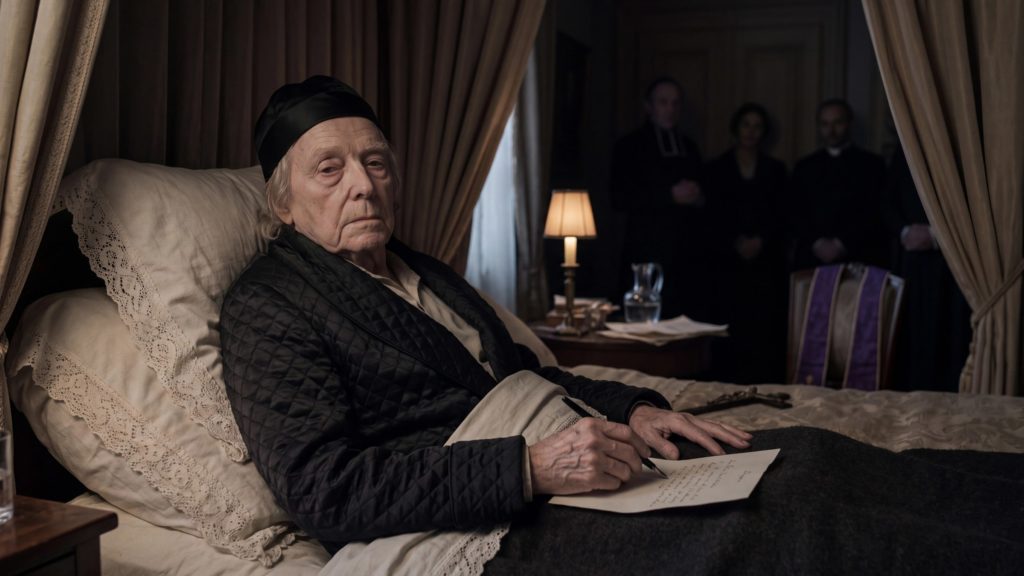
Whoever did not live in the years neighboring 1789 does not know what the pleasure of living means.
Charles-Maurice de Talleyrand-Périgord
Talleyrand's own wistful verdict, late in life, on the vanished elegance of the pre-Revolutionary world he was born into, before he spent decades navigating from bishop to revolutionary to Napoleonic minister to restoration diplomat.
Timeline
How it unfolded
2 February 1754
Birth of Talleyrand
Charles-Maurice de Talleyrand-Périgord was born on 2 February 1754 into one of the noblest families in France.[2][11][12] A lameness caused by an accident led to his being destined for Holy orders.[4]
January 1789
Talleyrand Becomes Bishop of Autun
Talleyrand was consecrated Bishop of Autun in January 1789, some four months before the States-General assembled.[11][4] He appeared in his diocese only to be elected a member of that body.[4]
July 1797
Talleyrand Becomes Foreign Minister
Talleyrand replaced Delacroix as the Directory's Minister for Foreign Affairs in July 1797.[13, p. 405][14][12] The Catholic Encyclopedia says he was appointed owing to the influence of Barras.[4]
9 November 1799
Coup of 18 Brumaire
With Bonaparte and Sieyès, Talleyrand prepared the coup d'état of Brumaire.[4] On the morning of 9 November 1799 (18 Brumaire) Paris woke to a revolution under way, and McCabe records that Barras was in Talleyrand's hands and soon had his resignation extorted.[1]
August 1807
Talleyrand Resigns as Foreign Minister
After advising against the Franco-Russian alliance, Talleyrand resigned as Minister for Foreign Affairs in August 1807.[4] Napoleon softened the parting by creating the Vice-grand Electorship for him.[1]
Dig Deeper
Copy any prompt below into your favourite AI chat to keep exploring.
Explain Talleyrand's role as Napoleon's foreign minister, and how he later helped negotiate against the very regime he had served.
What does Talleyrand's ability to serve five different French governments in a row say about the line between loyalty and survival?
Pitch Talleyrand as the office colleague who's already emailed his CV to three rival companies before lunch.
Further Reading
Where to read more
Charles-Maurice de Talleyrand, prince de Benevent - Britannica
Reference biography of the bishop-turned-diplomat who served, in turn, Louis XVI, the Revolution, the Directory, Napoleon, and the restored Bourbons.
Why look at this: Lays out the sheer span of his survival - excommunicated by the Pope in 1790, foreign minister under Napoleon by 1799, still negotiating for France as ambassador to London in the 1830s.
https://www.britannica.com/biography/Charles-Maurice-de-Talleyrand-prince-de-BeneventTALLEYRAND-PERIGORD, Charles-Maurice de - napoleon.org
Fuller biographical treatment from the Fondation Napoleon covering his terms as foreign minister under the Directory and Napoleon, and his decisive diplomacy at the Congress of Vienna.
Why look at this: Quotes Napoleon's own assessment of him - 'a man of intrigue, of great immorality, but with much wit, and certainly the most capable of the ministers I have had' - and explains how he split the Allies at Vienna to protect a defeated France.
https://www.napoleon.org/en/history-of-the-two-empires/biographies/talleyrand-perigord-charles-maurice-de/A Peace Congress of Intrigue (Vienna, 1815), ed. Friedrich Freksa
A 1919 primary-source compilation of participants' memoirs and letters from the Congress of Vienna, including a section drawn directly from Talleyrand's own letters to his sovereign, King Louis XVIII. Free full text on the Internet Archive, public domain.
Why look at this: Puts you inside Talleyrand's actual reports back to Louis XVIII while he was, in real time, out-maneuvering Russia, Prussia, Austria and Britain to keep a defeated France at the table as an equal power.
https://archive.org/details/peacecongressofi00frekialaRelated
Keep exploring






Can be seen in
Where this shows up
References
Sources
Sources
- BookTalleyrand, a biographical study by Joseph McCabe ↑
- BookPrince Talleyrand and his times by Frédéric Loliée and Bryan O'Donnell. Pages 56, 104, 204, 356. ↑
- BookLife of Prince Talleyrand. Accompanied with a portrait by Charles Maxime Catherinet de Villemarest ↑
- DocumentCatholic Encyclopedia (1913)/Charles-Maurice de Talleyrand-Périgord ↑
- BookTalleyrand by Charlotte Julia von Leyden Blennerhassett and Frederick Clarke ↑
- BookThe Bourbon restoration by John Richard Hall ↑
- BookReligion and the reign of terror; or, The church during the French revolution by Edmond de Pressensé and John Power Lacroix. Page 46. ↑
- BookJOSEPH FOUCHE THE PORTRAIT OF A POLITICIAN STEFAN ZWEIG by STEFAN ZWEIG. Page 268. ↑
- BookA life of Napoleon Bonaparte; with a sketch of Josephine, empress of the French by Ida M. Tarbell ↑
- BookAlexis De Tocqueville Vol.2 by Alexis De Tocqueville. Page 458. ↑
- BookHistorical characters: Talleyrand, Cobbett, Mackintosh, Canning by Henry Lytton Bulwer Dalling and Bulwer ↑
- Websiteen.wikipedia.org: Charles Maurice de Talleyrand Périgord ↑
- BookDiaries and correspondence of James Harris, first Earl of Malmesbury; containing an account of his missions to the… by James Harris Malmesbury and James Howard Harris Malmesbury. Page 405. ↑
- BookA dictionary of Napoleon and his times by Hubert N.B Richardson ↑