
Paul Barras, viscount and former army officer, the one man to sit as a Director for the whole life of the Directory, 1795 to 1799.
Director / Leader of the Directory
The Director who first spotted Napoleon Bonaparte's talent at the siege of Toulon — and whose own memoirs one reference work dismissed as "more fool than knave"[1].
Bio
Who they were
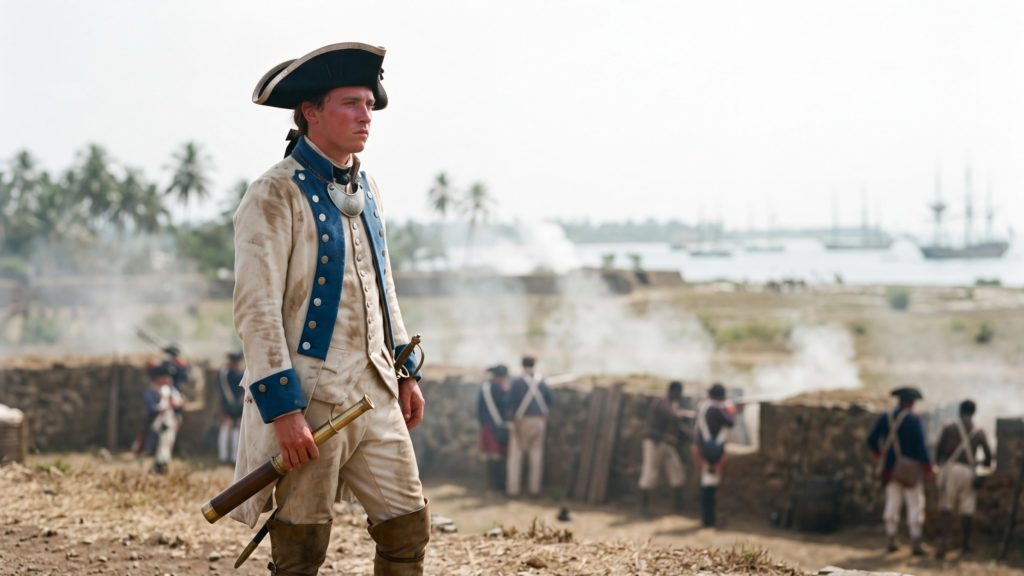
Paul François Jean Nicolas Barras was born on 30 June 1755 at Fox-Amphoux, in Provence, into an old noble family[2][1]. At sixteen he began a military career as a "gentleman cadet" in the regiment of Languedoc[1]. In 1775 he joined a regiment bound for Pondicherry in India, was shipwrecked on the voyage, but still reached the city in time to help defend it before it fell to the British in October 1778[1]. He then served under Admiral de Suffren and at the Cape of Good Hope, returning to France with a reputation for gambling and love affairs[1].
When revolution broke out in 1789, Barras became a committed supporter of the democratic cause[1]. He took part in the storming of the Bastille and the insurrection of 10 August 1792[2]. Elected deputy for the Var to the National Convention, he voted for the execution of Louis XVI[2]. Sent on missions to southern France, he was posted to Toulon during its siege, where he first met a young artillery officer named Napoleon Bonaparte[1]. In 1794 Barras helped organise the fall of Robespierre on 9 Thermidor (27 July)[1].
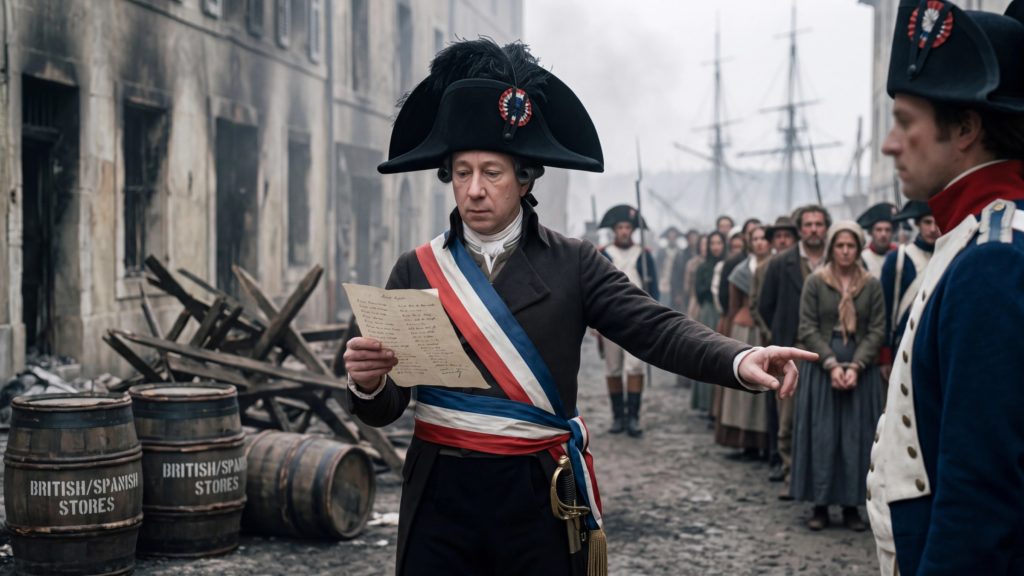
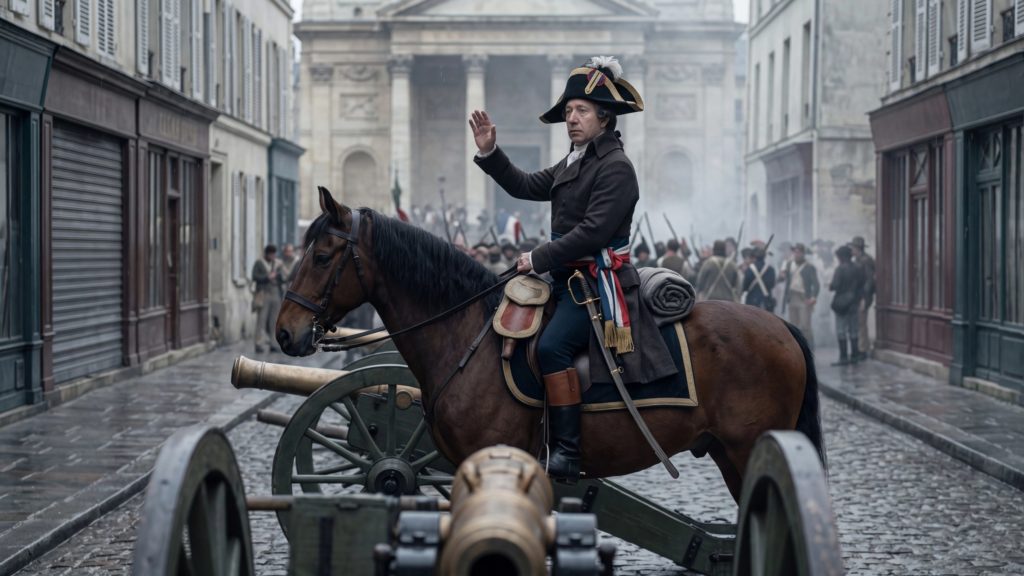
In October 1795, when royalist and rebel forces threatened the Convention, Barras called on Bonaparte to help defend it; the young officer's cannon fire scattered the crowds around the Tuileries in what became known as the "whiff of grapeshot," on 13 Vendémiaire (5 October 1795)[1]. These services won him a seat on the five-man Directory formed soon after[1]. In 1797, as royalist opposition grew, he and Bonaparte again worked together, sending General Augereau to crush the threat in the coup of 18 Fructidor (4 September)[1]. Two years later Barras joined Bonaparte and Sieyès in the coup of 18 Brumaire (9 November 1799), which overthrew the Directory he himself sat on[1].

Barras underestimated Bonaparte's ambitions, and after Brumaire he found himself pushed out of politics for good[1]. He retired with a large fortune amassed during the Revolution[1]. After 1815 he claimed royalist sympathies, but the restored Bourbons still regarded him with suspicion[1]. He died at Chaillot, near Paris, on 29 January 1829[2]. Afterward, the authorities tried unsuccessfully to seize his private papers and memoirs[1].
Barras is chiefly remembered as the man who gave Napoleon Bonaparte his first real opportunities, from Toulon to the "whiff of grapeshot"[1]. However, one detailed reference work on the period specifically disputes the popular claim that Barras arranged Bonaparte's marriage to Josephine de Beauharnais as a way of securing him command of the Army of Italy, citing evidence from fellow Director Lazare Carnot against it[1]. His own memoirs, published long after his death, remain a disputed source for the Revolution's history[1].
At the age of sixteen, Barras was shipwrecked on his way to defend French Pondicherry in India — and still made it there in time to fight before the city fell to the British in 1778[1], a foretaste of the improbable survival that would mark his entire career.
Legacy & Reputation
What’s the verdict?
Hubert Richardson’s 1920 reference work on the Napoleonic era is scathing about Barras, calling him “the most corrupt thing bred among the slime of the Revolution” and judging his memoirs “notoriously incorrect in historical fact”[1]. The same source nonetheless credits him with real political skill, saying he “just missed being a genius”[1]. This is one early-20th-century historian’s harsh judgement rather than settled fact.
Myth-buster
Think you know this one?
It’s sometimes assumed Barras handed Bonaparte the command of the Army of Italy as a kind of dowry for Josephine de Beauharnais; one detailed reference on the period states this claim is specifically disproved by the evidence of fellow Director Lazare Carnot[1].
Quick Facts
The essentials
Quick Facts
Roger would like you to know…
Barras was born in 1755 at Fos-Amphoux in Provence and died in 1829 at Chaillot. Before the Revolution swallowed his fortune, he'd already served in India and helped storm the Bastille in 1789[2].
Keith checked the sources…
Barras voted for the execution of Louis XVI, according to one contemporary record, "without appeal or respite"[2] — a man who helped topple a king would later spend his career propping up the general who buried the revolution that followed.
Roger said it. Keith checked it…
One historian credits Barras, more than anyone, with the overthrow of Robespierre on 9 Thermidor 1794. Afterwards "he cared but little" for power itself, so long as it kept bringing him "the money, the luxury, and above all the women"[3].
Roger has a theory…
Contemporaries described Barras as elegant, "wildly extravagant" and permanently short of cash despite a huge salary, surrounded by intriguers and "pretty women of loose morals" — and noted that his own published Memoirs became his own harshest witness[4].
Keith would like to clarify…
Barras turned his rooms at the Luxembourg Palace into "the centre of all that was gay in the social world," deliberately reviving the extravagance, luxury and licentiousness of the old royal court under a shiny new revolutionary name[5].
History gets strange here…
In 1795, it was Barras who talked a reluctant young artillery officer into defending the government against an armed Paris mob. That officer fortified the Tuileries overnight with borrowed cannon — and his name was Napoleon Bonaparte[5].
Keith has spotted the quotation problem…
Barras later claimed in his own Memoirs that he'd handed Bonaparte command of the Army of Italy as a "wedding gift" to Josephine. Historians call the story "absolutely false" — the appointment was actually made by Carnot[4].
One for the Ageonauts…
By 1799, Barras was the only one of the five original Directors still in office since 1795 — at forty-four, "too fond of power to leave it without regret," even though his own term was about to expire[4].
Roger insists this matters…
On the actual morning of the Brumaire coup, Barras didn't rush to defend the government he supposedly led. He sent word that "he was in his bath" and couldn't come for an hour, still hoping Bonaparte might invite him into the new regime instead[4].
The empire did not read the instructions…
Barras gambled on staying useful to Bonaparte right to the end, and lost. Because he was the Director most publicly linked to the regime's excesses, history has hung the Directory's whole reputation for corruption largely around his neck[4].
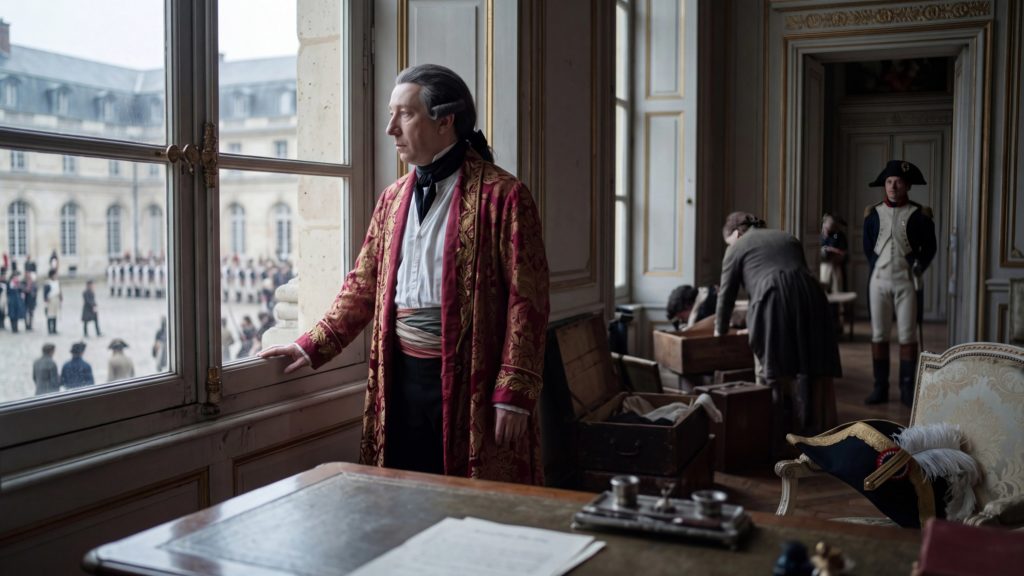
We shall make up the deficiency in numbers by our courage; a single discharge of grape fired in the air will suffice to strike terror in the ranks of our opponents, who will all of them fly if a few of them get their faces scratched.
Paul Barras
Barras's own account, from his memoirs, of planning the defense of the Convention on 13 Vendémiaire (October 1795) alongside the young artillery officer Bonaparte -- the encounter that launched Napoleon's career.
Timeline
How it unfolded
30 June 1755
Birth of Paul Barras
Paul Barras was born on 30 June 1755 at Fox-Amphoux in Provence.[2][6, p. 3] He came of an ancient and noble Provençal family and, as a young man, served against the British in India.[1][3]
December 1793
Barras and Bonaparte at Toulon
Barras and Fréron were the Convention's proconsuls at Marseilles and Toulon.[7] Aulard says Bonaparte served with his artillery under Barras at Toulon, and that the town was taken in December 1793 through Bonaparte's strategy.[8]
27 July 1794
Barras and the Fall of Robespierre
On 9 Thermidor (27 July 1794) Robespierre fell, a fall prepared by his adversaries, among them Tallien, Barras and Fouché.[9, p. 755] The Convention appealed to Barras, who took command of its troops and led them along the quays to the Place de Grève.[4]
5 October 1795
Barras Commands the Convention Against the Sections
When the Paris sections rose against the new Constitution, Barras was placed in command and appointed the young artillery officer Napoleon Bonaparte, who had distinguished himself at Toulon, as his aide de camp or chief of staff.[3] The day of the rising was 13 Vendémiaire (5 October 1795).[3]
November 1795
Barras Becomes a Director
Barras became one of the five Directors of the new Directory in November 1795 and installed himself at the Luxembourg on the fourth of that month.[3]
9 March 1796
Bonaparte Marries Josephine
Barras and Bonaparte between them overcame Josephine's indecision, and Barras and Tallien were the two chief witnesses at the civil ceremony held on 9 March 1796.[10, p. 240][5]
9 November 1799
Barras Pushed Out at Brumaire
Barras joined Bonaparte, Sieyès and others in the plot that produced the coup d'état of 18 Brumaire (9 November 1799), but was afterwards thrust aside and his political career was at an end.[1] On the day of the coup, according to McCabe, Barras was in the hands of Talleyrand, who soon extorted his resignation.[11]
Dig Deeper
Copy any prompt below into your favourite AI chat to keep exploring.
Explain how Paul Barras's decision to call on a young General Bonaparte in October 1795 put down a royalist uprising and launched Napoleon's career.
What does it say about power that the man who first promoted Napoleon ended up sidelined by the very coup he helped plan?
Convince me Paul Barras was history's most consequential talent scout, and he didn't even get a cut of what came next.
Further Reading
Where to read more
Paul-François-Jean-Nicolas, vicomte de Barras
Britannica's biography of Barras, the dominant figure of the Directory.
Why look at this: Explains how Barras's meeting with a young artillery officer at the siege of Toulon in 1793 - whom he then made a brigadier general - was the start of his patronage of Napoleon Bonaparte.
https://www.britannica.com/biography/Paul-Francois-Jean-Nicolas-vicomte-de-BarrasPaul-François de Barras (Napoléon & Empire)
An English-language biography detailing Barras's Revolutionary and Directory career and his relationship with Bonaparte.
Why look at this: Spells out the specific chain of events on 13 Vendémiaire 1795, when Barras chose Bonaparte as his deputy to crush a royalist uprising, then married him to his own former mistress Josephine before handing him command of the Army of Italy.
https://www.napoleon-empire.org/en/personalities/barras.phpMemoirs of Barras, Member of the Directorate (1895 English edition)
Barras's own four-volume memoir, in this 1895 English translation edited by Georges Duruy, freely readable on the Internet Archive.
Why look at this: Gives Barras's own first-hand account of exactly why he picked Bonaparte for 13 Vendémiaire, and how he later came to resent the protégé who eclipsed him.
https://archive.org/details/memoirsofbarrasm01barrRelated
Keep exploring








Can be seen in
Where this shows up

References
Sources
Sources
- BookA dictionary of Napoleon and his times by Hubert N.B Richardson ↑
- BookThe Memoris Of Joseph Fouche ( Vol - Ii ) ↑
- BookNAPOLEON AND JOSEPHINE THE RISE OF THE EMPIRE by WALTER GEER ↑
- BookThe French revolution : a historical sketch by Walter Geer ↑
- BookNapoleon and the end of the French revolution by Charles F. Warwick ↑
- BookThe principal speeches of the statesmen and orators of the French Revolution, 1789-1795 by Henry Morse Stephens. Page 3. ↑
- DocumentCatholic Encyclopedia (1913)/French Revolution ↑
- BookThe French Revolution: A Political History, 1789-1804. Volume III: The Revolutionary Government, 1793-1797 (cites Moulin's role in the… by François-Alphonse Aulard ↑
- BookThe French Revolution - Volume 3 by Hippolyte Taine. Page 755. ↑
- BookA Life of Napoleon Bonaparte, with a Sketch of Josephine, Empress of the French. by Ida M. Tarbell. Page 240. ↑
- BookTalleyrand, a biographical study by Joseph McCabe ↑