
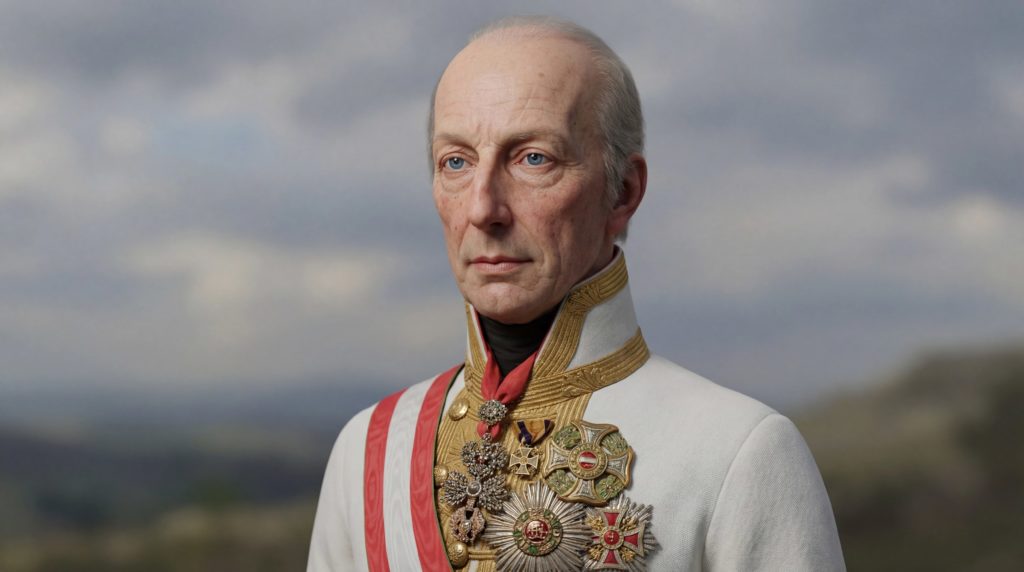
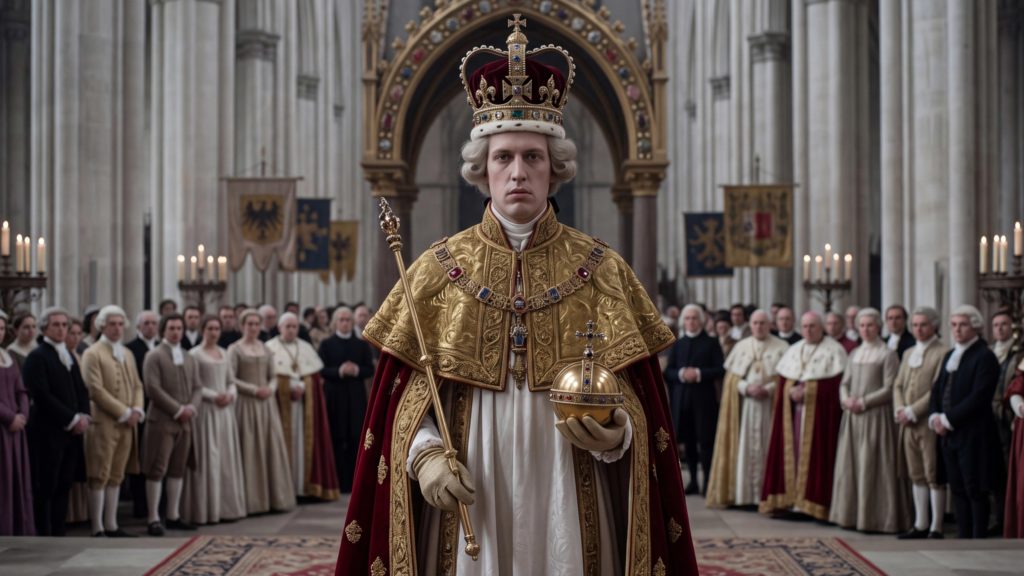
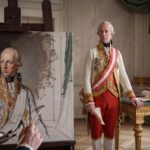
Francis in the white coat of an Austrian field marshal, hung with the orders of a monarch who was both the last Holy Roman Emperor and the first Emperor of Austria.
Last Holy Roman Emperor; First Emperor of Austria
The Habsburg emperor who chose to abdicate a thousand-year-old empire rather than let Napoleon inherit its crown — and then, four years later, became Napoleon's own father-in-law[1].
Bio
Who they were
Francis was born in Florence on 12 February 1768, the son of Leopold II[2]. His father was then ruling Tuscany and would later himself become Holy Roman Emperor, so Francis grew up inside the wider Habsburg family that governed both Austria and northern Italy[2]. Detailed record of his own childhood and schooling did not turn up anywhere in this library, so nothing further about his upbringing can be stated with confidence here. What is clear is that by 1792 he was ready to take on one of Europe's oldest and most complicated thrones.
Francis succeeded his father as Holy Roman Emperor in 1792[2], inheriting a title stretching back to Charlemagne just as revolutionary France was turning into a military threat across the Rhine. His reign quickly became defined by war: "his reign was a series of wars against Napoleon, in which, with the exception of the last, he was beaten"[2]. Rather than risk Napoleon eventually claiming the ancient imperial title for himself, Francis pre-emptively created a new one: in 1804 he proclaimed himself hereditary Emperor of Austria, becoming Francis I of Austria while still also Holy Roman Emperor[3, p. 273].
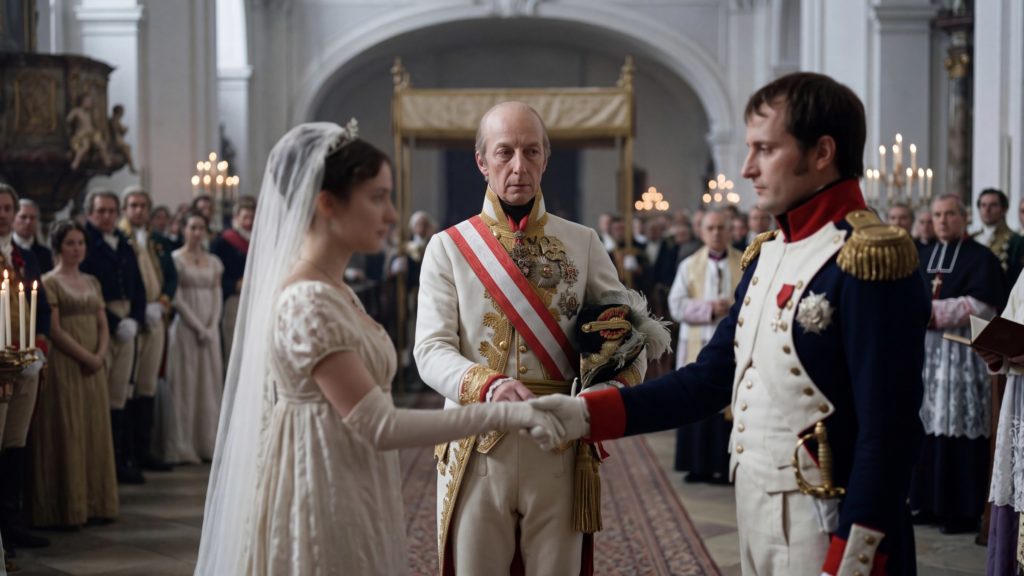
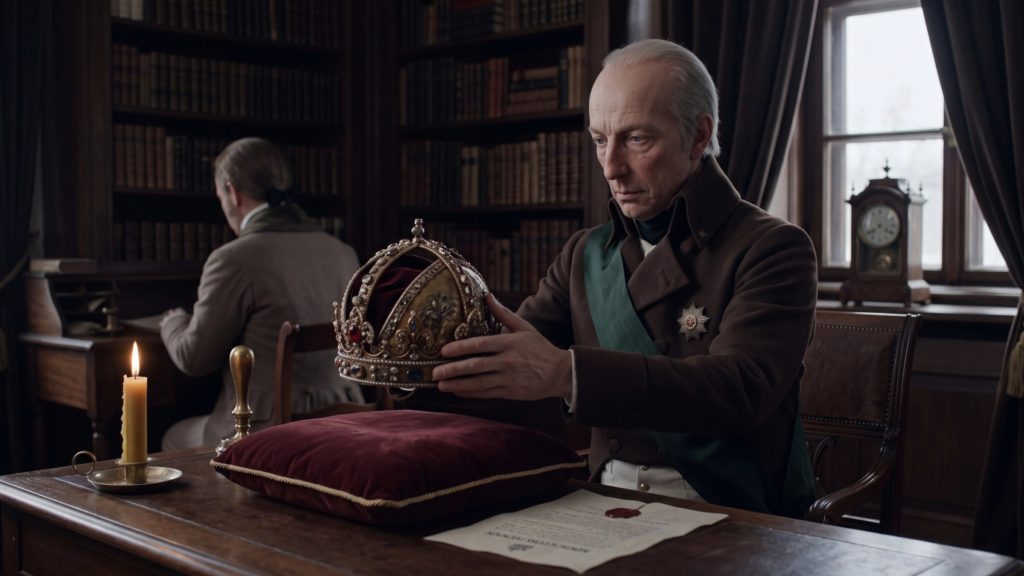
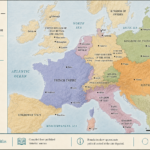
In 1806, after another defeat, Francis abdicated the Holy Roman crown outright, declaring the ancient office "as lapsed" and releasing every prince and official from their oaths to it[4]. The empire that had lasted roughly a thousand years simply ceased to exist. Four years later, in a striking twist, Napoleon married Francis's own eldest daughter, Marie Louise, on 1 April 1810[1][5] — making the man who had beaten him repeatedly in battle into his son-in-law. After Napoleon's fall, Francis took his place among the Allied monarchs reordering Europe at the Congress of Vienna[6, p. 1].

Francis died in Vienna on 2 March 1835[2]. Contemporaries remembered him as "narrow-minded" yet genuinely "a popular ruler" among his own subjects[2]. He was succeeded by his son Ferdinand, though real direction of Austrian policy had already shifted toward his long-serving chancellor, Klemens von Metternich, who continued running foreign affairs in the same cautious, conservative spirit Francis favoured[7].
Francis's decision to end the Holy Roman Empire in 1806 closed a chapter of European history running back roughly a thousand years, and the Austrian imperial title he created that day survived until 1918[3, p. 273]. His alliance with Metternich shaped the conservative "Concert of Europe" after 1815: "Hold on to what is old," he reportedly told an academic audience, "for what is old is respectable"[7]. That instinct held the multi-ethnic Habsburg Empire together during his lifetime but also stored up the nationalist and liberal pressures that would eventually break it apart.
Two years before Napoleon defeated him for the last time, Francis found himself giving his own daughter, Marie Louise, in marriage to his old enemy[1][5]. The emperor who had dissolved an ancient empire rather than share its crown with Napoleon became, quite literally, part of his family — a strange, personal footnote to a rivalry that had cost Austria repeated battlefield defeats.
Legacy & Reputation
What’s the verdict?
Historians have generally judged Francis a cautious, unimaginative ruler rather than a visionary one — content to let Metternich set the tone of Austrian and European politics after 1815[7]. Even a sympathetic near-contemporary account called him “narrow-minded” while still noting he was popular with ordinary Austrians[2]. Opinion remains divided between crediting him with stability after decades of war, and blaming him for entrenching a reactionary system that delayed Central Europe’s political modernisation.
Myth-buster
Think you know this one?
Myth: Napoleon simply stripped Francis of the title of Holy Roman Emperor. Correction: Francis gave it up himself in 1806, formally declaring the office “lapsed” before Napoleon could claim it, and immediately created a separate Austrian imperial title for himself instead[4][3, p. 273].
Quick Facts
The essentials
Quick Facts
Roger has found a numbering problem…
Francis II was the last Holy Roman Emperor, then simply proclaimed himself "Francis I, Hereditary Emperor of Austria"[7] two years before the older title vanished for good. One man, two numbers, two crowns — Roger insists this counts as the tidiest identity crisis in European history.
Keith checked the succession…
Francis inherited the Austrian throne in 1792, weeks before revolutionary France declared war, after his father Leopold II died suddenly. One unsparing historian judged him "great in nothing but his absolutistic obtuseness and his crusade zeal"[5] — a verdict Keith finds harsh, though not entirely groundless.
One for the Ageonauts…
In 1810 Francis's daughter Marie Louise married Napoleon, technically making the French Emperor his son-in-law[8]. It was an odd family reunion: four years earlier Napoleon had forced Francis to surrender the Holy Roman crown his dynasty had held for centuries.
Keith has been reading the casualty reports…
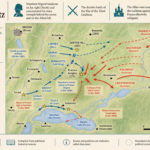
At Austerlitz in December 1805, Napoleon inflicted one of the most complete defeats of the era on the combined Austrian and Russian armies. Francis fled the disaster with all speed to Galicia[9], leaving the so-called Battle of the Three Emperors an emperor short on the winning side.
Roger would like a moment of silence…
In August 1806, under pressure from Napoleon's new Confederation of the Rhine, Francis formally laid down the crown of the Holy Roman Empire[4], ending an institution that had, in some form, existed for roughly a thousand years.
This sounds invented, but…
According to Napoleon's own memoirs, Francis "hesitated about taking the first step" before Austria finally declared war on France's allies in 1809, yielding only after heavy pressure from Britain and Russia[10]. Even the enemy's own account remembers him as reluctant, not reckless.
Roger has done the arithmetic…
Francis married four times — Elisabeth of Württemberg, Maria Theresa of the Two Sicilies, Maria Ludovika of Austria-Este, and finally Caroline Augusta of Bavaria[11]. Only the second marriage produced the bulk of his children, including the future Empress of the French, Marie Louise.
Keith has spotted the informers…
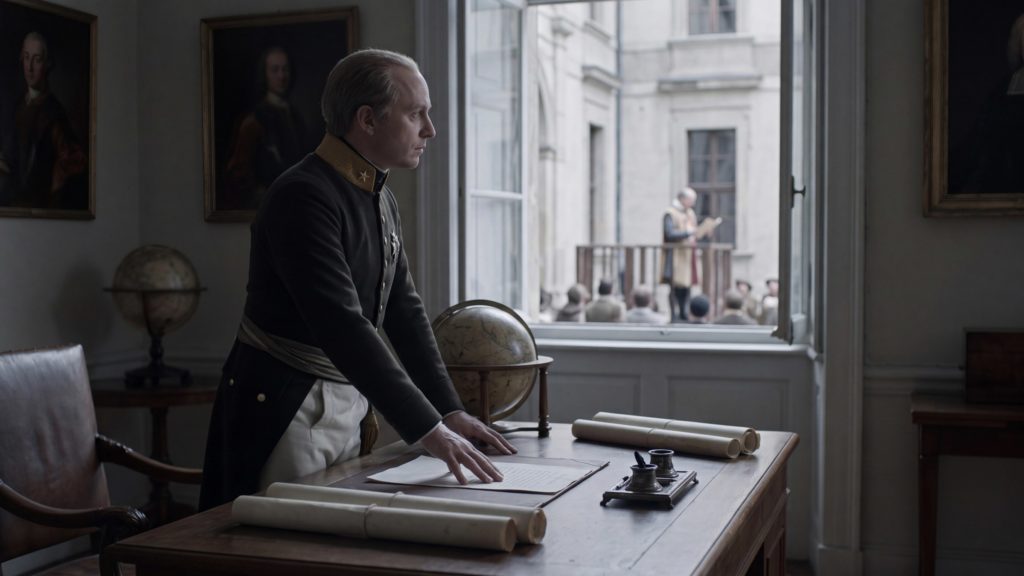
After 1815, Francis, guided by his chancellor Metternich, built a state run on censorship, police spies and a network of informers — even his own brothers had their movements watched[12]. Historians call it the Metternich System; Keith calls it a very thorough filing cabinet.
History gets strange here…
Francis was Marie Antoinette's nephew — his father, Leopold II, was her brother[13]. That makes him family to the French queen his empire went to war against, and later, father-in-law to the very man who ended the empire she never lived to see fall.
Meanwhile, in history…
Francis hosted the Congress of Vienna in 1814 and 1815, entertaining a tsar, a king of Prussia, several more kings, and dozens of minor German royalty for the better part of a year[14]. Contemporaries joked that the Congress danced a great deal more than it actually negotiated.
We ... declare by these presents that We regard the bond, which has up to now united Us to the body politic of the German Empire, as severed ... and that We are thereby released from all duties undertaken with regard to the German Empire and the Imperial Crown.
Francis II (Francis I of Austria)
From his formal proclamation abdicating the Holy Roman imperial crown, issued after the Peace of Pressburg made his position untenable[4].
Timeline
How it unfolded
12 February 1768
Birth of Francis II
Francis, who later became the first Emperor of Austria, was born at Florence on 12 February 1768, the son of Leopold II.[2]
1 March 1792
Succession of Francis II
Emperor Leopold II died suddenly and his son Francis succeeded him as King of Hungary, later being elected Emperor of the Romans.[15]
August 1804
Francis Proclaims the Austrian Empire
Four months before Napoleon's coronation as Emperor of the French, Francis II proclaimed himself Francis I, Hereditary Emperor of Austria.[3, p. 273]
2 December 1805
Defeat at Austerlitz
Napoleon defeated Emperor Francis and Tsar Alexander at Austerlitz, and the Treaty of Pressburg that followed in December 1805 inflicted deep humiliation upon the first Emperor of Austria.[16][7]
6 August 1806
End of the Holy Roman Empire
Francis II resigned the imperial dignity by a declaration dated 6 August 1806, retiring to the government of his hereditary dominions as Emperor of Austria and ending the thousand-year-old Holy Roman Empire.[17, p. 119][7]
1 April 1810
Marriage of Marie Louise to Napoleon
Napoleon, having divorced Josephine, married Marie Louise, Archduchess of Austria and daughter of Emperor Francis.[5][18]
2 March 1835
Death of Francis I of Austria
Francis died at Vienna after a reign that was a series of wars against Napoleon, and is described as a narrow-minded but popular ruler.[2]
Dig Deeper
Copy any prompt below into your favourite AI chat to keep exploring.
Explain why Emperor Francis II chose to dissolve the thousand-year-old Holy Roman Empire in 1806 rather than risk Napoleon claiming its crown.
What does it mean that an emperor chose to end his own ancient title rather than let a rival inherit it?
Convince me dissolving an empire that had lasted a thousand years is the ultimate 'if I can't have it, no one can' move.
Further Reading
Where to read more
Francis II, Holy Roman Emperor
Britannica's reference biography of Francis II, covering his 1792 accession, the wars against Revolutionary and Napoleonic France, and his dual role as the last Holy Roman Emperor and first Emperor of Austria.
Why look at this: Explains why Francis dissolved the thousand-year-old Holy Roman Empire in 1806 — he renounced the imperial crown himself rather than let Napoleon's new title of "Emperor of the French" appear to outrank it.
https://www.britannica.com/biography/Francis-II-Holy-Roman-emperorFrancis II (I) — Fondation Napoléon biography
A fuller biographical essay tracing Francis's four wars against France, his territorial losses at Campo Formio, Marengo, Ulm and Austerlitz, and his later alliance with Metternich at the Congress of Vienna.
Why look at this: Covers the personally awkward peace he struck in 1810, marrying his daughter Marie-Louise to Napoleon — the man who had defeated Austria four times over — to buy Austria a fragile security.
https://www.napoleon.org/en/history-of-the-two-empires/biographies/francis-ii-i/Declaration of His Majesty the Emperor Francis II, Whereby He Abdicates the German Imperial Throne and the Imperial Government (German History in Documents and Images)
The translated primary text of Francis's own 6 August 1806 declaration abdicating the Holy Roman imperial throne and releasing the empire's estates and officials from their oaths to him.
Why look at this: This is the actual abdication document that ended the Holy Roman Empire, issued days after Napoleon's Confederation of the Rhine had already peeled away Francis's German vassal states — his own words, not a later summary of them.
https://germanhistorydocs.org/en/the-holy-roman-empire-1648-1815/declaration-of-his-majesty-the-emperor-francis-ii-whereby-he-abdicates-the-german-imperial-throne-and-the-imperial-government.pdfRelated
Keep exploring
Places

Can be seen in
Where this shows up

References
Sources
Sources
- BookThe Napoleon dynasty: or, The history of the Bonaparte family. An entirely new work by C. Edwards Lester and Edwin Williams ↑
- DocumentThe New Student's Reference Work/Francis II ↑
- BookA short history of Europe, from the fall of the Eastern empire to the dissolution of the Holy… by Charles Sanford Terry. Page 273. ↑
- DocumentAbdication of Francis II, Holy Roman Emperor ↑
- BookThe French revolution from 1789 to 1815 by M. Mignet and James Westfall Thompson ↑
- WebsiteFinal Act of the Congress of Vienna / General Treaty (1815). Page 1. ↑
- BookA short history of Europe from the dissolution of the Holy Roman empire to the outbreak of the… by Charles Sanford Terry ↑
- BookBlücher and the uprising of Prussia against Napoleon, 1806-1815 by Ernest F. Henderson ↑
- BookBattles of the nineteenth century, vol. 1 of 7 by Archibald Forbes G. A. Henty ↑
- BookMemoirs Of Napoleon Bonaparte - Iii And Iv by Louis Antoine Fauvelet De Bourrienne ↑
- Websitehabsburger.net: Emperor franz offspring ↑
- Websitehabsburger.net: Franz ii i and metternich system ↑
- Websitebritannica.com: Francis II Holy Roman emperor ↑
- Websitehistorytoday.com: When congress wasn’t dancing ↑
- BookHistory of the wars occasioned by the French revolution, from the commencement of hostilities in 1792, to the… by C. H Gifford ↑
- DocumentCatholic Encyclopedia (1913)/Napoleon I (Bonaparte) ↑
- BookThe Holy Roman Empire by James Bryce. Page 119. ↑
- BookMemoirs Of Napoleon Bonaparte - I And Ii by Louis Antoine Fauvelet De Bourrienne ↑