
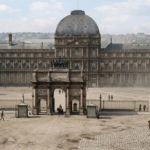
In a sky-blue coat, Robespierre leads the Festival of the Supreme Being on the Champ de Mars, 8 June 1794, the civic religion he helped design.
Revolutionary Leader, Committee of Public Safety
A provincial lawyer nicknamed "the Incorruptible"[1] became the most feared man on the Committee of Public Safety[2, p. 264] — then was executed by the same revolutionary government he had helped run.
Bio
Who they were
Maximilien Robespierre was born in Arras in May 1758[3]. He won a scholarship that let him study at the prestigious Collège Louis-le-Grand in Paris[1][4, p. 20], a route into education far beyond what an ordinary provincial family could usually afford. That schooling set him on a legal career, and by the time the French Revolution began he was established as a lawyer in his home region.
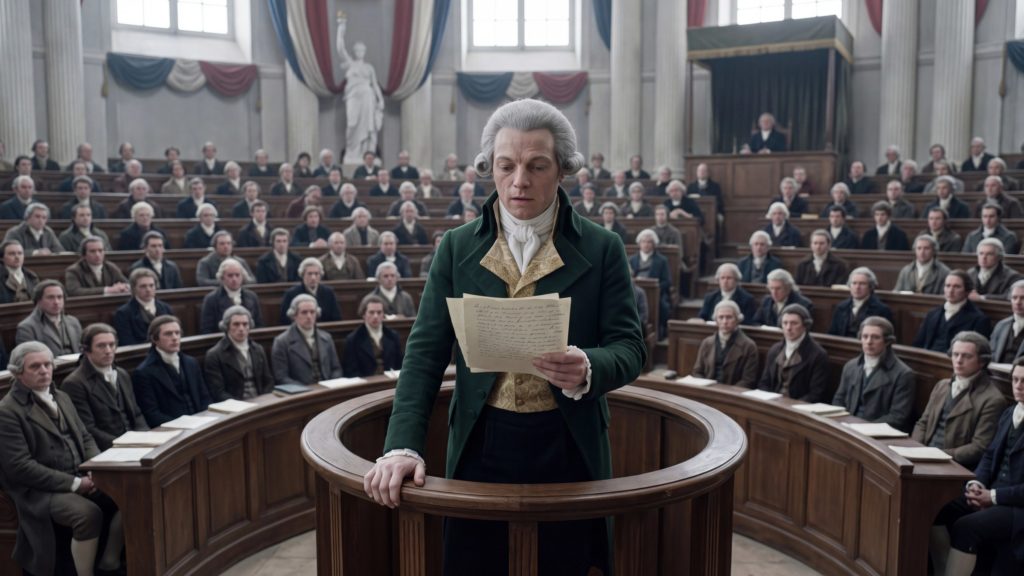
Robespierre entered national politics as the French monarchy's finances and authority collapsed, returning to the Estates-General as the fifth deputy for the Third Estate[5]. He became a leading voice at the Jacobin Club[6], building a reputation for personal austerity and strict principle that earned him the nickname "the Incorruptible"[1]. As the Revolution radicalized, his influence grew accordingly, and in 1793 he became one of the founding members of the powerful Committee of Public Safety[2, p. 264].
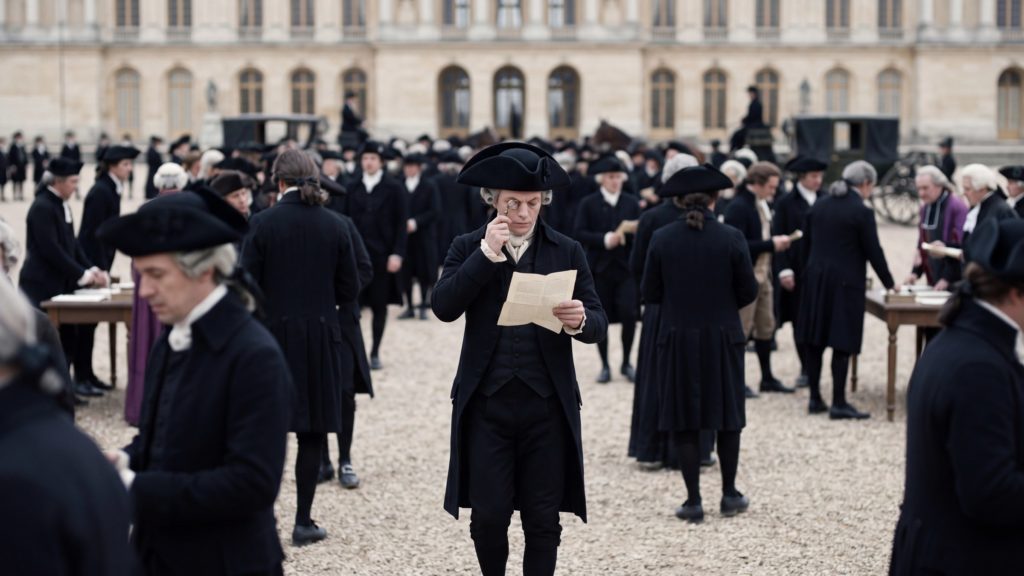
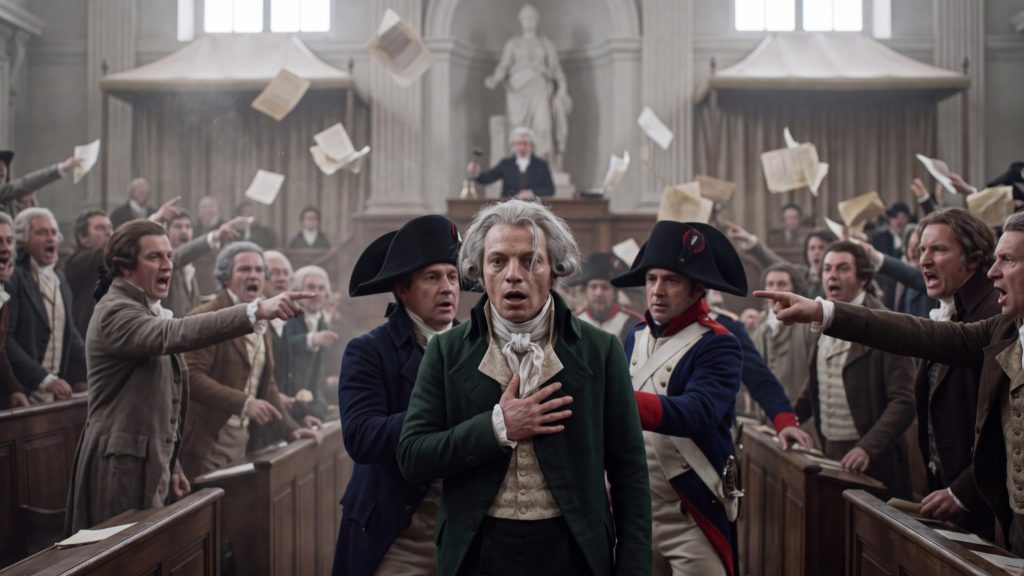
From the Committee of Public Safety, Robespierre helped direct the period later known as the Reign of Terror, in which thousands were sent to the guillotine[7, p. 19]. He justified this in stark terms before the National Convention, arguing that "terror is nothing more nor less than swift, severe and indomitable justice" and that virtue without terror was powerless[6]. His power reached its height in mid-1794, but turned allies against him; on 9 Thermidor (27 July 1794) he was denounced and arrested in the Convention itself[7, p. 19], shot in the jaw during the chaos of his arrest[8].
Robespierre was guillotined on 28 July 1794[9, p. 155], without trial, the day after his arrest. His fall ended the Terror almost immediately, as the Convention moved swiftly to dismantle the machinery of the Committee of Public Safety that he had helped build. Many of his closest allies were executed alongside or soon after him.
Robespierre's name became shorthand for revolutionary extremism and for the danger of a government that claims to rule in the name of pure virtue. The Terror he helped direct is still cited in discussions of how revolutions can turn on their own leaders, and the record of thousands guillotined under the Committee of Public Safety[7, p. 19] remains central to how the French Revolution as a whole is remembered and judged.
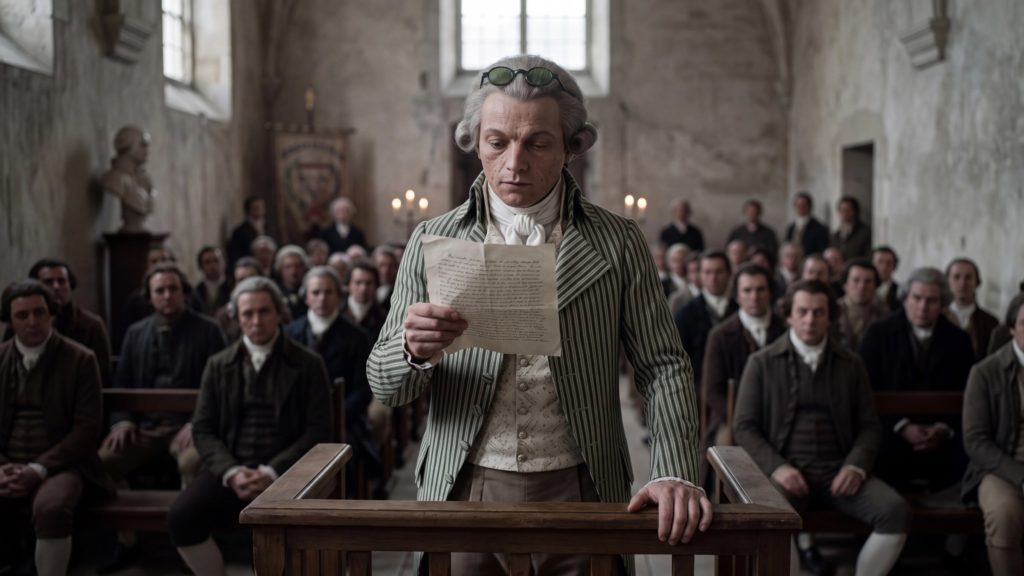
The man responsible for one of history's bloodiest political purges was, by contemporary account, personally austere and scrupulously honest with money and favors — the source of his nickname "the Incorruptible"[1], a label that sat uneasily beside the machinery of mass execution he came to direct.
Legacy & Reputation
What’s the verdict?
Robespierre’s reputation has swung sharply over time: nineteenth-century writers such as those behind Robespierre’s Rise and related biographical studies tend to stress his personal incorruptibility[1], while accounts of the Terror itself[7, p. 19] emphasize the scale of the killing carried out under his and the Committee’s direction. Whether he is judged an idealist undone by circumstance or an architect of state violence still divides the sources in this library.
Myth-buster
Think you know this one?
Myth: Robespierre is often pictured as a lone dictator who single-handedly ran the Terror. Correction: he was one of several members of the Committee of Public Safety, a collective body of around a dozen men that directed the Terror together[2, p. 264] — his power was real but institutional and shared, not solitary.
Quick Facts
The essentials
Quick Facts
Down the rabbit hole we go…
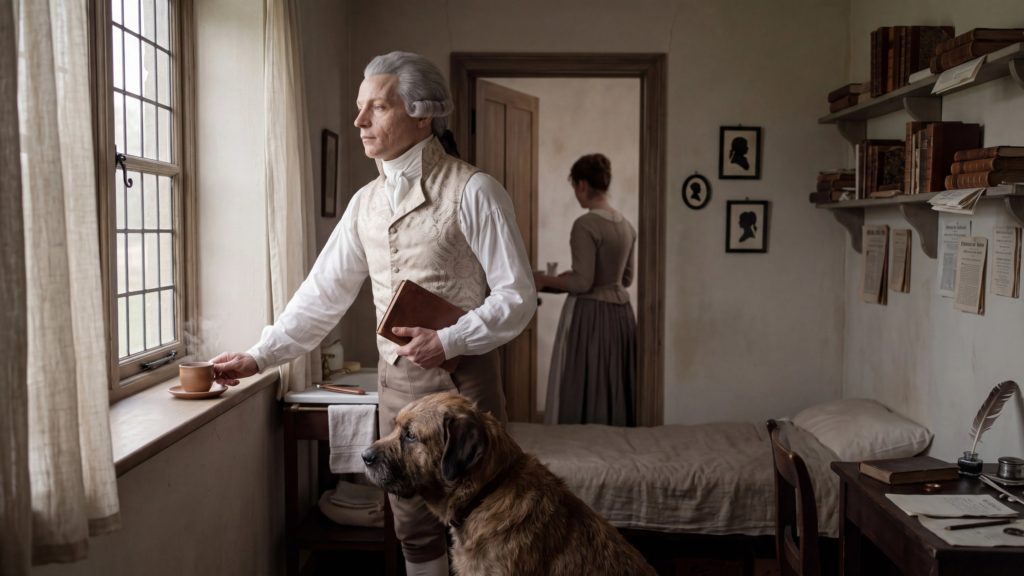
The image of Robespierre as a powdered "Dandy of the Terror" — silk stockings, gold shoe-buckles, a maid holding his cravat — comes from an invented, later memoir. His real mornings, by a more reliable account, ran to coffee, a hairdresser and the newspaper: far less theatrical[4, p. 134].
Keith has spotted the problem…
Robespierre really did have a dog, Brount, who went everywhere with him. The story that he and his fiancée strolled the Champs-Élysées with Brount, admiring a sunset on his last free evening, is flagged by this source as apocryphal — his actual evening was spent arguing at the Jacobin Club[3].
Roger would like you to know…
As the tumbrils rolled to the guillotine on 10 Thermidor, Camille Desmoulins — once Robespierre's close friend — tore open his own shirt in the cart and shouted to the crowd: "Unhappy people! You are deceived!... I am Desmoulins! It is I who gave you the first cockade!"[7, p. 19].
A small fact with a very large consequence…
Robespierre was born in Arras in 1759 and orphaned young. Offered the prestigious post of public prosecutor for the Seine criminal tribunal, he turned it down to lead the Jacobin Club instead — a decision that arguably reshaped the whole direction of the Revolution[10].
Keith has inspected the tapestry…
The gendarme who shot and wounded Robespierre during his arrest was named Merdat. He was promoted for it — and went on to serve as one of Napoleon's own colonels, dying years later at the Berezina, in a wholly different emperor's army[6].
One for the Ageonauts…
Robespierre's Cult of the Supreme Being, complete with festival and civic hymns, tried to replace both Catholicism and atheism with a state-sponsored deism. It made him plenty of enemies fast — this account notes the plotting against him hardened in the weeks right after the festival[11, p. 168].
Roger has entered the historical rabbit hole…
Even the men plotting his downfall in the summer of 1794 still called him, half-mockingly, "the Incorruptible" — the nickname had stuck that hard. Robespierre's reputation for personal honesty apparently outlasted his enemies' patience even when his political power did not[11, p. 9].
History gets strange here…
On 9 Thermidor, Robespierre's own allies turned against him inside the Committee of Public Safety itself. Within a single day he went from the most powerful man in France to a prisoner awaiting the guillotine he had sent so many others to[11, p. 9].
Keith remains unconvinced…
Between April and June 1794 alone, the guillotine "worked with horrible activity" in Paris, according to this account — a pace so intense that even contemporaries struggled to keep count. Keith remains unconvinced any single man, Robespierre included, was still fully steering it by that point[7, p. 19].
Roger says, "Hear me out…"
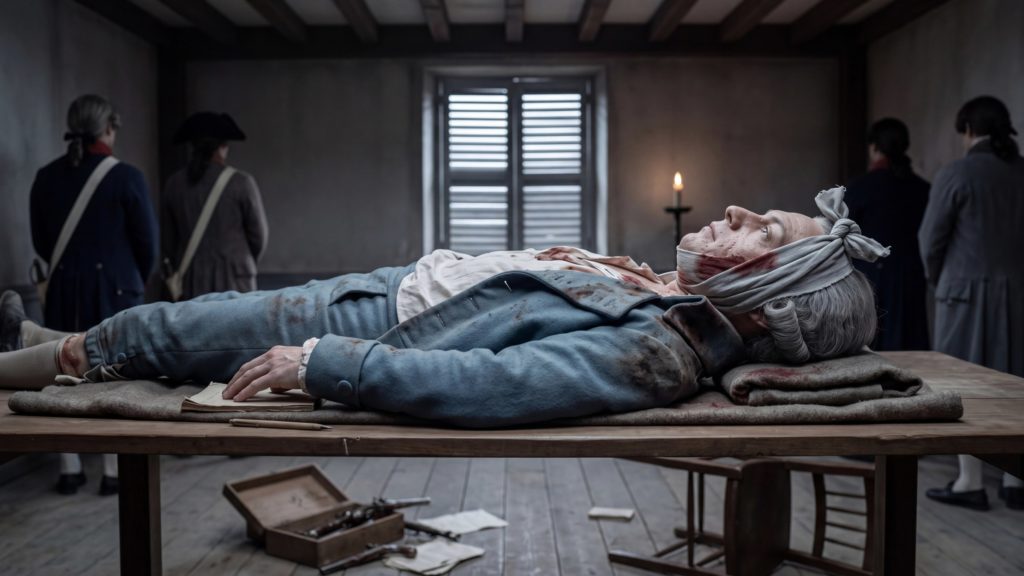
The same chaotic night Robespierre was shot, his ally Le Bas turned a pistol on himself rather than face trial, and Robespierre's own younger brother Augustin leapt from a Hôtel de Ville window and was fatally injured. It was, by any measure, a very bad night for one family[6].
Terror is nothing more nor less than swift, severe and indomitable justice.
Maximilien Robespierre
From his speech to the National Convention on the principles of political morality (5 February 1794), defending the use of state terror as, in his view, an extension of revolutionary virtue[6].
Timeline
How it unfolded
6 May 1758
Birth of Maximilien Robespierre
Maximilien Robespierre was born on 6 May 1758 into a family of lawyers settled in Arras, his father being an advocate at the Council of Artois.[4] Jan ten Brink likewise concludes that he was born on 6 May 1758.[7, p. 19]
26 April 1789
Robespierre Elected to the Estates-General
Robespierre was elected on 26 April 1789 as one of the sixteen deputies of Artois to the Estates-General, according to Lenotre.[1] He was elected fifth deputy of the Third Estate from Artois, aged thirty, comparatively poor and without patronage.[12]
27 July 1793
Robespierre Joins the Committee of Public Safety
On 27 July 1793 Robespierre was elected a member of the second, or Great, Committee of Public Safety in the place of Gasparin, who had retired from ill-health, and was nominated by the other members of the Committee.[13, p. 3] The Convention's vote came although he had not sought the post, according to the New World Encyclopedia.[12]
8 June 1794
Festival of the Supreme Being
Robespierre had proposed marking moral ideas with regular ceremonies, and it was resolved that a festival be dedicated to the Supreme Being on 8 June 1794.[7, p. 19] At the festival he calmly ascended the mountain while rows of singers performed a hymn to the Supreme Being, even as enemies in the Convention accused him of aiming at the dictatorship.[7, p. 19]
10 June 1794
Law of 22 Prairial
Brink says Robespierre conceived the plan of proposing to the Convention a reorganisation of the Revolutionary Tribunal, known as the law of 22 Prairial, dated 10 June 1794.[7, p. 19][13, p. 3] Death sentences continually multiplied under the new law, and the last weeks of July 1794 became known as la Grande Terreur.[7, p. 19]
27 July 1794
Arrest of Robespierre on 9 Thermidor
On 27 July 1794 (9 Thermidor) Robespierre and his allies were placed under arrest by the National Convention, ending the hold on government of the Great Committee of Public Safety, which Stephens says remained in office until his overthrow.[14][15]
28 July 1794
Execution of Robespierre
Robespierre was guillotined without a trial on the evening of 28 July 1794 (10 Thermidor) in the Place de la Revolution, the day after his arrest.[14] A contemporary-era English history records that he and the others outlawed with him were executed that evening in the Place de la Revolution.[16]
Dig Deeper
Copy any prompt below into your favourite AI chat to keep exploring.
Explain what the Terror under Robespierre was, and how the France it left behind shaped the country Napoleon eventually took over.
What does Robespierre's fall teach us about how revolutions can end up devouring the very people who started them?
Tell me 3 other revolutionary leaders whose own movement eventually turned on them, the way it did on Robespierre.
Further Reading
Where to read more
Maximilien Robespierre | Biography, French Revolution, Reign of Terror, Facts, & Death
Britannica's concise account of Robespierre's rise through the Jacobin Club to the Committee of Public Safety, and his overthrow and execution in the Thermidorian Reaction.
Why look at this: Covers his domination of the Committee of Public Safety during the Terror in late 1793, and his own execution without trial on 28 July 1794 - the same fate he had sent thousands of others to.
https://www.britannica.com/biography/Maximilien-RobespierreMaximilien Robespierre - World History Encyclopedia
A full narrative biography from the nonprofit World History Encyclopedia, tracing his path from a provincial Arras lawyer influenced by Rousseau to the Revolution's most divisive leader.
Why look at this: Highlights his April 1792 warning against war with Austria that 'no one likes armed missionaries' - a caution about revolutionary overreach he himself would abandon once he came to lead the Committee of Public Safety.
https://www.worldhistory.org/Maximilien_Robespierre/Rapport sur les principes du gouvernement révolutionnaire (1793)
The original printed pamphlet of Robespierre's own report to the National Convention, delivered in the name of the Committee of Public Safety, defining and defending 'revolutionary government' (in French; public-domain scan of the period pamphlet).
Why look at this: This is the speech in which Robespierre laid out the ideological justification for the Terror he presided over - the argument that revolutionary government must be the 'despotism of liberty against tyranny.'
https://archive.org/details/rapportsurlespri00robe_1Related
Keep exploring



Places


Can be seen in
Where this shows up

References
Sources
Sources
- BookRobespierre's rise and fall by G. Lenotre ↑
- BookThe life of Maximilien Robespierre; by George Henry Lewes. Page 264. ↑
- BookCritical Miscellanies (Vol. 1 of 3), Essay 1: Robespierre by John Morley ↑
- BookRobespierre and the women he loved by Hector Fleischmann and A. S. Rappoport. Pages 20, 134. ↑
- BookRobespierre and the French revolution by Charles Franklin Warwick ↑
- BookVoices Of Revolt: Maximilien Robespierre by maximillian robespierre ↑
- BookRobespierre and the red terror; by Jan ten Brink and J. Hedeman. Page 19. ↑
- BookThe French revolution : a historical sketch by Walter Geer ↑
- BookReligion and the reign of terror; or, The church during the French revolution by Edmond de Pressensé and John Power Lacroix. Page 155. ↑
- BookThe French revolution from 1789 to 1815 by M. Mignet and James Westfall Thompson ↑
- BookThe fall of Robespierre, and other essays by Albert Mathiez. Pages 9, 168. ↑
- Websitenewworldencyclopedia.org: Maximilien Robespierre ↑
- BookThe principal speeches of the statesmen and orators of the French Revolution, 1789-1795 by Henry Morse Stephens. Page 3. ↑
- Websitehistory.com: Robespierre overthrown in france ↑
- BookA history of the French revolution by H. Morse Stephens ↑
- BookHistory of the wars occasioned by the French revolution, from the commencement of hostilities in 1792, to the… by C. H Gifford ↑