
Louis-Jerome Gohier, a lawyer and former Minister of Justice, elected to the Directory in June 1799 to help steady a failing regime.
President of the Directory
The only Director who refused to go quietly when Napoleon Bonaparte seized power in 1799 — and was arrested for it[1, p. 408].
Bio
Who they were
Louis-Jérôme Gohier was born at Semblançay in 1746[2]. He trained and worked as a lawyer at Rennes, in Brittany, where he took an active part in the liberal movement that signalled the approaching Revolution[2]. In 1791 he was sent to the Legislative Assembly as a deputy for the department of Ille-et-Vilaine[2].
In October 1792 Gohier was appointed to a senior post in the Ministry of Justice[2]; a separate source describes him as having held the position of Minister of Justice itself under the Convention[1, p. 408] — sources are not fully consistent on his exact title at this stage. In September 1795, alongside fellow "advanced Republican" Jean-François-Auguste Moulin, he was brought onto the five-man Directory, filling a seat vacated by a director forced to resign[1, p. 408].

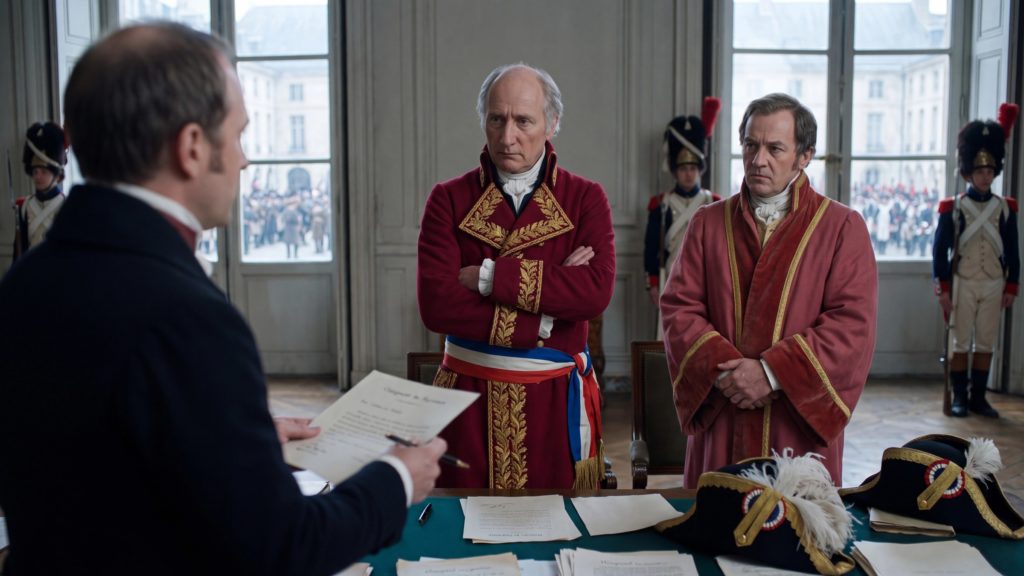
Gohier reached the peak of his power as President of the Directory in 1799[3]. When Napoleon Bonaparte returned from Egypt, he reportedly tried, and failed, to win Gohier over to his side[2]. During the coup of 18–19 Brumaire (9–10 November 1799), while fellow Directors Sieyès, Ducos and Barras stepped aside or resigned as part of Bonaparte's plan, Gohier and Moulin refused to surrender their positions and were instead put under arrest[1, p. 408].
Gohier died in Paris on 29 May 1830[2].
Gohier's chief historical distinction is that he did not go along with Bonaparte's coup: unlike Sieyès, Ducos and Barras, he was one of only two Directors arrested for actively resisting Brumaire[1, p. 408].
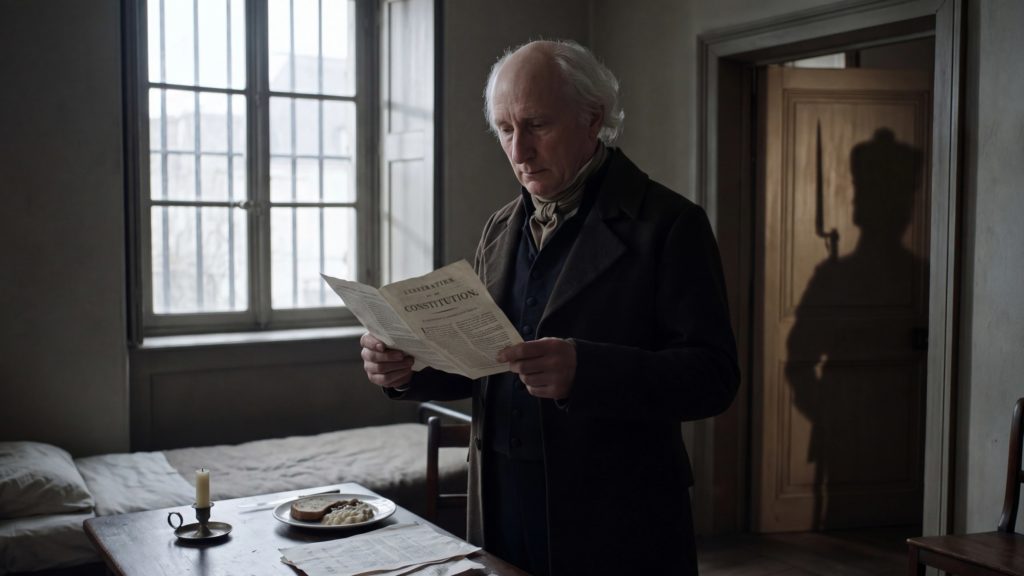
After returning from his Egyptian campaign, Bonaparte made a point of trying to win Gohier onto his side — and failed, a small but telling sign of the resistance Gohier would put up a few months later at Brumaire[2].
Legacy & Reputation
What’s the verdict?
Sources give conflicting detail on Gohier’s exact office in 1792 — one calls him “secretary-general” of the Ministry of Justice, another calls him Minister of Justice outright[2][1, p. 408].
Myth-buster
Think you know this one?
It might be assumed all five Directors quietly accepted Bonaparte’s coup of Brumaire; in fact Gohier, together with fellow Director Moulin, refused to resign and was placed under arrest for it[1, p. 408].
Quick Facts
The essentials

Quick Facts

Keith found the footnote…
Louis-Jérôme Gohier was born at Semblançay in 1746 and died in Paris in 1830. A lawyer at Rennes, he took an active part in the liberal movement that signalled Brittany's approach to Revolution[2].
Roger would like you to know…
Long before he became a Director, Gohier was a serious legal mind: elected to the Legislative Assembly in 1791, then appointed secretary-general of the Ministry of Justice in October 1792[2] — a post one historian calls "the responsible position of Minister of Justice"[1, p. 408].
Keith has spotted the problem…
Gohier was already a sitting Director when four of his five colleagues changed places in a single dramatic week in 1799 — the reshuffle that left the five-man Directory as Barras, Sieyès, Gohier, Ducos and Moulin[3].
This sounds invented, but…
As President of the Directory, Gohier genuinely believed Bonaparte simply ought to be handed a military command[3] — he had no idea he was about to be outmanoeuvred by the very general he thought he was doing a favour.
Roger has entered the historical rabbit hole…
To keep Gohier away on the morning of the coup, Bonaparte had Josephine write him a note: "Venez, mon cher Gohier, et votre femme, déjeuner avec moi demain à huit heures du matin" — come to breakfast, and bring your wife[3].
Down the rabbit hole we go…
Bonaparte even invited himself to dinner at Gohier's own official apartment on the day of the coup itself. Asked to justify the brazen trickery afterwards, he reportedly said, "In the case of a conspiracy, everything is permitted"[3].
Keith remains unconvinced…
Once he smelled trouble, Gohier called an emergency meeting of the Directory at the Luxembourg Palace. Only one colleague, Moulin, actually turned up[3] — the rest were already busy deciding whether to be co-conspirators or casualties.
One for the Ageonauts…
Gohier and Moulin tried to rally opposition to the coup but needed Barras for a majority. Barras, hoping for a late invitation from Bonaparte himself, stalled them — and the moment to resist quietly slipped away[3].
Roger has a theory…
Even Napoleon's own police minister, Fouché, later described Gohier and Moulin as men "attached to the established order of things"[4, p. 346] — decent, cautious institutionalists, not the plotting type, which is exactly why the coup caught them out.
File under: surprisingly true…
The trickery worked, but the loyalty didn't transfer: "on his return from Egypt Bonaparte sought in vain to attach Gohier to him"[2]. Gohier survived the coup — but he was never bought.
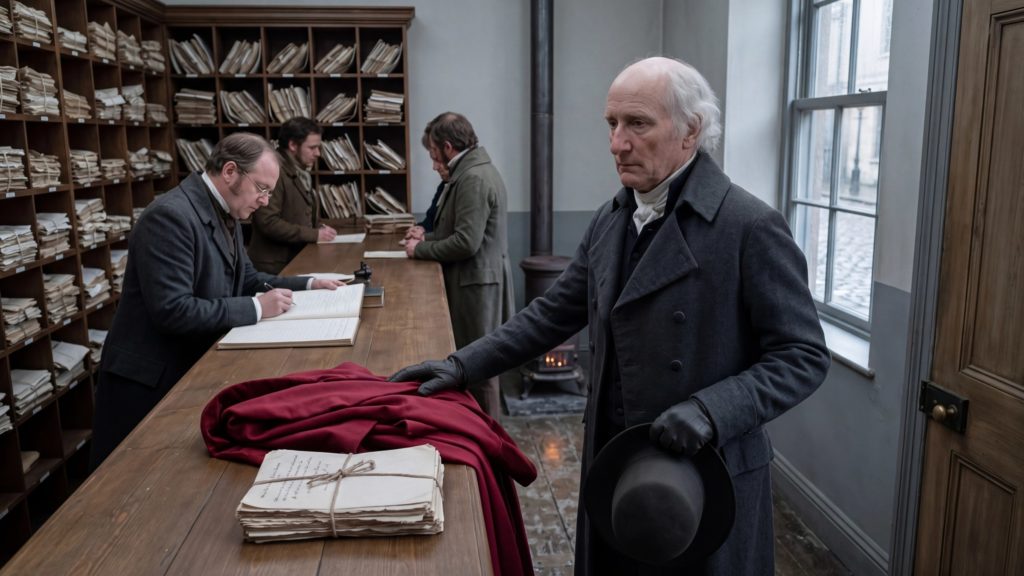
...to save the republic.
Louis-Jérôme Gohier
What Gohier said his purpose was when, as president of the Directory, he went to confront Bonaparte at the Tuileries on 18 Brumaire (November 1799) rather than resign as his fellow Directors did.
Timeline
How it unfolded
27 February 1746
Birth of Louis-Jerome Gohier
Louis-Jerome Gohier was born on 27 February 1746 at Semblancay.[5][6] He became a lawyer at Rennes and took an active part in the liberal movement in Brittany as the Revolution approached.[2]
20 March 1793
Appointment as Minister of Justice
Gohier replaced Garat as Minister of Justice on 20 March 1793 and held the post until 20 April 1794.[7] English Wikipedia says that in this post he oversaw the arrest of Girondists.[6]
18 June 1799
Gohier Joins the Directory
Gohier replaced Treilhard on the Directory on 18 June 1799.[8][7] Aulard records that a law had declared Treilhard's appointment unconstitutional, and the Elders then elected Gohier by 164 votes against 16 for Delacroix.[9]
October 1799
Bonaparte Courts the Director Gohier
When Bonaparte returned from Egypt in October 1799 he repeatedly tried to win the support of Gohier, then president of the Directory.[6] Fouche's biographical notes say he sought in vain to attach Gohier to him.[2]
9 November 1799
Gohier Guarded at the Luxembourg
On the 18th Brumaire (9 November 1799) the plot against the Directory culminated.[10] Bonaparte sent three hundred soldiers to the Luxembourg under Moreau to guard Gohier and Moulin.[3] Gohier and Moulin refused to resign.[11]
1802
Consul-General at Amsterdam
In 1802 Napoleon Bonaparte made Gohier consul-general at Amsterdam in the Batavian Republic.[6]
Dig Deeper
Copy any prompt below into your favourite AI chat to keep exploring.
Explain what happened to Louis-Jérôme Gohier when he refused to resign as President of the Directory during Napoleon's coup of Brumaire.
What does it say about power that refusing to resign got Gohier arrested, while resigning quietly got other Directors off scot-free?
Roleplay Gohier's reaction to Napoleon Bonaparte's attempt to talk him into resigning quietly.
Further Reading
Where to read more
Gohier, Louis Jérôme
A concise 1911 Encyclopædia Britannica dictionary entry covering Gohier's legal career, his time as Minister of Justice, and his brief presidency of the Directory in 1799.
Why look at this: A quick, single-paragraph overview of exactly who Gohier was and why he mattered, before the fuller Archontology treatment.
https://en.wikisource.org/wiki/1911_Encyclop%C3%A6dia_Britannica/Gohier,_Louis_J%C3%A9r%C3%B4meLouis-Jérôme Gohier (Archontology)
A detailed, footnoted reference biography giving Gohier's full career dates and sourced archival details.
Why look at this: Documents the exact vote count from his election as Director on 17 June 1799 and the precise pressure - 'an envoy of general Napoléon Bonaparte' - that finally forced his resignation signature on 10 November 1799.
https://www.archontology.org/nations/france/france_state1/gohier1.phpMémoires de Louis-Jérôme Gohier, président du Directoire au 18 brumaire (Vol. 1, 1824)
Gohier's own two-volume memoir, published in Paris by Bossange frères in 1824, freely readable on the Internet Archive.
Why look at this: His personal, first-hand justification of his refusal to resign during Bonaparte's coup, written in his own defense by the one Director who did not go quietly.
https://archive.org/details/mmoires01gohiuoftRelated
Keep exploring







Can be seen in
Where this shows up

References
Sources
Sources
- BookThe French revolution from the age of Louis 14 to the coming of Napoleon by Harold Felix Baker Wheeler. Page 408. ↑
- BookThe Memoris Of Joseph Fouche ( Vol - Ii ) ↑
- BookThe French revolution : a historical sketch by Walter Geer ↑
- BookMemoirs of Joseph Fouché : Duke of Otranto, minister of the General Police of France : with portraits by Joseph Fouché. Page 346. ↑
- Websitewww2.assemblee-nationale.fr: Fiche / 13460 ↑
- Websiteen.wikipedia.org: Louis Jérôme Gohier ↑
- Websitefr.wikipedia.org: Louis Jérôme Gohier ↑
- BookNapoleon's Letters to Josephine, 1796-1812 by Emperor of the French Napoleon I ↑
- BookThe French Revolution: A Political History, 1789-1804. Volume III: The Revolutionary Government, 1793-1797 (cites Moulin's role in the… by François-Alphonse Aulard ↑
- BookA Life of Napoleon Bonaparte, with a Sketch of Josephine, Empress of the French. by Ida M. Tarbell ↑
- BookThe French revolution : [crowned by the French academy. Gobert prize] by Louis Madelin ↑