
Story › Napoleon: Larger Than Legend › Part 1 of 6
| Part 1 of 6 |
Was Napoleon actually short?
The tape measure, the cartoonist and the French inch.
About This Part
What’s covered
Napoleon Bonaparte was born at Ajaccio in Corsica on 15 August 1769, in the very year the island passed to France[1]. By 1804 he had been proclaimed hereditary emperor[2], yet the picture that travelled furthest was not the emperor but a stamping little caricature. When he died on Saint Helena on 5 May 1821[2] the measures taken of his body gave five feet two inches, in French measure[3, p. 398], a figure that sounds tiny only if you read it with an English ruler. Walter Scott, writing soon afterwards, gave five feet six inches English[4, p. 220]. This is chapter 1 of 6 of Napoleon: Larger Than Legend, and it asks one question: was Napoleon actually short? It weighs the French inch against the English one, follows the British printmakers who made smallness their favourite joke, and traces the Corsican outsider's climb from Brienne to Austerlitz, to see how much of the myth is measurement and how much is propaganda.
Watch
See the part on YouTube
The Story
How the Story Unfolds
Five Pieds, Two Pouces
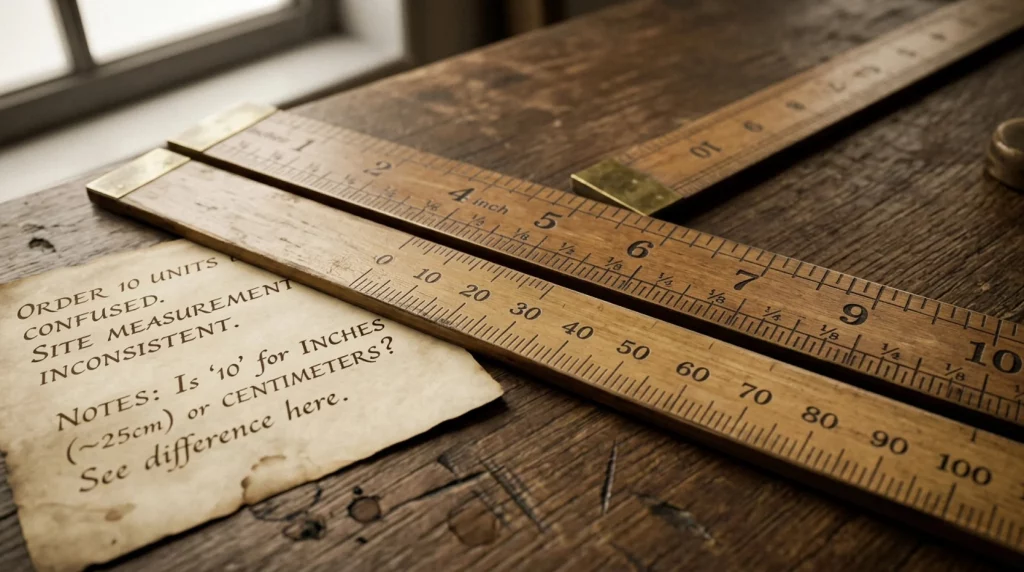
The famous number is real, but it was written in a different system. The measures taken of Napoleon's body gave five feet two inches in French measure, according to the historian Thiers[3, p. 398]. A Fondation Napoleon article quotes the full reading from Marchand's memoirs, five pieds, two pouces and four lignes, and works it out at 1.686 metres, counting the French foot at 32.47 centimetres[5]. The same article sets an English upholsterer's measurement, taken with General Montholon, at five feet seven in English measure, about 1.70 metres[5]. Walter Scott's five feet six inches English sits comfortably alongside both[4, p. 220]. Wellington is given as five feet nine[6, p. 1826] and Nelson as five feet six[7], so by these figures Napoleon stood level with the admiral and a little below the duke. Contemporaries disagreed, and Marbot called him short of stature[8]. Yet Thierry Lentz notes that the average Frenchman of the time stood about 1.60 metres[9], which makes the emperor ordinary rather than tiny.
The Pencil of James Gillray
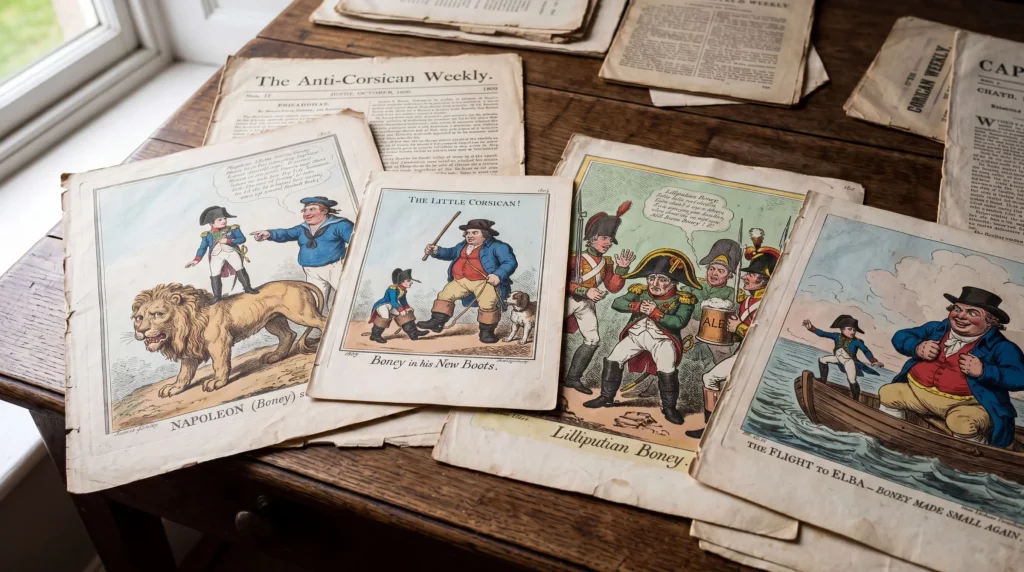
The shrinking began when peace ended. The Peace of Amiens of 25 March 1802 was broken on 22 May 1803[2], and the Fondation Napoleon dates the legend of the little great man from that rupture, when British propaganda and its caricaturists turned it against le petit Boney[5]. Broadley's 1911 survey finds the famous nickname first in Gillray's “German Nonchalance, or the Vexation of Little Boney”, published in January 1803[10]. In it, Thomas Wright wrote, the Little Corsican dances with indignation among his moustached guards[11]. Gillray's “Maniac Ravings, or Little Boney in a Strong Fit” followed on 24 May 1803[11]. The best-known print, “The King of Brobdingnag and Gulliver”, came on 26 June 1803[12, p. 42], though Broadley judged that it did not give rise to the nickname[10]. A writer quoted by Wright said it turned the terror of invasion into laughter at a pigmy emperor in the hand of George III[11][11].
A Corsican Boy Climbs
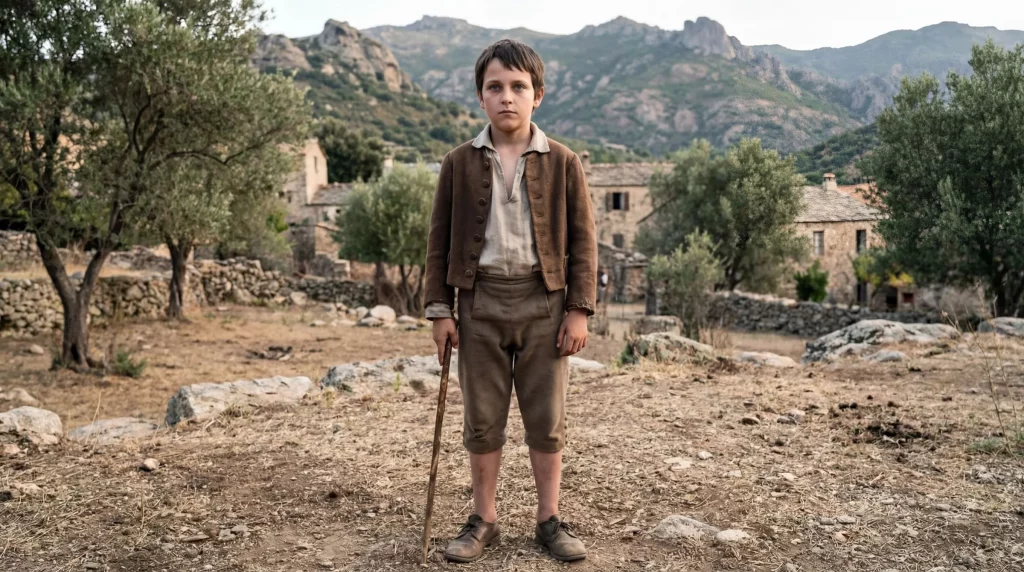
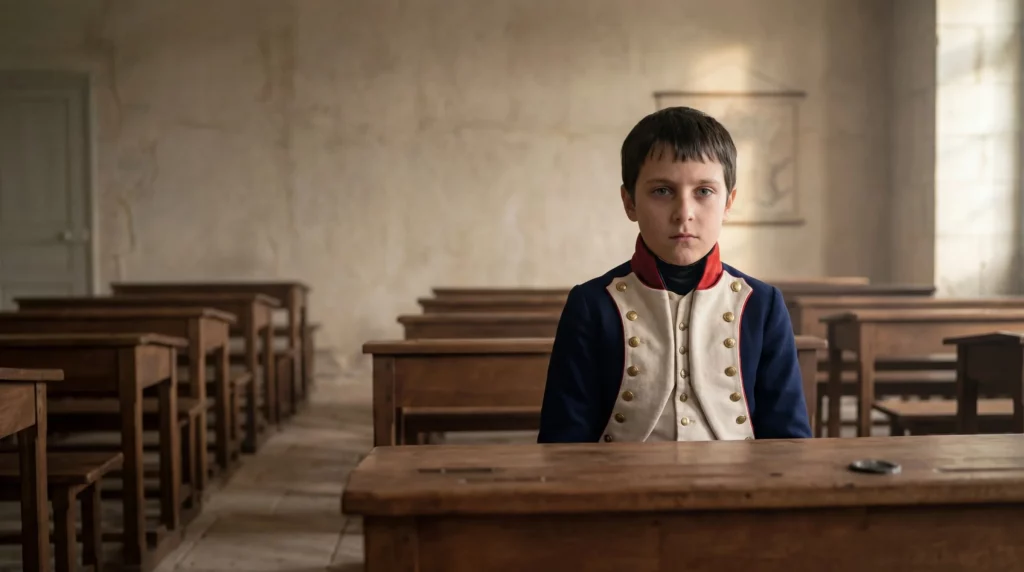
The boy behind the caricature was an outsider. Napoleon entered the military school at Brienne in 1779[2] and left at the end of 1784[13, p. 135]. As he left, the school inspector Keralio recorded his height as four feet ten inches ten lines, about five feet three inches in English measure, and called him mild, thoughtful and distinguished in mathematics[14][14]. The taunts that survive were not about height. Bourrienne, a contested witness, recalled schoolmates ridiculing his Christian name and his country[15]. Sloane records a jibe that his father was a wretched tipstaff[16]. He was a lieutenant in garrison at Valence in 1785[2]. Toulon made him a general of brigade[14], nominated on 22 December 1793, when he was twenty-four[17, p. 240]. On 23 February 1796 he became General-in-Chief of the Army of Italy[17, p. 240]. After the bridge of Lodi his soldiers invented a joke of their own[18].
Consul, Emperor, Austerlitz
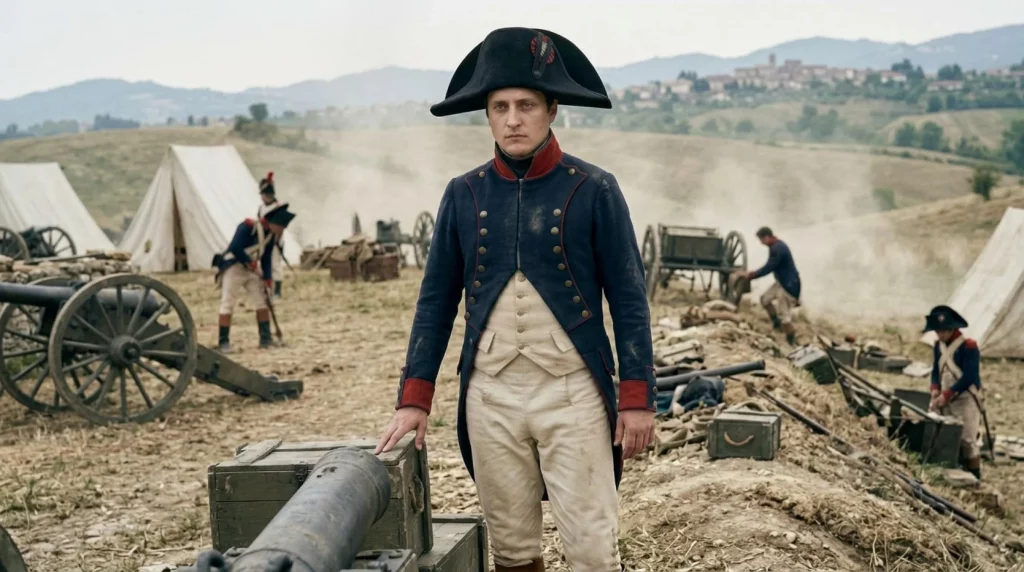
After the coup of Brumaire a committee report provided for three temporary Consuls, Bonaparte, Sieyes and Ducos[19]. By 1804 Bonaparte had himself proclaimed hereditary emperor[2], and the coronation took place at Notre Dame on 2 December[2]. The printmakers kept pace. Gillray's burlesque “Grand Coronation Procession” was published on 1 January 1805[20][21], and his “Plum-pudding in Danger” followed on 26 February, with Napoleon and Pitt contending over the globe and Napoleon helping himself to the whole of Europe[20]. Then, on 2 December 1805, came Austerlitz, which compelled the Russians to retreat and the Austrians to submit[20]. Thiebault noted that it fell on the anniversary of the coronation[22]. The victory let Napoleon complete the reconstruction of Germany[23, p. 273], and Francis II laid down the title of Holy Roman Emperor on 6 August 1806[23, p. 273]. The Civil Code had become law on 21 March 1804[14]. The man the prints kept small had redrawn the map and rewritten the law.
Historical Context
What was going on
Napoleon's rise belongs to the Revolution. In Mignet's account he became an officer of artillery in the regiment of La Fere and, at that time, had no love for France[1]. Britain was the enemy that mattered most to his image. In the London print shops, Mistress Humphrey's assistant Betty proved a most successful vendor of the Little Boney caricatures[10]. A 1920 reference work credits Gillray with originally coining the phrase[14]. Broadley judged that the name stuck to Napoleon until the last day of his life[10], and in June 1814 the British public still called him Little Boney as a print dragged him towards the flames[10]. Yet the impression of smallness was partly relative. The Fondation Napoleon notes that he stood out from an athletic, brilliantly dressed entourage[5], and that plumes and bearskins made the people around him look taller still[5]. Thierry Lentz adds that the grenadiers of the Guard were never under 1.76 metres[9]. Broadley also remarks that others shared Gillray's influence, notably Isaac Cruikshank and Thomas Rowlandson[10]. After this chapter the story turns to what Napoleon did with whatever height he had: Egypt, the seizure of power, Russia, Waterloo and Saint Helena.
Quick Facts
The essentials
Quick Facts
Two Inches, Two Rulers
Keith has the calculator out. A French inch measured about 2.707 centimetres against the English inch’s 2.540, so one French inch equals roughly 1.066 English inches[24, p. 63]. Sixty-two French inches, his five feet two, come to about five foot six English, which is just what Walter Scott gave[4, p. 220]. Roger, that is not tiny.
Where the Number Came From
Roger, this was no tailor’s guess. Thiers says the measures taken of Napoleon’s body gave five feet two inches, French measure[3, p. 398], and the Fondation Napoléon gives it more exactly as five feet, two inches and three lines, or 1.686 metres[9]. Keith approves of precision down to the line.
Always Painted Among Giants
Why do the pictures shrink him? The Fondation Napoléon notes that the average Frenchman stood about 1.60 metres, yet Napoleon was always shown among generals and soldiers, and the grenadiers of the guard were never under 1.76 metres, with tall plumed hats on top[9]. Roger blames the hats.
Roger Collects Real Schoolyard Nicknames
Neither of these is about height, Keith. Ida Tarbell wrote that at Brienne the boys twisted his strange name into la paille au nez, meaning straw in the nose[17]. A French author of 1890 says his comrades called him Napoleone dimezzacalzetta, Napoleon of the sagging stockings[25, p. 230]. Roger is thrilled.
Keith Traces the Sun of Austerlitz
Edward Fraser notes that Napoleon himself apostrophised the ‘Sun of Austerlitz’ so often in after days[26], which makes it his glow-up, not his generals’. Its cruellest echo came at Waterloo, which Harold Wheeler describes as dismal, foggy and wet, with no Sun of Austerlitz piercing the low clouds[27].
Boney was represented as a fierce dwarf, with goggle eyes, a huge laced hat and tricolored plume, a crooked sabre, reeking with blood
William Makepeace Thackeray
Thackeray, in The Second Funeral of Napoleon (1841), recalling the coloured caricatures of Boney that he found in old family portfolios[28, p. 578].
Who Is in This One?
The people you'll meet
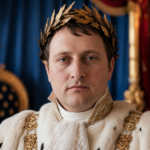

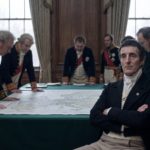
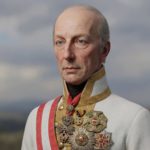

Timeline
How it unfolded
15 August 1769
Birth of Napoleon Bonaparte
Napoleon Bonaparte was born at Ajaccio in Corsica, in the very year when the island passed to France.[1] His father was a lawyer, and the family had originally come from Tuscany.[1]
23 April 1779
Napoleon Enters Brienne Military School
Napoleon entered the Royal Military School of Brienne on 23 April 1779[29, p. 88], a school kept at royal expense to train youths for the engineer and artillery service.[18] He moved on to the Paris military school in October 1784.[29, p. 88]
19 December 1793
Toulon Taken
Napoleon commanded part of the artillery before Toulon, which was taken on 19 December 1793.[29, p. 88] Named by his general-in-chief as one who had distinguished himself, he was made general of brigade in February 1794.[29]
2 March 1796
Napoleon Given the Army of Italy
The Directory appointed Napoleon Commander-in-Chief of the Army of Italy on 2 March 1796, a week before his marriage to Josephine.[29, p. 88] Its plan sent Moreau and Jourdan towards Vienna, while his army was only to conquer Lombardy.[30]
10 May 1796
Battle of the Bridge of Lodi
Napoleon won the Battle of Lodi on 10 May 1796[29, p. 88], rushing a bridge held by the Austrian rearguard.[14] According to Las Cases, his soldiers saluted him that day with affectionate admiration as 'le petit caporal'.[14]
January 1803
Gillray Publishes German Nonchalance
Gillray's 'German Nonchalance, or the Vexation of Little Boney' showed the Little Corsican dancing with frenzied indignation among his tall hussars, after an Austrian minister passed through Paris without paying his respects.[11]
26 June 1803
The King of Brobdingnag and Gulliver
Gillray's 'The King of Brobdingnag and Gulliver', borrowed from Swift, was published by Humphrey on 26 June 1803. Broadley called it one of the best-known Napoleon caricatures, though it did not give rise to the famous nickname.[10]
June 1814
Little Boney at the Peace Rejoicings
At the London peace rejoicings of June 1814, West's transparency 'The Time is Come' showed the Devil dragging 'Little Boney' towards the flames. Broadley added that the British public always called him that.[10]
6 May 1821
Napoleon's Height Recorded After Death
After the post-mortem at Longwood on 6 May 1821[14], Thiers recorded his height as five feet two inches in French measure[3, p. 398], about 1.686 metres, against an average Frenchman of about 1.60 metres.[9]
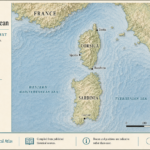
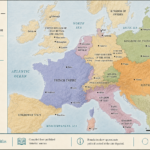
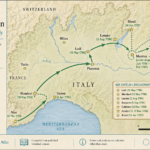
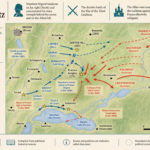
Where Is That?
The maps used in this part
What Happens in This One?
The moments it covers




Myth-buster
Think you know this one?
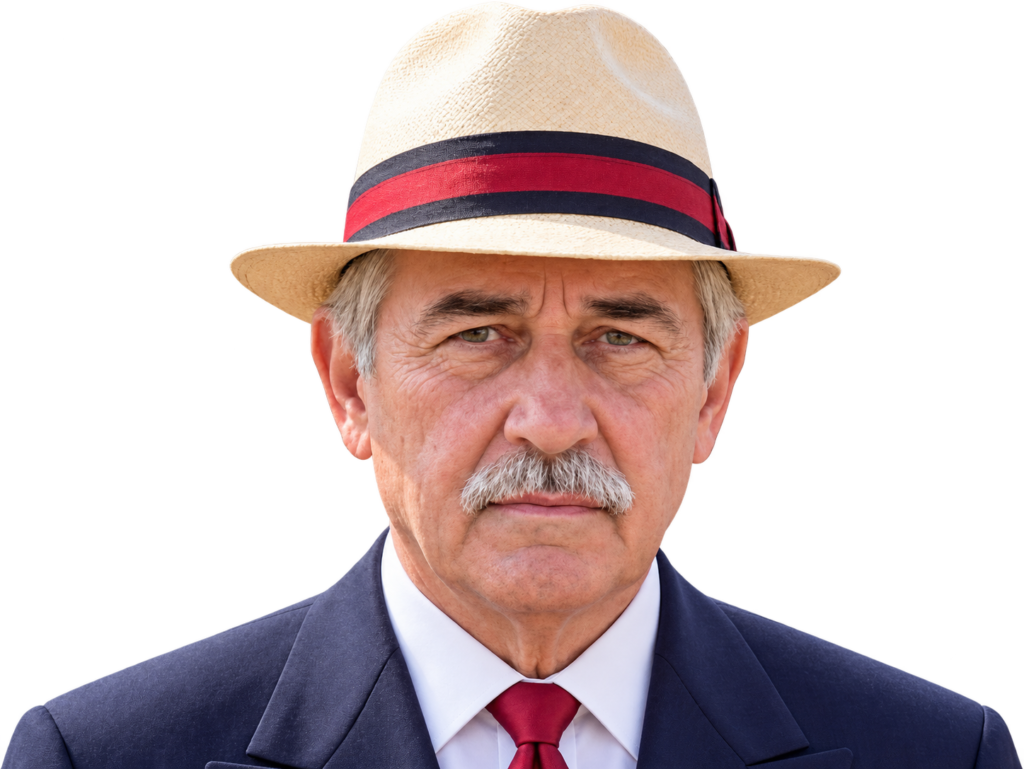
Keith, five foot two! It is right there in the record, plain as a bicorne. A man who stood five foot two was a pocket-sized emperor, Keith, a tiny tyrant on tiptoe, and the cartoonists were only drawing what they saw. Fetch the stepladder and a very loud drum.
Roger, the number is real, but the ruler is French. Thiers has the body at five feet two inches, French measure[3, p. 398], and the Fondation Napoleon works the same reading out at about 1.686 metres[5]. Scott gave five feet six English[4, p. 220]. So the stepladder goes back in the cupboard, Roger, and you can keep the drum.

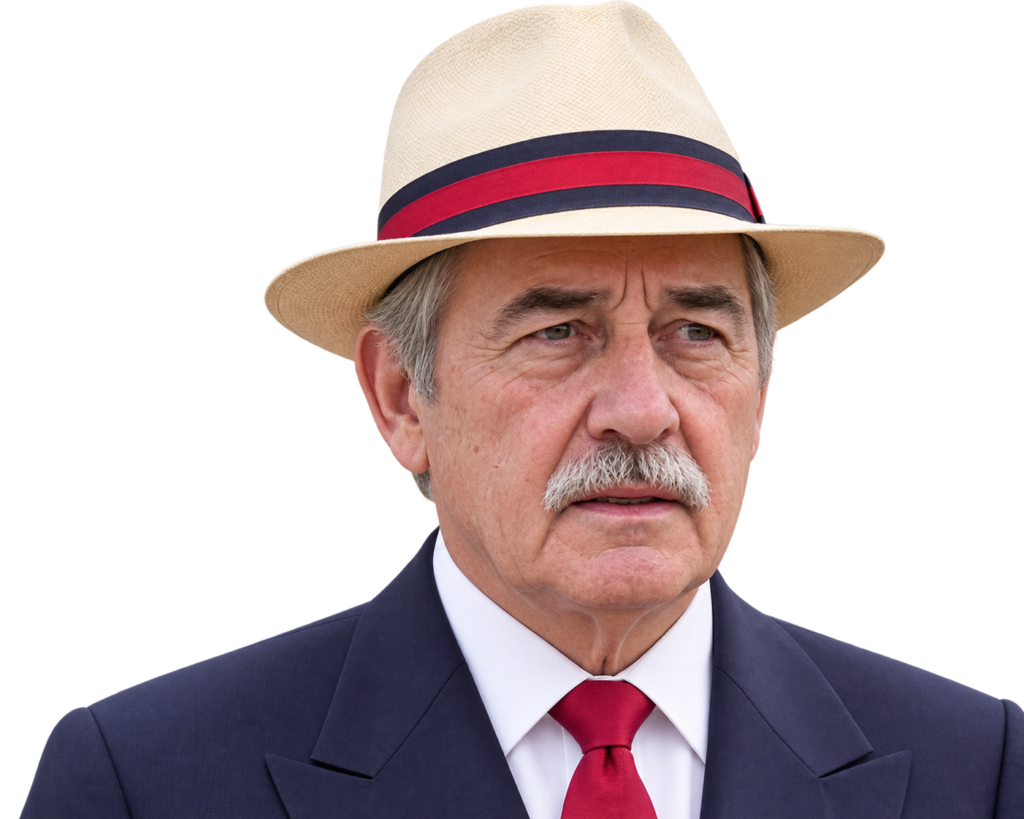
Keith, it was one man with one pencil! James Gillray looked at Napoleon, decided he was small, and invented Little Boney all by himself. Every tiny emperor in every print shop came out of that single etching. Pure genius, Keith, and Napoleon never stood a chance.
Roger, even Gillray's admirers would not give him that much. Broadley credits him with the nickname[10]. Yet he says the famous Gulliver print did not give rise to it[10], and Wright reports that print is said to be Lieutenant-Colonel Bradyll's design, which Gillray only etched[12, p. 42]. Broadley adds that Isaac Cruikshank began the battle and Thomas Rowlandson joined it[10]. One man, one pencil? Roger, that was a whole print shop.

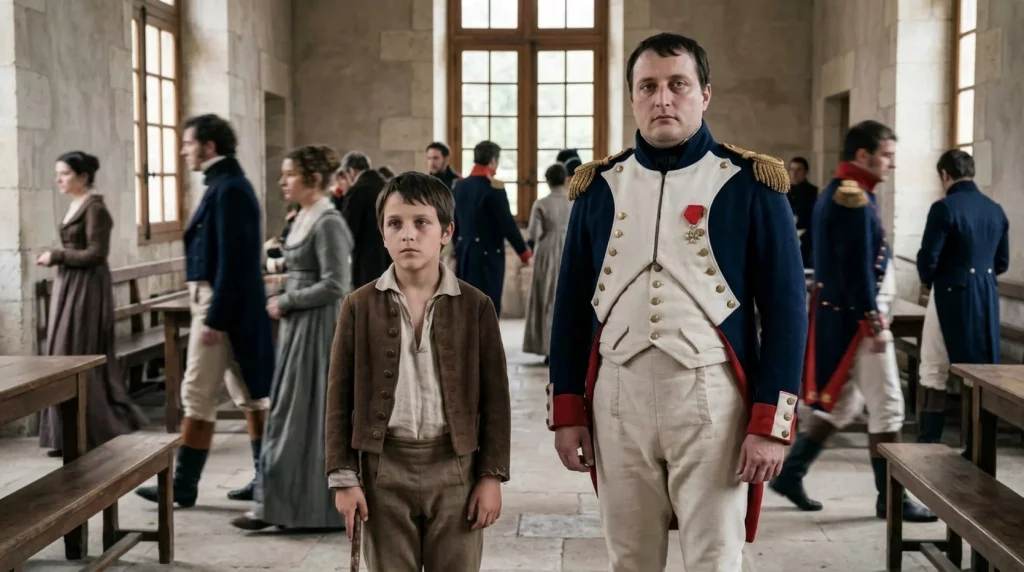
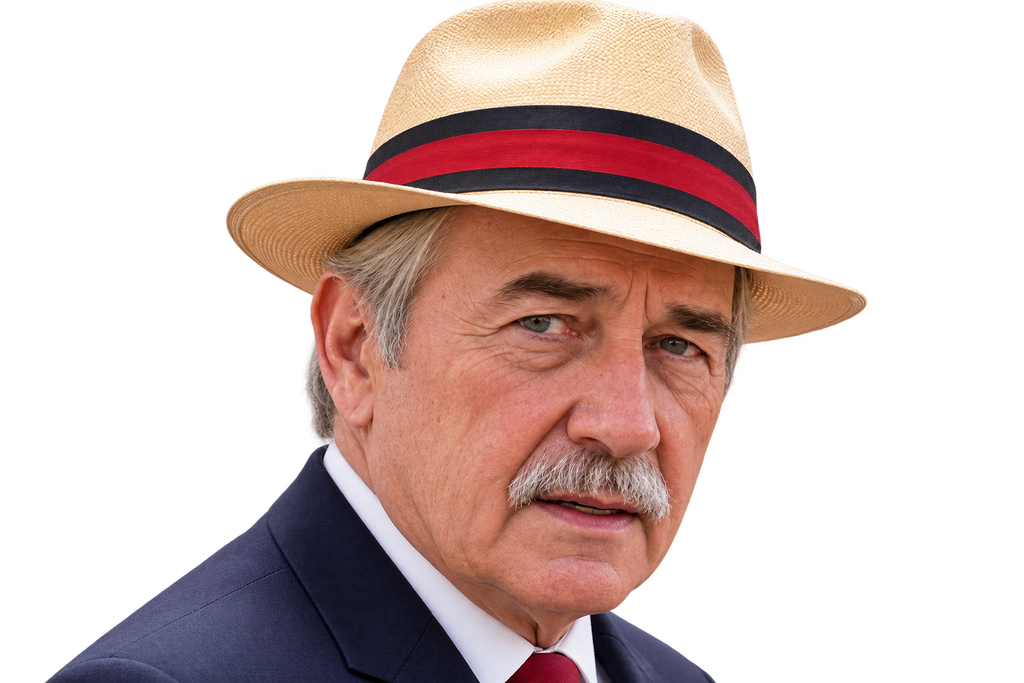
Keith, the Little Corporal! His own soldiers called him that to his face because he was a titch, the smallest man in the ranks. Nobody calls a tall man little, Keith. Corporal because he was tiny, and the whole army loved the joke.
Roger, the joke was about rank, not inches. Scott says French soldiers amused themselves by giving their generals an imaginary rank for some remarkable exploit, and made Buonaparte a corporal for his bravery at Lodi[18]. Sloane adds that it was after Lodi that his adoring soldiers gave him the name[16]. A promotion, Roger, not a tape measure.

Where Does It Happen?
The places you'll visit




Dig Deeper
Copy any prompt below into your favourite AI chat to keep exploring.
How did James Gillray's cartoons turn Napoleon into a tiny villain?
Explain how a hand-coloured print by James Gillray was produced, sold and displayed to the public, and why that made caricature such a powerful weapon against Napoleon.
Explain exactly how Napoleon’s apparently weak right flank at Austerlitz drew Allied troops away from the Pratzen Heights, and why the gamble was so risky.
How can one measurement mix-up turn into a historical myth?
Debate whether British cartoonists drew Napoleon small because they feared him or because they despised him, and what that choice reveals about the people holding the pencil.
Debate whether winning by pretending to be weak marks a great general or a lucky gambler, using Austerlitz as your case.
Did Napoleon really make Europe drive on the right?
Tell me 3 other rulers whom cartoonists tried to shrink in print, and judge whether the mockery ever actually stopped them.
Convince me Austerlitz was a heist movie, with Napoleon as the mastermind and the Allied commanders as the guards who fell for the decoy.
Further Reading
Where to read more
Traditional French units of measurement (Wikipedia)
A reference article on the pre-metric French system, with a length table showing the pied du roi and its twelfth part, the pouce, set against the English foot and inch. Free to read, no account needed.
Why look at this: Roger says Napoleon was measured in five pieds, two pouces. This table gives the pouce as about 27.07 mm, against 25.4 mm for an English inch, so you can redo the conversion yourself.
https://en.wikipedia.org/wiki/Traditional_French_units_of_measurementGillray Caricatures: Napoleon (National Portrait Gallery)
A short introduction from the National Portrait Gallery to its Gillray prints of Napoleon, with a run of 1798 to 1799 satires and a note on how the character of little Boney first appeared on 1 January 1803.
Why look at this: Keith says Gillray coined the nickname Little Boney. This page gives the careful version: the character first seen on 1 January 1803, drawn by a man who never saw Napoleon in the flesh and worked from French engravings.
https://www.npg.org.uk/collections/explore/james-gillray/napoleonBullet point #2: Was Napoleon born French? (Fondation Napoléon)
A short article by Thierry Lentz (2018), translated by Peter Hicks, on Napoleon’s birth on 15 August 1769, the 1768 Treaty of Versailles, the island’s attachment to France, and what being French meant at the time.
Why look at this: Roger puts Corsica as not quite France, not quite Italy. This page pins down the date that settles it: Genoa ceded the island in 1768, so the baby born in Ajaccio in 1769 was already a subject of the French king.
https://www.napoleon.org/en/history-of-the-two-empires/articles/bullet-point-2-napoleon-born-frenchWas Napoleon even short? Inside the history of discrimination against short men (National Geographic)
A nine-minute History feature by Erin Blakemore (2023) that untangles Napoleon’s recorded height, the French inch, the tall Old Guard grenadiers around him, Gillray’s “little Boney” cartoons, and where the phrase Napoleon complex came from.
Why look at this: Keith says Napoleon wasn’t tiny, he was mistranslated. This article walks through the same unit mix-up, then shows how a British cartoonist who never saw him in person turned an ordinary height into a joke.
https://www.nationalgeographic.com/history/article/napoleon-complex-height-discrimination-men-historyLittle Boney: James Gillray and Napoleon’s Fragile Masculinity (The Public Domain Review)
A free long-read by historian Peter W. Walker (2024) on how Gillray shrank Napoleon across the 1798 to 1803 prints, amid the invasion scare, among over two thousand British prints of Napoleon, about forty of them by Gillray.
Why look at this: Roger says the joke was never really his height, it was his ambition. This essay makes that case, tracing how a rising general was redrawn as a baby, an animal and a Lilliputian to take the sting out of him.
https://publicdomainreview.org/essay/little-boney/Talking Point with Peter Hicks: “Soldiers, you are naked!” (Fondation Napoléon)
A short essay by historian Peter Hicks on the 1796 speech to the Army of Italy, showing how the famous version comes from Napoleon’s Saint Helena memoirs and how the report of the real proclamation reads more plainly.
Why look at this: Keith says Italy was won with marketing and victory bulletins. This piece shows Napoleon polishing his own story, which is the same instinct for image that the British cartoonists then spent years trying to puncture.
https://www.napoleon.org/en/history-of-the-two-empires/articles/talking-point-with-peter-hicks-soldiers-you-are-naked/German-nonchalence; -or-, the vexation of little-Boney, James Gillray, 1 January 1803 (British Museum)
The British Museum’s catalogue record for Gillray’s hand-coloured etching and aquatint, published on 1 January 1803, with the museum’s description of the scene, the inscriptions and a curatorial comment quoting the 1947 print catalogue.
Why look at this: Roger names Gillray as the man with the pencil. This is one of his actual 1803 prints, the museum’s own record, where you can see how Napoleon is drawn small, furious and powerless at the Tuileries gate.
https://www.britishmuseum.org/collection/object/P_1851-0901-1101Letter from Napoleon Bonaparte to his father, Charles Bonaparte (1784) (Fondation Napoléon)
An early letter from the fifteen-year-old cadet at the Royal Military School of Brienne, held in the French Archives Nationales, with the French transcription and an English translation. The letter itself is dated 12 October 1784.
Why look at this: Roger says he was sent to Brienne and teased for his accent. Here is the schoolboy’s own voice, writing home about his brother’s schooling and asking for a book on Corsican history, long before any caricature.
https://www.napoleon.org/en/history-of-the-two-empires/articles/document-letter-from-napoleon-bonaparte-to-his-father-charles-bonaparte-september-1784/Napoleon’s Addresses, Part I: The Campaign in Italy (Wikisource, ed. Ida M. Tarbell, 1897)
A free transcription of Tarbell’s 1897 collection of Napoleon’s proclamations and letters, with Part I covering the Italian campaign from the March 1796 address to the army through Lodi, Milan, Mantua and Campo Formio.
Why look at this: Roger says 1796 in Italy was Napoleon’s first real test. Read the March 1796 address that opens with Soldiers, you are naked and ill-fed, then the Lodi and Milan texts, and compare them with the plainer account in the Hicks essay.
https://en.wikisource.org/wiki/Napoleon's_Addresses/Part_ISources
- BookThe French revolution from 1789 to 1815 by M. Mignet and James Westfall Thompson ↑
- DocumentCatholic Encyclopedia (1913)/Napoleon I (Bonaparte) ↑
- BookHistory of the Consulate and the Empire of France under Napoleon by Adolphe Thiers. Page 398. ↑
- BookLife of Napoleon Bonaparte, Volume V. by Walter Scott. Page 220. ↑
- WebsiteLa taille de Napoléon - napoleon.org (napoleon.org) ↑
- BookWellington by J. W. Fortescue. Page 1826. ↑
- BookNelson and his captains: sketches of famous seamen by W. H. Fitchett ↑
- BookThe Memoirs of Baron de Marbot by Jean-Baptiste-Antoine-Marcelin de Marbot ↑
- WebsiteBullet Point #15- Was Napoleon small? - napoleon.org (napoleon.org) ↑
- BookNapoleon in caricature 1795-1821 by Alexander Meyrick Broadley and John Holland Rose ↑
- BookThe works of James Gillray, the caricaturist :with the history of his life and times /edited by Thomas… by Thomas Wright, Thomas Wright and Joseph Grego ↑
- BookHistorical and descriptive account of the caricatures of James Gillray. Comprising a political and humorous history of the… by Thomas Wright, R. H. Evans and James Gillray. Page 42. ↑
- BookMemoirs of Napoleon Bonaparte — Complete by Louis Antoine Fauvelet de Bourrienne. Page 135. ↑
- BookA dictionary of Napoleon and his times by Hubert N.B Richardson ↑
- BookMemoirs Of Napoleon Bonaparte - I And Ii by Louis Antoine Fauvelet De Bourrienne ↑
- BookThe Life of Napoleon Bonaparte. Vol. 1 (of 4) by William Milligan Sloane ↑
- BookA life of Napoleon Bonaparte; with a sketch of Josephine, empress of the French by Ida M. Tarbell. Page 240. ↑
- BookLife of Napoleon Bonaparte, Volume II. by Walter Scott ↑
- BookThe French revolution : a historical sketch by Walter Geer ↑
- BookCaricature history of the Georges; or, Annals of the House of Hanover by Thomas Wright ↑
- BookEnglish caricature and satire on Napoleon I by John Ashton ↑
- BookThe Memoirs of Baron Thiebault Vol II by Paul Charles Francois Adrien Henri Dieudonne Thiebault ↑
- BookA short history of Europe, from the fall of the Eastern empire to the dissolution of the Holy… by Charles Sanford Terry. Page 273. ↑
- BookA geological manual / by Henry T. De La Beche by Henry T. De La Beche. Page 63. ↑
- BookLe prince imperial: Napoleon IV by Maurice d'Irisson d'Herisson. Page 230. ↑
- BookThe war drama of the Eagles : Napoleon's standard-bearers on the battlefield in victory and defeat from Austerlitz… by Edward Fraser ↑
- BookThe story of Wellington by Harold Felix Baker Wheeler ↑
- BookThe Second Funeral of Napoleon by William Makepeace Thackeray. Page 578. ↑
- BookA Life of Napoleon Bonaparte, with a Sketch of Josephine, Empress of the French. by Ida M. Tarbell. Page 88. ↑
- BookNapoleon's Campaigns in Italy 1796-1797 and 1800 by R.G. Burton ↑