
AI reconstruction based on François Gérard's "La bataille d'Austerlitz, 2 décembre 1805," from the perspective of a mounted chasseur of the escort holding his horse steady a few paces from the imperial staff as General Rapp rides in with a prisoner.
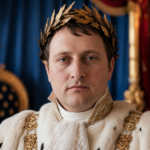
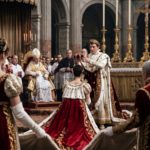
On the first anniversary of his own coronation[1], Napoleon dangled a weak flank and a false offer of peace in front of two emperors[1] - and watched them both walk into the trap.
What Happened
The story
By December 1805 Napoleon's Grande Armee, fresh from forcing an Austrian army to surrender at Ulm, held the ground around the small Moravian town of Austerlitz, facing a combined Austrian and Russian force under Emperors Francis II and Alexander I[1]. England had financed this Third Coalition to reopen a war that had lain dormant for two and a half years[1]. Napoleon deliberately left his own right flank thin, drew back forward positions to look weaker than he was, and sent conciliatory signals toward the Russian camp[1], hoping to draw the Allied army onto ground of his own choosing.
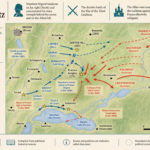
On 2 December - the anniversary of Napoleon's coronation[2] - the Allies duly attacked his supposedly weak right around Sokolnitz and Telnitz, pulling ever more of their own centre away from the high ground of the Pratzen Heights to reinforce it[1]. Napoleon then sent Marshal Soult's corps straight up that emptied centre, the men emerging from the valley mist unseen until they were nearly at the crest[3], seizing the heights that Kutuzov himself recognised as 'the key to the position' the moment he saw the French columns approaching[4]. With their army split in two around the captured high ground, the Allied line began to collapse.
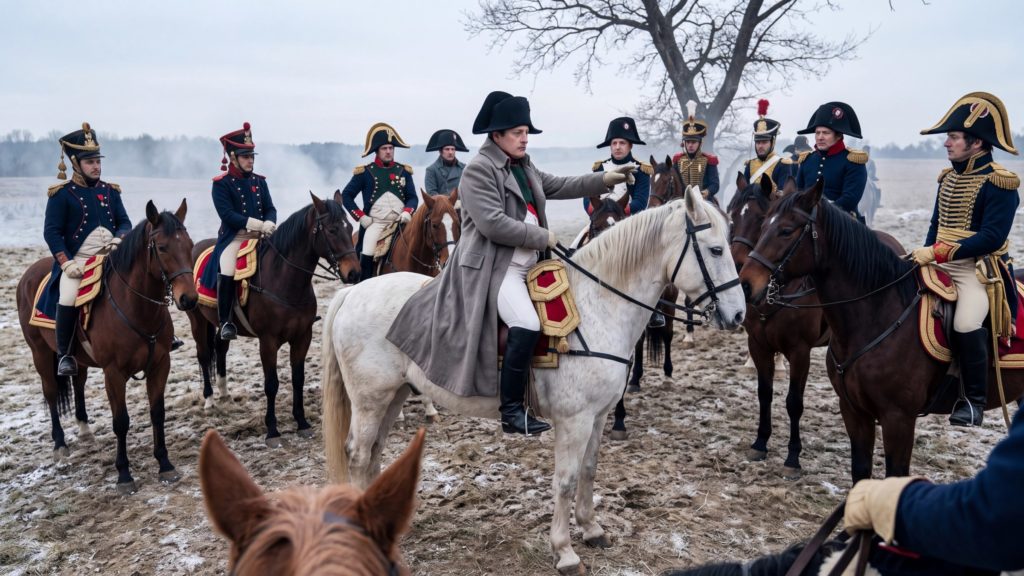
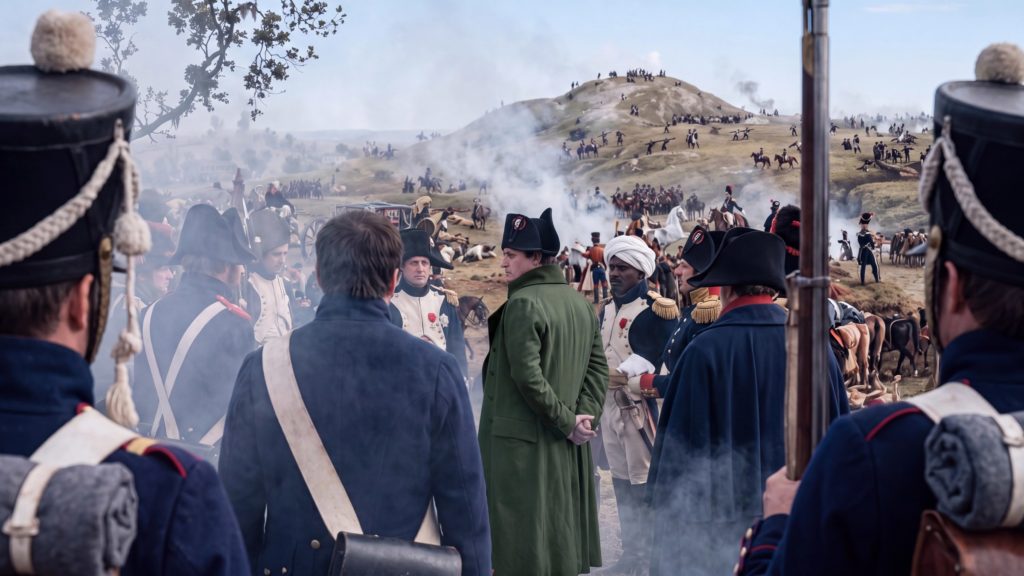
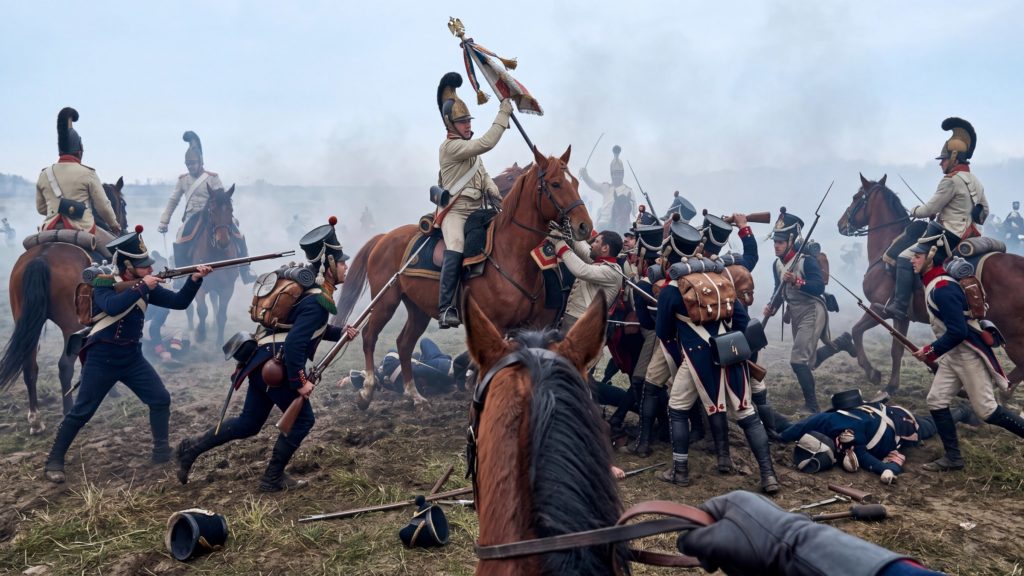
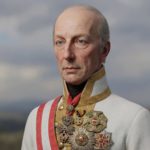
By early afternoon the Allied army was disintegrating: in the fight for the heights alone, roughly 15,000 Russians were taken prisoner as they tried to escape across clay-heavy ground where their own guns became hopelessly bogged down[4]. Emperor Alexander left the field in what one eyewitness called 'hopeless grief', authorising Francis II to seek terms with Napoleon on his own[5]. That same evening the defeated Austrian emperor asked for an interview, and on 4 December the two rulers met privately beside a mill near Nasedlowitz and agreed an armistice on the spot[4].
The armistice held while Austria negotiated Napoleon's terms[4]. Russia's shattered army withdrew toward Galicia, with roads left littered with abandoned cannon and baggage as stragglers fled the disaster[5]. Napoleon himself moved his headquarters to Schoenbrunn Palace outside Vienna to oversee the negotiations in person[2]. Austria's exit from the war, formalised weeks later at Pressburg, cost her roughly a sixth of her revenue and three million subjects[6].
Quick Facts
The essentials
Quick Facts
The French Empire
Leadership
Emperor Napoleon I, with Marshals Soult, Davout, Lannes and Bernadotte[4]
Forces
Napoleon's Grande Armee, including the corps of Soult and Davout and Murat's cavalry[3]
Objective
Destroy the combined Austro-Russian army and force Austria out of the Third Coalition
The Third Coalition (Austria and Russia)
Leadership
Emperor Francis II of Austria; Emperor Alexander I of Russia; commander-in-chief General Kutuzov[4]
Forces
The Austrian and Russian Imperial armies, including the columns of Kollowrath, Miloradovich, Przybyszewski and Buxhoevden, and Prince John de Liechtenstein's cavalry[4][4]
Objective
Cut Napoleon's army off from Vienna and destroy it before it could consolidate the gains of the Ulm campaign
The Bigger Picture
Part of the War of the Third Coalition: after two and a half years of peace, Britain financed a new alliance of Austria and Russia against France, reopening a war this battle would decide[1].
How It Came To This
Napoleon's Grande Armee had already forced an Austrian army to surrender at Ulm and pushed on toward Vienna, bringing him face to face with a combined Austro-Russian force gathered around Austerlitz in Moravia[1]. He deliberately left his own right flank thin and staged a show of weakness and a wish for peace, hoping to draw the Allies onto ground of his own choosing[1]; eager to cut him off from Vienna, the Allied command took the bait[4].
What Actually Happened
Austerlitz worked because Napoleon controlled the tempo of the battle before it began. His seemingly exposed right at Sokolnitz and Telnitz was held just heavily enough to absorb an attack without collapsing, while the true weight of his army waited, hidden in the valley mist, for a single thrust at the Allied centre[1]. The Allied commanders, still eager to cut the French off from Vienna, could not resist the invitation his weakness offered[4]. Once their fourth column shifted south to reinforce that flank, the Pratzen Heights - the position Kutuzov himself recognised as the key to the whole field - were left with barely two dozen weak battalions to hold twice their number of French troops[4]. Soult's corps went up the western slope unseen until they broke the crest-line, and from that moment the Allied army was fighting two disconnected halves of one battle rather than a single coordinated force[3]. It was a battle largely won by persuading the enemy commanders to defeat themselves.
Why It Still Matters
Effectively ended the Third Coalition and forced Austria's exit from the war at Pressburg, clearing the way for Napoleon to reorganise western Germany into the Confederation of the Rhine the following year - the arrangement that made Emperor Francis II's renunciation of the thousand-year-old Holy Roman Empire all but inevitable[6].
Quick Facts
Roger would like you to know...
Austerlitz fell on the exact anniversary of Napoleon's coronation - and he knew it. His soldiers were reminded on the eve of battle that 'the next day was December 2, the anniversary of the coronation', and they fought like it mattered[1].
Keith checked the sources...
Napoleon's 'weak' right flank wasn't an accident - it was bait. He held Sokolnitz and Telnitz with only a handful of battalions specifically to tempt the Allies into over-committing there while he massed his real strike force out of sight[1].
One for the Ageonauts...
Soult's men climbed the Pratzen Heights hidden in mist so thick that, by one officer's account, they went 'unseen by the enemy at any point, without a shot being fired' until they were nearly at the top[3].
Roger has entered the historical rabbit hole...
General Kutuzov spotted the danger the moment he saw French columns forming below the heights - but his own fourth column had already been ordered south, and he could only watch as the position he called the key to the whole battlefield fell[4].
Keith would like to clarify...
The battle wasn't won by weight of numbers. In the fight for the Pratzen centre, roughly 12,000 poorly reinforced Allied troops found themselves attacked by around 24,000 French - the enemy's strength effectively doubled at the one point that mattered[4].
History gets strange here...
In the chaos of the retreat, Allied guns sank into deep clay below the heights, and the Russians' own draught horses - built for speed, not hauling - couldn't drag them free. Whole batteries were simply abandoned in the mud[4].
Meanwhile, in history...
The defeated Emperor Alexander I authorised his ally Francis II to make peace without him and left the field, by one eyewitness's account, 'in hopeless grief' - a rare moment of a Russian tsar handing the negotiating table to someone else entirely[5].
Keith has spotted the problem...
The peace that ended the fighting was settled in the open air, not a palace. Napoleon and Francis II met beside a windmill near the village of Nasedlowitz, and that roadside conversation is what actually stopped the guns[4].
A small fact with a very large consequence...
This war almost didn't restart at all. Austria and Russia had been at peace with France for two and a half years before Britain financed the Third Coalition that put these armies back in the field in the first place[1].
The familiar story leaves this out...
Losing at Austerlitz didn't just cost Austria the battle. Within a year the defeat's political fallout helped push Emperor Francis into dissolving the thousand-year-old Holy Roman Empire itself[6].
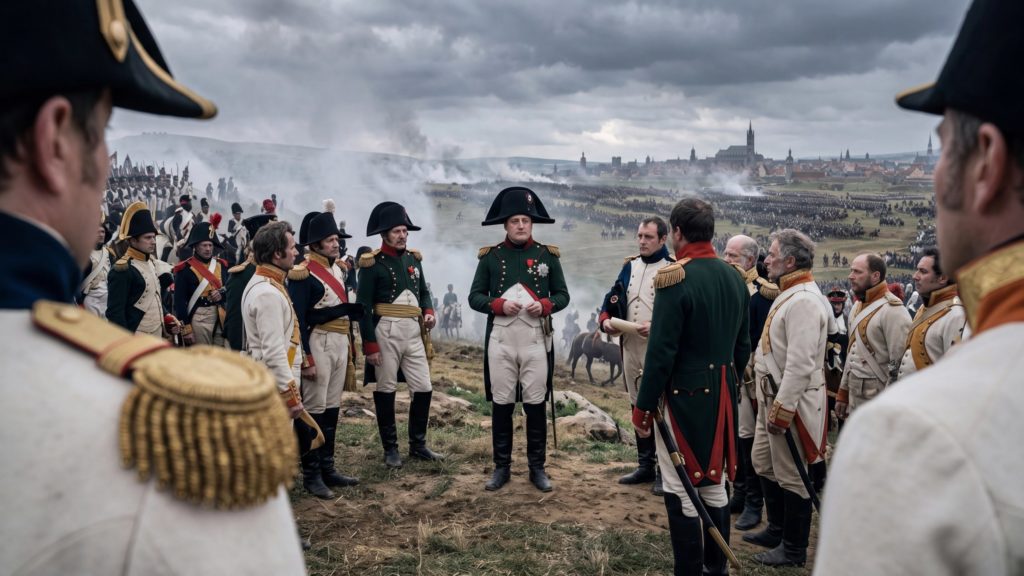
"We promise you that you will only have to fight with your eyes to-morrow!"
An unnamed French soldier, on the eve of Austerlitz[1]
Recalled by General Baron Thiebault: Napoleon had just told the army that if they fought as he expected, he would only need to direct the battle from safety, and a soldier shouted back this confident reply on the night of 1 December 1805.
Timeline
How it unfolded
April 1805
Formation of the Third Coalition
Great Britain and Russia formed the Third Coalition by the Treaty of Petrograd, aiming to release North Germany, Holland, Switzerland and Italy from French influence, and the Italian situation then added Austria to it.[6]
20 October 1805
Capitulation of Ulm
The Austrian army in Ulm filed past Napoleon, some 27,000 men with 80 guns, according to Burton.[7] Napoleon had outwitted General Mack by striking the Danube in his rear, and Mack, cut off from Vienna, capitulated.[6]
13 November 1805
Napoleon Enters Vienna
Napoleon entered the Austrian capital and then marched into Moravia to meet the Russians, round whom the defeated troops had rallied.[8] A chronology in an edition of his letters to Josephine also records Vienna entered and the bridge over the Danube seized on this day.[9]
2 December 1805
Battle of Austerlitz
On the first anniversary of his coronation Napoleon lured the combined armies of Francis and the Tsar into trying to turn his right and then hurled an attack on their centre, and his victory was decisive.[6] Sloane called it the first true Napoleonic battle, the principle of which shaped the great conflicts that followed.[10]
6 December 1805
Armistice with Austria
The armistice between the emperors of the French and of Austria is dated at Austerlitz on this day.[11] According to Lloyd, the two emperors had met at Napoleon's advanced posts on 4 December and agreed its terms and the principal conditions of peace.[12]
26 December 1805
Treaty of Pressburg
Austria's treaty with Napoleon is printed in Anderson's collection of documents under this date.[13, p. 138] It compelled Francis to recognise Napoleon's territorial changes in Italy and to give up Venetia with Istria and Dalmatia, which were attached to the Kingdom of Italy.[6]
Dig Deeper
Copy any prompt below into your favourite AI chat to keep exploring.
Explain how Napoleon used a deliberately weakened right flank and the morning mist over the Pratzen Heights to split the Austro-Russian army in two.
What does tricking two emperors in a single day at Austerlitz teach us about the danger of assuming your enemy is exactly as weak as he looks?
Pitch me Napoleon's fake-weakness trick at Austerlitz like a heist movie's big double-cross.
Further Reading
Where to read more
Battle of Austerlitz - World History Encyclopedia
A free, concise overview of the battle, from Napoleon's deception to the rout of the Allied centre.
Why look at this: Explains, in plain terms, exactly how Napoleon's fake weakness and the morning mist combined to let his troops seize the Pratzen Heights unseen.
https://www.worldhistory.org/article/2253/battle-of-austerlitz/The Battle of Austerlitz and the Principles of War - napoleon.org
A free, detailed scholarly article walking through General Thiebault's brigade action on the Pratzen Heights step by step.
Why look at this: Shows exactly how the 'key to the battlefield' that worried Kutuzov was actually taken, action by action.
https://www.napoleon.org/en/history-of-the-two-empires/articles/the-battle-of-austerlitz-and-the-principles-of-war/The Memoirs of Baron de Marbot
The free, public-domain memoirs of a French officer who rode in Napoleon's escort at Austerlitz.
Why look at this: Marbot describes the rout of the Allied army and Napoleon's own meeting with Francis II two days later from horseback, as an eyewitness.
https://archive.org/details/memoirsofbaronde00marbrichRelated
Keep exploring
Can be seen in
Where this shows up
References
Sources
Sources
- BookThe Memoirs of Baron Thiebault Vol II by Paul Charles Francois Adrien Henri Dieudonne Thiebault ↑
- BookMemoirs of General Count Rapp First Aide-de-Camp to Napoleon by Jean Rapp ↑
- BookThe war drama of the Eagles : Napoleon's standard-bearers on the battlefield in victory and defeat from Austerlitz… by Edward Fraser ↑
- BookA Detailed Account of the Battle of Austerlitz by Karl von Stutterheim ↑
- BookThe Memoirs of Baron de Marbot by Jean-Baptiste-Antoine-Marcelin de Marbot ↑
- BookA short history of Europe from the dissolution of the Holy Roman empire to the outbreak of the… by Charles Sanford Terry ↑
- BookFrom Boulogne to Austerlitz, Napoleon's campaign of 1805 by Reginald George Burton ↑
- BookThe French revolution from 1789 to 1815 by M. Mignet and James Westfall Thompson ↑
- BookNapoleon's Letters to Josephine, 1796-1812 by Emperor of the French Napoleon I ↑
- BookThe Life of Napoleon Bonaparte. Vol. 2 (of 4) by William Milligan Sloane ↑
- BookUnpublished correspondence of Napoleon I : preserved in the War Archives by Emperor of the French Napoleon I and others ↑
- BookAlexander I. Emperor of Russia ; or, a sketch of his life.. by Hannibal Evans Lloyd ↑
- BookThe Constitutions and Other Select Documents Illustrative of the History of France 1789-1907 by Frank Maloy Anderson. Page 138. ↑