
Jean-Francois-Auguste Moulin, a career soldier of the revolutionary armies, elected to the Directory in June 1799 with no political following.
General; one of the five Directors of the French Republic (1799)
One of the five men who ran France in its last revolutionary government — and one of only two Directors who refused to hand over power when Napoleon Bonaparte staged his coup.[1]
Bio
Who they were
Moulin enlisted before the Revolution and rose quickly in the republican armies, serving in the Vendée and on the Rhine frontier and reaching general of division, a career built on genuine field experience rather than political connections. He had no political following and little national profile when the Directory's shifting factions produced his election to it in June 1799. His military career, built on genuine field experience rather than political connections, was unusual among the political appointees who typically filled the Directory's ranks. He enlisted before the Revolution and rose quickly through the republican armies, serving in the Vendee and on the Rhine frontier before reaching general of division.
Moulin was a general when, in 1799, he was chosen alongside Roger Ducos to complete the five-member Directory governing France[1]. One contemporary account was blunt about how the choice looked at the time: appointing this "general of the barricades" to the Directory "smacked of comic opera"[1].

By November 1799, Moulin sat on the five-man Directory alongside Barras, Sieyès, Gohier, and Roger Ducos[2]. When Napoleon Bonaparte and his allies moved to seize power in the coup of 18–19 Brumaire, Moulin and fellow Director Gohier refused to resign — but by then the real levers of power had already been taken from them, and the refusal changed nothing[1].
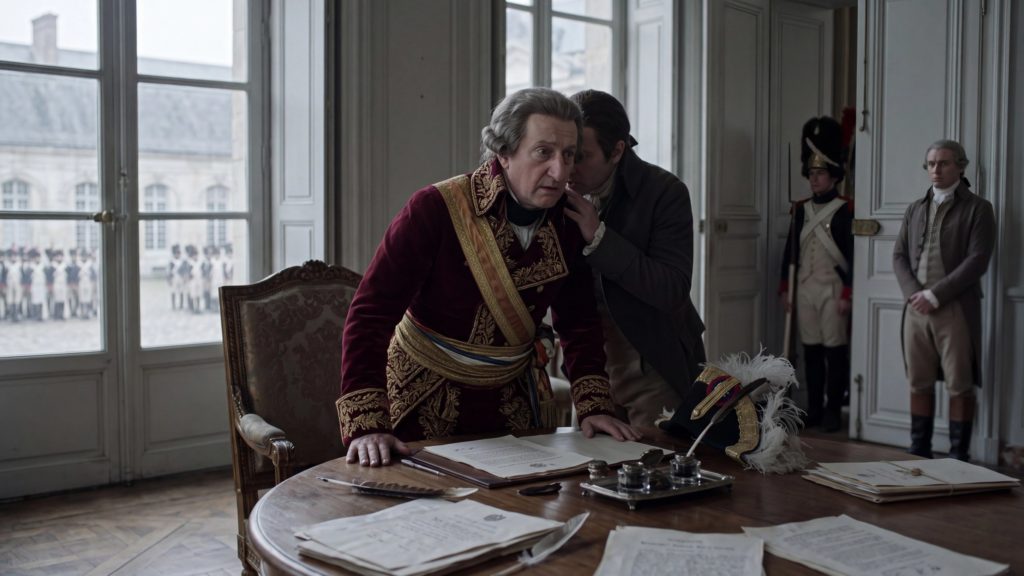
Unlike Gohier, he left no memoir and features only briefly in most histories of the Revolution, a reflection of how completely the coup's success overshadowed the gesture of resistance the two men made together. His refusal to resign made no practical difference to the coup's outcome, but it stands as one of the Directory's only recorded acts of resistance to its own removal.
Moulin's refusal to resign, futile as it was, stands in the sources here as one of the Directory's last recorded acts of resistance before it was swept aside by Bonaparte's new Consulate[1].

Even sympathetic-sounding descriptions of Moulin carry a note of mockery: the source that calls him a "general of the barricades" also judges that his appointment to the Directory "smacked of comic opera"[1] — a dismissive line that is nearly all this library preserves of how he was seen by people who watched him take office.
Legacy & Reputation
What’s the verdict?
The only characterisation of Moulin on record is a dismissive contemporary remark that his elevation to the Directory “smacked of comic opera”[1].
Myth-buster
Think you know this one?
The Directory is often pictured handing power to Bonaparte without a fight, but two of its five members, Moulin and Gohier, refused to resign during the coup of Brumaire[1].
Quick Facts
The essentials

Quick Facts
Keith checked the sources…
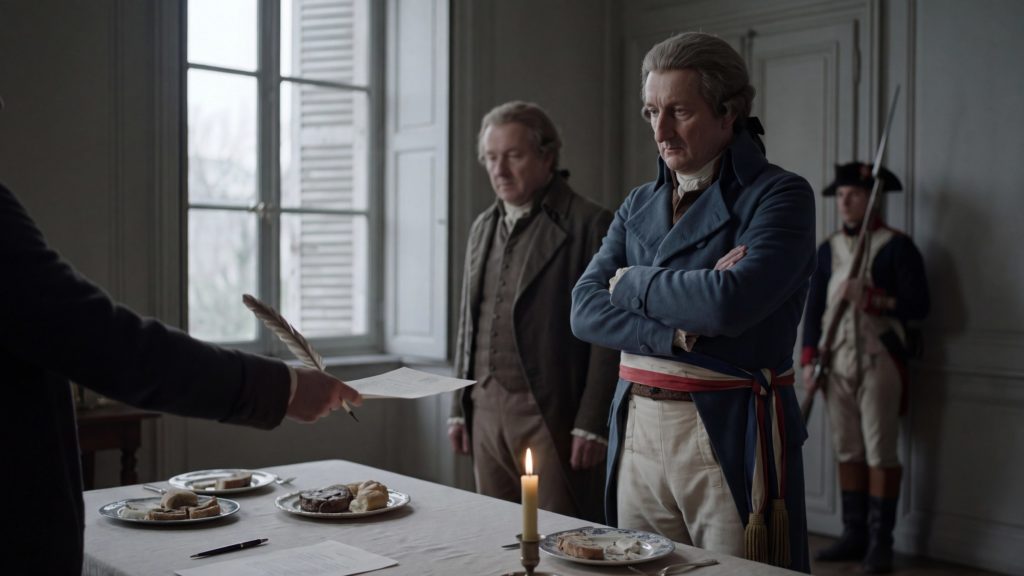
When the Council of Elders needed a new Director in June 1799, they settled on General Jean-François-Auguste Moulin by a vote of 105 to spare. It wasn't a landslide, but it was enough to put a career soldier at the very top of the French Republic's government.[2]
Roger would like you to know…
One contemporary historian summed up the arrival of Moulin and his fellow Director Roger-Ducos rather bluntly: two persons, 'at once obscure and insignificant,' had been chosen. Whether that verdict was entirely fair or not, it's certainly not the introduction most Directors of the Republic got.[3]
This sounds invented, but…
The historian Louis Madelin later described Moulin, somewhat unkindly, as 'a general of barricades' — a soldier better known for indoor political scuffles than for any battlefield glory. It's not the kindest epitaph, but it does capture how briefly and obscurely his moment in power lasted.[1]
Keith would like to clarify…
During the Coup of 18 Brumaire, Napoleon Bonaparte reportedly took the opportunity to push Director Moulin around quite literally, addressing him sharply as 'General Moulin' before more or less marching him off to the Tuileries. It was not a meeting between equals.[4]
Roger has entered the historical rabbit hole…
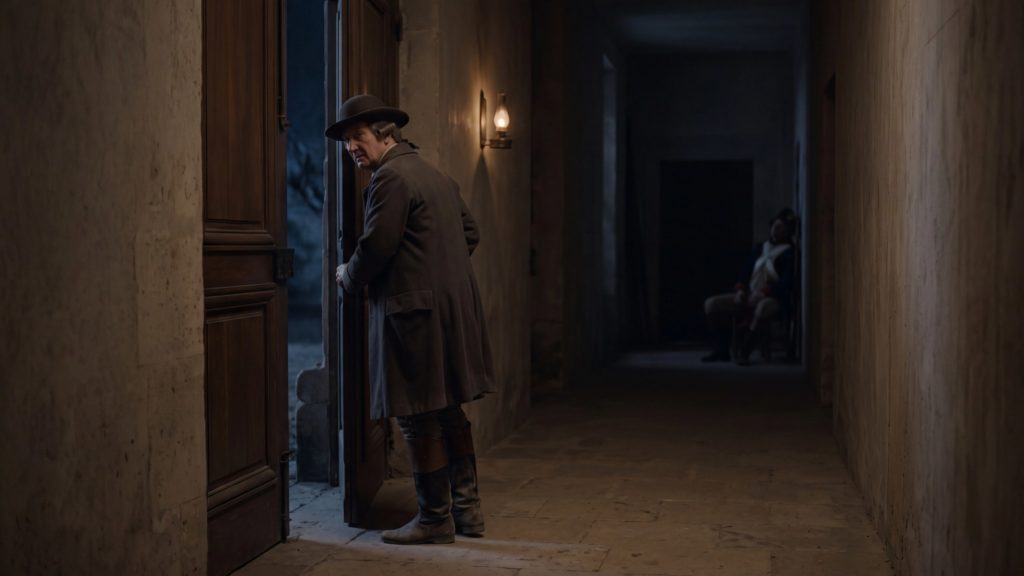
Unlike three of his fellow Directors, Moulin didn't quietly step aside when Bonaparte's coup began. He and fellow Director Gohier refused to resign outright — a stand that changed nothing about the outcome, since, as one historian dryly notes, their actual power had already evaporated.[1]
History gets strange here…
After refusing to resign, Moulin and Gohier fled to the Luxembourg Palace, where Bonaparte sent General Moreau and three hundred soldiers to 'protect' them. It was protection in name only — by the next morning, Moreau's own troops had placed them under arrest instead.[5]
Keith has spotted the problem…
General Moulin's name turns up more than once in the vote tallies for Revolutionary-era elections, not just in his eventual win for the Directory. He was clearly a recognised candidate across several ballots of this period — recognised, evidently, just not always victorious.[2]
Roger insists this matters…
By the time Moulin's election brought him into the Directory, the institution itself was already crumbling. One classic French account frames his arrival almost as bad timing: a fresh face stepping into a government that was, by then, well on its way to falling apart entirely.[4]
One for the Ageonauts…
Moulin never sought fame and mostly avoided getting it — yet his refusal to resign quietly on 18 Brumaire means his name is now permanently written into the story of the day the French Republic effectively ended and Napoleon's rise began.[1]
The past has entered the chat…
Despite the historians who dismiss him as obscure, Moulin earned his own entry in the great nineteenth-century 'Dictionnaire des parlementaires français' — solid proof that, whatever his reputation, the historical record still thought his career worth carefully writing down.[6]
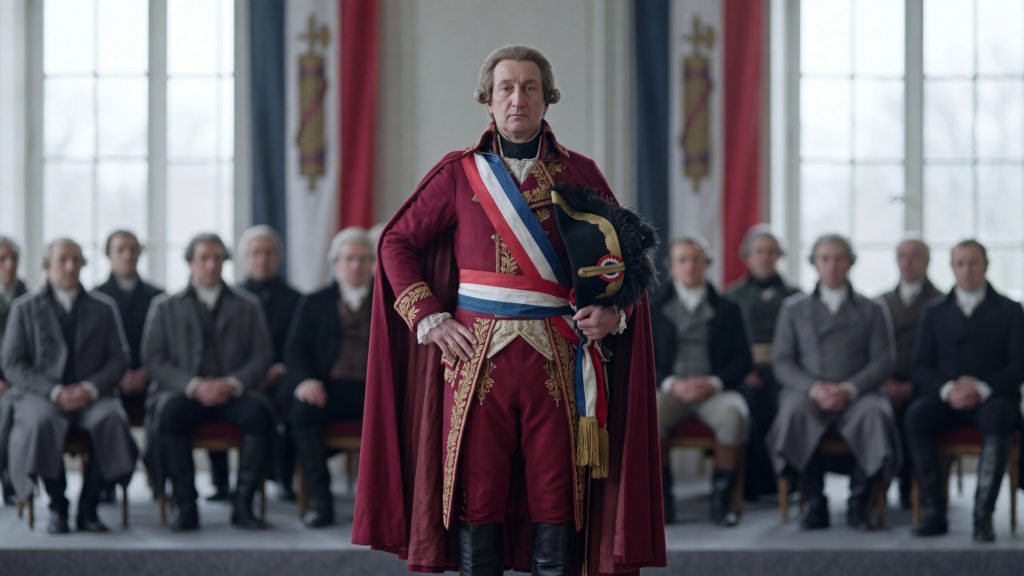
a general and a good Jacobin
Historian Georges Lefebvre, in The Thermidorians and The Directory
Lefebvre's shorthand for exactly why the little-known Moulin was picked for the Directory in June 1799 — genuine field service plus steady Jacobin loyalty, rather than any political following of his own.
Timeline
How it unfolded
14 March 1752
Birth of General Jean-Francois Moulin
Jean-Francois-Auguste Moulin was born at Caen on 14 March 1752.[7][8]
1791
Moulin Volunteers and Rises in the Vendee
An engineer officer, Moulin volunteered in 1791 and gained his grade of general in the Vendee.[9]
1794-1795
Command of the Army of the Alps
In 1794-1795 Moulin brilliantly commanded in chief the Army of the Alps.[9]
October 1798
Command of the Army of England
From October 1798 Moulin commanded the Army of England, with its headquarters at Rennes.[9]
20 June 1799
Moulin Elected a Director
General Moulin was elected to the Directory on 2 Messidor of the year VII (20 June 1799), replacing La Revelliere-Lepeaux.[2][7] The Directory was then made up of Barras, Sieyes, Gohier, Roger Ducos and Moulin until its end.[2]
Dig Deeper
Copy any prompt below into your favourite AI chat to keep exploring.
Explain what role Jean-François-Auguste Moulin played as one of only two Directors who refused to resign during Napoleon's coup of Brumaire.
What does it mean that history barely remembers Moulin, even though he was one of only two men who stood their ground against Napoleon's coup?
Convince me refusing to resign during a coup is the most pointless-but-principled move in French revolutionary history.
Further Reading
Where to read more
Moulin, Jean-François-Auguste — Dictionnaire des parlementaires français
An entry from the standard French biographical dictionary of parliamentarians, covering Moulin's Directory service and his refusal to resign during Brumaire. (French language; Gallica blocks automated fetchers but is free to read.)
Why look at this: The closest thing to a standard reference-dictionary entry that exists for this genuinely obscure figure — real primary reference material, not a summary of a summary.
https://gallica.bnf.fr/ark:/12148/bpt6k837081Moulin, Jean-François-Auguste — Archontology
A more detailed, source-cited biographical entry tracing his rise from a grocer's son and military engineer to his June 1799 appointment as a Director and his later reconciliation with Napoleon.
Why look at this: Cites the specialist scholarship on his directorship (including a dedicated academic article, 'Le général Moulin') and the contemporary Moniteur universel for his electoral and political record — a level of sourcing the shorter overviews don't show their work for.
https://www.archontology.org/nations/france/france_state1/moulin.phpDictionnaire biographique des généraux et amiraux français de la Révolution et de l'Empire, 1792-1814, Tome 2 (Georges Six, 1934) — Internet Archive
The standard scholarly biographical dictionary of every French Revolutionary and Napoleonic general and admiral, compiled by Georges Six in 1934 — still the reference historians cite today for figures like Moulin.
Why look at this: This is the reference work behind his precise service record, including his 1793 imprisonment by the Terror's representative-on-mission Jean-Baptiste Carrier for sparing roughly 1,200 Vendéen prisoners after the rout at Le Mans — exactly the kind of granular, document-based military detail this dictionary was built to preserve.
https://archive.org/details/dictionnaire-biographique-des-generaux-t-2-imagesRelated
Keep exploring







Can be seen in
Where this shows up

References
Sources
Sources
- BookThe French revolution : [crowned by the French academy. Gobert prize] by Louis Madelin ↑
- BookThe French Revolution: A Political History, 1789-1804. Volume III: The Revolutionary Government, 1793-1797 (cites Moulin's role in the… by François-Alphonse Aulard ↑
- BookHistory of the wars occasioned by the French revolution, from the commencement of hostilities in 1792, to the… by C. H Gifford ↑
- BookLe Dix-huit Brumaire (French) by Jacques Bainville ↑
- Websitenapoleon.org: 18 brumaire the context and course of a coup detat ↑
- ArchiveDictionnaire des parlementaires français...depuis le 1er mai 1789 jusqu'au 1er mai 1889. Tome IV. Lav-Pla (includes the Moulin… by Adolphe Robert, Edgar Bourloton and Gaston Cougny ↑
- Websitefr.wikipedia.org: Jean François Moulin ↑
- Websiteen.wikipedia.org: Jean François Auguste Moulin ↑
- BookThe French revolution : a historical sketch by Walter Geer ↑
- BookA Life of Napoleon Bonaparte, with a Sketch of Josephine, Empress of the French. by Ida M. Tarbell ↑