
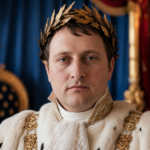
Louis XVIII, brother of Louis XVI, who kept the royalist claim alive through twenty-three years of exile before the allies restored him in 1814.
King of France
The exiled French prince who spent over two decades moving between foreign courts, waiting for a throne that only came to him after Napoleon — not his own family — was finally defeated[1].
Bio
Who they were
Louis-Stanislas-Xavier, later Louis XVIII, was born at Versailles on 17 November 1755, grandson of Louis XV and younger brother of the future Louis XVI[1]. Known in childhood as the Comte de Provence, he was a delicate baby, so much so that it briefly seemed unlikely he would survive infancy[1]. He and his younger brother, the future Charles X, were inseparable playmates, though the more studious, ambitious Comte de Provence was less naturally charming than his lively brother, and had to work harder to win the same attention at court[1].
When Louis XV died in 1774, Louis XVI's marriage had so far produced no children, so the Comte de Provence became heir-presumptive to the French throne[1]. That expectation was upended by the Revolution: after his brother's execution and the death of his young nephew, the uncrowned Louis XVII, in the Temple prison on 8 June 1795, the Comte de Provence proclaimed himself King Louis XVIII from exile just over two weeks later[1, p. 51]. Two decades of wandering followed: he lived at different times in Koblenz, Verona, Mittau, Warsaw, Sweden and England, dependent on other monarchs' hospitality and never certain of a throne to return to.

Louis XVIII finally returned to France in 1814 after Napoleon's first abdication, restored to the throne largely by the Allied powers rather than by any French uprising in his favour[1, p. 51]. He granted France a Charter establishing a constitutional, if limited, monarchy, trying to steer a moderate course between vengeful royalist exiles and former supporters of the Revolution and Napoleon[1, p. 51]. That settlement nearly collapsed when Napoleon escaped Elba in 1815 and Louis had to flee to Ghent for the Hundred Days, but after Waterloo he returned to Paris a second time and spent the rest of his reign defending the Charter against ultra-royalists led by his own brother, who wanted to roll it back[1, p. 51].
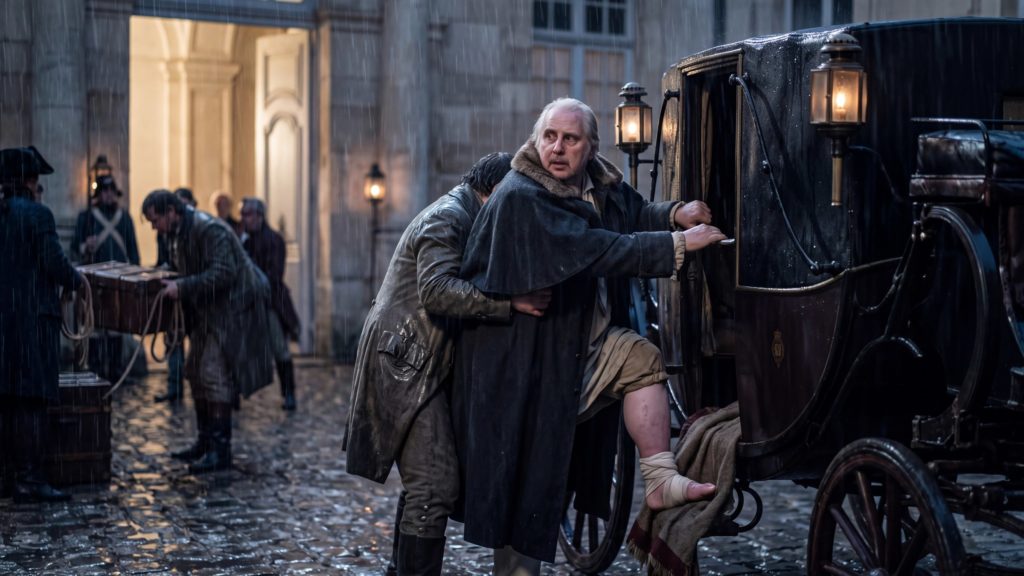
By the early 1820s Louis XVIII's health was failing badly, and in December 1821 he effectively handed control of government to his brother, the future Charles X, though he remained king in name[1, p. 51]. Told by his own doctor that his final illness would likely be "slow and gradual," he grimly noted this meant his devout brother would get to bring in the priests after all[1, p. 51]. He died in September 1824 and was buried at Saint-Denis, the traditional resting place of French kings, on 23 September 1824, with full royal ceremony[1, p. 51].
Louis XVIII's most lasting achievement was arguably diplomatic rather than domestic: at the 1814–15 peace settlement he resisted Allied demands to permanently dismember or cripple France, using firmness and negotiating skill to keep his country among Europe's major powers[1]. Domestically, the constitutional Charter he granted in 1814 gave France its first sustained experience of limited monarchy since the Revolution, and it survived, in weakened form, until Charles X was overthrown in 1830. His reign is often treated as a genuine, if imperfect, attempt to reconcile the old monarchy with a post-revolutionary nation.
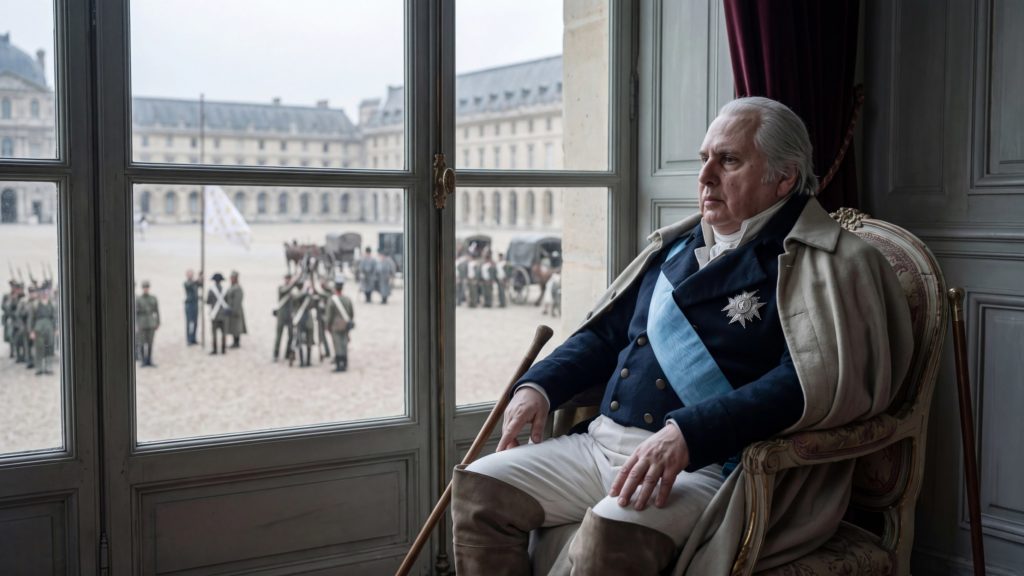
Louis XVIII kept a dark sense of humour even about his own death. Pressing his doctor bluntly on whether he would die suddenly or suffer for days, and getting only a vague answer, the gout-ridden king snapped, "Do not treat me as a fool, Portal. I know very well that I have not long to live"[1, p. 51].
Legacy & Reputation
What’s the verdict?
Contemporaries were often unkind about Louis XVIII, mocking his corpulence and love of ceremony, and even sympathetic royalists in Russian exile had nicknamed him “the greatest Jacobin in Europe” for his willingness to compromise with revolutionary-era France[1]. His biographer Mary Sandars, writing in 1910, argued he had been unfairly overshadowed by his own early mistakes and deserved credit as “a wise and beneficent ruler” once he had learned the temper of post-revolutionary France[1]. Later historians have generally agreed his diplomatic sense was underrated compared with his brother’s rigidity.
Myth-buster
Think you know this one?
Myth: Louis XVIII was simply an out-of-touch reactionary restored by foreign bayonets. Correction: while the Allies did bring him back in 1814, he granted France a written constitutional Charter and spent much of his reign resisting his own ultra-royalist supporters, who wanted a full return to the old absolute monarchy[1, p. 51].
Quick Facts
The essentials

Quick Facts
Roger has rolled out the carpet…
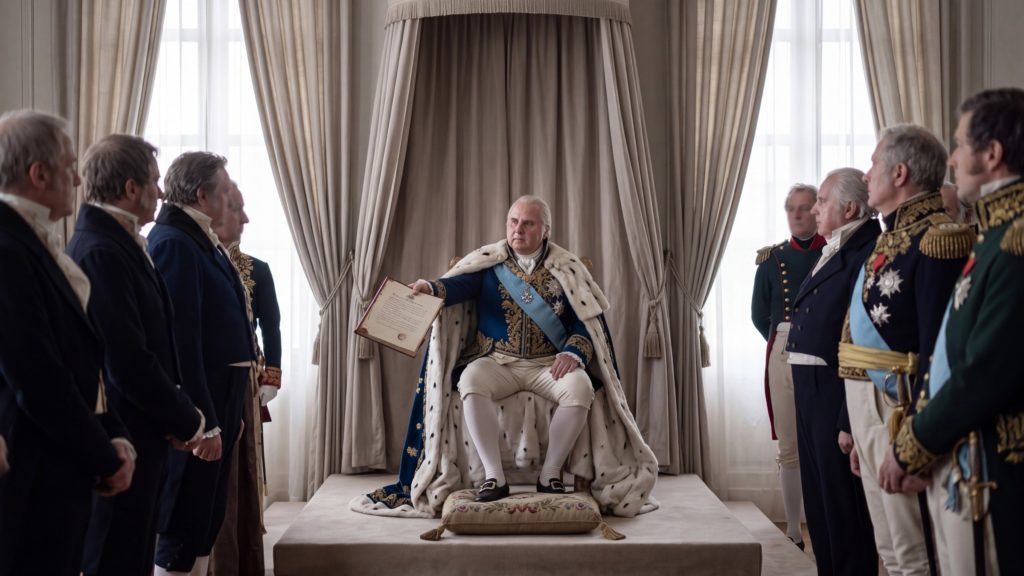
Louis XVIII returned to Paris and the throne in 1814, after more than twenty years of revolution, war and exile had swept through France without him[2, p. 64]. It was, by any measure, a very long commute back to the Tuileries.
Keith has read the fine print…
On regaining the throne, Louis granted France a Charter setting out a constitutional monarchy, and was reportedly proud to think he had given it freely rather than had it forced upon him[3]. Whether France experienced it quite that way is another matter entirely.
Roger has packed again…
When Napoleon escaped Elba in 1815 and marched on Paris, Louis fled to Ghent within about five days[4], beginning the strange interlude historians call the Hundred Days — for Louis, mostly spent watching events from just over the border.
This sounds invented, but…
Louis suffered so badly from gout that one contemporary flatly described him as "a gouty, helpless invalid" who had to be carried into his own restoration ceremonies[1, p. 51]. He returned to rule France largely unable to walk into the room under his own power.
Keith has checked the old name tag…
Before he was Louis XVIII, he was known simply as "Monsieur," the Count of Provence, the future king's official title as the elder surviving brother of Louis XVI[5, p. 84]. It is a considerably less grand name for a future monarch to carry around Versailles.
One for the Ageonauts…
During the Revolution and Napoleon's rule, Louis spent years as a wandering exile, passing through England, Sweden, Holland, Germany and elsewhere in search of safety and allies[6]. He collected a great deal of hospitality and very little actual power along the way.
Keith has read the accusation…
When Louis's nephew, the Duc de Berry, was assassinated in 1820, royalist critics tried to blame the king's own minister, Decazes. Louis defended him publicly, saying "they accuse him of having assassinated my nephew. It is not the first time they have calumniated me"[1, p. 51].
History gets strange here…
Louis's government was represented at the Congress of Vienna by Talleyrand, the very diplomat who had served Napoleon only a year before[3]. In post-Napoleonic Europe, changing sides quickly was less a scandal than a survival skill.
Roger has done some awkward maths…
Louis XVIII took his number from a nephew who never actually reigned: after Louis XVI's execution, royalists considered his young son the rightful Louis XVII, even though the boy died in prison without ever ruling[7]. Louis's own number, in other words, honours a king who never sat on the throne.
The past has entered the chat…
After Waterloo in 1815, Louis returned to Paris for a second time, in what history calls the Second Restoration[8]. Losing a throne once might be misfortune; getting it back twice from the same runaway emperor takes a certain stubbornness.

Do not treat me as a fool, Portal. I know very well that I have not long to live, and I know that I shall suffer much at the last.
Louis XVIII
Said to his physician, Dr. Portal, the year before his death, after pressing him for a candid answer about how his final illness would unfold[1, p. 51].
Timeline
How it unfolded
17 November 1755
Birth of the Comte de Provence
Louis-Xavier Stanislas, Comte de Provence and the future Louis XVIII, was born at Versailles on 17 November 1755, when it seemed extremely unlikely that he would ever inherit the crown.[1]
24 June 1795
Proclaimed Louis XVIII in Exile
After Louis XVII died in the Temple on 8 June 1795, the Regent proclaimed himself King of France as Louis XVIII on 24 June 1795 and issued a proclamation promising reform of abuses and pardon to all but the regicides.[1, p. 51]
3 May 1814
Louis XVIII Enters Paris
Louis XVIII landed at Calais on 24 April 1814 and entered Paris with solemnity on 3 May.[9] He was received with cheers, though not everyone was deceived as to the share taken by the bulk of the citizens in the ovations.[10]
4 June 1814
Charter of 1814
According to Gleig, Louis XVIII held that any concessions to the popular will would be made of his own accord as an act of grace and not as a bargain, and the result was the Charter of 4 June 1814.[11] It was a constitutional text granted by the king in the form of a royal charter.[12]
19 March 1815
Flight to Ghent
On 19 March 1815, as Napoleon reached Fontainebleau, Louis XVIII left Paris with some adherents, went to Ostend and later took up residence in Ghent.[13] The Hundred Days forced him into exile once again.[14]
8 July 1815
Second Restoration at the Tuileries
Louis XVIII returned to the Tuileries on 8 July 1815, the day after the Allies entered Paris, as the Allies had decided to restore the Bourbon dynasty.[15, p. 300] His re-entry ended the roughly Hundred Days since his flight in March.[16]
Dig Deeper
Copy any prompt below into your favourite AI chat to keep exploring.
Explain what the Second Bourbon Restoration was, and how Louis XVIII came to be restored to the French throne for a second time after Waterloo.
What does it say about power that Louis XVIII got his throne back twice without winning a single battle himself?
Tell me 3 other historical figures who, like Louis XVIII, got their old job back after their replacement spectacularly failed.
Further Reading
Where to read more
Louis XVIII
A concise reference biography covering Louis XVIII's decades of exile, his 1814 restoration, the Hundred Days, and his second reign to 1824.
Why look at this: Explains why a king who had spent 23 years in exile came back promising compromise — his 1814 Charter deliberately preserved many Revolutionary-era reforms rather than restoring the old absolute monarchy outright.
https://www.encyclopedia.com/people/history/french-history-biographies/louis-xviiiLouis XVIII (Napoléon & Empire)
A fuller biographical account of Louis XVIII's life as the comte de Provence, his emigration in 1791, his First and Second Restorations, and his dealings with Napoleon's return during the Hundred Days.
Why look at this: Covers his second flight into exile in March 1815, to Ghent, when Napoleon returned from Elba — and his return to Paris only after Waterloo, this time for good.
https://www.napoleon-empire.org/en/personalities/louis_XVIII.phpConstitutional Charter of 1814 (The Napoleon Series, primary document)
The full English translation of the Charter Louis XVIII personally granted on 4 June 1814, establishing France's post-Napoleonic constitutional monarchy.
Why look at this: This is the actual constitutional settlement Louis XVIII offered France on taking the throne — a bicameral legislature and civil liberties granted as a royal gift rather than won by revolution, the deal that defined his entire reign.
https://www.napoleon-series.org/research/government/legislation/c_charter.htmlRelated
Keep exploring



Places




Can be seen in
Where this shows up

References
Sources
Sources
- BookLouis XVIII by Mary Frances Sandars. Page 51. ↑
- BookThe life of Wellington : the restoration of the martial power of Great Britain by Herbert Maxwell. Page 64. ↑
- BookThe Bourbon restoration by John Richard Hall ↑
- BookThe Life of Napoleon Bonaparte. Vol. 4 (of 4) by William Milligan Sloane ↑
- BookThe great French revolution, 1789-1793 by Petr Alekseevich Kropotkin and N. F Dryhurst. Page 84. ↑
- BookFive American politicians; a study in the evolution of American politics. I. Aaron Burr, father of the political… by Samuel Peter Orth ↑
- Websiteworldhistory.org: Louis XVII of France ↑
- BookNapoleon the Third; the romance of an emperor by Walter Geer ↑
- BookThe French revolution from 1789 to 1815 by M. Mignet and James Westfall Thompson ↑
- BookNapoleon and the Campaign of 1814 by Henry Houssaye ↑
- BookStory of the battle of Waterloo by G. R. Gleig ↑
- Websiteen.wikipedia.org: Charter of 1814 ↑
- BookNapoleon : a history of the art of war, from the beginning of the peninsular war to the… by Theodore Ayrault Dodge ↑
- Websitenapoleon-empire.org: Louis XVIII ↑
- BookNapoleon and Waterloo, the emperor's campaign with the Armée du Nord, 1815; a strategical and tactical study by Archibald Frank Becke. Page 300. ↑
- BookA short history of Europe from the dissolution of the Holy Roman empire to the outbreak of the… by Charles Sanford Terry ↑
- Websiteen.wikipedia.org: Louis XVIII ↑