
Churchill with the Nobel Prize in Literature, awarded in 1953 for his historical writing and oratory, his own volumes stacked beside the typewriter.
Prime Minister of the United Kingdom
Long before he became the wartime Prime Minister remembered for refusing to surrender, he was a soldier and journalist who had already been taken prisoner in one war and made a daring escape[1].
Bio
Who they were
Winston Leonard Spencer Churchill was born at Blenheim Palace on 30 November 1874[2]. His father, Lord Randolph Henry Spencer Churchill, was a descendant of John Churchill, the first Duke of Marlborough[2]. His mother, Jeanette "Jennie" Jerome, was an American from Brooklyn, daughter of a New York financier[2]. Churchill was proud of this mixed ancestry: addressing the US Congress in 1941, he joked that had his parents' nationalities been reversed, "I might have got here on my own!"[2]. From Harrow, he went straight to the Royal Military College at Sandhurst[3].
Churchill entered the army in 1895 and served in Cuba, India, Egypt and the Sudan, publishing his first books from these campaigns, including The Story of the Malakand Field Force[1][4]. On a commission for the Morning Post he covered the Boer War, was captured after Boers ambushed an armoured train he was travelling on, and later escaped[5][1]. In October 1900 he was elected Conservative MP for Oldham[3, p. 124]. He crossed to the Liberal party in 1904, and by 1911 had risen to First Lord of the Admiralty[1].
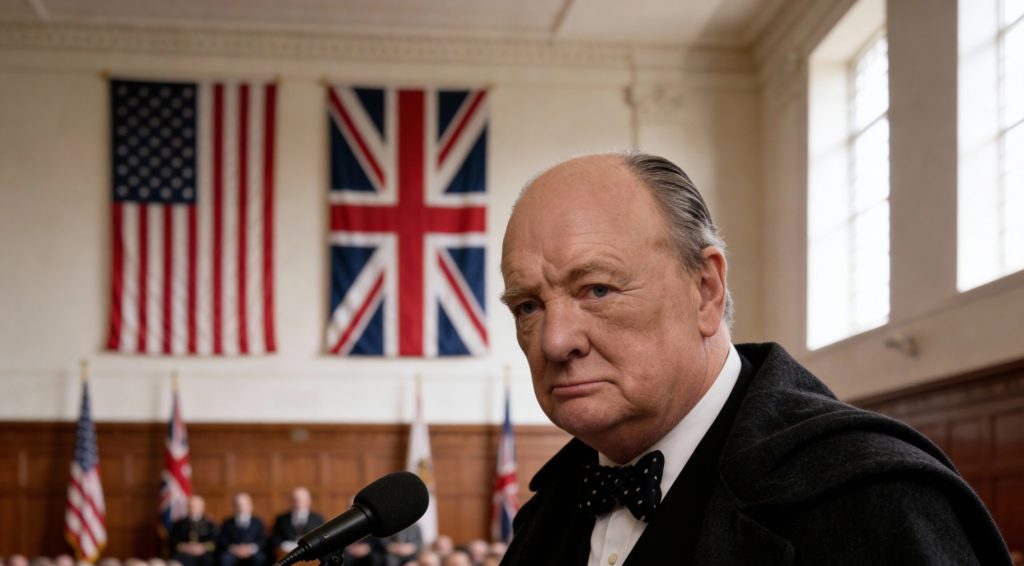
As First Lord of the Admiralty, Churchill pushed to modernise the Royal Navy ahead of war with Germany, but left the post in May 1915 after the failed Gallipoli campaign and served briefly as a Lieutenant-Colonel in France[1][6]. He returned to government through the 1920s as Chancellor of the Exchequer, then resigned in 1931 and spent the 1930s writing[1]. Recalled in September 1939 after Germany invaded Poland, he became Prime Minister in May 1940 when Chamberlain was forced out[1]. During the Battle of Britain he told the Commons that never in the field of human conflict had so much been owed by so many to so few[1, p. 483].
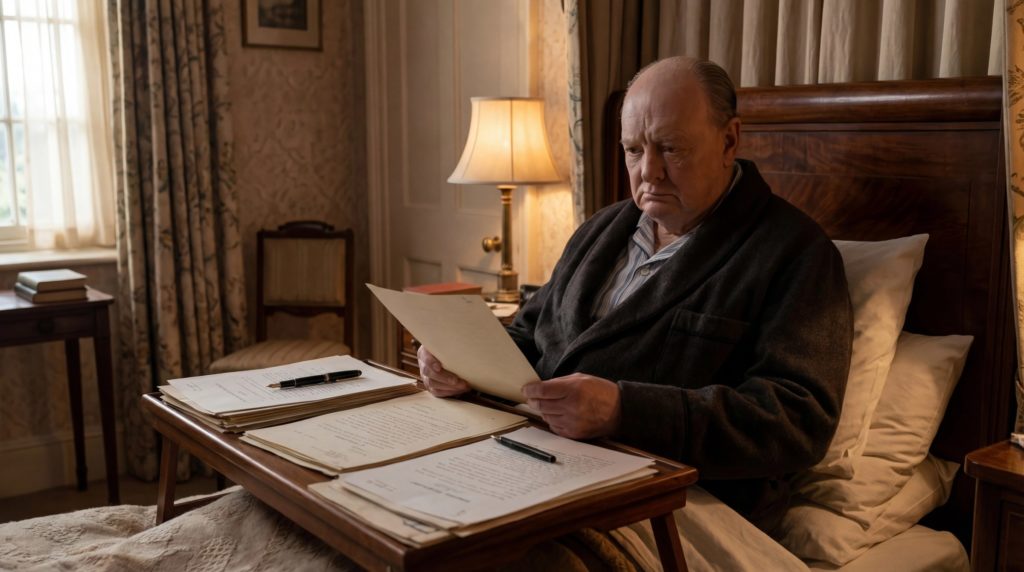
Churchill remained Prime Minister until May 1945[1]. He spent the years after 1945 largely writing his history of the war, before returning to office in 1951[1]. In 1953 he accepted the Order of the Garter and the Nobel Prize in Literature[1]. Ill health forced his resignation as Prime Minister in April 1955, though he kept writing, completing A History of the English-Speaking Peoples[1]. He died at the age of ninety (the library does not give an exact death date)[1].
Churchill's wartime speeches, including his tribute to the Battle of Britain's fighter pilots, are still quoted as some of the best-known lines in English political oratory[1, p. 483]. His own multi-volume history of the war and his later A History of the English-Speaking Peoples shaped how generations understood both the conflict and Britain's past[1]. He also drew on his American ancestry to help cement the wartime "Special Relationship" with the United States, a link he and President Roosevelt both enjoyed noting as distant cousins[2].
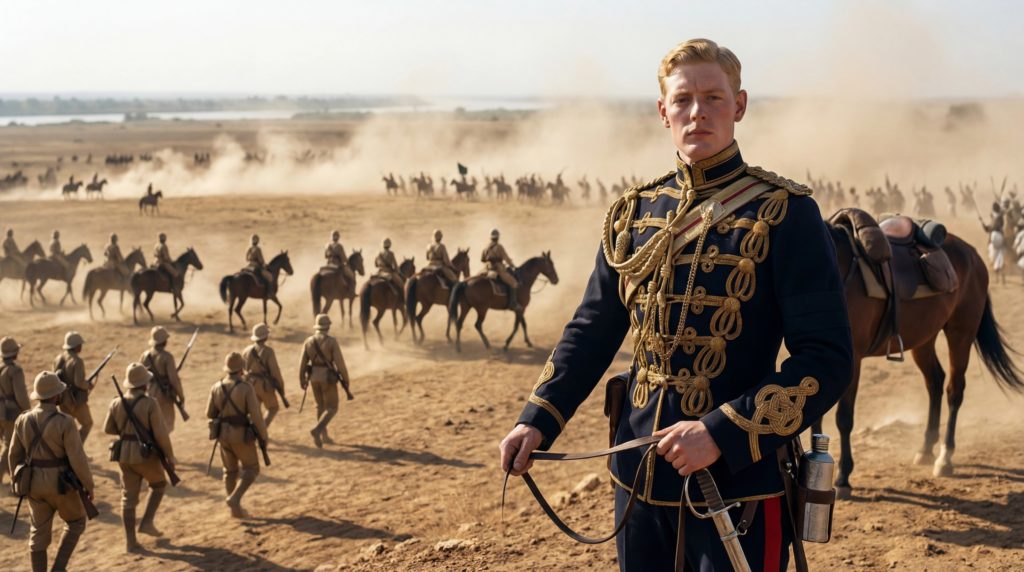
Churchill liked reminding Americans he was one of their own: accepting an honorary degree in 1941, he said that given his English father and American mother, "I expect I was on both sides then, and I must say I feel on both sides of the Atlantic Ocean now"[2]. At least four of his mother's ancestors had fought against Britain in the American War of Independence[2].
Legacy & Reputation
What’s the verdict?
Writing in the Society of the Cincinnati’s own journal, its historians frame Churchill’s mixed British-American ancestry as central to his legacy, arguing he “made the most of it” in building the wartime Anglo-American alliance[2].
Myth-buster
Think you know this one?
It’s easy to assume Churchill’s career was defined entirely by the Second World War; in fact by 1940 he had already been a published war correspondent, an escaped prisoner of war, and a government minister across three decades[1].
Quick Facts
The essentials
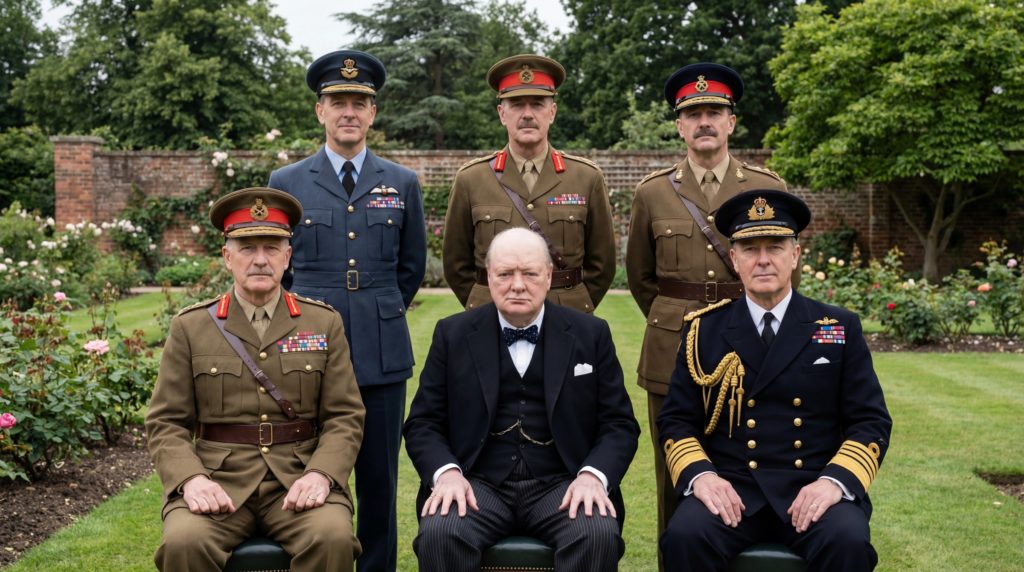
Quick Facts
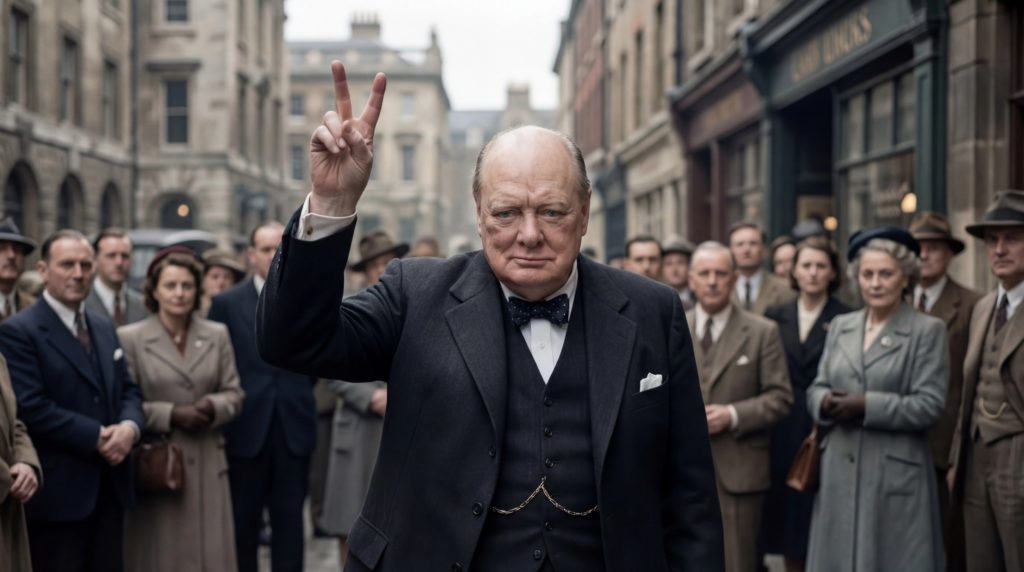
Roger would like you to know…
Churchill was born at Blenheim Palace on 30 November 1874[2]. He wasn't born into a cottage; he arrived at one of the grandest stately homes in England, seat of the Dukes of Marlborough, decades before anyone had heard of him.
Keith checked the sources…
His father, Lord Randolph Churchill, was a brilliant, erratic Conservative politician whose career "flashed across the political firmament like a dazzling meteor burning himself out too soon"[3]. Winston spent much of his early career finishing what his father started.
One for the Ageonauts…
Churchill's mother, Jennie Jerome, was American. Her father Leonard was described as "a New York financier and sometime editor of the New York" press[2] — half-American blood in Britain's future wartime leader, long before "special relationship" was a diplomatic phrase.
Roger has entered the historical rabbit hole…
Captured and then escaped during the Boer War, Churchill became wanted property: Pretoria's authorities posted a genuine notice offering twenty-five pounds for "the escaped prisoner of war CHURCHILL, dead or alive"[3]. He kept a copy.
Keith would like to clarify…
In his own account of that escape, Churchill admitted he left out crucial details, writing that "a man's life depends upon my discretion"[5]. Not narrative modesty — he was protecting the people who had risked themselves to help him.
A small fact with a very large consequence…
Churchill remains one of the few people ever granted honorary United States citizenship. Congress voted the honour in 1963, and it was formally proclaimed for the wartime ally[7] — largely symbolic, but a genuinely rare distinction.
Roger says, "Hear me out…"
Churchill's career reads like several lives stapled together: Under-Secretary for the Colonies in 1906, First Lord of the Admiralty by 1911, then, after resigning from government in 1915, a serving Lieutenant-Colonel in the trenches of France[1].
Keith has spotted the quotation problem…
Popular retellings say Churchill's "black dog" was his own private name for his depression — it's one of the most-quoted things ever attributed to him, though how often, or whether, he actually used those exact words is genuinely disputed among historians.
File under: surprisingly true…
In 1953, the same year he accepted the Order of the Garter, Churchill also won the Nobel Prize — not for a treaty or a victory, but for Literature, largely on the strength of his own history writing[1].
Down the rabbit hole we go…
As a government minister touring East Africa in 1908, Churchill wrote about the newly built Uganda Railway pushing on toward Lake Albert[8, p. 71] — empire ambition told through timetables and track-laying, decades before the wartime speeches.
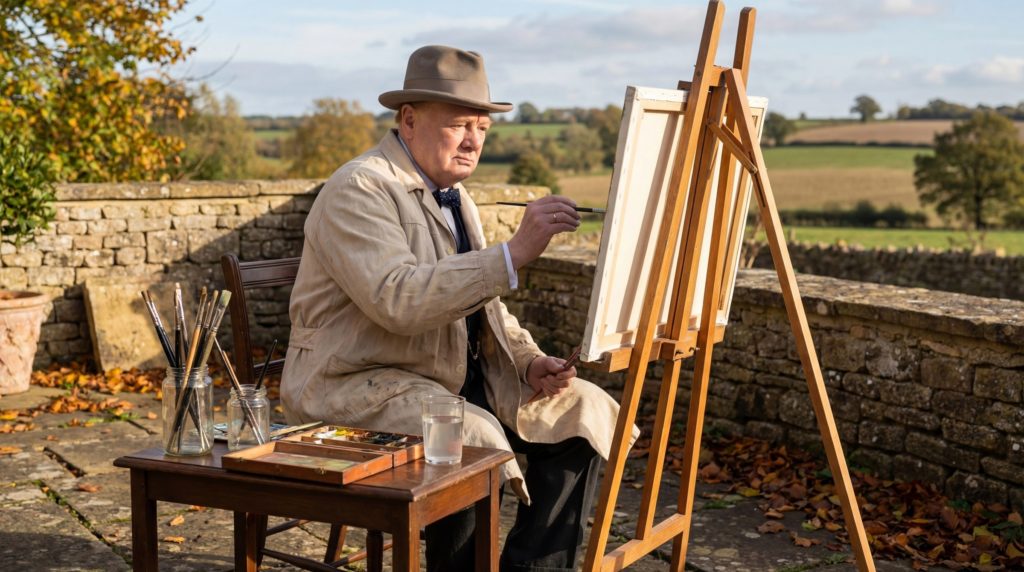
Had my father been American and my mother British, instead of the other way round, I might have got here on my own!
Winston Churchill
From his first address to a joint session of the US Congress in 1941, referencing his English father and American mother[2].
Timeline
How it unfolded
30 November 1874
Birth of Winston Churchill
Winston Leonard Spencer Churchill was born at Blenheim Palace, the ancestral home of the Dukes of Marlborough.[9] He was born into the aristocratic Spencer-Churchill family while his parents were staying at the palace.[10]
October 1900
Churchill Elected MP for Oldham
Churchill won a narrow victory as a Conservative candidate at Oldham in the October 1900 general election and entered Parliament at the age of 25.[11] A later biographical note likewise says he was elected Conservative M.P. for Oldham in October 1900.[1]
10 May 1940
Churchill Becomes Prime Minister
Churchill became British prime minister in succession to Neville Chamberlain, who had resigned after losing crucial support following Britain's failure to save Norway from German occupation.[12]
8 May 1945
Churchill Announces Victory in Europe
Churchill broadcast to the nation that Germany's High Command had signed the act of unconditional surrender, and that hostilities would end officially one minute after midnight that night.[13]
5 March 1946
Churchill's Iron Curtain Speech
At Westminster College in Fulton, Missouri, Churchill delivered the address he titled the Sinews of Peace, containing the line that an iron curtain had descended across the Continent from Stettin to Trieste.[14] President Truman accompanied him to Fulton and was present for the speech.[15]
16 October 1953
Churchill Wins the Nobel Prize in Literature
Churchill learned that he had been awarded the 1953 Nobel Prize in Literature, which the Swedish Academy gave for his mastery of historical and biographical description and for brilliant oratory in defending exalted human values.[16]
24 January 1965
Death of Winston Churchill
Churchill died on the morning of Sunday 24 January 1965 at his home at 28 Hyde Park Gate, London.[17]
30 January 1965
State Funeral of Winston Churchill
Churchill's state funeral was held on 30 January, after which, at his own request, he was buried in the family plot at St Martin's Church, Bladon, near Woodstock and not far from his birthplace at Blenheim Palace.[18]
Dig Deeper
Copy any prompt below into your favourite AI chat to keep exploring.
Explain how a young Winston Churchill was taken prisoner during the Boer War and then made his famous escape from captivity.
What does it say about Churchill that his first brush with fame came from escaping capture, decades before he became known for refusing to surrender?
Pitch young Churchill's prisoner-of-war escape like the opening heist scene of an action movie.
Further Reading
Where to read more
Winston Churchill
Britannica's core biography of Churchill, from his birth at Blenheim Palace through his wartime premiership to his death in 1965.
Why look at this: Traces the direct line from his 1899 escape from Boer captivity - which made him a celebrity - to his election to the Commons within a year, showing how his early fame built the political career that let him rally Britain as prime minister in 1940.
https://www.britannica.com/biography/Winston-ChurchillThe Life of Churchill (International Churchill Society)
An interactive timeline hub from the International Churchill Society tracing Churchill's life across seven periods, from childhood to his 1965 funeral.
Why look at this: Covers the 'Wilderness Years' (1933-1939), when Churchill held no government office and was repeatedly ignored in Parliament as he warned about German rearmament - the sidelined decade that makes his recall as prime minister in May 1940 so striking.
https://winstonchurchill.org/the-life-of-churchill/Churchill Archives Centre Access Portal
The Churchill Archives Centre's free digitised-materials portal, launched in 2023, giving open online access to family papers, photo albums and correspondence.
Why look at this: Includes Clementine Churchill's actual 1914 letter to Winston, hastily written in crayon urging him not to fly and signed with her characteristic cat doodle - a private moment behind the public wartime image.
https://oa.churchillarchives.libnova.comRelated
Keep exploring
People
Can be seen in
Where this shows up
References
Sources
Sources
- BookThe Second World War, Volume 6: Triumph and Tragedy by Winston S. Churchill. Page 483. ↑
- BookInternet Archive: SelectionsFromC14Vol4 ↑
- BookWinston Spencer Churchill by Alexander Maccallum Scott. Page 124. ↑
- BookThe Story of the Malakand Field Force: An Episode of Frontier War by Winston Churchill ↑
- BookLondon to Ladysmith via Pretoria by Winston Churchill ↑
- BookThe World Crisis, Volume 1 (of 6) by Winston Churchill ↑
- DocumentProclamation 9658 ↑
- BookMy African journey by Winston Churchill. Page 71. ↑
- Websitenationalchurchillmuseum.org: Winston churchill early life ↑
- Websiteblenheimpalace.com: Winston churchill life and death ↑
- Websiteen.wikipedia.org: Early life of Winston Churchill ↑
- Websiteencyclopedia.ushmm.org: Winston churchill becomes prime minister ↑
- Websitewinstonchurchill.org: End of the war in europe ↑
- Websitewinstonchurchill.org: The sinews of peace ↑
- Websiteen.wikipedia.org: Fulton Speech ↑
- Websitewinstonchurchill.hillsdale.edu: Churchills nobel prize peace literature ↑
- Websiteen.wikipedia.org: Death and state funeral of Winston Churchill ↑
- Websitewinstonchurchill.org: In memoriam / funeral ↑