
Joseph Fouche, Minister of Police under the Directory, Consulate, Empire and the restored Bourbons, the type of the political survivor.
Minister of Police under the Directory, Consulate and Napoleon
A former teacher at a Catholic religious college who voted to execute Louis XVI went on to build and run Napoleon's secret police network, all while privately distrusting the emperor he served[1][2][3].
Bio
Who they were
Joseph Fouché was born in the seaport town of Nantes; sources disagree on the exact year, giving both 1760 and 1763[3][4]. He was educated for a religious vocation and became a teacher at the Oratorian college of Juilly, part of a Catholic teaching order rather than the ordinary parish priesthood[1]. It was an unlikely starting point for a man who would go on to run revolutionary France's internal security apparatus.
Fouché's path into politics began with the Revolution: he was elected a deputy to the National Convention, representing the Côte-d'Or[5]. As a Convention deputy during the Terror, he took a hard revolutionary line, voting for the execution of King Louis XVI without any right of appeal[2][1]. He built a reputation for ruthless efficiency in enforcing revolutionary policy, a reputation that positioned him for the role that would define the rest of his career: running the state's internal security and surveillance apparatus.
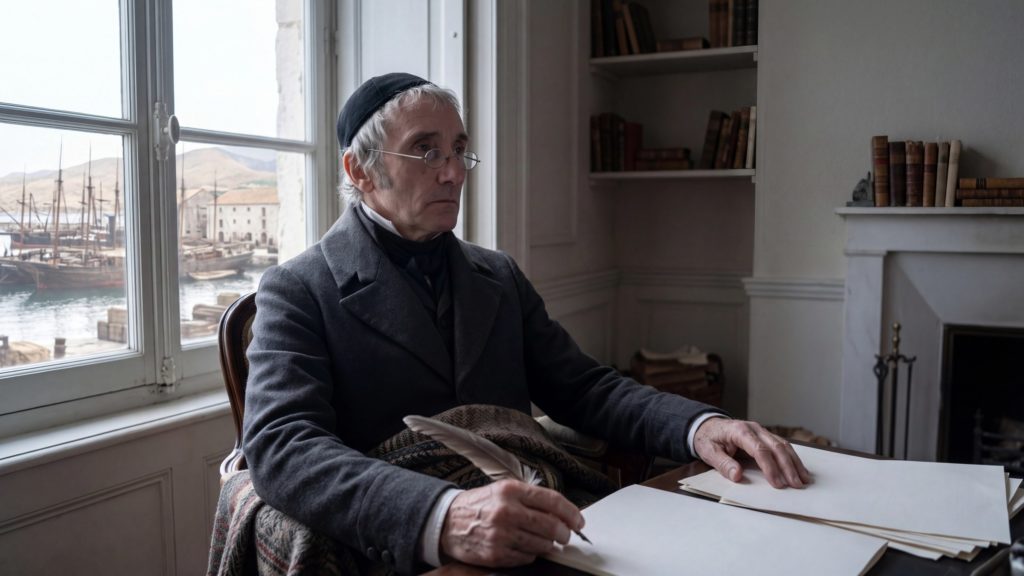
In 1799 Fouché was appointed minister of police, a post he used to build an extensive network of surveillance and informants across France[3]. He backed Napoleon Bonaparte's coup against the Directory on 18–19 Brumaire, helping smooth the general's path to power[5, p. 128]. Fouché kept his position through much of the Consulate and Empire, and was later made Duke of Otranto[6]. His relationship with Napoleon remained tense even as he served him for years; after Napoleon's final defeat, Fouché insisted, "It was not I who betrayed Napoleon, but Waterloo"[7, p. 268].
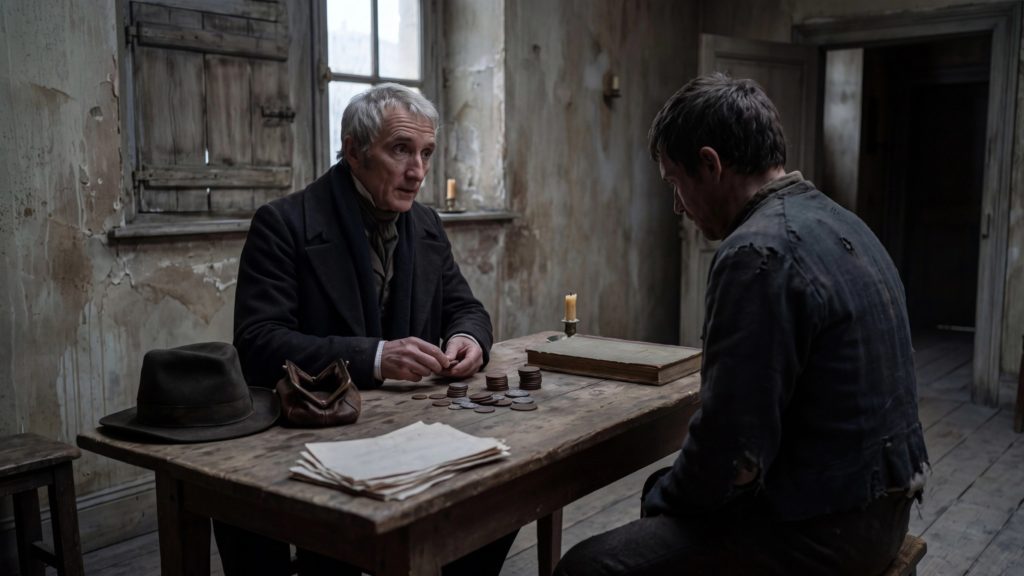
Fouché briefly served as police minister again during Napoleon's Hundred Days in 1815, before the emperor's final fall[5]. With the return of the Bourbon monarchy, his history as a regicide who had voted for Louis XVI's execution made him politically unacceptable, and he spent his final years in exile, dying at Trieste on 25 December[3].
Fouché's tenure as police minister set a template for centralized state surveillance that outlasted his own career, built on a network of informants that reached deep into French society[3]. His willingness to serve successive governments, from the revolutionary Convention through Napoleon's Empire and briefly the Hundred Days, has made him a case study in political survival under regime change[5]. As Duke of Otranto, he also illustrates how far the Revolution and Empire could elevate an ordinary provincial teacher into the highest ranks of the state.
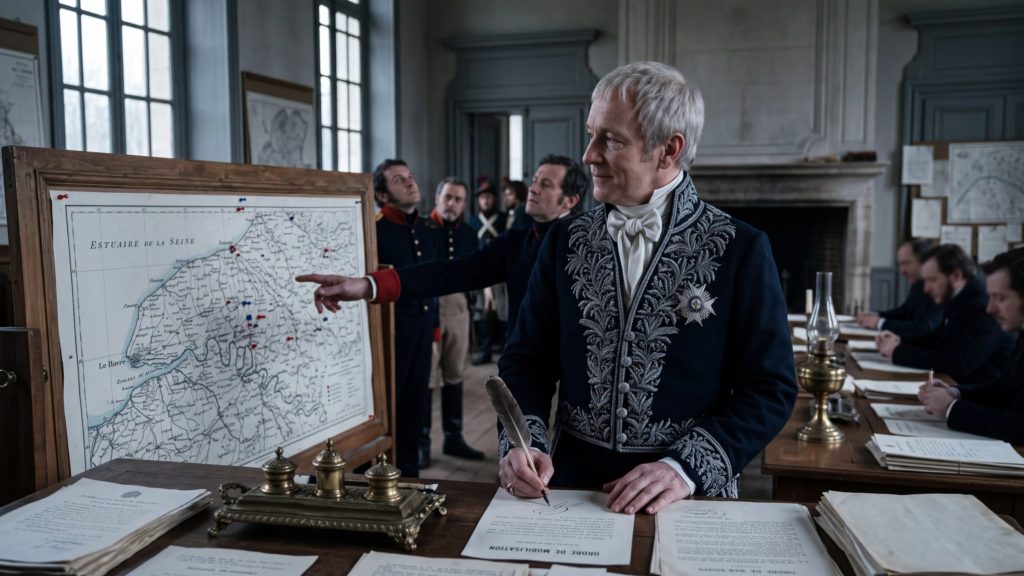
Fouché and Napoleon's foreign minister Talleyrand were rivals for influence, yet according to contemporary accounts the two privately agreed to protect each other regardless of which of them fell out of favor first — a pact between two of the most distrusted men in Napoleonic France, made because neither fully trusted anyone else[8].
Legacy & Reputation
What’s the verdict?
Fouché’s reputation has always been ambivalent. Napoleon relied on Fouché’s intelligence network for years while never fully trusting him, at one point directly questioning him rather than working through intermediaries[8]. Historians have similarly split between viewing him as an indispensable administrator who brought order to a chaotic state security apparatus, and viewing him as the prototype of the amoral political survivor, willing to serve — and abandon — whichever government held power.
Myth-buster
Think you know this one?
Fouché is sometimes remembered simply as Napoleon’s loyal secret-police chief. In reality theirs was a relationship of mutual distrust, and Fouché denied personal responsibility for Napoleon’s downfall, insisting, “It was not I who betrayed Napoleon, but Waterloo”[7, p. 268].
Quick Facts
The essentials
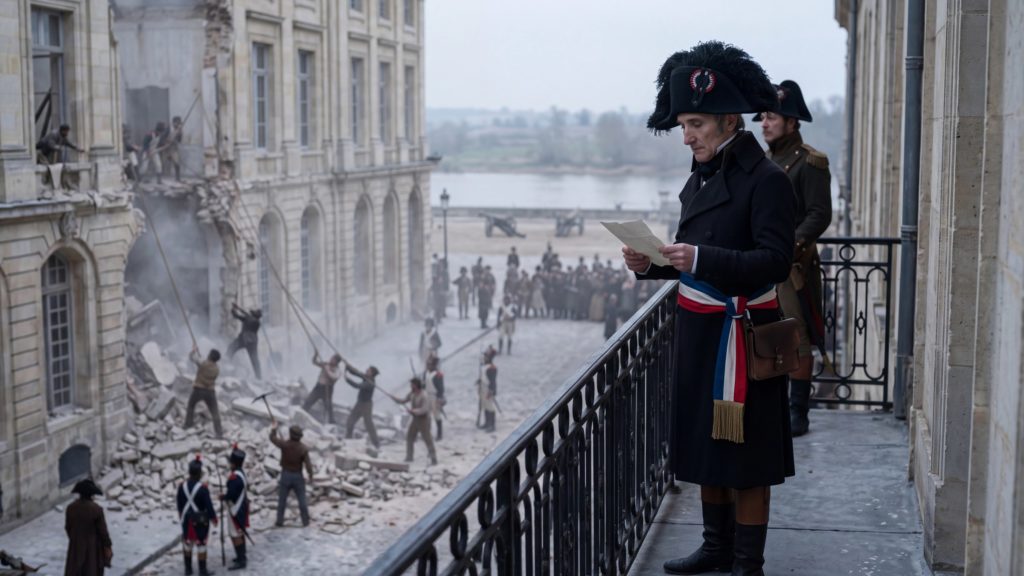
Quick Facts
Roger would like you to know…
Fouché earned one of the grimmest nicknames of the Revolution: "le mitrailleur de Lyon", the machine-gunner of Lyon, for his role suppressing the city's revolt with mass executions[7, p. 268]. It is a name his later respectability never quite managed to live down.
Keith checked the sources…
Fouché was one of the deputies who voted to send Louis XVI to the guillotine, and for the rest of his career opponents made sure to call him "the regicide" whenever it was politically useful[7, p. 268].
History has added a footnote…
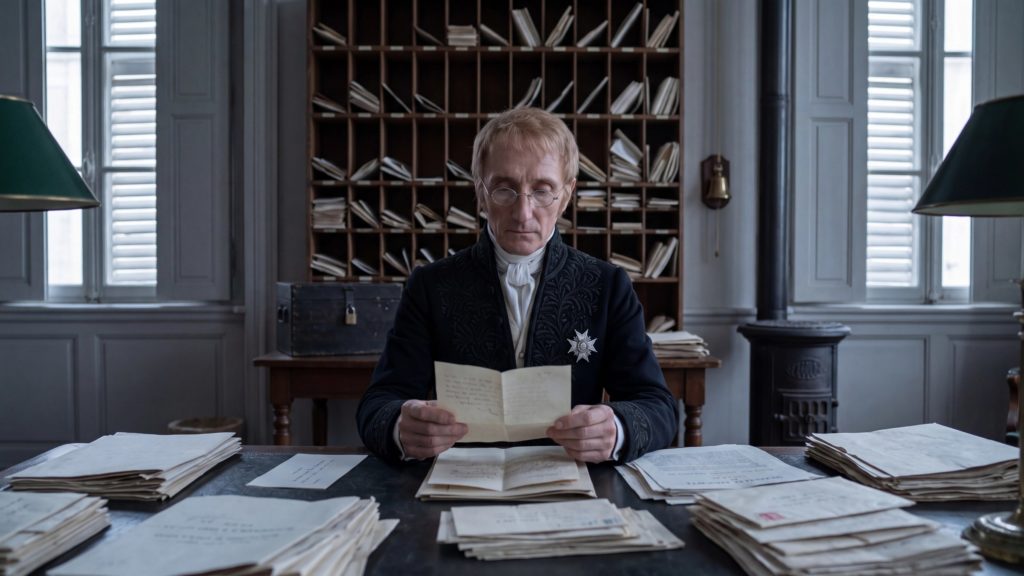
As Minister of Police, Fouché rebuilt France's surveillance apparatus into what contemporaries called a thoroughly complete system, drawing on informers across the city to feed information back to one man[8].
Roger has a theory…
For his service to the Empire, Napoleon made Fouché Duke of Otranto, and by his own biographer's account the new duke moved in a diplomatic circle that included Wellington, Metternich and Talleyrand[7, p. 268].
Keith would like to clarify…
Fouché was, by his own biographers' account, indispensable to Napoleon, and Napoleon dismissed him from office twice anyway[3]. Being useful to the Emperor and being trusted by him were evidently never quite the same thing.
One for the Ageonauts…
Fouché and Talleyrand ran what one biographer calls a drawn-out duel for influence, two supremely adaptable survivors of the Revolution circling one another through every regime that followed it[7, p. 268].
History gets strange here…
Fouché once made overtures to Robespierre even as their rivalry deepened, but the peace never held. What his biographer calls the duel between the two men ended only with Robespierre's fall from power[8].
Roger insists this matters…
Fouché's police relied on an army of ordinary people — doorkeepers, informers and talebearers — recruited to feed him information from every corner of Parisian life[7, p. 268].
Keith remains unconvinced…
Few Revolutionary figures survived as many changes of regime as Fouché did. He served through the Republic, the Consulate, the Empire and briefly the Restoration, prompting his biographer to marvel at how completely he outlived a revolution that consumed almost everyone around him[9, p. 346].
The past has entered the chat…
Fouché's model of a centralised secret police, answerable directly to the head of state and reaching into ordinary households through informers, is still pointed to by historians as an early blueprint for the modern political police[7, p. 268].
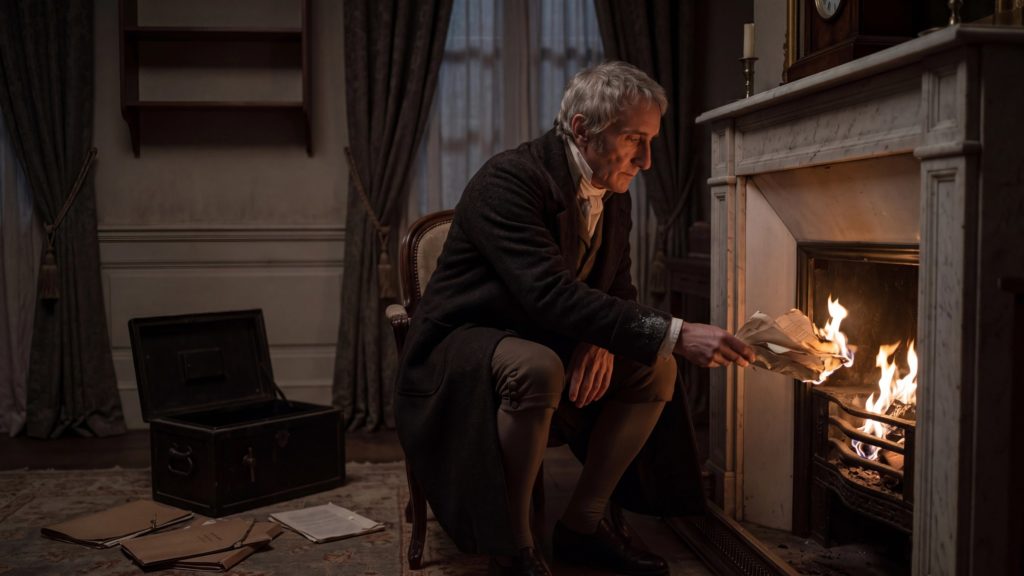
It was not I who betrayed Napoleon, but Waterloo.
Joseph Fouché
Said in response to accusations that he had personally betrayed Napoleon during the Hundred Days of 1815, shifting responsibility instead to the military defeat at Waterloo[7, p. 268].
Timeline
How it unfolded
May 1759
Birth of Joseph Fouché
Joseph Fouché was born in May 1759 near the seaport of Nantes, the child of seafaring and merchant parents.[7, p. 268][10]
November 1793
Fouché Sent to Lyon
The Convention sent Fouché with Collot d'Herbois to Lyons in November 1793 to carry out the decree for the town's destruction.[8] Stefan Zweig says it was as the mitrailleur de Lyon that he first made his mark on history.[7, p. 268]
July 1799
Fouché Becomes Minister of Police
While on a mission to Holland, Fouché was appointed Minister of Police of the Directory in July 1799.[8][7, p. 268][10]
9 November 1799
Fouché and the Coup of 18 Brumaire
On the day of the coup, 9 November 1799 (18 Brumaire), Fouché suspended the municipalities, according to McCabe.[11] Wikipedia says his activity in furthering the coup ensured him the favour of Bonaparte.[10]
3 June 1810
Fouché Dismissed as Minister of Police
Napoleon dismissed Fouché from the Ministry of Police on 3 June 1810 after finding that Fouché had made secret overtures to the British cabinet.[10] Savary succeeded him in the post.[12, p. 403][8]
June 1815
Fouché Heads the Provisional Government
Fouché served as Napoleon's Minister of Police during the Hundred Days and, after Napoleon's abdication, as president of the provisional government of June 1815.[13, p. 135][10]
Dig Deeper
Copy any prompt below into your favourite AI chat to keep exploring.
Explain how Joseph Fouché built and ran Napoleon's secret police network while privately distrusting the emperor he served.
What does it mean that the man running Napoleon's surveillance network never actually trusted the man he was protecting?
Roast Joseph Fouché for spending his career serving governments he was already planning to betray.
Further Reading
Where to read more
Joseph Fouche, duc d'Otrante (Encyclopaedia Britannica)
Britannica's biography of Fouche, from his time as an Oratorian teacher through his vote for Louis XVI's execution and his career as Napoleon's police minister.
Why look at this: Covers Fouche's vote for the king's death at the Convention in January 1793 — the act that made him, decades later, one of the regicides banished at the Bourbon Restoration.
https://www.britannica.com/biography/Joseph-Fouche-duc-dOtranteJoseph Fouche (Encyclopedia.com)
A fuller reference biography tracing Fouche's five separate terms as Minister of Police across six different French regimes, from the Directory through the Hundred Days.
Why look at this: Sets out exactly how he survived regime after regime — earning the name "terrorist" for crushing the Vendee and Lyon uprisings in 1793-94, then serving Napoleon, then quietly working for Louis XVIII's restoration in 1815 while still holding the police portfolio.
https://www.encyclopedia.com/people/history/french-history-biographies/joseph-foucheMemoirs of Joseph Fouche, Duke of Otranto, Minister of the General Police of France (1825 English edition, Internet Archive)
An early English translation of the memoirs published under Fouche's name in 1824, purporting to give his own account of his police ministry. Note: historians have long disputed how much of this text Fouche actually wrote himself versus his editor, Alphonse de Beauchamp — flagged here as a genuine open question, not settled fact.
Why look at this: Reading this alongside its authorship controversy is itself a lesson in how an unreliable insider account, real or embellished, still shaped two centuries of Fouche's reputation as the ultimate political survivor.
https://archive.org/details/memoirsofjosephf00foucRelated
Keep exploring








Can be seen in
Where this shows up
References
Sources
Sources
- BookThe French revolution : a historical sketch by Walter Geer ↑
- BookThe French Revolution : a study in democracy by Nesta Helen Webster ↑
- DocumentThe New Student's Reference Work/Fouche, Joseph ↑
- BookAuthentic memoirs of the public life of M. Fouché, duke of Otranto. Comprising various letters addressed to the… by Benno Loewy K. L. ↑
- BookThe Memoris Of Joseph Fouche ( Vol - Ii ). Page 128. ↑
- Document1911 Encyclopædia Britannica/Fouché, Joseph, Duke of Otranto ↑
- BookJOSEPH FOUCHE THE PORTRAIT OF A POLITICIAN STEFAN ZWEIG by STEFAN ZWEIG. Page 268. ↑
- BookThe memoirs of Joseph Fouché, duke of Otranto, minister of the General police of France by Joseph Fouché and Alph. de Beauchamp ↑
- BookMemoirs of Joseph Fouché : Duke of Otranto, minister of the General Police of France : with portraits by Joseph Fouché. Page 346. ↑
- Websiteen.wikipedia.org: Joseph Fouché ↑
- BookTalleyrand, a biographical study by Joseph McCabe ↑
- BookWith Napoleon in Russia: The Memoirs of General de Caulaincourt Duke of Vicenza by Armand-Augustin-Louis de Caulaincourt. Page 403. ↑
- BookMemoirs of Napoleon Bonaparte — Complete by Louis Antoine Fauvelet de Bourrienne. Page 135. ↑