
Riders and passers-by cross the Carrousel courtyard before the palace range, the Paris address Napoleon moved into as First Consul on 19 February 1800.
The Tuileries Palace was the great Paris residence that stood beside the Louvre for three centuries — home to kings, an emperor, and finally a fire that left nothing standing at all.
About the Place
Why it matters
Catherine de Médicis had a new royal residence built beside the Louvre, on the western edge of Paris, in the 1560s[1, p. 977]. Construction involved the royal architect Philibert Delorme, and decorative sculpture for the palace's principal front is dated to shortly after 1564, probably around 1568[1, p. 674][1, p. 301]. For much of the following century it stood as a distinct palace, only later drawn into a single complex alongside the Louvre.
The Tuileries became the fixed residence of the French crown in the autumn of 1789, when Louis XVI and Marie-Antoinette took up residence there[2]. It stood beside its own formal gardens, whose plantings under André Le Nôtre had by the nineteenth century matured into tall, stately groves[1, p. 395]. From this point the palace sat at the centre of French political life through revolution, empire, and restoration.
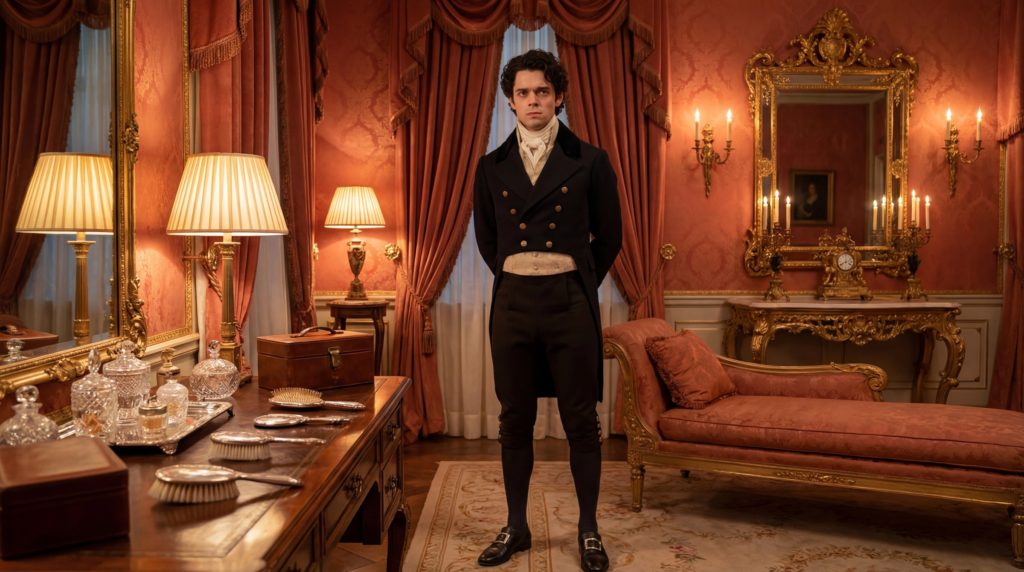
On the evening of 28 February 1791, National Guard lieutenant Nicolas Grellier arrived at the Château des Tuileries with sixty volunteers, ordered there as a reserve corps to keep order[3]. Around half past eight, his men stopped a stranger in a red coat and embroidered yellow waistcoat, denounced by onlookers as carrying concealed arms and trying to reach the King's own apartments; Grellier had him arrested and brought in for questioning[3]. The palace, still Louis XVI's official residence, was already a building under armed watch, with an insurrection that would break into it outright still to come.
The Tuileries' role as an imperial residence ended abruptly: Empress Eugénie heard mass in the palace on 4 September 1870[2]. The palace was burned during the collapse of the Paris Commune in May 1871 and was never rebuilt; the ruins were ultimately demolished in 1883, leaving only its formal gardens, the Jardin des Tuileries, on the site today[4][5].
Legacy & Reputation
What’s the verdict?
The Tuileries occupies an unusual place in French memory: for three centuries it was a working seat of power — home to Bourbon kings, and, under the First Consul and later Emperor Napoleon Bonaparte, decorated closely enough with his image that one of its state rooms was nicknamed the Salon Consulat[6] — yet almost nothing of the building itself survives to visit. Its 1871 destruction has made it as much an absence as a monument, discussed by historians chiefly as a “phantom palace”[5].
Myth-buster
Think you know this one?
Because the name survives in the Jardin des Tuileries and the Louvre looks so continuous today, many visitors assume the Tuileries Palace is still standing somewhere inside the Louvre complex. In fact it burned in 1871 and was fully demolished by 1883; nothing of the building remains on the ground today[4].
Quick Facts
The essentials
Quick Facts
Keith would like to clarify
There is no Tuileries Palace to visit in Paris today — it burned in 1871 and was demolished in 1883, so the "Tuileries" most tourists know is only the garden that took its name.[4]
Roger would like you to know
One of the Tuileries' state rooms was nicknamed the Salon Consulat simply because of its colour scheme and the portraits of General Bonaparte hanging in it — interior decorating, First Consul style.[6]
One for the Ageonauts
The Tuileries only became the French royal family's full-time Paris home from 6 October 1789, when Louis XVI and Marie-Antoinette took up residence there.[2]
Keith checked the sources
Catherine de Médicis had the Tuileries built beside the Louvre in the 1560s, with the royal architect Philibert Delorme among those responsible for the work.[1, p. 977][1, p. 674]
Roger has a theory
Paris's most awkward wardrobe moment happened at the Tuileries in 1791, when guards arrested a mystery man in a red coat and embroidered yellow waistcoat for allegedly hiding weapons and trying to reach the King's apartments.[3]
History gets strange here
On the night of 28 February 1791, sixty National Guard volunteers were posted at the Tuileries purely to keep order among the crowds gathering outside the King's own front door.[3]
Keith's footnote
When the ruins were finally cleared away in 1883, Paris chose not to rebuild on the site — the gap it left is why the Louvre's courtyard now opens straight into the gardens that still carry the palace's old name.[4]
Roger insists
The Tuileries never really left Paris — its name lives on in the Tuileries Garden that has occupied the site since the palace disappeared, still one of the city's best-known green spaces.[4]
The Age Team would like you to know
The Tuileries' formal gardens were laid out under André Le Nôtre, and by the nineteenth century his plantings had grown into tall, stately groves — a design legacy worth digging into further.[1, p. 395]
Somewhere in the archives
The last Empress to live at the Tuileries, Eugénie, is recorded hearing mass in the palace on 4 September 1870 — one of the last precisely dated moments of imperial life there before the palace passed out of royal and imperial hands for good.[2]
It is not everything, Bourrienne, to be at the Tuileries; the thing is to stay there.
Napoleon Bonaparte
Recalled by his secretary Louis-Antoine de Bourrienne on the day Napoleon moved in as First Consul, 19 February 1800. The line survives only through Bourrienne's memoirs, written after the two men fell out.
Timeline
How it unfolded
1564
Catherine de' Medici begins the Tuileries Palace
In 1564 Catherine de Medici, widow of Henry II, acquired the site and employed Philibert Delorme to build a magnificent palace there.[7] Geer adds that Delorme and Jean Bullant made it one of the most beautiful examples of the French Renaissance.[8]
6 October 1789
Royal family moves into the Tuileries
On 6 October 1789, after a march of Parisians on Versailles, Louis XVI and his family were brought back to Paris and moved into the Tuileries.[9][10]
10 August 1792
Insurrection of 10 August 1792 at the Tuileries
On 10 August 1792 the national guard attacked the Tuileries, defended by 800 Swiss, and Louis XVI took refuge with his family in the Legislative Assembly, which suspended his powers.[9] The Swiss Guards defending the palace were overwhelmed and massacred.[10]
19 February 1800
Napoleon takes up residence at the Tuileries
After about three months at the Luxembourg, Napoleon moved to the Tuileries on 19 February 1800, and it became his principal residence during the Consulate and the Empire.[11][11] He took the first-floor suite of Louis XIV, while Josephine occupied the former apartment of Marie-Antoinette below.[11]
23 May 1871
Palace burned during the Paris Commune
On 23 May 1871, during the suppression of the Paris Commune, twelve men acting under a Commune commander set the Tuileries on fire with petroleum, liquid tar and turpentine.[12] The blaze lasted 48 hours and gutted the palace, leaving the foundations and the Arc de Triomphe du Carrousel.[10]
1882
Ruins of the Tuileries cleared away
After years of delay over rebuilding, the French National Assembly voted on 21 March 1882 to clear away the ruins, and the demolition ran from February to 30 September 1883.[12] The courtyard has since remained open, and the site overlooks the eastern end of the Tuileries Garden.[10]
2021
Grande Allee of the Tuileries Garden replanted
In 2021 a Louvre patronage campaign supported by more than 4,500 donors funded 92 new elms and 26 restored stone benches along the garden's Grande Allee, the vista Andre Le Notre devised in 1665.[13] Elms were being added to the avenue from November 2021 to recreate its historic appearance.[14]
Dig Deeper
Copy any prompt below into your favourite AI chat to keep exploring.
Explain how a fire set during the Paris Commune's final days in May 1871 was able to destroy a palace built four centuries earlier, and why it was never rebuilt.
What does the Third Republic's choice to demolish the ruined Tuileries in 1883, rather than rebuild it, teach us about how a nation decides which parts of its royal and imperial past to erase versus preserve?
Roleplay as the Paris official in 1883 who has to explain to a nostalgic Parisian why the burned-out Tuileries Palace is finally being torn down for good.
Further Reading
Where to read more
Tuileries Palace
Encyclopedia Britannica's overview of the Tuileries Palace: its construction under Catherine de Médicis, its expansion by later monarchs, and its role as a French royal and imperial residence through Napoleon III.
Why look at this: A fast, reliable check on the palace's full occupancy timeline — useful for confirming which monarchs and emperors, from Henri IV through Napoleon III, actually lived there.
https://www.britannica.com/topic/Tuileries-PalaceStorming of the Tuileries Palace
World History Encyclopedia's detailed account of the 10 August 1792 assault on the palace, covering the Brunswick Manifesto, the Swiss Guard's defence, and the fall of the monarchy.
Why look at this: Goes deep on the single bloodiest day the palace ever saw — useful context for why, by the time Napoleon moved in as First Consul less than a decade later, the building already carried heavy political weight.
https://www.worldhistory.org/Storming_of_the_Tuileries_Palace/Les Tuileries (Gallica selection)
The Bibliothèque nationale de France's curated Gallica collection of original plans, prints, and photographs of the Tuileries Palace and gardens, drawn from the national library's digitised holdings.
Why look at this: Free access to primary visual and architectural sources — plans of the palace and its garden going back to the 1590s — for a building that no longer exists to photograph.
https://gallica.bnf.fr/conseils/content/les-tuileriesRelated
Keep exploring





Places






Can be seen in
Where this shows up

References
Sources
Sources
- BookMusée de sculpture antique et moderne; ou, Description historique et graphique du Louvre et de toutes ses parties… by Charles Othon Frédéric Jean Baptiste Clarac. Pages 301, 395, 674, 977. ↑
- BookRecollections of the court of the Tuileries by Madame Carette and Elizabeth Phipps Train ↑
- BookRécit exact de ce qui s'est passé au Château des Tuileries, le 28 février [1791] by Paris. Section de la Place Vendôme. and Paris. Section de la Place Vendôme ↑
- ArchiveTuileries Palace ↑
- ResearchThe Politics and Aesthetics of a Phantom Palace: Le Palais Des Tuileries in Charles Soulier'sParis Incendié, Mai 1871 by Colette Wilson ↑
- BookRecollections of the court of the Tuileries by Madame Carette and Elizabeth Phipps Train ↑
- BookNapoleon the Third; the romance of an emperor by Walter Geer ↑
- BookThe French revolution : a historical sketch by Walter Geer ↑
- DocumentCatholic Encyclopedia (1913)/French Revolution ↑
- Websiteen.wikipedia.org: Tuileries Palace ↑
- BookNAPOLEON AND JOSEPHINE THE RISE OF THE EMPIRE by WALTER GEER ↑
- Websitefrenchmoments.eu: Palais des tuileries paris ↑
- Websitelouvre.fr: The grande allee of the tuileries garden ↑
- Websiteen.wikipedia.org: Tuileries Garden ↑