
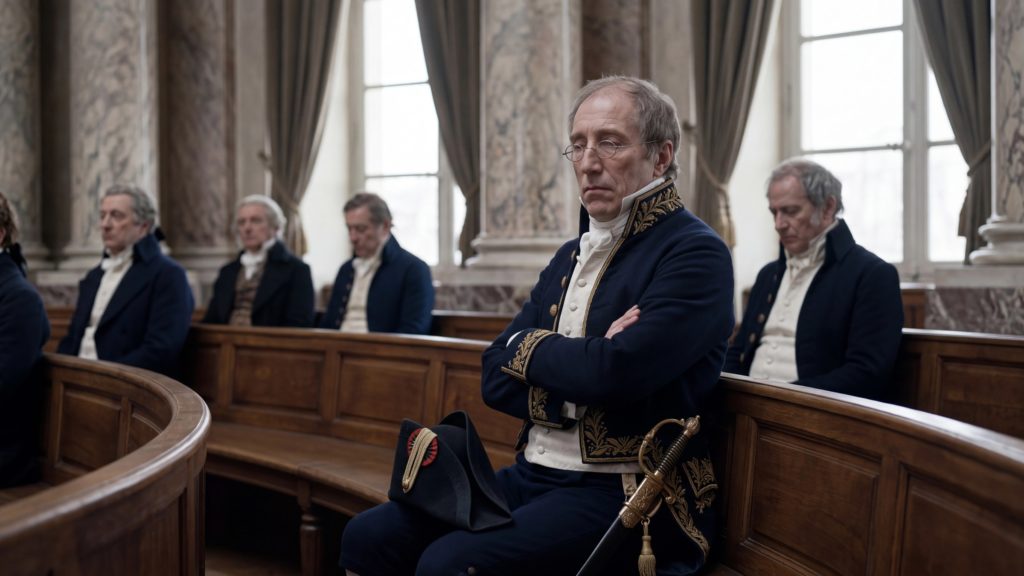
Sieyes concluded the Directory's constitution was unworkable and looked for a general to help replace it; he settled on Bonaparte.
Clergyman, Political Theorist & Provisional Consul of France
The clergyman-turned-pamphleteer whose 1789 tract on the Third Estate helped ignite the French Revolution — then, a decade later, the same man helped end it by ushering Napoleon Bonaparte into power.[1]
Bio
Who they were
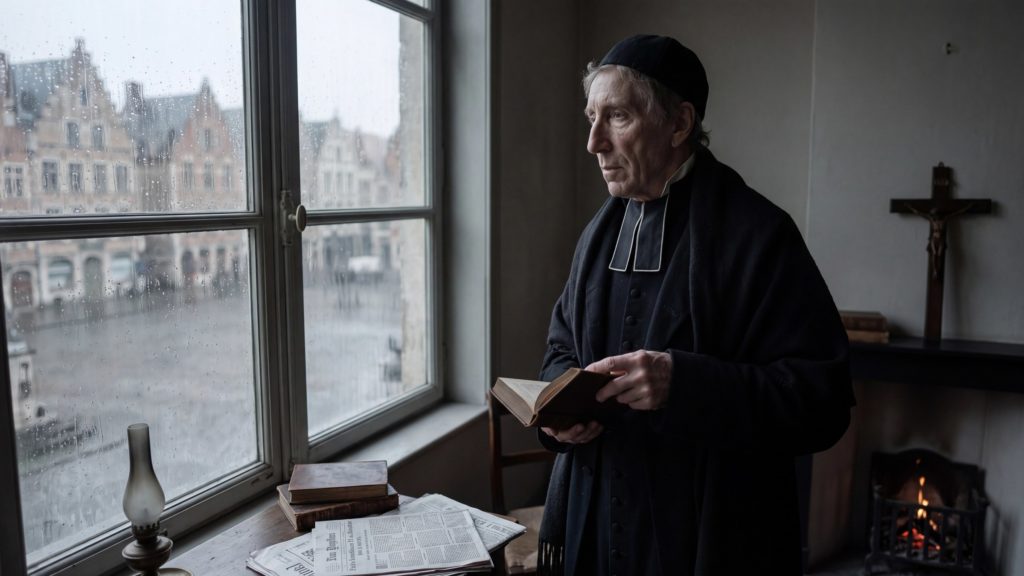
Emmanuel Joseph Sieyès was born on 3 May 1748, the fifth child of a family from the upper bourgeoisie of Fréjus, in the south of France[1]. Rather than following the legal or commercial path open to his class, he entered the Church. He rose within it to become vicar-general and canon — eventually chancellor — of the diocese of Chartres[2, p. 128]. It was an unlikely start for a man who would spend the next fifty years shaping, and repeatedly surviving, the politics of revolutionary France.
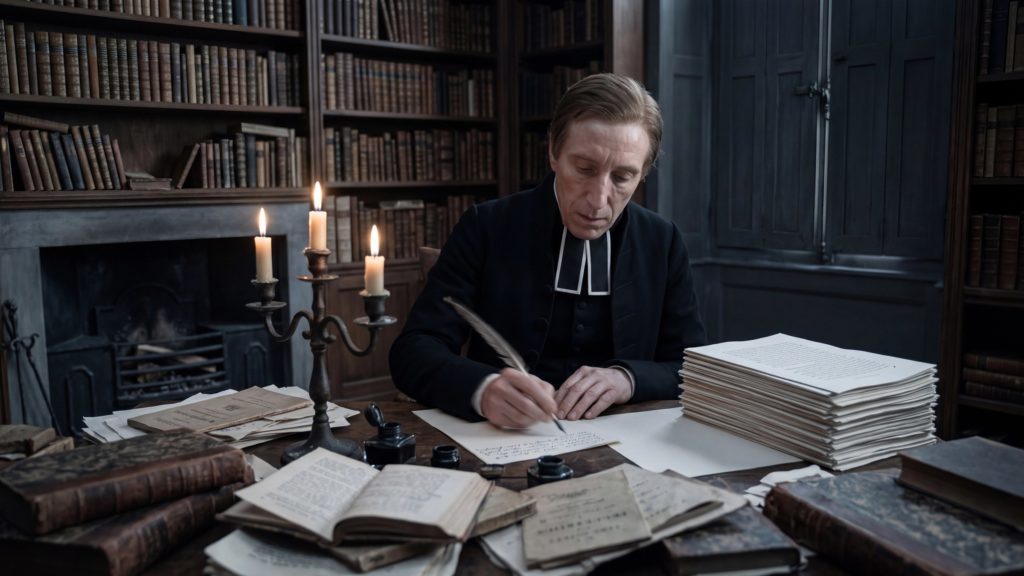
As France slid toward crisis in the late 1780s, Sieyès — still officially a churchman — turned to political writing. In January 1789, as the king summoned the Estates-General, he published a pamphlet titled "Qu'est-ce que le Tiers État?" ("What is the Third Estate?"), asking what role France's untitled citizens should play in government[1]. It argued the Third Estate — everyone who was not clergy or nobility — represented the nation itself, and that its votes should not be swallowed by the privileged orders[1]. It made him, almost overnight, one of the Revolution's most influential voices.
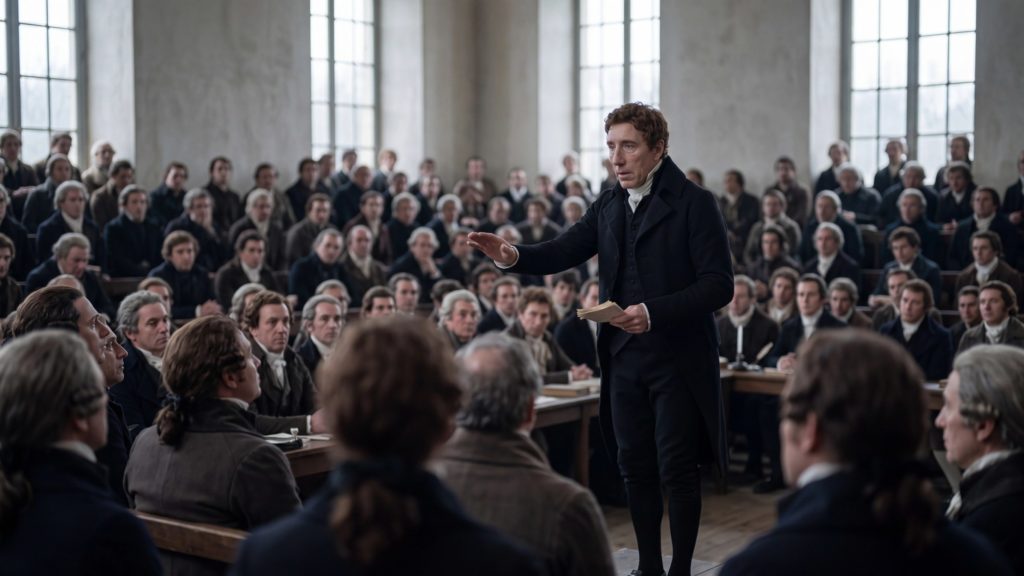
The pamphlet's opening lines became his most quoted words: "What is the Third Estate? Everything," he wrote, before asking what the Third Estate had actually been allowed to be in France's political life up to that point[1]. A decade later, after years in the Revolution's shifting assemblies and a spell as ambassador to Berlin[1, p. 79], Sieyès returned to Paris in 1799 determined to rewrite the constitution again[3]. He allied with the young general Napoleon Bonaparte to overthrow the Directory in the coup of 18 Brumaire, briefly sitting as one of three provisional Consuls governing France alongside Bonaparte and Roger Ducos[3].

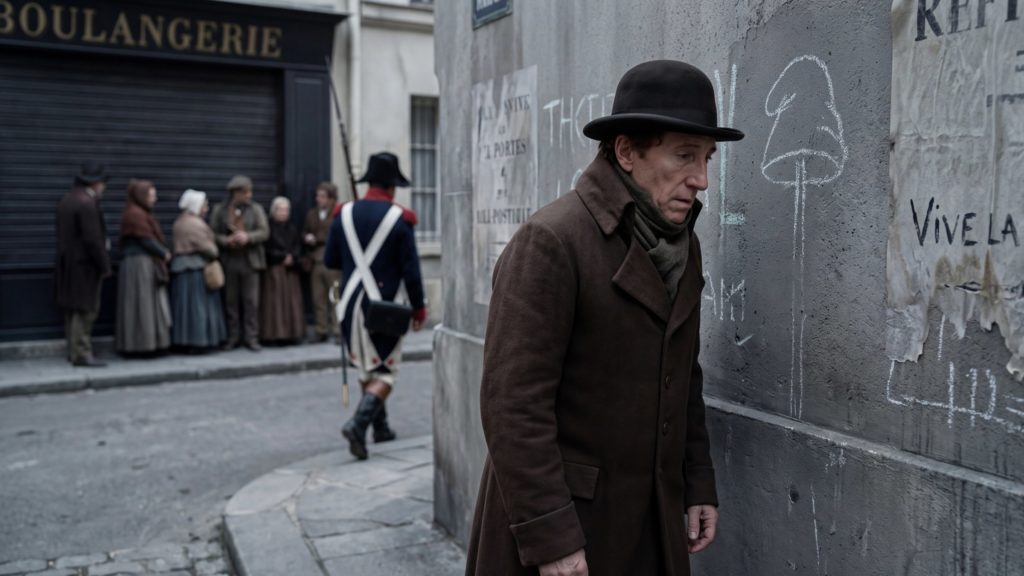
Sieyès's moment at the centre of power was short-lived. Within weeks of the Brumaire coup, he formally surrendered control as the new Constitution of the Year VIII took effect under First Consul Bonaparte[4][5]. He lived on for decades afterward and eventually died in Paris; a contemporary memoir groups the news of his death with other notable deaths of the 1830s[6].
Sieyès's lasting importance lies less in any office he held than in the theory that opened the Revolution and the deal he brokered that helped end it. His pamphlet's argument — that ordinary French citizens were the nation, not an afterthought to nobility and clergy — became one of the Revolution's founding ideas[1]. The Provisional Consular Government he helped install in November 1799, alongside Bonaparte and Ducos, was the hinge on which France turned from revolutionary republic toward the Consulate and eventual Empire[3].
Even Sieyès's name resisted pinning down: across contemporary documents he signed himself "Sieyès," "Siéyès," and other variant spellings interchangeably[1]. A small, fitting irony — his own biographer also noted that no thorough modern study of him existed, a curious gap for a man so central to the Revolution's turning points[1].
Legacy & Reputation
What’s the verdict?
Historians have long found Sieyès hard to pin down. His biographer noted that, even well into study of the period, only one substantial recent biography of him existed, reflecting how little sustained attention his career had received relative to his importance[1]. His famous pamphlet also drew contemporary criticism as well as acclaim — critics such as Montlosier attacked it even as it became one of the Revolution’s defining texts[1].
Myth-buster
Think you know this one?
Sieyès is often remembered mainly as a pamphleteer and theorist. In fact he was a hands-on political operator to the end: it was Sieyès who partnered directly with Napoleon Bonaparte to plan the Brumaire coup and briefly held executive power alongside him[3].
Quick Facts
The essentials
Quick Facts
Roger would like you to know…
In 1789 the Abbé Sieyès asked the question that helped ignite the Revolution: what is the Third Estate? His own answer was blunt — everything. The pamphlet turned a dry argument about representation into a rallying cry the whole country could repeat.[1]
Keith checked the sources…
Sieyès was ordained into the Church and held the title Abbé for most of his career, yet his real reputation was built as a political theorist. Born at Fréjus in 1748, he ended up doing far more for constitutions than for congregations.[7]
One for the Ageonauts…
When the Consulate replaced the Directory in 1799, Sieyès himself could have taken one of the top three seats. He helped engineer the coup that made it possible, only to watch a rather more ambitious general called Napoleon take the leading role instead.[1, p. 79]
Roger has entered the historical rabbit hole…
Even Sieyès didn't seem entirely sure how to spell his own name. Surviving documents show him signing himself Sieyès, Siéyès and other variants at different points in his career — a small inconsistency for a man remembered for wanting everything tidily defined by law.[1]
Keith would like to clarify…
Asked what he did during the Terror, Sieyès is said to have replied simply, 'J'ai vécu' — 'I survived.' The line is usually retold as pure dry wit, though it also captures a real strategy: he kept his head down, and his head attached.[8]
Down the rabbit hole we go…
Weeks before the National Assembly adopted its famous Declaration, Sieyès had already presented his own draft. His 'Recognition and Reasoned Exposition of the Rights of Man and Citizen' was read out on 20 and 21 July 1789 — a serious contender history mostly remembers as a runner-up.[9]
Keith found the footnote…
Sieyès survived the Revolution, the Terror and Napoleon's fall, only to be exiled again in 1816 — this time as a regicide under the restored Bourbon monarchy. He spent over a decade as 'Comte Sieyès' living quietly in Brussels before finally being allowed home.[10]
Roger insists this matters…
By the autumn of 1799 the five-man Directory had shrunk, in practice, to two men worth negotiating with: Sieyès and his ally Roger-Ducos. Bonaparte needed exactly that kind of thinning-out to make his coup workable, and Sieyès, remarkably, helped supply it.[11]
File under: surprisingly true…
Though Sieyès had been ordained as a priest, he was also among those who argued the Church's vast property should serve the nation. His 1789 pamphlet on ecclesiastical property helped set the stage for one of the Revolution's most disruptive reforms — seizing and selling Church land.[12]
The past has entered the chat…
Sieyès outlived the Revolution, the Terror, Napoleon's empire and the return of the Bourbons, finally dying in Paris in June 1836 at the age of eighty-eight. Few figures of 1789 got to watch quite so much history unfold from a safe distance.[8]
What is the Third Estate? Everything.
Emmanuel Joseph Sieyès
The opening line of his pamphlet "Qu'est-ce que le Tiers État?", published January 1789 as France prepared to convene the Estates-General[1].
Timeline
How it unfolded
3 May 1748
Birth of Emmanuel-Joseph Sieyès
Emmanuel Joseph Sieyès, the fifth child of an upper-bourgeois family of Fréjus in Provence, was born on 3 May 1748.[1][2, p. 128]
January 1789
What Is the Third Estate? Published
Sieyès's pamphlet Qu'est-ce que le Tiers État? appeared early in January 1789.[1] Its answer to the question of what the Third Estate is was 'Everything', a line Clapham calls the battle cry of the wronged and ambitious commons.[1]
17 June 1789
Third Estate Declares Itself the National Assembly
On Sieyès's motion the representatives of the Third Estate took the name National Assembly, the motion being carried on 17 June 1789.[13, p. 6][14] Clapham says the title was suggested by a member from Berry and adopted by 491 votes to 80.[1]
May 1799
Sieyès Elected a Director
In May 1799 Sieyès was chosen a member of the Directory in place of Reubell, who had been selected by lot to retire.[7][15] Wikipedia notes that he then considered ways to overthrow the Directory.[15]
9 November 1799
Sieyès and the Coup of 18 Brumaire
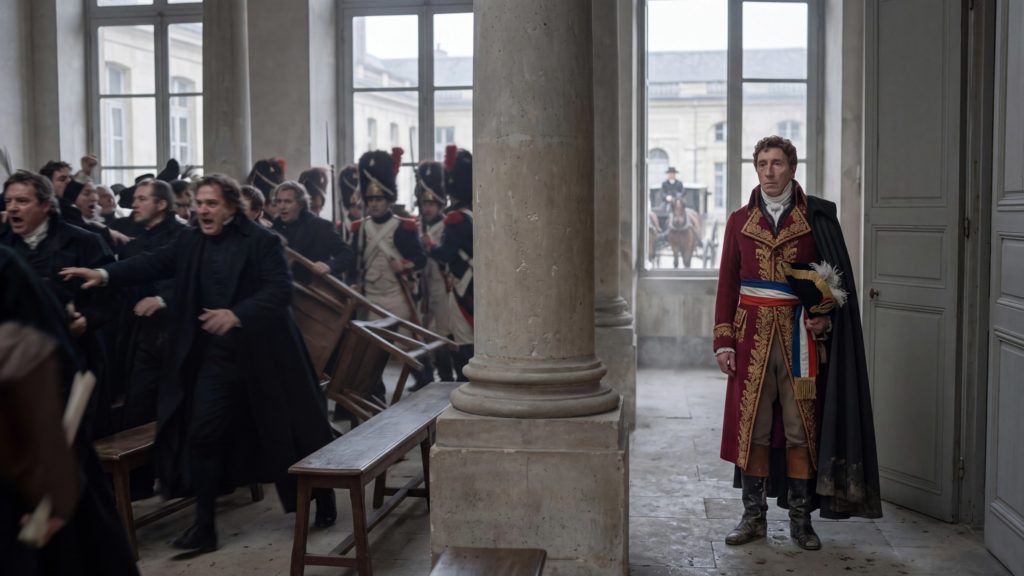
On the morning of 9 November 1799 (18 Brumaire), as the plot against the Directory was carried out, Sieyès, Roger-Ducos and Bonaparte were together at the Tuileries.[1, p. 79][1, p. 79] The coup set up a provisional consulate of Bonaparte, Sieyès and Roger-Ducos.[4]
January 1816
Sieyès Goes into Exile in Brussels
After the second Restoration, Sieyès stayed in Paris for six months and then, as a regicide and Bonapartist, left France.[1, p. 79] Late in January 1816 he arrived at Brussels and began fifteen years of exile.[1, p. 79]
20 June 1836
Death of Sieyès
Sieyès died on 20 June 1836, with no religious rites at his funeral.[1, p. 79] Clapham says he spent the last twenty years of his life in obscurity.[1]
Dig Deeper
Copy any prompt below into your favourite AI chat to keep exploring.
Explain how the same Emmanuel-Joseph Sieyès who helped ignite the French Revolution in 1789 also helped end it by putting Napoleon Bonaparte in power a decade later.
What does it say about revolutions that the person who wrote their opening argument can also end up writing their closing one?
Convince me Sieyès is history's ultimate 'I started this and I get to finish it too' guy.
Further Reading
Where to read more
Emmanuel-Joseph Sieyès — Britannica
A concise Britannica biography covering Sieyès's career as a revolutionary theorist, from his 1789 pamphlet through the Directory to his role in Napoleon's rise.
Why look at this: Sieyès conspired with Bonaparte, Fouché, and Talleyrand to engineer the 18 Brumaire coup and even drafted the new constitution — only to watch Bonaparte rewrite it within weeks to make himself First Consul; this overview lays out exactly how his own plot outran him.
https://www.britannica.com/biography/Emmanuel-Joseph-SieyesEmmanuel-Joseph Sieyès — World History Encyclopedia
A fuller biographical article tracing Sieyès from his reluctant seminary education through the Estates-General, the Terror, the Directory, and his later imperial honours.
Why look at this: It walks through the actual logic of his three-question formula in 'What Is the Third Estate?' — Everything / Nothing / Something — showing how that single rhetorical structure gave the Third Estate the ideological ammunition to claim it was the nation itself.
https://www.worldhistory.org/Emmanuel-Joseph_Sieyes/Qu'est-ce que le Tiers-État? (3rd edition, 1789) — Gallica, Bibliothèque nationale de France
The Bibliothèque nationale de France's digitized scan of an original 1789 edition of Sieyès's own pamphlet, the actual physical document as printed that January.
Why look at this: This is the primary object itself — the pamphlet whose opening lines ('Qu'est-ce que le Tiers état? Tout... Qu'a-t-il été jusqu'à présent dans l'ordre politique? Rien...') helped ignite the Revolution, viewable exactly as contemporaries first read it.
https://gallica.bnf.fr/ark:/12148/bpt6k97743407Related
Keep exploring







Can be seen in
Where this shows up

References
Sources
Sources
- BookThe Abbé Sieyès : an essay in the politics of the French revolution by J. H. Clapham. Page 79. ↑
- BookThe Memoris Of Joseph Fouche ( Vol - Ii ). Page 128. ↑
- BookLife of Napoleon Bonaparte, Volume II. by Walter Scott ↑
- BookThe Life of Napoleon Bonaparte. Vol. 2 (of 4) by William Milligan Sloane ↑
- DocumentCatholic Encyclopedia (1913)/Napoleon I (Bonaparte) ↑
- BookMemoirs to Illustrate the History of My Time Vol. 4 by Francois Guizot ↑
- BookThe French revolution : a historical sketch by Walter Geer ↑
- Websitebritannica.com: Emmanuel Joseph Sieyes ↑
- ArchiveSieyes, Emmanuel Joseph. Preliminair de la Constitution Francoise. Reconnaissance et exposition raisonnes de droits de l'homme & du… ↑
- ArchiveL'exil du comte Sieyès à Bruxelles (1816-1830) : d'après des documents inédits... / Paul Duvivier,... by Paul (18..-19.. Duvivier and avocat). Auteur du texte ↑
- BookLe Dix-huit Brumaire (French) by Jacques Bainville ↑
- ArchiveObservations sommaires sur les biens ecclésiastiques, du 10 Août 1789 ↑
- BookThe life and character of Maximilian Robespierre : proving by facts and arguments, that that much-calumniated person was… by James Bronterre O'Brien. Page 6. ↑
- BookThe French revolution from 1789 to 1815 by M. Mignet and James Westfall Thompson ↑
- Websiteen.wikipedia.org: Emmanuel Joseph Sieyès ↑