
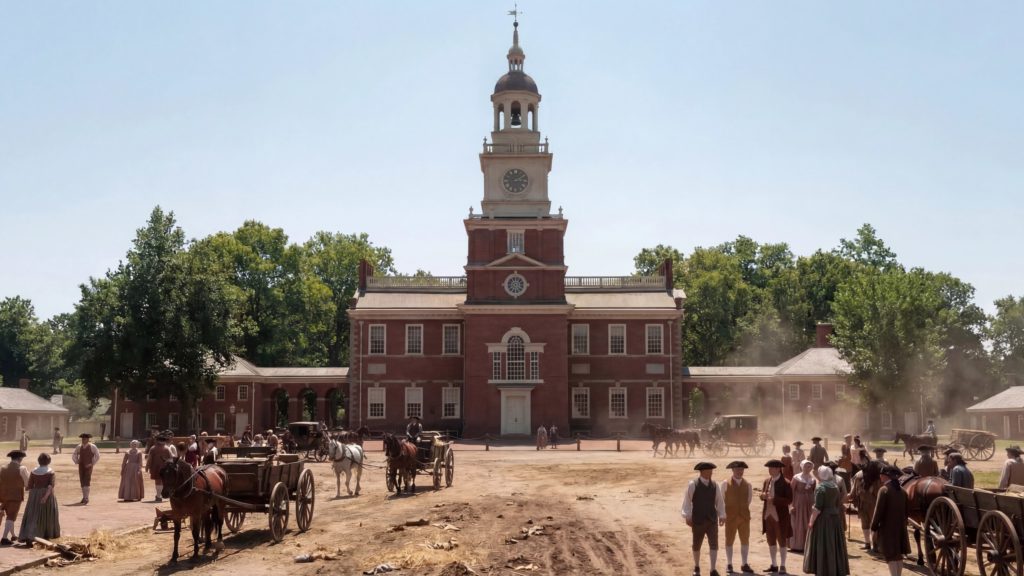
Independence Hall
The room where America was declared independent, and the room where its Constitution was written, are the very same room — eleven years apart.[1][1]
About the Place
Why it matters
Independence Hall is a red-brick civic building in Philadelphia, Pennsylvania, built from 1732 to 1753 as the Pennsylvania State House, seat of the colonial legislature.[1][2]
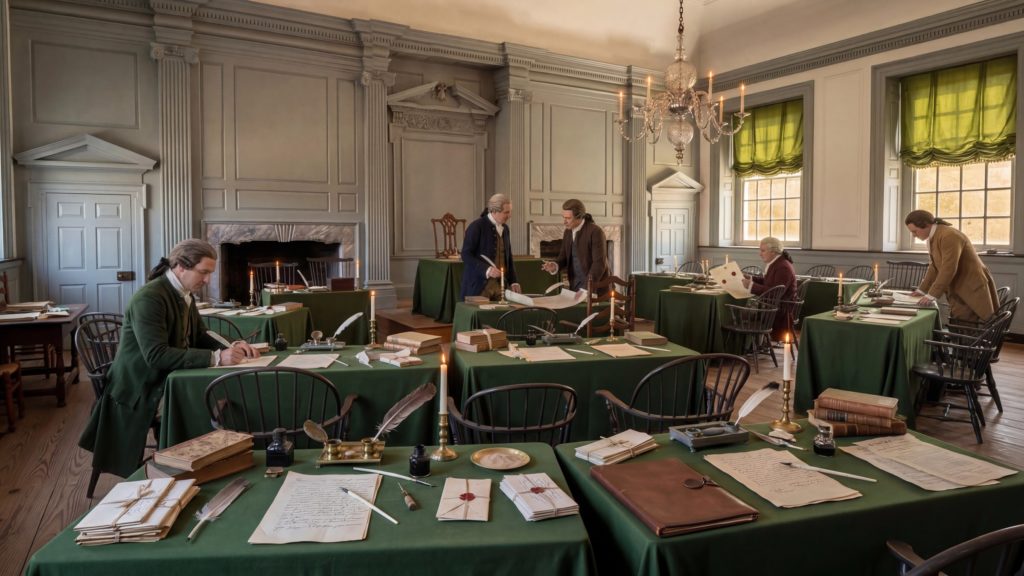
In the building's Assembly Room, the Second Continental Congress adopted the Declaration of Independence on July 4, 1776, formally announcing the thirteen colonies' break from Great Britain.[1][2, p. 5]
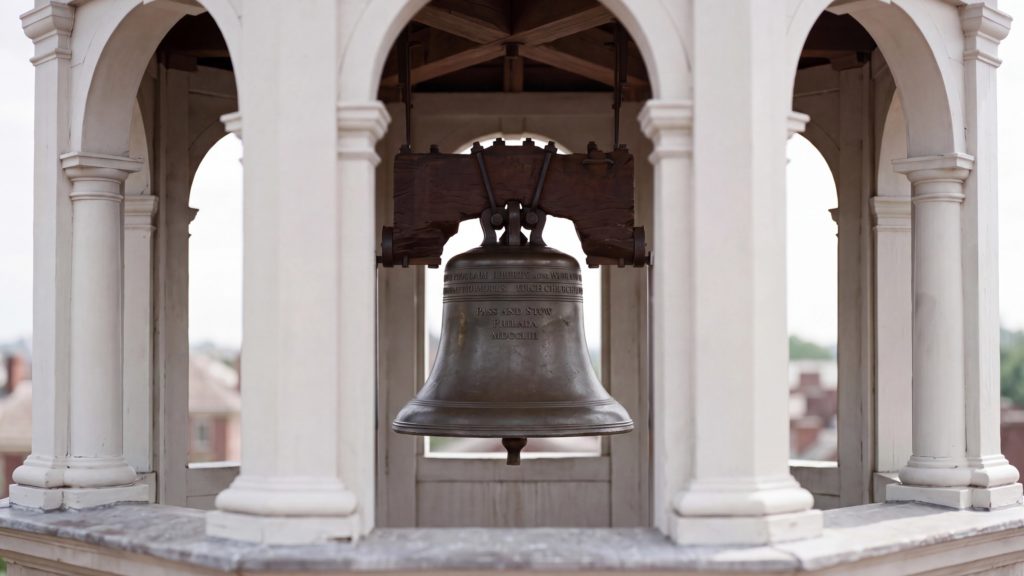
Eleven years later, in the summer of 1787, delegates returned to the same room for the Constitutional Convention, drafting the U.S. Constitution that still frames the federal government today.[1]
The building now forms the centrepiece of Independence National Historical Park.[3, p. 2]
Legacy & Reputation
What’s the verdict?
Independence Hall’s reputation as sacred ground was not automatic. For decades after the Revolution it was ordinary state office space; by an Act of the Legislature of 11 March 1816, the city of Philadelphia acquired the site after the state government had relocated. It was later designated a UNESCO World Heritage Site.[2, p. 82][3, p. 2]
Myth-buster
Think you know this one?
Myth: the Declaration of Independence was signed inside Independence Hall on July 4, 1776, in one dramatic ceremony. In fact, Congress only adopted the text that day — most delegates signed the engrossed copy weeks later, on August 2.[4][2, p. 82]
Quick Facts
The essentials
Quick Facts
Roger would like you to know…
Independence Hall was not built for independence. Ground plans were approved in August 1732 for the Pennsylvania State House, an ordinary colonial government building where loyal British subjects handled provincial paperwork.[1]
Keith has spotted the problem…
The famous scene of delegates signing the Declaration on 4 July 1776 did not happen. Congress adopted the text that day, but delegates signed the engrossed copy on 2 August instead.[4][2, p. 82]
The bell has some explaining to do…
The Liberty Bell's own documented ringing record does not list 4 July 1776 among its calls — it is recorded ringing to proclaim the Declaration on 8 July 1776 instead.[1]
The name arrived late…
The building wasn't always called Independence Hall. It was known as the State House; the Liberty Bell's own itinerary records show it welcoming Lafayette to the city on 29 September 1824, around the period the newer name began to take hold.[1]
Keith would like to clarify…
It came close to losing its role as a seat of government: by an Act of the Legislature of 11 March 1816 the city of Philadelphia took over the site after the state government's business had moved on.[2, p. 82]
Meanwhile, in history…
The Declaration's first public reading took place in the State House Yard on 8 July 1776 — independence was announced to Philadelphians four days after Congress adopted it.[1][2, p. 2]
Roger insists this matters…
Independence Hall is a UNESCO World Heritage Site, forming the centrepiece of Independence National Historical Park.[3, p. 2]
One chair survived the century…
Almost everything in the Assembly Room today is a careful reconstruction. Only two original features remain: a carved frieze, and the Speaker's chair made by John Folwell in 1779, in which George Washington presided over the Constitutional Convention.
File under: surprisingly true…
The tower's steeple has its own separate history — the book-length history of the Hall devotes chapters to ‘The Steeple removed’ and ‘The Steeple restored’ as distinct episodes.[2, p. 82]
One for the Ageonauts…
From 1794 Charles Willson Peale ran his museum inside the building, and it is remembered for holding a mounted skeleton contemporaries called ‘the Mammoth’ — the birthplace of American independence also housed a giant prehistoric skeleton.[2, p. 82]
I have often and often in the course of the Session, and the vicissitudes of my hopes and fears as to its issue, looked at that behind the President without being able to tell whether it was rising or setting: But now at length I have the happiness to know that it is a rising and not a setting Sun.[2, p. 2]
Benjamin Franklin
Recorded as the last delegates signed the Constitution in the Assembly Room on 17 September 1787 — the date the Constitution's own closing text gives; Franklin was gesturing at the sun carved into the back of the presiding chair.[5]
Timeline
How it unfolded
1732
Construction of the Pennsylvania State House begins
Ground was broken in the spring of 1732 for the Province of Pennsylvania's State House, planned to house the Assembly, the Supreme Court and the Governor's Council.[2]
c. 1735
Assembly takes possession of the State House
According to Keyser's history of the Liberty Bell, Andrew Hamilton took his seat as head of the Assembly in the State House on 15 September 1735, when it was far enough advanced to be occupied.[1] The National Park Service handbook by Ferris dates the move to 1736 and says the building was not fully finished until 1756.[6]
10 May 1775
Second Continental Congress convenes in the State House
The Second Continental Congress convened in the Pennsylvania State House in Philadelphia on 10 May 1775.[6] According to Etting, it was in that hall in June 1775 that George Washington was unanimously elected commander-in-chief.[7]
4 July 1776
Adoption of the Declaration of Independence
The Continental Congress adopted the Declaration of Independence in the building on 4 July 1776.[8] The text was read publicly for the first time in Independence Square on 8 July 1776.[3, p. 2]
May 1787
Constitutional Convention meets in secret
The Constitutional Convention held its highly secret sessions in the same chamber in which the Declaration had been adopted.[6] The delegates were called for the second Monday of May 1787 and, according to Franklin's editor, sat until 17 September.[9, p. 5]
1824
Lafayette receives Philadelphians in the Independence Chamber
During the Marquis de Lafayette's 1824 visit, the Independence Chamber was fitted up so he could formally receive the citizens, an early sign of the room being treated as a national shrine.[2, p. 82]
1948
Independence National Historical Park established
Independence National Historical Park was established in 1948 to protect the historic places associated with the birth of the American republic, with Independence Hall at its heart.[3, p. 2]
Dig Deeper
Copy any prompt below into your favourite AI chat to keep exploring.
Explain why the Declaration of Independence was actually signed on August 2 1776 rather than July 4 as most people assume
Debate whether the Declaration of Independence's real legacy is the words on the page or the constitutions around the world that copied its structure afterward
Convince me the Liberty Bell's famous crack-and-freedom story is basically 19th-century fan fiction invented by a novelist in 1847
Further Reading
Where to read more
Independence Hall: World Heritage Site — National Park Service
Article. Free online, no login. The same second-floor Assembly Room hosted the Declaration debate in 1776 and the Constitutional Convention in 1787 -- eleven years and one building behind both founding documents.
Why look at this: Explains exactly why UNESCO honoured the building in 1979 — not for its architecture, but because the same second-floor Assembly Room hosted both the Declaration debate of 1776 and the Constitutional Convention of 1787.
https://www.nps.gov/articles/000/independence-hall-world-heritage-site.htmThe American Revolution — Ken Burns, Sarah Botstein & David Schmidt (PBS, 2025)
Six-part, 12-hour documentary. Premiered November 16, 2025; streams free on pbs.org and the PBS App, also available via iTunes/Amazon.
Why look at this: Six hours of context for how the Revolution that began outside this building's doors actually unfolded, from a team with unmatched access to primary documents and historians.
https://www.pbs.org/kenburns/the-american-revolutionIndependence — Edward M. Riley (National Park Service Historical Handbook Series No. 17, 1954/rev. 1956)
Full-length NPS historical handbook. Free online, no login. Traces the building room by room from Pennsylvania State House through its 'Two Centuries' to becoming a national shrine.
Why look at this: Walks room by room through the building's transformation from ordinary Pennsylvania State House to national shrine, using the Park Service's own historical research.
https://www.nps.gov/parkhistory/online_books/hh/17/index.htmRelated
Keep exploring





Places




Can be seen in
Where this shows up

References
Sources
Sources
- BookThe Liberty Bell, Independence Hall, Philadelphia by Charles S. Keyser ↑
- BookAn historical account of the old State house of Pennsylvania now known as the Hall of independence by Frank M. Etting. Pages 2, 5, 82. ↑
- WebsiteFoundation Document Overview - Independence National Historical Park. Pages 2, 5. ↑
- BookHistory of Independence Hall : from the earliest period to the present time : embracing biographies of the… by D. W. cn Belisle ↑
- BookA Biography of the Signers of the Declaration of Independence, and of Washington and Patrick Henry by L. Carroll Judson ↑
- BookSigners of the Declaration: Historic Places Commemorating the Signing of the Declaration of Independence by Robert G. Ferris ↑
- BookMemorials of 1776 by Frank M. Etting ↑
- BookThe Life of George Washington, Vol. 2 by John Marshall ↑
- BookThe writings of Benjamin Franklin; by Benjamin Franklin and Albert Henry Smyth. Page 5. ↑
- Websiteen.wikipedia.org: Independence Hall ↑