
The Thirteen Colonies
Britain didn't have thirteen colonies in the Americas — it had dozens; Nova Scotia, Quebec, East and West Florida and its Caribbean islands all stayed under the Crown. Only thirteen decided rebellion was worth the risk.[1]
About the Place
Why it matters
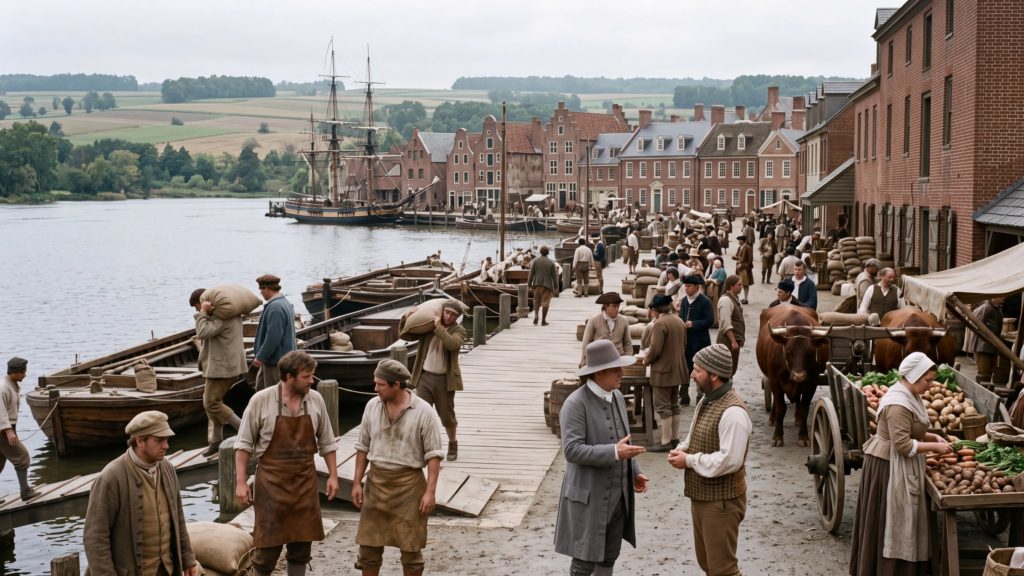
The Thirteen Colonies were the British settlements along the Atlantic coast of North America, founded between the establishment of Jamestown, Virginia, in 1607 and the founding of Georgia in 1732.[2][1]
Colonial governments took different legal forms: Georgia, for instance, began under a proprietary charter granted to trustees organized by James Oglethorpe, which the trustees surrendered in 1752 for direct provincial government.[3, p. 46]
Rising tensions over taxation, including the Stamp Act of 1765, led to armed conflict and, on 4 July 1776, a formal Declaration of Independence from Great Britain, following Congress's resolution of independence adopted two days earlier.[4, p. 9][5, p. 183]
After winning the Revolutionary War, the Thirteen Colonies reorganized as the founding states of the United States, first under the Articles of Confederation and later under the Constitution, ratified by the states in 1788.[6]
Legacy & Reputation
What’s the verdict?
The Thirteen Colonies are often remembered as a single, unified project bound together by liberty, but the reality was messier: a substantial loyalist minority never accepted independence at all.[4, p. 9]
Myth-buster
Think you know this one?
Myth: American independence was declared on July 4, 1776. In fact, Congress voted for independence on the second of July — the declaration’s text was only agreed unanimously on the fourth — and John Adams wrote to his wife the following day marvelling at what had just been decided.[5, p. 183]
Quick Facts
The essentials
Quick Facts
Keith would like to begin with a correction…
Britain had considerably more than thirteen colonies in the Americas. Nova Scotia, Quebec, East and West Florida and its Caribbean islands all stayed under the Crown. Thirteen rebelled; the others watched.[1]
Roger has been counting snakes…
Franklin's plan for uniting the colonies didn't start with the Revolution. On his way to the Albany Congress in 1754, he drew up a plan for a union of all the colonies under one government for defence and other general purposes — and it went nowhere.[7]
The familiar story leaves this out…
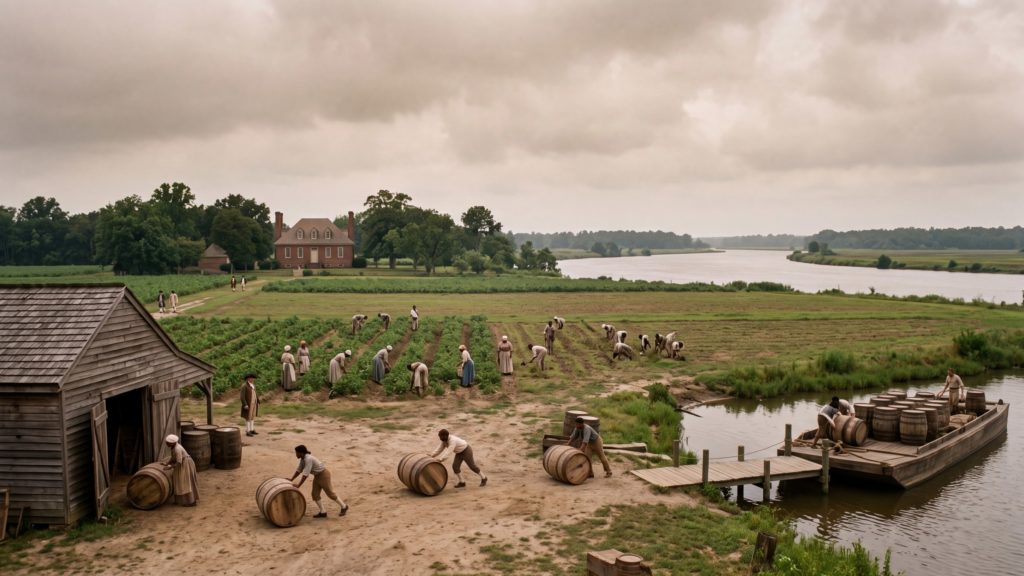
The thirteen colonies' population in 1776 was about 2.56 million — including roughly 450,000 enslaved people, close to one-fifth of the total.[8]
Georgia tried something different…
Georgia's colonial trustees had at first opposed introducing slavery into the colony, but sustained pressure from settlers won out: the opposition was overcome, and by the early 1750s slavery was firmly and legally established there.[9, p. 30]
Keith found the footnote…
Delaware's early identity was bound up with Pennsylvania: it was long known as the ‘Three Lower Counties on the Delaware’, sharing its governor with its larger neighbour.[5, p. 183]
The date is wrong, but the party is right…
Congress actually voted for independence on the second of July 1776; the fourth is when the declaration's wording was agreed. John Adams wrote to his wife the very next day, awestruck at ‘the greatest question... that was ever debated in America’.[5, p. 183]
Roger has a theory…
Franklin proposed a colonial union in 1754, on his way to the Albany Congress — two decades before the Revolution. He showed the plan to two New York gentlemen before presenting it further.[7]
Not everyone agreed…
Loyalism was not a fringe position: loyalist sentiment is discussed at length in contemporary and later accounts of the Revolution.[10]
New York was not always New York…
New York began as the Dutch colony of New Netherland, settled in 1609; it fell into English hands on 27 August 1664 and was renamed New York.[9]
A small fact with a very large consequence…
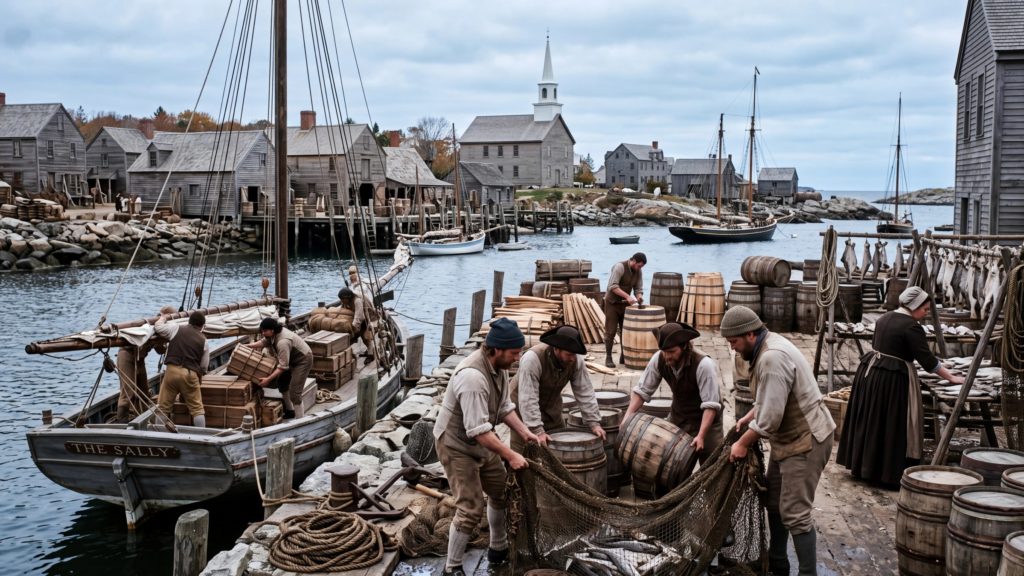
By the 1770s the colonies were not simply English. Pennsylvania in particular had large German-speaking communities living alongside its English-speaking neighbours.[11]
That these United Colonies are, and of Right ought to be Free and Independent States; that they are Absolved from all Allegiance to the British Crown.[12]
The Second Continental Congress
From the final paragraph of the Declaration of Independence, adopted 4 July 1776, two days after Congress's resolution of independence.[5, p. 183]
Timeline
How it unfolded
May 1607
Founding of Jamestown, Virginia
English colonists founded Jamestown in Virginia in May 1607, the first permanent English settlement on American soil.[2] The National Park Service likewise says England established its first permanent colony there in 1607 through the Virginia Company.[13]
11 November 1620
Mayflower Compact at Cape Cod
On 11 November 1620 by the old-style calendar, the New England colonists aboard the Mayflower drew up the Mayflower Compact off Cape Cod.[14, p. 61] It formed the basis of government for Plymouth colony until a patent was granted in 1630.[15, p. 399]
9 June 1732
Charter of Georgia, the thirteenth colony
A royal charter dated 9 June 1732 created the Trustees for establishing the Colony of Georgia, the thirteenth colony planted in North America by the English government, and the trust was to last twenty-one years.[9, p. 30]
22 March 1765
Stamp Act sparks colonial unity
The Stamp Act received the royal assent on 22 March 1765 and was due to take effect on 1 November.[16] That October a colonial congress met in New York[17] and it was attended by delegates from nine colonies.[14, p. 61]
4 July 1776
The colonies declare independence
On 4 July 1776 the Continental Congress at Philadelphia issued the Declaration of Independence, affirming that the thirteen colonies are and ought to be free and independent states.[18, p. 273]
3 September 1783
Treaty of Paris ends the war
The definitive articles of peace ending the war for independence were signed at Paris on 3 September 1783, after provisional articles had been signed on 30 November 1782.[19]
7 December 1787
Delaware first to ratify the Constitution
Delaware was the first state to ratify the new Constitution, on 7 December 1787, followed by Pennsylvania and New Jersey within the month.[20, p. 116]
29 May 1790
Rhode Island ratifies, completing the thirteen
Rhode Island, the last of the original thirteen, ratified the Constitution on 29 May 1790, after the new government had already begun operating.[21, p. 181]
Dig Deeper
Copy any prompt below into your favourite AI chat to keep exploring.
Explain why Nova Scotia Quebec and Britain's Caribbean colonies did not join the thirteen colonies in rebelling against Britain in 1776
Argue whether the thirteen colonies were ever really one nation before independence or just thirteen separate governments that got lucky rebelling together
Pitch me Benjamin Franklin's Join or Die snake cartoon like it's a recruitment ad for the wrong war since it was originally about fighting the French
Further Reading
Where to read more
13 Colonies — Encyclopædia Britannica
Reference article. Free online, no login. Lays out how each colony had a different founding motive -- Puritan religious refuge in Massachusetts versus a profit-seeking venture in Virginia.
Why look at this: Breaks down how each colony had a completely different founding motive — Puritan religious refuge in Massachusetts versus a straightforward profit-seeking venture in Virginia — the detail that explains why they never had one shared identity.
https://kids.britannica.com/students/article/13-colonies/338325Liberty! The American Revolution
Six-part PBS documentary series (1997) tracing how thirteen separate, often quarreling colonies bound themselves together in a shared cause for independence, 1763–1789. Free to stream on Internet Archive.
Why look at this: Traces the awkward process of thirteen quarrelling, often mutually suspicious colonies learning to act as one, across the quarter-century from 1763 to the ratified Constitution.
https://archive.org/details/liberty-episode-1-the-reluctant-revolutionaries-1763-1774The History of the Thirteen Colonies of North America, 1497-1763 — Reginald W. Jeffery (1908)
Full-length scholarly history, public domain. Free download via Project Gutenberg, no login or account. A colony-by-colony academic account running from the Cabot voyages to the eve of the French and Indian War.
Why look at this: A full colony-by-colony scholarly account running from the Cabot voyages through to the eve of the French and Indian War, for anyone who wants each colony's founding story told individually rather than collapsed into one.
https://www.gutenberg.org/ebooks/40244Related
Keep exploring


Places




Can be seen in
Where this shows up

References
Sources
Sources
- BookMason and Dixon's Line : a history : including an outline of the boundary controversy between Pennsylvania and… by James Veech ↑
- BookThe Mentor: Historic Spots of America, Vol. 1, Num. 32, Serial No. 32 by Robert McNutt McElroy ↑
- BookThe federal and state constitutions, colonial charters, and other organic laws of the United States .. by Benjamin Perley Poore, United States. Constitution and United States. Congress. Senate. Page 46. ↑
- BookGeorge Washington The Image And The Man by W. E. Woodward. Page 9. ↑
- BookLives of the signers to the Declaration of independence by Charles A. Goodrich. Page 183. ↑
- BookSigners of the Declaration: Historic Places Commemorating the Signing of the Declaration of Independence by Robert G. Ferris ↑
- BookThe autobiography of Benjamin Franklin with an introduction and notes by Benjamin Franklin ↑
- Websitebritannica.com: What Was Life Like in America in 1776 ↑
- BookHistory of the Negro Race in America from 1619 to 1880. Vol 1 by George Washington Williams. Page 30. ↑
- BookThe American Revolution, 1776-1783 by Claude Halstead Van Tyne ↑
- BookHistory of the United States of America, Volume 1 (of 9) : $b During the first administration of… by Henry Adams ↑
- BookThe Declaration of Independence of the United States of America by Thomas Jefferson ↑
- Websitenps.gov: Historyculture / index ↑
- BookSelect Charters And Other Documents Illustrative Of American History 1606-1775 by William MacDonald. Page 61. ↑
- BookSelect Documents Illustrating Mediaeval and Modern History (includes Abdication of Francis the Second document) by Emil Reich. Page 399. ↑
- BookPatriotism in Washington's time, collected and comp (compiled by Patrick James Byrne) ↑
- DocumentThe Encyclopedia Americana (1920)/Congress, Continental ↑
- BookA short history of Europe, from the fall of the Eastern empire to the dissolution of the Holy… by Charles Sanford Terry. Page 273. ↑
- BookAmerican progress: or, The great events of the greatest century, including also life delineations of our most noted… by R. M. Devens ↑
- BookWashington, the man and the mason, by Charles Hilliard Callahan. Page 116. ↑
- BookWritings of George Washington by George Washington and Lawrence B. Evans. Page 181. ↑