
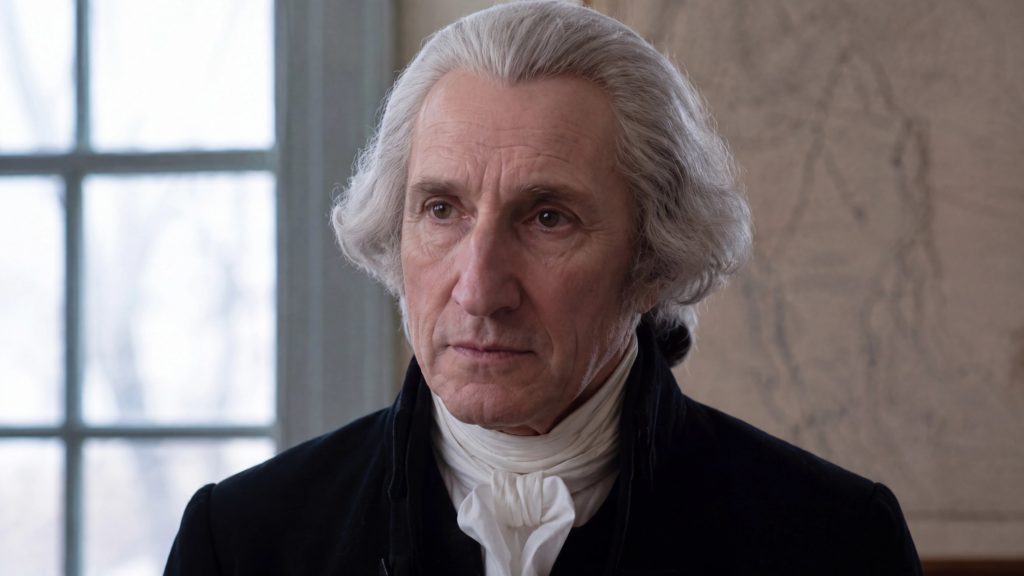
George Washington
Founding Father, military commander, and first President of the United States
The general who could have held power in every way but name at the end of the Revolution — and chose, twice, to walk away from it instead.[1][2, p. 408]
Bio
Who they were
George Washington was born on 22 February 1732 in Westmoreland County, Virginia[3]. His older half-brother Lawrence inherited the family's Potomac River estate and named it Mount Vernon, after a British admiral he had served under[4, p. 260]; Lawrence became an early influence on the younger Washington. As a young man, Washington trained and worked as a land surveyor[5], work that took him deep into Virginia's frontier country years before he ever led troops there.
Washington's surveying work on the frontier put him in the middle of the contested borderlands between British and French territory. During the French and Indian War, he served alongside British General Edward Braddock's expedition; Braddock ignored repeated warnings from both Washington and Benjamin Franklin about the dangers of the march[2]. The experience gave Washington real command experience and a regional reputation as a capable, level-headed officer. Decades later, when the American colonies broke with Britain, that reputation helped make him the choice to lead the new Continental Army as commander in chief[6].
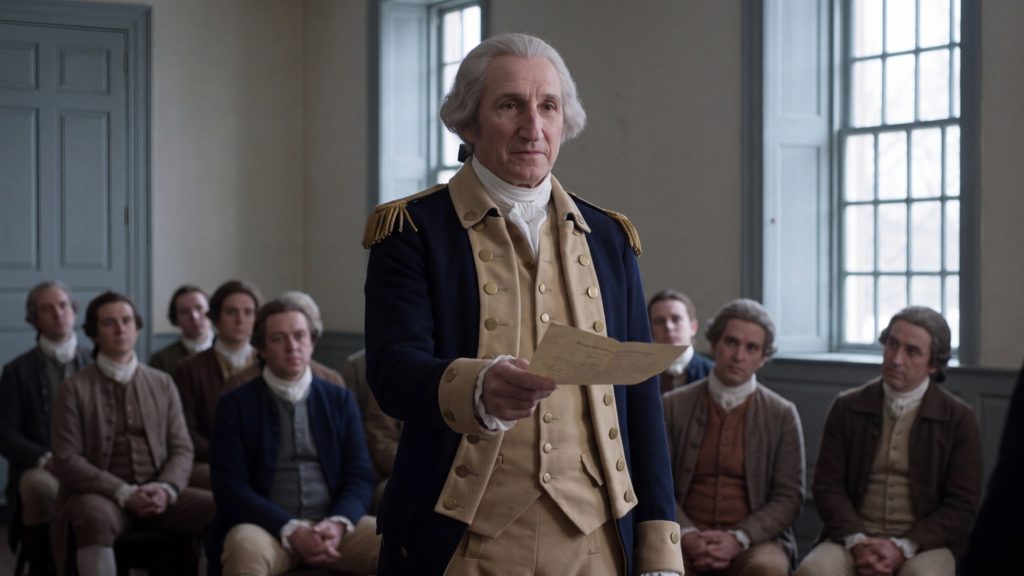
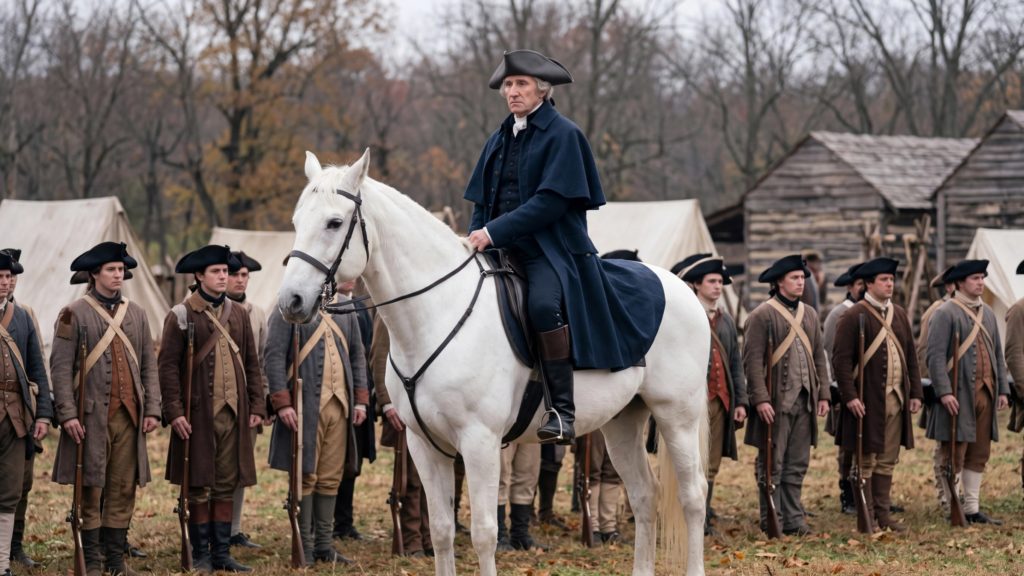
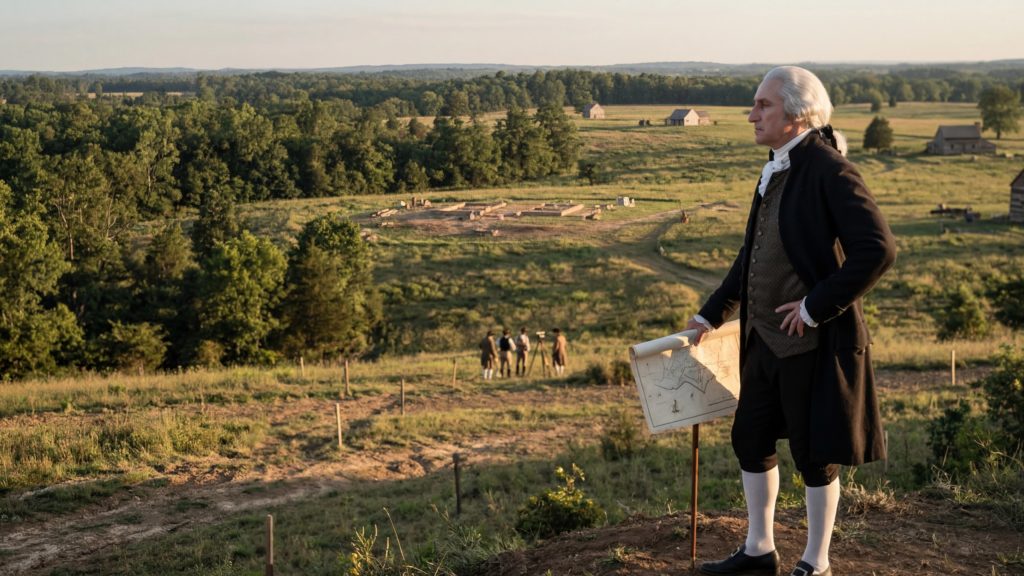
Washington's defining role was leading the Continental Army through the Revolutionary War, holding a fragile, underfunded, often outnumbered force together until American independence was won. His authority was called on again in 1787, when he was chosen to preside over the Constitutional Convention in Philadelphia; he spoke very little during the four months of debate, letting delegates argue the details while his presence lent the proceedings legitimacy[7, p. 2]. In 1789 he was unanimously elected the first President of the United States[8]. As president, he also personally chose the location for the new federal capital on the Potomac River, after Congress authorised him to select the site[9, p. 10].
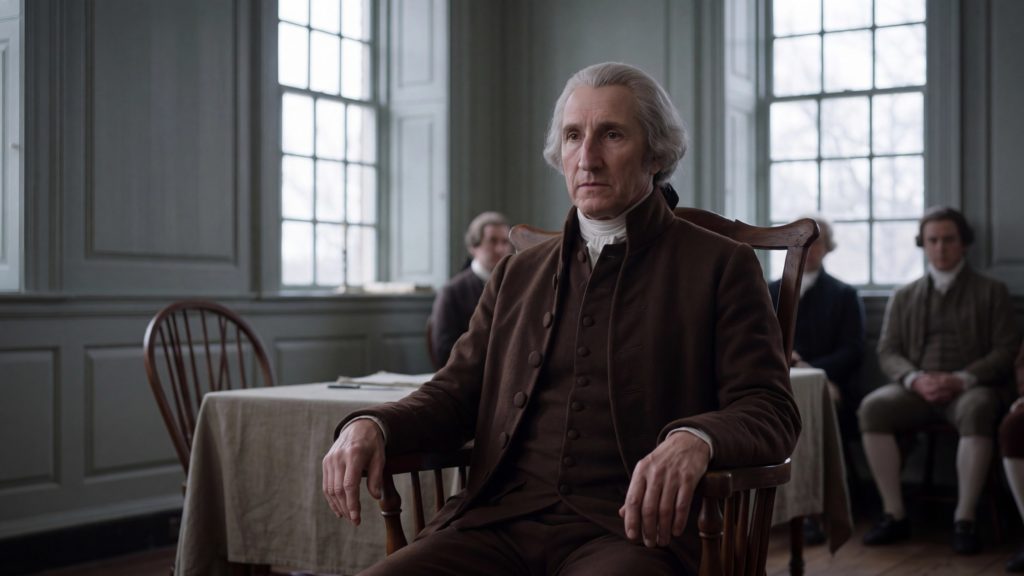
After two terms as president, Washington chose not to seek a third, deliberately setting a precedent of voluntarily leaving power[2, p. 408]. In his farewell remarks to the nation, he warned against the 'baneful effects of the spirit of party,' fearing that organised political factions would divide the young republic[10, p. 19]. He retired to Mount Vernon and died there on 14 December 1799[11, p. 39].
Washington's unanimous election as the first president[8] and his decision to walk away from power at the end of two terms set an unwritten precedent for a two-term presidency that many of his successors chose to follow[12]. His warning against political parties proved strikingly prophetic: within years of his farewell address, Federalists and Democratic-Republicans had formed exactly the kind of rival camps he feared[10, p. 19]. Generations later, Americans still use the title given to him even in his own lifetime: 'the Father of his Country'[13, p. 17].
Contrary to popular legend, Washington's famous false teeth were never made of wood: surviving dentures attributed to him were built from materials including ivory[14, p. 11]. He also, despite the popular association, never actually lived in the White House itself[14, p. 11] — that distinction belongs to his successor, John Adams, the first president to move into the building on the site Washington had chosen.
Legacy & Reputation
What’s the verdict?
Washington’s reputation has always sat somewhere between man and monument. His earliest biographer, the clergyman Mason Locke Weems, shaped much of the popular image with moralising, partly invented anecdotes written soon after Washington’s death[11, p. 177]. Modern historians separate Weems’s legend-building from the historical record, but the underlying reverence, the sense of Washington as uniquely trustworthy among the founders, has proven durable, reinforced by his own repeated choices to relinquish power rather than keep it.
Myth-buster
Think you know this one?
Myth: as a boy, Washington chopped down his father’s cherry tree and confessed because he ‘could not tell a lie.’ The story, along with several similar anecdotes, was invented by Washington’s early biographer Mason Locke Weems after Washington’s death[11, p. 177] — no contemporary evidence supports it.
Quick Facts
The essentials
Quick Facts
Roger has entered the historical rabbit hole…
Washington insisted he was exactly six feet tall — no taller, no shorter — though contemporaries who met him often came away convinced he was even bigger than that[17]. Command presence, it turns out, adds a few inches in the retelling.
Keith checked the sources…
Washington's famous false teeth were never carved from wood, despite the enduring legend. The dentures that survive were built partly from ivory[14, p. 11], which is only slightly less painful to imagine wearing.
History gets strange here…
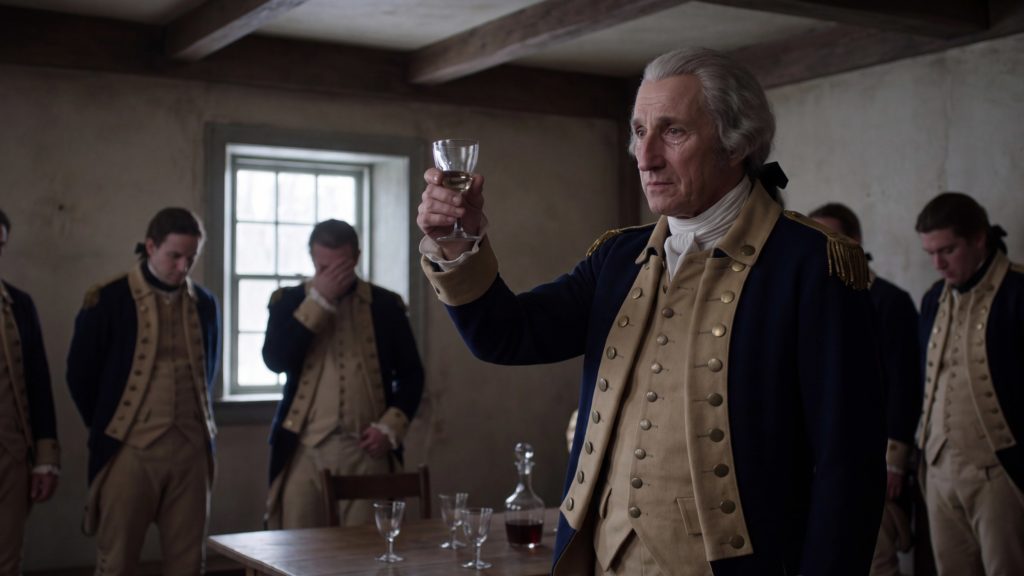
In 1783, unpaid Continental Army officers at Newburgh flirted with mutiny against Congress. Washington addressed them, paused to put on reading glasses, and remarked that he had 'grown gray' and nearly blind 'in the service of my country'[18, p. 10] — and the room reportedly went quiet.
Roger insists this matters…
At the height of his power, commanding the only army the United States had, Washington simply resigned his commission at Annapolis in 1783 and went home[1]. Handing back that kind of authority voluntarily was, at the time, genuinely startling.
Keith found the footnote…
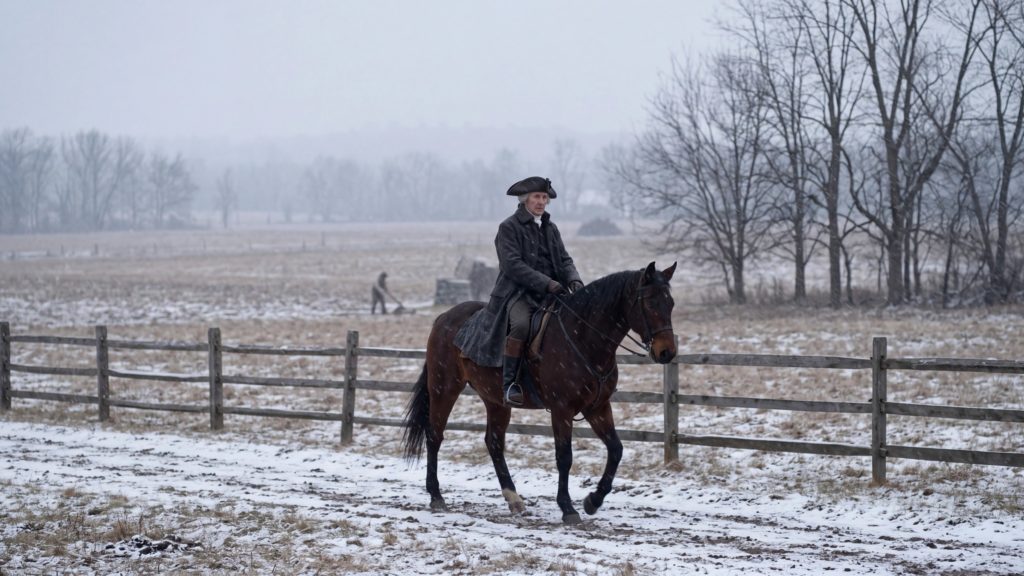
Washington designed his own sixteen-sided barn at Mount Vernon, built specifically so horses could tread out wheat under cover in bad weather[19, p. 5]. Founding Father, yes — but also a genuinely hands-on farm engineer.
One for the Ageonauts…
Mount Vernon ran a working whiskey distillery, and by the time Washington retired it was one of the largest of its kind in the young United States[19, p. 5]. The first president moonlighted, very successfully, as a distiller.
Keith would like to clarify…
Despite everything the building represents today, George Washington himself never actually lived in the White House[14, p. 11]. He chose its site and oversaw its early construction, but John Adams was the one who eventually moved in.
Roger says, "Hear me out…"
After his stepson died, Washington and Martha took in and raised her two youngest grandchildren, Nelly and George Washington Parke Custis, as their own[11, p. 116]. The famously formal general also, quietly, did a lot of grandparenting.
A small fact with a very large consequence…
When electors cast the very first presidential ballots in 1789, they were unanimous: every single vote went to George Washington[8]. He was unanimously elected again for his second term[20] — twice unanimous, with essentially no contest either time.
File under: surprisingly true…
Washington married Martha Dandridge Custis, a wealthy widow with two surviving children from her first marriage[11, p. 90]. Her fortune, alongside his own, helped make Mount Vernon the substantial estate it became.
...the baneful effects of the spirit of party...
George Washington, Farewell Address, 1796
From his 1796 Farewell Address, warning the new nation against the dangers of organised political factionalism[10, p. 19].
Timeline
How it unfolded
22 February 1732
Birth of George Washington
Washington was born on 22 February 1732 (11 February in the Old Style calendar) in the family homestead at Bridges Creek, Virginia, the son of Augustine Washington.[21][22]
28 May 1754
Skirmish at Great Meadows
Washington, then a young Virginia officer, clashed with a French party under Jumonville near the Great Meadows on the frontier, in an engagement in which Jumonville was killed.[23]
6 January 1759
Marriage to Martha Custis
Washington resigned his army commission and married Martha Custis on 6 January 1759.[24][2]
15 June 1775
Washington Named Commander in Chief
The Continental Congress at Philadelphia unanimously elected Washington commander in chief of the American forces, giving him command of the army in the war against Britain.[25, p. 2][11, p. 177]
26 December 1776
Battle of Trenton
On 26 December 1776, after crossing the Delaware above Trenton in winter weather, Washington's force surprised the Hessians at Trenton.[26, p. 9][27, p. 322][28]
19 October 1781
Surrender of Cornwallis at Yorktown
After a prolonged siege directed by General Washington, Lord Cornwallis surrendered at Yorktown, Virginia, on 19 October 1781.[29]
25 May 1787
Washington Presides at the Constitutional Convention
The convention met at Philadelphia on 25 May 1787 to provide a new framework of government, and Washington was made its president.[24]
30 April 1789
Inauguration of George Washington
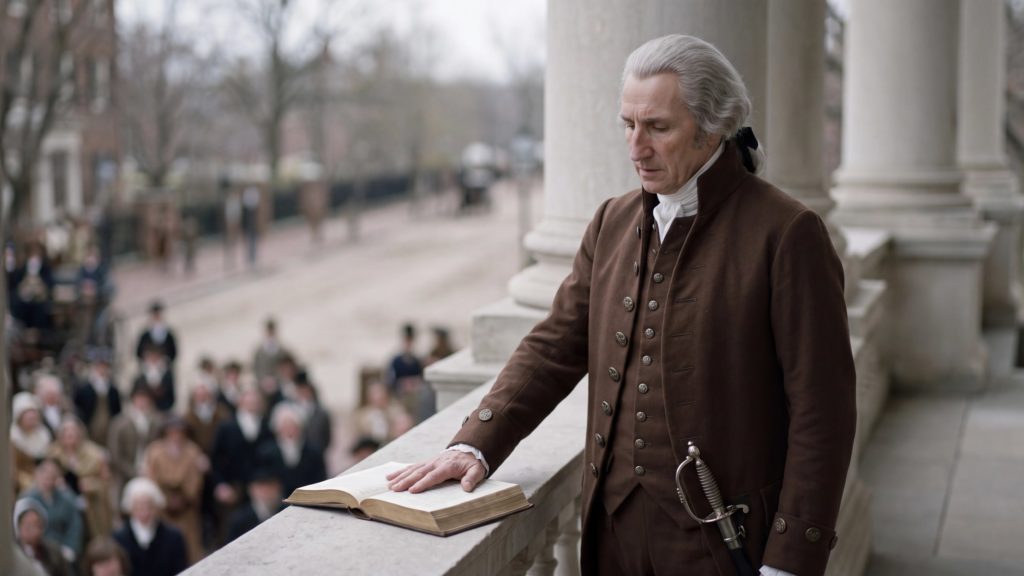
Washington was inaugurated as first President of the United States on 30 April 1789 on the balcony of Federal Hall in New York City, with John Adams as Vice-President.[30, p. 84][25, p. 3][31]
19 September 1796
Washington's Farewell Address
Washington's Farewell Address, his parting message to the American people, first appeared in print on 19 September 1796.[10, p. 3]
14 December 1799
Death of George Washington
Washington died at Mount Vernon, his Virginia home, on 14 December 1799.[11, p. 39][32]
Dig Deeper
Copy any prompt below into your favourite AI chat to keep exploring.
George Washington's 1796 Farewell Address warning against political parties
why the first president tried to warn America off political tribalism before it had even started
the retirement speech that basically predicted America's next two centuries of arguing
Further Reading
Where to read more
George Washington — Britannica
A concise, regularly updated encyclopedia biography covering Washington's life from Virginia planter to commanding general to first president.
Why look at this: A fast way to check the basic shape of the two moments the episode touches on: Washington's warning against political parties, and his role in siting the new federal capital on the Potomac.
https://www.britannica.com/biography/George-WashingtonGeorge Washington's Life — George Washington's Mount Vernon
The official biography maintained by Mount Vernon, Washington's own estate, tracing his life in full from his Virginia youth through his military career, presidency, retirement, and death.
Why look at this: Written by the institution that curates Washington's actual home and papers, it goes well beyond the headline dates into the working life, including the farm and household, behind the public figure the episode only glimpses.
https://www.mountvernon.org/george-washington/biographyAbout the Papers of George Washington — Founders Online (National Archives)
The complete, searchable digitised edition of Washington's letters and papers, over 135,000 documents, published as part of Founders Online, a joint venture of the National Archives and the University of Virginia Press.
Why look at this: Lets a reader search out Washington's own 1796 Farewell Address correspondence and drafts in his own words, the same warning against political parties the episode references secondhand.
https://founders.archives.gov/about/WashingtonRelated
Keep exploring
Places
Can be seen in
Where this shows up
References
Sources
Sources
- BookGeorge Washington: Farmer by Paul Leland Haworth ↑
- BookWritings of George Washington by George Washington and Lawrence B. Evans. Page 408. ↑
- DocumentEncyclopædia Britannica, Ninth Edition/George Washington ↑
- BookThe True George Washington By Paul Leicester Ford by Paul Leicester Ford. Page 260. ↑
- BookThe Farmer Boy, and How He Became Commander-In-Chief by Morrison Heady ↑
- BookCalendar of the correspondence of George Washington, commander in chief of the Continental Army, with the officers by Library of Congress. Manuscript Division and John Clement Fitzpatrick ↑
- WebsiteFounder of the Month: George Washington (Center for the Study of the American Constitution, UW-Madison). Page 2. ↑
- BookUnited States Presidents' Inaugural Speeches: From Washington to George W. Bush by United States. Presidents ↑
- WebsiteComprehensive Plan for the National Capital: Federal Elements (2004) - National Capital Planning Commission. Page 10. ↑
- WebsiteWashington's Farewell Address to the People of the United States (106th Congress Senate Document). Pages 3, 19. ↑
- BookWashington, the man and the mason, by Charles Hilliard Callahan. Pages 39, 90, 116, 177. ↑
- BookThe Attempted Assassination of ex-President Theodore Roosevelt by Henry F. Cochems Oliver E. Remey ↑
- BookThe life of George Washington : with curious anecdotes, equally honourable to himself and exemplary to his young… by M. L. Weems. Page 17. ↑
- WebsiteGeorge Washington Guided Reading (University of Idaho Library Digital Collections). Page 11. ↑
- BookThe unique collection of engraved portraits ... to be sold Thursday, January 21, 1904 ... and Friday, January… by Hampton L. Carson and S. V. Henkels. Page 230. ↑
- WebsiteMount Vernon (National Park Service National Historic Landmark brochure). Page 5. ↑
- BookGeorge Washington The Rebel And The Patriot by Rupert Hughes ↑
- WebsiteGeorge Washington and the Foundations of Civilian Control of the Military (Army University Press, Military Review). Page 10. ↑
- WebsiteMount Vernon Map (National Park Service). Page 5. ↑
- BookThe Life of George Washington, Vol. 5 by John Marshall ↑
- BookThe Life of George Washington, Vol. 2 by John Marshall ↑
- BookLife of George Washington by Washington Irving ↑
- BookJournal of Colonel George Washington by George Washington and Joseph M. Toner ↑
- BookFamous American Statesmen by Sarah Knowles Bolton ↑
- WebsiteDiscover the Real George Washington: Exhibition Overview (National Constitution Center). Pages 2, 3. ↑
- BookGeorge Washington The Image And The Man by W. E. Woodward. Page 9. ↑
- BookThe Story of the Thirteen Colonies by H. A. Guerber. Page 322. ↑
- BookColonel William Smith and lady; the romance of Washington's aide and young Abigail Adams by Katharine Metcalf Roof ↑
- BookYorktown and the Siege of 1781 by Charles E. Hatch ↑
- BookThe home of Washington or, Mount Vernon and its associations, historical, biographical, and pictorial by Benson John Lossing and Making of America Project. Page 84. ↑
- BookBiographical Sketches of the Generals of the Continental Army of the Revolution by Mary Theresa Leiter ↑
- BookAn Illustrated Handbook of Mount Vernon, the Home of Washington by Mount Vernon Ladies' Association of the Union ↑