
American Revolution
Thirteen colonies took on the world's most powerful empire — and won: Britain formally recognised American independence in the Treaty of Paris.[1]
What Happened
The story
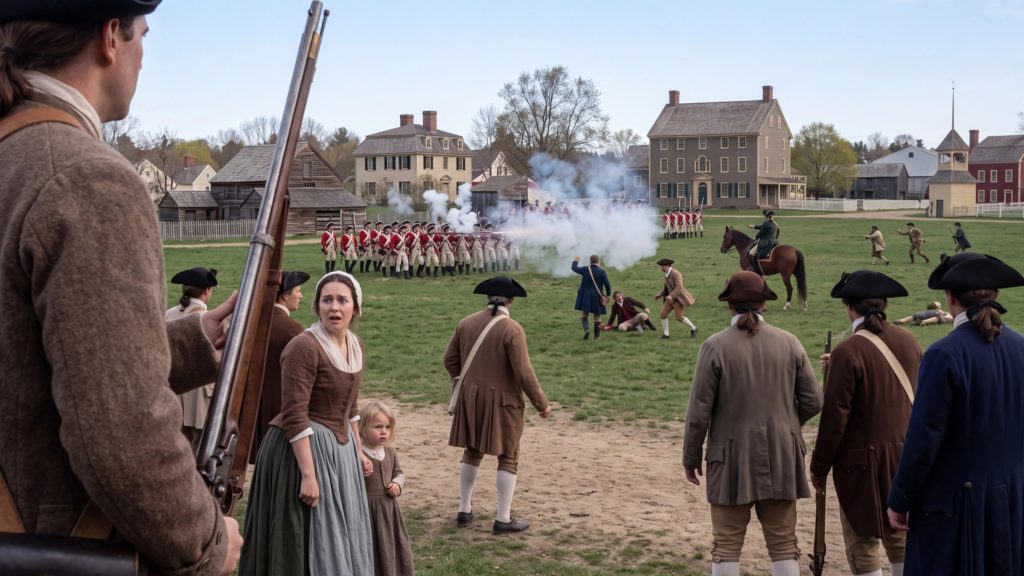
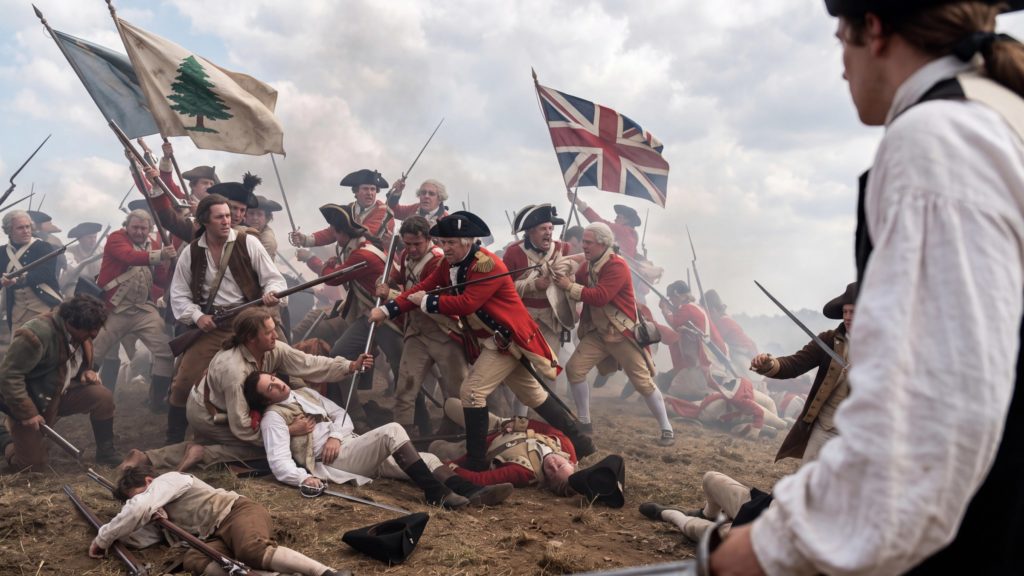
By the 1760s, Britain's Thirteen American Colonies were chafing under new taxes imposed by a Parliament in which they had no representation, starting with the Stamp Act of March 1765[2, p. 41]. Protest escalated through the following decade, and on 19 April 1775 fighting broke out between colonial militia and British troops at Lexington and Concord[3, p. 2], opening a war few on either side had expected.
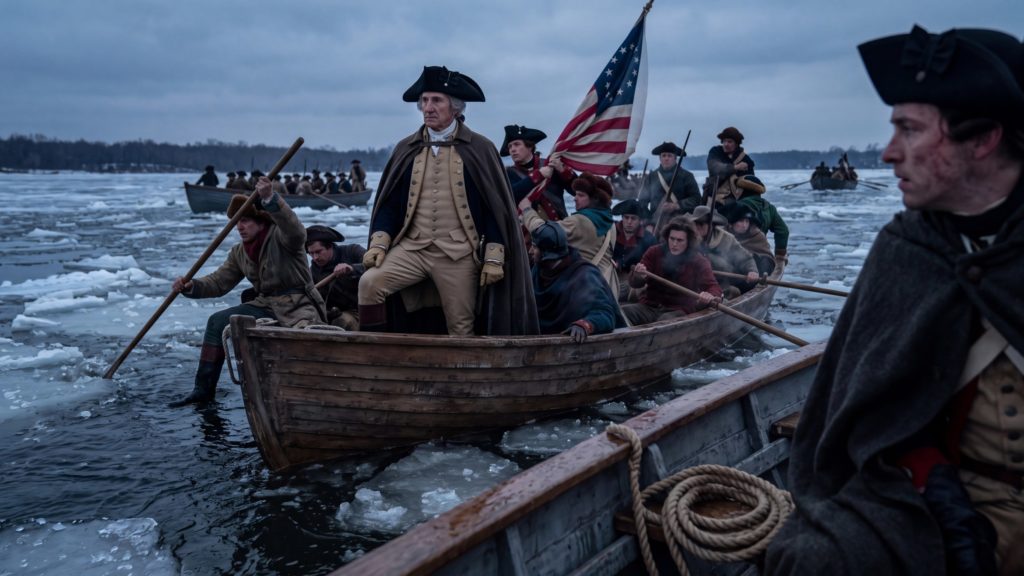
The Continental Congress raised the Continental Army and gave command to George Washington[4, p. 235]. Early fighting included the costly British win at Bunker Hill in 1775. The war's turning point came in October 1777, when American forces forced the surrender of General Burgoyne's army at Saratoga[5, p. 141], persuading France to enter as an American ally the following year[6, p. 1].
Fighting later shifted to the southern colonies, where Lord Cornwallis led the British campaign[7]. Trapped by American and French forces at Yorktown, Virginia, Cornwallis surrendered his army on 19 October 1781[5, p. 146], effectively ending major fighting in North America.
News of the defeat at Yorktown broke the will in London to continue the war. Peace negotiations followed, and Britain formally recognised American independence in the Treaty of Paris, signed in 1783[1].
Quick Facts
The essentials
Quick Facts
Thirteen Colonies / United States (Patriots)
Leadership
George Washington, commander-in-chief of the Continental Army[4, p. 235]
Forces
The Continental Army and colonial militias, joined from 1778 by France as a treaty ally[6, p. 1]
Objective
Independence from British rule
Kingdom of Great Britain
Leadership
King George III[9]
Forces
The British Army and Loyalist militias, under commanders including Sir William Howe[10, p. 209] and Lord Cornwallis[7]
Objective
To retain control over the American colonies
The Bigger Picture
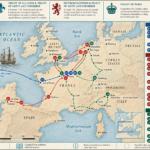
From February 1778 France signed treaties of alliance with the United States[6, p. 1], and Spain and the Dutch Republic later entered against Britain too, turning a colonial rebellion into a wider international war.
How It Came To This
Colonial resistance centred on the principle of “taxation without representation”[11], provoked first by Britain's Stamp Act of March 1765[2, p. 41] and by the later duties and coercive measures that followed it.
What Actually Happened
Fighting between the Thirteen Colonies and Britain ran from 1775 to 1783. The Continental Congress placed George Washington in command of the new Continental Army[4, p. 235], which faced British forces under commanders including General Sir William Howe[10, p. 209]. The American victory at Saratoga in October 1777 helped bring France into the war as an ally from February 1778[6, p. 1]. Fighting later shifted south, where Lord Cornwallis commanded British forces[7] until his surrender at Yorktown in October 1781.
Why It Still Matters
The war ended with Britain's formal recognition of American independence in the Treaty of Paris, signed in 1783[1], establishing the United States as a sovereign republic.
Quick Facts
Roger has entered the historical rabbit hole…
When Cornwallis's army marched out to formally surrender at Yorktown in October 1781, regimental bands reportedly played the tune “The World Turned Upside Down”[12, p. 322] — a fittingly theatrical soundtrack for the moment Britain's American war effectively ended.
Keith has spotted the quotation problem…
The phrase “the shot heard round the world”, often quoted as if soldiers said it in 1775, actually comes from Ralph Waldo Emerson's 1837 poem “Concord Hymn”[13], written more than sixty years after the battle it commemorates.
One for the Ageonauts…
A young French nobleman, the Marquis de Lafayette, crossed the Atlantic to fight for the American cause and won Congress's formal thanks for his “great zeal” in its service[14] — one of the war's more enthusiastic foreign volunteers.
Roger would like you to know…
Britain didn't fight this war alone either — it hired German troops, commonly known as Hessians, to serve alongside British regulars on the very same pay basis as its own soldiers[15, p. 9].
Keith checked the sources…
Continental soldiers owed a lot to a Prussian-trained drillmaster: Baron von Steuben, who whipped Washington's army into shape at Valley Forge and earned the nickname “Drill Master of the Revolution”[16, p. 2].
Meanwhile, in history…
Britain's American headache had international company: in 1779, Spain formally declared war on Great Britain too[17, p. 479], turning a colonial rebellion into a genuinely global conflict.
Keith would like to clarify…
The story of who actually fought in the Continental Army is often flattened into a simple narrative, but African Americans served in its ranks throughout the war[18, p. 180], a fact the standard textbook version tends to skip.
Roger says, “Hear me out…”
Benjamin Franklin spent much of the war as America's ambassador in Paris[19, p. 104], charming French society while quietly working to keep French support — and French money — flowing towards the American cause.
History gets strange here…
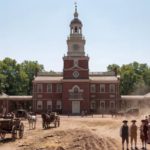
Independence Hall's bell tower gave its name to what's now treated as an almost sacred relic of the Revolution: the Liberty Bell, still kept in Philadelphia today[20].
Down the rabbit hole we go…
The Revolution's memory outlived every veteran who fought in it: the Daughters of the American Revolution, a heritage society for their descendants, was founded in 1890[21] — over a century after the fighting stopped.
These are the times that try men's souls.[22]
Thomas Paine
Opening line of The American Crisis, published December 1776 during Washington’s retreat across New Jersey and read aloud to demoralised Continental Army troops days before the crossing of the Delaware and the attack on Trenton[22].
Timeline
How it unfolded
22 March 1765
Stamp Act Passed
The Stamp Act received the royal assent on 22 March 1765, and colonial reaction forced its repeal in March 1766, though the repeal was accompanied by a declaratory act.[23, p. 61][24, p. 50][25]
16 December 1773
Boston Tea Party
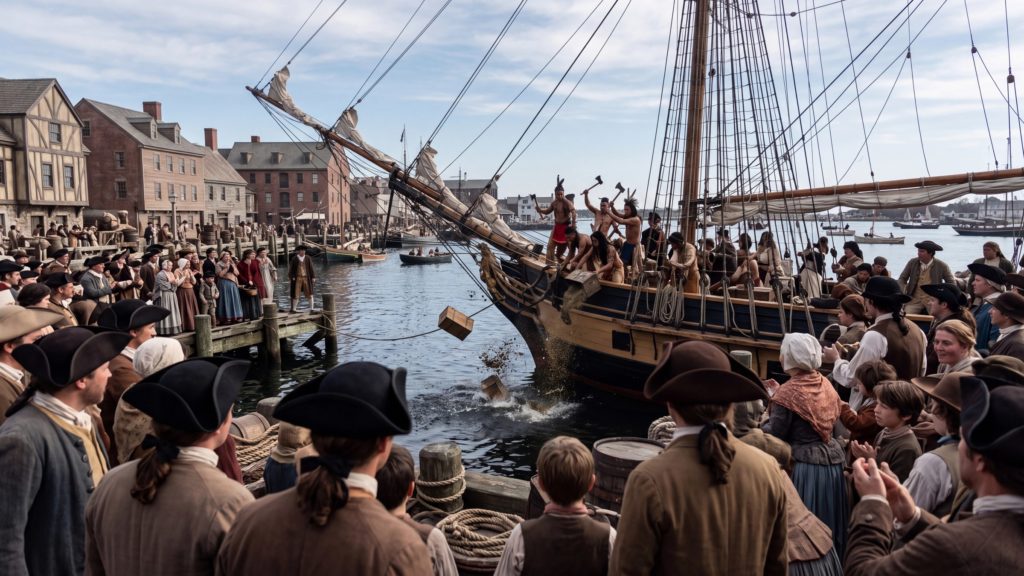
On 16 December 1773 Bostonians, some disguised as Mohawk Indians, boarded British ships in Boston harbour and threw their cargoes of tea overboard, tea that belonged to the East India Company.[25][26]
5 September 1774
First Continental Congress Meets
Delegates from every colony except Georgia met in Philadelphia, the first intercolonial congress called against the measures colonists labelled the 'intolerable acts'.[18, p. 164][27][12, p. 322]
19 April 1775
Battles of Lexington and Concord
British troops marching from Boston toward Concord fought colonial militia at Lexington and Concord on 19 April 1775.[18, p. 164] According to Leiter's sketches of Continental Army generals, the battle of Lexington made war inevitable.[28]
4 July 1776
Declaration of Independence Adopted
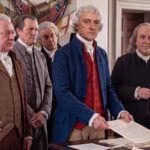
Congress adopted the Declaration of Independence on 4 July 1776, formally announcing the thirteen colonies' separation from Britain.[29][12, p. 322]
17 October 1777
Surrender of Burgoyne at Saratoga
General John Burgoyne surrendered his army at Saratoga on 17 October 1777, a defeat that led France to move from sympathy to active alliance.[30][31, p. 273]
6 February 1778
Treaty of Alliance with France
The Treaty of Alliance between France and the United States was signed on 6 February 1778, after the Saratoga surrender had turned French passive enthusiasm into active alliance.[18, p. 180][31, p. 273]
19 October 1781
Cornwallis Surrenders at Yorktown
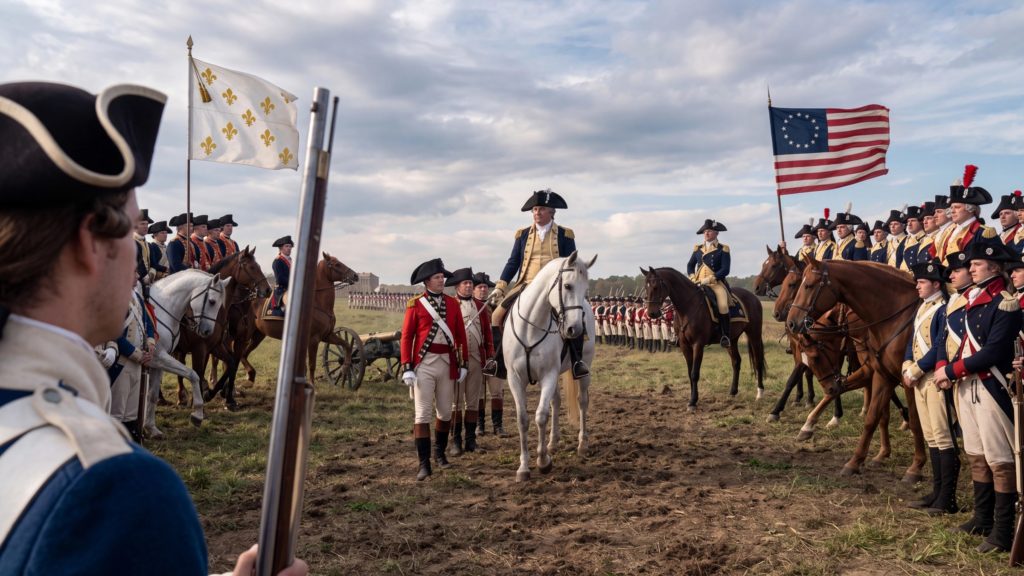
Lord Cornwallis surrendered at Yorktown on 19 October 1781 after a prolonged siege by allied French and American forces.[32]
3 September 1783
Treaty of Paris Signed
The definitive treaty of peace between Great Britain and the United States was signed at Paris on 3 September 1783, and in its first article Britain acknowledged the United States.[33][34, p. 655]
Dig Deeper
Copy any prompt below into your favourite AI chat to keep exploring.
Explain how French financial and military support after the 1778 alliance actually kept the American Revolution's war effort alive.
What does it mean that the birth of American independence depended so heavily on the very European monarchies the revolutionaries were rejecting?
Convince me the American Revolution was really a European proxy war wearing a Boston accent.
Further Reading
Where to read more
American Revolution — Britannica
Encyclopaedia Britannica's full overview article on the American Revolution, covering causes, major battles, and the peace settlement.
Why look at this: A clear one-stop summary of how a tax dispute in the Thirteen Colonies escalated into full independence by 1783 — good for checking the shape of the whole war before diving into any one battle.
https://www.britannica.com/event/American-RevolutionLiberty! The American Revolution (1997, PBS/Middlemarch Films) — Episode 1: ‘The Reluctant Revolutionaries’
The Peabody Award-winning six-part PBS documentary series, using period actors reading contemporary letters and diaries alongside historians; free to watch on YouTube.
Why look at this: Brings Washington's early defeats and the tense build-up to Saratoga to life in the words of the people who lived through them, rather than as a list of dates.
https://www.youtube.com/watch?v=CHRPY1aBPugFounders Online — National Archives
The National Archives' searchable database of over 185,000 letters and documents by Washington, Franklin, Adams, Jefferson, Hamilton and Madison.
Why look at this: Lets you read Washington's own wartime correspondence about Saratoga, the French alliance, or Yorktown directly, rather than through a historian's summary.
https://founders.archives.gov/Related
Keep exploring




Can be seen in
Where this shows up

References
Sources
Sources
- DocumentTreaty of Paris (1783) ↑
- BookThe Black Man: His Antecedents, His Genius, and His Achievements by William Wells Brown. Page 41. ↑
- WebsiteCorrespondence of George Washington as Commander in Chief (America in Class / National Humanities Center). Page 2. ↑
- BookWashington the Soldier by Henry B. Carrington. Page 235. ↑
- BookThe rotunda and dome of the U. S. Capitol by S[amuel] D[ouglas] Wyeth. Pages 141, 146. ↑
- WebsitePredicting Britain's Response to the U.S. Alliance with France. Page 1. ↑
- BookBEAT THE LAST DRUM THE SIEGE OF YORKTOWN 1781 by THOMAS J. FLEMING ↑
- WebsiteGeorge Washington Guided Reading (University of Idaho Library Digital Collections). Page 12. ↑
- DocumentResponse of the Continental Congress to the Proclamation of Rebellion by King George III ↑
- BookHistory of Independence Hall : from the earliest period to the present time : embracing biographies of the… by D. W. cn Belisle. Page 209. ↑
- BookThe Declaration of independence, an interpretation and an analysis by Herbert Friedenwald ↑
- BookThe Story of the Thirteen Colonies by H. A. Guerber. Page 322. ↑
- BookPoems of American Patriotism ↑
- BookLives of celebrated statesmen by John Quincy Adams and Charles Wentworth Upham ↑
- BookGeorge Washington The Image And The Man by W. E. Woodward. Page 9. ↑
- BookThe Hatchet of the United States ship "George Washington," by Edwin Taylor Pollock and Paul Frederick Bloomhardt. Page 2. ↑
- BookAmerican eloquence: a collection of speeches and addresses, by the most eminent orators of America; (edited by Frank Moore). Page 479. ↑
- BookThe Continental Army Series: Reality and Aspiration in the American Revolutionary Era by wts@gunjones.com Wm. Thomas Sherman. Pages 164, 180. ↑
- BookAutobiography of Benjamin Franklin : edited from his manuscript, with notes and an introduction by Benjamin Franklin and John Bigelow. Page 104. ↑
- BookThe Mentor: Historic Spots of America, Vol. 1, Num. 32, Serial No. 32 by Robert McNutt McElroy ↑
- BookWhite House gossip : from Andrew Johnson to Calvin Coolidge by Edna M. Colman ↑
- BookGeorge Washington The Rebel And The Patriot by Rupert Hughes ↑
- BookSelect Charters And Other Documents Illustrative Of American History 1606-1775 by William MacDonald. Page 61. ↑
- BookAn historical account of the old State house of Pennsylvania now known as the Hall of independence by Frank M. Etting. Page 50. ↑
- BookThe Life of George Washington, Vol. 1 by John Marshall ↑
- BookThe Declaration of independence; a study in the history of political ideas by Carl Lotus Becker ↑
- BookThe American Revolution, 1776-1783 by Claude Halstead Van Tyne ↑
- BookBiographical Sketches of the Generals of the Continental Army of the Revolution by Mary Theresa Leiter ↑
- BookThe Life of George Washington, Vol. 2 by John Marshall ↑
- BookSigners of the Declaration: Historic Places Commemorating the Signing of the Declaration of Independence by Robert G. Ferris ↑
- BookA short history of Europe, from the fall of the Eastern empire to the dissolution of the Holy… by Charles Sanford Terry. Page 273. ↑
- BookYorktown and the Siege of 1781 by Charles E. Hatch ↑
- BookDefinitive treaty of peace and friendship between His Britannic Majesty and the United States of America : signed… by etc. United States Great Britain. Treaties and etc. Great Britain United States. Treaties ↑
- BookAn address delivered before the New York Historical Society on its seventy-ninth anniversary, Tuesday, November 27, 1883 by John Jay and New-York Historical Society. Page 655. ↑