
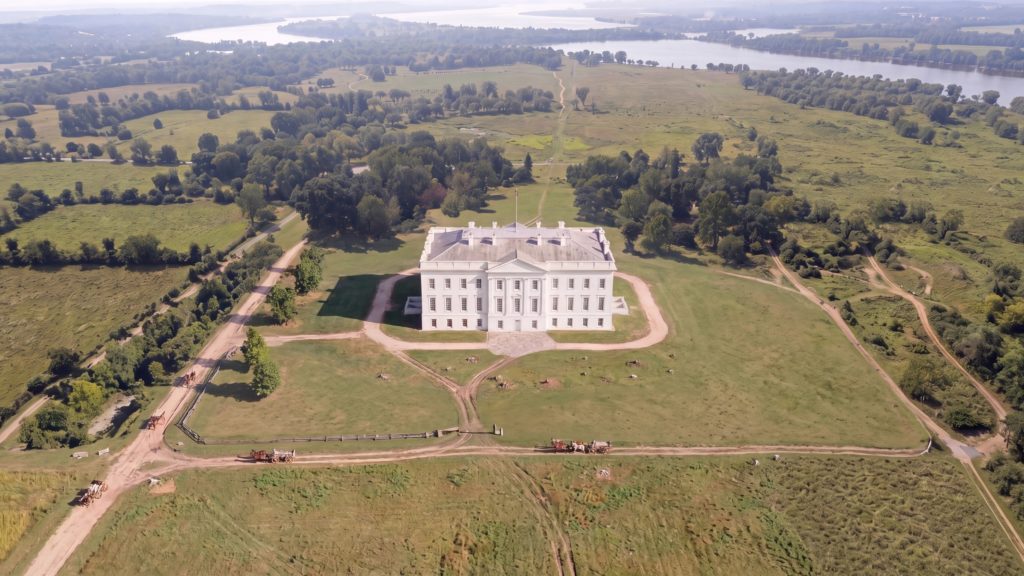
The White House
The White House wasn't painted white to cover fire damage from 1814 — its porous sandstone was already being whitewashed for protection well before that.[1, p. 3]
About the Place
Why it matters
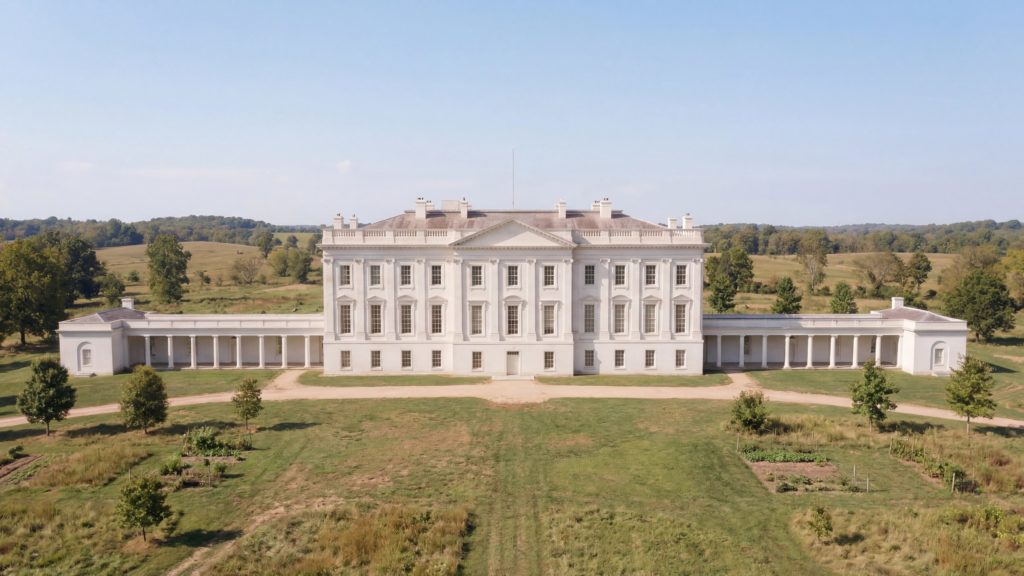
The White House is the official residence and workplace of the President of the United States, located in Washington, D.C. Its cornerstone was laid on 13 October 1792, to a design by Irish-born architect James Hoban.[2][1, p. 2]
John Adams became the first president to live in the house, moving in in November 1800, before construction was fully finished.[2]
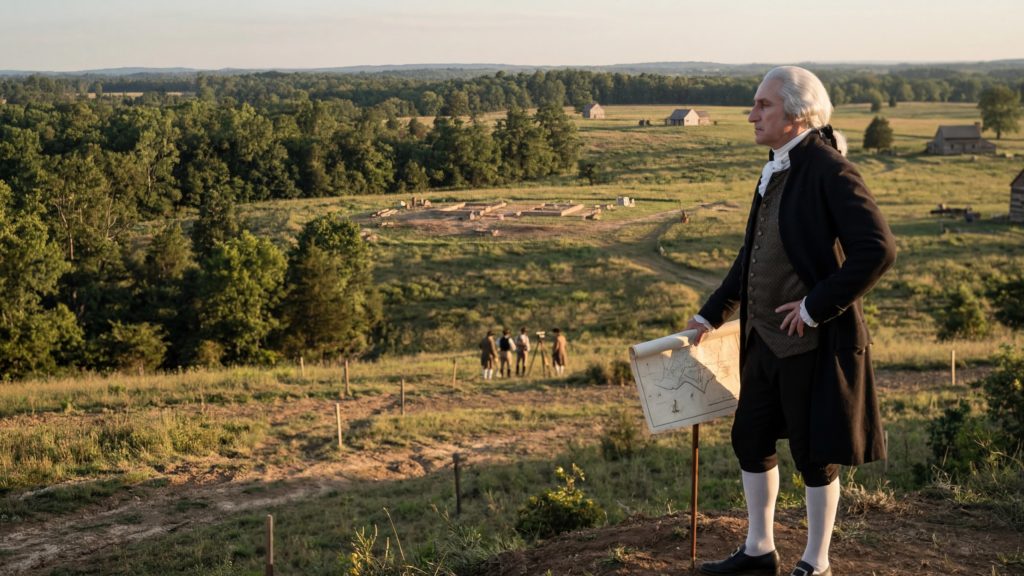
British forces set fire to the building in August 1814 during the War of 1812, gutting the interior; reconstruction began in spring 1815, and President James Monroe was able to occupy the restored house in 1817.[3]
Since then the building has been expanded and renovated repeatedly — a south portico in 1824, a north portico in 1829, and a west wing including the President's oval office during the first decade of the twentieth century — while remaining in continuous use as the head of state's home and office.[3, p. 25]
Legacy & Reputation
What’s the verdict?
The White House’s history complicates any simple reading of its restrained, republican design: enslaved people, including Paul Jennings in Dolley Madison’s household, did real, documented work inside and around it. The building’s plain sandstone walls have needed protective whitewash and paint for as long as records here reach back.[3, p. 25][1, p. 3]
Myth-buster
Think you know this one?
Myth: the White House got its name because it was painted white to cover the scorch marks left by the British burning it in 1814. In fact, its porous sandstone needed protective whitewash from well before the fire, for straightforward weatherproofing reasons.[1, p. 3]
Quick Facts
The essentials
Quick Facts
Keith would like to clear something up…
The house was not painted white to hide the scorch marks of 1814. Its porous sandstone needed whitewash for protection from moisture and freezing well before the fire ever happened.[1, p. 3]
Roger has checked the paperwork…
For a century the name was only a nickname — officially it was the Executive Mansion. Under the Roosevelt Administration, the building's official name changed to The White House.[4, p. 191]
The house was built by people who were not free…
Enslaved people did real, documented work in and around the White House. Paul Jennings, enslaved in the Madison household, was fifteen and present the night the British approached in 1814, and later wrote his own memoir of the experience.[3, p. 25]
Roger has inspected the accommodation…
John Adams moved into a house nobody had finished, in November 1800.[2]
Keith has read the memoir…
As the British approached Washington in 1814, Dolley Madison directed Paul Jennings and other enslaved members of the household to save the public documents and the presidential portrait — not, as often retold, Dolley cutting the canvas from its frame herself.[3, p. 25]
This sounds invented, but…
In the summer of 1948 a leg of Margaret Truman's piano fell straight through the floor of her room — proof the aging house needed major structural repair, not just redecoration.[5]
The oval came later…
The west wing, including the President's oval office, was added during the first decade of the twentieth century.[2][4, p. 191]
The design crossed an ocean…
James Hoban was born and trained in Ireland, and the library's own sources describe the building's facade as resembling the Duke of Leinster's mansion in Dublin — with the library adding the same caution that Hoban left no statement confirming the connection himself.[2]
The house, counted up…
The modern White House holds 132 rooms in total, including 35 bathrooms.[6]
History gets strange here…
Andrew Jackson's 1829 inaugural reception really did overwhelm the White House — but accounts describe only modest real damage; stewards eventually set out tubs of whiskey punch on the lawn specifically to draw the crowd back outside.[7]
I Pray Heaven to Bestow The Best of Blessings on THIS HOUSE and All that shall hereafter Inhabit it. May none but Honest and Wise Men ever rule under This Roof.[8]
John Adams
Written in a letter to Abigail Adams shortly after John Adams moved into the house in November 1800; later inscribed on the State Dining Room mantel.[9]
Timeline
How it unfolded
13 October 1792
Cornerstone of the President's House laid
The cornerstone of the President's House was laid on 13 October 1792 to the design of Irish-born James Hoban, winner of the prize competition, whose plans President Washington approved.[2] The site had been set aside by Pierre L'Enfant in his plan of the Federal City.[1, p. 1]
November 1800
John Adams moves into the unfinished President's House
The house was ready for occupancy in November 1800, although the interior was still unfinished when John and Abigail Adams moved in, making Adams the first president to live there.[1, p. 2]
24 August 1814
British burn the Executive Mansion
On 24 August 1814, during the War of 1812, British forces set fire to the Executive Mansion, destroying the interior and furnishings though some exterior walls remained standing.[1, p. 2]
1817
James Monroe moves into the rebuilt house
James Monroe moved into the rebuilt house in the fall of 1817, after James Hoban rebuilt it to his original plan in slightly less than three years on Madison's orders.[1, p. 3]
1901
Theodore Roosevelt makes the name White House official
The name White House had been in common use but remained only a nickname until 1901, when President Theodore Roosevelt made it official.[1, p. 3]
1948
Truman reconstruction of the interior
In 1948 President Truman began reconstruction of the entire interior, which was completed in 1952.[10, p. 1]
September 1961
Congress declares the White House a museum
Congress enacted legislation in September 1961 declaring the White House a museum.[11] A National Park Service timeline also lists the museum declaration in 1961.[10, p. 1]
Dig Deeper
Copy any prompt below into your favourite AI chat to keep exploring.
Explain who actually built the White House including the enslaved and immigrant laborers whose work constructed it
Debate why the newly independent United States chose to build the White House in a restrained republican style instead of a European-style palace
Roast the myth that Dolley Madison single-handedly saved Washington's portrait from the White House in 1814 then tell me who actually deserves the credit
Further Reading
Where to read more
The White House — Official History, WhiteHouse.gov
Article. Free online, no login. Notes that architect James Hoban's design beat out a competing, anonymously submitted entry from Thomas Jefferson himself in the 1792 competition.
Why look at this: Notes that James Hoban's winning design beat out a competing, anonymously submitted entry from Thomas Jefferson himself in the 1792 competition — Jefferson lost the contest to design his own future home.
https://www.whitehouse.gov/about-the-white-house/the-white-house/The White House: Inside Story
PBS documentary (2016) taking viewers behind the scenes of the White House across two centuries, with residence staff, curators and former First Families including the Carters, Obamas and Bushes. Free to stream on pbs.org and the PBS App.
Why look at this: Goes behind the scenes across two centuries with residence staff, curators and former First Families, showing how the working building differs from the public rooms most visitors see.
https://www.pbs.org/video/white-house-inside-story-welcome-white-house/Restoration of the White House: Report of Architects, with Historical Notes on the White House by Charles Moore (S. Doc. 197, 57th Congress, 1903)
Official government report. Free online, no login (UW Digital Collections). The architects' own room-by-room account of stripping the White House to its walls in 1902 -- and what they found from the 1814 fire still hidden inside them.
Why look at this: The architects' own room-by-room account of stripping the White House down to its walls in 1902, describing exactly what two centuries of change had done to the original 1800 structure.
https://search.library.wisc.edu/digital/AXV7IAHTHQWXCX85Related
Keep exploring



Places
Can be seen in
Where this shows up
References
Sources
Sources
- WebsiteClassroom Resource Packet: Designing the White House 1792-1830. Pages 1, 2, 3. ↑
- BookSigners of the Declaration: Historic Places Commemorating the Signing of the Declaration of Independence by Robert G. Ferris ↑
- WebsiteDolley Madison Program Transcript (PBS American Experience). Page 25. ↑
- BookThe story of the White House : In 2 vol. Fully illustr by Esther Singleton. Page 191. ↑
- Websitewhitehousehistory.org: Margaret truman and her piano ↑
- Websitewhitehousehistory.org: White house dimensions ↑
- Websitewhitehousehistory.org: Not a ragged mob the inauguration of 1829 ↑
- BookLife and public services of John Quincy Adams, sixth President of the United States, with the eulogy delivered… by William H. Seward ↑
- BookThe Ladies of the White House; Or, in the Home of the Presidents by Laura C. Holloway ↑
- WebsiteWashington D.C.: The Growth of a Capital City (NPS newspaper). Page 1. ↑
- Websiteen.wikipedia.org: White House ↑