
Story › Napoleon: Larger Than Legend › Part 2 of 6
| Part 2 of 6 |
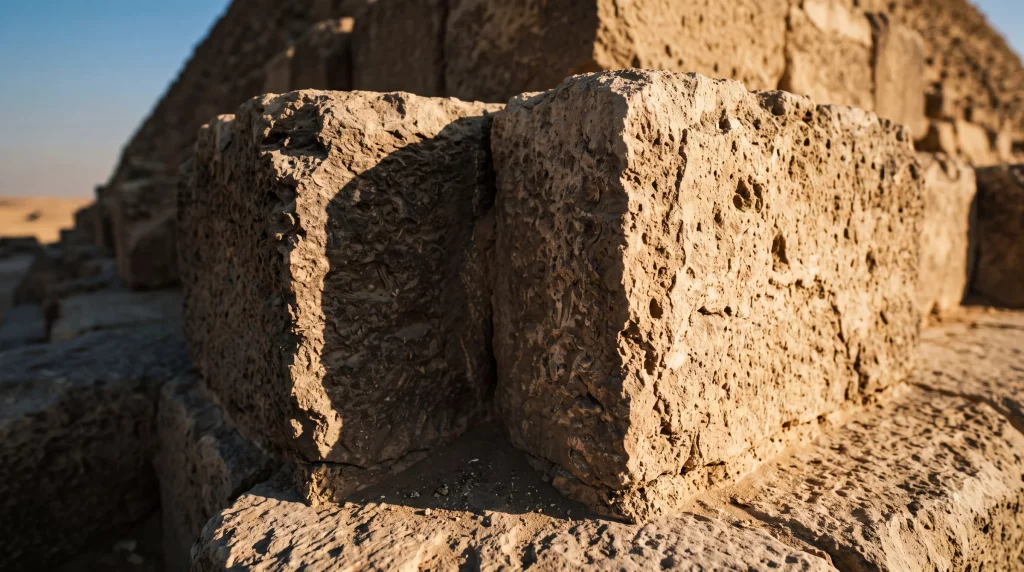
What did Napoleon see inside the Great Pyramid?
One night, one legend, and a secretary who says it never happened.
About This Part
What’s covered
In May 1798 General Bonaparte sailed from Toulon for Egypt with an army and a body of scholars[1]. This video is chapter 2 of 6 of Napoleon: Larger Than Legend, and it asks what Napoleon saw inside the Great Pyramid. The famous answer is a night alone, a vision and a changed man. The evidence is thinner than the legend. His own secretary, Bourrienne, wrote that Bonaparte never even entered the great Pyramid[2, p. 135]. Around that disputed night sit events that are far better recorded. After winning the Battle of the Pyramids he entered Cairo, but Nelson destroyed the French fleet in Aboukir Bay almost at the same moment and cut off his power to retreat[3, p. 273]. A French officer found the Rosetta Stone in 1799[4, p. 41]. This video weighs the legend against those records, and asks how a stop at the Pyramids became one of the most retold stories about Napoleon.
Watch
See the part on YouTube
The Story
How the Story Unfolds
Sailing for Egypt with Scholars
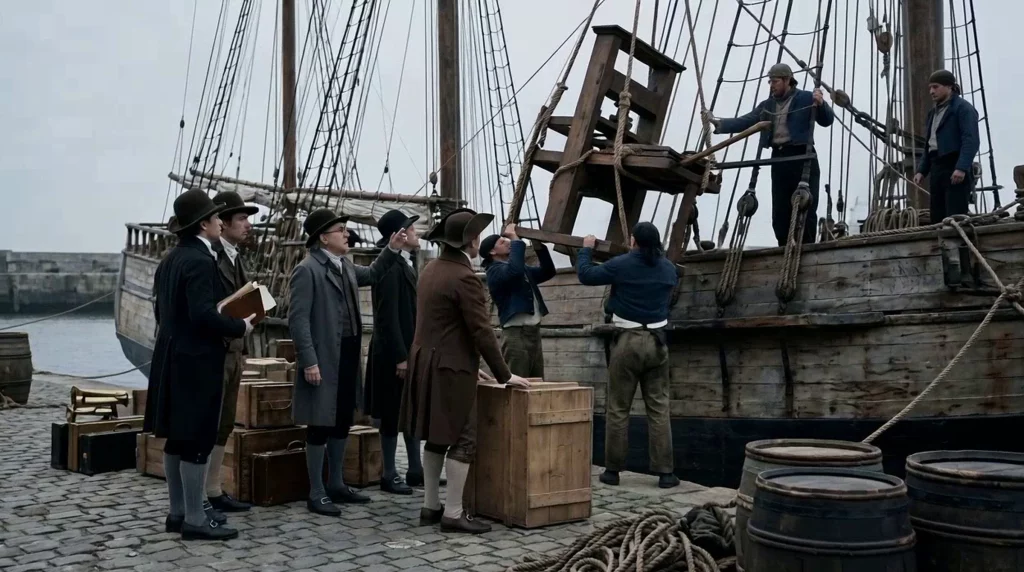
The Treaty of Campo Formio left Britain alone against France, and in February 1798 Bonaparte was named to command an Army of England, though he had already planned an expedition to Egypt[3, p. 273]. Mahan records him arguing that seizing Egypt would give a base of operations against India[5]. On 19 May 1798 he sailed with ten thousand sailors, thirty-five thousand soldiers and delegates from the world of letters, science and art[6]. Ida Tarbell counted over one hundred scientists, among them Monge, Berthollet, Fourier and Denon, and says Napoleon founded the Institute of Egypt for them[7]. On 21 July the French formed five great hollow squares[8, p. 710], and Sloane reports Bonaparte telling his men that forty centuries looked down upon them from the summit of the Pyramids[1]. After winning that battle he entered Cairo[3, p. 273]. At the Institute's first sitting he asked how to improve the army's baking ovens and purify the water of the Nile[8, p. 710], and a French and Arabic printing press was soon at work in Cairo[9, p. 179].
The Stone the Soldiers Found
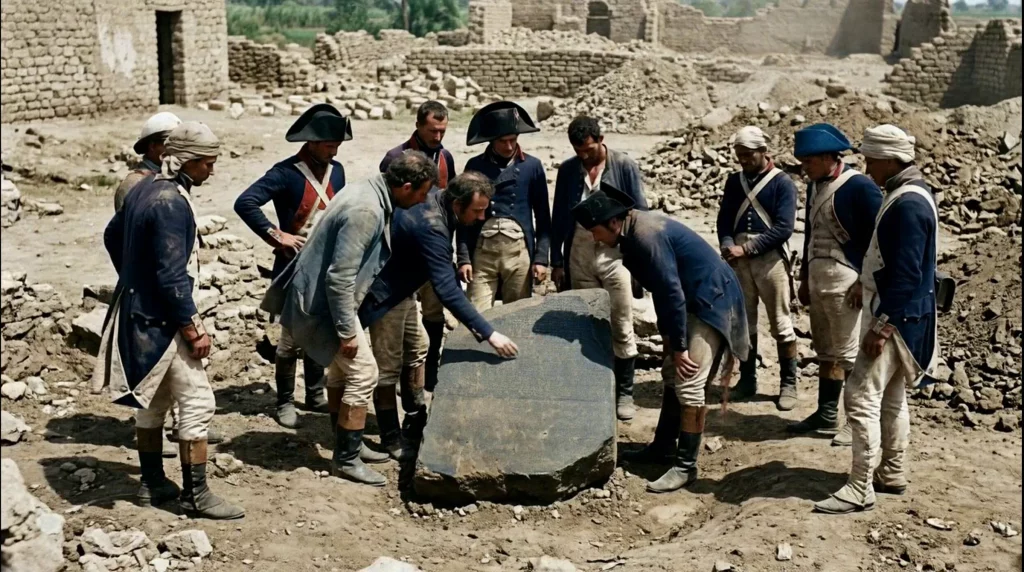
In 1799 a French officer of engineers, whose name is spelt Boussard or Bouchard, found the Rosetta Stone, according to Budge, either lying on the ground or built into an old wall that soldiers had been ordered to remove for an addition to the fort later called Fort St Julien[10]. The block carries a decree of Egyptian priests in honour of Ptolemy V, written in hieroglyphic, demotic and Greek[4, p. 41]. Budge adds that when Napoleon heard of the stone he ordered it taken to Cairo, where the learned men of the expedition took the deepest interest in it[10]. It did not stay French. Article XVI of the capitulation of 1801 surrendered it to General Hutchinson[10], and it arrived in England in February 1802[11, p. 251]. Thomas Young published an interpretation of some parts of the hieroglyphic text in 1817[11, p. 251], and Champollion's Lettre à M. Dacier of 1822 followed the path Young had indicated[11, p. 251].
The Night Nobody Can Prove
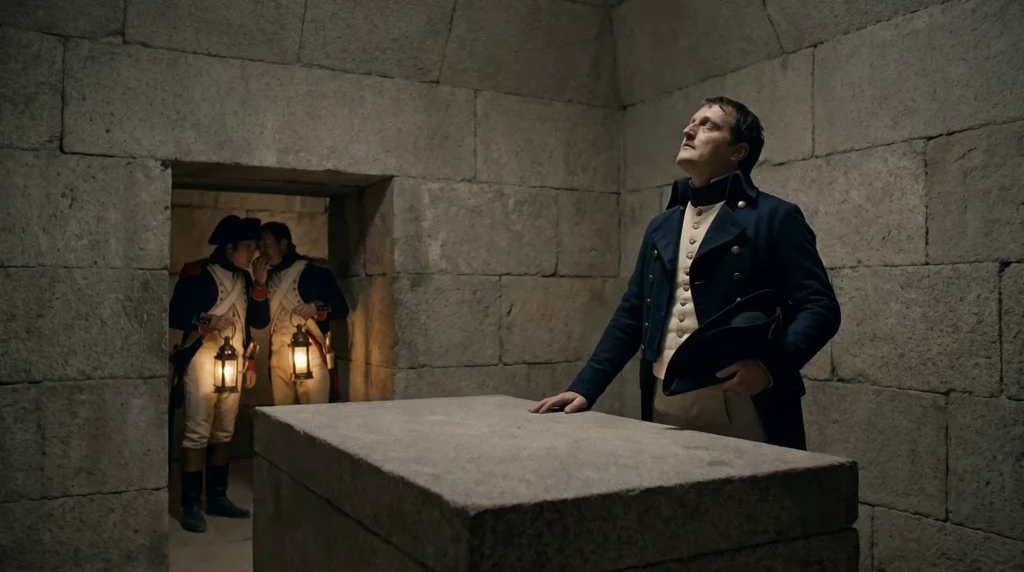
One printed version of the legend, Sir Walter Scott's, puts Bonaparte in the sepulchral chamber of the pyramid of Cheops, saying “Glory be to Allah” beside a mufti[12]. Scott's note says the conversation appeared officially in the Moniteur, and adds that Bourrienne nonetheless asserts Buonaparte never set foot in the pyramid[12]. Gifford's history of the wars of the Revolution also prints a talk about the pyramid between Bonaparte and the muftis[13]. Bourrienne, who says he never quitted Bonaparte's side a single moment in the desert, wrote that Bonaparte never even entered the great Pyramid and never had any thought of entering it[2, p. 135]. By his account Bonaparte caused some persons to go in while he stayed outside, and they informed him there was nothing to be seen[2, p. 135]. He called Scott's version the height of absurdity[2, p. 135]. Bourrienne is no neutral witness, since he was accused of peculation before the First Consul parted with him[2, p. 135]. Even so, the night alone rests on a printed tale, and the one eyewitness we can quote points the other way.
The Nile and a Quiet Exit
Nelson's captains found the French moored in line of battle parallel with the shore in Aboukir Bay, and he wrote that he attacked at sunset on 1 August 1798[14]. Captain Foley had formed the idea of getting inside the French line[15, p. 89]. By the end, eleven of thirteen French ships of the line had been captured or destroyed[16]. Terry says the defeat cut off Bonaparte's power to retreat, and Turkey declared war on France[3, p. 273]. In Syria the siege of Acre was raised on 20 May 1799, at a cost of nearly 3000 men[17, p. 135]. Bourrienne records that on 23 August they embarked on two frigates, the Muiron and the Carrère[2, p. 135], and Bonaparte landed at Fréjus on 9 October[8, p. 710]. He left command to Kléber[18], whose letter to the Directory, as Gifford summarises it, complained that Bonaparte had left without telling any person whatever[13], and that the army was reduced a full half[13].
Historical Context
What was going on
Egypt was a strategic gamble. The Treaty of Campo Formio had left Britain alone in the war, and the Directory sanctioned Bonaparte's scheme, not unwilling to remove the young and masterful general as far from Paris as possible[3, p. 273]. Egypt was subject to the suzerainty of the Sultan, but its masters were the Mamelukes, whose power dated from the thirteenth century[3, p. 273]. Sloane notes that the expedition was justified to the Sultan with the plea that Egypt no longer belonged to Turkey[1]. The loss of the fleet turned the gamble into a trap, and Turkey, influenced by Great Britain, declared war upon France[3, p. 273]. The scholars left a longer mark than the soldiers. Rhind thought it probable that their scientific commission formed the first considerable collection of antiquities procured systematically in Egypt, its labours embodied in the Description de l'Égypte[19, p. 54]. Warwick adds that Bonaparte took care that thrilling accounts of his victories reached France through the papers[20]. The French lost the country: Kléber defeated the Turks at Heliopolis on 20 March 1800 but was assassinated at Cairo on 14 June, and Cairo and Alexandria surrendered in 1801[18]. Bonaparte had meanwhile landed at Fréjus on 9 October 1799 and entered Paris on 16 October[21, p. 346], which sets up chapter 3.
Quick Facts
The essentials
Quick Facts
Nothing to See Inside
Roger wants a revelation, but the one eyewitness memoir offers a shrug. Napoleon's secretary Bourrienne claims Napoleon never entered the great Pyramid, and had someone else go in while he waited outside[2, p. 135]. Their report, he says, was that there was nothing to be seen[2, p. 135]. Keith adds that Bourrienne's memoirs are a contested source.
Roger Blames the Novelist
Roger would love to credit the ancients, but the mystical pyramid scene has a literary suspect. The printed memoirs accuse Sir Walter Scott of embellishing his account with the ridiculous farce of the sepulchral chamber of the grand pyramid, speeches and all[2, p. 135]. Keith notes that this is one side of an argument.
A Priestly Decree on Stone
Forget curses and mysteries. According to Wallis Budge, the Rosetta Stone copies a decree passed by a council of Egyptian priests assembled at Memphis to mark the first commemoration of Ptolemy V's coronation[10], in the spring of 196 BC[10]. The Demotic section is the original, Keith notes; the Greek and hieroglyphic versions were made from it[10].
Science Moves Into a Harem
Napoleon brought scholars, then gave them a club. J. Holland Rose records that the Institute of Egypt was installed on 23 August 1798 in a Bey's palace, with Monge as president and Bonaparte as vice-president[22]. Its papers were read in a harem hall that once heard only twanging lutes, weary jests and idle laughter[22]. Roger approves.
Keith Counts the Lost Fleet
Keith has the Nile tally. One 1902 account says eleven French ships of the line out of thirteen were captured or destroyed, along with two of four frigates[16]. Nelson himself wrote that, had he not been wounded, not a boat would have escaped to tell the tale[16]. Napoleon's army was suddenly rather far from a ride home.
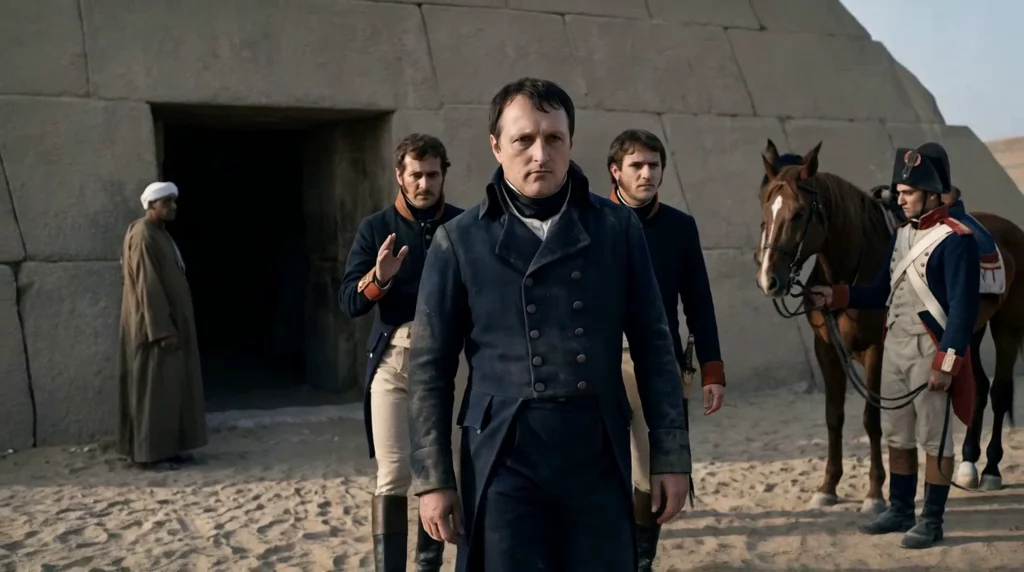
Bonaparte never even entered the great Pyramid. He never had any thought of entering it. I certainly should have accompanied him had he done so, for I never quitted his side a single moment in the desert.
Louis Antoine Fauvelet de Bourrienne, Napoleon's private secretary, in his Memoirs of Napoleon Bonaparte
Bourrienne's memoirs, answering Sir Walter Scott's chamber scene from the 1798 Egyptian campaign. Napoleon suspected him of making large sums at Hamburg, so his memoirs are a contested source[2, p. 135].
Who Is in This One?
The people you'll meet




Timeline
How it unfolded
1798
The Pyramid Night Denied by Bourrienne
According to his secretary Bourrienne, who said he never left Napoleon's side in the desert, Bonaparte never even entered the Great Pyramid.[2, p. 135] Bourrienne wrote that men sent inside reported there was nothing to be seen.[2, p. 135]
19 May 1798
Expedition Sails from Toulon
The expedition sailed from Toulon on 19 May 1798, with Napoleon taking chemists, mathematicians, engineers, architects, archaeologists and historians alongside his army. Nelson, who had been watching the port, was driven out to sea by a storm and missed the departure.[23]
21 July 1798
Battle of the Pyramids
On 21 July 1798 the French met Murad Bey's Mamelukes, entrenched at Embabeh to cover Cairo.[12] French casualties were surprisingly small, about 30 killed and 300 wounded.[8, p. 710]
1 August 1798
Battle of the Nile
The French fleet, which had remained in Aboukir Bay after landing the army, was attacked by Nelson on 1 August 1798.[7] After the defeat Bonaparte could only consolidate French rule in Egypt and trust to chance for communication with France.[8, p. 710]
23 August 1798
Institute of Egypt Installed in Cairo
Bonaparte united his scholars in a society called the Institute of Egypt, installed with much ceremony on 23 August 1798, with Monge as president and Bonaparte as vice-president.[22]
1799
Rosetta Stone Found
French troops repairing the fortifications north of Rosetta found the stone, which Wallis Budge says was found in August 1799.[11, p. 251] Its inscription was bilingual and one language, Greek, was well known, which made it so valuable to the early decipherers.[11, p. 251]
August 1799
Napoleon Leaves Egypt, Kléber Left in Command
In August 1799 Bonaparte secretly embarked for France with companions including Berthier, Lannes, Murat and his secretary Bourrienne, leaving the French troops in Egypt under Kléber.[24]
2 September 1801
Menou Surrenders and the Stone Passes to Britain
Allied forces landed in Alexandria in March 1801 and defeated General Menou, who surrendered on 2 September.[25] Article XVI of the capitulation required the French to hand over antiquities collected by their Institute, and Menou gave way over the stone.[11, p. 251]
1822
Champollion Publishes His Reading
Dr Young's translations of the three inscriptions were published in 1818, and in 1822 Champollion published his own and made out something like an alphabet, helped by Young's work. Reading the stone came more than twenty years after French soldiers found it.[4]
Where Is That?
The maps used in this part
What Happens in This One?
The moments it covers



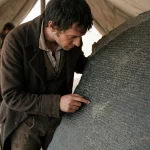
Myth-buster
Think you know this one?

Keith, this is the best bit. Napoleon crept into the Great Pyramid alone, spent the whole night in the dark chamber, and came out pale and silent after a vision of his destiny. A pharaoh's tomb, a lonely general and a mystical message. Nobody knows what he saw, Keith, which is why it is magical.
Roger, “alone in the dark” needs someone to go in first. Bourrienne, who says he never left Napoleon's side in the desert, wrote that Bonaparte never even entered the great Pyramid and sent others in, who found nothing to be seen[2, p. 135]. Scott's chamber scene he called absurd[2, p. 135]. Bourrienne was accused of peculation, so treat him with care[2, p. 135]. But no visitor, Roger, no vision.

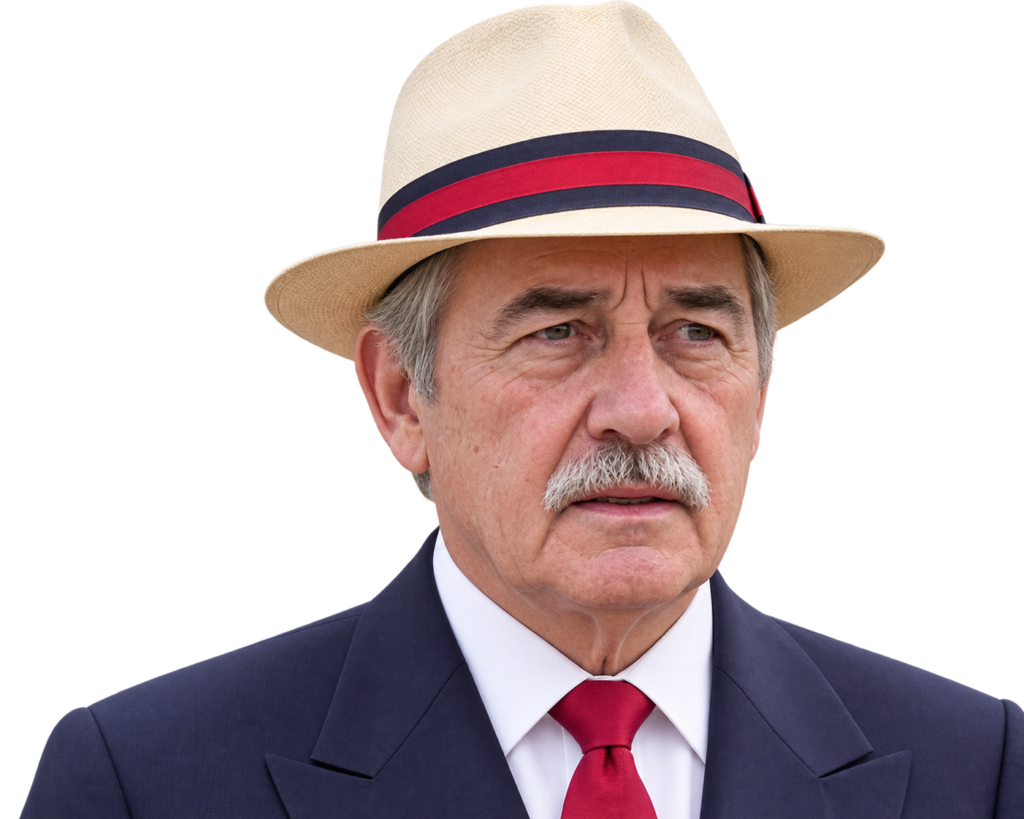
Keith, it is simple. Napoleon cracked the hieroglyphs! He took scholars to Egypt, grabbed the Rosetta Stone, and the secrets of the pharaohs fell open like a tin of biscuits. Egypt's ancient writing, solved by the Emperor himself.
Roger, soldiers found the stone, they did not crack it. A French officer found it in 1799[4, p. 41]. Under the capitulation of 1801 it was surrendered to General Hutchinson[10]. Young published a partial interpretation in 1817, and Champollion's letter of 1822 followed Young's path[11, p. 251]. Your tin of biscuits took two decades to open, Roger, and Napoleon was nowhere near the tin opener.

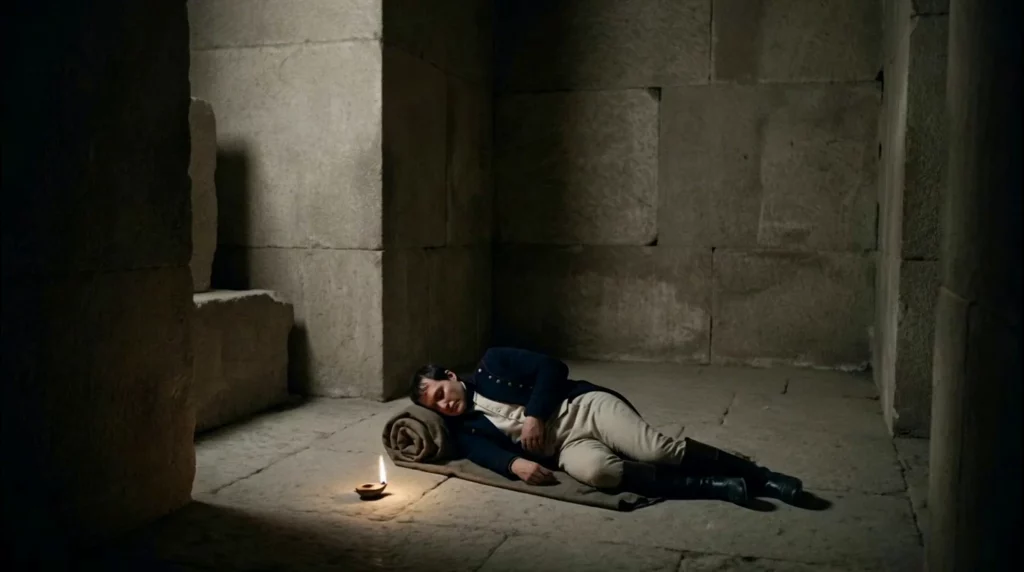

Keith, Egypt was a triumph! Napoleon wins the Battle of the Pyramids, takes Cairo, brings home scholars and a stone, and strolls back to France a hero. Not one thing went wrong, Keith. A flawless conquest of the East.
Roger, “not one thing went wrong” skips the sea. After the Pyramids, Nelson destroyed the French fleet and cut off the retreat, and Turkey declared war[3, p. 273]. The siege of Acre was raised in May 1799 at a cost of nearly 3000 men[17, p. 135]. Bonaparte then left, and by 1801 Cairo and Alexandria had surrendered[18]. A fine battle, Roger. Even your stone ended up in England[11, p. 251]. Not a triumph.

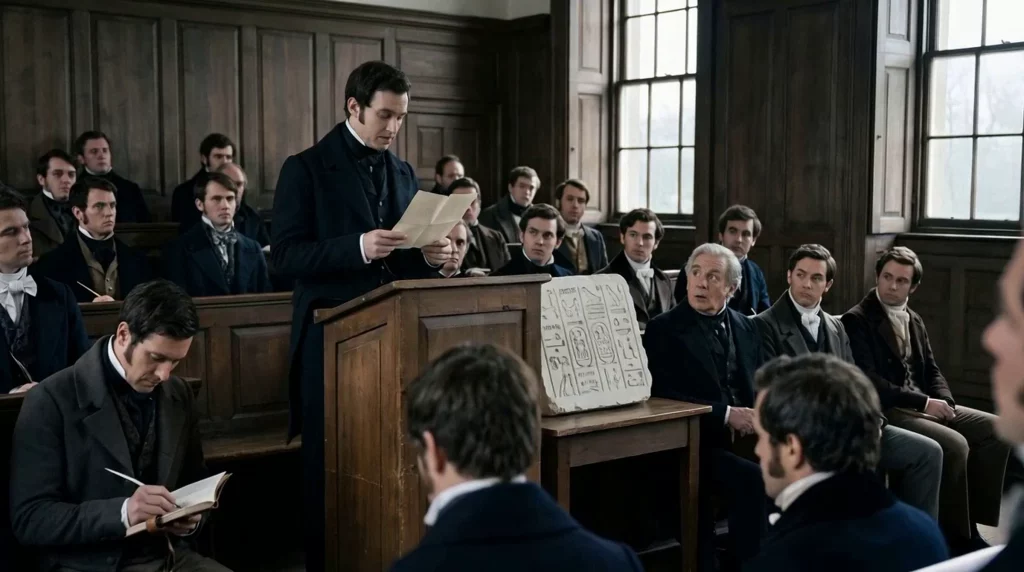

Dig Deeper
Copy any prompt below into your favourite AI chat to keep exploring.
Did Napoleon really spend a night alone inside the Great Pyramid?
Explain how historians weigh Bourrienne's denial that Napoleon ever entered the Great Pyramid, and why a secretary's memoir is both valuable and risky as evidence.
Walk me through how Captain Foley's decision to sail inside the anchored French line at Aboukir Bay turned a late-afternoon attack into the destruction of a fleet.
Why did translating one ancient language change how we study history?
Debate whether a legend like Napoleon's night in the Great Pyramid survives because it is believable, or because people want their great men to have had a mystical moment.
Argue whether Napoleon's army was truly trapped in Egypt once the French fleet was lost at the Nile, or whether he could always have slipped away.
Did Napoleon's army really shoot the Sphinx's nose off?
Tell me 3 other famous legends that stuck to a great leader long after someone who was actually there flatly denied them.
Challenge me to a quiz on Aboukir Bay, then mark my answers the way Nelson would mark a captain who anchored on the wrong side.
Further Reading
Where to read more
The Rosetta Stone (EA24), The British Museum
The British Museum's catalogue record for the Rosetta Stone: a granodiorite stela carrying a priestly decree for Ptolemy V in hieroglyphic, Demotic and Greek, with its findspot at Rashid, dimensions, curator's note and bibliography.
Why look at this: Keith says the slab carried the same text three times over, in two languages and three scripts. This record gives the line count of each block of text and the Fort Saint Julien findspot at Rashid, so the claim can be checked against the object itself.
https://www.britishmuseum.org/collection/object/Y_EA24The Battle of the Nile, 1 August 1798 (Nicholas Pocock, 1808), Royal Museums Greenwich
A Royal Museums Greenwich collection entry for Nicholas Pocock's oil painting, with a museum account of the anchored French line in Aboukir Bay and Captain Foley's Goliath doubling its head at about half past six in the evening.
Why look at this: Keith has Nelson attacking late afternoon into night. This entry pins the opening moment to about 6.30 pm on 1 August 1798 and names every ship in the French line, so the whole scene Roger describes can be pictured in two minutes.
https://www.rmg.co.uk/collections/objects/rmgc-object-12005Inside the Great Pyramid (Mike Dash, A Blast From The Past, 2011)
A short post by the historian Mike Dash that calls the tale of Napoleon's night alone in the King's Chamber apocryphal, retells the story of his emerging shaken, and cites Bourrienne's denial, with Bourrienne's memoirs in the bibliography.
Why look at this: Roger sells the legend of a night in the Great Pyramid and Keith warns it is probably a later story. This post covers both halves in a few paragraphs: the shaken general who would not talk, and the secretary who says he never went in.
https://mikedashhistory.com/2011/09/01/inside-the-great-pyramid/The Rosetta Stone (Napoleon and the Scientific Expedition to Egypt), Linda Hall Library
A page from the Linda Hall Library's digital exhibition on the French expedition. It covers the stone's discovery at Rosetta in July 1799, its three scripts, the rival work of Thomas Young and Champollion, and its reproduction in the Description de l'Égypte.
Why look at this: The script's own fact flag says Napoleon did not unlock hieroglyphs. This page sets it straight: French soldiers found the stone, the army later lost it to Britain, and Champollion worked mostly from copies, publishing his first report in 1822.
https://www.lindahall.org/experience/digital-exhibitions/napoleon-and-the-scientific-expedition-to-egypt/15-the-rosetta-stone/Battle of the Nile (Harrison W. Mark), World History Encyclopedia
A long-form, free article on the battle: Brueys's fleet anchored in Aboukir Bay, the gap inshore that Foley's Goliath exploited, the explosion of L'Orient, and how the loss left the French army cut off in Egypt.
Why look at this: Roger says most of the French fleet was gone and Napoleon's army was stuck in Egypt. This article walks through the afternoon and night in order, then explains why that left a general without a fleet to take him home.
https://www.worldhistory.org/article/2244/battle-of-the-nileThe 'Institut d'Égypte' and the Description de l'Égypte, Fondation Napoléon
A Fondation Napoléon article on the scientific commission that sailed with Napoleon in 1798, his creation of the Institut d'Égypte in Cairo under Monge and Berthollet, its fields of study, and the multi-volume Description published from 1809 to 1828.
Why look at this: Roger jokes that Napoleon invaded with scientists. The article gives the real commission as 167 academics, though other sources round it to about 150, which is exactly the headcount the script's fact flag says to verify.
https://www.napoleon.org/en/history-of-the-two-empires/articles/the-institut-degypte-and-the-description-de-legypteMemoirs of Napoleon Bonaparte, Volume 3 (Bourrienne), Project Gutenberg
The free full text of the third volume of the memoirs of Napoleon's private secretary, covering the Egyptian campaign, including his own account of the journey to the Pyramids in July 1798 and his notes answering Sir Walter Scott.
Why look at this: This is the witness Dr Mbeki cites. Bourrienne writes that Napoleon never even entered the great Pyramid and sent others in to report. Read it as a contested memoir, but it is the written source behind the doubt.
https://www.gutenberg.org/ebooks/3553Description de l'Égypte digital collection, Bibliotheca Alexandrina
The Bibliotheca Alexandrina's free online edition of the Description de l'Égypte: eleven volumes of large engraved plates and nine of text on antiquities, the modern state and natural history, with a short history of the Institut d'Égypte.
Why look at this: Dr Mbeki's list of what the scientists recorded is a joke. This is the real record: the engraved temples, plants, animals and maps the savants of the expedition produced, the actual answer to Roger's gap-year-with-homework line.
https://descegy.bibalex.org/en/Letters and Dispatches of Horatio Nelson, 3 to 9 August 1798, The War Times Journal
Transcribed letters Nelson wrote from the Vanguard at the mouth of the Nile in the days after the battle, including his covering letter to the Admiralty on 7 August and his note to Sir William Hamilton, taken from his letter-book and the London Gazette.
Why look at this: Roger has the English fighting with wind and steel. Here is Nelson's own account days later: writing to Hamilton on 8 August that God had made him the instrument of destroying the enemy's fleet, with a head too sore to write well.
https://www.wtj.com/archives/nelson/1798_08b.htmSources
- BookThe Life of Napoleon Bonaparte. Vol. 2 (of 4) by William Milligan Sloane ↑
- BookMemoirs of Napoleon Bonaparte — Complete by Louis Antoine Fauvelet de Bourrienne. Page 135. ↑
- BookA short history of Europe, from the fall of the Eastern empire to the dissolution of the Holy… by Charles Sanford Terry. Page 273. ↑
- BookThe Nile. Notes for travellers in Egypt by E. A. Wallis Budge. Page 41. ↑
- BookThe influence of sea power upon the French revolution and empire, 1793-1812 (vol 2) by A. T. Mahan ↑
- BookThe French revolution : [crowned by the French academy. Gobert prize] by Louis Madelin ↑
- BookA Life of Napoleon Bonaparte, with a Sketch of Josephine, Empress of the French. by Ida M. Tarbell ↑
- BookThe Cambridge Modern History : The French Revolution by A. W. Ward Lord Acton. Page 710. ↑
- BookMemoirs of the Duke of Rovigo (M. Savary) Vol. 1 by Anne-Jean-Marie-René Savary duc de Rovigo. Page 179. ↑
- BookThe Rosetta Stone by Sir E. A. Wallis Budge ↑
- BookThe Rosetta Stone in the British Museum: The Greek, Demotic and Hieroglyphic Texts of the Decree Inscribed on… by Wallis Budge. Page 251. ↑
- BookLife of Napoleon Bonaparte, Volume II. by Walter Scott ↑
- BookHistory of the wars occasioned by the French revolution, from the commencement of hostilities in 1792, to the… by C. H Gifford ↑
- BookThe Boys' Nelson by Harold Wheeler ↑
- BookThe Life Of Nelson, 2nd edition by Alfred Thayer Mahan. Page 89. ↑
- BookNelson and his captains: sketches of famous seamen by W. H. Fitchett ↑
- BookMemoirs of Napoleon Bonaparte (vol 1) by Louis Antoine Fauvelet de Bourrienne and Ramsay Weston Phipps. Page 135. ↑
- BookThe French revolution from 1789 to 1815 by M. Mignet and James Westfall Thompson ↑
- BookThebes; its tombs and their tenants, ancient and present, including a record of excavations in the Necropolis by A. Henry Rhind. Page 54. ↑
- BookNapoleon and the end of the French revolution by Charles F. Warwick ↑
- BookMemoirs of Joseph Fouché : Duke of Otranto, minister of the General Police of France : with portraits by Joseph Fouché. Page 346. ↑
- BookThe Life of Napoleon I (Complete) by J. Holland Rose ↑
- BookThe Eastern question; an historical study in European diplomacy by J. A. R. Marriott ↑
- BookThe French revolution : a historical sketch by Walter Geer ↑
- WebsiteThe Rosetta Stone: A Journey from Alexandria to London (napoleon.org) ↑