
In bicorne and greatcoat, Napoleon stands amid modern traffic - the emperor whose 1805 decree still governs how Paris numbers its houses.
The capital Napoleon inherited half-built and left half-rebuilt — the stage for his self-coronation, his looted-art museum, and the monuments that still shape how the world remembers him.
About the Place
Why it matters
Paris had been France's political capital for centuries, but a decade of revolutionary upheaval before Napoleon's 1799 coup left it financially strained, with many of its grand pre-Revolutionary building schemes stalled or abandoned[1]. As First Consul, Napoleon inherited a capital of unfinished monuments and neglected public works, and quickly began redirecting the city's building programme toward his own emerging imperial image rather than completing the Revolution's own plans for it[2].
From 1799 Paris functioned as the administrative heart of the Consulate, and from 1804 of the Empire — the city where Napoleon issued decrees, received foreign envoys, and staged the ceremonies of a new imperial court centred on the Tuileries Palace[3]. The Louvre, renamed the Musée Napoléon, displayed art seized during his Italian campaigns, turning the capital into a showcase of conquest as much as government[4].
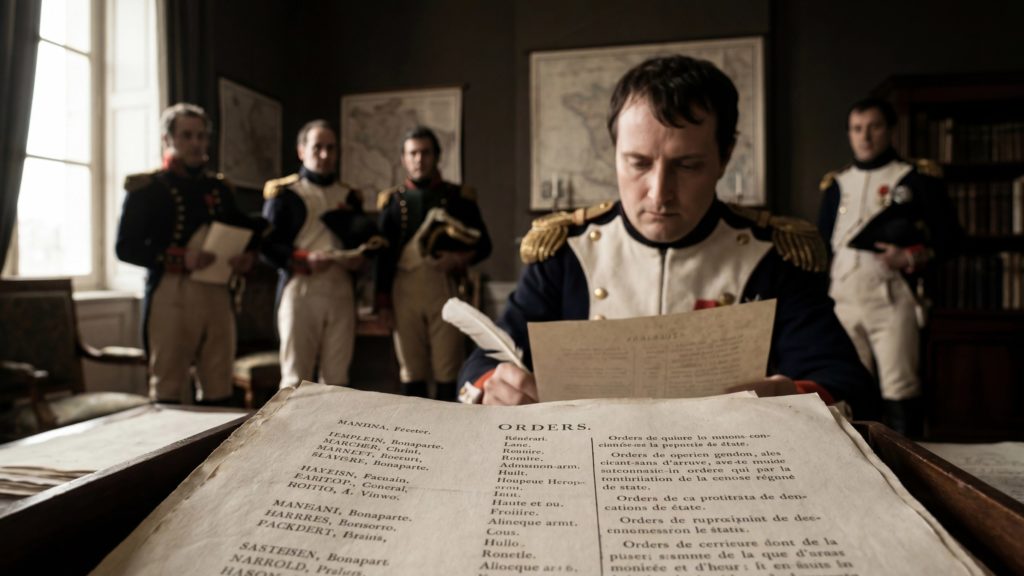
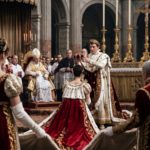
The defining scene is Napoleon's coronation as Emperor of the French inside Notre-Dame in December 1804. He summoned Pope Pius VII to Paris rather than travelling to Rome himself, then broke with papal tradition by placing the crown on his own head — a deliberate statement that the new Empire's authority ran through Paris, not the Vatican[1][3].
Paris fell to allied armies in 1814, forcing Napoleon's abdication and ending his direct hold on the capital he had spent fifteen years rebuilding[5]. Later regimes, especially Napoleon III's Second Empire, dramatically expanded on his groundwork with the wide Haussmann boulevards most visitors now picture as "old Paris"[6]. Today Paris remains the capital of France and still carries physical traces of the Napoleonic building programme.
Legacy & Reputation
What’s the verdict?
Napoleon’s Paris is often remembered as a triumphant showcase — arches, columns, and a renamed Louvre proclaiming imperial glory — but historians studying his building programme note it was as much propaganda and unfinished ambition as achievement, with many of its signature projects only completed decades later under different regimes[2][7]. His reputation as Paris’s great builder rests partly on later rulers finishing his own plans.
Myth-buster
Think you know this one?
It’s tempting to picture Napoleon I’s Paris as the grand, wide-boulevarded city of the postcards; those sweeping avenues are largely the work of his nephew Napoleon III’s Baron Haussmann, decades later. Napoleon I’s own Paris was still substantially the older, denser street plan he had only begun to reshape[2][6].
Quick Facts
The essentials
Quick Facts
Roger has a theory about the cannon count
Paris's Vendôme Column was cast from the bronze of Russian and Austrian cannon captured around Austerlitz, formed into 425 spiralling relief plates like a giant war diary[8]. Sources disagree on exactly how many guns went in — Roger suspects Napoleon liked round numbers more than accountants did.
Keith checked the date
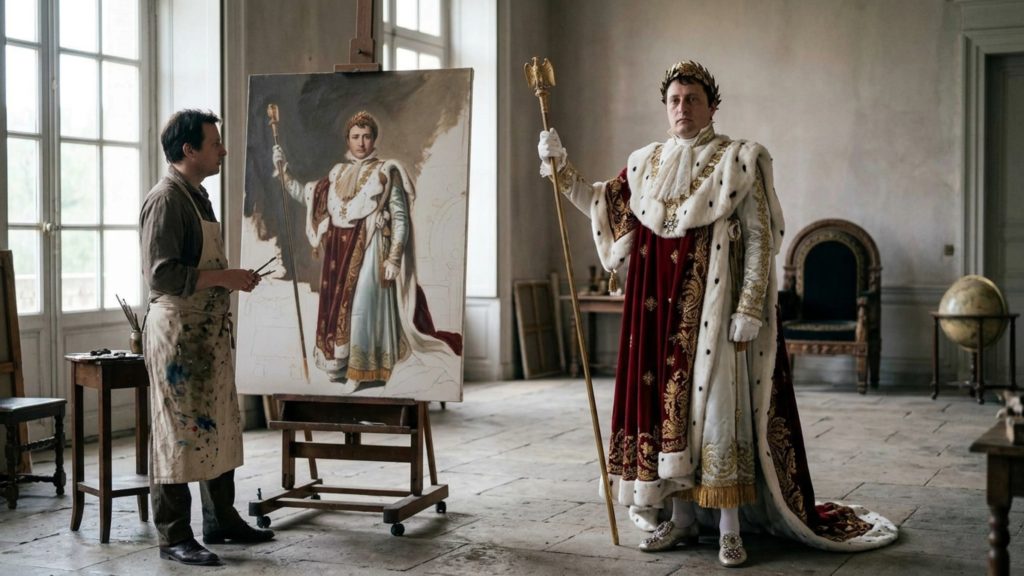
On 2 December 1804, inside Notre-Dame, Napoleon was crowned Emperor of the French — and, breaking centuries of tradition, placed the crown on his own head rather than letting the Pope do it[1]. Keith calls it history's boldest piece of stage direction.
One for the Ageonauts: Rome came to him
Rather than travel to Rome to be crowned, Napoleon had Pope Pius VII brought to Paris for the ceremony[3]. It fits a pattern historians trace across his reign — reshaping Paris itself into a rival to ancient Rome[2].
Keith would like to clarify what happened to the Louvre
During Napoleon's rule the Louvre was renamed the Musée Napoléon and filled with artworks seized during his Italian campaigns[4]. Much of it was returned to its original owners after his fall, so the "museum of conquest" didn't last.
Roger would like you to know the arch wasn't finished on time
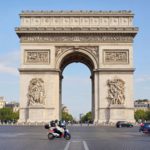
Napoleon commissioned the Arc de Triomphe after Austerlitz in 1806, intending it as a monument to his armies[2]. He did not live to see it completed — Roger says that's either tragic or extremely on brand.
History gets strange here: the law outlived the Empire
The Napoleonic Code, drafted under his Consulate and Empire, reorganised French civil law and still forms the backbone of the country's legal system today[1]. Few Parisian monuments have outlasted the Emperor's paperwork.
Keith checked the sources on 1814
In 1814 allied armies took Paris, forcing Napoleon's abdication and ending his direct rule over the city he'd spent fifteen years remaking[5]. Keith notes the capital he built up was also the capital that gave him up.
Roger's theory on the statue that wouldn't stay put
The statue atop the Vendôme Column has been toppled and replaced several times since Napoleon's day, including when the column itself was pulled down during the 1871 Paris Commune[9]. Roger reckons it's the most fought-over plinth in Paris.
Shared verdict: Napoleon started something bigger than he finished
Napoleon's building programme gave Paris grand monuments and a template for large-scale imperial urban design, but it was his nephew Napoleon III, decades later, who transformed the city wholesale with Haussmann's boulevards[6][2]. One emperor planted the idea; another paved it.
One for the Ageonauts: the word nobody said
Notice something? This episode's Tuileries trouser drama, Notre-Dame coronation talk, and Arc de Triomphe finale are all pure Paris — yet the script never once says the word. Consider this fact your unofficial subtitle.
To make Paris not only the most beautiful city that exists, but also the most beautiful city that could exist.
Napoleon Bonaparte, on his ambitions for Paris as First Consul (c. 1799-1802)
Translated from the French; the standard historians' shorthand for Bonaparte's stated ambition to remake Paris as he began the building campaign - the Tuileries as seat of government from 1800, the Arc de Triomphe, the Vendome Column.
Timeline
How it unfolded
19 February 1800
First Consul moves into the Tuileries
On 19 February 1800 the First Consul took possession of the palace of the kings in Paris.[10] The Bonapartes left the Luxembourg for the Tuileries, which was made the Government House.[11, p. 240]
1802
Rue de Rivoli begun
Napoleon began building the Rue de Rivoli in 1802.[12] According to an 1827 guide, it was opened by Bonaparte on ground belonging to convents and the old riding school, and it bears the name of the battle of Rivoli of 14 January 1797.[13, p. 62]
1 January 1806
Pont d'Austerlitz opens
The Pont d'Austerlitz, begun in 1802 between the Arsenal and the Jardin des Plantes, opened to foot passengers on 1 January 1806 and to carriages on 5 March 1807, and was named for the victory of 2 December 1805.[13, p. 62]
25 August 1806
Vendôme Column begun
Work on the Vendôme Column began on 25 August 1806 and ended on 15 August 1810, according to the inscription on the monument as recorded in an 1827 guide to Paris.[13, p. 262] The column commemorates the campaign of 1805 in Germany and rests on the foundation of the earlier statue of Louis XIV in the Place Vendôme.[13, p. 262] Its bas-reliefs are composed of twelve hundred pieces of cannon taken from the Russian and Austrian armies.[13, p. 262]
c. 1808
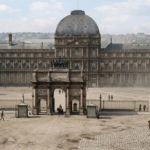
Arc du Carrousel completed
The Arc de Triomphe du Carrousel, designed by Charles Percier and Pierre Fontaine, was built between 1806 and 1808 to commemorate Napoleon's military victories.[14] The Louvre gives its building dates as 1806 to 1810, so the end date varies by source.[15] A 1922 history describes it as erected by Napoleon to commemorate the victories of 1805, at the spot where a barrier and gate once stood between the Carrousel and the Tuileries courtyard.[16]
22 June 1853
Haussmann becomes prefect of the Seine
On 22 June 1853 Napoleon III made Georges-Eugène Haussmann prefect of the Seine, and he went on to cut eighty kilometres of new avenues through the city.[17] The Rue de Rivoli begun by Napoleon I was extended by Haussmann and completed in 1865.[12]
November 2022
Arc du Carrousel conservation begins
A conservation treatment of the Arc de Triomphe du Carrousel began in November 2022 to consolidate the structure by addressing masonry waterproofing and reinforcing ironwork, and to clean and restore the sculpted elements, with completion planned before the summer of 2024.[15]
Dig Deeper
Copy any prompt below into your favourite AI chat to keep exploring.
Explain how Napoleon turned captured Russian and Austrian cannon into the bronze Vendôme Column, and why sources still disagree on the exact number melted down.
What does the disputed cannon-count behind the Vendôme Column teach us about how far Napoleon's monuments blurred verified history and self-mythologising?
Roleplay as the foundryman melting down captured cannon in 1809, and convince me the Vendôme Column's disputed gun-count legend still makes for an emperor-sized flex.
Further Reading
Where to read more
The Vendôme Column — napoleon.org
A short, richly illustrated magazine piece from the official Fondation Napoléon on how the column was cast from captured cannon and later rebuilt after being toppled.
Why look at this: Explains — and complicates — the "1,200 melted cannons" figure behind our Vendôme Column fun fact, straight from Napoleon's own foundation.
https://www.napoleon.org/en/magazine/places/vendome-column/A Close-Up On: The Coronation of Napoleon I — napoleon.org
An in-depth walkthrough of the 2 December 1804 coronation at Notre-Dame, from Pope Pius VII's journey to Paris to Napoleon crowning himself.
Why look at this: Goes well beyond the episode's Arc de Triomphe finale to the actual coronation scene that made Napoleon Emperor — including why the Pope came to him.
https://www.napoleon.org/en/history-of-the-two-empires/close-up/a-close-up-on-the-coronation-of-napoleon-i/La colonne de la Grande Armée d'Austerlitz, ou de la victoire (1822)
A digitized 1822 French volume by Ambroise Tardieu, held via the Internet Archive/Getty Research Institute, describing and illustrating the Vendôme Column monument plate by plate.
Why look at this: A genuine period primary source on the exact monument behind our cannon-count fun fact, for viewers who want to go straight to the 1822 original.
http://www.archive.org/details/lacolonnedelagra00tardRelated
Keep exploring



Can be seen in
Where this shows up
References
Sources
Sources
- BookHistory of the Consulate and the Empire of France Under Napoleon by Adolphe Thiers ↑
- BookParis: The 'New Rome' of Napoleon I by Diana Rowell ↑
- BookMemoirs Illustrating the History of Napoleon I from 1802 to 1815 by Claude-François baron de Méneval ↑
- ArchiveGaleries des antiques, ou, Esquisses des statues, bustes et bas-reliefs, fruit des conquêtes de l'Armée d'Italie ↑
- ArchiveCampagne de Paris, en 1814, précédée d'un coup-d'oeil sur celle de 1813, ou, Précis historique et impartial des… ↑
- BookUpstart Empire: Paris During the Brilliant Years of Louis Napoleon by S. C. Burchell ↑
- BookNapoleon's Paris by David Buttery ↑
- ArchiveLa colonne de la Grande Armée d'Austerlitz, ou de la victoire : monument triomphal erigé en bronze, sur… ↑
- Websitenapoleon.org: Vendome column ↑
- BookMemoirs Of The Emperor Napoleon - I by Madame Junot ↑
- BookA life of Napoleon Bonaparte; with a sketch of Josephine, empress of the French by Ida M. Tarbell. Page 240. ↑
- Websiteen.wikipedia.org: Rue de Rivoli ↑
- BookThe History of Paris from the earliest period to the present day : containing a description of its…. Pages 62, 262. ↑
- Websiteen.wikipedia.org: Arc de Triomphe du Carrousel ↑
- Websitelouvre.fr: Conservation treatment on the arc de triomphe du carrousel ↑
- BookThe French revolution : a historical sketch by Walter Geer ↑
- Websiteen.wikipedia.org: Georges Eugène Haussmann ↑