
Louis XVI on the scaffold in the Place de la Revolution, 21 January 1793; the Convention had condemned 'Citizen Louis Capet' to death by a narrow majority.
King of France
The French king remembered mainly for losing his head, whose actual last words on the scaffold were a public act of forgiveness rather than the defiance or confession either side expected[1].
Bio
Who they were
Louis, then known as the Duc de Berry, grew up the less favoured of the Dauphin's sons, overshadowed at court by his livelier younger brothers, the future Louis XVIII and Charles X[2]. He was a timid child; asked once who loved him, he is recorded as saying sadly, "Whom can I love here, when nobody loves me?"[2]. His prospects changed abruptly: his elder brother, the Duke of Burgundy, died in 1761, putting Louis directly in line for the throne, and by 1766 both his parents had died, leaving him effectively orphaned in his early teens under indifferent tutors[2].
Louis became king on 10 May 1774, at nineteen, succeeding his grandfather Louis XV[2]. He had already married the Austrian archduchess Marie Antoinette, a match meant to cement the alliance between France and Austria[3]. As king he inherited a state sliding toward bankruptcy after decades of war and lavish court spending under his grandfather. Contemporaries and later historians alike describe him as well-meaning but chronically indecisive — a man who "had neither the determination necessary to fight for his rights, nor the power of submitting with apparent indifference" when resistance meant danger[1].
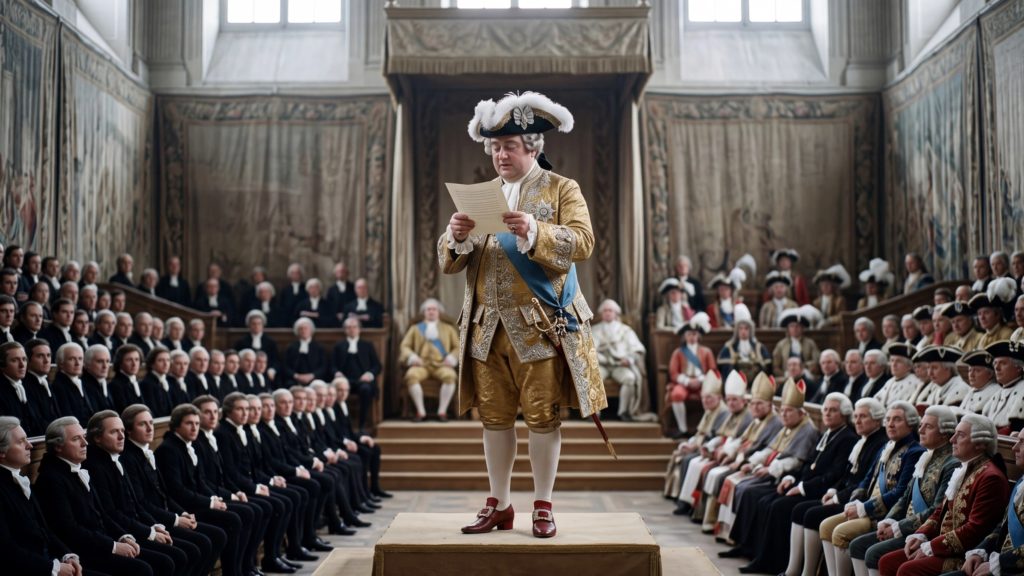
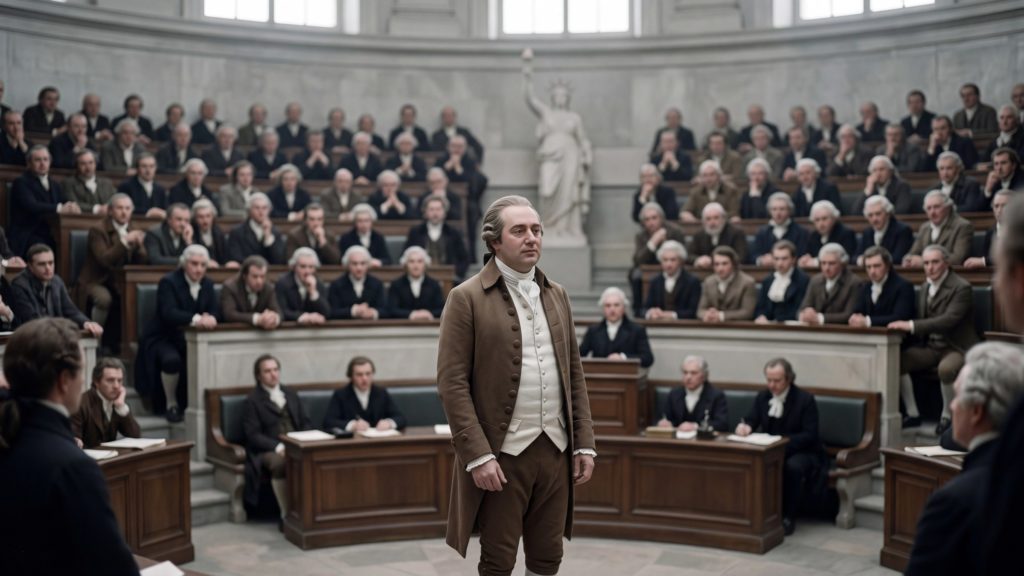
Facing financial crisis, Louis convened the Estates-General in 1789, and the Revolution began when its Third Estate broke away to form a National Assembly, followed that July by the fall of the Bastille[4]. Over the next two years royal authority steadily collapsed. In June 1791 Louis and his family tried to flee France in disguise but were recognised and arrested at Varennes, near the border[5, p. 273]. That failed escape destroyed what remained of public trust in him. After the monarchy was abolished in 1792, Louis was tried before the National Convention and condemned to death by a majority of only a single vote[4].

Louis was guillotined in Paris on 21 January 1793[1]. On the scaffold, his confessor Abbé Edgeworth recorded his final words: "I die innocent of all the crimes laid to my charge; I pardon those who have occasioned my death; and I pray to God that the blood you are going to shed may never be visited on France"[1]. His execution shocked royal courts across Europe and helped push several powers into war against revolutionary France; the monarchy would not be restored for over two decades.
Louis XVI's execution turned the French Revolution from a domestic political crisis into a European ideological war, as other monarchies came to see revolutionary France as a direct threat to monarchy itself. His death also became a lasting symbol: republicans invoked it as proof no ruler stood above the law, while royalists treated it as a martyrdom, circulating his supposed last testament urging his son to govern only "according to the laws"[1]. Both readings have shaped how the Revolution is remembered — either as a triumph of popular sovereignty or a descent into violence.
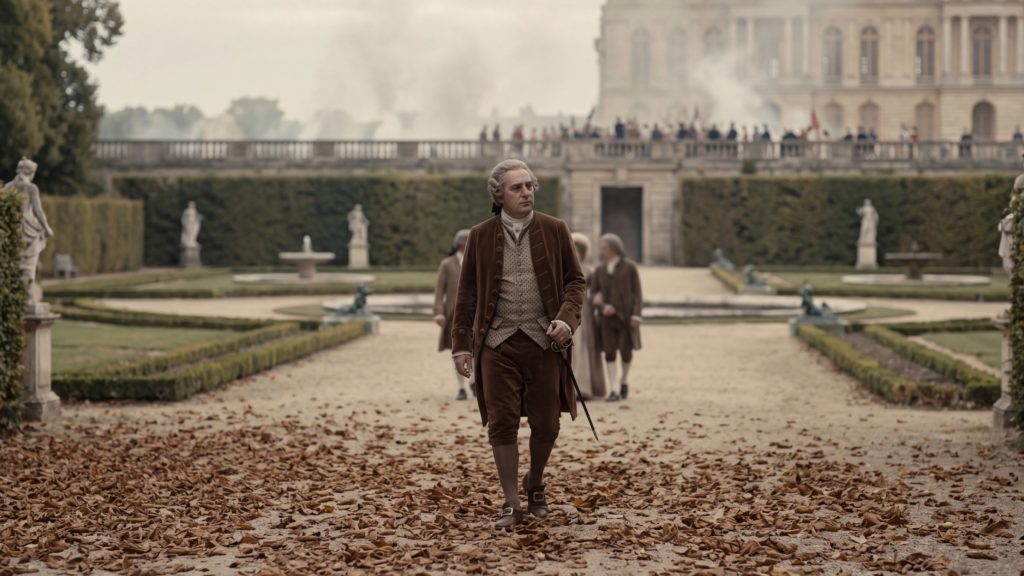
As a boy, Louis was famously the least noticed of the royal brothers — quieter and less charming than the future Louis XVIII or Charles X — and is recorded asking wistfully who, if anyone, actually loved him[2]. The same reserved man later showed real composure at the very end: witnesses were struck that on the scaffold he silenced the execution drums simply by the force of his look before speaking his last words[1].
Legacy & Reputation
What’s the verdict?
Historians have long debated whether Louis was simply weak or genuinely trapped by circumstances beyond any king’s control. One near-contemporary account concluded his hesitation “arose from benevolence, not from pusillanimity,” distinguishing indecision from cowardice[1]. Revolutionary polemicists, by contrast, treated him as a tyrant deserving death, publishing his supposed will as proof of his “fanaticism and crimes”[1]. Most modern historians lean toward the first view: a decent, poorly prepared man overwhelmed by a crisis that would have tested any monarch.
Myth-buster
Think you know this one?
Myth: Louis XVI went to the guillotine defiant or unrepentant. Correction: witnesses recorded him publicly forgiving those responsible for his death and praying his execution would not be avenged on France, moments before he was killed[1].
Quick Facts
The essentials
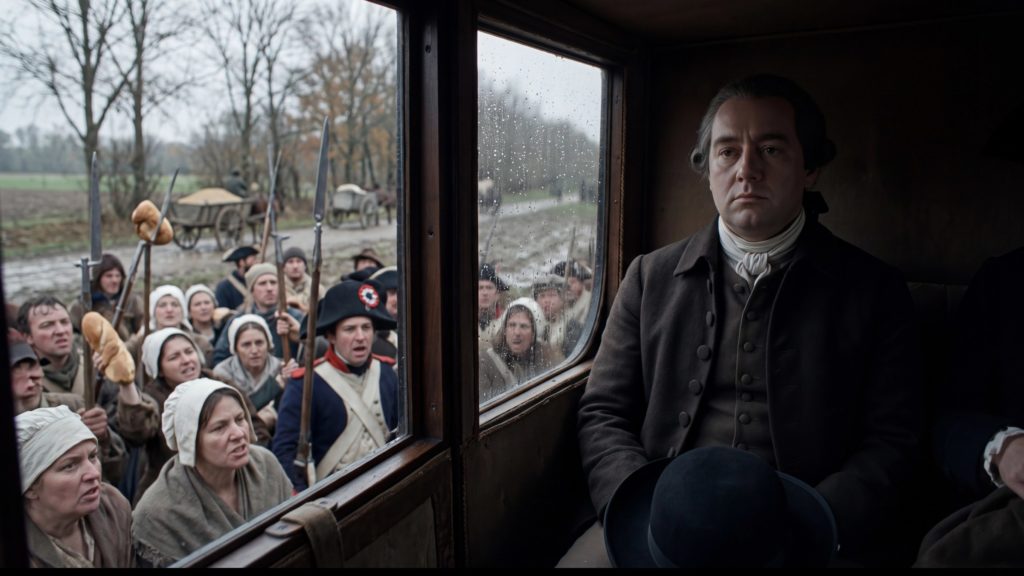
Quick Facts
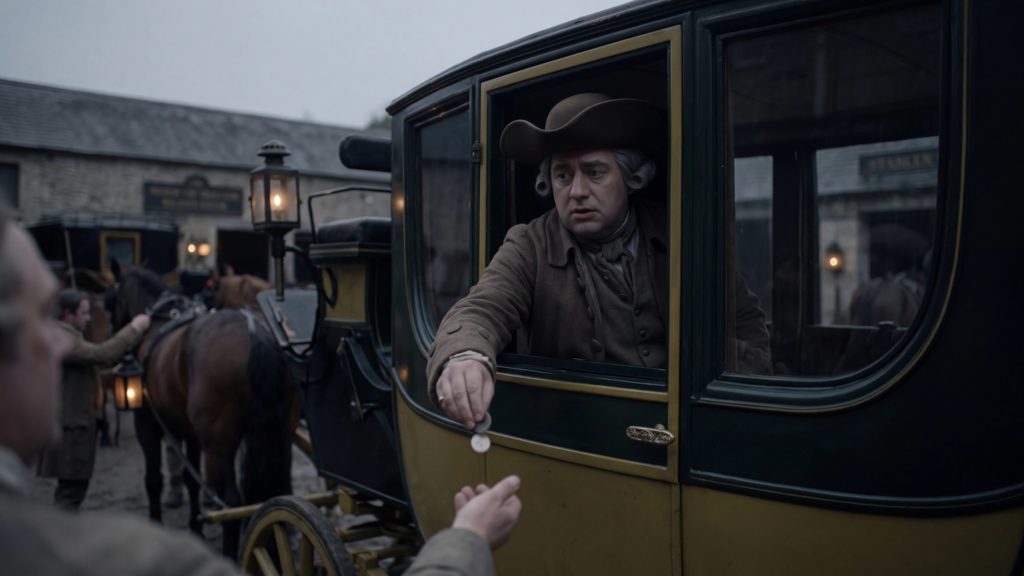
Roger has found a hobby…
Louis XVI's favourite pastime away from the throne was locksmithing — he kept a private workshop and worked alongside a professional locksmith on the mechanisms himself[4]. Not the image most people have of a Bourbon king, but apparently a very calming one for him.
Keith has checked his diary…
Louis preferred hunting and manual work to the polished rituals of court life, and reportedly had little patience for its more ornamental pleasures[6]. For a king raised inside the most elaborate court in Europe, he seems to have found much of it faintly exhausting.
Roger has packed a coach…
In June 1791, Louis and his family attempted to flee France in disguise, only to be stopped at the small town of Varennes[4], which would otherwise have had no reason to appear in any history of the French Revolution at all.
This sounds invented, but…
Louis was recognised during the flight to Varennes when the local postmaster, Jean-Baptiste Drouet, compared his face to the king's portrait engraved on the new paper currency, the assignat, and found an unmistakable match[7]. Louis, in effect, was identified by his own banknote.
Keith has looked at the accounts…
Facing a deepening financial crisis, Louis recalled the reforming minister Jacques Necker in 1788, a popular but ultimately insufficient attempt to fix the royal deficit[4]. It bought him time, though nowhere near enough of it.
History gets strange here…
After the storming of the Tuileries on 10 August 1792, Louis and his family were imprisoned in the Temple, a medieval fortress in Paris[8, p. 84]. A king who had once ruled from Versailles was now confined to a tower within his own capital.
Roger would like you to know…
Louis's France signed a treaty of alliance with the fledgling United States in 1778, sending money, ships and troops to help defeat Britain in the American War of Independence[9]. Ironically, the war that helped bankrupt his own treasury also helped birth a republic.
Keith has counted the votes…
At his trial in January 1793, the National Convention condemned Louis to death by a majority of just one vote[4]. French history sometimes turns on landslides; this particular verdict turned on a margin narrow enough to make anyone wince.
A small fact with a very large consequence…
On his last night, Louis asked to see his family, but the next morning had his attendants keep the visit from happening, not wanting them to witness him leaving for the scaffold[4]. He left behind his marriage ring and a few small keepsakes instead.
The past has entered the chat…
Louis XVI was executed by guillotine on the Place de la Révolution on 21 January 1793[10], watched by an estimated twenty thousand people under a cold, foggy Paris sky.
I die innocent of all the crimes laid to my charge; I pardon those who have occasioned my death; and I pray to God that the blood you are going to shed may never be visited on France.
Louis XVI (as recorded by his confessor, Abbé Edgeworth)
Spoken on the scaffold in Paris, moments before his execution on 21 January 1793[1].
Timeline
How it unfolded
23 August 1754
Birth of Louis XVI
Louis, the grandson of Louis XV and future Louis XVI, was born on 23 August 1754 and became heir to the throne through the death of his father when he was in his eleventh year.[11, p. 148] At fifteen he married the Austrian archduchess Marie-Antoinette.[11, p. 148]
10 May 1774
Accession of Louis XVI
Louis XVI came to the throne on 10 May 1774, inheriting, in Mignet's account, deficient finances, disregarded authority and intractable parlements.[12][13, p. 235]
20 June 1791
Flight to Varennes
On 20 June 1791 the king, queen and their children set out in disguise for the frontier but were arrested at Varennes and brought back to Paris.[5, p. 273] The attempted escape was the first strong sign of personal displeasure towards the king in the Assembly.[14]
10 August 1792
Fall of the Monarchy at the Tuileries
On 10 August 1792 the Tuileries was attacked and captured; Louis refused to defend himself and took refuge with his family in the Legislative Assembly, which suspended his powers.[15][16, p. 3] He was then imprisoned in the Temple by order of the insurrectionary Commune of Paris.[15]
21 January 1793
Execution of Louis XVI
After the Convention's president declared that the penalty pronounced against Louis Capet was death, the king was beheaded on 21 January 1793.[4][1][13, p. 235]
Dig Deeper
Copy any prompt below into your favourite AI chat to keep exploring.
Explain what Louis XVI actually said in his final moments on the scaffold, and how that differs from how his execution is usually remembered.
What does it mean that Louis XVI's actual last act was forgiveness, when history mostly remembers him just for losing his head?
Tell me 3 other historical figures whose famous last words turned out to be very different from what popular memory says.

Further Reading
Where to read more
Louis XVI
Britannica's reference biography covering Louis XVI's 1774 accession, his support for the American Revolution, the outbreak of the French Revolution, and his 1793 execution.
Why look at this: Explains how funding the American Revolution — meant as a blow against Britain — nearly bankrupted France and forced Louis to convene the Estates-General, the very body that triggered his own downfall.
https://www.britannica.com/biography/Louis-XVILouis XVI of France (World History Encyclopedia)
A longer, footnoted narrative account of Louis XVI's reign, covering the Flight to Varennes, the Estates-General, and his trial and execution in detail.
Why look at this: Covers the Flight to Varennes in June 1791 in detail — Louis was recognized from his own portrait on a 50-livre banknote, and the failed escape destroyed the last of his public image as a well-meaning king misled by bad advisors.
https://www.worldhistory.org/Louis_XVI_of_France/The Defence of Louis XVI, as Delivered at the Bar of the National Convention... by De Sèze, One of His Counsel; to Which Is Added the Will of His Late Majesty (1793 primary text, Internet Archive)
A period English translation of the actual legal defense delivered on Louis XVI's behalf before the National Convention on 26 December 1792, printed together with his will.
Why look at this: This is the defense speech itself, given by his lawyer Raymond de Sèze days before the Convention voted on his fate — read the actual argument made to save his life, not a later paraphrase of it.
https://archive.org/details/bim_eighteenth-century_the-defence-of-louis-xvi_seze-raymond-de_1793Related
Keep exploring



Places

Events

Can be seen in
Where this shows up

References
Sources
Sources
- BookLife of Napoleon Bonaparte, Volume I. by Walter Scott ↑
- BookLouis XVIII by Mary Frances Sandars ↑
- DocumentThe Nuttall Encyclopædia/M ↑
- BookThe French revolution : a historical sketch by Walter Geer ↑
- BookA short history of Europe, from the fall of the Eastern empire to the dissolution of the Holy… by Charles Sanford Terry. Page 273. ↑
- BookThe ruin of a princess by Marie-Thérèse Charlotte Angoulême and others ↑
- BookThe French Revolution: A History by Thomas Carlyle ↑
- BookThe great French revolution, 1789-1793 by Petr Alekseevich Kropotkin and N. F Dryhurst. Page 84. ↑
- Document1911 Encyclopædia Britannica/Europe ↑
- DocumentThe Trial of Louis XVI. Late King of France, Who Was Beheaded on Monday, January 21, 1793/Part 2 ↑
- BookAuthentic memoirs of the revolution in France, and of the sufferings of the royal family deduced principally from…. Page 148. ↑
- BookThe French revolution from 1789 to 1815 by M. Mignet and James Westfall Thompson ↑
- BookSymbol and satire in the French Revolution by Ernest F. Henderson. Page 235. ↑
- BookThe first French Republic : A study of the origin and the contents of the declaration of the… by Horace Mann Conaway ↑
- DocumentCatholic Encyclopedia (1913)/French Revolution ↑
- BookThe principal speeches of the statesmen and orators of the French Revolution, 1789-1795 by Henry Morse Stephens. Page 3. ↑