
Alexander I in the dark-green Russian court uniform at a ball; charming and elusive, he was the emperor Napoleon likened to a Byzantine Greek.
Emperor of Russia
The tsar who was elsewhere in the palace, by design, on the night conspirators murdered his own father to put him on the throne — and who went on to be hailed as the man whose armies broke Napoleon's invasion of Russia[1, p. 218][2].
Bio
Who they were
Alexander was born on 23 December 1777[2], grandson of the reigning Empress Catherine the Great, who took him from his parents to raise personally. His father was the future Tsar Paul I. For his tutor Catherine chose Frédéric-César de La Harpe, a republican-minded Swiss colonel, whose liberal Enlightenment ideas left a lasting mark on the young grand duke[2]. From childhood Alexander showed exceptional devotion to his mother, the Empress Maria, a filial piety contemporaries described as "a feeling next akin to religion"[2].
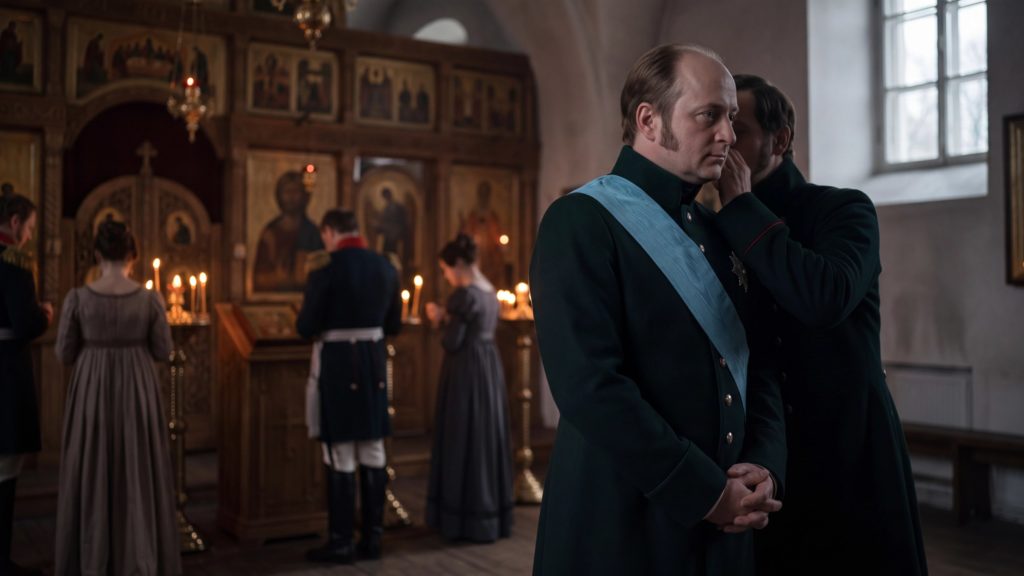
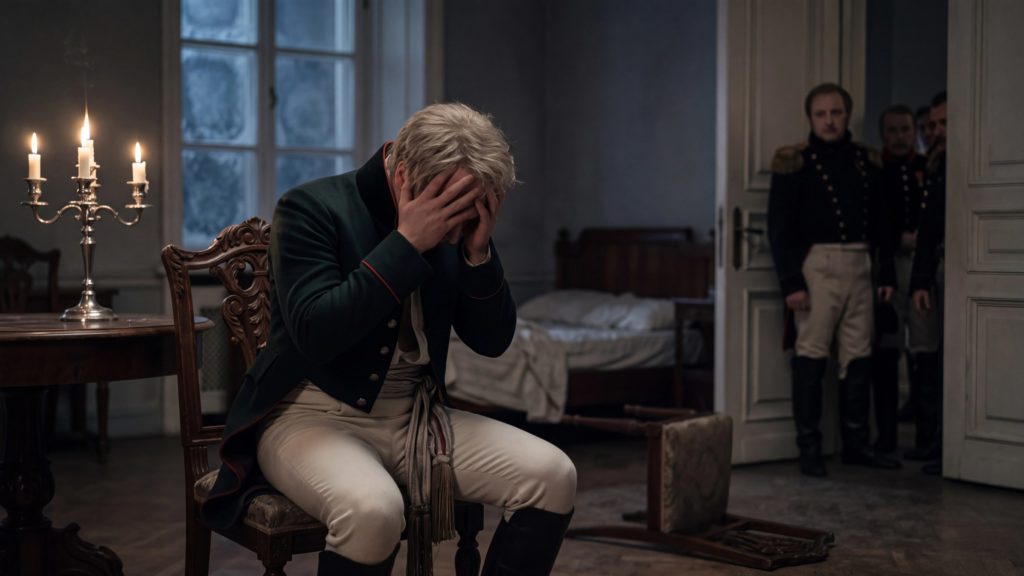
Alexander's path to the throne was violent and, for him, deeply compromising. His father Paul I's erratic rule provoked a palace conspiracy among his own officers and officials, including Count Pahlen, the St Petersburg police chief[1, p. 218]. On the night of the coup in March 1801, Alexander waited in another room of the palace for news, and Paul was killed by the conspirators[1, p. 218]. Alexander acceded to the throne that day and was reportedly overcome with grief once the killing became clear to him[2]. Early in his reign he moved to distance himself from his father's harshness, among other measures abolishing the secret tribunal his father had instituted[1, p. 218].
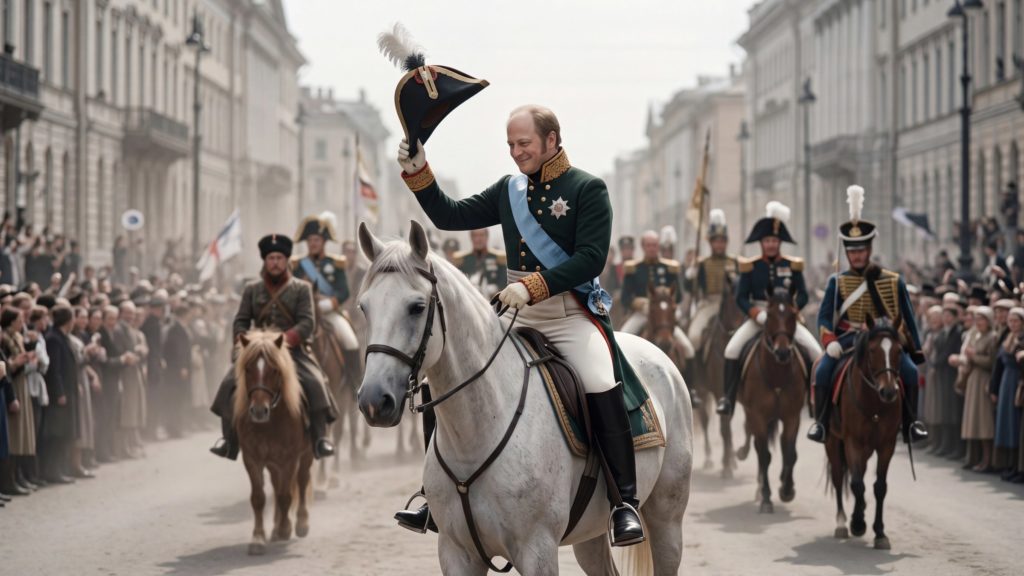
Alexander's reign became defined by his long contest with Napoleon. In 1807 the two emperors met on a raft on the Niemen at Tilsit, where Alexander struck a peace that briefly turned into personal admiration for Napoleon[2]. That peace collapsed in 1812, when Napoleon's army invaded Russia, occupied a burning Moscow, and then was forced into a catastrophic retreat[2]. Alexander pursued the French army back across Europe, entered Paris with the victorious Allies in 1814, and took a leading role at the Congress of Vienna and in creating the Holy Alliance — his own idealistic scheme for a Christian league of monarchs to keep the peace[3].
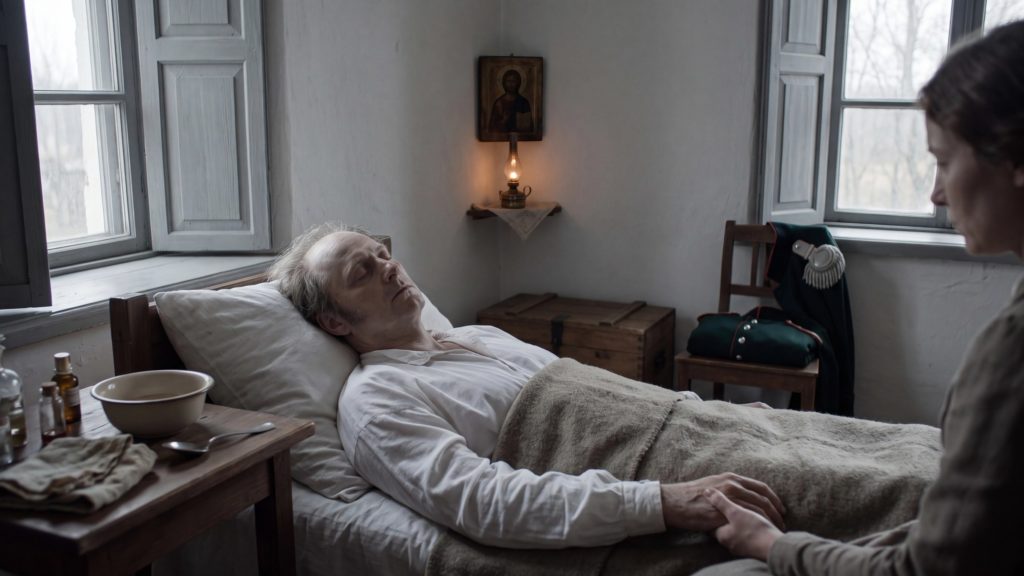
Alexander died at Taganrog, on the Sea of Azov, on 1 December 1825, after a sudden illness during a tour of southern Russia[4]. His wife, the Empress Elizabeth, was at his side through the illness[2]. Because he died far from the capital and left no direct heir, his death triggered a succession crisis between his brothers Constantine and Nicholas, which fed into the failed Decembrist uprising in St Petersburg weeks later[5].
Alexander's defeat of Napoleon's invasion made him, for a time, the most powerful monarch in Europe, and his Holy Alliance was meant to bind Christian rulers to govern by "Justice, Christian Charity, and Peace"[3]. In practice, under the influence of Austria's chancellor Metternich, the Alliance became a tool for suppressing liberal and nationalist movements rather than the moral brotherhood Alexander had envisioned[3]. That gap between his early reputation as a liberal reformer and his later role propping up conservative Europe has left historians divided over how sincere his reforming instincts really were.
Even as emperor, Alexander kept a soft spot for the tutor who raised him. Visiting Frédéric-César de La Harpe as an adult, he waited patiently outside for an hour rather than interrupt his old teacher's meal, then brushed off any fuss: "My dear tutor, do not mention it; an hour to you is worth a day to me"[2]. It sits oddly with the murkier fact that, as a young man, he had waited in another room of the palace on the night his own father was killed[1, p. 218].
Legacy & Reputation
What’s the verdict?
Alexander’s own early biographers, writing soon after his death, portrayed him as almost saintly — “one of the most virtuous and amiable of men,” as one admiring 1826 account put it[2]. Modern assessments take a more mixed view, crediting him with genuinely liberal instincts early in his reign but noting that, in practice, he let Metternich steer the postwar order toward repression[3], and that his own role in his father’s death remains disputed rather than settled fact.
Myth-buster
Think you know this one?
Myth: Alexander I was simply a liberal reformer who freed Russia from his father’s tyranny. Correction: he began his reign with reforming intentions and abolished his father’s secret tribunal[1, p. 218], but he came to the throne through a palace conspiracy against that same father, and his later Holy Alliance was used by Austria to suppress liberal movements across Europe[3].
Quick Facts
The essentials
Quick Facts
Roger has heard the cannon…
Alexander's grandmother, Catherine the Great, personally directed his upbringing and deliberately exposed the boy to cannon fire from infancy, wanting him hardened for a soldier's life[6]. One recorded side effect: it reportedly left him partially deaf in both ears for the rest of his life.
One for the Ageonauts…
As a child, Alexander's endless questions about the shape of the earth once sent his grandmother Catherine running for a globe from the Hermitage library[1, p. 218]. Within half an hour, by her own account, he knew more geography than tutors who had spent years on it.
Keith has read the grim details…
On the night his father, Tsar Paul, was deposed and murdered in 1801, Alexander lay awake in the Michael Palace, aware a conspiracy was under way, believing he had only agreed to an abdication[1, p. 218]. The grief and guilt reportedly never fully left him.
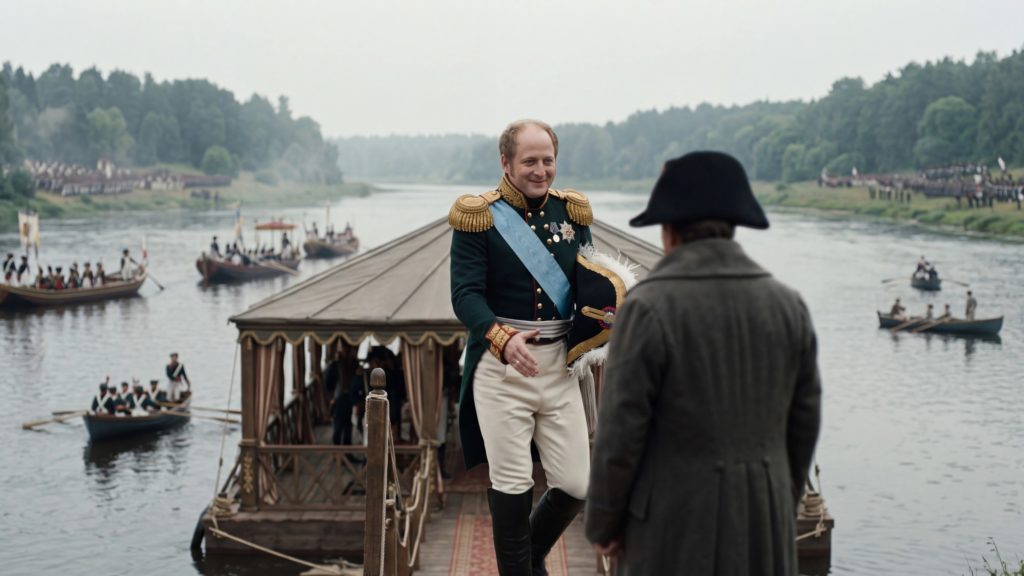
Roger has boarded a raft…
In 1807, Alexander and Napoleon negotiated the Treaty of Tilsit face to face on a raft anchored in the middle of the River Niemen[1, p. 218], a genuinely unusual venue for two of Europe's most powerful men to decide the continent's fate.
Keith has counted the fires…
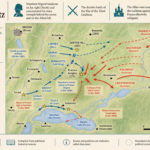
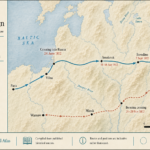
When Napoleon's army occupied Moscow in September 1812, the city began burning that same evening as residents fled toward the countryside[7, p. 2]. Napoleon got his prize capital; what came with it was a smouldering, empty one.
History gets strange here…
In March 1814, Alexander led the allied armies into Paris in triumph, avenging Moscow's destruction eighteen months earlier[3]. The tsar who had fled his own burning capital was now riding through the enemy's, cheered as a liberator this time.
Keith has read the small print…
As King of Poland, Alexander granted the new Kingdom of Poland a constitution, complete with its own parliament — a notably liberal gesture for an autocratic Russian emperor[4, p. 26]. It did not survive long, but it was more freedom than Poland had seen in decades.
Roger has founded a club…
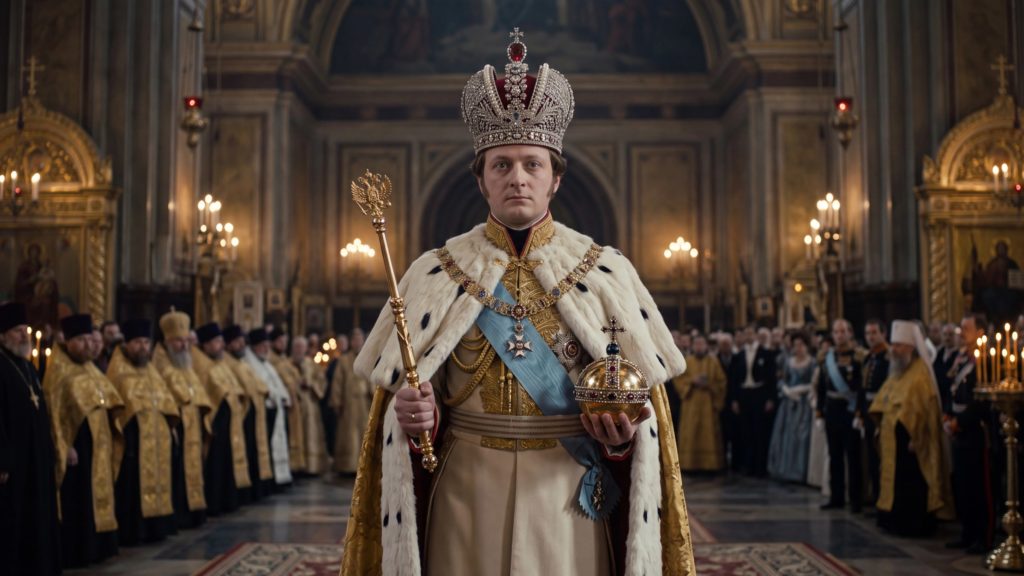
In 1815, in a wave of religious feeling after defeating Napoleon, Alexander founded the Holy Alliance, urging fellow monarchs to govern by Christian charity rather than self-interest[1, p. 218]. Critics found it vague and sentimental; Alexander seems to have meant every word of it.
This sounds invented, but…
Alexander died suddenly at Taganrog, a remote town on the Sea of Azov, on 1 December 1825[4], far from the usual royal deathbed of a palace in St Petersburg — a distance that only fuelled speculation about what had really happened there.
The past has entered the chat…
A persistent legend claims Alexander faked his death at Taganrog and reappeared years later in Siberia as a humble hermit named Feodor Kuzmich, living out his days in prayer rather than power. Historians remain divided, but the story has never quite gone away.
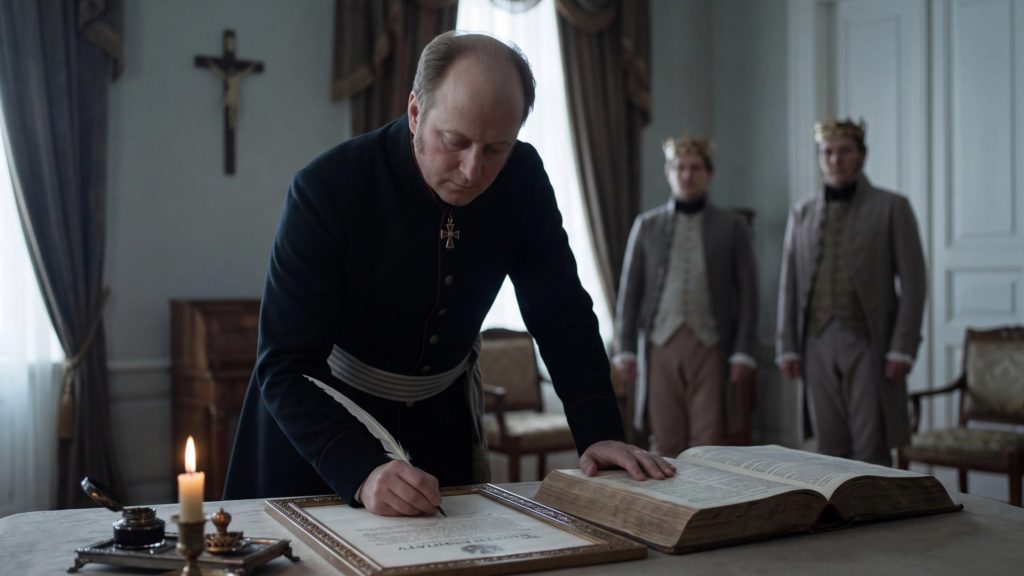
My dear tutor, do not mention it; an hour to you is worth a day to me; and besides, I have had a hearty breakfast with your servants, which I should have lost, had I been admitted when I came.
Alexander I
Said to his former tutor, Frédéric-César de La Harpe, after Alexander — by then emperor — waited outside for an hour so as not to interrupt La Harpe's meal with his own servants[2].
Timeline
How it unfolded
23 December 1777
Birth of Alexander I of Russia
Alexander Pavlovich was born on 23 December 1777 in the Gregorian (New Style) calendar, which is 12 December in the Julian calendar then used in Russia.[2][8]
23-24 March 1801
Assassination of Paul I and Accession of Alexander
Paul I was assassinated in his bed during the night of 23 March 1801 (New Style), and Alexander succeeded his father the next day.[9][2]
25 June 1807
Meeting of the Emperors at Tilsit
Napoleon met Alexander on a raft moored in the River Niemen, and the youthful and enthusiastic emperor was completely won over.[10]
September 1808
Second Meeting with Napoleon at Erfurt
Alexander and Napoleon met again at Erfurt, where the two emperors sat together in the royal stalls and engaged in confidential conversation.[1, p. 218]
14 September 1812
Napoleon Enters Moscow and Alexander Refuses Peace
Napoleon entered a deserted Moscow and waited five weeks hoping Alexander would approach him for terms, but the Tsar had declared his resolution not to make peace while the enemy remained on Russian soil.[3]
31 March 1814
Alexander Enters Paris
Alexander I entered Paris, a prelude to Napoleon's abdication on 6 April.[7, p. 1]
1 December 1825
Death of Alexander I at Taganrog
Alexander died at Taganrog on 1 December 1825 in the Gregorian calendar (19 November Old Style).[8][11, p. 64]
Dig Deeper
Copy any prompt below into your favourite AI chat to keep exploring.
Explain the circumstances around the murder of Alexander I's father, Paul I, and Alexander's own role in the palace conspiracy that put him on the throne.
What does it say about power that Alexander I began his reign by looking away from a murder committed on his behalf?
Roleplay Alexander I's inner monologue the night he's deliberately somewhere else in the palace while his father is being overthrown.
Further Reading
Where to read more
Alexander I
Britannica's reference biography covering Alexander's 1801 accession, his early reforms, his shifting relationship with Napoleon, and the Holy Alliance era.
Why look at this: Explains the guilt that shadowed his entire reign — his father Paul I was assassinated in a palace coup Alexander knew was coming, and he became tsar the next morning having to live with that knowledge.
https://www.britannica.com/biography/Alexander-I-emperor-of-RussiaAlexander I — Fondation Napoléon biography
A fuller biographical essay tracing Alexander's foreign policy from the 1805-07 coalition wars through Tilsit, the 1812 French invasion of Russia, and his post-war turn to mysticism.
Why look at this: Covers his refusal to negotiate with Napoleon even after Moscow burned in September 1812 — the resolve that turned the tide of the entire Napoleonic Wars.
https://www.napoleon.org/en/history-of-the-two-empires/biographies/alexander-i/The Holy Alliance Treaty, 1815 (The Napoleon Series, primary document)
The full text of the September 1815 Holy Alliance treaty, drawn up largely by Alexander I himself and signed together with Austria and Prussia.
Why look at this: Read Alexander's own religiously-charged diplomatic language directly — the treaty he personally drafted, binding Europe's monarchs to govern by "justice, Christian charity and peace" after Napoleon's defeat.
https://www.napoleon-series.org/research/government/diplomatic/c_alliance.htmlRelated
Keep exploring
Can be seen in
Where this shows up
References
Sources
Sources
- BookThe curse of the Romanovs, a study of the lives and the reigns of two tsars: Paul I… by A. S. Rappoport. Page 218. ↑
- BookAlexander I. Emperor of Russia ; or, a sketch of his life.. by Hannibal Evans Lloyd ↑
- BookA short history of Europe from the dissolution of the Holy Roman empire to the outbreak of the… by Charles Sanford Terry ↑
- BookHistorical memoirs of the emperor Alexander I. and the court of Russia by Sophie de Tisenhaus Choiseul-Gouffier. Page 26. ↑
- BookThe last days of Alexander, and the first days of Nicholas, (emperors of Russia) by Robert Lee ↑
- BookPaul The First Of Russia The Son Of Catherine The Great by K. Waliszewski ↑
- WebsiteMovement in Times of War: Russian Campaign French Campaign 1812-1814. Pages 1, 2. ↑
- Websiteen.wikipedia.org: Alexander I of Russia ↑
- BookThe Life of Napoleon Bonaparte. Vol. 2 (of 4) by William Milligan Sloane ↑
- BookA dictionary of Napoleon and his times by Hubert N.B Richardson ↑
- BookThe life of Wellington : the restoration of the martial power of Great Britain by Herbert Maxwell. Page 64. ↑