
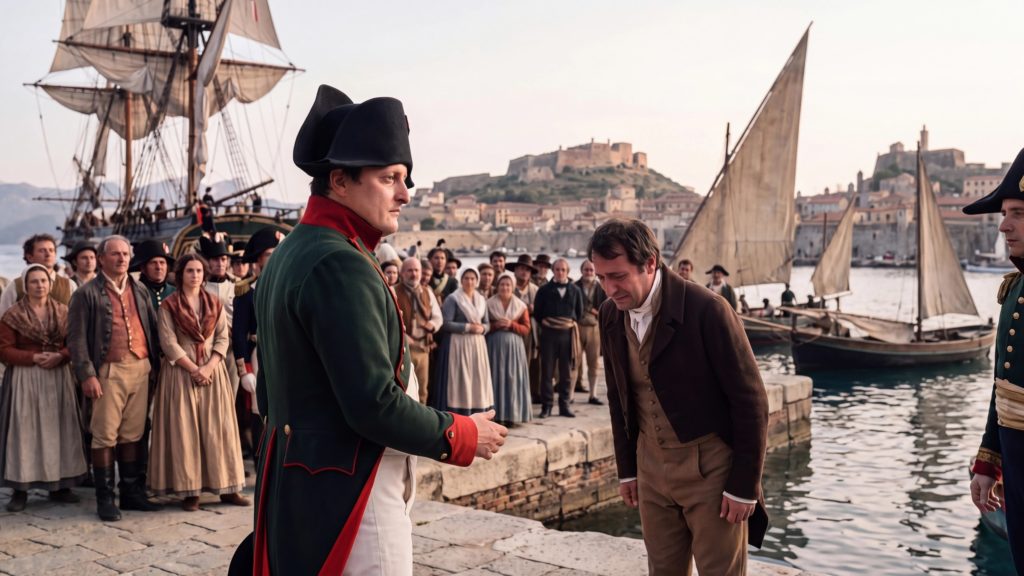
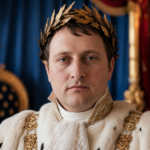
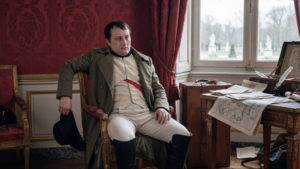
AI reconstruction based on Charles de Steuben's "Napoleon's Return from Elba," from within the ranks of the soldiers crowding forward to him on the road, raised sabres and hats filling the near foreground.
In March 1815 Napoleon slipped away from Elba with a few hundred men, landed near Cannes[1], and had his empire back within three weeks, without the civil war anyone expected.
What Happened
The story
By early 1815 Napoleon had spent less than a year on Elba, watching France from a distance. He believed the allies meant to move him somewhere far more remote than Elba[2], while his promised income from the restored French crown went largely unpaid. Meanwhile, Louis XVIII's Bourbon government had alienated the army: unpaid and half-starved soldiers who had once served the Empire cursed the new regime[3, p. 51]. Calculating that France would rally to him rather than to the Bourbons, Napoleon slipped away from Elba and, on 1 March 1815, landed near Cannes with a small force[1].
His march north became a test of loyalty rather than a battle. Facing troops sent to stop him, Napoleon reportedly opened his coat and declared that any soldier who wished to kill his emperor could do so, 'here I am'[4]; the troops joined him instead. Marshal Ney, who had promised Louis XVIII he would bring Napoleon back in an iron cage, defected to the emperor's side along with his men[5, p. 1]. City after city declared for Napoleon as he advanced, and one garrison of 6,000 men surrendered to him without firing a shot[6].
Louis XVIII fled Paris for Ghent in the night[7, p. 125], and Napoleon entered the capital to popular acclaim, restored to power without a formal battle fought inside France. The Congress of Vienna, still in session, received news of his escape within days and immediately declared him an outlaw, uniting the allied powers against him rather than negotiating[8][9, p. 15]. Napoleon issued a new constitution, the Acte Additionnel, in an attempt to present himself as a reformed, more liberal ruler[10].
With Europe's coalition mobilising against him, Napoleon had only weeks to rebuild an army before the allies could combine their forces. He left Paris for the Belgian frontier to strike the nearest coalition armies, under Wellington and Blucher, before the rest of the coalition could arrive[10]. The campaign that followed would be decided within days, at Quatre Bras, Ligny, and finally on the ridge above the village of Waterloo.
Quick Facts
The essentials
Quick Facts
Napoleon and the reconstituted Empire
Leadership
Napoleon Bonaparte, restored Emperor of the French[10]
Forces
Napoleon Bonaparte; Marshal Ney and the troops who defected to him[5, p. 1]; the garrisons and regiments that joined his march north[6]
Objective
To reclaim the French throne and secure it before the allied powers could unite against him
The restored Bourbon monarchy and the Seventh Coalition
Leadership
Louis XVIII[11, p. 135]; the allied coalition under Wellington and Blucher[12, p. 197][13, p. 552]
Forces
Louis XVIII and the fleeing Bourbon government[7, p. 125]; the allied powers assembled at the Congress of Vienna[8]
Objective
To remove Napoleon permanently and prevent any restoration of his rule
The Bigger Picture
News of Napoleon's escape reached the assembled powers at the Congress of Vienna, who declared him an outlaw and resolved on war rather than negotiation[8][9, p. 15].
How It Came To This
Napoleon's belief that the allies meant to move him somewhere more remote than Elba[2]; the discontent of unpaid, half-starved soldiers with the restored Bourbon government[3, p. 51]; and his calculation that France would rally to him rather than to Louis XVIII.
What Actually Happened
The Hundred Days succeeded, at first, for a reason that had little to do with fighting: Napoleon's return was less a military invasion than a referendum conducted at bayonet-point. Rather than being defeated in battle, the troops sent to stop him kept choosing to join him instead, from the confrontation near Grenoble to Marshal Ney's defection despite his promise to deliver Napoleon back to Paris in a cage[5, p. 1]. That pattern shows how thin the Bourbon restoration's real support in the army was, and how much of Napoleon's power still rested on personal loyalty rather than institutions. But the same speed that let him take Paris without a fight denied him the one thing he actually needed: time. The allied powers, meeting at Vienna, treated his return not as a French internal matter but as a breach of the general peace, and moved to combine their armies against him before he could consolidate[8]. Napoleon's own strategy reflected that pressure - his plan was to strike Wellington's and Blucher's armies separately in Belgium before the larger Austrian and Russian forces further east could arrive, a gamble that staked his entire restored regime on a single short campaign.
Why It Still Matters
Napoleon's brief second reign proved that popular acclaim alone could not hold power against a united Europe[8]. Its collapse at Waterloo ended his rule permanently and left the restored Bourbon monarchy, under Louis XVIII once again[11, p. 135], to govern a France whose army it had never really persuaded[3, p. 51].
Quick Facts
Roger would like you to know...
Napoleon's 'invasion' of France in 1815 barely needed an army. Facing troops sent to stop him, he supposedly opened his coat and dared them to shoot their emperor - they joined him instead[4].
Keith checked the sources...
Marshal Ney promised Louis XVIII he'd drag Napoleon back to Paris in an iron cage. Within days of actually meeting him, Ney had defected to Napoleon's side instead - no cage required[5, p. 1].
History gets strange here...
At least one garrison of 6,000 men surrendered to Napoleon's advancing force without a single shot being fired. His 'invasion' of France was won largely through desertion, not battle[6].
One for the Ageonauts...
Louis XVIII didn't stay to negotiate. As Napoleon closed in on Paris, the restored king fled the capital in the dead of night for exile in Ghent[7, p. 125].
A small fact with a very large consequence...
The Congress of Vienna was still in session, redrawing the map of Europe, when news of Napoleon's escape arrived. The assembled powers didn't pause to negotiate - they declared him an outlaw on the spot[8].
Keith would like to clarify...
When Napoleon's second reign collapsed, he didn't simply hand back the crown - he abdicated in favour of his young son, whom he formally named Napoleon II. The boy never actually reigned a single day[14].
Meanwhile, in history...
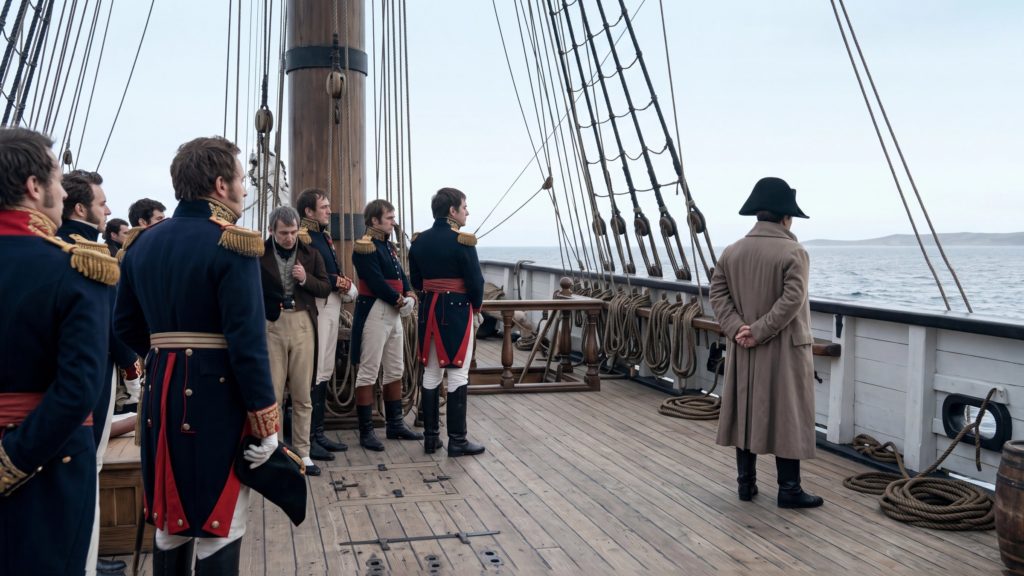
After his final defeat, Napoleon didn't surrender to France - he surrendered to Britain, going aboard the Royal Navy ship HMS Bellerophon in August 1815 and formally putting himself under British protection[15, p. 67].
Roger has entered the historical rabbit hole...
Napoleon tried to rebrand himself for his second reign, issuing a new constitution, the Acte Additionnel, to look like a more liberal ruler than the emperor who had left for Elba the year before[10].
Roger said it. Keith checked it...
The whole comeback lasted about as long as it took Napoleon to lose it: roughly three and a half months from his landing near Cannes to his second, final abdication, ending an empire built over fifteen years[1].
Keith has spotted the problem...
Napoleon returned to power on the strength of soldiers switching sides, not on winning any battles inside France itself - which meant the moment his army lost decisively abroad, he had nothing left to fall back on[5, p. 1].
If there is one among you who wishes to kill his general, his Emperor, he may do so: here I am.
Napoleon Bonaparte, addressing troops sent to intercept him near Grenoble, March 1815[4]
Facing soldiers ordered to stop his march on Paris, Napoleon reportedly opened his coat and dared them to fire on their former emperor - and they joined him instead.
Timeline
How it unfolded
4 May 1814
Napoleon lands on Elba
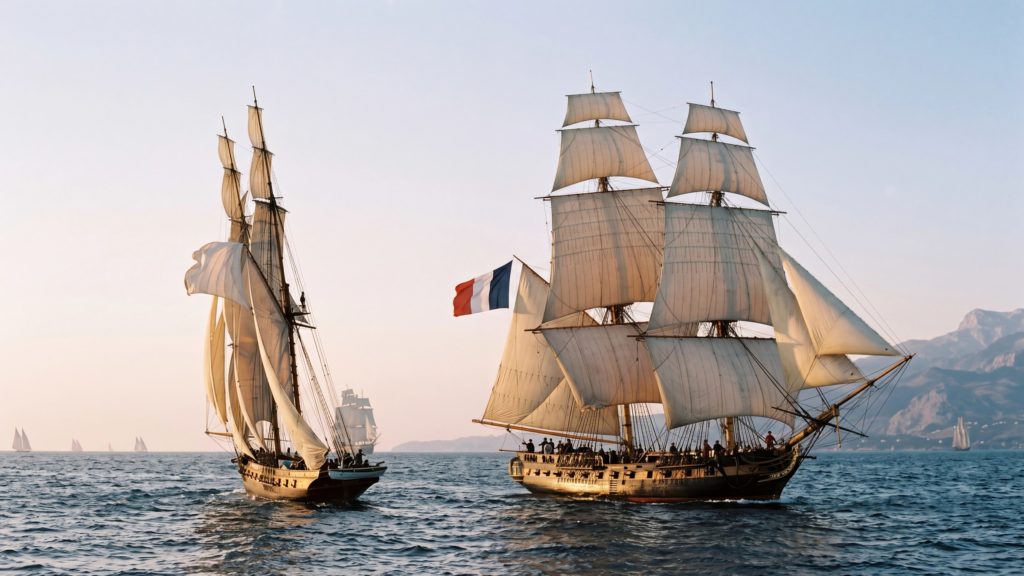
Napoleon landed from the Undaunted on Elba on 4 May 1814, taking up his new little kingdom.[8]
26 February 1815
Napoleon leaves Elba
On 26 February 1815 Napoleon secretly left Elba with about a thousand of his guards and his civil and military officers.[16, p. 1]
1 March 1815
Landing at Golfe-Juan
Napoleon's small force anchored in the Bay of Juan on the afternoon of 1 March 1815, and completed the landing by five o'clock.[5, p. 1]
7 March 1815
Napoleon enters Grenoble
Napoleon reached Grenoble on the night of 7 March 1815 and spent the following day there, reviewing a garrison of ten thousand men who had resumed their tricolour cockades.[5, p. 1]
13 March 1815
Powers at Vienna declare Napoleon an outlaw
On 13 March 1815 the powers assembled at the Congress of Vienna published a declaration on his escape.[17, p. 149] It stated that Napoleon had placed himself outside civil and social relations and was liable to public vengeance.[18]
20 March 1815
Napoleon enters Paris
Napoleon reached the Tuileries on the evening of 20 March 1815, the day Louis XVIII left it.[19]
1 June 1815
Champ de Mai ceremony
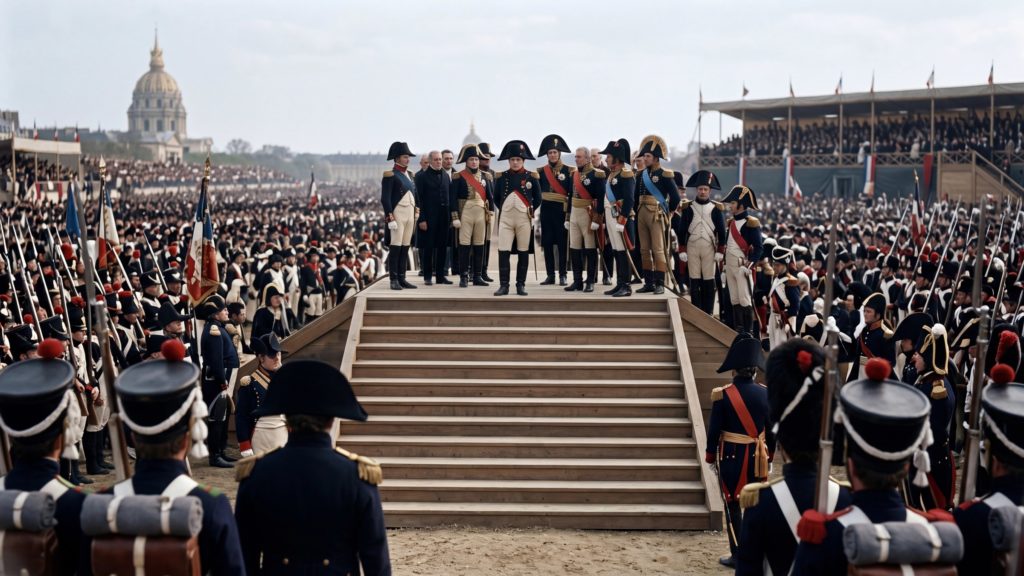
The Champ de Mai ceremony took place on the Field of Mars on 1 June 1815.[6] Guizot judged the royal-style pageant at the ceremony a childish attachment to splendour that deeply disgusted public feeling, as twenty thousand soldiers marched past on their road to death.[20]
18 June 1815
Defeat at Waterloo
The Battle of Waterloo began at 11:30 a.m. on 18 June 1815.[21, p. 26] When Blücher's Prussians arrived at about 7:30 p.m., Napoleon's troops came under assault from both sides and by 8:30 p.m. were in panic and wild retreat.[21, p. 31]
22 June 1815
Second abdication
Napoleon returned to Paris on 21 June 1815 and abdicated a second time, in favour of his son, on the 22nd.[22]
8 July 1815
Louis XVIII returns to Paris
The restoration of Louis XVIII ended the Hundred Days when he re-entered Paris on 8 July 1815.[22]
Dig Deeper
Copy any prompt below into your favourite AI chat to keep exploring.
Explain how Napoleon retook power in France in 1815 largely through soldiers changing sides rather than through actual fighting.
Debate whether Napoleon's swift, almost bloodless return to power in 1815 proves the Bourbon restoration was doomed from the start, or simply poorly managed.
Pitch me Napoleon's Hundred Days like history's worst retirement plan, cancelled after just fifteen weeks.
Further Reading
Where to read more
Hundred Days - World History Encyclopedia
A free, concise overview of Napoleon's escape from Elba, his second reign, and its collapse at Waterloo.
Why look at this: Explains why the Bourbon Ultras' reactionary policies and mass military dismissals left Louis XVIII's own soldiers ready to defect the moment Napoleon reappeared.
https://www.worldhistory.org/Hundred_Days/Waterloo 1815: The Hundred Days & Precursory Battles - Brown University Library
A fuller, illustrated account from Brown University Library's digital exhibition, covering the escape from Elba through to the diplomatic and military response.
Why look at this: Covers how quickly the Congress of Vienna at Paris turned Napoleon's return into a coordinated international war, the same reaction behind this page's Vienna fact.
https://library.brown.edu/cds/askb/waterloo/hundred.htmlMemoirs of the Private Life, Return, and Reign of Napoleon in 1815, Vol. I
Fleury de Chaboulon's 1820 memoir of Napoleon's return from Elba, freely available through Project Gutenberg.
Why look at this: Chaboulon was close to Napoleon during the march on Paris and records the confrontation near Grenoble - the direct source behind this page's central quote.
https://www.gutenberg.org/ebooks/22345Related
Keep exploring



Places



Can be seen in
Where this shows up
References
Sources
Sources
- BookTravels in France during the years 1814-15 by Sir Archibald Alison and Patrick Fraser Tytler ↑
- BookNapoleon and the end of the French revolution by Charles F. Warwick ↑
- BookLouis XVIII by Mary Frances Sandars. Page 51. ↑
- BookMemoirs of the Private Life, Return, and Reign of Napoleon in 1815, Vol. I by baron Pierre Alexandre Édouard Fleury de Chaboulon ↑
- BookMarie Louise The Island Of Elba And The Hundred Days by Imbert De Saint - Amand. Page 1. ↑
- BookThe war drama of the Eagles : Napoleon's standard-bearers on the battlefield in victory and defeat from Austerlitz… by Edward Fraser ↑
- BookLife of the Duke of Wellington by Charles MacFarlane. Page 125. ↑
- BookBlücher and the uprising of Prussia against Napoleon, 1806-1815 by Ernest F. Henderson ↑
- BookMemoirs Of Napoleon Bonaparte - Iii And Iv by Louis Antoine Fauvelet De Bourrienne. Page 15. ↑
- BookA dictionary of Napoleon and his times by Hubert N.B Richardson ↑
- BookMemoirs of Napoleon Bonaparte — Complete by Louis Antoine Fauvelet de Bourrienne. Page 135. ↑
- BookThe Campaign of Waterloo: A Military History by John Codman Ropes. Page 197. ↑
- BookThe Waterloo Campaign, 1815 by William Siborne. Page 552. ↑
- BookThe Bourbon restoration by John Richard Hall ↑
- BookThe battle of Waterloo; or, a faithful and interesting history of the unparalleled events connected therewith; from the…. Page 67. ↑
- BookA Voice from Waterloo by Edward Cotton. Page 1. ↑
- BookThe history of the war : from the establishment of Louis XVIII on the throne of France by Hewson Clarke. Page 149. ↑
- BookLife of Napoleon Bonaparte, Volume V. by Walter Scott ↑
- BookMemoir of the Life of John Quincy Adams. by Josiah Quincy ↑
- BookMemoirs to Illustrate the History of My Time Volume 1 by Francois Guizot ↑
- WebsiteWaterloo Belgium Historic Trail guide. Pages 26, 31. ↑
- BookA short history of Europe from the dissolution of the Holy Roman empire to the outbreak of the… by Charles Sanford Terry ↑