
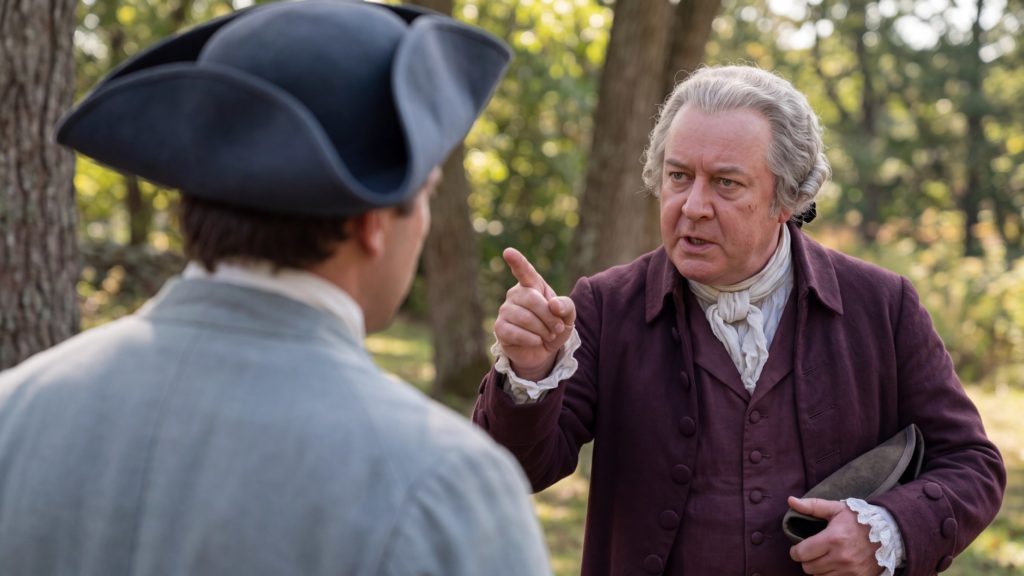
Continental Congress debates and votes for independence – 1776
On a summer day in Philadelphia, delegates cast the vote that actually made America independent — two days before anyone signed a thing.[1, p. 2][2, p. 12]
What Happened
The story
On 7 June 1776, Richard Henry Lee of Virginia rose in the Second Continental Congress at Philadelphia[3, p. 1] to move that the colonies be declared free and independent states[1, p. 1]. With opinion still divided, Congress postponed a final vote and instead appointed a Committee of Five to draft a declaration explaining such a step, ready if the vote later carried[4].
Over the following weeks, delegates still bound by cautious instructions sought fresh guidance from their home colonies. Support gradually built, and by late June Georgia and other hesitant delegations had come round to independence[5, p. 209], though John Dickinson of Pennsylvania remained a prominent voice against breaking with Britain[6].
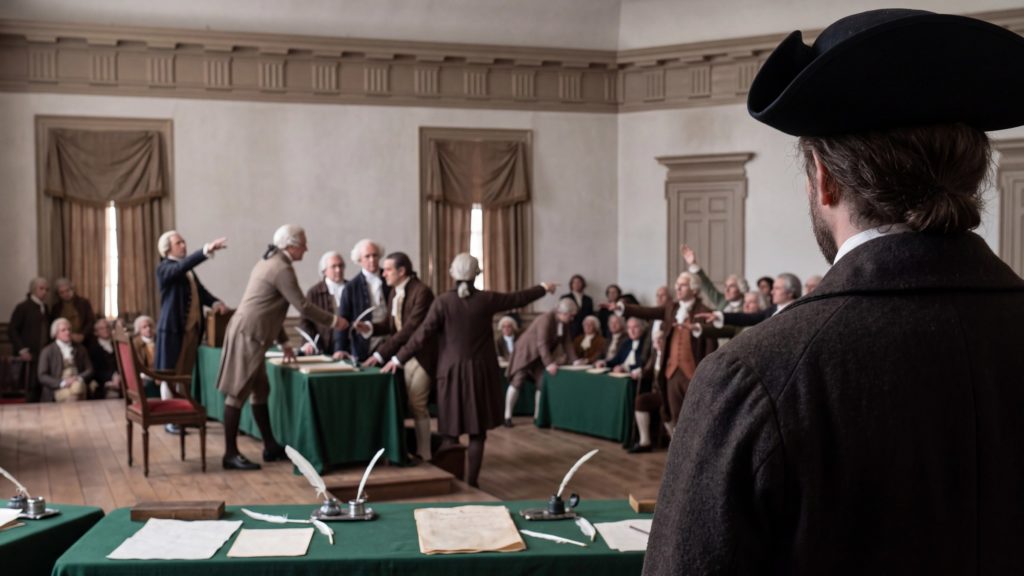
On 2 July 1776, the Congress voted to adopt Lee's resolution, formally declaring the colonies independent states[1, p. 2]. Contemporaries treated this vote, rather than the later signing, as the true moment independence was decided[7].
With independence approved in principle, Congress spent the next two days reviewing and amending the Committee of Five's draft declaration explaining the decision, before adopting it on 4 July 1776[2, p. 7].
Quick Facts
The essentials
Quick Facts
The Bigger Picture
The vote took place more than a year into the fighting of the American Revolutionary War, which had begun at Lexington and Concord on 19 April 1775.[9, p. 50]
How It Came To This
By mid-1776 a growing number of delegates in the Second Continental Congress in Philadelphia[3, p. 1] judged reconciliation with Britain no longer realistic, leading Richard Henry Lee to move a resolution for independence[8, p. 9].
What Actually Happened
On 7 June 1776, Richard Henry Lee introduced a resolution declaring the colonies independent states[1, p. 1]. Congress postponed the final vote and appointed a Committee of Five to draft a supporting declaration[4] while delegates sought fresh instructions from their colonies. Support built through June, with Georgia among the colonies coming around[5, p. 209], though John Dickinson remained a prominent opponent of the break[6]. On 2 July 1776, Congress voted to adopt Lee's resolution[1, p. 2].
Quick Facts
Roger has entered the historical rabbit hole…
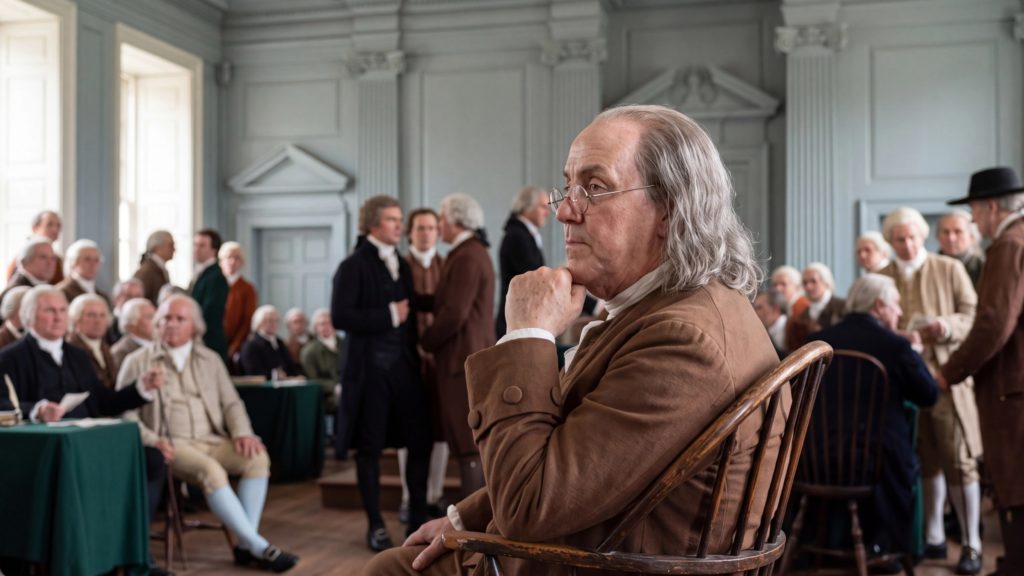
Delaware's tie-breaking vote nearly didn't happen. When his colleagues split down the middle, delegate Thomas McKean sent an express rider, at his own expense, to fetch the ailing Caesar Rodney, who arrived at the State House door still in his riding boots and spurs[2, p. 12], just in time to cast Delaware's deciding vote.
Keith has spotted the problem…
The vote for independence wasn't actually unanimous on its first try. On 1 July 1776, Pennsylvania's seven-member delegation split four against to three in favour, and the measure only carried the next day after two of the dissenters simply stayed away[2, p. 12].
Keith checked the sources…
Despite the familiar image of fifty-six men signing on 4 July, the engrossed parchment copy wasn't actually signed by most delegates until 2 August 1776[2, p. 12] — weeks after independence had already been voted and announced.
This sounds invented, but…
A few names on the Declaration belong to men who weren't even delegates yet on 4 July 1776. Several, including George Clymer and George Taylor, weren't elected to Congress until later that month, but still signed the parchment[2, p. 12].
Roger said it. Keith checked it…
John Adams was confident he knew which date history would remember. Writing home just after the vote, he predicted future Americans would commemorate 2 July “with Pomp and Parade”[10, p. 3] — he simply had the date two days wrong.
Roger would like you to know…
Writing the Declaration was a team job, at least on paper. The Committee of Five tasked with it was Thomas Jefferson, John Adams, Benjamin Franklin, Roger Sherman, and Robert R. Livingston[10, p. 1] — a five-man drafting team that, Roger notes with some pride, already had a Roger in it.
One for the Ageonauts…
The Congress that voted for independence still needed someone to keep order: John Hancock, elected President of the Continental Congress, was in the chair for the vote itself[11, p. 39].
Keith would like to clarify…
Not every colony could even vote for independence when the question was first raised. New York's delegates were still waiting on fresh instructions from home and had no authority to vote at all[12], so their support only arrived after the fact.
Roger has a theory…
The final push to unanimity on 2 July came down to two men simply not showing up. Pennsylvania's John Dickinson and Robert Morris, both opposed to independence, stayed away from Congress that day, letting their colony's vote flip in favour[2, p. 12].
A small fact with a very large consequence…
Georgia was among the more reluctant colonies, only bringing its delegates round to voting for independence shortly before the final tally[5, p. 209] — a reminder that the vote's eventual unanimity was hard-won, not automatic.

The Second Day of July 1776, will be the most memorable Epocha, in the History of America.[10, p. 3]
John Adams
Written by Adams to his wife Abigail on 3 July 1776, the day after Congress voted for independence — Adams predicted this date, not 4 July, would be the one future Americans celebrated[10, p. 3].
Timeline
How it unfolded
15 May 1776
Virginia Instructs Its Delegates
The Virginia convention at Williamsburg instructed its delegates in Congress to propose that Congress declare the colonies independent of Great Britain.[13, p. 679][4]
7 June 1776
Lee Resolution Introduced
Richard Henry Lee, acting on Virginia's instructions, moved in Congress that the united colonies 'are, and of right ought to be, free and independent states', and John Adams seconded the motion.[14, p. 10][15, p. 99]
10 June 1776
Vote Postponed to 1 July
After debate in committee of the whole, Congress resolved to postpone consideration of the Lee resolution to 1 July and, in the meantime, to appoint a committee to prepare a declaration to the effect of the resolution.[16, p. 235][15, p. 99]
1 July 1776
First Vote in Committee of the Whole
On 1 July Congress took its first count on independence, which only nine colonies supported, with Pennsylvania and South Carolina opposed, New York abstaining and the two Delaware delegates present deadlocked. Edward Rutledge of South Carolina moved that the vote be retaken the next day.[4]
2 July 1776
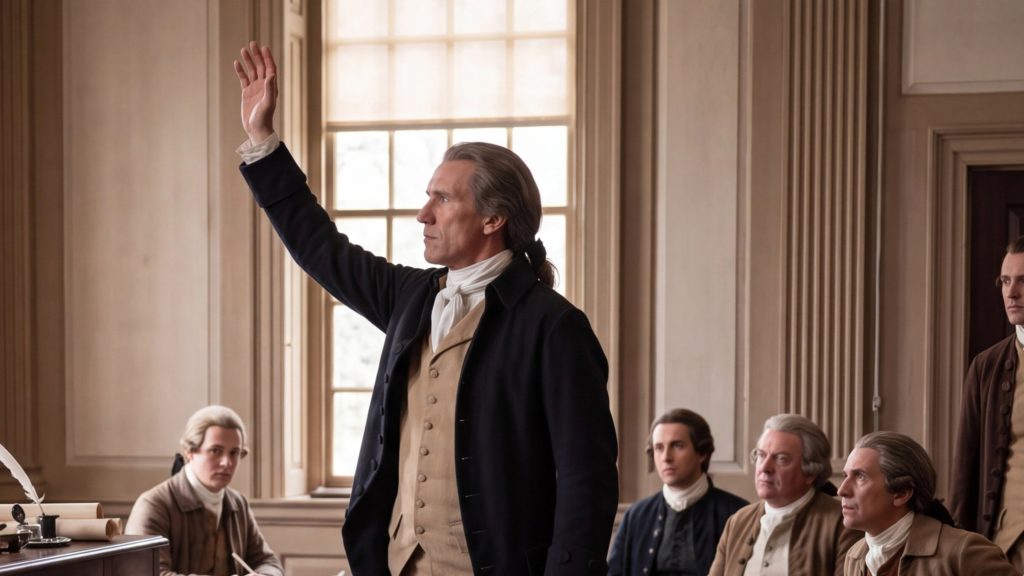
Congress Votes for Independence
On 2 July Congress adopted Lee's resolution, with all colonies voting in favour except New York, whose delegates abstained.[12][14, p. 10] John Adams wrote to his wife that the second day of July 1776 'will be the most memorable epocha in the history of America'.[17, p. 60]
4 July 1776
Declaration of Independence Adopted
Congress resolved itself into a committee of the whole on 4 July, and Benjamin Harrison reported that the committee had agreed to a Declaration, which Congress then agreed to and ordered authenticated and printed.[18, p. 375][19, p. 170]
9 July 1776
New York Approves the Declaration
On 9 July New York's approval, the last colony to give it, made the Declaration the unanimous declaration of the thirteen united States.[20, p. 1] Jefferson recorded in his autobiography that, within a few days of the vote, the New York convention approved it and so filled the gap left by its delegates.[21, p. 87]
Dig Deeper
Copy any prompt below into your favourite AI chat to keep exploring.
Explain how the Continental Congress moved from debating reconciliation to actually voting for independence in the summer of 1776.
What does it mean that America's independence was decided by a vote inside a hot, locked room rather than on a battlefield?
Roleplay John Adams trying to convince a nervous Congress that voting for independence is a great idea, actually.
Further Reading
Where to read more
Lee Resolution (1776) — Milestone Documents, National Archives
The National Archives' page on Richard Henry Lee's 7 June 1776 resolution, with historical background, a transcript, and a link to the original document image.
Why look at this: Explains exactly what Lee's three-part motion said and how Congress's postponed vote on 2 July 1776 became the actual legal moment of independence.
https://www.archives.gov/milestone-documents/lee-resolutionEpisode 443: How Independence Happened, Part 1: The Lee Resolution, 1776 — Ben Franklin's World
Free podcast episode with historians Woody Holton and Terrence Rucker on Richard Henry Lee's resolution and the lobbying that turned it into a unanimous vote.
Why look at this: Walks through the three weeks of behind-the-scenes persuasion — including Caesar Rodney's ride and Pennsylvania's shift — that got a divided Congress to a unanimous vote.
https://benfranklinsworld.com/episode-443-how-independence-happened-part-1-the-lee-resolution-1776/Letters of Delegates to Congress, 1774–1789 (vol. 4: 16 May – 15 August 1776) — Library of Congress
The Library of Congress's digitized volume of delegates' own letters from the weeks surrounding the independence vote.
Why look at this: Shows what individual delegates were actually writing home about the vote in real time, in their own unedited words, rather than in later historical retellings.
https://www.loc.gov/resource/lldelegatesvol.76002592_04/Related
Keep exploring




Can be seen in
Where this shows up

References
Sources
Sources
- WebsiteThe Lee Resolution (America 250 Alabama). Pages 1, 2. ↑
- BookThe Declaration of Independence, its history .. by John H. Hazelton. Pages 7, 12. ↑
- WebsiteAbigail Adams: "Remember the Ladies" (1776). Page 1. ↑
- BookSigners of the Declaration: Historic Places Commemorating the Signing of the Declaration of Independence by Robert G. Ferris ↑
- BookHistory of Independence Hall : from the earliest period to the present time : embracing biographies of the… by D. W. cn Belisle. Page 209. ↑
- BookThe Washington-Madison papers collected and preserved by James Madison, estate of J.C. McGuire ... containing highly important letters… by James Madison and others ↑
- BookThe Declaration of independence; a study in the history of political ideas by Carl Lotus Becker ↑
- BookGeorge Washington The Image And The Man by W. E. Woodward. Page 9. ↑
- BookAn historical account of the old State house of Pennsylvania now known as the Hall of independence by Frank M. Etting. Page 50. ↑
- WebsiteDelegates' letters on the Declaration, July 1776 (National Humanities Center). Pages 1, 3. ↑
- BookWashington, the man and the mason, by Charles Hilliard Callahan. Page 39. ↑
- BookThe Declaration of independence, an interpretation and an analysis by Herbert Friedenwald ↑
- BookThe house in which Thomas Jefferson wrote the Declaration of Independence by Thomas Donaldson. Page 679. ↑
- BookLetters and addresses of Thomas Jefferson by Thomas Jefferson, William B Parker and Jonas Viles. Page 10. ↑
- BookThe life of Thomas Jefferson by Henry Stephens Randall. Page 99. ↑
- BookThe works of John Adams, second President of the United States: by Charles Francis Adams John Adams. Page 235. ↑
- BookFamiliar letters of John Adams and his wife Abigail Adams, during the revolution. With a memoir of Mrs.… by John Adams, Abigail Adams and Charles Francis Adams. Page 60. ↑
- BookThomas Jefferson, the Apostle of Americanism by Gilbert Chinard. Page 375. ↑
- BookThe Declaration of Independence : a study in the history of political ideas by Carl Lotus Becker. Page 170. ↑
- WebsiteThe Declaration of Independence, 4 July 1776, annotated (National Humanities Center). Page 1. ↑
- BookThe Writings of Thomas Jefferson, Vol. 1 (of 9): Being His Autobiography, Correspondence, Reports, Messages, Addresses, and Other… by Thomas Jefferson. Page 87. ↑