
James Monroe
Fifth President of the United States, diplomat and Secretary of State
A young Revolutionary officer wounded at Trenton[1], who later signed the Louisiana treaty alongside Robert Livingston[2, p. 370], approved the Missouri Compromise[3, p. 497] and lent his name to an 1823 warning to Europe about the Americas[2, p. 370].
Bio
Who they were
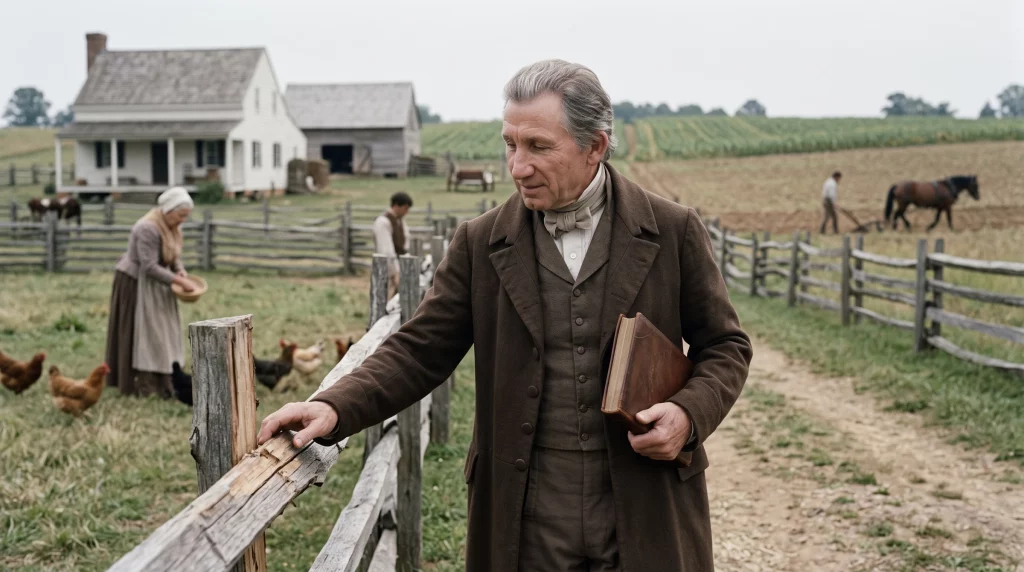
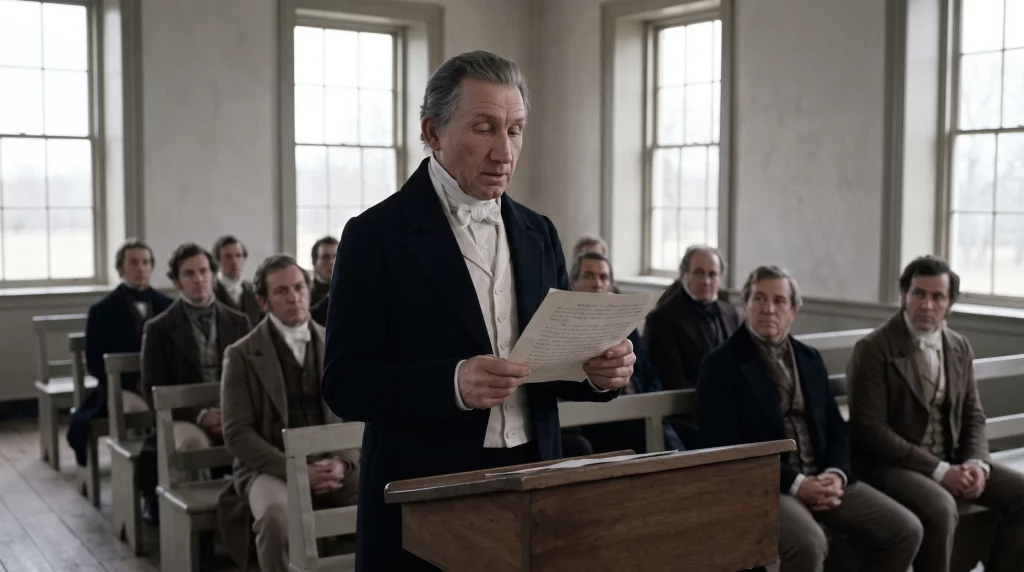
James Monroe was born on 28 April 1758 in Westmoreland County, Virginia[3]. His parents were Spence Monroe and Eliza Jones[4]. One later writer called his father a carpenter. Records show that Spence trained as a joiner, a skilled woodworker, but the historian Lyon G. Tyler replied that earlier Monroes had been justices, militia officers and landowners[3]. James entered the College of William and Mary in 1774[2, p. 370]. His father died that year and left him an enslaved boy named Ralph and several enslaved farm workers[5]. In 1776 Monroe became a lieutenant in the Third Virginia Regiment[2, p. 370].
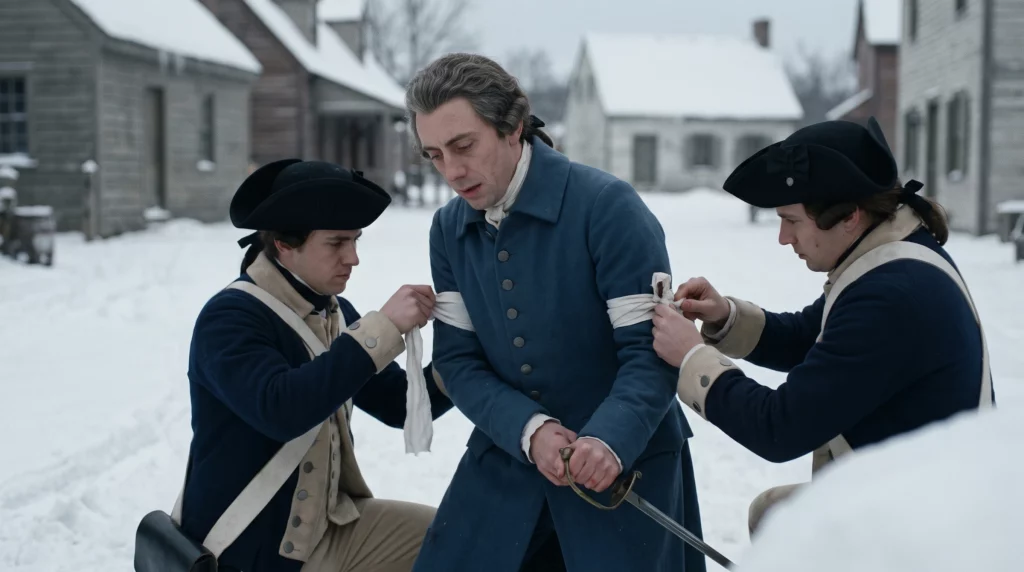
Monroe served at Harlem, White Plains and Trenton, where he received what his biographer Daniel Coit Gilman called an honorable wound[1]. He joined General Stirling's staff in 1777 and began studying law under Thomas Jefferson in 1780[2, p. 370]. He sat in Congress from 1783 to 1786 and in the United States Senate from 1790[2, p. 370]. Washington made him minister to France, then recalled him[6, p. 56]. Monroe answered with a long public defence, his View of the Conduct of the Executive[7]. In 1799 he became governor of Virginia[2, p. 370].
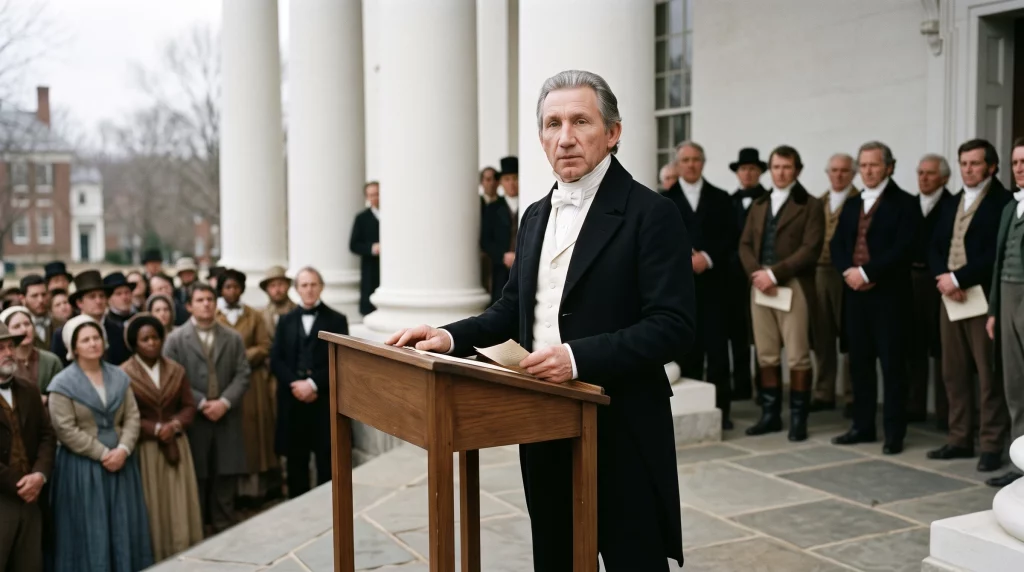
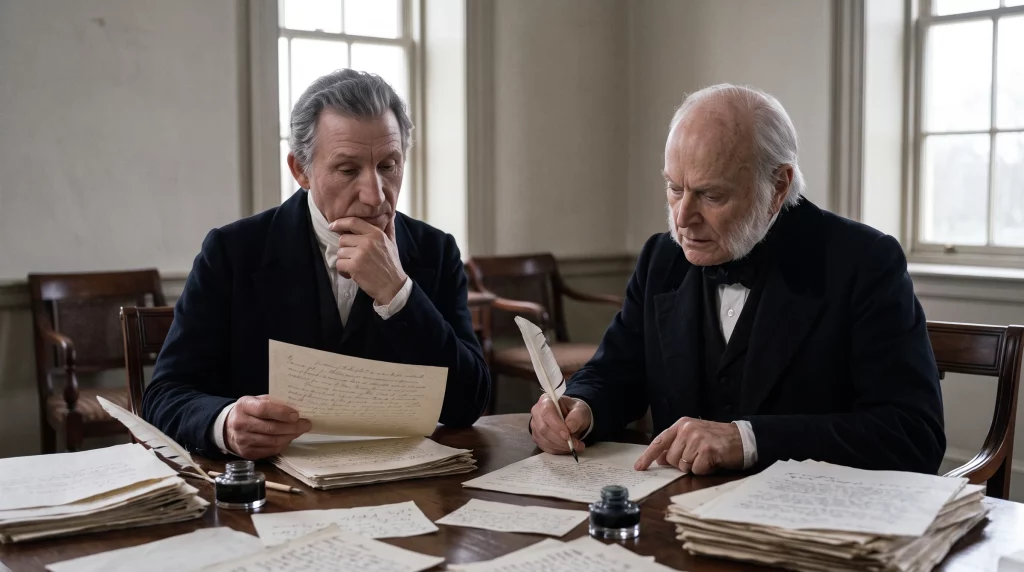
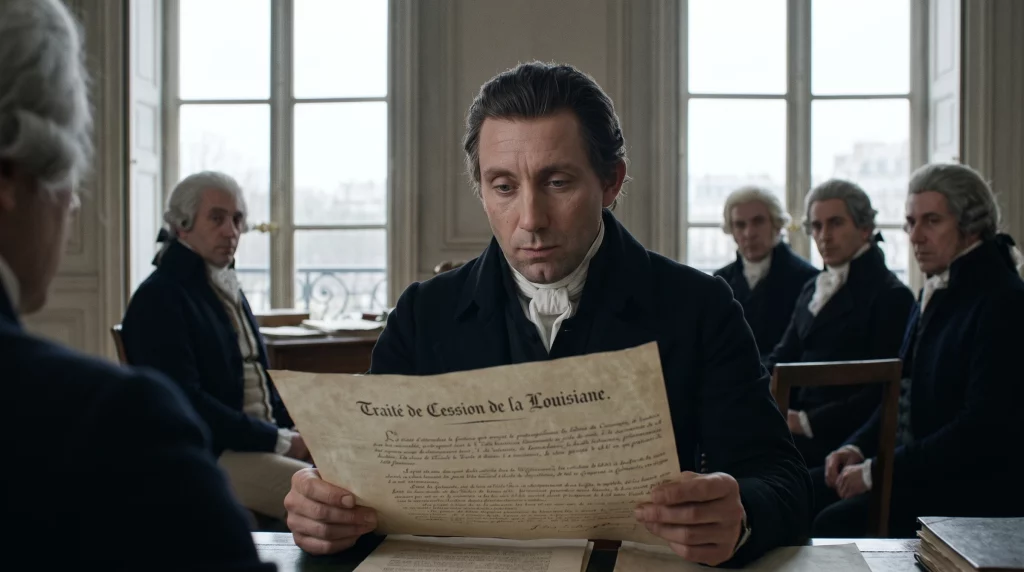
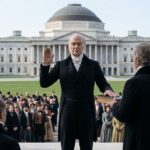
In January 1803 President Jefferson commissioned Monroe to act with Robert Livingston in Paris[2, p. 370]. Hosmer wrote that their instructions covered only the mouths and east bank of the Mississippi, but the two men took on the larger responsibility[8]. On 30 April 1803 they signed the treaty for the cession of Louisiana[2, p. 370]. The United States agreed to pay fifteen million dollars in all, counting claims owed to American citizens[9]. Monroe became Secretary of State in 1811 and took charge of the War Department in September 1814[2, p. 370][7]. He was inaugurated president on 4 March 1817[3, p. 410]. His message of 2 December 1823 declared that European attempts to extend their system to the hemisphere would endanger American peace and safety[10][2, p. 370].
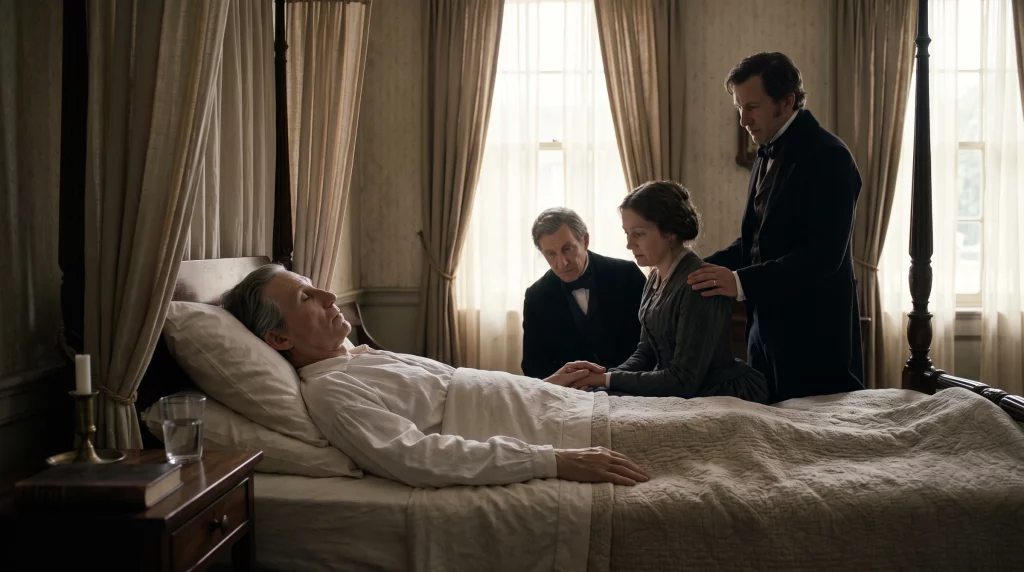
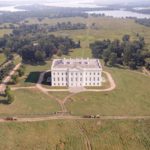
Monroe left the presidency in 1825 and retired to Oak Hill, his Virginia home[3]. In 1826 he became a visitor, or governing member, of the University of Virginia, and in 1829 he sat in the state's constitutional convention[2, p. 370]. His wife died in 1830[2, p. 370]. Monroe died on 4 July 1831 at the New York home of Samuel L. Gouverneur, who had married his daughter Maria[2, p. 370]. He was buried in New York with honours[1]. In 1858 his body was carried to Richmond and reburied, a hundred years after his birth[1][3].
The Monroe Doctrine outlived its author. Albert Bushnell Hart wrote that it was not a single utterance but a frame of mind, described anew by later statesmen[11]. Monroe signed the Missouri bills on 6 March 1820, after his cabinet agreed that Congress could prohibit slavery in the territories[3, p. 497][12, p. 226]. He wanted free Black Americans resettled in Africa[3, p. 497], and the settlement of Monrovia was named for him in 1824[13]. In 1800, as governor, he called out the militia against a planned uprising of enslaved people led by Gabriel[4]; by 15 September he reported ten men condemned and executed[14, p. 1]. Highland records 178 people he enslaved as an adult, and says he freed only one[5].
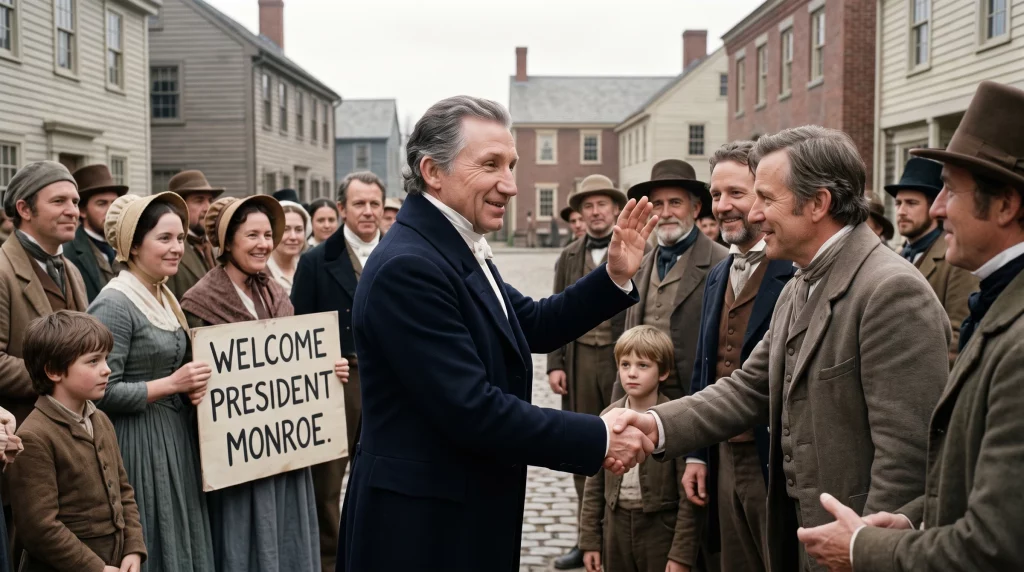
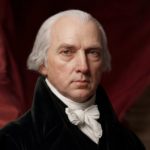
A recollection quoted by Morgan describes Monroe in old age as about six feet tall, broad-shouldered, his face marked by anxiety and care[3, p. 177]. In his family he was unvaryingly kind and affectionate[3, p. 177]. He always used the plainest, simplest language, but was not fluent[3, p. 177]. According to the same account, he was fondest of talking about the scenes and events through which he had passed when he had good listeners[3, p. 177].
Legacy & Reputation
What’s the verdict?
Contemporaries praised Monroe’s honesty. Gilman records Jefferson saying that Monroe’s soul might be turned wrong side outwards without showing a blemish, and Madison saying that his understanding was much underrated[4, p. 154]. Gilman himself judged that Monroe never rose to the highest statesmanship except when he announced the Monroe doctrine[4, p. 154]. Highland, the museum on his Virginia estate, describes a contradiction: he kept dozens of people enslaved while calling for the abolition of slavery[5].
Myth-buster
Think you know this one?
It is often said that Monroe bought Louisiana from Napoleon. The talks began between Robert Livingston and Napoleon’s minister Marbois[15, p. 10]. Monroe reached Paris on 12 April 1803[15, p. 10], after Napoleon had ordered talks with Livingston to open without waiting for him[8]. The two Americans signed the treaty together on 30 April[2, p. 370].
Quick Facts
The essentials
Quick Facts
The last of the cocked hats…
Monroe dressed in a style that was already vanishing. Morgan says he wore a Revolutionary-style cocked hat and was called 'the last of the cocked hats', the last president to keep the fashions of the previous century[3, p. 165]. A visitor noted his small clothes, silk hose and knee-buckles[1].
Roger would like you to know…
Monroe and Livingston were not meant to buy Louisiana. Hosmer says their instructions covered only the mouths and east bank of the Mississippi, yet they took on the larger responsibility and went so far as to increase the sum they had been authorised to offer[8]. Diplomacy by improvisation.
One for the Ageonauts…
A speaker at a Monroe Doctrine centennial called him the greatest repeater in American history. Twice he sat in Congress, twice he went on missions to France, twice he was governor of Virginia, twice he was president and, the speaker added, twice he was buried[6, p. 55].
Roger says, “Hear me out…”
In Paris, Monroe helped Thomas Paine, who had been imprisoned without trial[17, p. 1]. After Paine's release he lived with Monroe, who grew uneasy about what he might publish[2, p. 1807]. Conway wrote that Mrs. Monroe provided Paine with an excellent nurse when he caught a violent fever[3, p. 134].
History has a way with dates…
Monroe died on 4 July 1831[2, p. 370], five years to the day after Thomas Jefferson and John Adams died on 4 July 1826, the fiftieth anniversary of the Declaration of Independence[3]. Three early presidents, one national birthday.
Keith has spotted the draft problem…
Monroe's first draft of his 1823 message attacked France's invasion of Spain and urged recognition of Greece, in terms that seemed to threaten war with Europe, until John Quincy Adams persuaded him to change it[12, p. 226]. Worthington Ford argued that Adams, not Monroe, spoke in the doctrine paragraphs[18].
The map still carries his name…
Monrovia, capital of Liberia, is named for Monroe. In February 1824 the American Colonization Society named the town in his honour[13]. The society aimed to resettle free Black Americans in Africa, an idea Highland says reflected a lack of belief in an American society of equals[3, p. 497][5].
Roger has a theory about Trenton…
At Trenton, Gilman records, Lieutenant Monroe was wounded through the shoulder[1]. A centennial speaker said historians generally concede he was the first man to cross the Delaware[6, p. 109]. Stryker's history, quoted by Morgan, doubts who led the scouting party and suggests another company[3].
One vote short of unanimity…
When Monroe won a second term, only one electoral vote was cast against him. Gilman repeats the story that the elector did not want a second president chosen with the unanimity that had honoured Washington[4, p. 154]. It is a story, not a certainty.
Keith checked the footnotes…
After Washington recalled him from France, Monroe promptly published a 500-page View of the Conduct of the Executive[6, p. 56]. Gilman's biography reprints Washington's notes on the appendix to that work[1].
We should consider any attempt on their part to extend their system to any portion of this hemisphere as dangerous to our peace and safety.
James Monroe
From Monroe's annual message to Congress of 2 December 1823, the passage now known as the Monroe Doctrine[2, p. 370][10].
Timeline
How it unfolded
28 April 1758
Birth of James Monroe
James Monroe, later the fifth President of the United States, was born on 28 April 1758 near the head of Monroe's Creek in Westmoreland County, on Virginia's Northern Neck.[3][2, p. 370]
26 December 1776
Wounded at the Battle of Trenton
Lieutenant Monroe of the Third Virginia Regiment helped lead the American left's advanced guard at Trenton with Captain William Washington and was wounded through the shoulder.[19][1][2, p. 370]
22 August 1796
Monroe Recalled from France
Commissioned minister to France on 28 May 1794, Monroe was recalled on 22 August 1796 after Washington's cabinet judged that he had not eased French discontent. He answered with a published defence of his conduct.[2, p. 370][17, p. 1][7]
15 September 1800
Gabriel's Conspiracy Suppressed
Chosen governor of Virginia in 1799, Monroe suppressed a planned uprising of enslaved people led by Gabriel near Richmond. On 15 September 1800 he told Jefferson that ten had been condemned and executed.[3, p. 134][4][14, p. 1]
30 April 1803
Louisiana Purchase Treaty Signed
Monroe and Robert Livingston signed the treaty for the cession of Louisiana at Paris. The price was sixty million francs, and the United States also assumed debts owed by France to American citizens.[2, p. 370][9]
1811
Monroe Becomes Secretary of State
After a short term as governor of Virginia, Monroe joined Madison's Cabinet as Secretary of State, serving until 4 March 1817. He also ran the War Department ad interim from 26 September 1814 to 3 March 1815.[4][2, p. 370]
4 March 1817
Inauguration of James Monroe
Monroe was inaugurated President on 4 March 1817, in fine weather, and held the office until 1825. His years in office included the 1819 treaty with Spain for the cession of Florida.[3, p. 410][2, p. 370]
6 March 1820
Missouri Bill Signed
Monroe signed the Missouri bill on 6 March 1820, three days after the act admitting Maine became law. The first compromise admitted Missouri without a slavery ban but forbade slavery north of latitude 36° 30'.[7][3, p. 497]
2 December 1823
Monroe Doctrine Message
In his message of 2 December 1823 Monroe declared that any European attempt to extend its system to any part of the hemisphere would be regarded as dangerous to American peace and safety.[2, p. 370][10]
4 July 1831
Death of James Monroe
Monroe died on 4 July 1831 at the New York City home of his son-in-law, Samuel L. Gouverneur. Like Jefferson and John Adams before him, he died on a Fourth of July, as Sydney Howard Gay later noted.[2, p. 370][20]
Dig Deeper
Copy any prompt below into your favourite AI chat to keep exploring.
Explain how Robert Livingston and James Monroe came to sign a treaty for all of Louisiana in April 1803 when their instructions covered only the mouths and east bank of the Mississippi.
Debate whether James Monroe signing the Missouri bills in March 1820, after his cabinet judged that Congress could prohibit slavery in the territories, preserved the Union or postponed a reckoning over slavery.
Roleplay James Monroe in November 1823 defending his war-like first draft about France and Greece while John Quincy Adams argues for a calmer, purely American statement.
Further Reading
Where to read more
James Monroe: Life in Brief - Miller Center, University of Virginia
A short, free biographical essay on the fifth US President (1758-1831), part of the Miller Center's presidential series, covering his military, diplomatic and political career and his presidency from 1817 to 1825.
Why look at this: Gives the whole arc in one sitting, from his recall as minister to France in 1797 and the Louisiana mission of 1803 to the Missouri Compromise of 1819 and the Monroe Doctrine message of 2 December 1823.
https://millercenter.org/president/monroe/life-in-briefThe Life of James Monroe - George Morgan (Small, Maynard and Company, Boston, 1921)
A full-length biography in fifteen chapters, from Monroe's boyhood in the Northern Neck of Virginia and his early campaigning to his presidency. The scanned book is free to read online at the Internet Archive.
Why look at this: Chapter IX, 'Monroe in Paris', and chapter XI, 'Monroe and the Louisiana Purchase', follow his diplomacy in France in detail, and the final chapter runs from the Monroe Doctrine message to his last days. It is an early twentieth-century biography, so read its admiring tone with care.
https://archive.org/details/lifeofjamesmonro01morgJames Monroe to James Madison, 14 May 1803 - Founders Online, National Archives
The full transcribed text of Monroe's letter from Paris to Secretary of State James Madison, sent with the Louisiana treaty and conventions, with modern editorial notes from The Papers of James Madison.
Why look at this: Monroe tells Madison in his own words that the First Consul's decision 'was to sell the whole' of Louisiana and that he and Robert R. Livingston had no power to change it. He also gives a candid account of his friction with Livingston, which no summary will show you.
https://founders.archives.gov/documents/Madison/02-04-02-0717Related
Keep exploring



Events

Can be seen in
Where this shows up
References
Sources
Sources
- BookJames Monroe in his relations to the public service during half a century, 1776 to 1826 by Daniel Coit Gilman and J. Franklin Jameson ↑
- BookCalendar of the correspondence of James Monroe by James Monroe. Pages 370, 1807. ↑
- BookThe life of James Monroe by George Morgan. Pages 134, 165, 177, 410, 497. ↑
- BookJames Monroe by Daniel Coit Gilman and John F. Jameson. Page 154. ↑
- Websitehighland.org: Highland and slavery ↑
- WebsitePromulgation of the Monroe Doctrine: Proceedings of the International Centennial Celebration, Richmond 1923 (Senate Doc. 125, 68th Congress)…. Pages 55, 56, 109. ↑
- BookThe lives of James Madison and James Monroe, fourth and fifth presidents of the United States by John Quincy Adams ↑
- BookThe history of the Louisiana purchase by James Kendall Hosmer ↑
- BookHistory of the United States of America, Volume 2 (of 9) : $b During the first administration of… by Henry Adams ↑
- BookA Compilation of the Messages and Papers of the Presidents. Volume 2, part 1: James Monroe ↑
- BookThe Monroe doctrine : an interpretation by Albert Bushnell Hart ↑
- BookRise of the new West, 1819-1829 by Frederick Jackson Turner. Page 226. ↑
- BookClaims of the Africans: or, History of the American Colonization Society by Sarah Tuttle ↑
- WebsiteJames Monroe to Thomas Jefferson 15 Sep 1800 re Gabriel's Rebellion (Highland PDF). Page 1. ↑
- BookThe history of Louisiana, particularly of the cession to the United States (Marbois, 1830) by Francois Barbe-Marbois. Page 10. ↑
- Websitehollywoodcemetery.org: 102 president james monroe s tomb ↑
- BookThe Monroe mission to France, 1794-1796 by Beverley W. Bond. Page 1. ↑
- BookJohn Quincy Adams, his connection with the Monroe Doctrine (1823) by Worthington Chauncey Ford and Charles Francis Adams ↑
- BookThe tour of James Monroe : president of the United States, through the northern and eastern states, in… by S. Putnam Waldo ↑
- BookJames Madison by Sydney Howard Gay ↑