
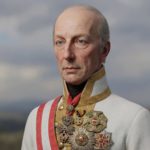
A Habsburg emperor in white uniform and Austrian orders: Francis II dissolved the thousand-year empire on 6 August 1806 rather than let Napoleon claim the title.
For roughly a thousand years, Central Europe was nominally ruled by a Holy Roman Emperor who was neither guaranteed the job by birth nor guaranteed much real power over it — until 1806 finally put the arrangement to rest.
About the Place
Why it matters
The Empire's imperial title took root in the early medieval revival of Roman-style kingship among Frankish and German rulers, formalised through the pairing of election by the realm's leading princes and a solemn coronation — the standing scholarship on German kingship holds that a king only truly became emperor "through the coronation" itself[1]. Library sources place the Ottonian dynasty already exercising that imperial authority by 962, when a grant issued in Otto I's name refers directly to "the Empress," evidencing a functioning imperial court by that date[2].
Government never rested on one hereditary throne. Each king first had to be chosen by the realm's leading princes before he could be crowned — election followed by coronation, a two-step process the standing literature on German royal installation treats as constitutionally essential[1]. That elected ruler then shared authority with an Imperial Diet, the Reichstag, whose sittings — summoned to cities such as Nuremberg and Regensburg to weigh everything from troop levies to the Hussite wars — survive in granular, city-by-city detail in Cologne's own civic correspondence[3].
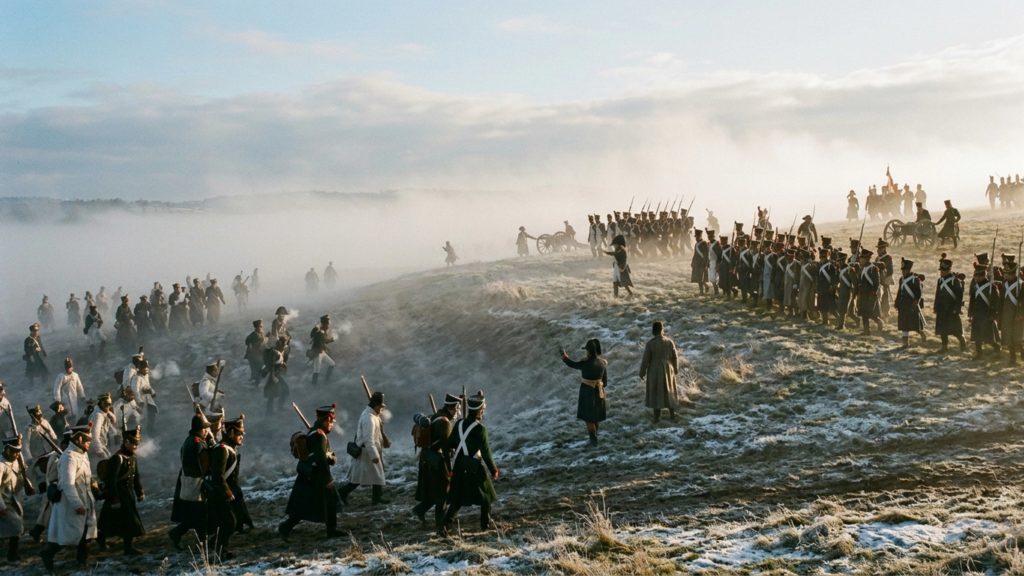
By 1806 the millennium-old title had run its course. The library's own copy of a note sent by the Empire's Electoral College to the Diet at Ratisbon is catalogued as issued under "Holy Roman Empire. Sovereign (1792–1806 : Franz II)" — a plain bibliographic marker that Francis II's tenure as Holy Roman Emperor ended that year[4]. Ironically, that same 1791 note shows the Empire's princes still insisting, barely fifteen years before the end, that their territorial rights could never be bargained away without full imperial consent — confidence the following decade would not vindicate.
The library holds no detailed sources on the century that followed, so specifics are kept general here: German-speaking Europe spent the 1800s reorganising into new political structures before eventual unification, a legacy historians have continued to reassess ever since. James Bryce's full-length study of the old Empire, still read today, is one marker of that long afterlife of interpretation[5].
Legacy & Reputation
What’s the verdict?
For an institution that never fit any tidy description, it has attracted an outsized share of serious historical attention — whole monographs, across more than a century, exist simply to ask what kind of political body it actually was, from Bryce’s 1904 study to newer full-length reassessments[5][6]. That persistent scholarly disagreement is itself part of its reputation: there is no single settled verdict on whether it was a failed state or a genuinely workable, if unusual, constitutional order.
Myth-buster
Think you know this one?
Myth: people often assume the Holy Roman Emperor’s throne passed automatically from father to son, like an ordinary hereditary crown. Correction: it never did — the standing scholarship on German kingship is explicit that a king first had to be chosen by the realm’s electors and only became emperor through a separate act of coronation[1].
Quick Facts
The essentials
Quick Facts
Keith would like to clarify...
Keith would like to clarify that the Holy Roman Emperor's crown was never simply inherited. The standing scholarship on German kingship treats election by the realm's princes, followed by a separate coronation, as the two constitutionally essential steps to the throne — not a birthright[1].
History gets strange here...
History gets strange here: by the mid-1400s the Empire already held seven electoral principalities, twenty-five major secular principalities, roughly ninety archbishoprics, bishoprics and imperial abbeys, and over a hundred independent counties — and that's before the free imperial cities were even counted[7].
Roger has a theory...
Roger has a theory that the Empire's own name was its best punchline. Voltaire's 1756 verdict — that the thing calling itself the Holy Roman Empire was "neither holy, nor Roman, nor an empire" — has outlived most of the Empire's own emperors[8].
Keith checked the sources...
Keith checked the sources, and they're blunt about it: a king-elect "only truly becomes king through the coronation," according to the standing German scholarship on royal installation — meaning the vote alone never actually made anyone emperor[1].
One for the Ageonauts...
One for the Ageonauts: the library holds an actual 1791 note from the Empire's own Electoral College to the Diet at Ratisbon, still defending the princes' feudal territorial rights against revolutionary France — just fifteen years before the whole Empire dissolved[4].
Roger would like you to know...
Roger would like you to know Otto I was already acting like an emperor by 962: a grant recorded in his name that year assigns a Trier abbey's income to "the Empress" herself, proof of a functioning imperial household centuries before Napoleon was born[2].
The paperwork survives, if barely...
The paperwork survives, if barely: Cologne's civic archive still holds records of a Reichstag ordering a "fiftieth man" levy from cities for a summer campaign — a reminder that the Empire's grand diplomacy was funded, in the end, by ordinary municipal bookkeeping[3].
Roger's favourite find...
Roger's favourite find is a 1615 book that tried to catalogue every Roman and Holy Roman ruler in one volume, complete with portraits, running all the way from Julius Caesar down to the reigning Emperor Matthias[9].
Keith would like to flag...
Keith would like to flag the actual mechanics of the end: Napoleon's Confederation of the Rhine pulled sixteen German states out of the Empire in mid-1806, and Francis II dissolved the whole structure days later rather than risk Napoleon claiming the imperial title himself[10].
«Il ne feroit certainement point de leur dignité, ni de leur honneur, si les princes eux-mêmes vouloient, pour ainsi dire, exposer en marché leurs possessions féodales, & leurs droits de supériorité territoriale relevants de l'Empire.» — “It would certainly not be consistent with their dignity, nor their honour, were the princes themselves to, so to speak, put up for sale their feudal possessions and their rights of territorial superiority belonging to the Empire.”
The Empire's Electoral College (Corps Électoral de l'Empire)
From a note presented to the Imperial Diet at Ratisbon (Regensburg) in 1791, in which the Electoral College urged fellow princes not to negotiate away imperial territorial rights under pressure from revolutionary France.[4]
Timeline
How it unfolded
25 December 800
Charlemagne Crowned Emperor at Rome
On Christmas Day 800 Pope Leo III crowned Charlemagne emperor at Rome, placing the diadem of the Caesars on the Frankish king in St Peter's.[11][11][12] Historians count the Empire's beginning from either this coronation or Otto I's of 962, and this timeline records both.[13]
2 February 962
Otto I Crowned Emperor at Rome
Otto I, king of the Germans, was crowned Emperor by Pope John XII at Rome on 2 February 962.[14, p. 69] According to Tout, the coronation hardly had among contemporaries the extreme importance later writers ascribed to it.[14, p. 69]
1356
Golden Bull Fixes the Seven Electors
Emperor Charles IV issued the Golden Bull in 1356, which settled the number of imperial electors at seven.[15, p. 430][15, p. 430] Britannica names them as the archbishops of Cologne, Mainz and Trier, the king of Bohemia, the duke of Saxony, the margrave of Brandenburg and the count palatine of the Rhine.[12]
24 October 1648
Peace of Westphalia
The Peace of Westphalia was signed on 24 October 1648, ending the Thirty Years' War.[16] By its terms the practical independence of the German princes was assured, and the Empire's more than 300 petty principalities gained the right to make alliances, laws and war.[12] The Britannica account concludes that the Empire lost all cohesion and became little more than a confederation.[12]
6 August 1806
Francis II Dissolves the Empire
Francis II, in a proclamation issued at Vienna on 6 August 1806, declared the bond uniting him to the German Empire severed and his office as its Supreme Head lapsed.[17][17] Bryce writes that the oldest political institution in the world had thereby come to an end.[11]
Dig Deeper
Copy any prompt below into your favourite AI chat to keep exploring.
Walk me through why Emperor Francis II dissolved the thousand-year-old Holy Roman Empire in 1806 instead of simply losing another war.
Does the Holy Roman Empire's ability to survive for centuries while barely functioning as one unified state say something about what actually holds a political union together?
Roleplay as Francis II's press secretary in 1806, spinning the end of a centuries-old empire as a bold rebrand rather than a defeat.

Further Reading
Where to read more
Holy Roman Empire — Britannica
Encyclopaedia Britannica's full reference entry on the Empire, covering its traditional 800–1806 span, its elected emperors, and its political structure.
Why look at this: The fastest way to check the Empire's outer dates and basic shape before or after watching — useful grounding for the Francis II / 1806 beat in this episode.
https://www.britannica.com/place/Holy-Roman-EmpireThe Confederation of the Rhine and the Dissolution of the Holy Roman Empire (1 August 1806)
A George Mason University / CUNY digital-history project page presenting the actual 1806 documents — the Confederation of the Rhine's secession and Francis II's declaration ending the Empire.
Why look at this: Lets you read the real 1806 wording behind the episode's "Francis II finally dissolves the Holy Roman Empire" beat, straight from the primary documents rather than a summary.
https://revolution.chnm.org/d/516/The Holy Roman Empire (James Bryce, 1904 edition)
James Bryce's classic full-length scholarly study of the Empire, freely scanned and downloadable via the Internet Archive — the same edition already located in this library run.
Why look at this: The place to go if the "what even was this Empire" question raised in Legacy & Reputation is the one that hooked you — a full academic treatment, not just a summary.
https://archive.org/details/holyromanempire00brycRelated
Keep exploring

Can be seen in
Where this shows up

References
Sources
Sources
- BookWahl und Einsetzung des Deutschen Königs im Verhältnis zu einander by Mario Ferdinand Krammer ↑
- BookGeschichte der deutschen Kaiserzeit by Wilhelm von Giesebrecht and Bernhard von Simson ↑
- BookMitteilungen aus dem Stadtarchiv von Köln ↑
- BookTraduction littérale de la note, présentée `a la Diete de Ratisbonne / by Holy Roman Empire. Reichstag and Holy Roman Empire. Sovereign ↑
- BookInternet Archive: holyromanempire00bryc ↑
- BookThe Holy Roman Empire by Peter H. Wilson ↑
- Websiteencyclopedia.com: Holy roman empire ↑
- Websiteoxfordreference.com: Q oro ed6 ↑
- BookDe vitis imperatorum et caesarum romanorum : tam occidentalium quam orientalium, nec non vxorum et liberorum eorum, item… by Octavius de Strada ↑
- Websiterevolution.chnm.org: D / 516 ↑
- BookThe Holy Roman Empire by James Bryce ↑
- Document1911 Encyclopædia Britannica/Europe ↑
- Websiteen.wikipedia.org: Holy Roman Empire ↑
- BookThe empire and the papacy, 918-1273 by T. F. Tout. Page 69. ↑
- BookSelect Documents Illustrating Mediaeval and Modern History (includes Abdication of Francis the Second document) by Emil Reich. Page 430. ↑
- Websiteen.wikipedia.org: Peace of Westphalia ↑
- DocumentAbdication of Francis II, Holy Roman Emperor ↑
- BookA short history of Europe from the dissolution of the Holy Roman empire to the outbreak of the… by Charles Sanford Terry ↑
- Websiteen.wikipedia.org: German Confederation ↑