
Pompey
Roman general and statesman
The Roman general who swept the pirates from the sea in about three months[1], then lost a civil war to his own son-in-law[2][1] and was stabbed to death as he came ashore in Egypt[1].
Bio
Who they were
Gnaeus Pompeius, known to history as Pompey, was born in 106 BC[1]. His father, Pompeius Strabo, was consul in 89 BC[1]. Plutarch says the Romans hated Strabo for his greed, yet felt a strong and early affection for his son[1]. At seventeen Pompey fought beside his father against the Italians in 89 BC[3, p. 7]. Strabo was killed by lightning, according to Plutarch[1]. The young Pompey then had to answer a charge of misusing public funds that had been made against his father[1].
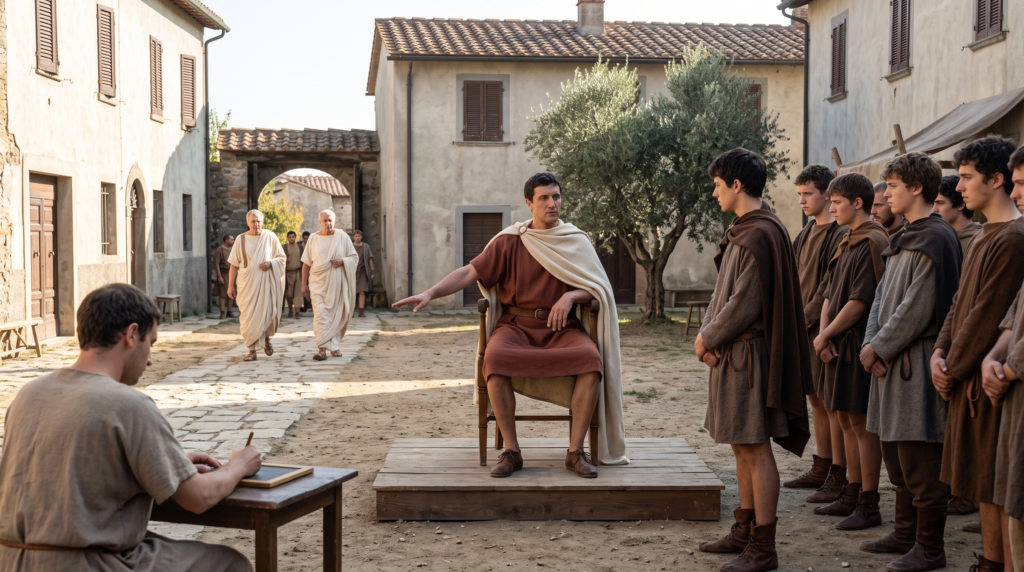
At twenty-three, Pompey raised three legions in Picenum, a region of eastern Italy, on his own authority[1]. He joined the general Sulla, who greeted him with the title Imperator, an honour for a victorious commander[1]. Pompey was then sent to Sicily and on to Africa[1]. In forty days, Plutarch says, he defeated his enemies and subdued Libya, in his twenty-fourth year[1]. Sulla saluted him as Magnus, meaning "the Great"[1]. Pompey triumphed, a victory parade, before he was even a senator[1]. Later he was sent to Spain to fight Sertorius, who held much of the country[1].
Pirates had made the Mediterranean unsafe, and Pompey was given wide powers over the sea and its coasts to end the threat[1]. He drove the pirates from the sea in no more than three months[1]. He then took over the war against King Mithridates from the general Lucullus[1]. Mithridates died, and the war was over[1]. Pompey made Syria a Roman province, subdued Judaea and took its king, Aristobulus, prisoner[1]. His triumph over Asia completed a set, after Libya and Europe, as if he had triumphed over the whole world[1]. In the consulship of Caesar, Pompey married Caesar's daughter Julia[1][1].
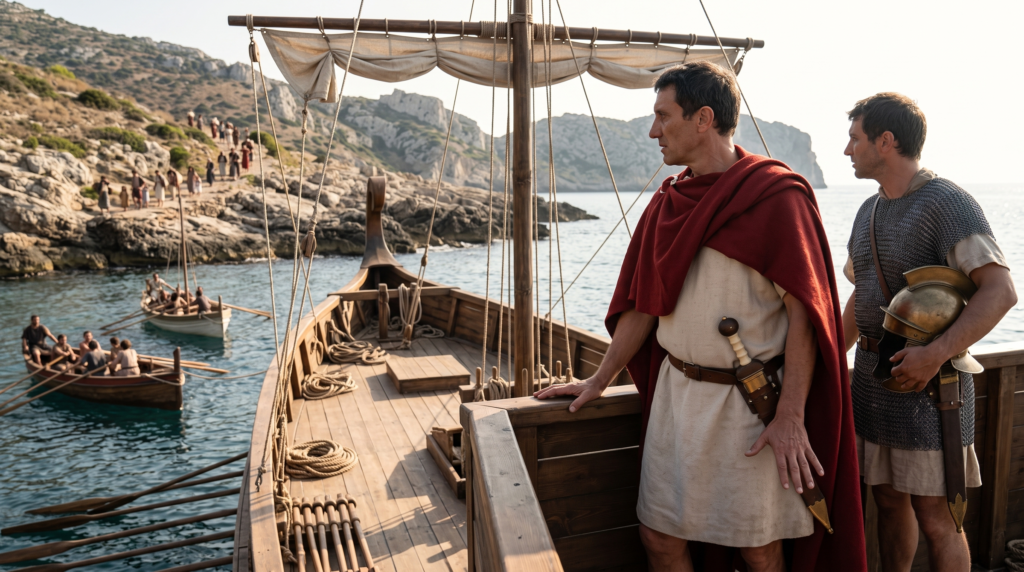
Julia died in 54 BC after giving birth[1]. In 52 BC, with Rome in disorder, the Senate made Pompey sole consul[4][1]. When Caesar invaded Italy, Pompey left Rome and shipped his army out from Brundisium[4]. At Pharsalus, on 9 August 48 BC, Caesar's army defeated him[2]. Pompey fled to Egypt, hoping to borrow a mercenary army from its government[4]. Its advisers chose to kill him[1]. Septimius, once a centurion under Pompey, stabbed him as he rose to step ashore[1][1].
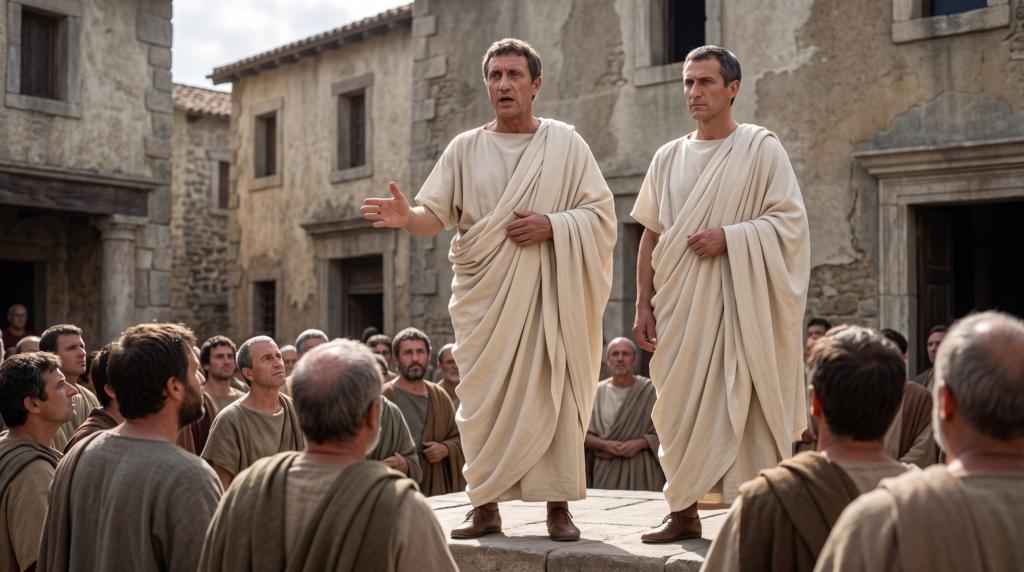
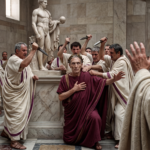
When Caesar reached Egypt, Plutarch says, he turned away from the man who brought him Pompey's head, as from a murderer, and wept when handed Pompey's seal ring[1]. Pompey's wife Cornelia buried his remains at his Alban villa[1]. His building outlived him. Beside his theatre stood the Curia of Pompey, a hall used for Senate meetings, with a colossal statue of him inside[5, p. 1]. Caesar was killed there on the Ides of March, 44 BC[6], at the foot of that statue[7].
Plutarch tells a story about Pompey's plain tastes. When he was ill, his doctor prescribed a thrush to eat, but none could be found out of season[1]. Someone said Lucullus, the general Pompey had replaced against Mithridates, kept thrushes all year round[1]. Pompey joked that he supposed he could not live if Lucullus were not luxurious, ignored the doctor and ate whatever was to hand[1].
Legacy & Reputation
What’s the verdict?
The historian Charles Oman, writing in 1902, called Pompey an honest man and an able general, who never wished to be a tyrant[4]. Yet Oman argued that Pompey helped to make the Republic impossible, naming the laws that gave him his commands and his sole consulship in 52 BC as landmarks in the growth of the imperial idea[4]. Plutarch wrote that Pompey was overthrown by the strength and magnitude of his own power[1]. He also reported Cato’s view that Rome was ruined by the union of Pompey and Caesar, not by their later quarrel[1].
Myth-buster
Think you know this one?
Quick Facts
The essentials
Quick Facts
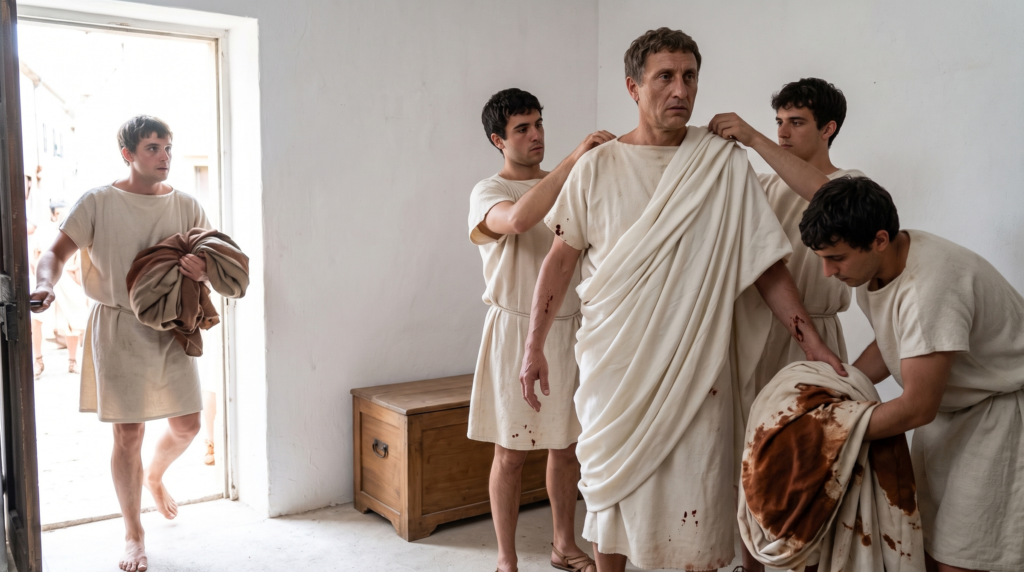
Roger would like you to know…
Pompey was said to look like Alexander the Great. Plutarch mentions a slight sweep of hair back from the brow and soft eyes, though he adds that the likeness was more talked of than real. Pompey did not object, and some people used the nickname Alexander, not always kindly[1].
The city gate was not consulted…
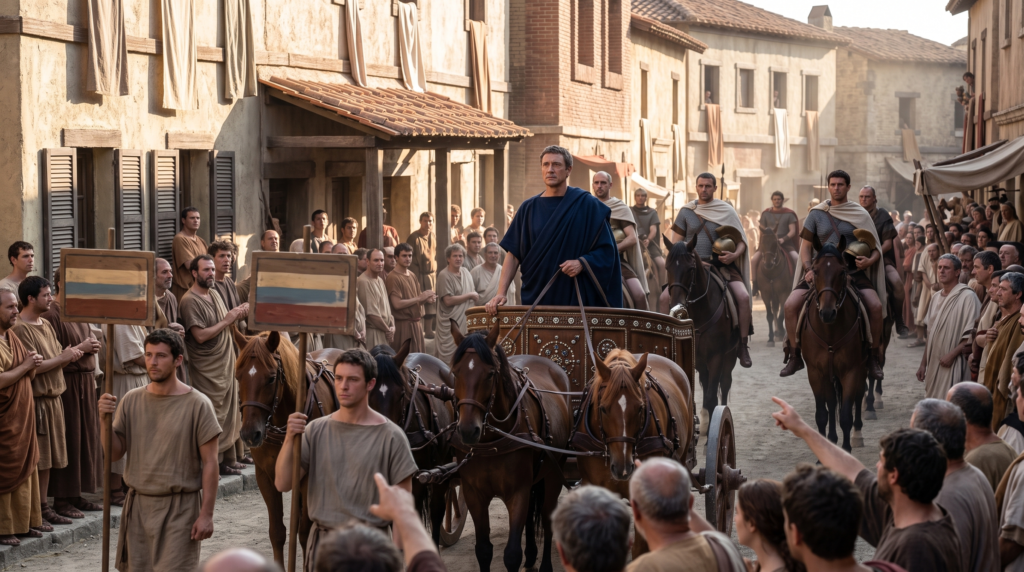
Pompey won a triumph before he was even a senator. He planned to ride in on a chariot drawn by four elephants, taken from Libya, but the gate was too narrow, so he made do with horses[1].
Roger has visited the pirate coast…
Plutarch counts over a thousand pirate ships and four hundred captured cities[1]. Their favourite joke: a captive who claimed to be a Roman got shoes, a toga and polite apologies, then a ladder down into the sea[1].
Three months, not three years…
Pompey cleared the pirates from the sea in no more than three months. Then came the surprise: he did not execute the twenty thousand or so captured. Plutarch says he resettled many in towns and farmland, reasoning that new habits and surroundings could change them[1].
Keith has found an awkward door…
When Cicero was in danger and asked Pompey for help, Plutarch says Pompey would not even see him. He shut the front door on those sent by Cicero and left by another. Cicero, who had served Pompey well, left Rome[1].
History has booked a very large venue…
Pompey opened his theatre in Rome with athletic and musical contests and wild-beast hunts, in which five hundred lions were killed, and ended with an elephant fight[1]. He had admired a theatre at Mytilene and ordered a plan of it, meaning to build a larger and grander one at Rome[1].
Roger has found the worst advice in Egypt…
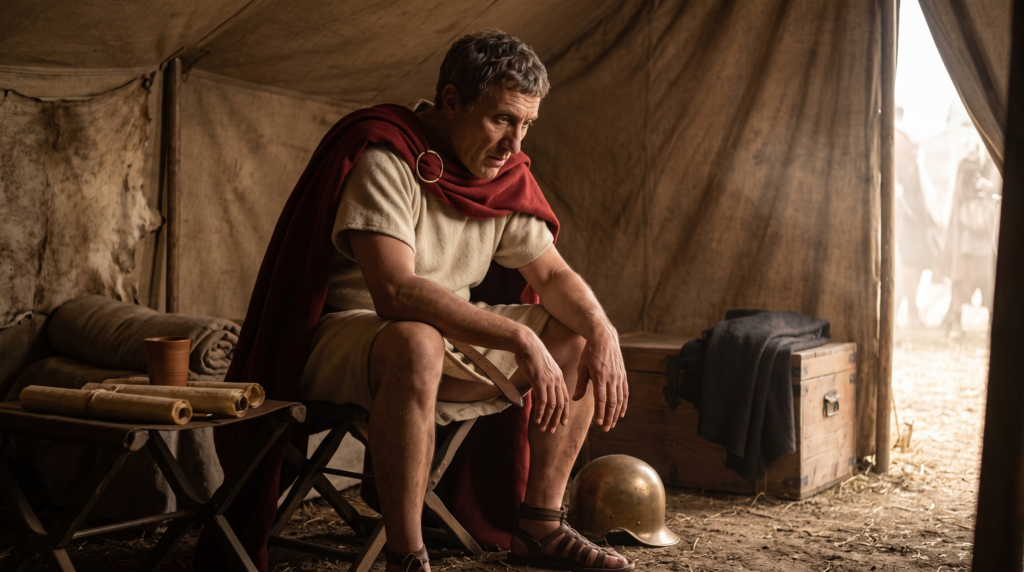
Pompey's fate was settled by a council of the young king's advisers. Theodotus, a teacher of rhetoric, argued that killing Pompey would please Caesar and risk nothing from Pompey, and finished, with a smile, "A dead man does not bite"[1][1].
File under: surprisingly human…
When Caesar reached Egypt, he turned away from the man who brought him Pompey's head, as from a murderer. Handed Pompey's seal ring, engraved with a lion holding a sword, he wept. He then had Achillas and Potheinus put to death[1].
Keith would like to clarify…
Plutarch says Pompey died aged sixty less one, just one day after his birthday[1]. The Victorian scholar George Long, citing Velleius, insisted it was the day before it, on 28 September 48 BC[9]. Roman birthday arithmetic was evidently no easier than ours.
One for the Ageonauts…
Mithridates' body reached Pompey at Amisus. The face could not be recognised, because the embalmers had left the brain in, so it was identified by its scars. Pompey declined to look at it, fearing divine retribution, and sent it to Sinope[1].
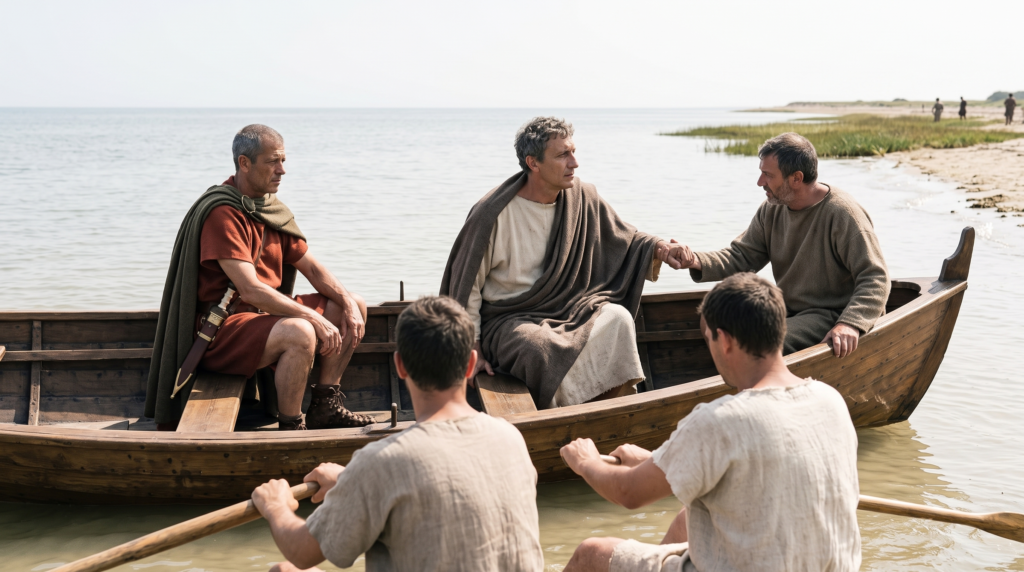
I have performed all, and all under my own command as Imperator.
Pompey
Pompey's reply, as Plutarch reports it, when the censors asked whether he had completed all the military service the law required, while he was consul[1].
Timeline
How it unfolded
September 106 BC
Birth of Pompey
Gnaeus Pompeius, later called Pompey the Great, was born in September 106 BC, according to T. Rice Holmes[8, p. 186]. His father, Pompeius Strabo, was consul in 89 BC[1].
81 BC
Victory in Africa and the Title Magnus
In 81 BC Pompey crossed from Sicily to Africa, where he defeated the army of Domitius Ahenobarbus and within months reduced Numidia[3, p. 7]. Plutarch says Sulla then greeted him with the name Magnus, meaning the Great[1].
67 BC
War Against the Pirates
In 67 BC the tribune Gabinius proposed giving Pompey command of the war against the pirates[3, p. 7]. Plutarch says he drove them from the sea in no more than three months[1].
61 BC
Triumph Over Asia
After Mithridates died, Pompey made Syria a Roman province and took King Aristobulus of Judaea prisoner[1]. His triumph in 61 BC[3, p. 7] completed a set, after Libya and Europe, so that he seemed to have triumphed over the whole world[1].
59 BC
Marriage to Caesar's Daughter Julia
In Caesar's consulship Pompey, shortly after divorcing his wife Mucia, married Caesar's daughter Julia, sealing the union of Caesar, Pompey and Crassus[3, p. 7]. Plutarch adds that Caesar himself married Calpurnia, the daughter of Piso[1].
55 BC
Opening of Pompey's Theatre
In 55 BC, the year of his second consulship with Crassus, Pompey completed Rome's first stone theatre, in the Campus Martius, and opened it with games lasting many days[3, p. 7]. The Curia of Pompey, a hall used for Senate meetings, stood beside it[5, p. 1].
52 BC
Sole Consul of Rome
With Clodius murdered and Rome in disorder, the Senate made Pompey sole consul, and in the spring of 52 BC he restored order[4]. The death of his wife Julia in 54 BC had already weakened his link with Caesar[3, p. 7].
9 August 48 BC
Defeat at Pharsalus
When Caesar invaded Italy, Pompey withdrew and shipped his army out of Brundisium[4]. On 9 August 48 BC, at Pharsalus, he was persuaded to risk a battle and Caesar's army defeated him[2].
September 48 BC
Death of Pompey in Egypt
Pompey fled to Egypt and was put to death on the orders of King Ptolemy as he landed[2]. George Long places the murder in September 48 BC[9]. Plutarch says Septimius, once a centurion under him, struck first as he rose to step ashore[1], and that his wife Cornelia buried his remains at his Alban villa[1].
Dig Deeper
Copy any prompt below into your favourite AI chat to keep exploring.
Explain why the Senate was meeting in the Curia of Pompey on the Ides of March, 44 BC, and how a general's theatre complex came to host Senate business.
Debate whether Caesar dying in Pompey's hall was coincidence, planned symbolism or later storytelling, and what each reading says about how Romans remembered Pompey.
Pitch me Pompey's new theatre in 55 BC as a must-see tourist attraction: what would a Roman visitor see there, and why would they queue to get in?
Further Reading
Where to read more
Pompey the Great - Britannica
A concise biographical article on Pompey's career, from his early campaigns for Sulla to the eastern settlement, the civil war with Caesar and his death at Pelusium in Egypt.
Why look at this: Explains how the Gabinian law of 67 BC gave Pompey the command that cleared the pirates from the Mediterranean, and how he then resettled many of them as farmers, the surprising mercy behind the three-month campaign.
https://www.britannica.com/biography/Pompey-the-GreatThe Theater in Antiquity, by James Packer - The Pompey Project, King's College London
A scholarly history of Rome's first permanent theatre, dedicated in 55 BC, covering its concrete construction, its gardens and portico, and the Curia Pompeia built behind it as a meeting hall for the Senate.
Why look at this: Describes the hall where the Senate met beside Pompey's theatre and where Julius Caesar was murdered in 44 BC, and what happened to it, and to the statue of Pompey, afterwards.
https://pompey.cch.kcl.ac.uk/Historyofthe_Theater.htmPlutarch, Life of Pompey, translated by Bernadotte Perrin (Loeb Classical Library, 1917), LacusCurtius, University of Chicago
The full ancient biography of Pompey by Plutarch, written about 150 years after his death, in a public-domain English translation transcribed and hosted by Bill Thayer's LacusCurtius site.
Why look at this: The ancient account behind the story of Pompey's end: the council of the young king's advisers at Pelusium, the line that a dead man does not bite, and the stabbing as he stepped ashore in 48 BC.
https://penelope.uchicago.edu/Thayer/E/Roman/Texts/Plutarch/Lives/Pompey*.htmlRelated
Keep exploring
Can be seen in
Where this shows up

References
Sources
Sources
- BookPlutarch's Lives, Volume 3 (of 4) by Plutarch ↑
- BookA history and description of Roman political institutions by Frank Frost Abbott ↑
- BookDictionary of Greek and Roman biography and mythology by William Smith. Page 7. ↑
- BookSeven Roman statesmen of the later republic: The Gracchi. Sulla. Crassus. Cato. Pompey. Caesar by Charles William Chadwick Oman ↑
- BookThe remains of ancient Rome (vol 2) by J. H. Middleton. Page 1. ↑
- BookThe greatness and decline of Rome by Guglielmo Ferrero, Alfred Eckhard Zimmern and H. J. Chaytor ↑
- BookPlutarch, Lives ( LCL 11 Volumes In One; Perrin Trans) by Bernadotte Perrin ↑
- BookThe Roman republic and the founder of the empire by T. Rice Holmes. Page 186. ↑
- BookThe decline of the Roman republic by George Long ↑
- BookPharsalia; Dramatic Episodes of the Civil Wars by Lucan ↑