
Cicero
Roman orator, lawyer and statesman
The consul who drove a conspirator out of Rome in 63 BC[1], then heard Caesar's killers shout his name in 44 BC[2], though they had not invited him to join them[3].
Bio
Who they were
Marcus Tullius Cicero was born on 3 January 106 BC at Arpinum, a town on the river Liris between Rome and Capua[4]. His family was equestrian, meaning gentlemen of means rather than nobles[4]. His mother was Helvia, said to be well born and rich[4]. Anthony Trollope, who wrote a life of Cicero, judged that his father wanted his children to have the best education Rome or Greece offered[4]. Cicero studied under teachers including Philo and Molo[4]. Molo was a distinguished orator who came to Rome in 81 BC as an envoy from the island of Rhodes[5]. Cicero promptly secured him as an instructor in oratory[5].
In 80 BC Cicero defended Sextus Roscius of Ameria[1]. By 75 BC he was quaestor, a junior official, in Sicily[6], where, according to the introduction in C. D. Yonge's translation of his orations, he won the goodwill of the Sicilians[7]. In 70 BC he prosecuted Verres, a former praetor of Sicily, who was accused of treating the Sicilians with great greed and tyranny[1][7]. The historian T. Rice Holmes wrote that Cicero was by then recognised as the foremost advocate in Rome[8, p. 186]. As praetor, a senior magistrate, in 66 BC he made a famous speech in support of the Manilian law[8, p. 186].
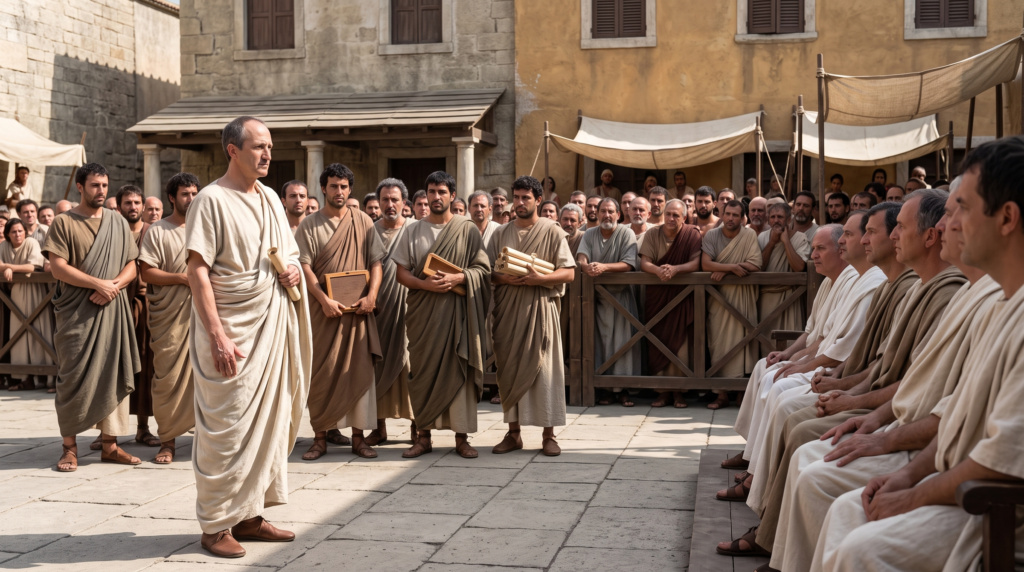
Cicero was consul in 63 BC, one of Rome's two chief magistrates[6]. In that year the conspirators around Catiline planned to murder Cicero and other senators, and Catiline's lieutenant, Manlius, took up arms in Etruria[4]. Cicero delivered the speech in the Senate that forced Catiline to leave Rome[1]. On 5 December he exposed and defeated the conspiracy[2]. Cicero personally led one of the captured conspirators, Lentulus, to the prison and handed him to the executioner[9]. Caesar condemned those executions as illegal[5]. In 58 BC a law was passed against anyone who had put Roman citizens to death without a regular trial[5], and Cicero was banished[1]. He was recalled in 57 BC[1].
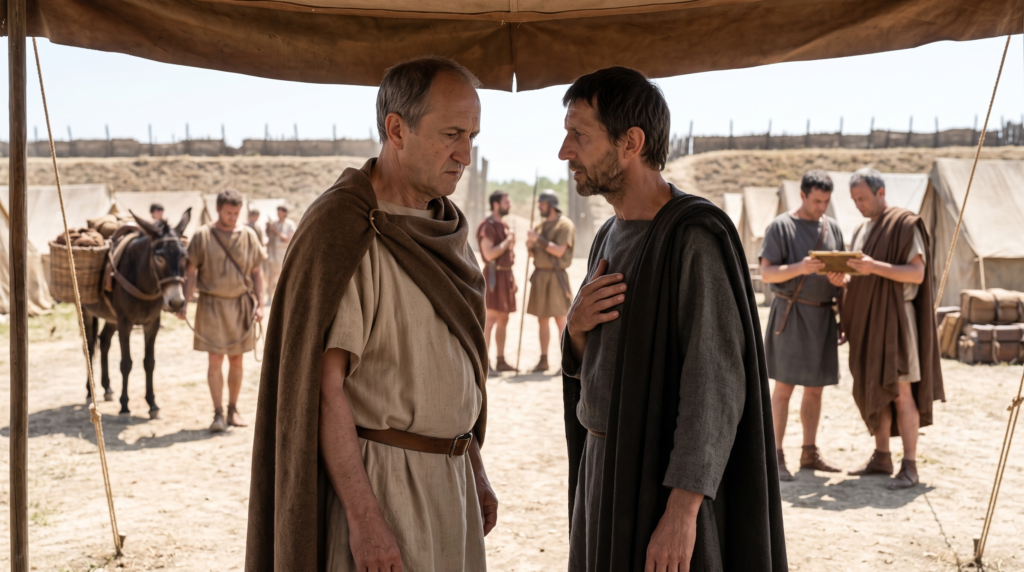
In the civil war Cicero followed Pompey, but he returned to Rome in 48 BC and was partly won over by Caesar's mercy[1]. After Caesar's murder, Cicero led the Senate on 17 March 44 BC to vote an amnesty, or pardon, for the killers[1]. He then turned on Mark Antony, and his Second Philippic was a declaration of war to the knife[1]. When Octavian, Antony and Lepidus formed the Second Triumvirate, Cicero was on its list of the proscribed, the men marked for death[1]. He was hunted down and killed on 7 December 43 BC[1]. Antony ordered his head and hands to be fixed on the Rostra, the speakers' platform in the Forum[2].
Cicero's letters survive. Holmes noted that, with his speeches, they let us observe the workings of his mind and are original sources for Roman history[8, p. 186]. Many were addressed to his old schoolfellow Atticus[8, p. 186]. Earlier, while Caesar campaigned in Africa, Cicero wrote a history of Roman oratory dedicated to Brutus[5]. In 44 BC, with little role left in politics, he finished his Tusculan Disputations and wrote treatises such as On Friendship[10]. The first collected edition of his philosophical works was printed at Rome in 1471[11].
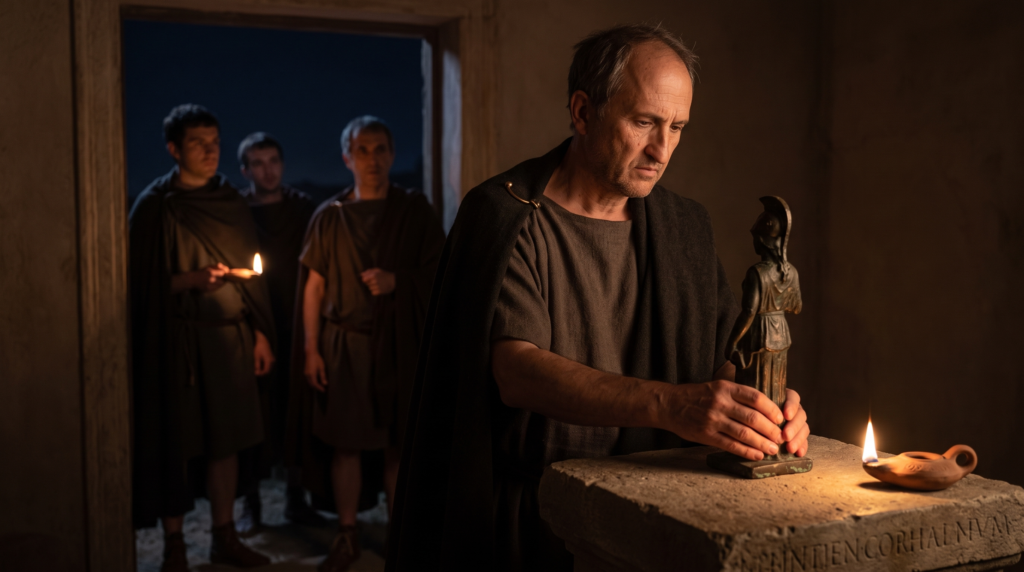
When Cicero first stood for office, friends advised him to drop his odd third name, which came from the Latin word for a vetch, a plant[4]. He replied, according to Plutarch, that he would make the name Cicero more glorious than those of Scaurus and Catulus[9]. As quaestor in Sicily, he had a silver offering to the gods inscribed with his first two names and, as a joke, a carved vetch in place of the third[9].
Legacy & Reputation
What’s the verdict?
Opinion has been sharply divided. Theodor Mommsen, in his History of Rome, called Cicero a statesman without insight, idea or purpose[12], yet credited him as the creator of modern Latin prose[12]. The introduction to H. E. D. Blakiston’s 1894 edition of Cicero’s speeches admitted that he was conceited[1] and unduly dejected by his banishment[1], but found it almost impossible not to admire his devotion to orderly government[1].
Myth-buster
Think you know this one?
Quick Facts
The essentials
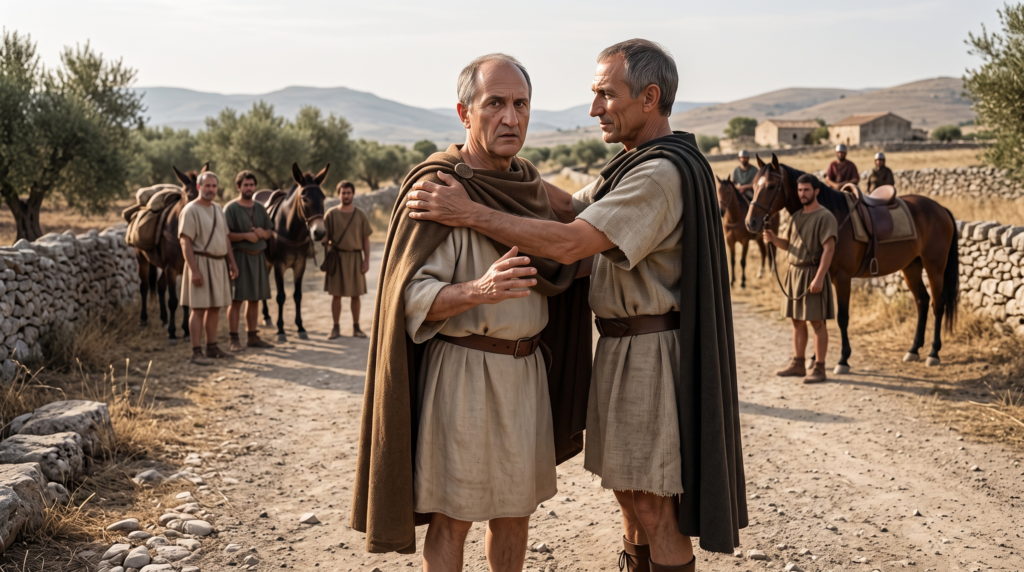
Quick Facts
Keith checked the nickname…
Cicero's name comes from cicer, Latin for a vetch. One story says an ancestor's nose was marked like one, but Trollope thought the family more probably grew and sold vetches[4]. Friends urged Cicero to change it. He is reported to have refused, vowing to make it more glorious than Scaurus or Catulus[9].
Roger has found a villain…
In 70 BC every Sicilian town but Syracuse and Messana joined the case against Verres, who had governed them as praetor, and begged Cicero to lead it[7]. Then Verres's old quaestor, Caecilius, asked to run it himself. The introduction in Yonge's translation calls him Verres's tool, there to stifle the trial[7].
History has added a footnote…
In February 43 BC Cicero wrote to Trebonius, one of the plotters[10], wishing he had been invited to that most beautiful banquet on the Ides of March, as there would have been no leftovers[14, p. 424]. The leftover was Antony, whom Trebonius had been given the job of keeping away from the murder[15].
Roger says, “Hear me out…”
Clodius's law of 58 BC, aimed at anyone who had killed Roman citizens without trial, was distinctly retroactive, which sent Cicero into exile over the executions of 63 BC[5]. He was recalled in the sixteenth month and said that Italy had carried him into Rome on her shoulders[9].
Keith has spotted the problem…
Cicero, Rome's famous orator, was a nervous speaker. Plutarch says he was timid even when he began speaking, and often kept trembling until his eloquence reached its height[9]. At Milo's trial, with Pompey's soldiers ringing the Forum, Milo had him carried there in a litter[9].
The past has entered the chat…
Cicero was at enmity with Vatinius[9]. Plutarch says that when Cicero heard Vatinius had died, then learned he was alive, he remarked, “Ill betide the man who lied so ill.”[9] Plutarch preserves a whole string of such one-liners[9].
This sounds invented, but…
Cicero wrote verse about his own career. Smith's Dictionary says only four disjointed lines of his poem on his own times survive, and one is an unlucky jingle known from Juvenal: “O fortunatam natam me consule Romam”, roughly “O fortunate Rome, born in my consulship”[11].
A small fact with a very large consequence…
Caesar's young heir, the future Augustus, was born in Cicero's consulship, and as a young man he went so far as to call Cicero father[9]. At Cicero's advice the Senate turned to him against Antony[1], yet in 43 BC he joined Antony in the triumvirate that proscribed Cicero[1].
Down the rabbit hole we go…
Cicero's speeches against Antony are called the Philippics because the name was borrowed from Demosthenes' speeches against King Philip of Macedon, Alexander the Great's father[16]. If the Epistles to Brutus are genuine, Cicero himself playfully gave them the name[16].
Keith found the footnote…
Cicero was frank about his philosophy. He told Atticus he found it difficult to reproduce Greek philosophy in Latin, then called his books mere transcriptions, produced with no very great toil, and said his task was only to furnish the phrases, of which he had a rich supply[5].
he called me above all men to witness that he had been an imitator of my exploits
Cicero
From Cicero's Second Philippic against Antony, in C. D. Yonge's translation, answering the charge that Brutus had called out Cicero's name after Caesar's murder[17].
Timeline
How it unfolded
3 January 106 BC
Birth of Cicero
Marcus Tullius Cicero was born at Arpinum, on the river Liris, on 3 January 106 BC.[4] His family was equestrian, which Anthony Trollope likened to a man born a gentleman and nothing more.[4]
70 BC
Cicero prosecutes Verres
In 70 BC Cicero accused Verres, a former praetor of Sicily who was charged with treating the Sicilians with great rapacity and tyranny.[1][7] T. Rice Holmes wrote that Cicero was now recognised as the foremost advocate in Rome.[8, p. 186]
8 November 63 BC
Cicero confronts Catiline in the Senate
As consul, Cicero called the Senate to the temple of Jupiter Stator on 8 November 63 BC, the day after the plotters had meant to murder him.[4] Catiline attended, was exposed in the First Catilinarian and left Rome for Etruria that night.[1]
5 December 63 BC
Catilinarian conspiracy defeated
On 5 December 63 BC Cicero, in his consulship, exposed and defeated the conspiracy of Catiline.[2] He led the captured conspirator Lentulus to prison and handed him to the executioner.[9] Caesar condemned the executions as illegal.[5]
58 BC
Banishment of Cicero
In 58 BC a law was passed against anyone who had put Roman citizens to death without a regular trial, and Cicero was banished.[5][1] He was recalled in 57 BC.[1]
late 44 BC
Cicero publishes the Second Philippic
Cicero turned on Mark Antony, and his Second Philippic was a declaration of war to the knife.[1] The Loeb chronology places its publication in late 44 BC, after Antony had set out for Cisalpine Gaul to confront Decimus Brutus.[16]
17 March 44 BC
Senate decrees amnesty for Caesar's killers
Under Cicero's leadership the senate decreed an amnesty for Caesar's murderers on 17 March 44 BC.[1] Brutus had called Cicero's name as he raised his bloody dagger, though Froude says Cicero was not invited to the plotters' supper.[2][3]
7 December 43 BC
Death of Cicero
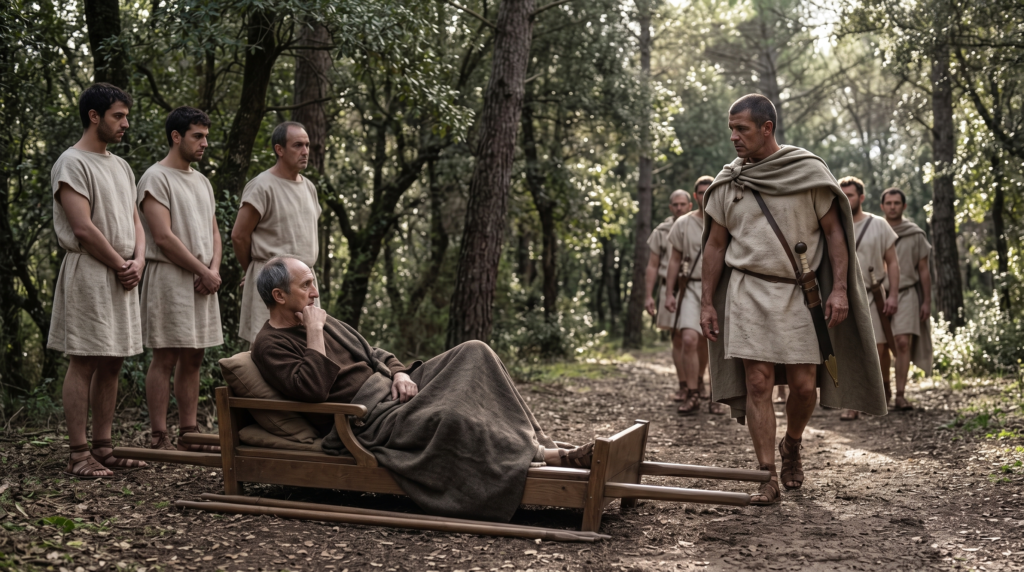
Cicero was on the Second Triumvirate's proscription list and was hunted down and killed on 7 December 43 BC.[1] Antony's emissaries came upon him in his litter, being carried from his villa at Formiae to the sea, and Antony ordered his head fixed on the Rostra between his hands.[13][2]
Dig Deeper
Copy any prompt below into your favourite AI chat to keep exploring.
Explain how and why Cicero, one of Rome's most famous orators, ended up outside the plot to kill Caesar, and what he said about it afterwards.
Debate whether leaving Cicero out of the Ides of March plot protected the conspirators or cost them the one voice who might have defended their act to Rome.
Roleplay Cicero discovering that the plot against Caesar went ahead without him, and writing a politely furious letter to one of the plotters.
Further Reading
Where to read more
Cicero - Encyclopaedia Britannica
A free encyclopaedia biography of the Roman statesman, lawyer and writer, running from his Sicilian quaestorship and the consulship of 63 BC to the Philippics and his death in 43 BC.
Why look at this: States plainly that Cicero was not involved in the plot to kill Caesar and was not in the Senate on 15 March 44 BC, then shows him speaking for a general amnesty on 17 March, which is the context for being left out and then claiming the event.
https://www.britannica.com/biography/CiceroCicero: The Life and Times of Rome's Greatest Politician - Anthony Everitt, Random House Trade Paperbacks (2003)
A 400-page biography of Cicero by the classical historian Anthony Everitt, drawing on his surviving speeches and letters, including those to his friend Atticus. The publisher's page gives the description and edition details free.
Why look at this: Follows the full arc from the Catiline affair of 63 BC to his attacks on Mark Antony, so you can see why a consul who had put down one conspiracy was neither asked to join another nor spared by the man he lambasted afterwards.
https://www.penguinrandomhouse.com/books/47491/cicero-by-anthony-everitt/9780375758959/Letters of Cicero, Selected and Edited, with Introduction and Notes - John H. Muirhead (Rivingtons, 1885), Internet Archive
A full scan of a nineteenth-century school edition of Cicero's letters, with the Latin text, an English introduction and notes, free to read online. It includes the letters of February 43 BC to Cassius (Fam. 12.4) and to Trebonius (Fam. 10.28).
Why look at this: Contains Cicero's own words in two letters to plotters, each wishing he had been asked to the dinner on the Ides of March, 'reliquiarum nihil' (no leftovers). The editor's note explains that Antony had been detained outside the Senate by Trebonius.
https://archive.org/details/lettersofciceros00ciceuoftRelated
Keep exploring


Places

Can be seen in
Where this shows up

References
Sources
Sources
- BookThe speeches of M. Tullius Cicero against Catiline and Antony and for Murena and Milo by Marcus Tullius Cicero and Herbert Edward Douglas Blakiston ↑
- BookCicero's Life and letters : The life of Cicero, by Dr. Middleton, Cicero's letters to his friends, translated… by Marcus Tullius Cicero and others ↑
- BookCaesar: A Sketch by James Anthony Froude ↑
- BookThe Life of Cicero, Volume One by Anthony Trollope ↑
- BookCicero of Arpinum : a political and literary biography, being a contribution to the history of ancient civilization… by E.G. Sihler ↑
- BookPlutarch, Lives ( LCL 11 Volumes In One; Perrin Trans) by Bernadotte Perrin ↑
- BookThe orations of Marcus Tullius Cicero, literally translated by C.D. Yonge by Marcus Tullius Cicero and Charles Duke Yonge ↑
- BookThe Roman republic and the founder of the empire by T. Rice Holmes. Page 186. ↑
- BookPlutarch's Lives, Volume 4 (of 4) by Plutarch ↑
- BookLetters of Cicero. Selected and edited, with introd. and notes by Marcus Tullius Cicero and John H. Muirhead ↑
- BookDictionary of Greek and Roman biography and mythology by William Smith ↑
- BookThe History of Rome (Volumes 1-5) by Theodor Mommsen ↑
- BookThe Life of Cicero, Volume II. by Anthony Trollope ↑
- BookThe correspondence of M. Tullius Cicero, vol 6 by Marcus Tullius Cicero. Page 424. ↑
- BookThe correspondence of M. Tullius Cicero : arranged according to its chronological order by Marcus Tullius Cicero, Robert Yelverton Tyrrell and Louis Claude Purser ↑
- BookCicero in twenty eight volumes. Vol.15: Philippics [Loeb 189] by Marcus Tulius Cicero and Walter Charles Alan Ker ↑
- BookThe Orations of Marcus Tullius Cicero, Volume 4 by Marcus Tullius Cicero ↑