
Brutus
Roman senator and leading conspirator against Julius Caesar
A senator whom Caesar had pardoned[1] and promoted[1], then persuaded by Cassius to join the plot that killed Caesar on the Ides of March, 44 BC[1].
Bio
Who they were
Marcus Junius Brutus was born in the autumn of 85 BC[1]. His father, also named Marcus Junius Brutus, was killed on Pompey's orders in 77 BC[1], when the boy was eight[1]. His mother, Servilia, was the half-sister of Cato of Utica[1]. Her brother, Quintus Servilius Caepio, adopted the boy[1], who was therefore sometimes called Quintus Caepio Brutus[1]. Servilia and her brothers oversaw his education with great care, and he acquired a love of learning that never left him[1]. The family name also carried weight. Plutarch says Brutus was believed to descend from Junius Brutus, who drove out the Tarquins, Rome's last royal family, though his enemies denied it[2].
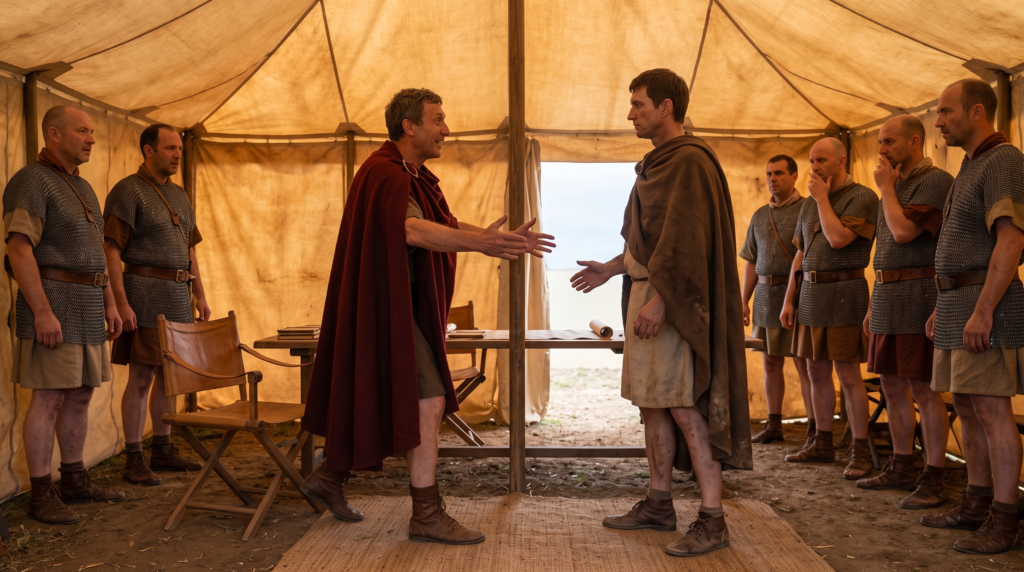
Cato became Brutus's great political model[1]. In 58 BC Cato was sent to Cyprus, and Brutus went with him[1]. Brutus also studied Greek philosophy, favouring the school of Plato[2]. When civil war broke out in 49 BC between Caesar and Pompey, many expected Brutus to join Caesar. Instead he followed Cato's example and sided with Pompey, the man who had ordered his father's death[1]. Plutarch says he thought Pompey's cause the better one[2]. At the battle of Pharsalus in 48 BC, Caesar gave orders that Brutus should not be killed[1]. Afterwards Brutus wrote asking for pardon, and Caesar granted it generously[1].
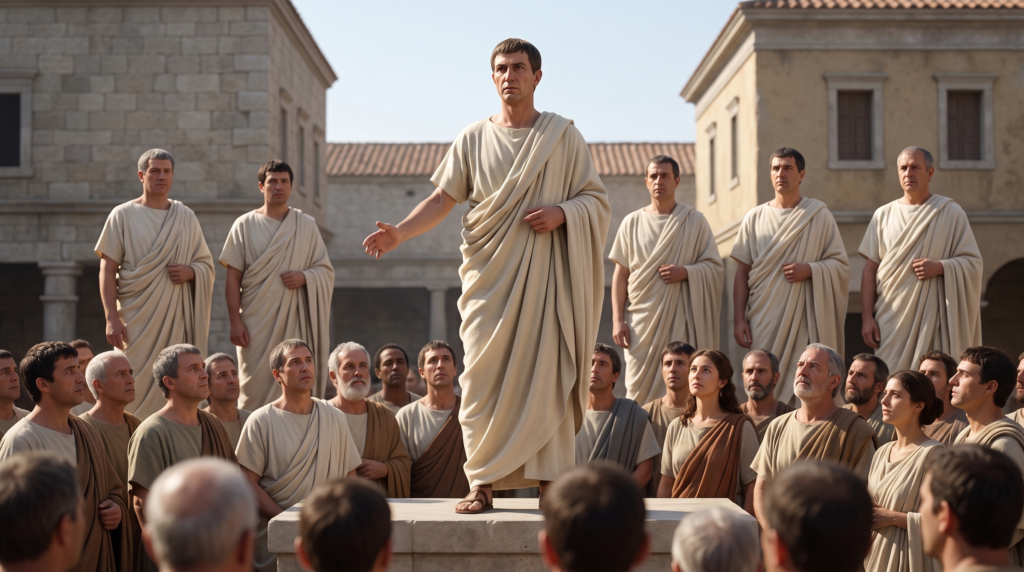
Caesar then advanced Brutus. In 46 BC he made him governor of Cisalpine Gaul[1], the Gaulish lands on the Italian side of the Alps[2]. In 44 BC Brutus became city praetor[1], the senior post among the praetors[2]. According to Plutarch, Caesar said Brutus must have the first office[2], though he also feared Brutus's proud temper[2]. Meanwhile Romans left notes on Brutus's judgement seat, such as "Brutus, are you asleep?"[2] Cassius persuaded him to join the plot[1]. On 15 March 44 BC the conspirators killed Caesar at a meeting of the Senate held in a portico of Pompey's theatre[1][2]. Plutarch says Caesar stopped resisting when he saw Brutus draw his sword[2].
After the killing, the Senate pardoned the conspirators[1]. But Mark Antony's funeral for Caesar stirred the crowd, and men ran to burn the houses of the assassins[2]. Brutus left Rome and in September 44 BC sailed to Athens[1]. He then took over Macedonia and raised an army[1]. In autumn 42 BC he and Cassius faced the forces of Octavian and Antony at Philippi[1]. Cassius was defeated and died[2]. About twenty days later Brutus lost a second battle and fell on his own sword[1]. Antony had Brutus's body wrapped in a purple robe and sent the ashes to Servilia[2].
The killing did not restore the Republic. In 43 BC Octavian, named in Caesar's will as his son and heir, became consul and had Caesar's killers condemned in their absence[2][1]. He, Antony and Lepidus then divided the provinces and, in Plutarch's account, proscribed two hundred men, Cicero among them[2]. Brutus's name lived on in other ways. Cicero wrote a treatise called Brutus, with Brutus as one of its speakers, and dedicated his Orator to him[1]. Coins issued in his name showed a cap of freedom between two daggers and the legend EID MAR, short for the Ides of March[3][4]. Shakespeare built Julius Caesar from Plutarch's Lives of Caesar, Brutus and Antony, which he knew in North's English translation[5][5].
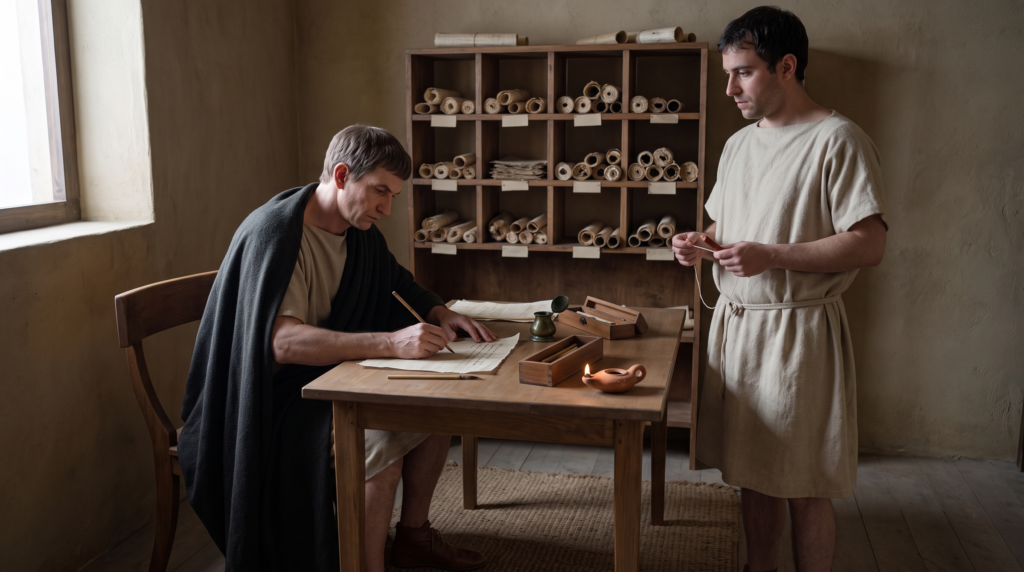
Brutus was a bookish man. Plutarch says that before the battle of Pharsalus, in fierce summer heat, he went on writing until evening, making a summary of the historian Polybius[2]. Years later, as he prepared to move his army out of Asia in 42 BC[1], he slept little and read a book until the third watch of the night, when his officers came to him[2]. William Smith's dictionary says nothing charmed him as much as study, which he pursued by day and night[1].
Legacy & Reputation
What’s the verdict?
Opinion of Brutus has long been divided. The French scholar Gaston Boissier noted that some writers, such as the poet Lucan, raised him almost to heaven, while others, such as Dante, placed him firmly in hell[4]. Plutarch reported that even Antony thought Brutus the only conspirator moved by the noble nature of the deed[2]. Boissier, however, called him upright but narrow, and pointed to his harsh moneylending in Cyprus[4]. William Smith’s 1870 dictionary judged that he lacked knowledge of people and the world[1].
Myth-buster
Think you know this one?
Quick Facts
The essentials
Quick Facts
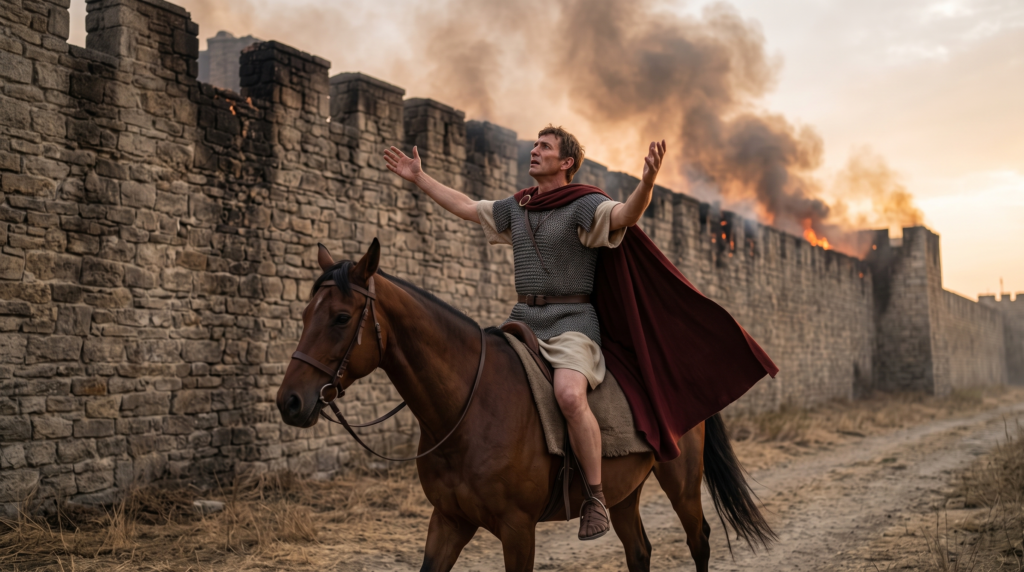
Roger has found the graffiti…
Before the plot, Romans were writing anonymous notes to Brutus. Plutarch says his praetor's tribunal was found every morning covered with messages such as "Brutus, are you asleep?" and "You are not really Brutus!" Others were left on the statue of his famous ancestor[2].
Keith has done the arithmetic…
Plutarch reports that Caesar half-believed Brutus was his son, since Servilia, Brutus's mother, had loved him[2]. William Smith's dictionary disposes of it neatly: Caesar was only fifteen years older than Brutus[1], which makes fatherhood rather tricky.
The familiar story leaves this out…
Brutus's reputation for virtue had a blot. Gaston Boissier says Brutus's friend Scaptius lent money to the town of Salamis, Cyprus, at four per cent a month, and cavalry besieged its senate until five senators starved[4]. Brutus proved to be the real creditor[4].
Roger would like you to know…
Brutus's wife Porcia, Cato's daughter, wanted proof that she could keep a secret. Plutarch says she cut a deep wound in her own thigh with a small knife used for paring nails, endured the fever, and then told Brutus she now knew she was "invincible to pain"[2].
Caesar was warned about Brutus…
When people urged Caesar to beware of Brutus, Plutarch says he touched his own body and replied: "What, think you that Brutus would not wait for this poor body?" Even so, Plutarch adds, Caesar feared Brutus's proud temper[2].
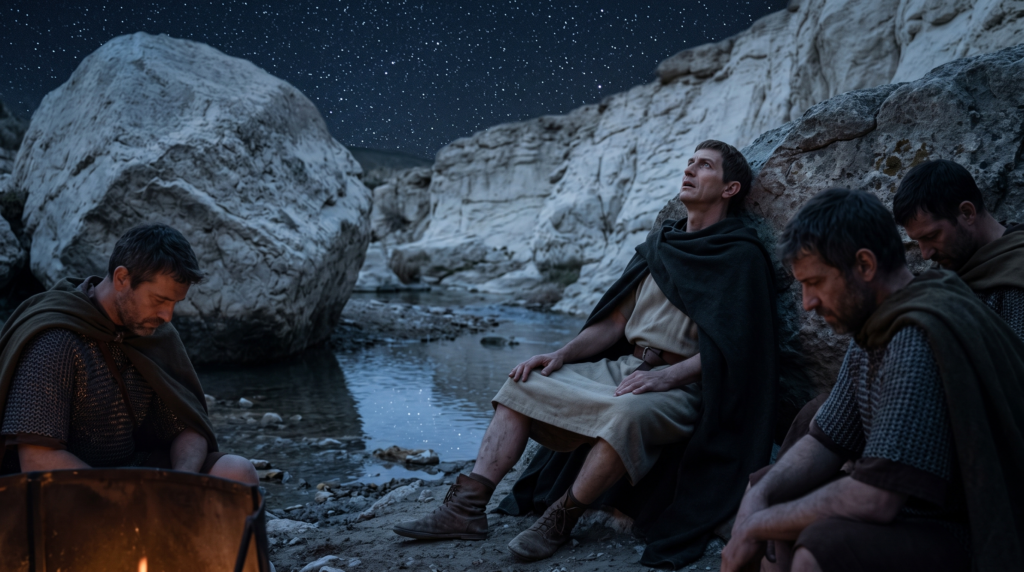
A visitor arrived after midnight…
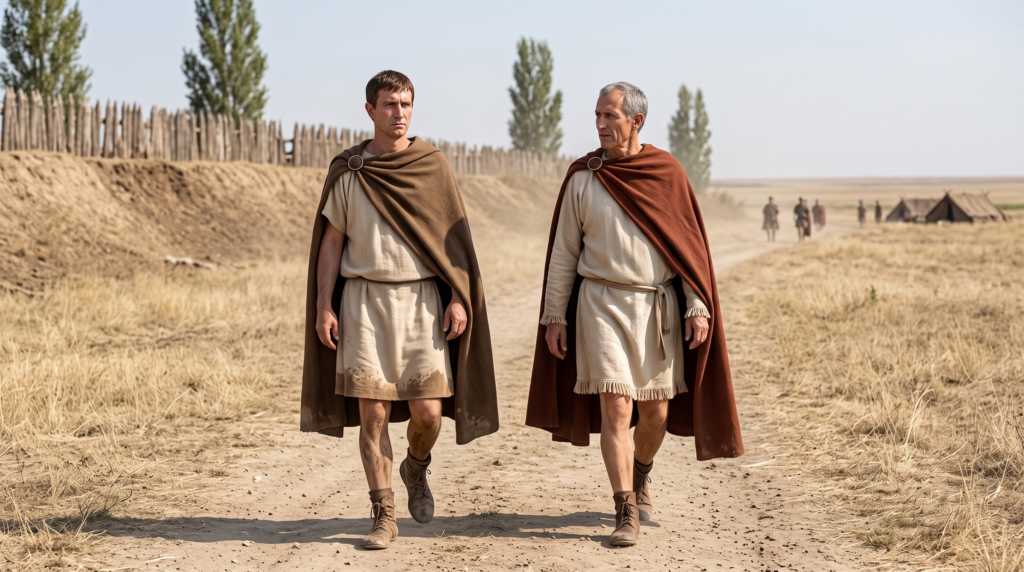
Plutarch tells of a huge, silent figure that appeared in Brutus's tent one night in 42 BC[1]. It said, "I am thy evil dæmon, Brutus, and thou shalt see me at Philippi." Brutus answered calmly, "I shall see." Cassius put it down to a troubled mind[2].
Keith notes an unexpected kindness…
After Philippi, Antony ordered Brutus's body wrapped in his most costly purple robe. When he found the robe had been stolen, Plutarch says, he had the thief put to death. He sent the ashes to Brutus's mother, Servilia[2].
Brutus put the murder on his money…
Brutus put his own portrait on coins[1]. The reverse shows a pileus, the cap of a freed slave, between two daggers, over the legend EID MAR, short for the Ides of March[3]. Gaston Boissier called it a "threatening legend"[4].
Roger has questions about Cicero…
The plotters kept Cicero out, Plutarch says, fearing his caution would blunt their edge[2]. Yet in his Second Philippic Cicero recalled that Brutus raised his bloody dagger, called out Cicero's name and congratulated him on liberty regained[8].
Brutus has sent a sharply worded letter…
Plutarch says Brutus wrote short, blunt letters in Greek. To the people of Pergamum, who had given money to Dolabella, he wrote that if they gave it willingly they admitted their wrong, and if unwillingly they should prove it by giving to him willingly[2].
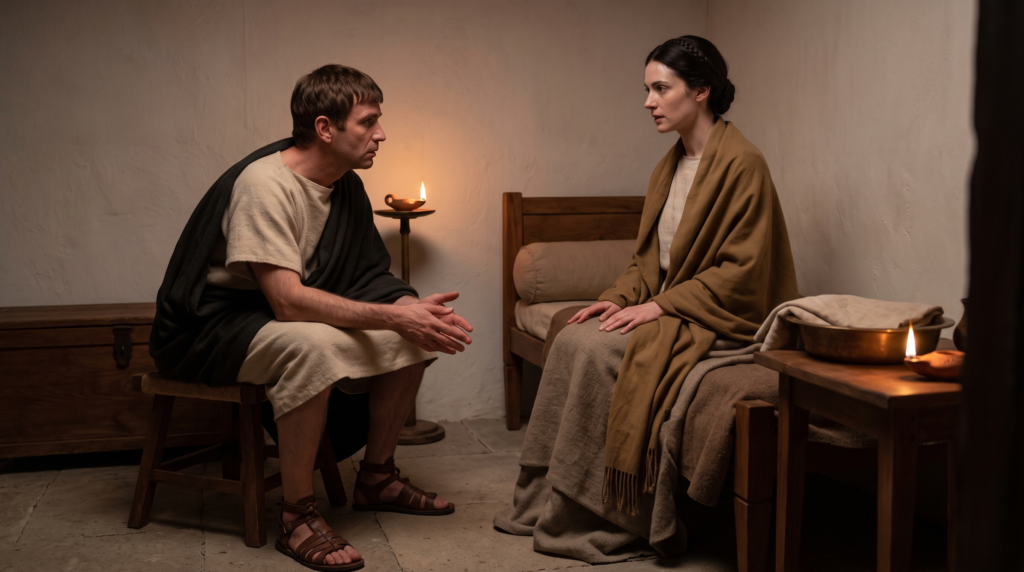
on the Ides of March I gave my own life to my country, and since then, for her sake, I have lived another life of liberty and glory.
Marcus Junius Brutus
Brutus's words to Cassius on the morning of the first battle of Philippi, 42 BC, as reported in Plutarch's Life of Brutus (Perrin translation)[9].
Timeline
How it unfolded
autumn 85 BC
Birth of Marcus Junius Brutus
Brutus was born in the autumn of 85 BC, his mother being Servilia, half-sister of Cato of Utica.[1][1] His father was killed on Pompey's orders, and Brutus lost him at the age of eight.[1][1]
48 BC
Brutus pardoned by Caesar
Caesar defeated Pompey at Pharsalus on 9 August 48 BC.[1] Brutus, who had sided with Pompey, wrote to Caesar asking for pardon, and Caesar granted it generously.[1]
46 BC
Brutus made governor of Cisalpine Gaul
Although he had been neither praetor nor consul, Brutus was made governor of Cisalpine Gaul in 46 BC.[1] Its provincials were delighted with his mild treatment and justice.[1]
44 BC
Brutus becomes city praetor
In 44 BC Brutus was praetor urbanus, the city praetor.[1] Cassius, who had hoped for the post, was as enraged against Brutus as against the dictator, while Caesar promised Brutus the province of Macedonia.[1]
15 March 44 BC
Brutus joins the plot to kill Caesar
Persuaded by Cassius to join the conspirators, Brutus helped to kill Caesar on 15 March 44 BC.[1] The Senate was meeting in a portico belonging to Pompey's theatre.[2] In Plutarch's account, Caesar stopped resisting when he saw Brutus draw his sword.[2]
September 44 BC
Brutus sails for Athens
The senate pardoned the murderers, but in September 44 BC Brutus sailed to Athens, meaning to take the province of Macedonia that Caesar had assigned him and to repel force by force.[1][1]
Dig Deeper
Copy any prompt below into your favourite AI chat to keep exploring.
Explain how Cassius persuaded Brutus to join the conspiracy against Caesar, and why Brutus's name mattered so much to the plotters.
Debate whether Brutus was a patriot defending the Republic or a traitor who killed the man who had pardoned him.
Roleplay Brutus trying to explain to his mother Servilia, over dinner, why he has to join the plot against the man who pardoned him.
Further Reading
Where to read more
Marcus Junius Brutus – Encyclopaedia Britannica
A short biography by E. Badian covering Brutus's family, his pardon after Pharsalus, his offices under Caesar, the assassination and the two battles at Philippi in 42 BC.
Why look at this: Shows in a few paragraphs how Caesar pardoned Brutus after Pharsalus in 48 BC and made him city praetor in 44 BC, and why he still joined the plot, which makes the betrayal in the group chat make sense.
https://www.britannica.com/biography/Marcus-Junius-BrutusBrutus: The Noble Conspirator – Kathryn Tempest, Yale University Press
A full-length biography of Brutus that draws on his surviving correspondence with Cicero and the testimony of his contemporaries rather than on the later legend.
Why look at this: Tackles the question at the centre of the Ides of March: whether Brutus was right to put his duty to Rome before his personal loyalty to the man who had spared him.
https://yalebooks.yale.edu/book/9780300246643/brutus/Silver denarius of Brutus (Ides of March coin), 43–42 BC – Museum number 1855,0512.40, Department of Money and Medals, British Museum
The museum's own catalogue record for a silver denarius struck for Brutus: his bearded portrait and the legend BRVT IMP on one side, a pileus (freedman's cap) between two daggers and the legend EID MAR on the other, with the museum's translation, dimensions, weight and references to Crawford's Roman Republican Coinage.
Why look at this: Lets you inspect the coin on which Brutus advertised the killing of Caesar, with the date 'The Ides of March' stamped beside the daggers, and see how the museum itself catalogues it as struck by Brutus and his moneyer L. Plaetorius Cestianus.
https://www.britishmuseum.org/collection/object/C_1855-0512-40Related
Keep exploring
Can be seen in
Where this shows up

References
Sources
Sources
- BookDictionary of Greek and Roman biography and mythology by William Smith ↑
- BookPlutarch's Lives, Volume 4 (of 4) by Plutarch ↑
- Websitefitzmuseum.cam.ac.uk: CM1474 1963 ↑
- BookCicero and his friends; a study of Roman society in the time of Caesar by Gaston Boissier and Adnah David Jones ↑
- BookPlutarch's Lives of Coriolanus, Caesar, Brutus, and Antonius: In North's Translation by Plutarchus ↑
- BookThe Lives of the Twelve Caesars, Volume 01: Julius Caesar by Suetonius ↑
- BookThe Roman history of Appian of Alexandria; by of Alexandria Appianus and Horace White. Page 87. ↑
- BookCaesar: A Sketch by James Anthony Froude ↑
- BookPlutarch's Lives in eleven volumes. Vol.6: Dion and Brutus. Timoleon and Aemilius Paulus [Loeb 98] by Plutarchus / Plutarch and Bernadotte Perrin ↑