
Cassius
Roman senator and general, and a leader of the plot against Julius Caesar
He surrendered a fleet to Caesar[1, p. 87], was pardoned and made a praetor[2], and still became the man who, in Plutarch's account, set about recruiting the plot against him[3].
Bio
Who they were
Gaius Cassius Longinus was born around 86 BC[4]. Smith's Dictionary says he is sometimes called the son of an earlier Cassius Longinus, but calls this quite uncertain[2]. His brother Lucius sided with Caesar when civil war broke out[2]. Plutarch tells a story from Cassius's school days. When Faustus, son of Sulla, bragged about his father's absolute power, Cassius sprang up and gave him a thrashing[3]. Smith adds that Cassius learned Greek from Archelaus of Rhodes and followed the Epicurean philosophy, a Greek school of thought[2].
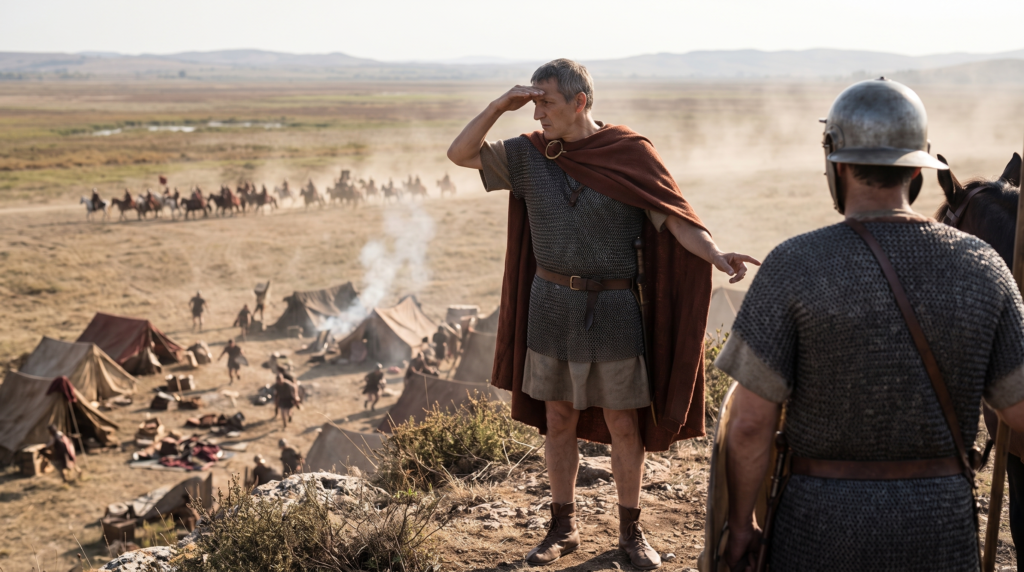
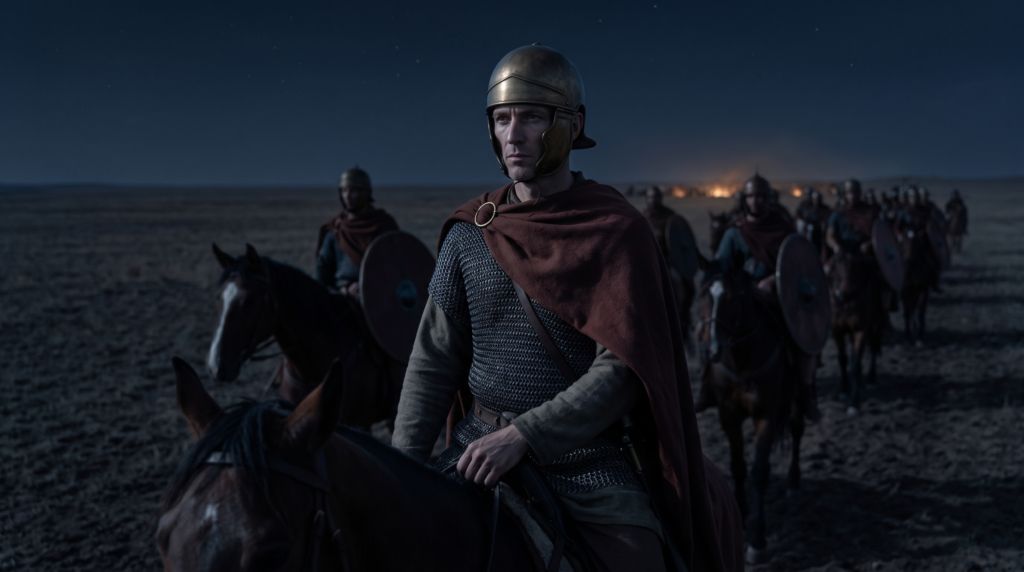
Cassius first appears in history as quaestor, a financial officer, to the general Crassus on his Parthian campaign of 53 BC[2]. Smith says his advice before the disastrous battle of Carrhae was not followed[2]. After the defeat he made his escape to Syria with 500 horsemen, then gathered the remains of the army[2]. The Parthians, Rome's neighbours beyond the Euphrates, attacked the province again in 51 BC with a much larger army[2]. Cassius threw himself into the fortified city of Antioch[2], then followed the Parthians and won a victory in September[2]. Smith adds that he was generally supposed, with justice, to have fleeced the provincials unmercifully[2].
In 49 BC Cassius was a tribune of the plebs, an elected Roman official, and left Rome to join Pompey in Greece[2]. After Pompey's defeat, Appian says Cassius met Caesar on the Hellespont, begged pardon and surrendered his fleet[1, p. 87]. Smith says Caesar forgave him[2]. Caesar later made him praetor peregrinus, a senior magistrate, and promised him Syria for the following year[2]. But Brutus won the more senior city praetorship; Plutarch has Caesar judge Cassius's claim the juster, yet give Brutus the post[3]. On 15 March 44 BC, Appian says, Cassius wounded Caesar in the face[1, p. 87].
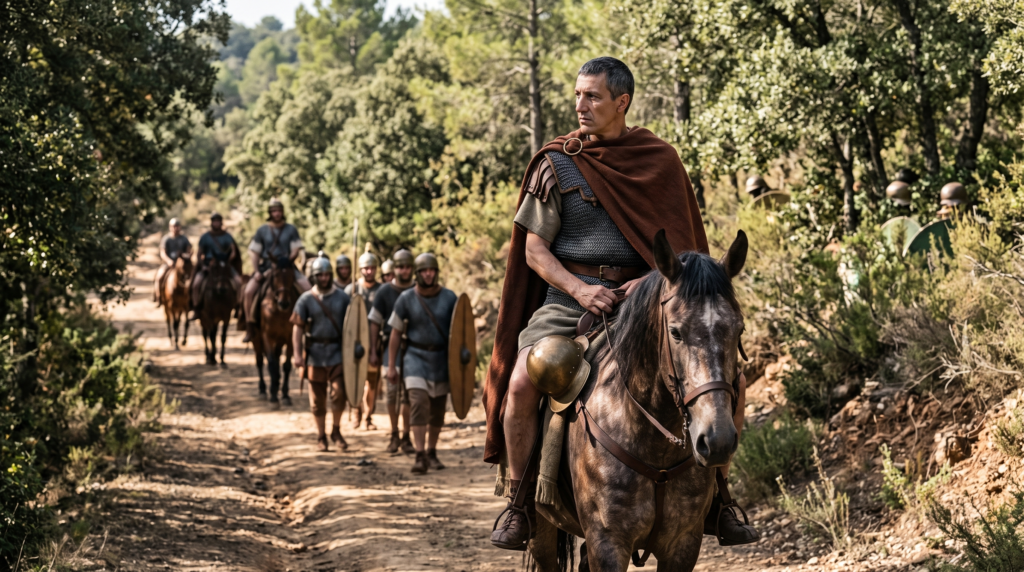
After the murder the conspirators fled to the Capitol[2]. Cassius and Brutus left Rome in mid-April[2]. Cassius left his nephew Lucius as governor of Syria and set out to join Brutus[2]. Early in 42 BC the two met at Sardis, then took up a position near Philippi in Macedonia[2]. On 3 October[4] Antony defeated Cassius's wing and took his camp[2]. In Smith's account, supposing all was lost, Cassius ordered his freedman Pindarus to end his life[2]. Brutus called him the last of the Romans and had him buried on Thasos[2].
The plotters were bitterly disappointed when supreme power passed to Antony[2]. Within three years of the assassination, the men most responsible were dead[4]. His widow, Junia Tertia, a half-sister of Brutus, outlived him by more than sixty years and died in AD 22[2]. Cassius's name outlived him too. In AD 40 the emperor Caligula ordered a later Cassius Longinus, proconsul of Asia, to be brought to Rome in chains because he descended from the great republican family[2]. Shakespeare's Julius Caesar has Caesar describe Cassius as having a lean and hungry look[5].
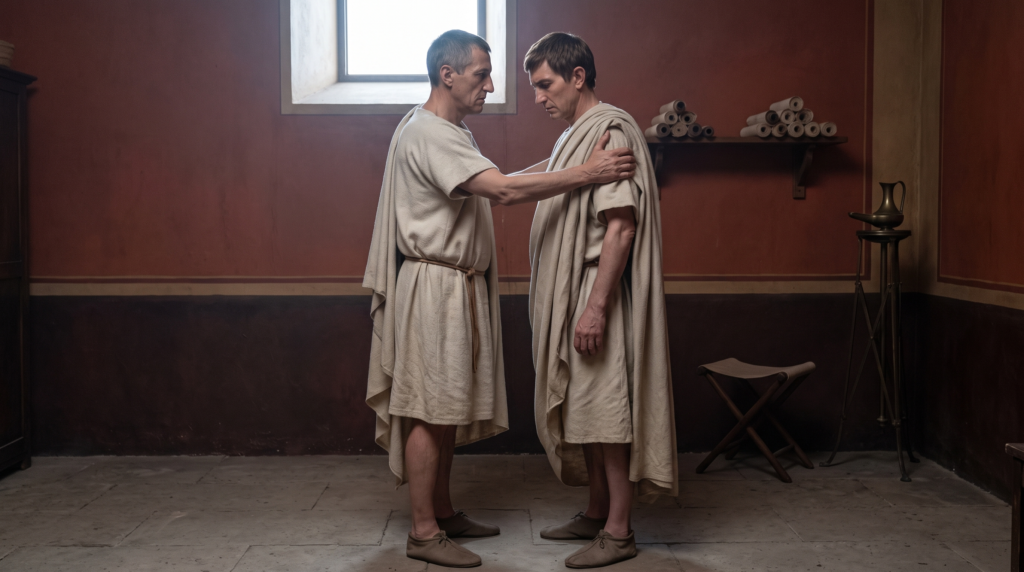
Plutarch gives Cassius a lighter side. He says that with his close friends Cassius was rather prone to laughter and fond of banter[3]. Before Philippi he took Messala's hand and spoke to him in Greek, as was his custom when he wished to show affection[3]. On the morning of the Ides his son was to put on the toga virilis, the toga of manhood, and the plotters escorted the boy to the forum[3].
Legacy & Reputation
What’s the verdict?
Writers have long disagreed about why Cassius acted. Plutarch called him rather a hater of Caesar on his own private account than a hater of tyranny[3]. Smith’s nineteenth-century Dictionary allowed him prudence and resolution beyond the other plotters, but judged him mean-souled and money-loving[2]. The French historian Gaston Boissier thought Brutus, not Cassius, really conducted the enterprise[6]. World History Encyclopedia now calls Cassius the brains of the conspiracy and Brutus its heart[4].
Myth-buster
Think you know this one?
Popular retellings make Brutus the mastermind of the plot and Cassius his sidekick. Plutarch instead shows Cassius starting the recruiting, and going to Brutus because the other plotters would join only if Brutus led[3].
Quick Facts
The essentials
Quick Facts
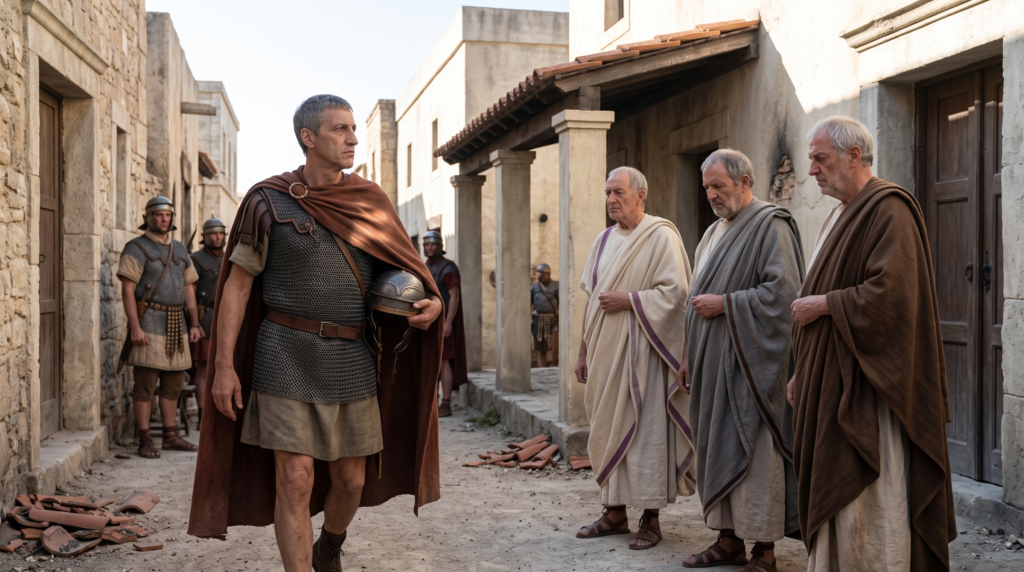
Keith has traced the famous line to its source…
In Shakespeare, Caesar says, “Yond Cassius has a lean and hungry look”[5]. The idea is older. Plutarch has Caesar saying it was not the fat, long-haired men that troubled him but “those pale and lean ones”, meaning Brutus and Cassius[3].
Roger has found a playground brawl…
At school, Cassius reportedly thrashed Faustus, son of Sulla, for bragging about his father's absolute power[3]. Plutarch says Pompey refused to let the quarrel go to court and brought the two boys together instead[3].
A small fact with a very large consequence…
On the morning of the Ides, the plotters gathered at Cassius's house and escorted his son to the forum, where the boy was to take the toga virilis, the toga of manhood[3]. Smith's Dictionary notes the gift came from his father just before the assassination[2]. A coming-of-age and a murder shared one morning.
Keith would like to clarify the ghost…
Cassius followed Epicurus, so when Brutus reported a phantom in his tent, he had a rebuttal ready[3]. Plutarch has him argue that the senses are deceitful, that a tired mind can shape any image, and that it is incredible a spirit would appear in human form[3].
Keith has spotted the problem…
Appian says Cassius, with seventy triremes, surrendered to Caesar on the Hellespont after Pharsalus[1, p. 87]. Smith's Dictionary notes that Suetonius and Dio wrongly name his brother Lucius instead[2]. Even ancient writers could not keep the two Cassii straight.
Roger has found a grievance involving lions…
Among Cassius's complaints against Caesar, Plutarch says, was that Caesar took lions Cassius had provided ahead of his term as aedile, a city magistrate. They had been left at Megara when the city fell[3]. Roger calls that a perfectly proportionate reason.
Meanwhile, in Syria…
Before he plotted anything, Cassius held the Parthians off Syria. After Carrhae he escaped with 500 horsemen[2], and in 51 BC, Smith's Dictionary says, he beat a larger Parthian army in September[2].
The familiar story leaves this out…
Cassius first wanted Antony killed alongside Caesar. Boissier writes that Brutus refused, the other plotters agreed with him, and Cassius gave way[6]. Plutarch reports that sparing Antony was held against Brutus afterwards[3].
File under: surprisingly true…
Cassius died on his birthday, the day of the battle, according to Appian[1, p. 87]. The night before, Plutarch says, he had invited Messala to supper on the following day, which was his birthday[3]. Brutus called him “the last of the Romans”[3].
One for the Ageonauts…
In AD 40, warned by an oracle to beware of a Cassius, Caligula ordered Cassius Longinus, proconsul of Asia, brought to Rome in chains, because he descended from the great republican family[2]. Smith's Dictionary says the oracle meant someone else.
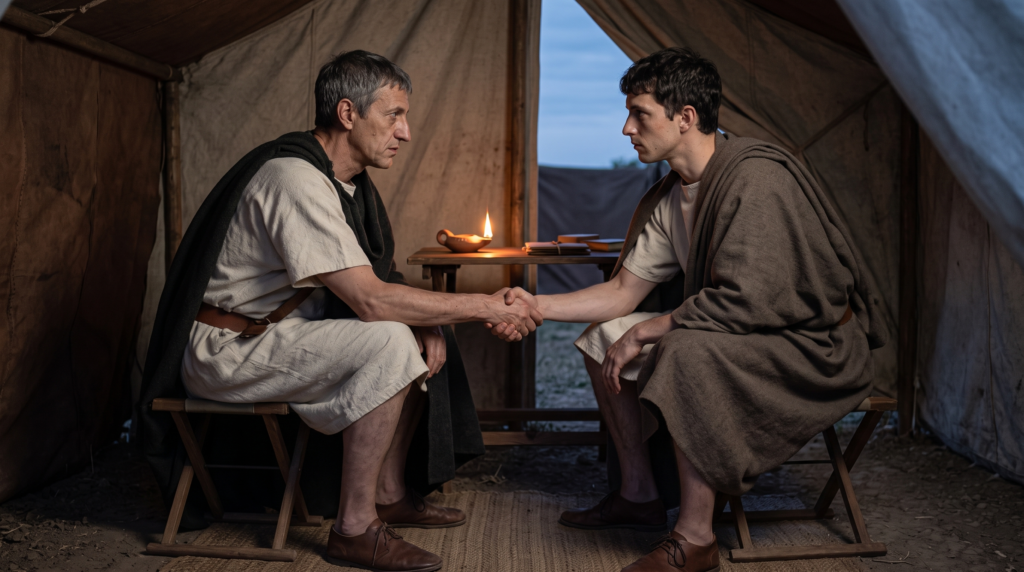
Neither lord nor king, but chastiser and slayer of your lord and king.
Gaius Cassius Longinus
Cassius's reply, as Plutarch records it in his Life of Brutus, to the people of Rhodes who hailed him as their lord and king when he entered their city[3].
Timeline
How it unfolded
c. 86 BC
Birth of Gaius Cassius Longinus
According to World History Encyclopedia, Cassius was born around 86 BC, perhaps on 3 October.[4] Smith's Dictionary calls it quite uncertain whether he was the son of an earlier Cassius Longinus.[2]
53 BC
Cassius survives the defeat at Carrhae
Cassius first appears in history in 53 BC as quaestor to Crassus on his Parthian campaign.[2] After the defeat at Carrhae he escaped to Syria with 500 horsemen and gathered the remains of the Roman army.[2]
September 51 BC
Cassius defeats the Parthians in Syria
In 51 BC the Parthians crossed the Euphrates again with a much larger army. Cassius threw himself into the fortified city of Antioch, then followed the Parthians when they withdrew and won a victory in September.[2]
48 BC
Cassius surrenders his fleet to Caesar
Having left Rome for Greece with Pompey, Cassius later commanded ships on his side.[2] After Pompey's defeat at Pharsalus on 9 August 48 BC, Appian says Cassius met Caesar on the Hellespont, begged pardon and surrendered his fleet.[7][1, p. 87] Smith adds that Caesar forgave him.[2]
44 BC
Cassius made praetor peregrinus
In 44 BC Cassius was praetor peregrinus and was to receive the province of Syria the next year.[2] Smith says he was deeply aggrieved that Brutus, his junior, had been made city praetor in preference to him.[2]
15 March 44 BC
Cassius takes part in the killing of Caesar
Smith records that Cassius took a distinguished part in the killing on 15 March 44 BC and is said to have wounded Caesar in the face.[2] In Plutarch's account he had earlier sounded out Brutus about attending the senate meeting.[3]
Dig Deeper
Copy any prompt below into your favourite AI chat to keep exploring.
Explain how Gaius Cassius, pardoned by Caesar after fighting for Pompey, still became a leader of the plot, and why he needed Brutus's name to make it work.
Debate whether Cassius was defending the Republic or settling personal grudges, given that Caesar had spared him and made him a praetor.
Roleplay Cassius pitching the plot to Brutus, the most respected man in the group, as a project that only works if his famous name is on it.
Further Reading
Where to read more
Gaius Cassius Longinus — Encyclopaedia Britannica
A short, free encyclopaedia entry on the quaestor, tribune and praetor who became the prime mover of the plot against Julius Caesar, from Carrhae to Philippi.
Why look at this: Explains in a few paragraphs how Cassius saved the remnants of Crassus's army at Carrhae in 53 BC, and how Caesar's choice of the junior Brutus as praetor urbanus in 44 BC deeply offended him.
https://www.britannica.com/biography/Gaius-Cassius-Longinus-Roman-quaestorGaius Cassius Longinus: Liberator, Tyrannicide, or Traitor? — Harrison W. Mark, World History Encyclopedia
A free, long-form article on Cassius's career, covering Carrhae and his years in Syria, the conspiracy against Caesar, and the defeat at Philippi.
Why look at this: Weighs why Cassius acted by calling him the brains of the conspiracy and Brutus its heart, and follows his last days at Philippi on 3 October 42 BC, when his freedman Pindarus killed him at his command.
https://www.worldhistory.org/Gaius_Cassius_Longinus/Plutarch, Life of Brutus — Loeb Classical Library, Vol. VI (1918), LacusCurtius, University of Chicago
The full English text of Plutarch's Life of Brutus from the Loeb Classical Library, free online with notes, from Bill Thayer's LacusCurtius site. It is the ancient account of how Cassius recruited Brutus.
Why look at this: Plutarch calls Cassius rather a hater of Caesar on his own private account than a hater of tyranny, tells of him thrashing Sulla's son Faustus at school, and describes his death at Philippi and Brutus calling him the last of the Romans.
https://penelope.uchicago.edu/Thayer/E/Roman/Texts/Plutarch/Lives/Brutus*.htmlRelated
Keep exploring
Can be seen in
Where this shows up

References
Sources
Sources
- BookThe Roman history of Appian of Alexandria; by of Alexandria Appianus and Horace White. Page 87. ↑
- BookDictionary of Greek and Roman biography and mythology by William Smith ↑
- BookPlutarch, Lives ( LCL 11 Volumes In One; Perrin Trans) by Bernadotte Perrin ↑
- Websiteworldhistory.org: Gaius Cassius Longinus ↑
- BookJulius Caesar by William Shakespeare ↑
- BookCicero and his friends; a study of Roman society in the time of Caesar by Gaston Boissier and Adnah David Jones ↑
- BookDictionary of Greek and Roman biography and mythology by William Smith ↑