
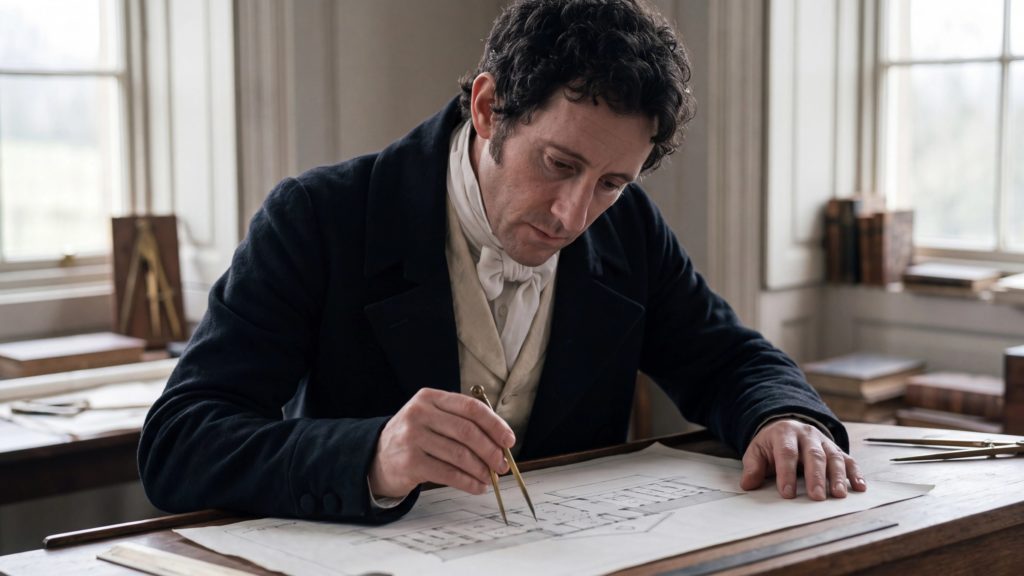
Benjamin Henry Latrobe
Architect and civil engineer
The London-trained architect Thomas Jefferson appointed to give Washington's unfinished Capitol its shape[1, p. 1][2, p. 3] — then the man called back to rebuild it after the British burned it to the ground in 1814[1, p. 32][1, p. 36].
Bio
Who they were
Benjamin Henry Latrobe was a British-born architect and engineer widely regarded as the first professionally trained architect to practise in the United States. Born in a Moravian settlement in Yorkshire and sent as a teenager to a Moravian school in Germany, he later trained under prominent London architects and engineers before emigrating to America in 1795, partly for financial reasons after his first architectural practice in England had failed. He introduced a refined neoclassical, Greek Revival style to American public building, beginning with the Bank of Pennsylvania in 1801, the country's first fully Greek Revival building, a style that soon became closely associated with the young republic's self-image as a new democracy modelled loosely on ancient Athens, and Philadelphia's pioneering waterworks.
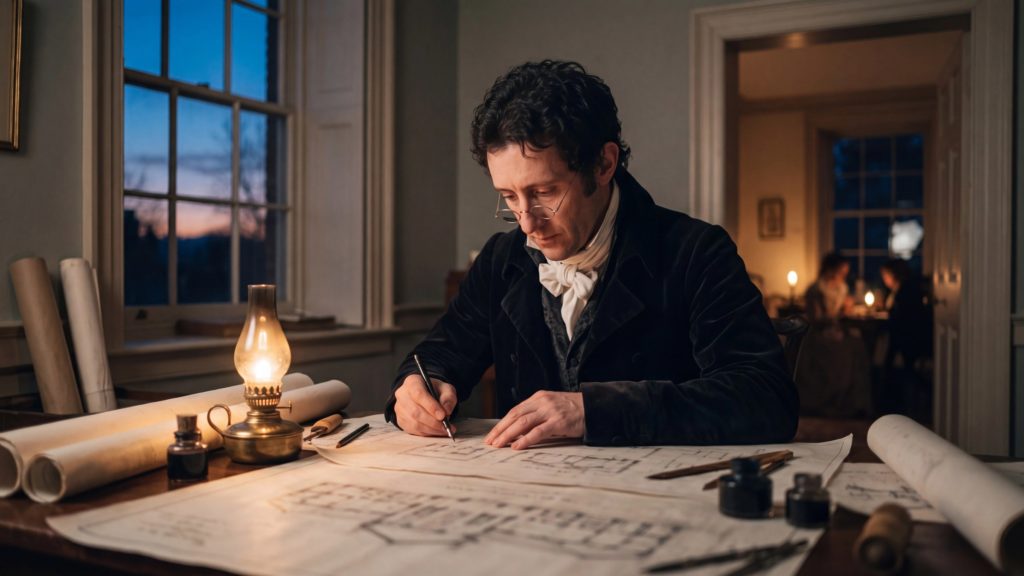
Latrobe trained as an architect in London before crossing the Atlantic to build a career in the young United States[2, p. 3]. He moved between Newcastle, Wilmington, Philadelphia and other towns, working wherever commissions could be found, at a time when there was barely such a thing as a professional American architect[1, p. 18]. Early work included Old West at Dickinson College in 1803, praised for the scale and proportion a formally trained architect and engineer could bring to an American campus building[2, p. 2][2, p. 3]. That reputation reached Thomas Jefferson, who corresponded with Latrobe directly about federal building work in Washington[1, p. 1][1, p. 3].
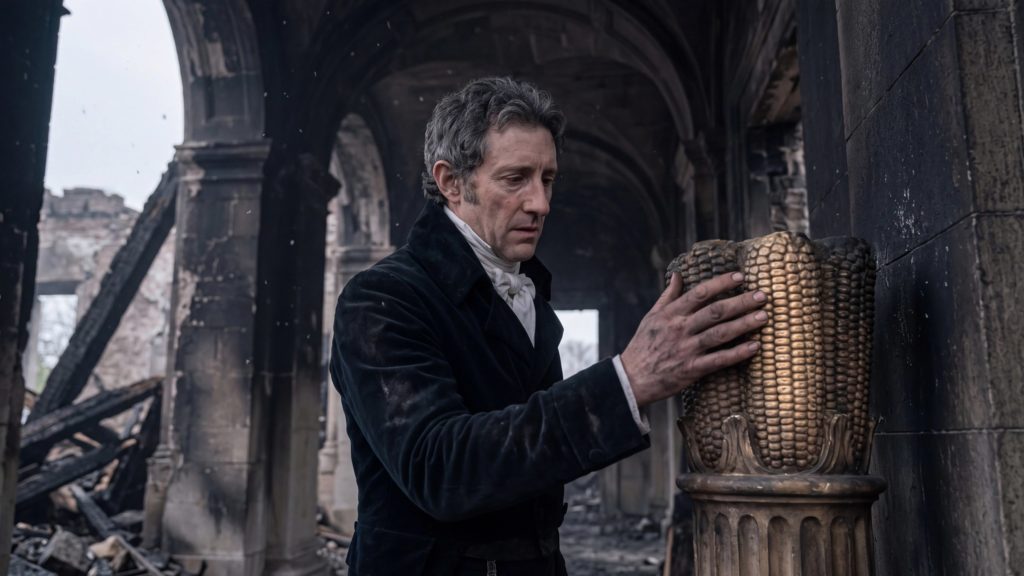
Latrobe was appointed the United States' Surveyor of the Public Buildings, taking charge of construction on the Capitol and the President's House under Jefferson[1, p. 1][1, p. 50]. He designed the Capitol's south wing and worked alongside fellow architect Maximilian Godefroy on Baltimore's Basilica of the Assumption, one of the era's most ambitious American church buildings[3, p. 11]. In 1814, British forces burned the Capitol and the President's House during their occupation of Washington[1, p. 32][1, p. 36]. Latrobe returned to the capital in April 1815 to rebuild what had been destroyed, producing new plans for the House of Representatives and Senate wings out of the ruins[1, p. 36][1, p. 39][1, p. 45].
Latrobe died of yellow fever in New Orleans in September 1820 while overseeing construction of the city's waterworks, just three years after his son Henry died of the same disease while continuing his father's work. He was buried in an unmarked grave in the city's Protestant cemetery.
Latrobe is remembered as one of the first professionally trained architects to practise in the United States, having brought formal London training to a country that had few such specialists[2, p. 3]. His Capitol and President's House work, and the post-1814 rebuilding drawings he produced, remain part of the historical record used to understand the buildings' original design and reconstruction[1, p. 39][1, p. 45]. Two of his sons, John H. B. Latrobe and Benjamin Henry Latrobe Jr., grew up around his federal building projects and went on to their own careers[1, p. 15].
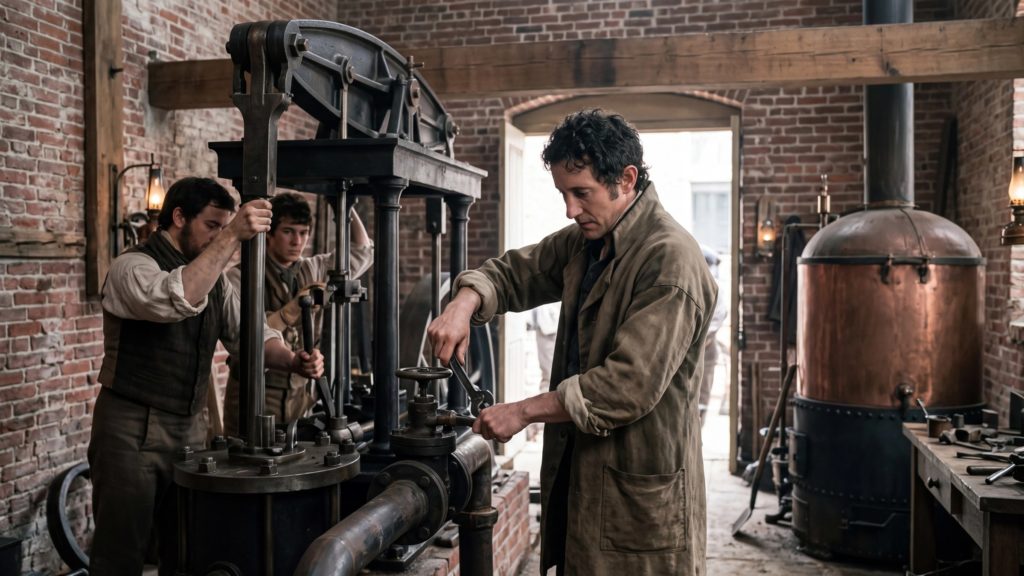
Latrobe was not only a builder but a working scientist: he prepared a formal report to the American Philosophical Society answering a query from a Rotterdam society about improvements made to steam-engine construction in America, a sign of how far his interests ran beyond bricks and columns[4].
Legacy & Reputation
What’s the verdict?
The National Historic Landmark nomination for Old West at Dickinson College credits Latrobe as one of the first professional architects working in the United States, a distinction repeated across accounts of his major federal commissions[2, p. 3]. That reputation rests chiefly on his federal work in Washington and his Baltimore Basilica design alongside Maximilian Godefroy, rather than on any single defining structure[3, p. 11].
Myth-buster
Think you know this one?
The Capitol seen in Washington today can look as though it has stood unchanged since 1800, but the building was actually burned out by British troops during their 1814 occupation of the city, and much of its interior had to be substantially rebuilt afterward under Latrobe’s direction[1, p. 32][1, p. 33][1, p. 36].
Quick Facts
The essentials
Quick Facts
Roger has a theory…
Latrobe trained as an architect in London before he ever set foot in America, at a time when there was barely such a thing as a professional American architect — Roger's theory is that the Capitol might look very different if he'd stayed home.[2, p. 3]
Keith checked the sources…
Thomas Jefferson personally appointed Latrobe Surveyor of the Public Buildings in 1803, putting him in charge of finishing the Capitol and the President's House. Keith can confirm the correspondence survives.[1, p. 1]
History gets strange here…
In 1814, British troops burned the Capitol and the President's House to the ground during the War of 1812. One British officer reportedly called it “a pity to burn anything so beautiful” on his way out.[1, p. 32][1, p. 15]
Roger insists this matters…
Latrobe came back to Washington in April 1815 to rebuild what the fire had destroyed, redrawing the House and Senate wings from the ruins up. Roger insists this is the real comeback story of early Washington.[1, p. 36][1, p. 39]
Keith found the footnote…
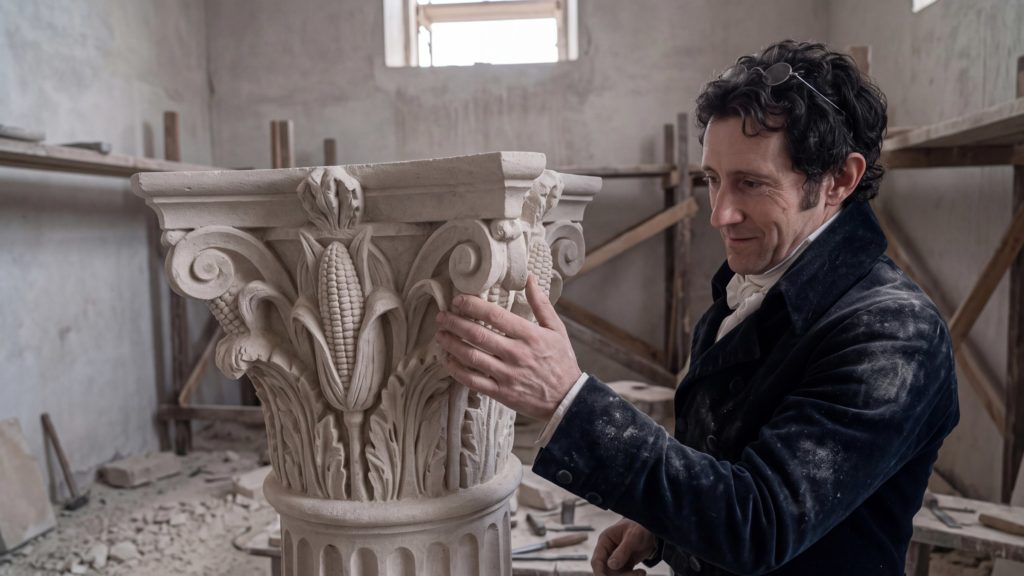
Rather than copying classical European capitals, Latrobe carved a set of Capitol columns with American tobacco-plant leaves instead of acanthus. Keith found the engraving still catalogued in the architectural record.[1, p. 48][1, p. 49]
One for the Ageonauts…
Latrobe also designed Baltimore's Basilica of the Assumption, working alongside fellow architect Maximilian Godefroy, a French-trained designer he counted as both colleague and friend.[3, p. 11]
Roger would like you to know…
Before the Capitol job, Latrobe designed Old West at Dickinson College in 1803, bringing a formally trained architect's sense of scale and proportion to an American college campus.[2, p. 2][2, p. 3]
Keith has spotted the problem…
Latrobe wasn't only a builder. He also submitted a formal scientific report to the American Philosophical Society answering a Rotterdam society's question about how far steam-engine design had advanced in America. Keith says that's a lot of range for one career.[4]
A small fact with a very large consequence…
Latrobe moved constantly for work, living in Newcastle, Wilmington, Philadelphia and other towns wherever a commission could be found, long before he settled into a single “architect of the Capitol” role.[1, p. 18]
The past has entered the chat…
Two of Latrobe's own sons, John H. B. Latrobe and Benjamin Henry Latrobe Jr., grew up around his federal building projects and carried different pieces of his professional world forward into their own careers.[1, p. 15]
New Orleans has at first sight a very imposing and handsome appearance, beyond any other city in the United States in which I have yet been.
Latrobe's journal, 9 January 1819
Recording his first impression of New Orleans, where he built the city's waterworks.
Timeline
How it unfolded
1 May 1764
Birth of Benjamin Henry Latrobe
The future architect of the US Capitol was born at the Moravian settlement of Fulneck, near Leeds, in Yorkshire, England.[5] The Heald/National Gallery biographical database gives the same birth date.[6]
March 1796
Latrobe Arrives in Virginia
After a roughly four-month Atlantic crossing, Latrobe landed at Norfolk, Virginia, in mid-March 1796 to begin his American career.[5] The House Commission's 1904 Capitol history likewise says he was born and trained in England and came to America in 1796.[7]
6 March 1803
Jefferson Offers Latrobe the Public Buildings Post
In a letter of this date Jefferson offered Latrobe the revived post of surveyor of the public buildings, to begin by 1 April, and Latrobe accepted and took charge of the Capitol work immediately.[1, p. 1][1, p. 3]
1807
Latrobe Draws Porticoes for the President's House
Latrobe drew north and south porticoes for the President's House in 1807, and they were built only during the reconstruction after the 1814 burning, under James Hoban's supervision.[8, p. 4]
26 October 1807
House of Representatives Meets in Latrobe's New Chamber
The House first met in its new Capitol chamber, completed under Latrobe, though he later complained that Jefferson had ordered Corinthian columns and plate-glass ceiling lights against his judgment.[1, p. 17]
24 August 1814
British Burn the Capitol and White House
British troops captured Washington and burned the Capitol and the White House, piling the Senate and House chambers and the wooden corridor with inflammable material and setting a great blaze.[1, p. 32] Those chambers were among the interiors Latrobe had designed.[7]
20 April 1815
Latrobe Returns to Rebuild the Capitol
Called back by the new commissioners after the fire, Latrobe arrived in Washington and was appointed to undertake the repairs of the Capitol.[1, p. 36]
November 1817
Latrobe Resigns as Architect of the Capitol
After the appointment of Peter Lenox over Latrobe's protest, he resigned the post, and Commissioner Samuel Lane accepted his resignation on 24 November 1817.[1, p. 50]
Dig Deeper
Copy any prompt below into your favourite AI chat to keep exploring.
Tell me what Benjamin Latrobe built and rebuilt at the US Capitol, including after it burned in 1814.
Should a burned national symbol be rebuilt exactly as it was, or redesigned better?
Pitch me Latrobe's job as America's first professional architect like a renovation show where the house is a government.
Further Reading
Where to read more
Benjamin Henry Latrobe, 2nd Architect of the Capitol
The U.S. Architect of the Capitol's official biography of Latrobe, covering his appointment under Jefferson, his major Capitol interiors, and his work rebuilding the building after the War of 1812.
Why look at this: A fast, authoritative timeline straight from the institution whose building he designed — the right first stop before anything else.
https://www.aoc.gov/about-us/history/architects-of-the-capitol/benjamin-henry-latrobeArchitectural Record's review of “Building America: The Life of Benjamin Henry Latrobe”
A 2020 review of historian Jean H. Baker's biography of Latrobe, examining his talent, his combative temperament, and his lifelong financial struggles.
Why look at this: Goes past the buildings into the man himself, including a 1817 confrontation with a Capitol commissioner and his eventual death of yellow fever in New Orleans — life details the Age Team's own library could not confirm.
https://www.architecturalrecord.com/articles/14623-review-of-building-america-the-life-of-benjamin-henry-latrobeBenjamin Henry Latrobe Papers, 1803–1817 (Library of Congress)
The Library of Congress's primary-source collection of Latrobe's letters to John Lenthall, clerk of works at the Capitol, along with notes from Thomas Jefferson concerning the building's construction.
Why look at this: Real correspondence from the man mid-project, giving direct access to the working relationship between Latrobe, Lenthall and Jefferson behind the Capitol's construction.
https://www.loc.gov/item/mm79048330/Related
Keep exploring

Can be seen in
Where this shows up
References
Sources
Sources
- WebsiteChapter IV: The Work of Benjamin Henry Latrobe, Architect (H. Doc. 108-240, U.S. Government Publishing Office). Pages 1, 3, 15, 17, 18, 32, 33, 36, 39, 45, 48, 49, 50. ↑
- WebsiteNational Historic Landmark Nomination: Old West, Dickinson College (designed by B.H. Latrobe, 1803). Pages 2, 3. ↑
- WebsiteNational Historic Landmark Nomination: Basilica of the National Shrine of the Assumption of the Blessed Virgin Mary (Baltimore…. Page 11. ↑
- BookFirst Report of Benjamin Henry Latrobe, to the American Philosophical Society, Held at Philadelphia; In Answer to the… by Benjamin Henry Latrobe ↑
- Websiteen.wikipedia.org: Benjamin Henry Latrobe ↑
- Websiteheald.nga.gov: Benjamin Henry Latrobe ↑
- BookDocumentary history of the construction and development of the United States Capitol building and grounds .. by United States. Congress. House. Commission on Construction of House Office Building ↑
- WebsiteClassroom Resource Packet: Designing the White House 1792-1830. Page 4. ↑
- Website64parishes.org: Benjamin latrobe ↑