
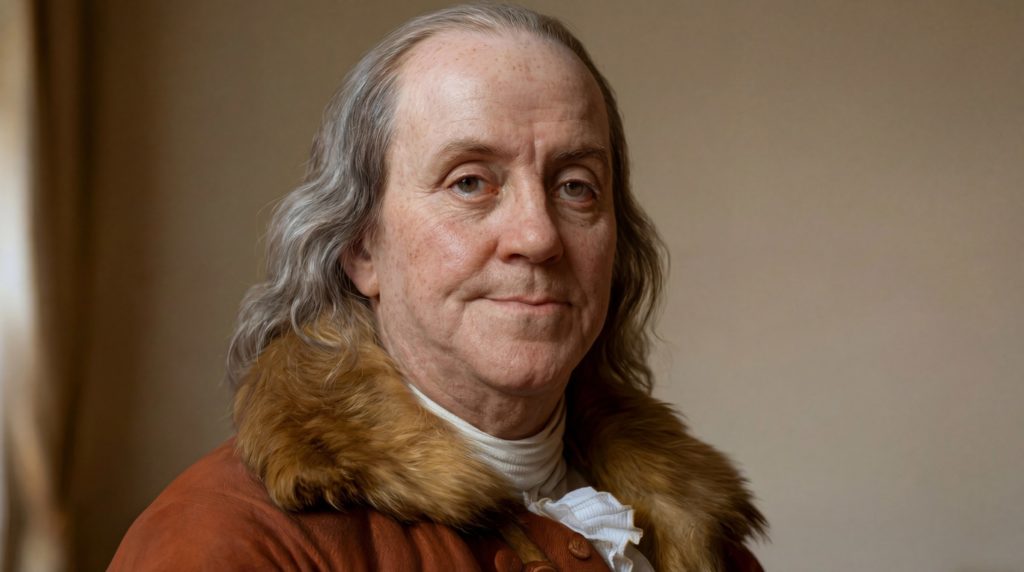
Benjamin Franklin
Founding Father, printer, scientist, and diplomat
The printer's apprentice who taught himself science well enough to tame lightning, then spent years in Paris talking France into bankrolling someone else's revolution.[1][2, p. 1][3, p. 175]
Bio
Who they were
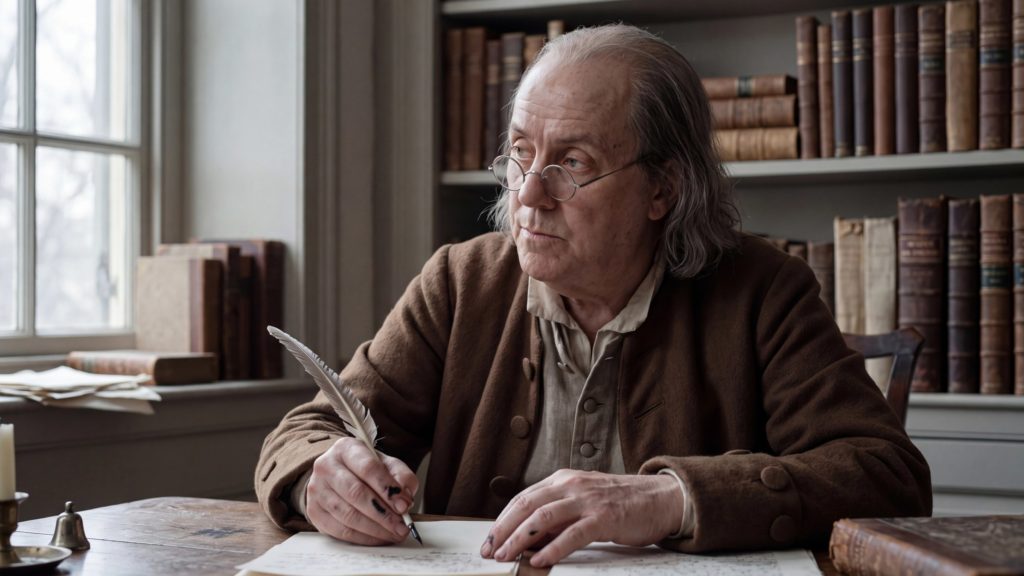
Benjamin Franklin was born on 6 January 1706 in Boston, Massachusetts[4], the son of Josiah Franklin, a tallow chandler who made candles and soap for a living[1]. At twelve, he was apprenticed to his older brother James, a printer, to learn the trade[1]. The print shop put him in daily contact with books and the physical craft of setting type, both of which shaped the rest of his life. He later migrated from Boston to Philadelphia[5], the city that became the base for his career as a printer.
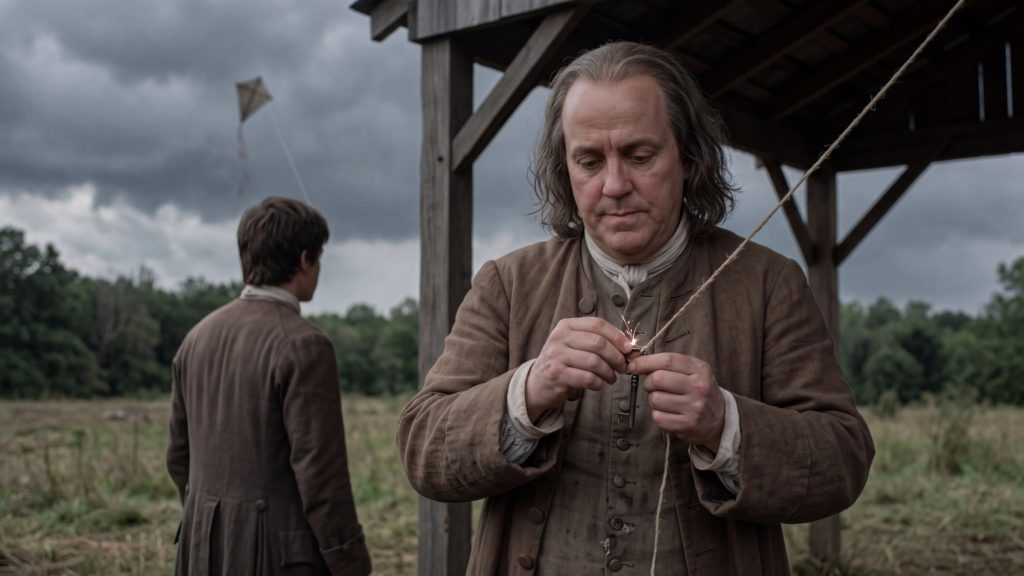
In Philadelphia, Franklin built a career as a printer, eventually taking over the Pennsylvania Gazette and making it his own after 1729[6, p. 225]. He also founded the Junto, a discussion club of tradesmen and thinkers that met on Friday evenings to debate ideas and improve themselves and their city[7, p. 202]. Success as a printer gave him the independence to pursue science, and by the early 1750s he was known on both sides of the Atlantic for his experiments with electricity, including his famous kite experiment[2, p. 1]. Public office followed: the colonial postal service made him Deputy Postmaster General, putting him in charge of mail across the American colonies[8].
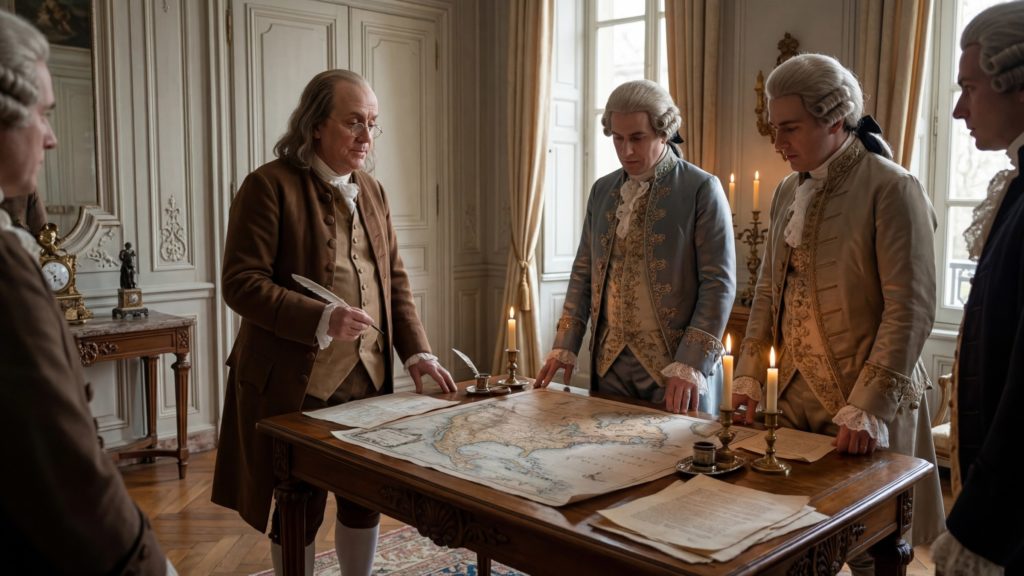
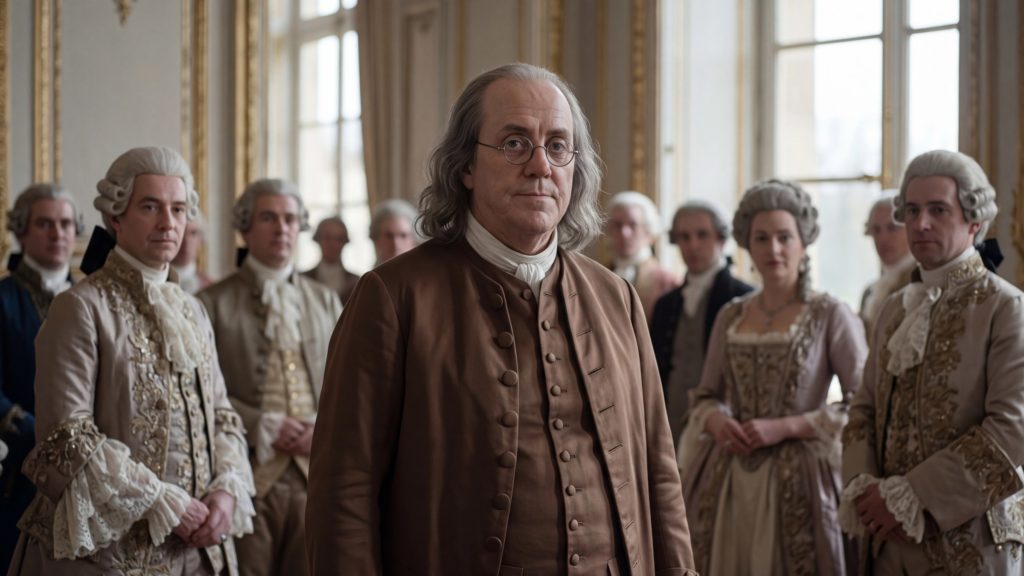
Franklin's defining role came in the American Revolution. He signed the Declaration of Independence in 1776[6, p. 225], then crossed the Atlantic as America's representative in Paris, working as Minister Plenipotentiary to win France's support for the fight against Britain[9]. In 1778, France agreed to a formal Treaty of Alliance with the fledgling United States, in large part through Franklin's diplomacy[10, p. 139]. He later helped negotiate the peace that ended the war. By tradition, Franklin is remembered as the only person to sign the Declaration of Independence, the Treaty of Alliance with France, and the peace treaty that followed it[11, p. 89].
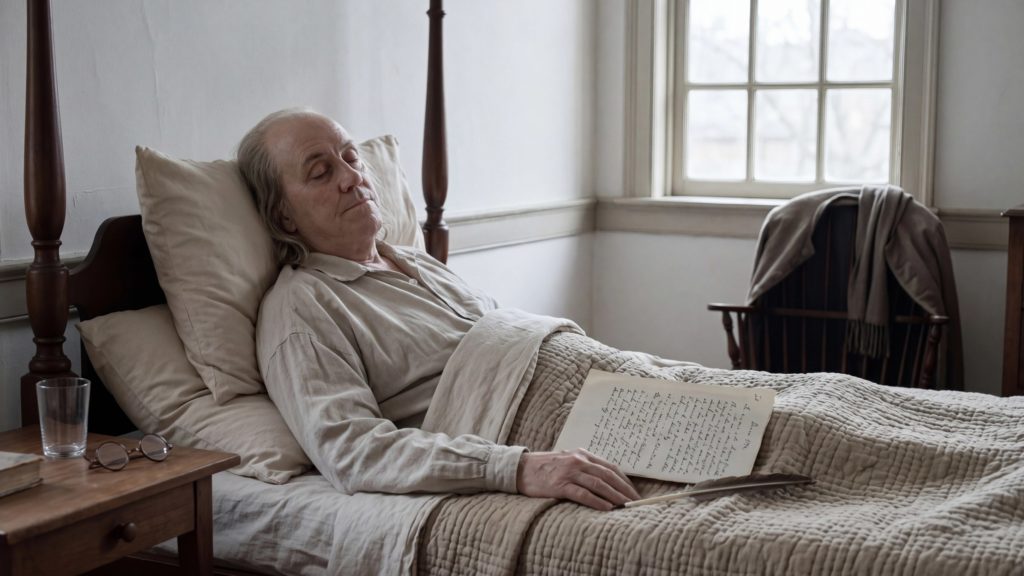
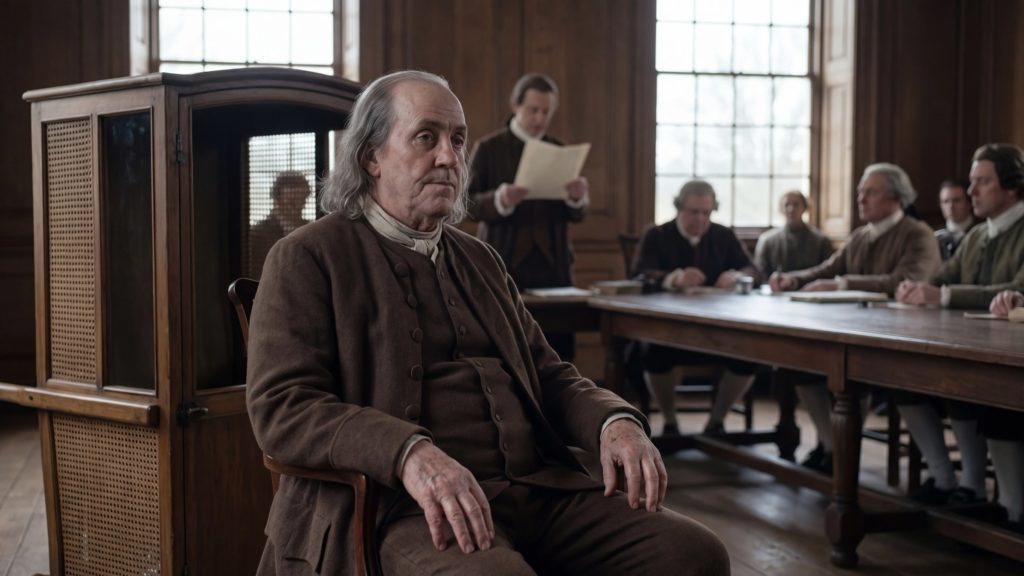
Franklin's public career continued almost to the end of his life: in 1787, in his eighties, he served as a delegate to the Constitutional Convention in Philadelphia[12, p. 9]. He died in Philadelphia on 17 April 1790[13]. His funeral drew a large procession through the city, led by the clergy of Philadelphia[14, p. 5], a public send-off that reflected how central he had become to American public life.
Franklin's influence outlasted his lifetime in both practical and symbolic ways. The civic institutions he helped build in Philadelphia, starting with the Junto's library project, became models copied elsewhere in the colonies[7, p. 202]. His diplomatic work in France helped secure the outside support the Revolution needed to succeed, cementing his reputation as one of the new nation's most effective negotiators[15, p. 417]. Later generations came to treat him as a model of the self-made American: a tradesman's son who became a scientist, publisher, and statesman without ever holding the presidency itself.
One human-scale irony sits at the center of Franklin's story: his son William, whom he had helped get appointed royal governor of New Jersey[16], stayed loyal to the British Crown throughout the Revolution, putting father and son on opposite sides of the war Franklin had helped bring about[17, p. 106].
Legacy & Reputation
What’s the verdict?
Franklin is remembered today less as a Founding Father in the narrow political sense and more as the era’s model self-made man — printer, scientist, and diplomat all at once. Biographer William Cabell Bruce, in his early-twentieth-century study drawn from Franklin’s own papers, presented him as a figure defined as much by private correspondence and personal relationships as by public achievement[18]. That dual reputation, part statesman and part polymath, has persisted.
Myth-buster
Think you know this one?
Myth: Franklin was struck by lightning while flying his famous kite. In fact, historians examining the original 1752 accounts have raised real doubts about exactly how, and in what form, the kite experiment happened[19, p. 1] — and a direct lightning strike would very likely have killed him outright.
Quick Facts
The essentials
Quick Facts
Roger has spotted a secret identity…
At just sixteen, Franklin invented a fictional persona, the widow 'Silence Dogood', and slipped her opinion pieces under the door of his brother's newspaper at night[21, p. 308]. His brother published them for months without realising his own apprentice was the author.
Keith checked the sources…
Franklin's 1754 cartoon of a snake cut into pieces, captioned 'Join, or Die', is often credited as the first political cartoon published in America[4, p. 153]. Each segment stood for a colony, and the message was blunt: unite, or be picked off separately.
File under: surprisingly true…
Franklin really is credited as the inventor of bifocal spectacles, designed so he could read and see at a distance through a single pair of glasses[22, p. 80]. A practical fix for an ageing diplomat who hated switching glasses mid-conversation.
Keith would like to clarify…
Franklin didn't simply stumble onto the lightning rod after his famous kite experiment. Accounts of that episode note he had already suggested the possibility of a lightning rod beforehand[19, p. 6], so the experiment tested a theory rather than sparking it.
Roger insists this matters…
When Franklin designed his famous heat-efficient stove, he was offered a patent that would have made him a tidy fortune — and turned it down[17, p. 347]. As he put it, since he had freely benefited from others' inventions, his own should be shared 'freely and generously' too[23, p. 70].
One for the Ageonauts…
Long before he was a statesman, Franklin was a serious swimmer, strong enough that a London acquaintance once tried to hire him as a swimming teacher[24]. He later called swimming one of the healthiest forms of exercise there is[25].
Keith found the footnote…
Franklin didn't just read books, he helped invent the idea of sharing them: around 1731 he set up what became the Library Company of Philadelphia, one of colonial America's first subscription libraries[26]. Members pooled money and shared the shelves.
Roger has entered the historical rabbit hole…
In Paris, Franklin's plain fur cap and spectacles became an actual fashion sensation: engravers sold prints of the 'fur cap portrait', and the French treated his understated look as high style[22, p. 7]. Diplomacy, it turns out, has always had a wardrobe department.
The past has entered the chat…
Franklin holds a strange historical record: tradition credits him as the only person to sign all three of the young United States' founding documents — the Declaration of Independence, the Treaty of Alliance with France, and the Treaty of Paris that ended the war[11, p. 89].
A small fact with a very large consequence…
Long before he was America's top diplomat, Franklin had another title: Deputy Postmaster General, responsible for mail across the American colonies for many years[8]. A less glamorous founding job, but a genuinely useful one.
Those who would give up essential Liberty, to purchase a little temporary Safety, deserve neither Liberty nor Safety.
Pennsylvania Assembly reply to the Governor, 1755 (attributed to Franklin)
On the dangers of trading liberty for security, 1755.
Timeline
How it unfolded
17 January 1706
Birth of Benjamin Franklin
Benjamin Franklin was born in Boston, the youngest son of the candlemaker Josiah Franklin.[27, p. 75][6, p. 225] Boston's records give the date as 6 January in the old-style calendar, which is 17 January by the modern one.[4]
October 1723
Franklin Arrives in Philadelphia
Apprenticed to his brother James at twelve, Franklin quarrelled with him, ran away, and arrived in Philadelphia on a Sunday morning in October 1723, where he soon found work as a printer.[28][29, p. 166]
1732
Publication of Poor Richard's Almanack
In his own words, Franklin first published his almanac in 1732 under the name of Richard Saunders and kept it up for about twenty-five years, finding it in such demand that it brought considerable profit.[30, p. 102]
c. June 1752
Franklin's Kite Experiment
At forty-six Franklin set out to test for himself whether lightning and electricity were one, making a kite for the purpose.[31] Fisher dates the experiment to June 1752, though a Tufts physics history notes some controversy over whether it was June or later that summer.[17, p. 347][32, p. 5]
11 June 1776
Franklin Joins the Declaration Committee
Franklin was one of the five men Congress named to draft a formal Declaration of Independence, with Adams, Jefferson, Roger Sherman and Robert R. Livingston.[33] On 2 August 1776 he signed the Declaration he had helped to draft two months before.[22, p. 81]
6 February 1778
Franklin Secures the French Alliance
Congress appointed Franklin commissioner to the court of France to negotiate a treaty of alliance, and he sailed in October 1776.[34, p. 209] France made its treaty of alliance with America and recognised its independence on 6 February 1778.[31]
3 September 1783
Franklin Signs the Treaty of Paris
Franklin signed the definitive treaty of peace with Great Britain at Paris alongside John Adams and John Jay, having signed the preliminary articles on 30 November 1782.[35][36, p. 6]
17 September 1787
Franklin and the Constitution
On 17 September 1787, Madison's notes of the Federal Convention show Franklin rising with a written speech, read for him by James Wilson, saying he did not at present approve several parts of the Constitution but was not sure he never would.[37, p. 647] The Convention's journal records the Constitution as unanimously agreed to that day.[37, p. 647]
17 April 1790
Death of Benjamin Franklin
Franklin died in Philadelphia in the eighty-fifth year of his age, and his remains were interred beside those of his wife in the cemetery of Christ Church.[13]
Dig Deeper
Copy any prompt below into your favourite AI chat to keep exploring.
Tell me how Franklin persuaded France to sign the 1778 Treaty of Alliance, and why it mattered so much.
Are revolutions won more by soldiers or by diplomats? Use Franklin in Paris as your case.
Roleplay Franklin persuading a cautious French minister that backing the United States against Britain is a smart investment.
Further Reading
Where to read more
Benjamin Franklin — Britannica
A concise, regularly updated encyclopedia biography covering Franklin's life from Boston printer's apprentice to elder statesman of the American Revolution.
Why look at this: Gives a fast, reliable rundown of exactly the mission the episode name-checks: how Franklin's years in Paris helped turn French money, allies, and sympathy into America's decisive wartime advantage.
https://www.britannica.com/biography/Benjamin-FranklinBenjamin Franklin: In His Own Words — Library of Congress exhibition
A free online exhibition built from more than 60 original documents, letters, and objects drawn from the Library of Congress's 8,000-plus-item Franklin collection, organised into sections including the Continental Congress and the Treaty of Paris.
Why look at this: Its dedicated Treaty of Paris and Continental Congress sections expand on exactly the diplomatic mission and peace negotiation Franklin was sent to Europe for, using the actual period documents rather than a secondhand summary.
https://www.loc.gov/exhibits/franklin/franklin-overview.htmlThe Papers of Benjamin Franklin — Founders Online (National Archives)
The complete, searchable digitised edition of Franklin's collected letters and papers, published as part of Founders Online, a joint venture of the National Archives and the University of Virginia Press.
Why look at this: Lets a reader search Franklin's own letters written from Paris in and after 1778 while negotiating French support for the Revolution, in his own words, rather than a modern paraphrase of the mission.
https://founders.archives.gov/about/FranklinRelated
Keep exploring

Can be seen in
Where this shows up

References
Sources
Sources
- BookFrom Boyhood to Manhood: Life of Benjamin Franklin by William Makepeace Thayer ↑
- WebsiteFranklin Kite Letter (Franklin and Electrostatics). Page 1. ↑
- BookThe life of Benjamin Franklin : containing the Autobiography, with notes and a continuation by Benjamin Franklin and others. Page 175. ↑
- BookBenjamin Franklin, printer by John Clyde Oswald. Page 153. ↑
- BookCalendar of the papers of Benjamin Franklin in the library of the American Philosophical Society by American Philosophical Society. Library and I. Minis Hays ↑
- BookBenjamin Franklin : $b Representative selections, with introduction, bibliograpy, and notes by Benjamin Franklin. Page 225. ↑
- BookBenjamin Franklin and the University of Pennsylvania by Francis Newton Thorpe. Page 202. ↑
- BookThe many-sided Franklin by Paul Leicester Ford ↑
- BookMemorial of the inauguration of the statue of Franklin by Nathaniel Bradstreet Shurtleff and Boston. City Council ↑
- BookThe autobiography of Benjamin Franklin : with a continuation drawn from his letters : edited for use in… by Benjamin Franklin. Page 139. ↑
- BookFranklin's Autobiography: (Eclectic English Classics) by Benjamin Franklin. Page 89. ↑
- WebsiteBenjamin Franklin, Letters from Paris on the Peace Process. Page 9. ↑
- BookThe autobiography of Benjamin Franklin, Poor Richard's almanac and other papers by Benjamin Franklin, Henry Ketcham and Benjamin Franklin ↑
- BookThe writings of Benjamin Franklin; by Benjamin Franklin and Albert Henry Smyth. Page 5. ↑
- BookBenjamin Franklin: his autobiography; with a narrative of his public life and services by Benjamin Franklin and H. Hastings Weld. Page 417. ↑
- BookBenjamin Franklin: A Picture of the Struggles of Our Infant Nation One Hundred Years Ago by John S. C. Abbott ↑
- BookThe True Benjamin Franklin by Sydney George Fisher. Pages 106, 347. ↑
- BookBenjamin Franklin, Self-Revealed, Volume 1 (of 2): A Biographical and Critical Study Based Mainly on his own Writings by Wiliam Cabell Bruce ↑
- WebsiteDid Benjamin Franklin Fly His Electrical Kite...?. Pages 1, 6. ↑
- Websitearchives.gov: Franklin ↑
- BookAutobiography of Benjamin Franklin by Benjamin Franklin. Page 308. ↑
- BookFranklin bi-centenial : number January 20, 1923 : the American printer, the business paper of the American printing…. Pages 7, 80, 81. ↑
- BookThe autobiography of Benjamin Franklin and a sketch of Franklin's life from the point where the autobiography ends by Benjamin Franklin. Page 70. ↑
- BookBenjamin Franklin, a Biography by George Canning Hill ↑
- BookBenjamin Franklin, self-revealed; by William Cabell Bruce ↑
- BookThe autobiography and essays of Dr. Benjamin Franklin by Benjamin Franklin ↑
- BookThe autobiography of Benjamin Franklin. (Complete.) Prepared for use in schools. With introduction, notes, and a supplementary sketch… by Benjamin Franklin and J. W. Abernethy. Page 75. ↑
- BookThe collection of Franklin imprints in the Museum of the Curtis Publishing Company; with a short-title check list… by Curtis Publishing Company and William James Campbell ↑
- BookThe Autobiography Of Benjamin Franklin Pg 148 by Benjamin Franklin. Page 166. ↑
- BookBenjamin Franklin : Selections from autobiography, Poor Richard's almanac, Advice to a young tradesman, The whistle, Necessary hints… by Benjamin Franklin and Bliss Perry. Page 102. ↑
- BookFamous American Statesmen by Sarah Knowles Bolton ↑
- WebsiteWhy Did Benjamin Franklin Fly the Kite?. Page 5. ↑
- BookAmerican progress: or, The great events of the greatest century, including also life delineations of our most noted… by R. M. Devens ↑
- BookBiographical sketches of the signers of the Declaration of American Independence ... by Benson John Lossing. Page 209. ↑
- BookDefinitive treaty of peace and friendship between His Britannic Majesty and the United States of America : signed… by etc. United States Great Britain. Treaties and etc. Great Britain United States. Treaties ↑
- BookThe autobiography of Benjamin Franklin; by Benjamin Franklin and Albert Henry Smyth. Page 6. ↑
- WebsiteThe Records of the Federal Convention of 1787, Volume II (Library of Congress). Page 647. ↑