
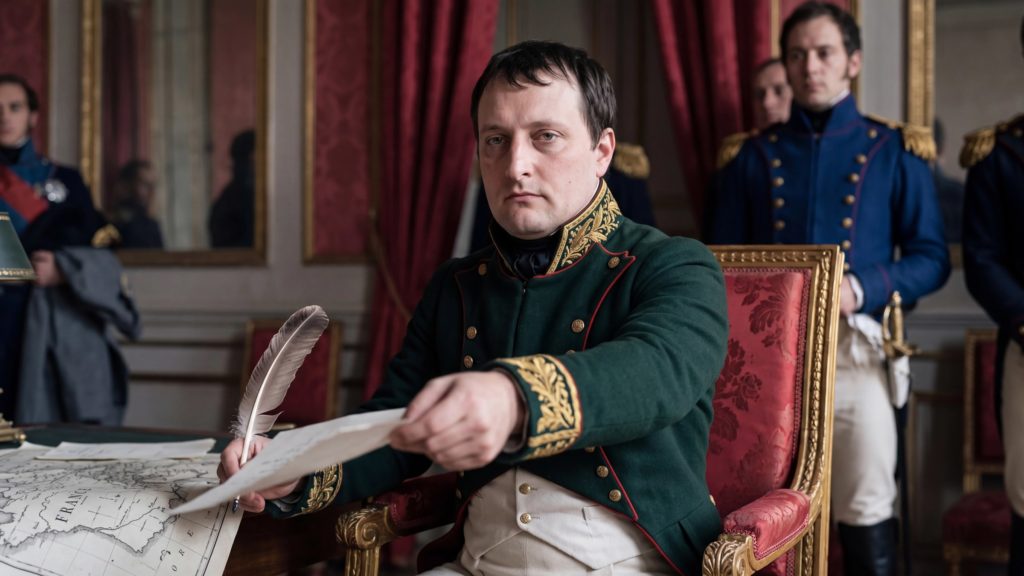
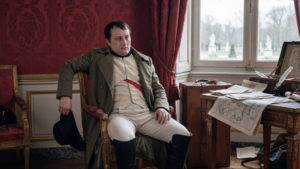
AI reconstruction based on Paul Delaroche's "Napoleon I at Fontainebleau, 31 March 1814," from the perspective of an aide who has come in with despatches and stopped short just inside the doorway of the cabinet.
In the spring of 1814 the man who had ruled an empire signed it away at Fontainebleau - and was handed, instead, a small island off the Italian coast[1].
What Happened
The story
By late March 1814, Napoleon's position had collapsed. Allied armies entered Paris in triumph on 31 March[2], while Napoleon and his shrinking army were still at Fontainebleau, unaware the capital had already surrendered[3]. The Senate, under Talleyrand's provisional government, moved swiftly to depose him[4]. Napoleon wanted to march on the capital and fight; his marshals, exhausted after years of campaigning, refused to follow him further[5]. Without his army's support, his position was finished.
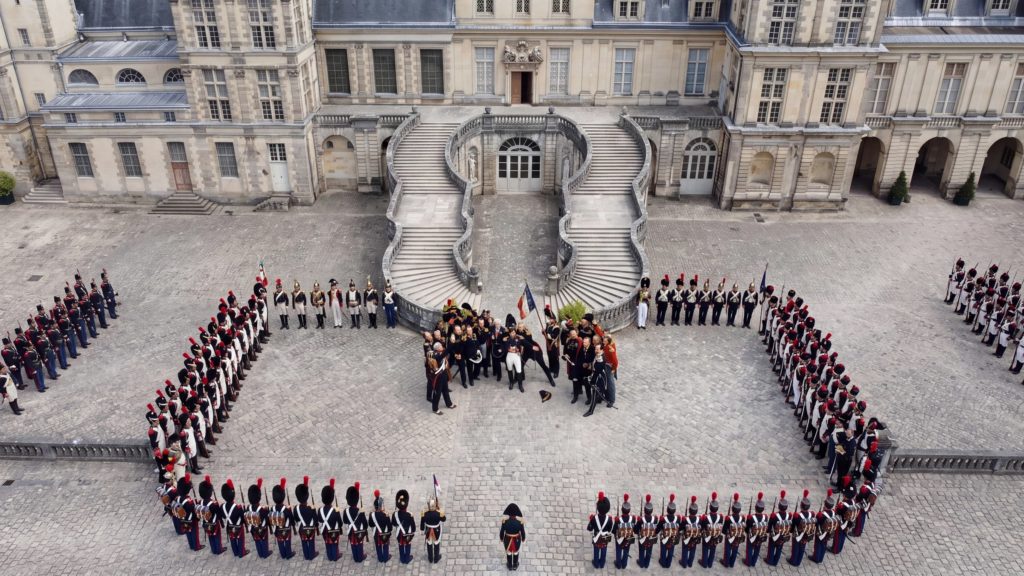
On 6 April Napoleon abdicated unconditionally, renouncing the throne for himself and his heirs[6, p. 149]. In the days around the negotiations he reportedly attempted to poison himself at Fontainebleau[7, p. 15], before the Treaty of Fontainebleau was ratified, granting him sovereignty over the small island of Elba, the title of Emperor, and an annual allowance[8][9, p. 274]. On 20 April he bid farewell to his Old Guard in the courtyard at Fontainebleau, embracing their eagle standard and kissing it three times before departing south[10].
Escorted through a wary France, Napoleon reached the port of Frejus, where he boarded the British frigate HMS Undaunted for the voyage to his new domain[11, p. 135]. He reached Elba on 4 May 1814[1], taking up residence at Portoferraio, the island's small capital[2]. Within days he was touring the island's iron mines, its principal source of wealth[7, p. 15], and organising a household of a dozen officials and ten domestic servants[2].
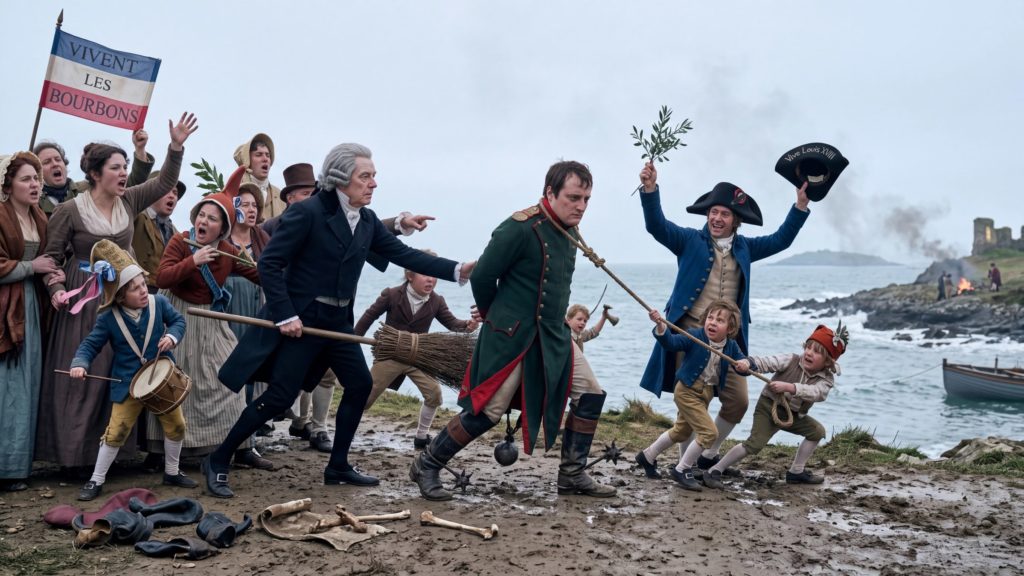
In Paris, the Senate installed Louis XVIII on the restored Bourbon throne[12]. On Elba, Napoleon set about administering his miniature state, reorganising the roads and municipal affairs of Portoferraio and touring his territory with the energy of a man still running an empire[2]. He kept a small honour guard and household staff around him[2], but his promised allowance from France went largely unpaid, and he continued to watch events on the mainland closely.
Quick Facts
The essentials
Quick Facts
Napoleon Bonaparte and the imperial court
Leadership
Napoleon Bonaparte, Emperor of the French[13]
Forces
Napoleon Bonaparte; his marshals, who refused to continue fighting[5]; the Old Guard who escorted him into exile[10]
Objective
To retain the throne, or failing that, to secure the best possible personal settlement
The Allied coalition and the Bourbon restoration
Leadership
Talleyrand[12]; Louis XVIII[11, p. 135]
Forces
The Senate under Talleyrand's provisional government[4]; the allied powers occupying Paris[2]; Louis XVIII and the returning Bourbons[12]
Objective
To remove Napoleon permanently from power and restore the Bourbon monarchy
The Bigger Picture
The final collapse of Napoleon's empire in the War of the Sixth Coalition, after allied armies entered Paris in triumph on 31 March 1814[2].
How It Came To This
The fall of Paris to the allied armies while Napoleon's own forces were still at Fontainebleau[3][2]; the refusal of his marshals to continue fighting[5]; and the Senate's move, under Talleyrand's provisional government, to depose him and recall the Bourbons[4].
What Actually Happened
The settlement that ended Napoleon's first reign was unusually generous for a defeated emperor, and its own generosity was the flaw. Wary of making a martyr of him and eager to avoid further war, the allies let Napoleon keep the imperial title and granted him personal sovereignty over Elba rather than simple imprisonment[8][9, p. 274]. That compromise placed a still-popular former emperor, with his own small guard and administration, on an island a short sail from the French coast he had just lost. Napoleon's own state of mind in these weeks was volatile: contemporaries recorded his fear of losing his reason during the negotiations[8], and the reported attempt to poison himself suggests a man closer to collapse than the composed administrator who governed Elba soon afterward[7, p. 15]. Meanwhile, Talleyrand's provisional government, which had engineered the Senate's vote against him, was already assembling a restoration many French people had little enthusiasm for. The pieces of Napoleon's eventual return were in place before he ever set foot on Elba.
Why It Still Matters
The Fontainebleau settlement left Napoleon a sovereign, an army, and a coastline within reach of France[8] - conditions the unpopular, unpaid Bourbon restoration[14, p. 51] failed to make secure. Within a year, that discontent combined with Napoleon's own unpaid allowance[15] to produce his return and the Hundred Days.
Quick Facts
Roger would like you to know...
Napoleon didn't quietly slip away to exile - he was escorted there by the Royal Navy itself. The frigate that carried him to Elba, HMS Undaunted, flew the flag of the very navy he'd spent a decade trying to beat[11, p. 135].
Keith checked the sources...
The composed administrator who reformed Elba's roads within days wasn't quite the whole picture. In the weeks before his abdication, contemporaries recorded that Napoleon attempted to poison himself at Fontainebleau[7, p. 15].
One for the Ageonauts...
Elba's real wealth wasn't glamour, it was iron. The island's mines were its greatest economic asset, and Napoleon toured them personally not long after he arrived to take charge of his new, much smaller domain[7, p. 15].
History gets strange here...
Under the Treaty of Fontainebleau, Napoleon didn't lose his imperial title, he just downsized. He was allowed to go on calling himself 'Emperor Napoleon' - just of a small Mediterranean island instead of half of Europe[9, p. 274].
Roger has entered the historical rabbit hole...
The farewell to the Old Guard at Fontainebleau is one of history's most theatrical exits: Napoleon embraced the regiment's eagle standard and kissed it three times while veteran officers reportedly wept[10].
Keith would like to clarify...
Napoleon's abdication on 6 April wasn't a negotiated retirement, it was unconditional: he surrendered the throne for himself and his descendants, with no guarantees attached beyond whatever the allies chose to offer him afterward[6, p. 149].
A small fact with a very large consequence...
Napoleon's household on Elba was tiny by imperial standards - a dozen officials and ten domestic servants now ran what had, until weeks earlier, been an empire of tens of millions[2].
Meanwhile, in history...
While Napoleon settled into island life, the Senate in Paris was installing a new king. Louis XVIII, brother of the guillotined Louis XVI, took the restored Bourbon throne within days of Napoleon's fall[12].
Roger said it. Keith checked it...
Napoleon 'ran' Elba almost like a full state in miniature, reorganising Portoferraio's municipal affairs and touring his tiny new territory with the same restless energy he'd once brought to running Europe[2].
Keith has spotted the problem...
The allies' settlement had an obvious flaw: it gave a still-popular ex-emperor his own small guard and a sovereign island a short sail from the French coast he'd just been forced to leave[8].
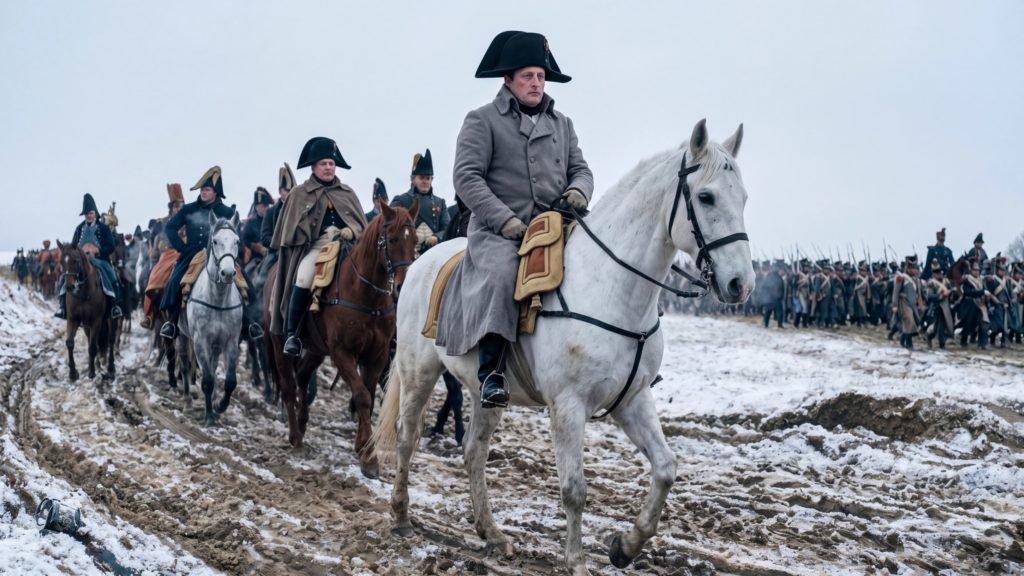
Soldiers of my Old Guard, I bid you farewell. For twenty years I have found you ever on the path of glory.
Napoleon Bonaparte, farewell address to the Old Guard at Fontainebleau, 20 April 1814[10]
Napoleon spoke these words in the courtyard at Fontainebleau before embracing the Guard's eagle standard and departing for exile.
Timeline
How it unfolded
19 October 1812
Retreat from Moscow begins
The Grand Army began its retreat from Moscow on 19 October 1812, Napoleon himself leaving the city before daylight.[16, p. 1] Hilaire Belloc later argued that the origin of Napoleon's fall lay in the decision of May 1812 to advance into Russia rather than in the Waterloo campaign.[17]
16-19 October 1813
Battle of Leipzig
The battle was fought around Leipzig on 16, 18 and 19 October 1813.[18] According to Scott, the fighting was renewed on the morning of the 18th, the French were compelled to retreat after immense loss on both sides, and they evacuated the city on the 19th.[19] It is remembered as the Battle of the Nations, in which Napoleon forfeited his hegemony.[20, p. 268]
31 March 1814
Allies enter Paris
The Allied sovereigns and their troops entered Paris early on 31 March 1814.[21] Houssaye records that on the afternoon of 1 April the signatories of the capitulation told Napoleon of the Allies' triumphal entry and of the Tsar's refusal to treat further with him.[3]
6 April 1814
Napoleon's unconditional abdication
After conditionally abdicating in favour of his son on 4 April, Napoleon abdicated unconditionally on 6 April 1814.[22, p. 88] Henderson adds that he agreed to this on the 6th after learning of Marmont's defection.[23]
11 April 1814
Treaty of Fontainebleau
By the Treaty of Fontainebleau of 11 April 1814 Napoleon was allowed to keep the title of Emperor and was given the sovereignty of the island of Elba with a revenue of two million francs.[14, p. 51] In the treaty he renounced for himself and his descendants all right of sovereignty over the French Empire and the Kingdom of Italy.[24, p. 138]
20 April 1814
Farewell to the Guard at Fontainebleau
On 20 April 1814 Napoleon took leave of his Guard at Fontainebleau before leaving for exile.[22, p. 88]
3 May 1814
Louis XVIII enters Paris
The Bourbon monarchy returned to the French capital when Louis XVIII made his solemn entry into Paris on 3 May 1814.[5]
Dig Deeper
Copy any prompt below into your favourite AI chat to keep exploring.
Explain why the allies let Napoleon keep his imperial title and sovereignty over Elba instead of simply imprisoning him after his abdication.
Debate whether granting Napoleon his own island, guard and title was a reasonable peace settlement, or a mistake that all but guaranteed his return.
Pitch me Napoleon's ten months on Elba like a reality-TV villain arc that ends in a shock comeback twist.
Further Reading
Where to read more
Napoleon Exiled to Elba - History.com
A concise, free overview of Napoleon's 1814 abdication and the terms of the Treaty of Fontainebleau.
Why look at this: Lays out exactly what Napoleon traded away and what he kept - the throne for the title, an empire for one small island and an income.
https://www.history.com/this-day-in-history/april-11/napoleon-exiled-to-elbaNapoleon's Farewell to the Old Guard at Fontainebleau, 20 April 1814 - napoleon.org
The Fondation Napoleon's detailed account of the farewell scene in the Cour du Cheval-Blanc, including both the romanticised and the historically-reconstructed versions of his speech.
Why look at this: Goes past the legend to the two competing accounts of what Napoleon actually said to the Guard before embracing their eagle standard - the same moment behind this page's central quote.
https://www.napoleon.org/en/history-of-the-two-empires/articles/napoleons-adieux-to-the-old-guard-at-fontainebleau-20-april-1814/Recollections of Caulaincourt, Duke of Vicenza, Vol. 2
The 1838 English translation of the memoirs of Armand de Caulaincourt, who personally negotiated the Treaty of Fontainebleau at Napoleon's side, freely digitised on the Internet Archive.
Why look at this: Caulaincourt was in the room for the abdication negotiations and recorded Napoleon's fear of losing his reason - this is the first-hand account behind that unsettling detail.
https://archive.org/details/recollectionsofc02cauluoftRelated
Keep exploring

Places



Can be seen in
Where this shows up
References
Sources
Sources
- BookNapoleon's Letters to Josephine, 1796-1812 by Emperor of the French Napoleon I ↑
- BookA dictionary of Napoleon and his times by Hubert N.B Richardson ↑
- BookNapoleon and the Campaign of 1814 by Henry Houssaye ↑
- BookTalleyrand, a biographical study by Joseph McCabe ↑
- BookThe French revolution from 1789 to 1815 by M. Mignet and James Westfall Thompson ↑
- BookThe history of the war : from the establishment of Louis XVIII on the throne of France by Hewson Clarke. Page 149. ↑
- BookMemoirs Of Napoleon Bonaparte - Iii And Iv by Louis Antoine Fauvelet De Bourrienne. Page 15. ↑
- BookRecollections of Caulaincourt Duke of Vicenza Vol. 2 by Armand-Augustin-Louis de Caulaincourt ↑
- BookHistory of the Captivity of Napoleon at St Helena Vol. 1 by William Forsyth. Page 274. ↑
- BookThe war drama of the Eagles : Napoleon's standard-bearers on the battlefield in victory and defeat from Austerlitz… by Edward Fraser ↑
- BookMemoirs of Napoleon Bonaparte — Complete by Louis Antoine Fauvelet de Bourrienne. Page 135. ↑
- BookTalleyrand by Charlotte Julia von Leyden Blennerhassett and Frederick Clarke ↑
- BookThe Fifteen Decisive Battles of the World: from Marathon to Waterloo by Sir Edward Shepherd Creasy ↑
- BookLouis XVIII by Mary Frances Sandars. Page 51. ↑
- BookNapoleon and the end of the French revolution by Charles F. Warwick ↑
- BookHistory of the Expedition to Russia Undertaken by the Emperor Napoleon in the Year 1812 by Philippe-Paul de Ségur. Page 1. ↑
- BookWaterloo by Hilaire Belloc ↑
- BookNapoleon : a history of the art of war, from the beginning of the peninsular war to the… by Theodore Ayrault Dodge ↑
- BookLife of Napoleon Bonaparte, Volume IV. by Walter Scott ↑
- BookJOSEPH FOUCHE THE PORTRAIT OF A POLITICIAN STEFAN ZWEIG by STEFAN ZWEIG. Page 268. ↑
- BookHistory of the wars occasioned by the French revolution, from the commencement of hostilities in 1792, to the… by C. H Gifford ↑
- BookA Life of Napoleon Bonaparte, with a Sketch of Josephine, Empress of the French. by Ida M. Tarbell. Page 88. ↑
- BookBlücher and the uprising of Prussia against Napoleon, 1806-1815 by Ernest F. Henderson ↑
- BookThe Constitutions and Other Select Documents Illustrative of the History of France 1789-1907 by Frank Maloy Anderson. Page 138. ↑