
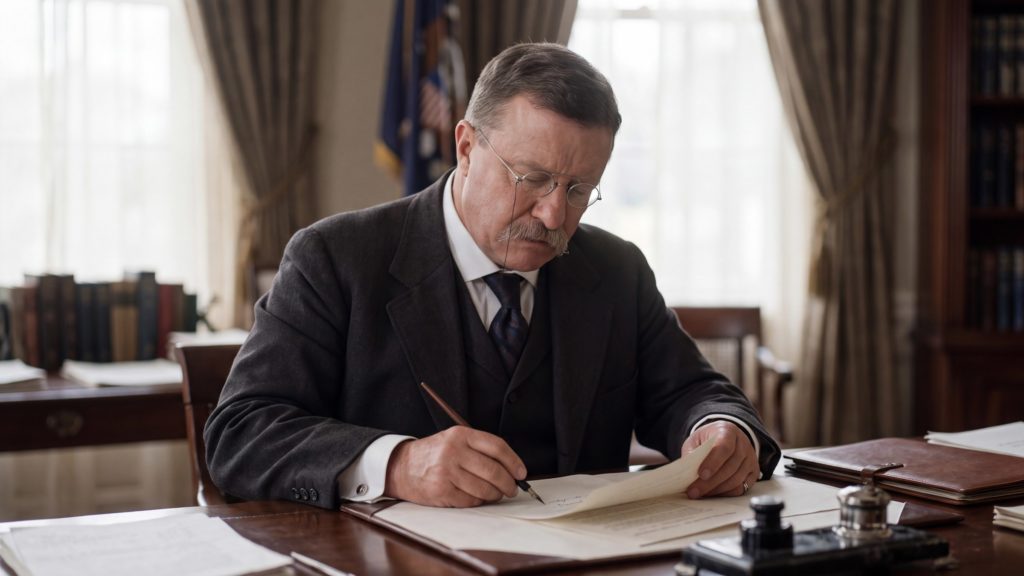
Theodore Roosevelt
Politician, soldier and conservationist; 26th President of the United States
The sickly, asthmatic boy from New York City[1, p. 2] who became America's youngest president[2] — and then, in 1912, insisted on finishing a campaign speech with a would-be assassin's bullet in his chest[3].
Bio
Who they were
Theodore Roosevelt was born in New York City[4][5, p. 270], the second of four children[1, p. 2]. As a boy he suffered from severe, sometimes agonising asthma, a condition serious enough to shape his whole approach to life[1, p. 2][6]. Rather than accept a frail childhood, he built himself up through strenuous exercise, a habit he kept for the rest of his life, later taking up boxing as one of his preferred forms of training[7][8].
Roosevelt's rise ran through a string of demanding public jobs: he served as New York City's police commissioner in 1895[5, p. 270], then as Assistant Secretary of the Navy from 1897[4]. He resigned that post to help raise and lead the Rough Riders, a volunteer cavalry regiment, during the Spanish-American War, taking part in the charge up San Juan Hill on 1 July 1898[9, p. 2][10]. War hero status carried him into the governorship of New York, and from there onto the Republican ticket as William McKinley's running mate in 1900[11, p. 12][7].
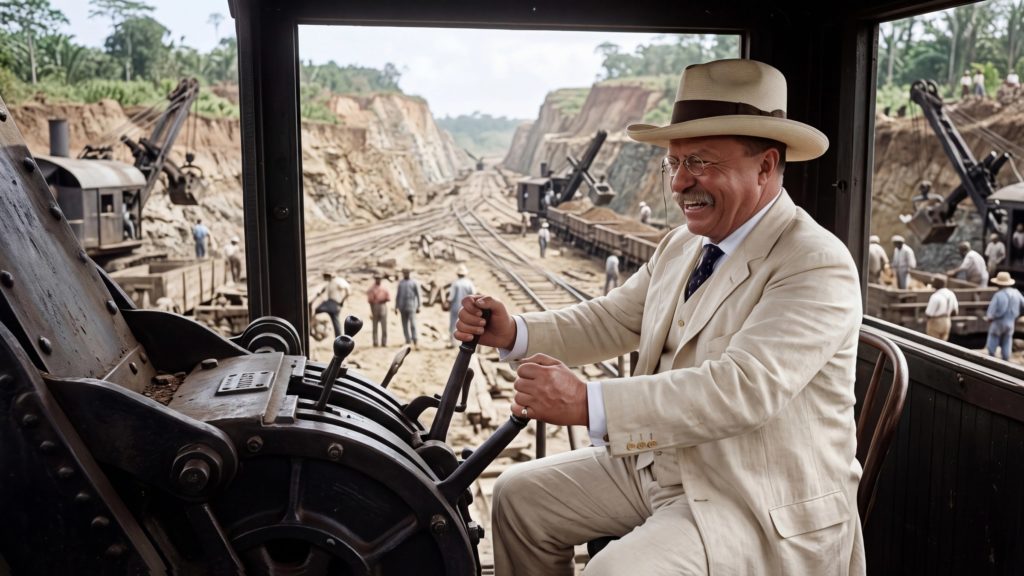
Roosevelt became president in September 1901, arriving in Buffalo only after William McKinley had already died of an assassin's gunshot wounds[12]. As president he pushed through the Panama Canal project, later called his greatest material contribution to the country[13][14], and made conservation a central plank of his administration, setting aside land that became national parks[1, p. 1][1, p. 16]. In 1906 he received the Nobel Peace Prize[7], though not without some friction with the prize committee along the way[13].
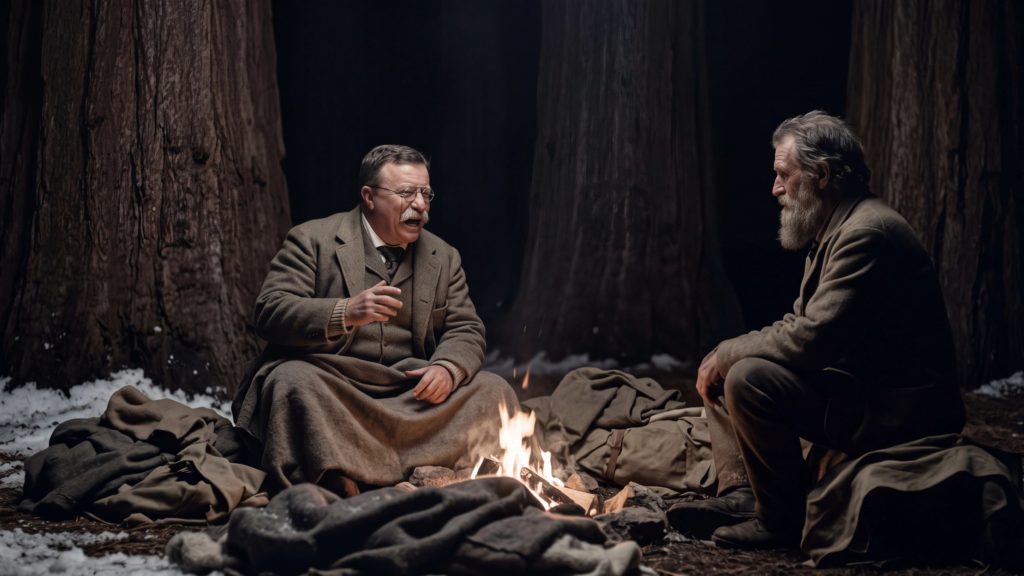
After leaving the White House, Roosevelt ran for president again in 1912 as the Progressive ‘Bull Moose’ Party candidate[15, p. 3]. In October that year he was shot in Milwaukee before a scheduled campaign speech and delivered it anyway, with the bullet still in his chest[7][3]. He died unexpectedly on 6 January 1919[16, p. 67][17]; a contemporary account recorded that after his death “all partisan feeling” toward him softened[17].
Roosevelt's presidency reshaped how Americans thought about the federal government's role, from conservation to trust-busting, and the national parks and forests set aside on his watch remain part of that legacy[1, p. 1][1, p. 16]. His 1912 break from the Republican Party to run as a Progressive also reshaped the reform politics that followed that year's election[15, p. 3][15, p. 10]. He remains, to this day, the youngest person to have held the presidency[2][18].
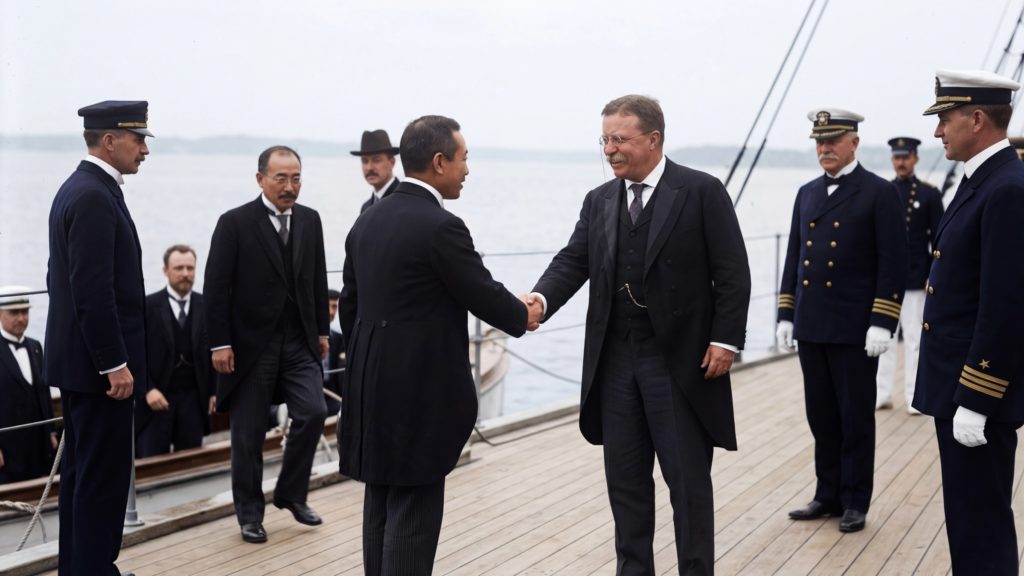
Roosevelt loved boxing as exercise even in the White House, sparring with a trainer named Mike Donovan; a blow in one of these bouts eventually cost him most of the sight in one eye, which he kept quiet about for years[7][19].
Legacy & Reputation
What’s the verdict?
Contemporary biographer Lawrence Abbott judged the Panama Canal Roosevelt’s greatest material achievement, while also noting that Roosevelt could be undiplomatic — Abbott records he was “not exactly polite” to the Nobel Prize Committee itself[13][13]. A Federal Reserve Bank of St Louis review of the 1912 election credits his Progressive Party run with reshaping the reform politics that followed, including debates that fed into the founding of the Federal Reserve itself[15, p. 3][15, p. 15].
Myth-buster
Think you know this one?
Quick Facts
The essentials
Quick Facts
Roger would like you to know…
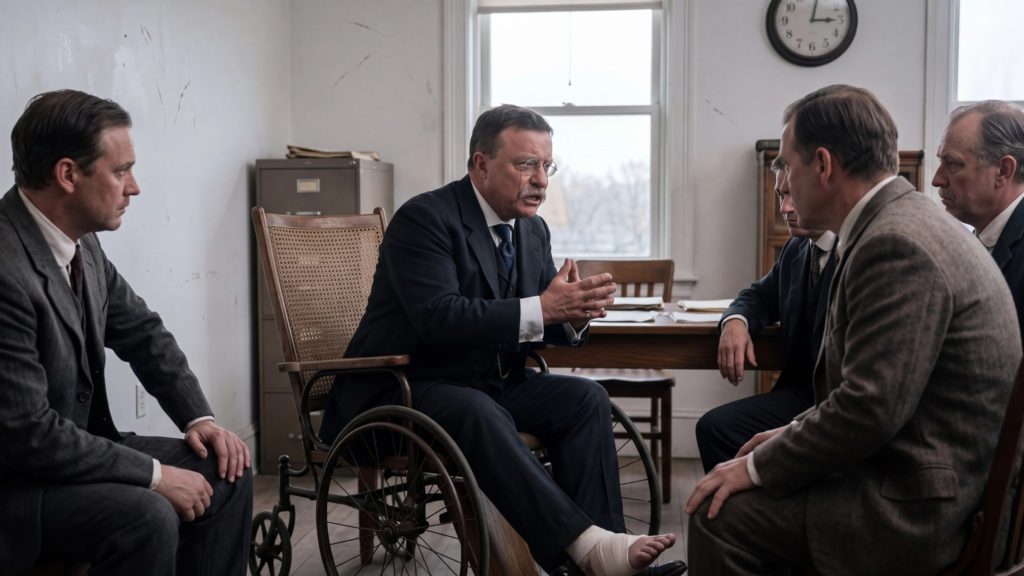
Roosevelt was a sickly child, the second of four children, and suffered from asthma so severe it shaped how he lived for the rest of his life. He responded by building himself up through sheer strenuous exercise.[1, p. 2][6]
Keith would like to clarify…
Roosevelt loved boxing well into adulthood and kept sparring even as president, training with a coach named Mike Donovan. One bout eventually cost him most of the sight in one eye — and he simply kept working.[7][19]
History gets strange here…
On 1 July 1898, Roosevelt led the Rough Riders, his volunteer cavalry regiment, in the charge up San Juan Hill during the Spanish-American War — the moment that turned “Colonel Roosevelt” into a national name.[9, p. 2][10]
Roger has entered the historical rabbit hole…
Roosevelt's rise ran through an unusual set of jobs before the presidency: New York City police commissioner, Assistant Secretary of the Navy, war hero, and Governor of New York, roughly in that order.[5, p. 270][4]
Roger said it. Keith checked it…
Roosevelt became president in September 1901 not by winning an election but because William McKinley had just been assassinated — Roosevelt arrived in Buffalo only after McKinley had already died.[12]
File under: surprisingly true…
At 42, Roosevelt remains the youngest person ever to hold the presidency — younger even than John F. Kennedy, who is popularly, and wrongly, given that title.[2][18]
Keith has spotted the quotation problem…
“Perdicaris alive or Raisuli dead” is remembered as Roosevelt's own defiant line during a 1904 Moroccan hostage crisis — contemporary accounts do record it as the Roosevelt administration's answer, even if the diplomatic reality behind it was messier than the slogan suggests.[7]
A small fact with a very large consequence…
Roosevelt's Panama Canal project was later called his single greatest material contribution to the country by contemporaries who watched it happen — a shortcut between two oceans that reshaped global shipping.[13]
“Perdicaris alive or Raisuli dead.”[7]
Theodore Roosevelt (recorded as the Roosevelt administration's answer)
A cabled reply during the 1904 Perdicaris affair in Morocco, after American resident Ion Perdicaris was kidnapped by the Berber chieftain Raisuli[7].
Timeline
How it unfolded
27 October 1858
Birth of Theodore Roosevelt
The future 26th President was born in New York City, the second of his name, into a family descended from the Dutch Roosevelts of New Amsterdam.[4]
1 July 1898
Rough Riders Charge at San Juan Heights
As lieutenant colonel of the First US Volunteer Cavalry, the Rough Riders, Roosevelt rode up Kettle Hill in the Battle of San Juan Heights during the Spanish-American War.[9, p. 2] He was elected governor of New York later that year, 1898.[7]
1901
Roosevelt Makes "White House" the Official Name
A National Park Service timeline of the building records that Roosevelt officially named it the White House in 1901, replacing the older Executive Mansion.[21, p. 1]
14 September 1901
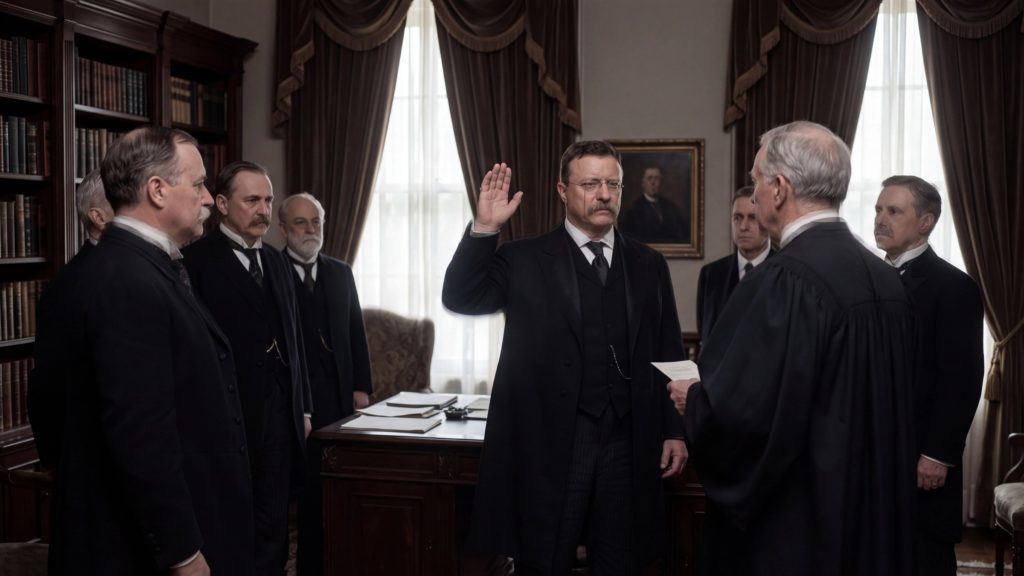
Roosevelt Sworn In After McKinley's Death
President McKinley died that morning, and Roosevelt took the oath as twenty-sixth President that afternoon at the home of Ansley Wilcox.[22][23] At nearly forty-three he was the youngest man ever to assume presidential duties.[23]
5 November 1902
Roosevelt Moves Into the New West Wing Office
Roosevelt first worked in the new Temporary Executive Office, built under architect Charles McKim to move the president's offices out of the main house, and held the first cabinet meeting there the next day.[24][25]
1906
Roosevelt Wins the Nobel Peace Prize
Roosevelt received the Nobel Peace Prize for his successful efforts to end the Russo-Japanese War, becoming the first non-European to win a Nobel Prize.[26]
5 August 1912
Roosevelt Leads the Progressive Party
The Progressive convention met in Orchestra Hall, Chicago, and Roosevelt's phrase "I feel like a bull moose" gave the new party its Bull Moose nickname.[16, p. 67][7] In the 5 November 1912 election the Republican vote split and Wilson won, with Roosevelt about four million votes to Taft's three million.[27, p. 25]
6 January 1919
Death of Theodore Roosevelt
Roosevelt died in his sleep at his home at Oyster Bay, New York, in the early hours of the morning.[7]
Dig Deeper
Copy any prompt below into your favourite AI chat to keep exploring.
Explain what led Theodore Roosevelt to break up powerful monopolies and create national parks during his presidency
What does Theodore Roosevelt's belief in living the strenuous life teach us about how we expect leaders to prove their toughness
Convince me Theodore Roosevelt surviving an assassination attempt and still giving his hour-long speech with the bullet in his chest is the toughest moment in presidential history
Further Reading
Where to read more
Theodore Roosevelt (White House Historical Association)
A concise official biography covering Roosevelt's childhood asthma, the Rough Riders, his ascent to the presidency after McKinley's assassination, and his major policy achievements.
Why look at this: Ties together the asthmatic boy, the war hero and the president in one readable pass — a solid orientation before going deeper.
https://www.whitehousehistory.org/bios/theodore-rooseveltTheodore Roosevelt Center Digital Library (Dickinson State University)
A free digital archive of roughly 150,000 Roosevelt-related records — correspondence, diary entries, speeches, photographs and more — plus encyclopedia entries and research guides.
Why look at this: Lets a reader chase any single moment from his life, from the Rough Riders charge to the 1912 shooting, in his own and his contemporaries' words.
https://www.theodorerooseveltcenter.org/Theodore Roosevelt Papers (Library of Congress, Manuscript Division)
The largest collection of original Roosevelt documents in the world, spanning his time as civil service commissioner, governor, vice president and president.
Why look at this: The genuine paper trail behind a presidency — personal and official correspondence, diaries and speech drafts, held by the institution that has spent decades cataloguing it.
https://www.loc.gov/item/mm73038299/Related
Keep exploring
Places
Can be seen in
Where this shows up
References
Sources
Sources
- WebsiteTheodore Roosevelt, 'Conservation as a National Duty' - Teaching-Learning Materials (Voices of Democracy, University of Maryland). Pages 1, 2, 16. ↑
- BookRoosevelt's African trip; the story of his life, the voyage from New York to Mombasa, and the route… by Frederic William Unger ↑
- BookThe Attempted Assassination of ex-President Theodore Roosevelt by Henry F. Cochems Oliver E. Remey ↑
- BookTheodore Roosevelt and his time shown in his own letters by Joseph Bucklin Bishop ↑
- BookTheodore Roosevelt And His Time I by Joseph Bucklin Bishop. Page 270. ↑
- BookThe life of Theodore Roosevelt by William Draper Lewis ↑
- BookLife and work of Theodore Roosevelt, typical American, patriot, orator, historian, sportsman, soldier, statesman and president by Thomas Herbert Russell ↑
- BookTheodore Roosevelt, an autobiography by Theodore Roosevelt ↑
- WebsiteResource Packet: Rough Riders (Theodore Roosevelt Presidential Library). Page 2. ↑
- BookAmerican Boy's Life of Theodore Roosevelt by Edward Stratemeyer ↑
- BookA cartoon history of Roosevelt's career by Albert Shaw. Page 12. ↑
- BookThe McKinley and Roosevelt administrations, 1897-1909 by James Ford Rhodes ↑
- BookImpressions of Theodore Roosevelt by Lawrence F. Abbott ↑
- BookThe triumphant life of Theodore Roosevelt ... the inspiring narrative of his wonderful career (edited by J. Martin Miller) ↑
- WebsiteTheodore Roosevelt, the Election of 1912, and the Founding of the Federal Reserve (Federal Reserve Bank of St.…. Pages 3, 10, 15. ↑
- BookFrom McKinley to Harding : personal recollections of our presidents by Herman Henry Kohlsaat. Page 67. ↑
- DocumentCollier's New Encyclopedia (1921)/Roosevelt, Theodore (elder) ↑
- BookBattling for the right; the life-story of Theodore Roosevelt, including his early life struggles and victorious public career… by Charles Morris ↑
- BookAn imperial saga; the Roosevelt family in America by Bellamy Partridge ↑
- BookTheodore Roosevelt, patriot and statesman; the true story of an ideal American .. by Robert Cornelius V. Meyers ↑
- WebsiteWashington D.C.: The Growth of a Capital City (NPS newspaper). Page 1. ↑
- BookLife of William McKinley, our martyred president, with short biographies of Lincoln and Garfield, and a comprehensive life… by Samuel Fallows ↑
- BookWhite House gossip : from Andrew Johnson to Calvin Coolidge by Edna M. Colman ↑
- Websitewhitehousehistory.org: The west wing 1900 1924 ↑
- Websitewhitehousehistory.org: Theodore roosevelts white house ↑
- Websiteen.wikipedia.org: Theodore Roosevelt ↑
- BookRoosevelt, the happy warrior by Bradley Gilman. Page 25. ↑