
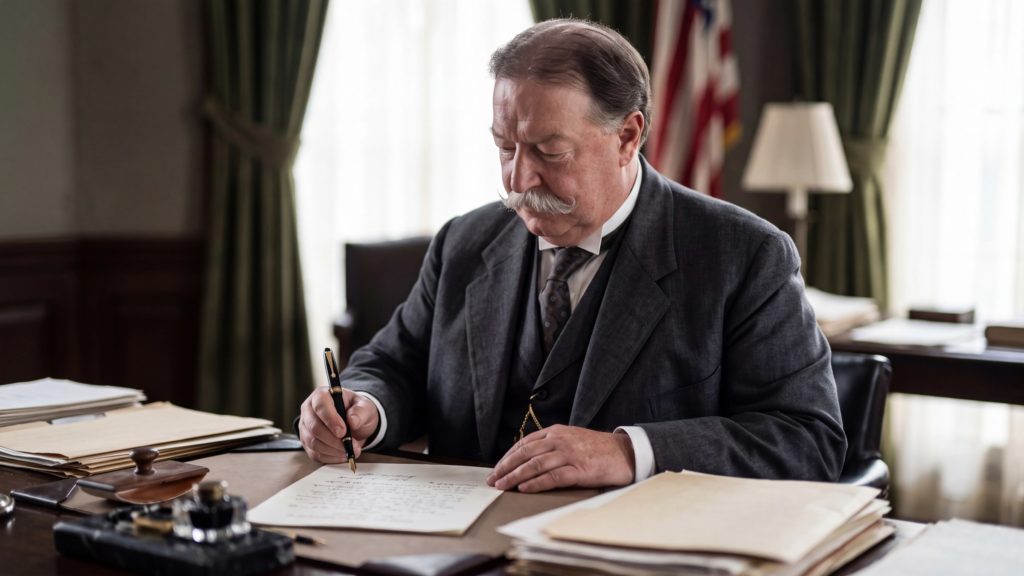
William Howard Taft
Lawyer, judge and colonial administrator; 27th President of the United States and 10th Chief Justice of the United States
The Ohio judge's son who was persuaded, reluctantly, into the presidency[1] — and who then finally got the job contemporaries always thought suited him best, taking the oath as Chief Justice of the United States[2].
Bio
Who they were
William Howard Taft was born in Cincinnati, Ohio, on 15 September 1857[3]. His father, Alphonso Taft, was a Vermont-born Yale graduate who became a judge, giving the family a strong legal tradition before William was even born[4]. All the Taft boys were expected to follow their brothers to Yale, and William did exactly that[1][4].
Taft built his early career as a judge, not a natural politician: a contemporary account judged him to have the qualities of ‘a paternal judge and lawgiver’ rather than those of a political leader[5]. He was persuaded, somewhat reluctantly, to take charge of the American civil government of the Philippines in the early 1900s[1], work that made his reputation in Washington. Theodore Roosevelt, who valued Taft's judgement highly, drew him into the cabinet and steered him toward the presidency, even contributing a chapter to Taft's 1908 campaign biography[1].
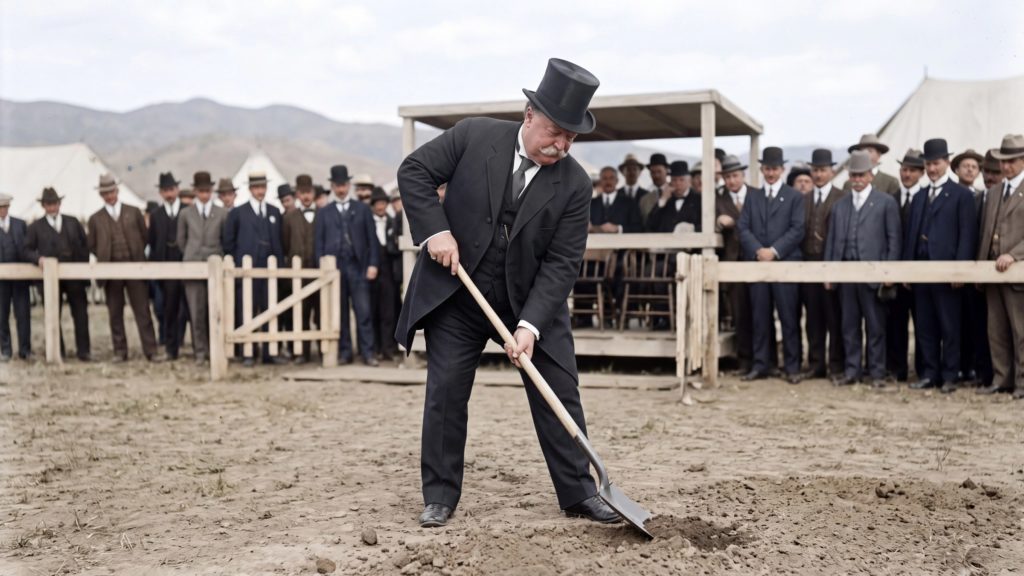
As president from 1909, Taft pursued a foreign policy known as ‘dollar diplomacy’, in which Secretary of State Philander Knox tried to extend American influence abroad through investment rather than military force[6][5]. At home, his administration pressed forward with antitrust prosecutions under the Sherman Act, including the landmark case against Standard Oil of New Jersey — a record contemporary defenders pointed to when critics claimed he had done less trust-busting than Roosevelt[7, p. 4393][7, p. 497]. The 1912 election split the Republican Party between Taft and his former mentor Roosevelt, and Taft was left carrying only two states, Utah and Vermont[8].
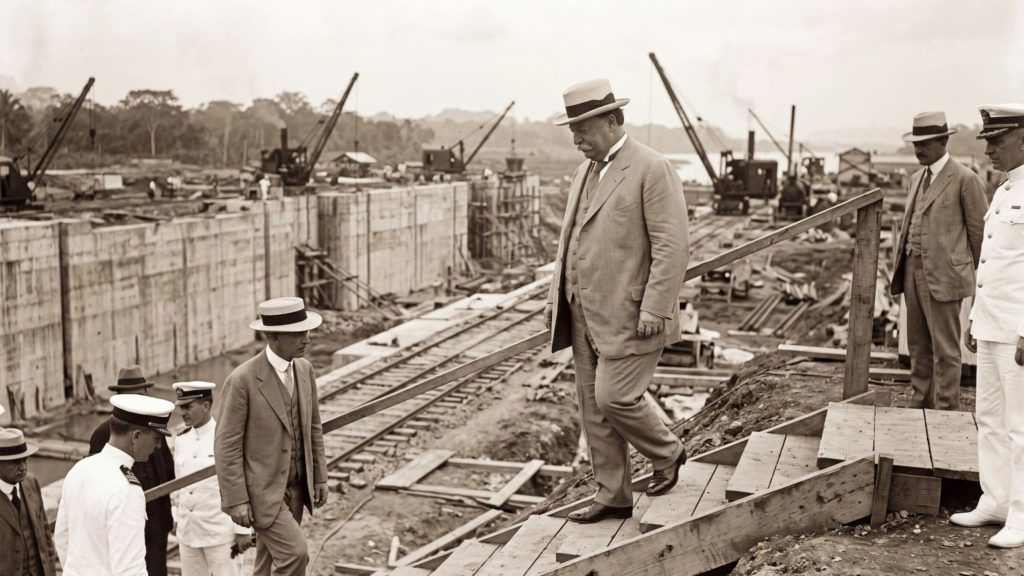
In 1921, President Warren Harding appointed Taft Chief Justice of the United States, succeeding Edward White[8]. Taft took the oath of office that year, moving from the presidency into the judicial role his contemporaries had always thought suited him better[2][5].
Taft's most lasting institutional legacy came after he left the presidency: as Chief Justice he pushed for reforms to how the Supreme Court itself operated[9, p. 5][9, p. 25]. His 1912 defeat, and the split with Roosevelt that caused it, also fed into the Progressive-era reform arguments that led toward the founding of the Federal Reserve later that decade[10, p. 15]. His son Robert A. Taft went on to become a major figure in the Republican Party in his own right, and another son, Horace Dutton Taft, founded the Taft School[11, p. 3].
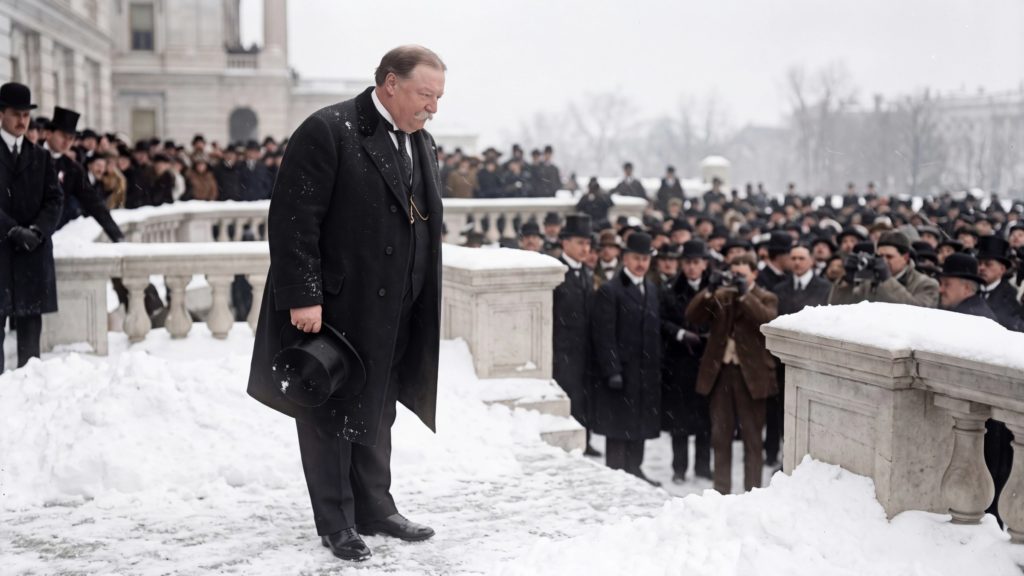
Taft was a genuinely large man, and contemporaries wrote about his size and his ‘weight in public life’ almost as often as his politics[1]. Off duty, he liked nothing better than a round of golf, playing regularly even as Secretary of War and President[4][7, p. 1552].
Legacy & Reputation
What’s the verdict?
The reference work ‘The Presidents of the United States, 1789-1914’ judged Taft to have the qualities of ‘a paternal judge and lawgiver’ rather than a natural political leader[5] — a verdict his own move to the Chief Justiceship in 1921 seems to bear out[8]. His single term is remembered as much for the Republican Party split of 1912 as for dollar diplomacy or his antitrust record[8][6].
Myth-buster
Think you know this one?
Taft is sometimes remembered as a caretaker president who achieved little beyond his size, but his administration pursued major antitrust cases, including the landmark suit against Standard Oil of New Jersey[7, p. 4393], and reshaped American foreign policy through ‘dollar diplomacy’[6].
Quick Facts
The essentials
Quick Facts
Roger would like you to know…
Taft was born in Cincinnati in 1857 into a family with law running through its veins — his father Alphonso Taft, born in Vermont, was a Yale graduate who became a judge before William was even born.[3][4]
Keith checked the sources…
Every one of the Taft sons was expected to follow the family tradition and attend Yale — and William, unsurprisingly, did exactly that.[1][4]
One for the Ageonauts…
A contemporary account judged Taft to have the qualities of “a paternal judge and lawgiver” rather than a natural political leader — which turned out to be a remarkably accurate preview of his career.[5]
Roger has entered the historical rabbit hole…
Before he was ever president, Taft was persuaded, somewhat reluctantly, to take charge of the American civil government of the Philippines in the early 1900s — a job that first put his name in front of Washington.[1]
Keith would like to clarify…
Taft's foreign policy became known as “dollar diplomacy”, an approach under Secretary of State Philander Knox that tried to extend American influence abroad through investment rather than the threat of force.[6][5]
History gets strange here…
Despite a reputation as the president who did less trust-busting than Roosevelt, Taft's administration pursued major antitrust cases, including the landmark suit against Standard Oil of New Jersey.[7, p. 4393][7, p. 497]
Roger says, “Hear me out…”
When Taft ran for re-election in 1912 against his own former mentor Roosevelt, the Republican vote split so badly that Taft carried only two states in the whole country: Utah and Vermont.[8]
The past has entered the chat…
In 1921, nearly a decade after losing the presidency, Taft was appointed Chief Justice of the United States by President Warren Harding, succeeding Edward White — the job many around him always thought he was better suited to in the first place.[8][2]
Keith found the footnote…
Taft's size was such public knowledge that contemporary writers discussed his physical “weight in public life” almost as a subject in its own right, separate from anything he actually did in office.[1]
A small fact with a very large consequence…
Off duty, Taft was a devoted golfer, playing regularly even while serving as Secretary of War and later as President — a habit contemporaries noted almost as often as his judicial ambitions.[4][7, p. 1552]
The truth is that in my present life I don't remember that I ever was president.
William Howard Taft
Written after he left the White House and became chief justice in 1921, reflecting how much more Taft valued the judicial career he had always preferred to politics.
Timeline
How it unfolded
15 September 1857
Birth of William Howard Taft
The future president and chief justice was born in Cincinnati, Ohio.[3] Wikipedia gives the same date and place.[14]
4 July 1901
Taft Becomes Civil Governor of the Philippines
Chosen by McKinley in 1900 to head a commission to set up civil government in the Philippines, Taft became the islands' first civil governor.[15] Wikipedia gives the same 4 July 1901 date.[14]
1 February 1904
Taft Becomes Secretary of War
Roosevelt had nominated Taft to succeed Secretary of War Elihu Root so that he could keep directing Philippine affairs from the United States.[2] Taft's term as Secretary of War began on this date and ran to 30 June 1908.[14]
1909
Taft Creates the First Oval Office
Taft had the West Wing doubled in size and placed the first presidential Oval Office at the centre of its south facade, and he became the first president to work in it.[16, p. 1][17]
4 March 1909
Taft Inaugurated as President
Taft was inaugurated as Theodore Roosevelt's successor, capping twenty-eight years as an office-holder with hardly any interval of private life.[7][18] A winter ice storm forced the ceremony into the Senate Chamber.[14]
5 November 1912
Taft Loses Re-election in a Split Field
With Republican voters divided between Taft and Roosevelt's Progressive run, Wilson won the election, Taft taking about three million votes to Roosevelt's four million.[19, p. 25] Taft carried only Utah and Vermont.[14]
11 July 1921
Taft Sworn In as Chief Justice
Taft took the oath as Chief Justice of the United States after President Harding appointed him on 30 June 1921 to succeed Edward Douglass White.[2][8] He is the only man to head two of the three branches of the federal government.[11, p. 3]
Dig Deeper
Copy any prompt below into your favourite AI chat to keep exploring.
Explain why William Howard Taft is the only person to have served as both US president and Chief Justice of the Supreme Court
Debate whether Taft was better suited to being a judge than a president and what that says about matching leaders to the right role
Convince me the story of William Howard Taft getting stuck in a White House bathtub is more myth than fact
Further Reading
Where to read more
William Howard Taft (White House Historical Association)
A concise official biography covering Taft's preference for the judiciary over politics, his term as president, and his later appointment as Chief Justice.
Why look at this: Explains, in a few short paragraphs, why the man widely seen as a disappointing president found his real calling on the Supreme Court instead.
https://www.whitehousehistory.org/bios/william-taftWilliam Taft: Life in Brief (Miller Center, University of Virginia)
An in-depth scholarly essay covering Taft's Cincinnati upbringing, his Philippines service, his presidency, and his later role as Chief Justice.
Why look at this: Goes well beyond the headline “only president to also be Chief Justice” fact into the specific tariff and trust-busting fights that split the Republican Party in 1912.
https://millercenter.org/president/taft/life-in-briefWilliam H. Taft Papers (Library of Congress Digital Collections)
Roughly 676,000 digitized documents from Taft's career as president and Chief Justice, including correspondence, judicial files, speeches and family papers.
Why look at this: A vast, searchable primary record covering both halves of Taft's unusual career — the presidency and the Supreme Court — in his own paperwork.
https://www.loc.gov/collections/william-howard-taft-papers/Related
Keep exploring
People

Places

Can be seen in
Where this shows up

References
Sources
Sources
- BookWilliam Howard Taft, the man of the hour; his biography and his views on the great questions of… by Oscar King Davis and Theodore Roosevelt ↑
- DocumentCollier's New Encyclopedia (1921)/Taft, William Howard ↑
- DocumentThe New Student's Reference Work/Taft, William Howard ↑
- BookWilliam Howard Taft, American by Robert Lee Dunn ↑
- DocumentThe Presidents of the United States, 1789-1914/William H. Taft ↑
- BookThe wreck; an historical and a critical study of the administrations of Theodore Roosevelt and of William Howard… by Henry Clay Hansbrough ↑
- Book[Historical sketches of the administration of President Taft by Albert Henry Walker. Pages 497, 1552, 4393. ↑
- Document1922 Encyclopædia Britannica/Taft, William Howard ↑
- WebsiteMr. Taft Rehabilitates the Court (Yale Law School, Open Yale Law Scholarship Repository). Pages 5, 25. ↑
- WebsiteTheodore Roosevelt, the Election of 1912, and the Founding of the Federal Reserve (Federal Reserve Bank of St.…. Page 15. ↑
- WebsiteNational Register of Historic Places Inventory: William Howard Taft National Historic Site. Page 3. ↑
- Websitearlingtoncemetery.mil: President William H Taft Gravesite ↑
- Websiteinfo.mysticstamp.com: This day in history march 8 1930 tdih ↑
- Websiteen.wikipedia.org: William Howard Taft ↑
- DocumentThe Encyclopedia Americana (1920)/Taft, William Howard ↑
- WebsiteWashington D.C.: The Growth of a Capital City (NPS newspaper). Page 1. ↑
- Websitewhitehousehistory.org: The west wing 1900 1924 ↑
- BookLife and work of Theodore Roosevelt, typical American, patriot, orator, historian, sportsman, soldier, statesman and president by Thomas Herbert Russell ↑
- BookRoosevelt, the happy warrior by Bradley Gilman. Page 25. ↑
- Websitesupremecourt.gov: Members text ↑