
Roman Republic
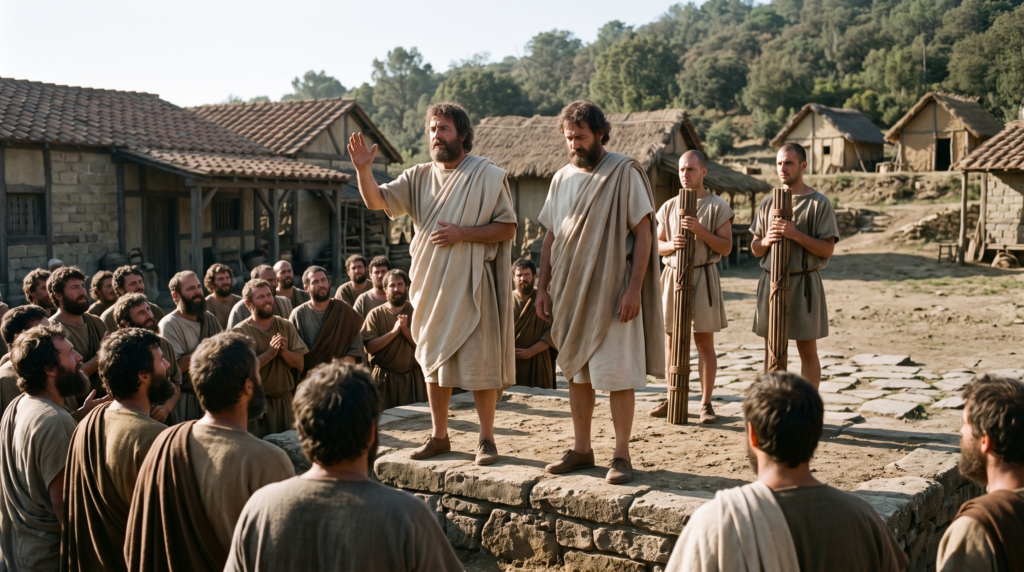
The Roman Republic was designed so that no single man could rule Rome again, yet it ended with a dictator who held power for life.[1, p. 270][2]
About the Place
Why it matters
Rome began as a kingdom. According to Livy, the regal form of government lasted 244 years from the city's founding.[3] The last king, Tarquin the Proud, was expelled, traditionally in 509 BC.[4] The historian Mommsen wrote that the Tarquins had to be driven out by force. He added that the romantic details of the story do not affect the fact itself.[5] Two elected consuls, Lucius Junius Brutus and Lucius Tarquinius Collatinus, then took charge.[3]
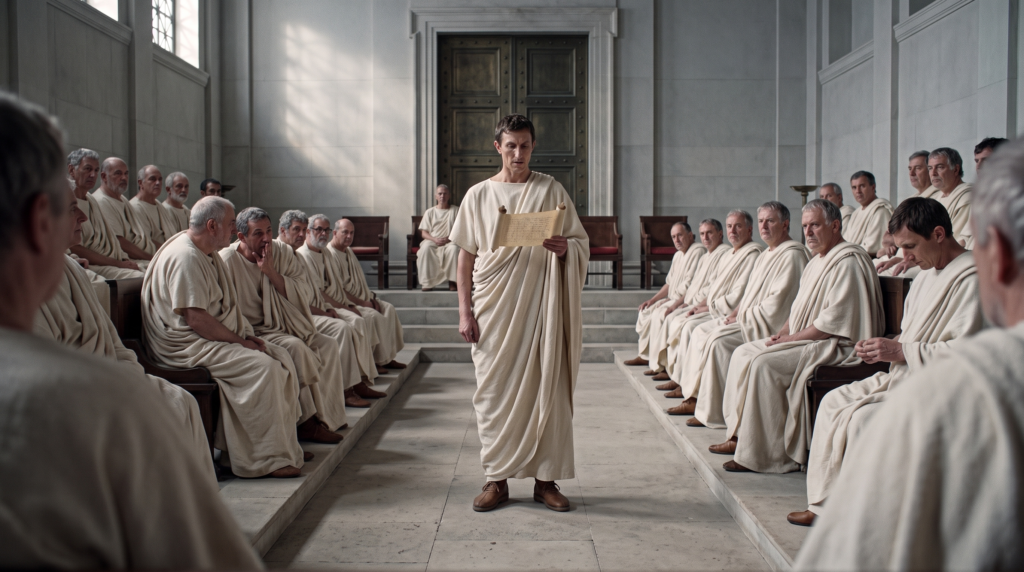
Brutus proposed that two men share supreme power, so that each could check the other's ambition, and that the office last only a year. These officials were called consuls.[1, p. 270] Consuls were, with some restrictions, what the kings had been: chief administrators, judges and generals.[5] The Senate, Rome's council of leading men, dealt with foreign envoys and disputes among Rome's Italian allies.[6] In a crisis a consul could name a dictator, an emergency ruler limited to six months.[5]
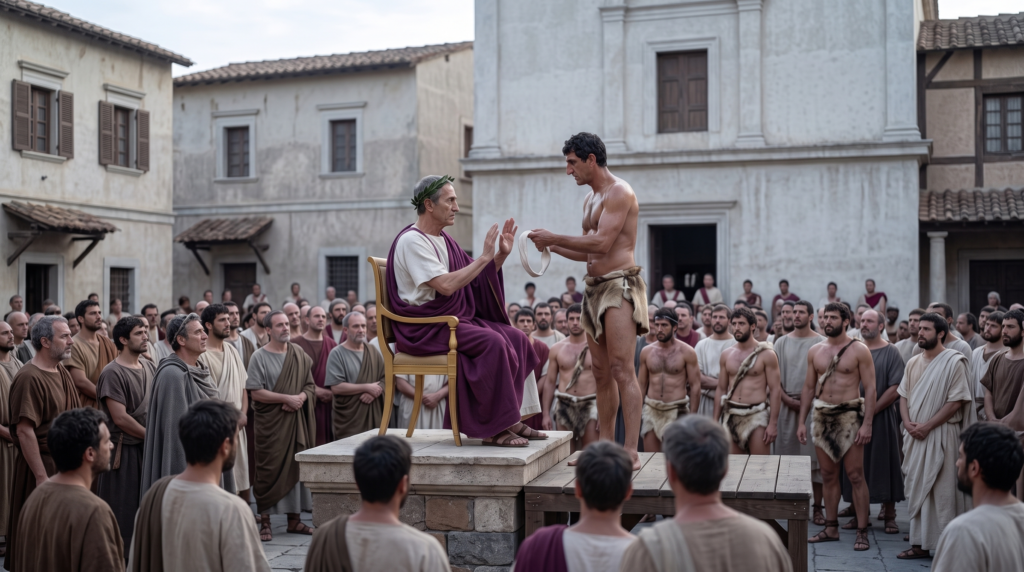
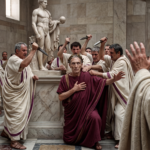
By 44 BC the emergency office had changed. Dictators once served six months at most, but Caesar held the post for an undefined period from 48 BC, for ten years from 46 BC and for life in 44 BC.[2][2] Greenidge called this a revival of monarchy in reality and in name, though Caesar never took the title of king and declined the diadem.[7] Caesar planned to leave for a Parthian war.[8] Instead, on the Ides of March, 15 March 44 BC, a meeting of the Senate had been summoned, and the conspirators waited at Pompey's portico, beside the theatre.[9][10][11, p. 161]
Caesar's death did not restore the Republic. Civil war followed, and in October 42 BC Antony defeated Brutus and Cassius at Philippi. Cassius was killed and Brutus took his own life.[12, p. 252] Caesar's will had adopted Octavian as his son and heir.[13, p. 102] On 13 January 27 BC Octavian, later called Augustus, transferred control of the state to the Senate and people, though he kept the consulship and tribunician power.[2] The Senate then gave him the title Augustus.[8] Tenney Frank wrote that freedom of discussion in the Senate was still offered, but freedom had disappeared.[14]
Legacy & Reputation
What’s the verdict?
Historians have judged the Republic largely by how it ended. Taylor argued that its vital defect was the sovereignty of the people, which let any general with an army win near-absolute power by popular vote.[8] Taylor adds that Polybius thought no one could say which single name fitted the Roman constitution.[8] Federalist No. 63 later held that history knows of no long-lived republic without a senate, and named Rome among its examples.[15]
Myth-buster
Think you know this one?
Quick Facts
The essentials
Quick Facts
The first consuls took turns being important
The first two consuls shared power, but only one at a time was attended by the lictors, the attendants who carried the fasces, the emblems of authority. They swapped that honour every month.[1, p. 270]
Roger would like you to know the dictator got a double escort
Polybius reports that each consul was followed by twelve lictors but the dictator by twenty-four. He adds that consuls often had to ask the Senate first, whereas the dictator was absolute.[6] Roger finds this a very persuasive argument for more lictors.
Meanwhile, in history, a farmer was handed the whole state
In Michelet's retelling, Quintius Cincinnatus is the classical ideal of the warrior labourer. Taken from the plough to be dictator, he delivers a Roman army and, after a fortnight, returns to the plough.[4]
One constitution, three different verdicts
Polybius said the Roman system looked despotic, aristocratic or democratic depending on which part you examined.[6] With the consuls out of town, he added, a visitor would think it a complete aristocracy, since the Senate settled nearly all foreign business.[6]
Keith found an American footnote
Federalist No. 63 says history knows of no long-lived republic without a senate, and names Sparta, Rome and Carthage.[15] It also notes that Rome's tribunes, representatives of the people, prevailed in almost every contest with the senate for life.[15]
Roger insists the crown came with a laurel wreath
At the Lupercalia festival, Plutarch says, Antony twined a laurel wreath round a diadem, a royal headband, and put it on Caesar's head.[16] Caesar declined it, then pushed it away again, and the people cheered.[16]
Keith would like to note where the Senate was sitting
On the Ides of March the Senate was summoned to a portico joining Pompey's theatre, where a statue of Pompey stood.[11, p. 161] Plutarch saw a pattern: Caesar would meet his punishment there for Pompey's death.[11, p. 161]
The past has entered the chat, with a wax model
At Caesar's funeral, Appian says, a wax image was turned round by a mechanical device to show the twenty-three wounds. The enraged crowd then burned the senate-chamber where Caesar was slain.[17, p. 87]
Roger has found anonymous mail for Brutus
Notes appeared at the foot of the statue of Brutus's ancestor, who had expelled the Tarquins, and on his own judge's platform. One read, 'Thou art not Brutus: would thou wert.'[18, p. 21]
Keith would like to clarify: the Republic was officially handed back
On 13 January 27 BC, Abbott records, the man soon to be named Augustus transferred control of the state to the Senate and people. He kept the consulship and tribunician power, and historians have called it a political manoeuvre.[2]
Consequently, if one were staying at Rome when the Consuls were not in town, one would imagine the constitution to be a complete aristocracy
Polybius
The historian Polybius, describing how Rome's constitution looked to a visitor when the consuls were away from the city.[6]
Timeline
How it unfolded
c. 509 BC
Expulsion of the Tarquins and the first consuls
Rome's last king, Tarquin the Proud, was expelled, traditionally in 509 BC.[4] Arnold wrote that Brutus then proposed that two men share supreme power for a single year, and the new governors were called consuls.[1, p. 270]
451 BC
Decemvirs appointed to draw up a legal code
Mommsen records that in 451 BC ten men were elected to draw up a legal code.[5] They held full powers as supreme magistrates in place of the consuls, and plebeians were eligible for the office.[5]
82 BC
Sulla made dictator
According to Abbott, the lex Valeria of 82 BC gave Sulla the dictatorship, with the task of revising the constitution.[2] Early dictators served for six months at most, but Sulla held the office for an indefinite period.[2]
49 BC
Caesar crosses the Rubicon
Weigall places Caesar's order summoning his legions in Gaul in the middle of January 49 BC.[19] He crossed the Rubicon, the river between his province of Cisalpine Gaul and Italy, and set out for the capital.[19]
44 BC
Caesar made dictator for life
Abbott counts Caesar's dictatorship as undefined in length from 48 BC, ten years from 46 BC and for life in 44 BC.[2] Greenidge called it a revival of the Roman monarchy in reality and in name, though Caesar did not take the title of king.[7]
15 March 44 BC
Assassination of Julius Caesar
On the Ides of March, 15 March 44 BC, Caesar fell to the conspirators' daggers in the Curia of Pompey, according to Huelsen.[20] Taylor notes that his murder cut short his plans to leave for the Parthian war.[8]
October 42 BC
Battle of Philippi
In October 42 BC Antony defeated Brutus and Cassius at Philippi. Weigall adds that Cassius was killed, Brutus took his own life, and Octavian, who was ill, took little part in the battle.[12, p. 252]
27 BC
Octavian's settlement and the title Augustus
On 13 January 27 BC Octavian transferred control of the state to the Senate and people, though Abbott notes he kept the consulship and tribunician power.[2] Three days later, Taylor says, the Senate conferred the title Augustus and the Principate began.[8]
Dig Deeper
Copy any prompt below into your favourite AI chat to keep exploring.
Explain how Romans, after expelling their last king, built a republic of consuls, a Senate and assemblies meant to stop any one man ruling alone again.
Debate whether the Republic fell because its checks and balances were flawed, or because Caesar's armies and ambition outgrew any system of checks.
Pitch me the Roman Republic's two-consul system like a flatshare agreement, written by people determined never to have a landlord, or a king, again.
Further Reading
Where to read more
Roman Republic – Encyclopaedia Britannica
A brief encyclopaedia treatment of the state that ran from 509 to 27 BCE, covering its origins after the overthrow of Tarquin the Proud, the elected magistrates and the Senate, and its replacement by the Roman Empire.
Why look at this: Gives the quick answer to how Rome swapped kings for annually elected consuls in 509 BCE and why it ended in 27 BCE, the frame for a story about a dictator for life being killed to save the Republic.
https://www.britannica.com/place/Roman-RepublicRoman Republics – Harriet I. Flower, Princeton University Press
A scholarly book arguing that Rome had a series of republics, not one unbroken republic, with sections on early republican institutions, the breakdown of constitutional rule after 133 BCE and the republic of Sulla.
Why look at this: Challenges the idea that Brutus and Cassius were defending one 450-year-old system, by showing how much the Republic had already changed and broken down before Caesar's dictatorship.
https://press.princeton.edu/books/paperback/9780691152585/roman-republicsPolybius, The Histories, Book 6 (Fragments on the Roman constitution) – Loeb Classical Library, Vol. III (1923), LacusCurtius, University of Chicago
A free online transcription of the Greek historian Polybius's account of the Roman constitution, including his analysis of consuls, Senate and people as three powers that check one another.
Why look at this: A near-contemporary Greek outsider explains how the consuls, the Senate and the popular assemblies were meant to balance each other, which is the very design that Brutus claimed to be protecting when he joined the plot against Caesar.
https://penelope.uchicago.edu/Thayer/E/Roman/Texts/Polybius/6*.htmlRelated
Keep exploring


Places
Can be seen in
Where this shows up

References
Sources
Sources
- BookThe history of the Roman Republic, from the earliest records till the time of Sylla by Thomas Arnold and E. Pococke. Page 270. ↑
- BookA history and description of Roman political institutions by Frank Frost Abbott ↑
- BookThe History of Rome, Books 01 to 08 by Livy ↑
- BookHistory of the Roman republic by Jules Michelet and William Hazlitt ↑
- BookThe history of the Roman republic, abridged by C. Bryans and F.J.R. Hendy by Theodor Mommsen, Clement Bryans and Frederick James Robert Hendy ↑
- BookThe Histories of Polybius, Vol. 1 (of 2) by Polybius ↑
- BookRoman public life by A. H. J. Greenidge ↑
- BookA constitutional and political history of Rome, from the earliest times to the reign of Domitian by T. M. Taylor ↑
- BookSeven Roman statesmen of the later republic: The Gracchi. Sulla. Crassus. Cato. Pompey. Caesar by Charles William Chadwick Oman ↑
- BookJulius Caesar and the foundation of the Roman imperial system by W. Warde Fowler ↑
- WebsitePlutarch's Lives vol 5, Dryden transl. rev. Clough (1906; OLL). Page 161. ↑
- BookThe life and times of Cleopatra, queen of Egypt; a study in the origin of the Roman empire by Arthur E. P. Brome Weigall. Page 252. ↑
- BookCicero And The Fall Of The Roman Republic by J. L. Strachan-davidson M. A. Page 102. ↑
- BookLife and literature in the Roman republic by Tenney Frank ↑
- Websiteavalon.law.yale.edu: 18th century / fed63 ↑
- BookPlutarch, Lives ( LCL 11 Volumes In One; Perrin Trans) by Bernadotte Perrin ↑
- BookThe Roman history of Appian (White), vol 2 by Appian. Page 87. ↑
- BookA history of Rome : from the earliest times to the establishment of the empire. With chapters on… by Henry George Liddell. Page 21. ↑
- BookTHE LIFE AND TIMES OF MARC ANTONY by ARTHUR WEIGALL ↑
- BookThe Roman Forum, its history and its monuments by Christian Hülsen ↑