
A young Napoleon in worn linen and breeches stands in a stone hill village below Corsica's mountains, the world the Buonapartes belonged to before France.
Corsica passed from Genoese to French rule in 1768 — barely a year before Napoleon Bonaparte was born in Ajaccio, on an island still working out which country it actually belonged to.[1, p. 28]
About the Place
Why it matters
Corsica had been ruled by the maritime Republic of Genoa for centuries, but Genoese authority provoked repeated revolt; under Pasquale Paoli the island won effective self-government from 1755.[1, p. 28] Genoa, unable to reassert control, ceded its claim to France under the Treaty of Versailles in 1768.[1, p. 28] French troops then crushed Paoli's forces at the Battle of Ponte-Nuovo on 9 May 1769, and Corsica passed formally under French administration — just months before Napoleon's birth.[1, p. 28]
Napoleon — born Napoleone Buonaparte — arrived on 15 August 1769 in Ajaccio, in the house later preserved as the Casa Buonaparte.[1, p. 28] His family were not originally Corsican: records trace the Buonapartes emigrating to the island from Sarzana, in Tuscany, in the 16th century.[1, p. 28] His father was Carlo Maria Buonaparte; his birth came into a household, and an island, that had only just — and reluctantly — become French, a technicality British cartoonists would later put to good comic use.
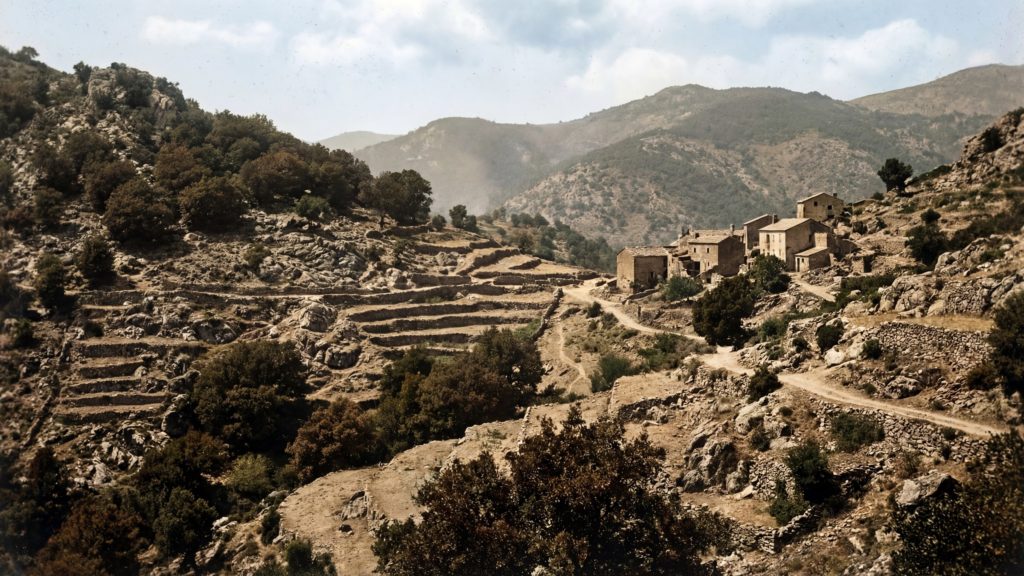
Napoleon's boyhood played out just after Corsica's independence movement had been crushed: he grew up on an island that had belonged to France for barely a year longer than he had been alive.[1, p. 28] He was sent away for his military education, and by the age of sixteen had already left the school at Brienne, on the French mainland, some two years earlier.[1, p. 28] A Corsican childhood folded into a barely-French Corsica — that is the defining shape of Napoleon's early years.
Corsica has remained French territory ever since 1769; an 1898 travellers' handbook already described the island's "union with France" as having grown "still more" complete over the nineteenth century.[1, p. 28] By then the Casa Buonaparte in Ajaccio, where Napoleon was born, was already open to visitors as a memorial house — the start of Corsica's enduring identity, into the present day, as the birthplace of an emperor.[1, p. 28]
Legacy & Reputation
What’s the verdict?
Historians have long noted the irony that Corsica’s own bid for independence, crushed at Ponte-Nuovo in May 1769, was extinguished only months before the island produced the man who would go on to rule most of continental Europe.[1, p. 28] Napoleon’s recent, reluctant French citizenship — his family had been Genoese subjects for most of their history on the island — has often been read as one root of his lifelong outsider status among France’s established elites.[1, p. 28]
Myth-buster
Think you know this one?
It’s sometimes claimed Napoleon was “really Italian” rather than French, since Corsican culture and the Buonaparte name were Genoese/Tuscan in origin. In fact Corsica had already passed to French sovereignty under the Treaty of Versailles in 1768, a year before his birth, so Napoleon was born a French subject on French territory.[1, p. 28]
Quick Facts
The essentials
Quick Facts
Roger has a theory about timing…
Genoa formally handed Corsica to France under the Treaty of Versailles in 1768 — a full year before Napoleon was born. Roger's theory: the island barely had time to change its passport before producing an emperor.[1, p. 28]
Keith checked the date…
Corsican resistance under Pasquale Paoli was crushed at the Battle of Ponte-Nuovo on 9 May 1769, ending the island's brief self-rule. It happened only months before Napoleon's birth on the same island.[1, p. 28]
One for the Ageonauts…
Napoleon — properly Napoleone Buonaparte — was born on 15 August 1769 in Ajaccio, in the house later preserved as the Casa Buonaparte. No British cartoonists were present at the birth, disappointingly.[1, p. 28]
Roger wants you to picture the family tree…
The Buonaparte family weren't originally Corsican at all — records trace them emigrating to the island from Sarzana in Tuscany back in the 16th century, making young Napoleon's "Italian-sounding" surname exactly that: genuinely Italian.[1, p. 28]
Keith would like to clarify the chain of command…
Pasquale Paoli commanded Corsica's independence movement from 1755 onward, running the island's affairs for over a decade before Genoa ceded it to France. Ajaccio still honours him with its central Place Paoli.[1, p. 28]
History gets strange here…
By 1898, Napoleon's birth house in Ajaccio was already a fixed tourist stop, open to visitors on Thursday and Sunday afternoons. The Corsican pilgrimage trade, it turns out, is well over a century old.[1, p. 28]
Roger insists this detail matters…
Napoleon left the military school at Brienne, on the French mainland, roughly two years before he turned sixteen — meaning the future emperor was already off the island and training for war by around fourteen.[1, p. 28]
Keith has spotted the maths problem…
People sometimes assume Napoleon was "always French." The numbers say otherwise: Corsica only became French territory in 1768, meaning its most famous son missed being born a Genoese subject by about a year.[1, p. 28]
The past has entered the chat…
Ajaccio still runs on Napoleon: a Rue Napoléon, a Cours Napoléon lined with orange trees, and monuments to the Buonaparte family dotted across the old town. The branding, evidently, never really stopped.[1, p. 28]
Worth remembering…
After the storming of the Bastille in 1789, a young Napoleon travelled to Marseilles to welcome Pasquale Paoli home from exile — the same Paoli whose Corsican resistance had been defeated twenty years earlier.[1, p. 28]
Sir, I am upon my travels, and have lately visited Rome: I am come from seeing the ruins of one brave and free people: I now see the rise of another.
James Boswell, introducing himself to Pasquale Paoli, 1765
Boswell travelled to Corsica specifically to meet Paoli during the independence struggle; the line became one of the most-quoted moments in his resulting book, An Account of Corsica (1768), published just before Genoa ceded the island to France.
Timeline
How it unfolded
1347
Corsica offered to Genoa
In 1347 an assembly of Corsican caporali and barons decided to offer the sovereignty of the island to the Republic of Genoa, beginning the long Genoese domination of Corsica.[2] Genoa held at least a nominal authority over the island until 1768.[3]
April 1755
Pasquale Paoli elected general
Pasquale Paoli was elected general of the Corsicans in April 1755 at an assembly at San Antonio della Casabianca, and went on to rule the island, apart from the coastal towns, with absolute authority while putting down the vendetta.[2]
15 May 1768
Genoa sells Corsica to France
On 15 May 1768 Genoa signed a treaty selling the sovereignty of the island to France, ending its long and failing contest to hold Corsica.[2] Baedeker's handbook calls it the Treaty of Versailles of 1768.[1, p. 28]
16 June 1769
Paoli leaves Corsica
Paoli resisted the French takeover, but by the summer of 1769 the French were masters of the island, and on 16 June Pasquale and Clemente Paoli embarked with some 400 followers on a British ship for Leghorn.[2]
15 August 1769
Birth of Napoleon in Ajaccio
Napoleon Bonaparte was born at Ajaccio in Corsica on 15 August 1769, the year the French conquest of the island was completed.[4, p. 135] His father, Carlo Buonaparte, had served as Paoli's secretary and supported the resistance to French rule.[2]
1 January 2018
Collectivite de Corse created
On 1 January 2018 the regional and departmental territorial collectivities of Corse-du-Sud and Haute-Corse were merged to form the single territorial collectivity of Corsica.[5]
Dig Deeper
Copy any prompt below into your favourite AI chat to keep exploring.
Explain how Corsica's 1768 transfer from Genoa to France, a bare year before Napoleon's birth, shaped his lifelong identity as an outsider in French elite circles.
What does it teach us about power that an island barely a year into French rule went on to produce the man who conquered most of Europe?
Roleplay as a customs officer at Ajaccio harbour in 1769, deciding on the spot whether baby Napoleon counts as Genoese or French cargo.
Further Reading
Where to read more
Corsica
Britannica's overview entry on Corsica — geography, history, and its status within France.
Why look at this: Confirms, from an authoritative reference, that Corsica became a province of France in the very year of Napoleon's birth (1769) — a quick check on the timing this page is built around.
https://www.britannica.com/place/CorsicaNapoleon and Corsica
An itinerary-style feature from the official Napoleon Foundation on Napoleon's Corsican years — his birth house, the Bonaparte family properties, and his break with Paoli.
Why look at this: Fills out the Buonaparte family's Corsican life beyond the birth house — including the Milelli olive grove and the family's 1793 flight from the island — that this page only sketches.
https://www.napoleon.org/en/magazine/itineraries/napoleon-and-corsica/South-eastern France Including Corsica: Handbook for Travellers (1898)
Karl Baedeker's 1898 travellers' handbook, digitised in full — the actual historical source this page draws its Corsica facts from, including the Ajaccio birth-house entry.
Why look at this: Lets readers see, in its original 1898 wording, the Genoa cession, the Battle of Ponte-Nuovo, and the Casa Buonaparte's visiting hours cited throughout this page.
https://archive.org/details/southeasternfra00firgoogRelated
Keep exploring

Places

Can be seen in
Where this shows up

References
Sources
Sources
- BookSouth-eastern France Including Corsica: Handbook for Travellers by Karl Baedeker (Firm Karl Baedeker. Page 28. ↑
- Document1911 Encyclopædia Britannica/Corsica ↑
- DocumentCatholic Encyclopedia (1913)/Corsica ↑
- BookMemoirs of Napoleon Bonaparte — Complete by Louis Antoine Fauvelet de Bourrienne. Page 135. ↑
- Websiteen.wikipedia.org: Wiki / Corsica ↑