
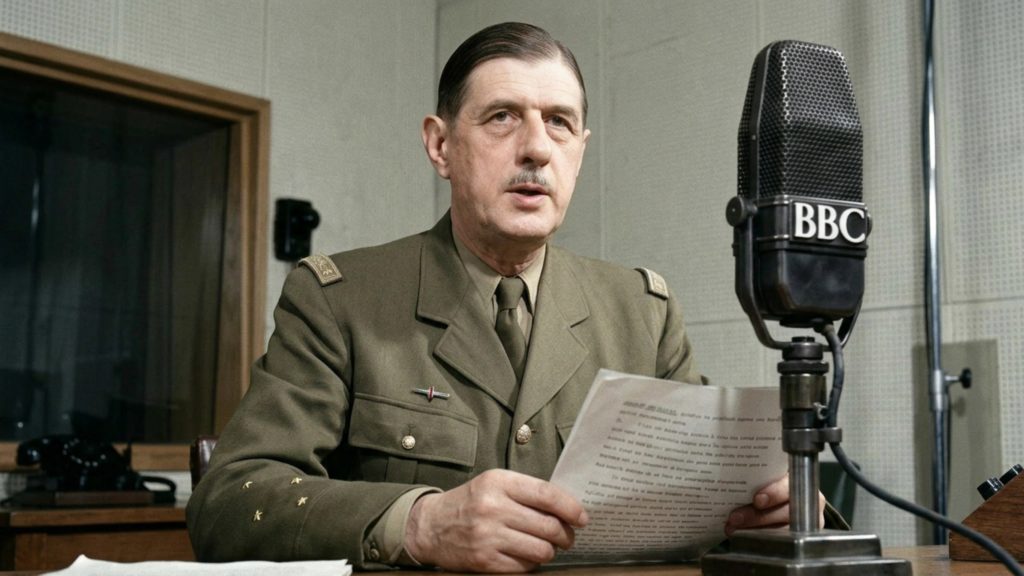
Brigadier General Charles de Gaulle in 1940; a junior minister when France sought an armistice, he flew to London to fight on.
General & President of the French Republic
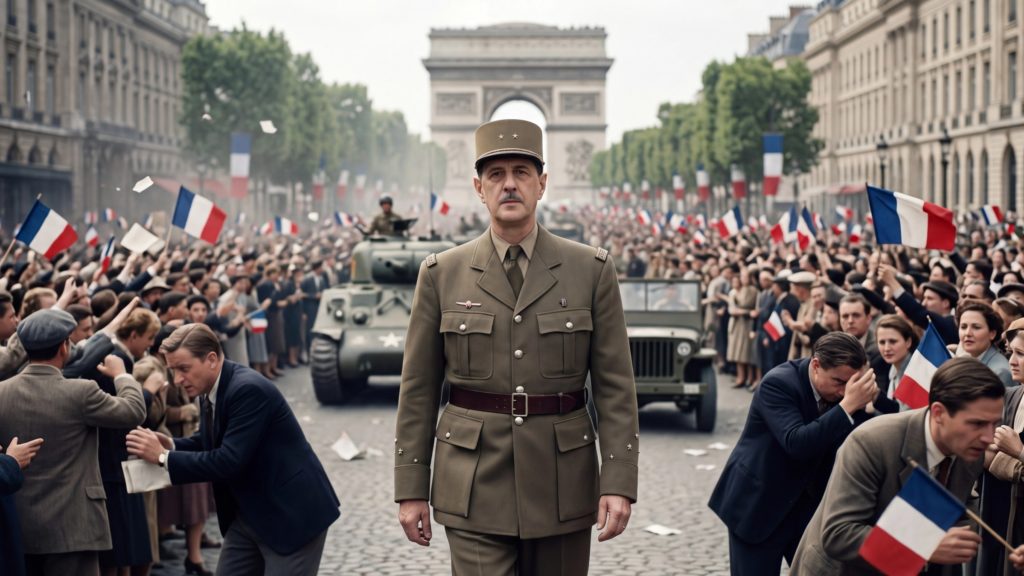
During the liberation of Paris he led a victory procession through the city while snipers opened fire around him — and kept walking[1].
Bio
Who they were
Charles de Gaulle was born in 1890 and died in 1970[2].
By 1944 de Gaulle held the rank of General and led the movement that Britain and the United States came to recognise as the Provisional Government of France[3, p. 163]. Churchill's own war memoirs record the two governments hesitating for months, watching how relations between de Gaulle and President Roosevelt developed, before formally recognising his Committee of National Liberation as France's Provisional Government on 20 October 1944[3].
During the liberation of Paris in late August 1944, de Gaulle led a victory procession through the city; snipers opened fire on the crowd around him, but he was not hit and the march continued[1]. Churchill flew to Paris that November, and on 11 November 1944 the two men led a further procession down the Champs-Élysées[3, p. 163]. Weeks later, on 10 December 1944, de Gaulle signed a Franco-Soviet pact with Stalin's government after visiting Moscow[3, p. 163]. Nearly two decades later, as President of the French Republic, he signed the Élysée Treaty with West German Chancellor Konrad Adenauer in Paris on 22 January 1963, aiming to end the two nations' "age-old rivalries"[4].
De Gaulle died in 1970[2].
The Élysée Treaty de Gaulle signed with Adenauer in January 1963 set out regular summits between French and German leaders, quarterly meetings between foreign ministers, and exchange programmes for students and young people, framed as ending the two countries' "age-old rivalries" and building toward "a united Europe"[4]. The library's downloaded material does not extend to how this partnership developed afterward, or to de Gaulle's other major legacies such as the Fifth Republic's constitution or Algerian independence, so those are not covered here.
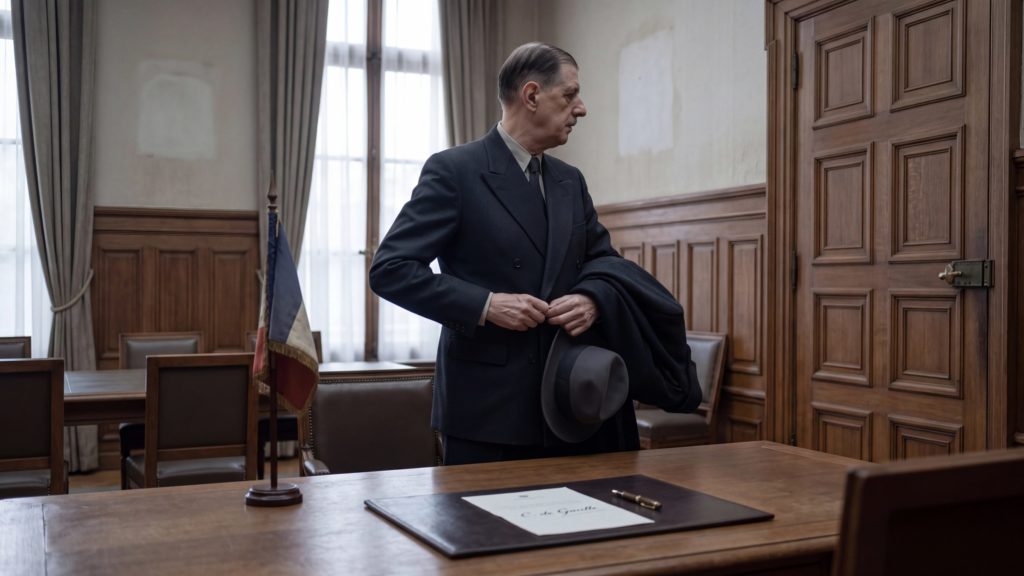
In a private telegram, Churchill referred wryly to the uncertain state of Franco-American relations as "the President's honeymoon with de Gaulle," reflecting how carefully Britain and the US had to manage their relationship with the general before fully recognising his government[3].
Legacy & Reputation
What’s the verdict?
Churchill’s own memoirs show Britain and the United States hesitating for months before recognising de Gaulle’s Committee of National Liberation as France’s legitimate government, only doing so in October 1944[3]. This points to a wary, sometimes strained relationship between wartime Allied leaders and de Gaulle, even as they ultimately relied on him to represent liberated France.
Myth-buster
Think you know this one?
It’s sometimes assumed de Gaulle’s authority over France was accepted the moment Paris was liberated in August 1944; in fact Britain and the US did not recognise his Committee of National Liberation as France’s Provisional Government until 20 October 1944, weeks later[3].
Quick Facts
The essentials
Quick Facts
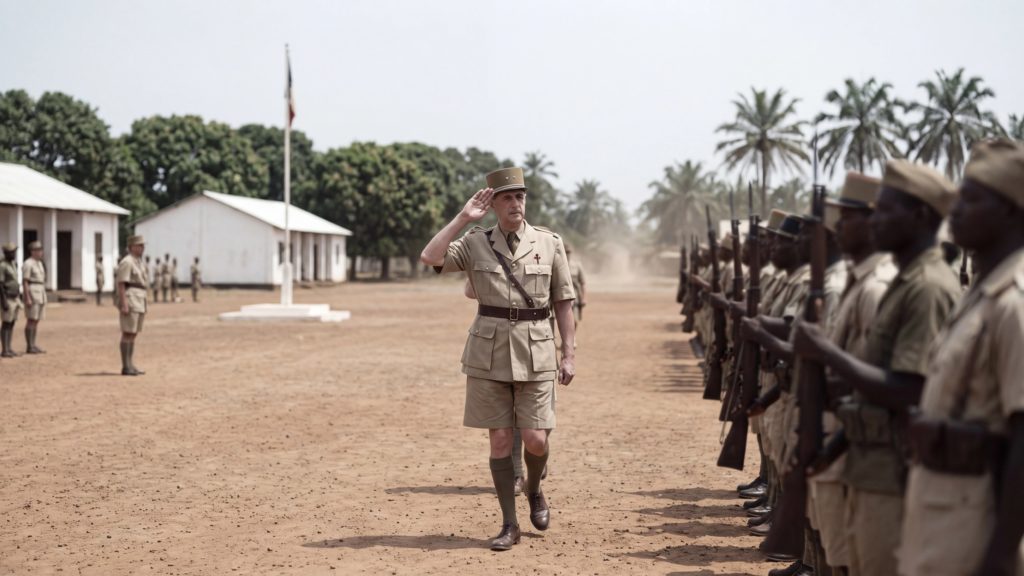
Roger would like you to know…
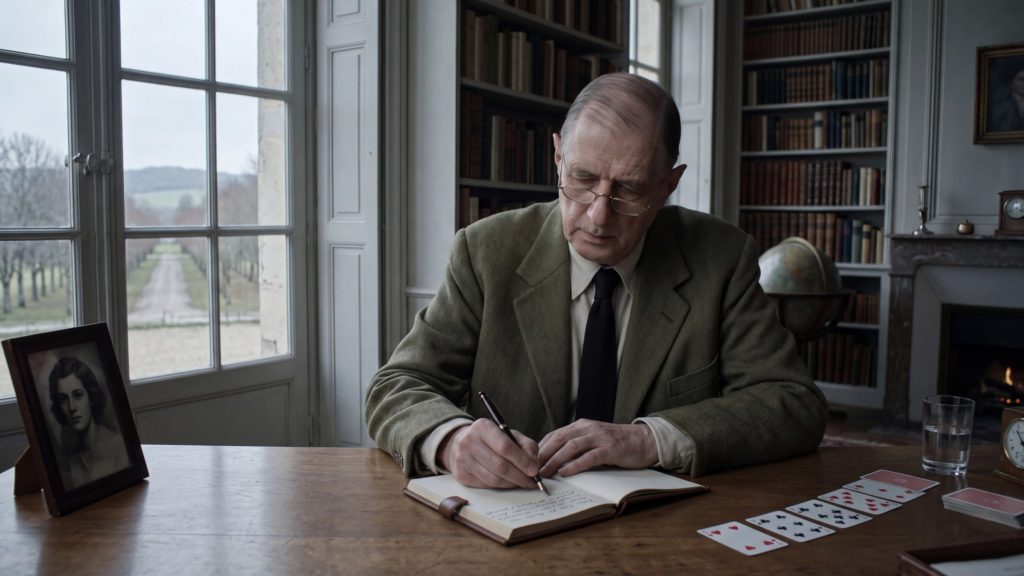
At six feet four inches, de Gaulle was hard to miss — a real problem when he tried to escape German prisoner-of-war camps in the First World War. He was recaptured every time, partly because he stood out in any crowd[5].
Keith checked the sources…
De Gaulle was captured by the Germans in March 1916 after being wounded several times, and spent roughly two years a prisoner. He kept up morale among fellow captives by giving them detailed lectures on how the war was actually going[6].
The past has entered the chat…
On 18 June 1940, with France defeated and its government negotiating an armistice, a little-known French general used BBC radio from London to urge officers and soldiers to keep fighting — the broadcast that founded the Free French movement[6].
Roger has a theory…
When Britain recognised de Gaulle as leader of the Free French on 28 June 1940, he was a freshly promoted brigadier general with barely any troops of his own. Churchill still reportedly called him "l'homme du destin" — the man of destiny[5].
Keith has spotted the problem…
Wartime allies, not always easy friends: Churchill's own war memoirs record a moment in 1944 when de Gaulle simply refused to meet him[3, p. 483], a small entry in a very long index of Anglo-French friction.
Meanwhile, in history…
In December 1944, de Gaulle travelled to Moscow and signed a Franco-Soviet pact with Stalin, even while Britain and America were still working out whether his government properly counted as France's legitimate voice[3, p. 163].
Roger has entered the historical rabbit hole…
On 22 August 1962, gunmen fired roughly 140 rounds at de Gaulle's car near Petit-Clamart. His Citroën DS's suspension held the vehicle steady through a skid, his driver accelerated clear, and de Gaulle and his wife walked away unharmed[7].
Keith remains unconvinced…
In 1963, de Gaulle vetoed Britain's application to join the European Economic Community, judging the country too closely tied to the United States to fit comfortably into a European club — a "non" that stuck for years[6].
A small fact with a very large consequence…
That same year, 1963, de Gaulle signed the Élysée Treaty with West Germany's Konrad Adenauer[4], turning two countries that had fought three wars in under a century into declared, formal partners.
The familiar story leaves this out…
De Gaulle didn't simply fade from office. After voters narrowly rejected his 1969 referendum on regional reform, he resigned the very next day, exactly as he had promised he would if he lost[6].
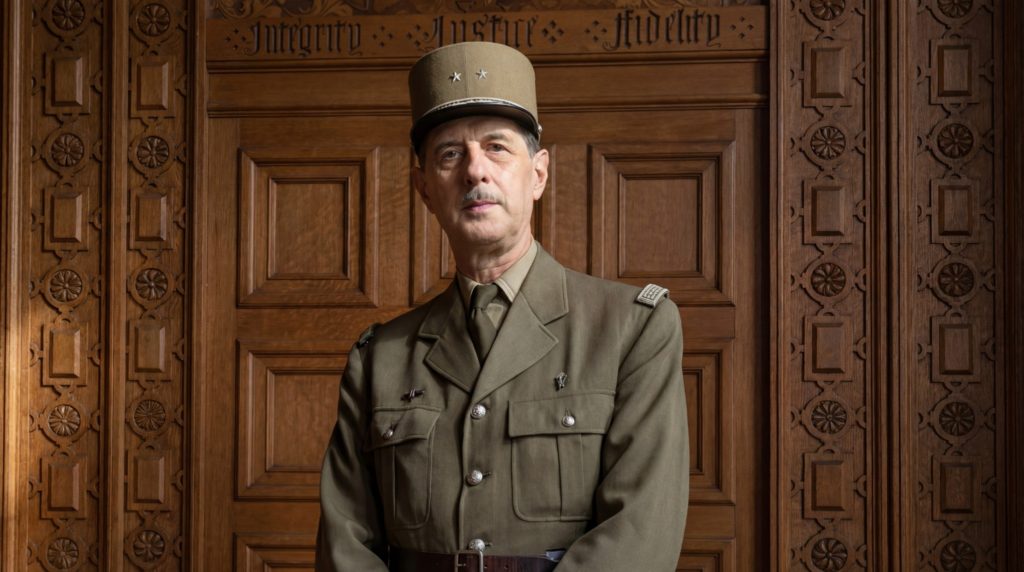
Whatever happens, the flame of French resistance must not be extinguished and will not be extinguished.
Appeal of 18 June 1940, broadcast from London on the BBC
Calling on French soldiers and civilians to keep fighting as the government sought an armistice.
Timeline
How it unfolded
22 November 1890
Birth of Charles de Gaulle
Charles de Gaulle was born in Lille, the third child of his family.[8] The Fondation Charles de Gaulle gives his birth date as 22 November 1890.[9]
18 June 1940
The Appeal of 18 June
From London, a day after Marshal Petain called for the fighting to stop, de Gaulle appealed to the French over the BBC to continue the struggle.[10]
25 August 1944
Liberation of Paris
General Leclerc's 2nd Armoured Division entered Paris, General von Choltitz surrendered the German garrison, and de Gaulle then went to the Hotel de Ville and delivered a famous speech.[11]
20 January 1946
De Gaulle Resigns from the Provisional Government
De Gaulle resigned as head of the provisional government, ending the chapter he had opened in June 1940 as leader of the Free French.[12] The Fondation Charles de Gaulle records that he preferred to resign on 20 January 1946.[8]
21 December 1958
De Gaulle Elected President of the Republic
Having become the last president of the council of the Fourth Republic on 1 June 1958, de Gaulle was elected President of the French Republic by indirect universal suffrage.[8]
28 April 1969
De Gaulle Resigns the Presidency
De Gaulle left office the day after French voters rejected his referendum on Senate reform and regionalisation.[13]
Dig Deeper
Copy any prompt below into your favourite AI chat to keep exploring.
Explain what happened when snipers opened fire during Charles de Gaulle's victory march through liberated Paris in August 1944.
What does it mean that de Gaulle's authority over France was built partly on a single, very public act of refusing to flinch?
Roleplay de Gaulle's security detail trying to convince him to take cover during the Paris victory march while he just keeps walking.
Further Reading
Where to read more
Charles de Gaulle
Britannica's biography of de Gaulle, covering his military career, leadership of Free France, and the Fifth Republic presidency.
Why look at this: Explains how being wounded three times and captured at Verdun in the First World War shaped the uncompromising discipline he later brought to leading Free France from London after 1940.
https://www.britannica.com/biography/Charles-de-Gaulle-president-of-FranceCharles de Gaulle (Encyclopedia.com)
A compiled, multi-article scholarly biography spanning de Gaulle's WWI service through his 1969 resignation.
Why look at this: Lays out the specific gamble of granting Algeria independence in 1962 over fierce opposition from French colonists and the OAS, and how that unresolved bitterness fed into the near-collapse of his government during May 1968.
https://www.encyclopedia.com/people/history/french-history-biographies/charles-de-gaulleThe Appeal of 18 June 1940 (UNESCO Memory of the World Register)
UNESCO's official register entry documenting the four surviving primary records of de Gaulle's 18 June 1940 BBC broadcast: the handwritten text, a later recording, and the August poster and its manuscript.
Why look at this: Shows precisely why this one radio broadcast - not a written proclamation - became the founding act of the Free French resistance, described by UNESCO as one of the strongest uses of radio in history.
https://www.unesco.org/en/memory-world/appeal-18-june-1940Related
Keep exploring
Places
Can be seen in
Where this shows up
References
Sources
Sources
- BookWar Speeches By The Right Hon. Winston S. Churchill C.h., M.p. (compiled by Charles Eade) ↑
- DocumentHans Brass ↑
- BookThe Second World War, Volume 6: Triumph and Tragedy by Winston S. Churchill. Pages 163, 483. ↑
- DocumentÉlysée Treaty ↑
- Websitehistory.com: Britain recognizes general charles de gaulle as the leader of the free french ↑
- Websiteelysee.fr: Charles de gaulle ↑
- Websitehistory.com: Citroen helps de gaulle survive assassination attempt ↑
- Websitecharles-de-gaulle.org: Charles de gaulle ↑
- Websitecharles-de-gaulle.org: 22 11 1890 naissance de charles de gaulle a lille ↑
- Websitedefense.gouv.fr: 18 juin 1940 appel historique du general gaulle bbc ↑
- Websitecharles-de-gaulle.org: Liberation de paris ↑
- Websiteherodote.net: 20 janvier 1946 evenement ↑
- Websitecharles-de-gaulle.org: 28 avril 1969 le general de gaulle demissionne ↑
- Websiteen.wikipedia.org: Charles de Gaulle ↑