
Bourrienne watches the storming of the Tuileries, 10 August 1792, a scene he later described, having stood beside Bonaparte to see it.
Private Secretary to Napoleon Bonaparte; Memoirist
He was Napoleon's private secretary at the height of his power[1, p. 135] — then was dismissed and accused of financial corruption[1, p. 135], before writing one of the most widely read (and most argued-over) eyewitness memoirs of Napoleon's career.
Bio
Who they were
Louis Antoine Fauvelet de Bourrienne was born in 1769[1], in Sens, on 9 July of that year[2] — the same year as Napoleon Bonaparte, a coincidence he noted himself at the opening of his own memoirs[1]. Little in the library's sources details his family background beyond this, but his later closeness to Napoleon points to an early acquaintance that placed him at the center of Napoleon's rise from very early on.
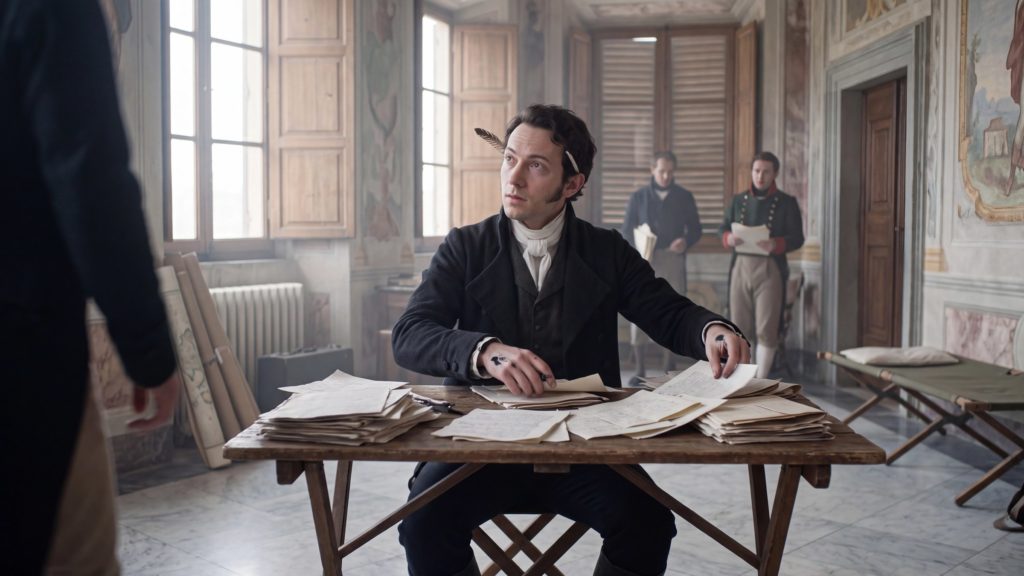
Bourrienne became one of Napoleon's most trusted aides, serving him closely enough to later describe long stretches of Napoleon's career from direct personal observation[1]. He rose to become Napoleon's private secretary, a position that put him at Napoleon's side through diplomatic correspondence and day-to-day administration during the Consulate period[1, p. 135]. Later he was sent abroad in an official capacity as France's representative at Hamburg[1, p. 135], a sign of the trust still placed in him even after his secretarial role ended.
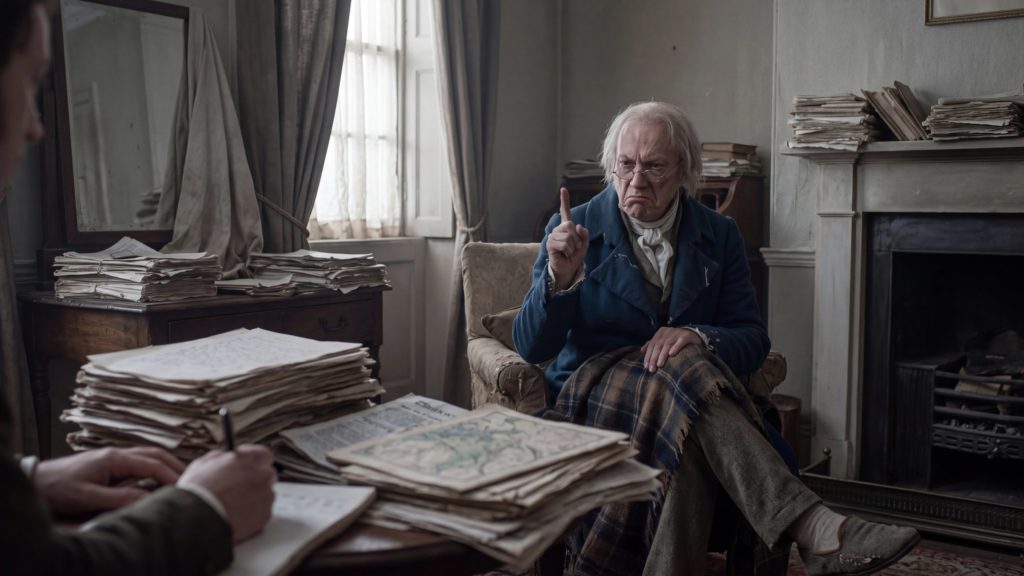
Bourrienne's closeness to power did not protect him from scandal: he was, by his own account, accused of "peculation" — financial corruption — during his career[1, p. 135], an accusation he addressed directly and at length in his own memoirs. He was removed from his post as private secretary as a result. Long after Napoleon's fall, Bourrienne turned his insider's knowledge into a substantial set of memoirs, later edited and annotated for English readers by Colonel R. W. Phipps in an 1891 edition[1], offering one of the fullest surviving first-hand accounts of Napoleon's private working life.
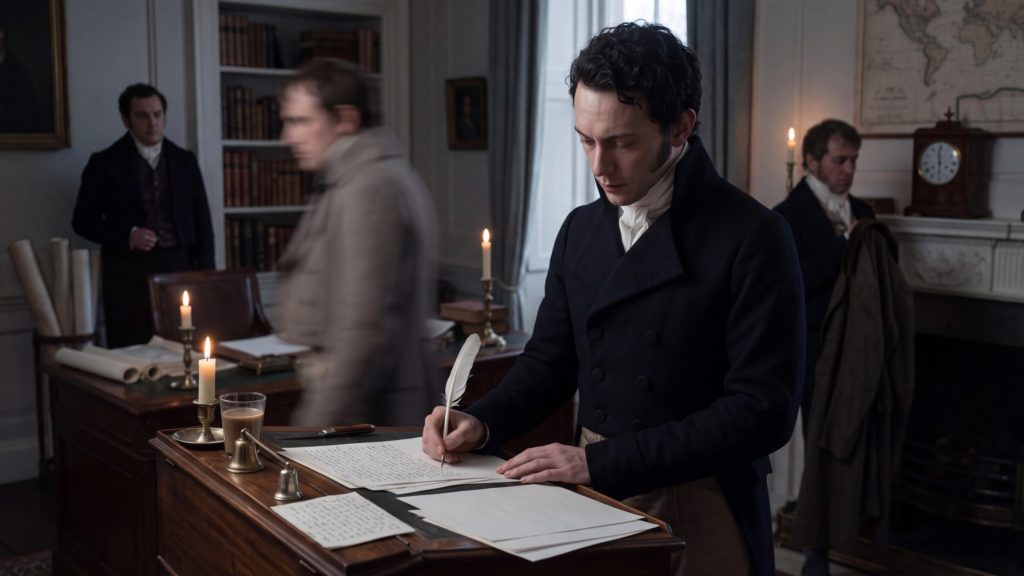
Bourrienne died in 1834 near Caen[2]. His memoirs, compiled and published after his death, became one of the standard sources historians have drawn on for details of Napoleon's private conduct, habits, and correspondence — even as questions were raised about how reliable a witness a dismissed and once-disgraced secretary could be.
Bourrienne's lasting importance lies almost entirely in his memoirs, which remain a frequently cited primary source for Napoleon's early career, precisely because Bourrienne had direct, sustained personal access that few others had[1]. That the same book was edited and annotated decades later by Colonel Phipps[1] reflects how much historians have continued to rely on — and needed to check — his account.
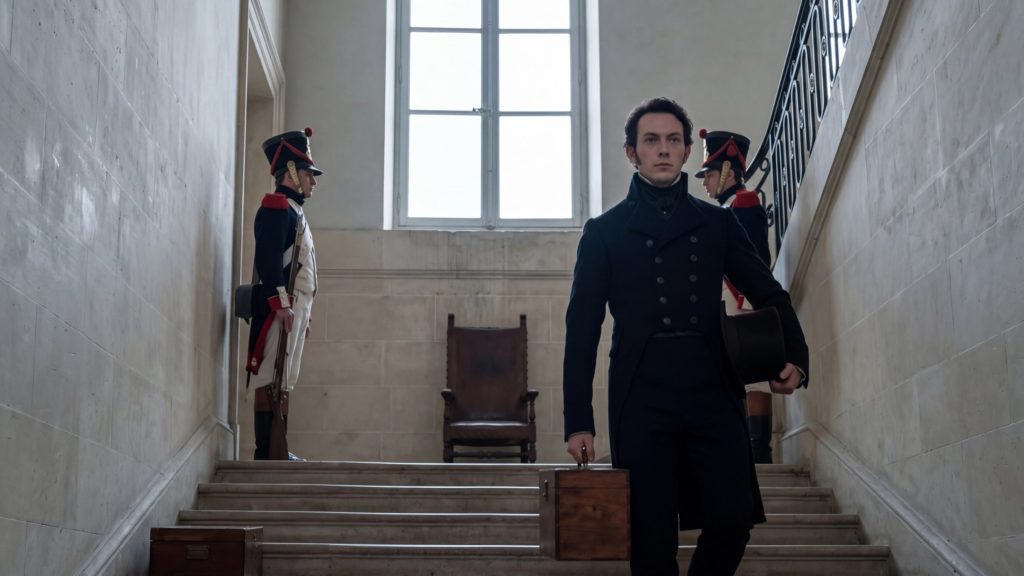
Bourrienne opens his own memoirs with a small, human detail: noting that he and Napoleon were born in the same year, 1769[1] — a quiet way of establishing that his account of Napoleon's life was that of a contemporary and intimate, not a distant observer.
Legacy & Reputation
What’s the verdict?
Bourrienne’s memoirs have long been treated with some caution by historians precisely because of his own removal from office over accusations of peculation[1, p. 135]; the 1891 English edition prepared by Colonel R. W. Phipps was itself an attempt to revise and annotate the original text for accuracy[1], which suggests the work needed correcting even in the eyes of its own later editors. Beyond this, the library’s sources do not give enough detail to characterize the wider historiographical debate with confidence.
Myth-buster
Think you know this one?
Myth: Bourrienne’s memoirs are sometimes treated as a plain, first-hand record of Napoleon’s life. Correction: Bourrienne himself was dismissed from Napoleon’s service amid accusations of financial corruption[1, p. 135], and the standard English edition of his memoirs was later edited and annotated to correct the original text[1] — it is a valuable but contested source, not a neutral transcript.
Quick Facts
The essentials

Quick Facts

Roger would like you to know…
Bourrienne and Napoleon were born the same year, 1769, and became friends as boys at the military school of Brienne-le-Château. They lost touch, met again in 1792 and 1795, and only in 1797 — once Napoleon had conquered Italy — did he send for his old schoolmate to be his secretary[1].
Keith checked the sources…
When the two reconnected in the mid-1790s, Bourrienne apparently regarded his old schoolmate's grand ambitions as "only so much folly." He was rather quickly proved wrong, and spent the next several years as the private secretary of the man he'd once written off[1].
Roger said it. Keith checked it…
Before Napoleon, Bourrienne was a junior diplomat posted to Stuttgart in 1792 — and, wisely, disobeyed an order to return to revolutionary France, becoming an émigré instead. It likely saved his life; plenty of men who did go home that year did not survive the year that followed[1].
Keith has spotted the problem…
Bourrienne's memoirs defend Napoleon over the deaths of sick and plague-stricken prisoners at Jaffa — but even his own editor isn't sure whether that was genuine defence, or a subtle way of pinning the act firmly on Napoleon while public opinion was running against him[1].
Roger has entered the historical rabbit hole…
The memoir's full title says it all: "Memoirs of Napoleon Bonaparte, Complete, by Louis Antoine Fauvelet de Bourrienne, His Private Secretary." Few people have ever had a better vantage point on a famous man — or a messier reputation for how they used it[1].
File under: surprisingly true…
Bourrienne served as France's Minister and Consul-General at Hamburg — a plum diplomatic post that, by his own editor's admission, he very likely used to make himself "much money." It did not end well for his career[1, p. 135].
Keith would like to clarify…
Bourrienne's short-sighted grasping after money at Hamburg cost him his career: his editor concludes he was clever and able enough to have risen to the very top under Napoleon, had greed not driven him from office and kept him out of favour for good[1, p. 135].
One for the Ageonauts…
A near-contemporary account backs Bourrienne up on Hamburg specifically: Marshal Marmont judged that part of the memoirs "generally well founded," adding only that Bourrienne had modestly left out just how much the locals thought he'd profited[1, p. 135].
Roger insists this matters…
Unlike Madame de Rémusat, who mostly recorded court gossip, Bourrienne gives readers Napoleon's working life: the long hours in the Cabinet, the restless activity of the Consul, the ambitious dreams that — unusually for ambitious dreams — he actually went on to realise[1, p. 135].
The familiar story leaves this out…
Historians still cross-check Bourrienne's memoirs today against Méneval, Madame de Rémusat and Colonel Iung's later research rather than dismissing them outright — a flawed source, by this editor's own account, but not a worthless one[1, p. 135].
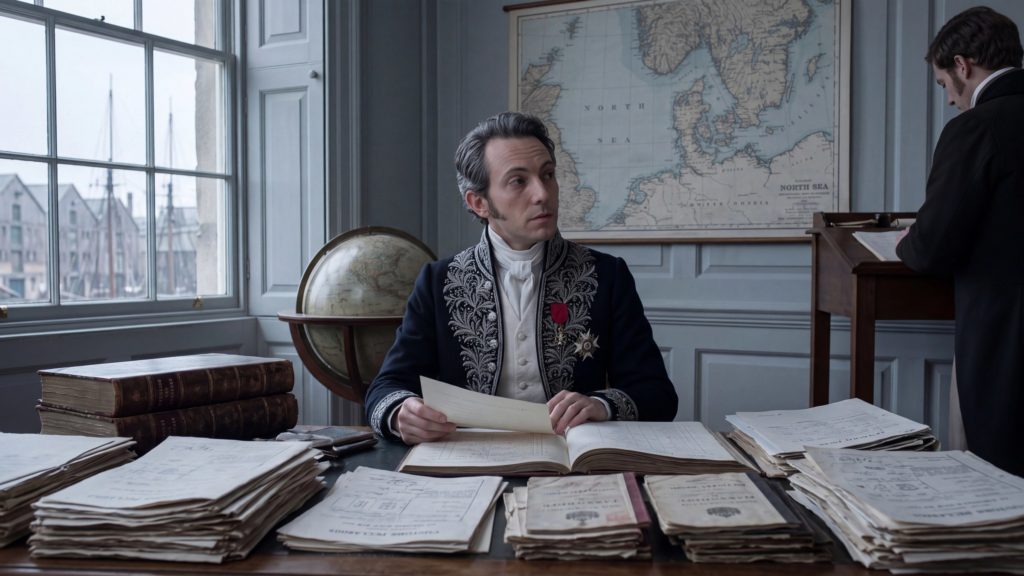
He was remarkable for the dark colour of his complexion... for his piercing and scrutinizing glance, and for the style of his conversation, both with his masters and his companions.
Louis Antoine Fauvelet de Bourrienne
Bourrienne's own recollection, from his memoirs, of the young Napoleon Bonaparte as a fellow cadet at the military school of Brienne -- one of the most frequently quoted descriptions of Napoleon's formative years.
Timeline
How it unfolded
9 July 1769
Birth of Antoine Fauvelet de Bourrienne
Louis Antoine Fauvelet de Bourrienne was born at Sens on 9 July 1769.[3][4] According to the editor of his Memoirs, he was born in the same year as Napoleon Bonaparte.[1]
1797
Bourrienne Becomes Napoleon's Secretary
Bourrienne, Napoleon's friend and companion from the military school of Brienne, joined him in 1797, after the Austrians had been beaten out of Italy, and at once assumed the office of secretary.[1] Encyclopedia.com dates his time as Napoleon's private secretary to 1797-1802.[5]
October 1802
Dismissal as Napoleon's Secretary
In October 1802 Bourrienne was called on to hand over his office to Meneval, his disgrace coming when he became involved in the affairs of the House of Coulon, which failed.[1] Wikipedia adds that Bonaparte most likely dismissed him because he was revolted by his financial speculations.[6]
1805
Appointment to Hamburg
Bourrienne left in 1805 to take up a post at Hamburg, which according to the editor of his Memoirs he held until 1810.[1] English Wikipedia says he was appointed French consul to the free city of Hamburg in the spring of 1805.[6]
Dig Deeper
Copy any prompt below into your favourite AI chat to keep exploring.
Explain why Bourrienne's memoirs of Napoleon are so widely read and so often disputed by historians at the same time.
What does it say about historical memory that some of the most-read accounts of Napoleon come from a man he personally dismissed?
Convince me Bourrienne's memoirs are the ultimate 'fired, but has receipts' career move.
Further Reading
Where to read more
Louis-Antoine Fauvelet de Bourrienne | Napoleonic, Revolutionary, Memoirist
Britannica's concise biography of Napoleon's childhood friend from the military academy at Brienne, who later became his private secretary.
Why look at this: Notes the pair's shared schooldays at Brienne, where Napoleon himself later recalled organizing a stone-filled snowball fight in which his friend Bourrienne was among those injured.
https://www.britannica.com/biography/Louis-Antoine-Fauvelet-de-BourrienneMémoires de Bourrienne, secrétaire intime de Napoléon
A Fondation Napoléon review of Bourrienne's ten-volume memoirs of Napoleon, including the historiographical dispute over how much he actually wrote himself. (French language.)
Why look at this: Goes beyond the basic facts to explain why historian Jean Tulard questioned whether Bourrienne wrote his own famous memoirs, or whether Charles de Villemarest ghost-wrote large parts of them.
https://www.napoleon.org/magazine/livres/memoires-de-bourrienne-secretaire-intime-de-napoleon/Bourrienne's Memoirs of Napoleon Bonaparte
The original English-language edition (1851) of Bourrienne's own memoirs, the eyewitness account he compiled of his years at Napoleon's side during the Consulate and the Egyptian campaign.
Why look at this: Written from his unique vantage point working 'in the same room' as Napoleon and handling his correspondence from 1797 to 1802 - contested by historians as embellished, but unmatched for firsthand detail.
https://archive.org/details/bourriennesmemoi00bourRelated
Keep exploring


Places




Can be seen in
Where this shows up

References
Sources
Sources
- BookMemoirs of Napoleon Bonaparte — Complete by Louis Antoine Fauvelet de Bourrienne. Page 135. ↑
- BookThe Memoris Of Joseph Fouche ( Vol - Ii ) ↑
- Websitewww2.assemblee-nationale.fr: Sycomore / fiche ↑
- Websiteen.wikisource.org: Bourrienne, Louis Antoine Fauvelet de ↑
- Websiteencyclopedia.com: Bourrienne louis antoine fauvelet de ↑
- Websiteen.wikipedia.org: Louis Antoine Fauvelet de Bourrienne ↑