
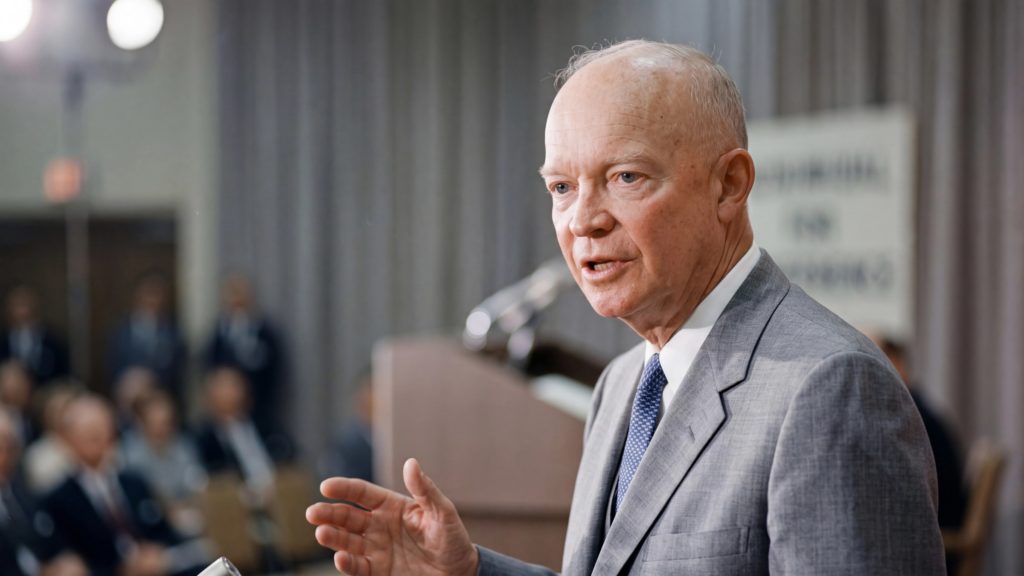
Dwight D. Eisenhower
President of the United States; Five-Star General; Supreme Allied Commander
The Kansas farm boy who rose to command the largest Allied invasion in history, then swapped a general's stars for the presidency and paved the nation with a highway system.[1, p. 7][2, p. 1][3, p. 1]
Bio
Who they were
Dwight David Eisenhower was born in Denison, Texas, on 14 October 1890[1, p. 7]. He was reared on a farm in Abilene, Kansas[1, p. 1], growing up in modest circumstances. He went on to attend the United States Military Academy at West Point[1, p. 5][2, p. 1], beginning a career in the US Army that would eventually carry him from small peacetime postings to command of the largest military coalition the world had yet assembled.
Eisenhower's military career advanced steadily through the interwar years, and by the Second World War he had been placed in command of Allied forces in Europe as Supreme Commander[4, p. 40][4, p. 30]. After the war he served as US Army Chief of Staff, then as President of Columbia University[4, p. 27][1, p. 38], before returning to uniform as a NATO military commander in Europe. In 1952 he was elected the 34th President of the United States[2, p. 1], one of very few presidents to have already led Allied forces to victory in a world war.
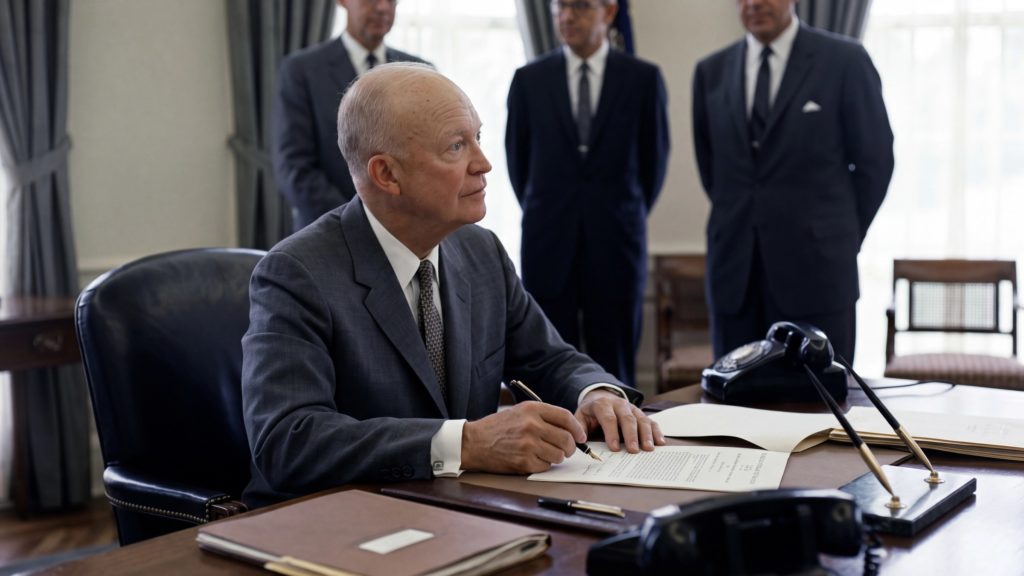
Eisenhower's best-known moment as a commander came on 6 June 1944, when as Supreme Commander of Allied forces he ordered the invasion of Normandy, sending roughly 156,000 Allied troops across the English Channel into northern France[2, p. 1]. More than 2,500 Allied troops died on the first day alone, and around 7,500 more were wounded[2, p. 1]. As president, he later signed the legislation that created the US Interstate Highway System[3, p. 1][1, p. 46], and in 1957 he sent federal troops to Little Rock, Arkansas, to enforce school desegregation at Central High School[1, p. 47].
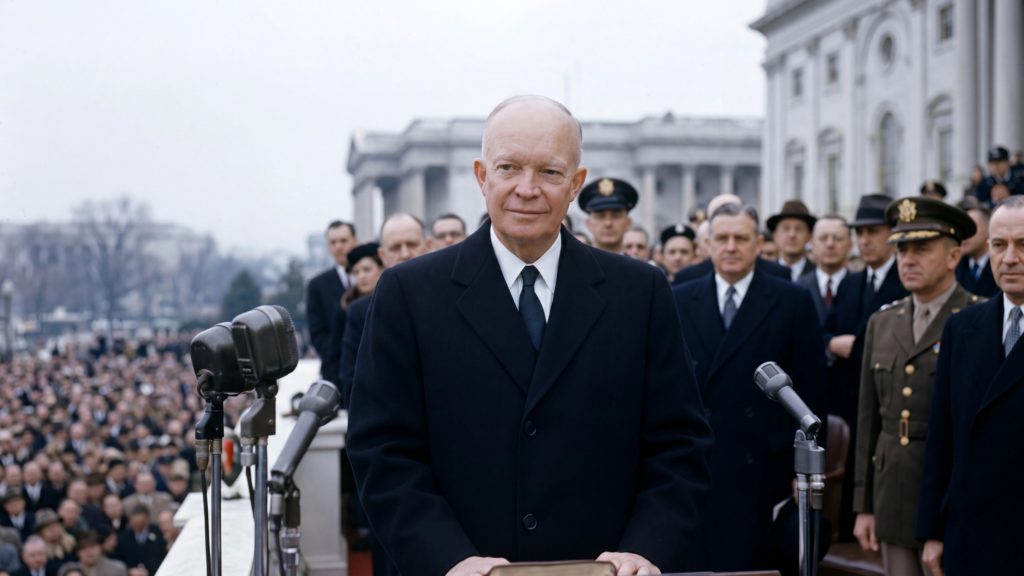
Eisenhower's health declined in his later years; by August 1968 he was making public statements from his bed at Walter Reed Hospital[4, p. 14]. He died on 28 March 1969, with his wife Mamie, son John, and grandson David at his side[1, p. 51]. His death prompted a period of national mourning for a leader remembered both as a victorious wartime general and as a two-term president.
The Interstate Highway System Eisenhower authorised reshaped how Americans travelled, worked and lived, and it still carries his name in official use as the Eisenhower Interstate Highway System[3, p. 8]. His decision to send federal troops into Little Rock set an early precedent for federal enforcement of school desegregation rulings[1, p. 47]. Competition with the Soviet Union was a constant theme of his presidency[1, p. 47], and his earlier role as Supreme Commander during the Normandy landings remains one of the most studied examples of Allied military leadership in the Second World War[2, p. 1].
Those close to Eisenhower knew him simply as "Ike," a nickname used even in formal accounts of his career[4, p. 27]. His wife, Mamie Doud Eisenhower, kept her own extensive personal papers as First Lady, later preserved as a 596,000-page collection at the Eisenhower Library[5, p. 10] -- a reminder of how thoroughly the couple's life together was documented.
Legacy & Reputation
What’s the verdict?
Historians generally regard Eisenhower as an effective, steady president, crediting him with consolidating Cold War-era infrastructure and institutions — from the Interstate Highway System to NATO’s early command structure — even though his calm public style led some contemporaries to underestimate how closely he directed policy behind the scenes. His wartime reputation as Supreme Commander has remained largely unchallenged, still treated by military historians as a central case study in coalition leadership[4, p. 40].
Myth-buster
Think you know this one?
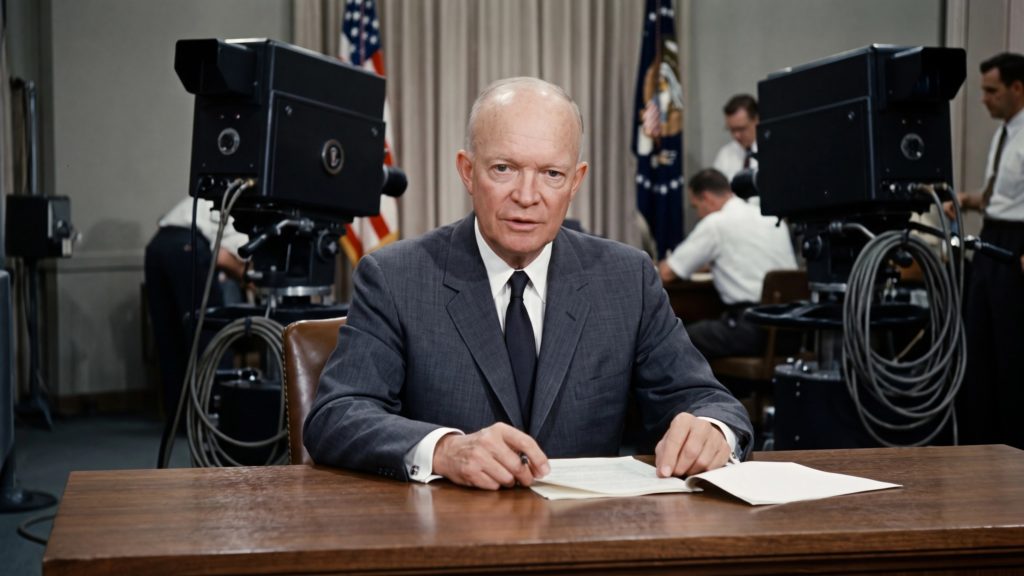
Eisenhower’s calm, grandfatherly public image sometimes leads people to assume he was a passive, hands-off leader. In fact, records of his career show him moving through an unusually demanding sequence of high-level roles in quick succession — Army Chief of Staff, president of Columbia University, and NATO commander — all before he even reached the White House[4, p. 27].
Quick Facts
The essentials
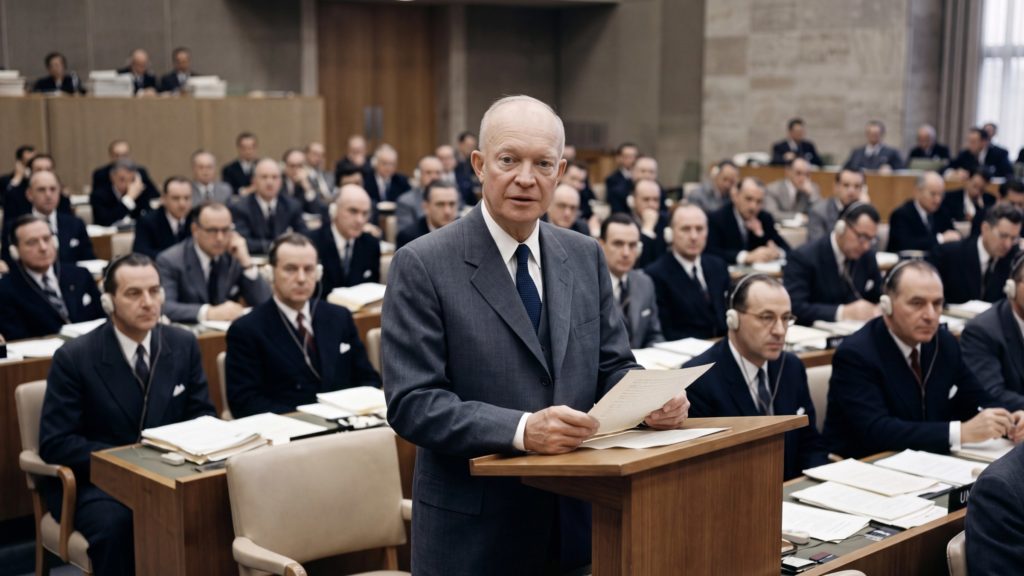
Quick Facts
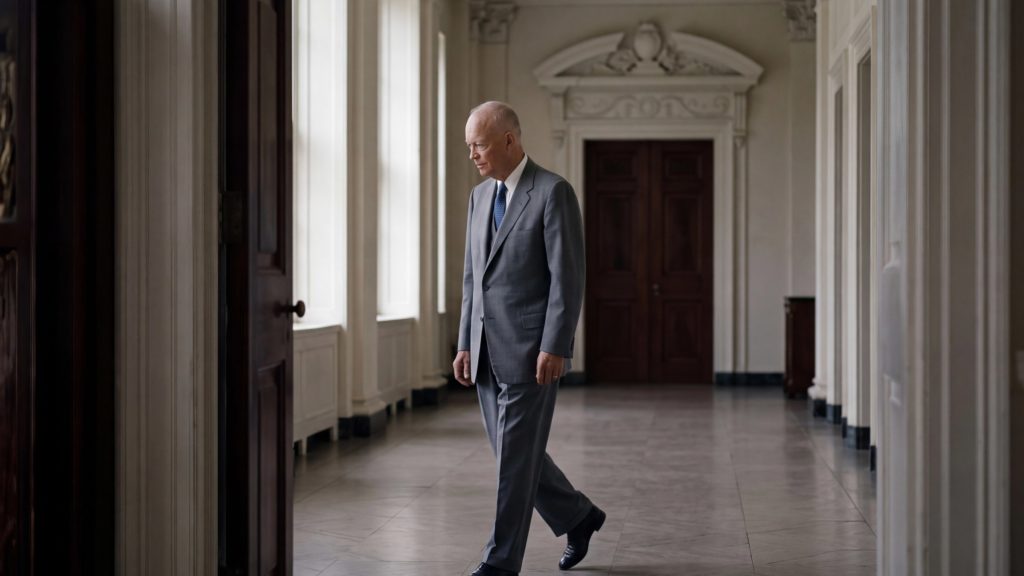
Roger has entered the historical rabbit hole...
Dwight Eisenhower was born in Denison, Texas, but grew up on a modest farm in Abilene, Kansas[1, p. 1] -- a long way, in every sense, from Supreme Allied Command.
Keith checked the sources...
Before Eisenhower ever sat in the Oval Office, he had already been US Army Chief of Staff and President of Columbia University[4, p. 27] -- an unusually varied resume for someone about to be elected the 34th President in 1952[2, p. 1].
One for the Ageonauts...
On the eve of D-Day, Eisenhower's Order of the Day told troops, "Soldiers, Sailors and Airmen of the Allied Expeditionary Force! You are about to embark upon the Great Crusade"[6, p. 1] -- words issued before he sent roughly 156,000 Allied troops into Normandy[2, p. 1].
History gets strange here...
More than 2,500 Allied troops died and 7,500 more were wounded on D-Day alone[2, p. 1] -- a cost Eisenhower, as the officer who gave the final order to go, carried as his own responsibility.
Roger insists this matters...
As president, Eisenhower signed the legislation that created the US Interstate Highway System, a project so tied to him that it is still officially called the Eisenhower Interstate Highway System[3, p. 8].
Keith would like to clarify...
In 1957, Eisenhower sent federal troops into Little Rock, Arkansas, to enforce school desegregation at Central High School[1, p. 47] -- a president once known chiefly as a general, using federal force to uphold a civil rights ruling.
This sounds invented, but...
Everyone close to Eisenhower simply called him "Ike," a nickname so standard it appears even in formal military bibliographies of his career[4, p. 27].
Meanwhile, in history...
Eisenhower's wife, Mamie Doud Eisenhower, left behind her own enormous paper trail as First Lady -- a 596,000-page personal collection now held at the Eisenhower Library[5, p. 10].
Roger said it. Keith checked it...
By August 1968, Eisenhower was frail enough to be making public statements from his bed at Walter Reed Hospital[4, p. 14]; he died there the following spring, on 28 March 1969, with his wife Mamie, son John, and grandson David at his side[1, p. 51].
Keith has spotted the quotation problem...
Eisenhower's D-Day order famously told troops "the eyes of the world are upon you"[6, p. 1] -- a line often quoted alone, though it was only one part of a longer order addressed to the entire Allied Expeditionary Force, not a private word to any single soldier.
Soldiers, Sailors and Airmen of the Allied Expeditionary Force! You are about to embark upon the Great Crusade, toward which we have striven these many months.[6, p. 1]
Dwight D. Eisenhower
Opening line of Eisenhower's Order of the Day to Allied troops on the eve of the Normandy invasion, 6 June 1944[6, p. 1][2, p. 1].
Timeline
How it unfolded
14 October 1890
Birth of Dwight D. Eisenhower
Dwight David Eisenhower was born in Denison, Texas, and his family moved to Abilene, Kansas before he was a year old.[1, p. 7]
June 1911
Eisenhower Enters West Point
Eisenhower left home and headed east to the United States Military Academy at West Point, which charged no fees and so spared his brother Edgar from working to pay his college costs.[1, p. 11]
6 June 1944
D-Day Invasion of Normandy
Eisenhower, in command of almost three million Allied troops, gave the order to go ahead with the Normandy landings, and by the end of the day over 150,000 Allied troops had overcome Hitler's defenses.[1, p. 32][1, p. 29]
7 May 1945
German Surrender at Reims
Germany's surrender took place in a school in Reims, France, early on 7 May 1945, and Eisenhower wrote the announcement himself, stating that the mission of the Allied force was fulfilled at 0241 local time.[1, p. 33]
June 1948
Eisenhower Becomes President of Columbia University
Eisenhower moved to New York City's Morningside Heights to become president of Columbia University, where he remained through the end of 1950 before leaving for a European assignment requested by President Truman.[1, p. 38]
20 January 1953
Eisenhower's First Inauguration
Eisenhower was sworn in as the thirty-fourth President, having first travelled to Korea to fulfil a campaign promise; about six months into his presidency a truce was arranged there.[1, p. 42][1, p. 41][1, p. 43]
29 June 1956
Interstate Highway System Authorized
Eisenhower signed legislation authorizing construction of the Interstate Highway System and creating a pay-as-you-go Highway Trust Fund; the system has since grown to over 42,000 miles of highways.[3, p. 1][1, p. 46]
20 January 1961
Eisenhower Hands the Presidency to Kennedy
Eisenhower's presidency ended and John F. Kennedy's began, after Kennedy narrowly defeated Richard M. Nixon in the 1960 election.[1, p. 47]
28 March 1969
Death of Dwight D. Eisenhower
Eisenhower died with his wife Mamie, son John and grandson David at his bedside, and was buried in Abilene, Kansas, near the small farm of his childhood.[1, p. 51]
Dig Deeper
Copy any prompt below into your favourite AI chat to keep exploring.
Explain how Dwight D Eisenhower went from commanding D-Day to building the US interstate highway system as president
What does a five-star general choosing to warn the country about the military-industrial complex on his way out of office teach us about power and self-restraint
Convince me Dwight D Eisenhower's decision to build America's highways was secretly inspired by how impressed he was by German autobahns during World War Two
Further Reading
Where to read more
The Life and Presidency of Dwight D. Eisenhower -- White House Historical Association
The White House Historical Association's overview of Eisenhower's life, covering his path from West Point through Supreme Allied Command to two terms as the 34th president.
Why look at this: Lays out, in one accessible piece, the dual identity that defines Eisenhower's page on this site -- the five-star general who commanded D-Day and the two-term president who signed the Interstate Highway System into law.
https://www.whitehousehistory.org/the-life-and-presidency-of-dwight-d-eisenhowerDwight D. Eisenhower: Life Before the Presidency -- Miller Center, University of Virginia
A fuller presidential-scholarship treatment from the Miller Center's American President series, focused on the unusual sequence of roles Eisenhower held before reaching the White House.
Why look at this: Goes deeper into exactly how Eisenhower moved from Army Chief of Staff, to President of Columbia University, to NATO's Supreme Allied Commander in barely seven years -- the demanding career path that this page's own myth-buster draws on.
https://millercenter.org/president/eisenhower/life-before-the-presidencyOnline Documents -- Eisenhower Presidential Library
The Eisenhower Presidential Library's curated digitised document sets, including citizens' letters on the Little Rock school desegregation crisis and Eisenhower's own wartime and presidential diaries.
Why look at this: Lets a reader read the actual citizens' letters written during the 1957 Little Rock crisis referenced on this page, rather than a later summary of how Americans reacted to Eisenhower sending in federal troops.
https://www.eisenhowerlibrary.gov/research/online-documentsRelated
Keep exploring
Places
Can be seen in
Where this shows up
References
Sources
Sources
- WebsiteDwight D. Eisenhower - biographical pamphlet (ERIC / U.S. Department of Education). Pages 1, 5, 7, 11, 29, 32, 33, 38, 41, 42, 43, 46, 47, 51. ↑
- WebsiteGeneral Dwight D. Eisenhower: D-Day and Responsibility - document handout (Bill of Rights Institute). Page 1. ↑
- WebsiteThe Interstate Highway System: 50 Years of Perspective (University of New Mexico academic paper). Pages 1, 8. ↑
- WebsiteDwight D. Eisenhower: A Centennial Bibliography (US Army Combined Arms Center / Army University Press). Pages 14, 27, 30, 40. ↑
- WebsiteA Guide to Historical Holdings in the Eisenhower Library - Women's Studies subject guide. Page 10. ↑
- WebsiteGeneral Dwight D. Eisenhower's Order of the Day (1944) - full text (Eisenhower Presidential Library). Page 1. ↑