
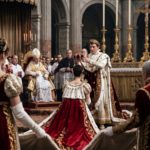
On 2 December 1804, at Notre-Dame, Napoleon placed the crown on his own head rather than receive it from the pope, then crowned Josephine — shown here lifting it high above his head while Pius VII watches from his chair, hands in his lap.
Pope of the Catholic Church (1800 to 1823) and Benedictine monk
A Benedictine monk[1] elected pope in a Venetian monastery in 1800[1], who travelled to Paris for Napoleon's coronation[2] and then spent five years deprived of his freedom by France[3].
Bio
Who they were
Barnaba Chiaramonti was born at Cesena, in the Papal States, the lands in central Italy then ruled by the pope, on 14 August 1742[1]. His father was Count Scipione Chiaramonti, and his mother came from the noble house of Ghini[1]. In 1763 she entered a Carmelite convent at Fano[1]. Barnaba was educated at a college for nobles at Ravenna[1]. At sixteen he entered the Benedictine monastery of Santa Maria del Monte, near Cesena, where he was called Brother Gregory[1]. After his studies he taught in colleges of his order, at Parma and then at Rome[1].
Pope Pius VI, a friend of the Chiaramonti family, promoted him steadily[1]. Barnaba became abbot of his monastery, then Bishop of Tivoli and Bishop of Imola, and was made a cardinal on 14 February 1785[1]. When French armies invaded northern Italy in 1797, he told his flock not to resist a force they could not beat[1]. After Pius VI died in 1799, the cardinals met in a conclave, the closed meeting that elects a pope, at a Benedictine monastery in Venice[1]. After about three months of deadlock, some neutral cardinals suggested Chiaramonti, and he was elected[1] on 14 March 1800[3]. He took the name Pius VII in homage to his predecessor[3].
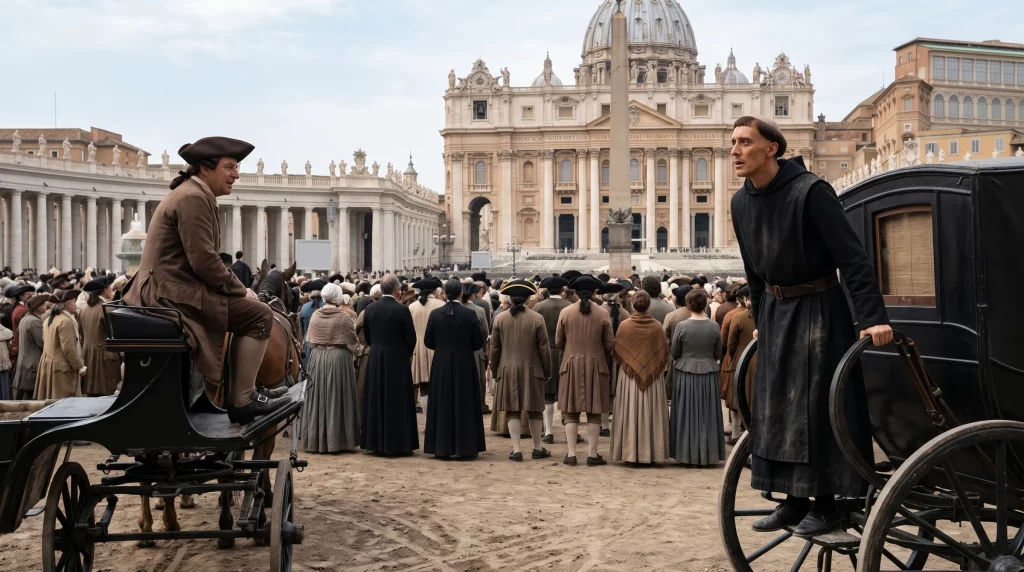
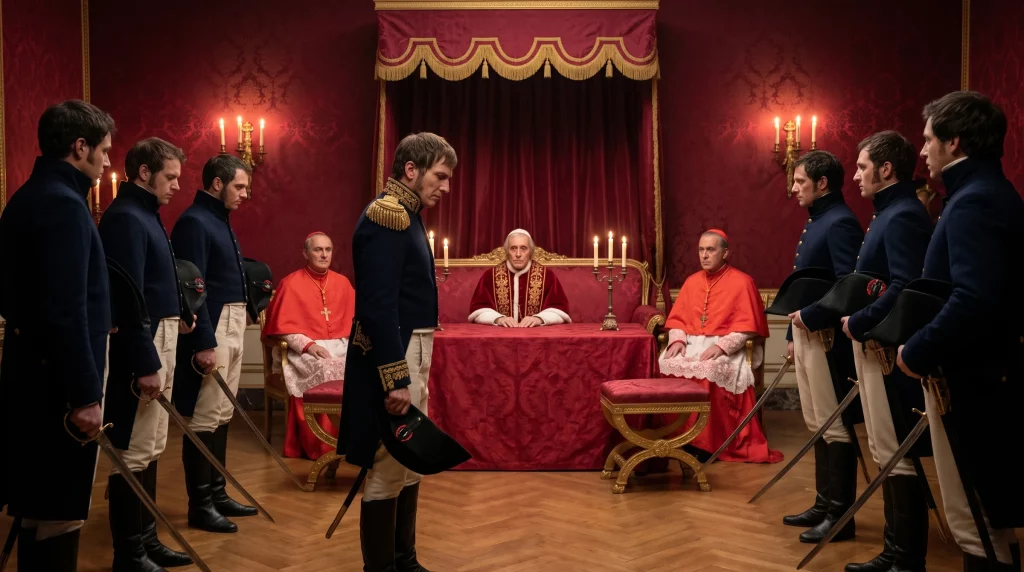
Napoleon, as First Consul, signalled that he wanted to negotiate over religion in France[1]. The two sides signed the Concordat, a treaty between pope and state, on 15 July 1801[4, p. 283]. In 1804 Pius VII agreed to travel to Paris for Napoleon's coronation on 2 December, despite his cardinals' opposition[2]. He insisted that Napoleon and Josephine receive the Church's blessing on their marriage first[5]. At Notre-Dame, Napoleon placed the crown on his own head and then crowned Josephine[5]. Relations then collapsed. In the night of 5 to 6 July 1809 General Radet arrested the pope and took him out of Rome at four in the morning[5]. He was held at Savona, and from June 1812 at Fontainebleau[2]. He re-entered Rome on 24 May 1814[2].
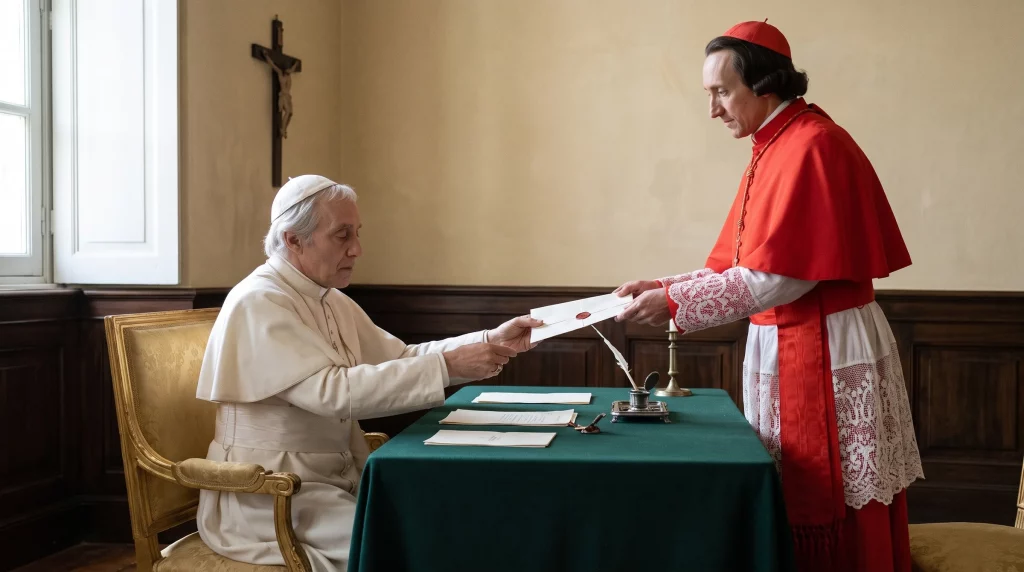
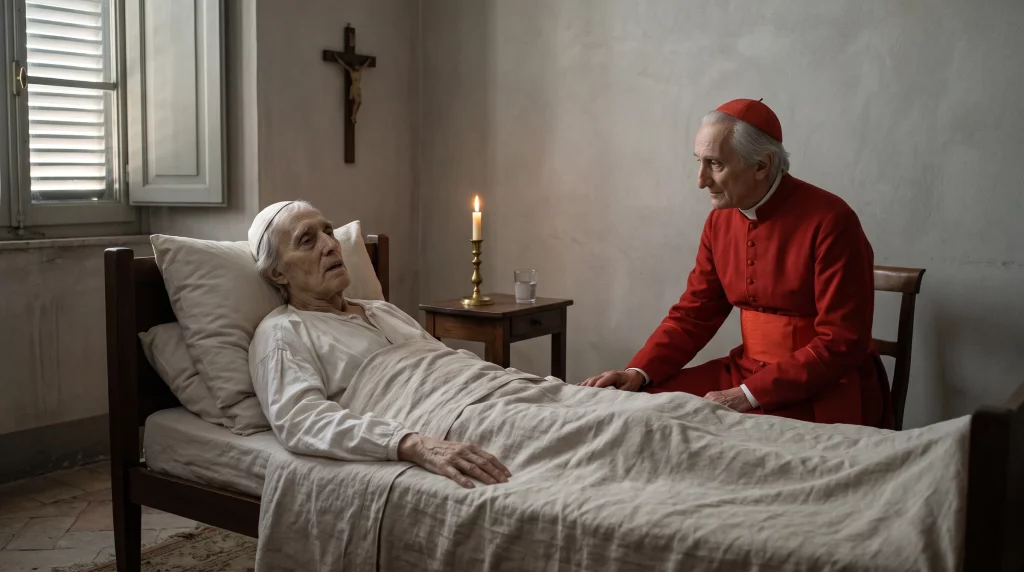
On 7 August 1814 Pius VII re-established the Jesuit order for the whole Church[1]. At the Congress of Vienna his secretary of state, Ercole Consalvi, secured the return of the Papal States[1]. After Napoleon's fall the pope gave refuge in Rome to members of the Bonaparte family[1]. On 6 July 1823 he fell in his apartment and fractured his thigh, and he never left his bed again[1]. He died on 20 August 1823 with Consalvi at his side[1]. After a funeral on 25 August he was buried in a monument in St Peter's Basilica[6].
The Concordat of 1801 governed relations between the French Church and Rome for over a hundred years[1]. Pius VII also helped the Church grow abroad. In 1808 he created dioceses, areas run by a bishop, at Boston, New York, Philadelphia and Bardstown in the United States, with Baltimore as the senior see[1]. In Rome he added manuscripts and printed books to the Vatican Library, and the city drew artists such as Antonio Canova and Bertel Thorvaldsen[1]. In 2007 Pope Benedict XVI allowed the cause for his beatification to open, and Pius VII now has the title Servant of God[6].
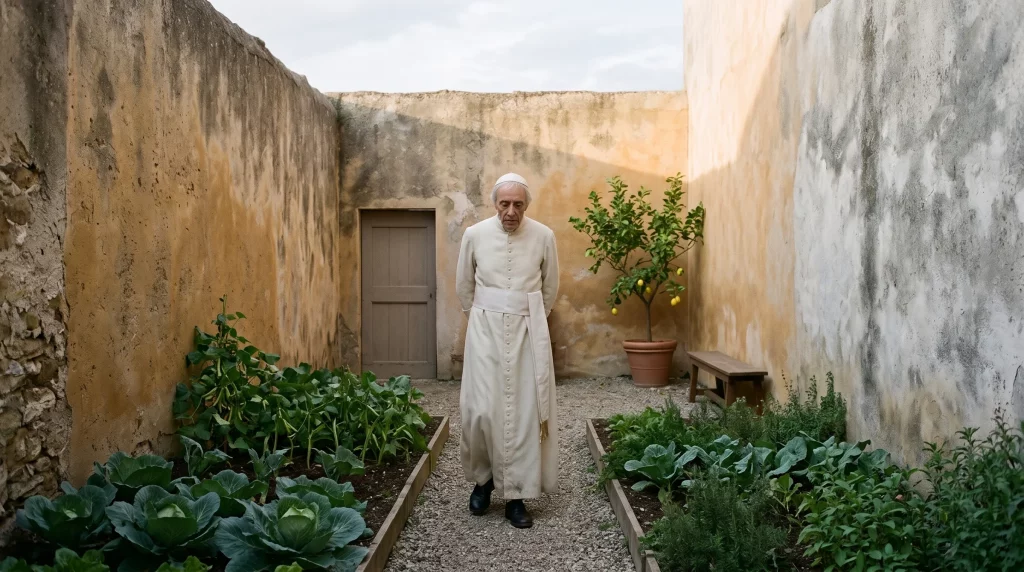
As a schoolboy under the Benedictines at Cesena, he was known for his love of pranks[2]. His mother is said to have foretold his election and his long sufferings[1]. As a bishop he was so generous to refugees and his own flock that he had to borrow money to reach the Venice conclave[2]. In his last weeks he often lost consciousness and muttered the names of the cities to which French forces had taken him[6].
Legacy & Reputation
What’s the verdict?
The New Catholic Encyclopedia judges that his troubled pontificate mixed conciliation with firmness, and says he deserves to be called the pope of the new age[2]. The Napoleon and Empire website calls him not a great theologian but an example of humanity and evangelical virtue[3]. Joseph McCabe writes that after the coronation even Joseph de Maistre called him a puppet of no importance[7]. On St Helena, that website records, Napoleon called him a good, gentle and brave man[3].
Myth-buster
Think you know this one?
Quick Facts
The essentials
Quick Facts
A pope with an American footprint…
In 1808 Pius VII created the dioceses of Boston, New York, Philadelphia and Bardstown, with Baltimore as the senior see[1]. Charleston and Richmond followed in 1820, and Cincinnati in 1821[1]. Quite a transatlantic footprint for a monk from Cesena.
Roger would like to know who paid for the taxi to Venice…
Austria's party rejected one front-runner and Austria itself vetoed another before Chiaramonti emerged as the compromise pope[1]. The Comte de La Garde-Chambonas wrote that he 'positively had not the money' for the journey, so a man named Torlonia advanced him three or four hundred crowns[9, p. 55].
The official report forgot the best bit…
At Notre-Dame, Napoleon placed the crown on his own head instead of letting the pope do it[5]. Out of respect for the pope, the official newspaper, the Moniteur, did not record the detail[5]. The biographer Vincent Cronin adds that Pius had been told in advance and raised no objection[8].
Keith wants to see the marriage certificate…
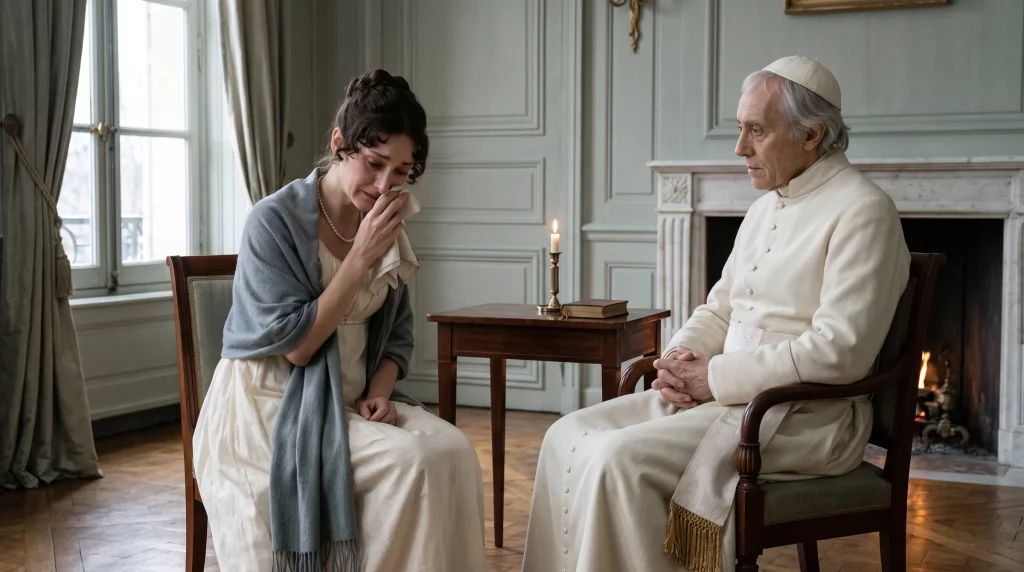
On the eve of the empress's coronation, Pius VII told Josephine that she had not been married to Napoleon according to the Church's rules[5]. He insisted on a religious blessing, or there would be no coronation, so a ceremony was held in secret at the Tuileries on 1 December[5].
Roger has notes on the welcome party…
Napoleon gave Pius VII no solemn reception. Surrounded by a hunting party, he met the pope in open country, put him in the imperial carriage, sat himself on the right and drove him to Fontainebleau[5]. The pope was then brought into Paris by night[5].
Two hours to pack…
In the night of 5 to 6 July 1809, General Radet entered the Quirinal palace, arrested Pius VII and Cardinal Pacca, and gave them two hours to prepare[5]. They were taken away from Rome at four in the morning, the pope to Savona and Pacca to Fenestrella[5].
Keith found a ring that did not survive…
During his captivity a gendarme demanded the ring of St Peter from Pius VII, who gave it up only after breaking it in two[5]. The same account says his custodian, Chabrol, showed him letters of submission to the emperor from church chapters, but the pope was inflexible[5].
Forgiveness, with a chaplain attached…
After Napoleon fell, Pius VII sheltered his mother Letizia, his brothers Lucien and Louis and his uncle Cardinal Fesch in Rome[1]. Hearing of the severe captivity at St Helena, he asked Cardinal Consalvi to plead for leniency, and sent the Abbé Vignali as Napoleon's chaplain[1].
we will suffer with a resignation conformable to the Gospel, we will accept every kind of calamity as coming from God
Pope Pius VII
The closing words of Pius VII's letter of 21 March 1806 to Napoleon, who was pressing him to join the emperor's side in the wars; the pope replied that he must hold aloof from them, as quoted in the Catholic Encyclopedia (1913)[5].
Timeline
How it unfolded
14 August 1742
Birth of Barnaba Chiaramonti
The future Pope Pius VII, Barnaba Chiaramonti, was born at Cesena in the Papal States on 14 August 1742.[1] Mary Allies describes his family as illustrious.[11, p. 130]
c. 1758
Entry into the Benedictine Order
At sixteen Barnaba entered the Benedictine monastery of Santa Maria del Monte, near Cesena, where he was called Brother Gregory.[1] He later taught in colleges of his order at Parma and Rome.
14 February 1785
Created Cardinal by Pius VI
Pius VI, who was a friend of the Chiaramonti family, made him Bishop of Tivoli and then of Imola, and created him cardinal on 14 February 1785.[1] When the French invaded northern Italy in 1797, he told his flock at Imola to avoid useless resistance.[1]
14 March 1800
Election as Pope at Venice
The cardinals met in conclave at the Benedictine monastery of San Giorgio in Venice, and after three months of deadlock Chiaramonti was chosen as a compromise candidate.[1] He was elected on 14 March 1800 and took the name Pius VII.[3]
15 July 1801
Concordat with Napoleon
Pius VII sent Cardinal Consalvi to Paris, where a concordat was signed with the First Consul on 15 July 1801, recognising the pope as head of the Church.[12, p. 172] It governed relations between the French Church and Rome for over a hundred years.[1]
2 December 1804
Coronation of Napoleon at Notre-Dame
Despite his cardinals' opposition, Pius VII travelled to Paris for the coronation.[2] At Notre-Dame, Napoleon placed the crown on his own head and then crowned the empress.[5]
5-6 July 1809
Arrest of the Pope
After Napoleon annexed the Papal States on 17 May 1809, Pius VII answered with a bull excommunicating him.[5] In the night of 5 to 6 July General Radet arrested him and took him from Rome to Savona.[5]
June 1812 - January 1813
Captivity at Fontainebleau
In June 1812 Napoleon moved Pius VII from Savona to Fontainebleau, near Paris, to force his capitulation.[2] A new concordat was signed there on 25 January 1813.[5]
24 May 1814
Release and Return to Rome
The pope left Savona on 19 March 1814, after a captivity of nearly five years.[13, p. 603] He re-entered Rome on 24 May 1814.[2]
Dig Deeper
Copy any prompt below into your favourite AI chat to keep exploring.
Explain what Pope Pius VII actually did and did not do at Napoleon's coronation in Notre-Dame on 2 December 1804, and why Napoleon placed the crown on his own head.
Debate whether Pius VII's presence at Napoleon's self-coronation made the Church look like a partner in his power or a bystander to it.
Roleplay Pope Pius VII giving a deadpan running commentary as Napoleon picks up the crown at Notre-Dame and places it on his own head.

Further Reading
Where to read more
Pius VII - Pope, Napoleon & Empire
A short biography of Pius VII on the Napoleon & Empire reference website, following him from his birth at Cesena in 1742 to his death in Rome in 1823.
Why look at this: Sets out the sequence at the heart of the Napoleon story in a few minutes: the Concordat of 1801, the coronation of 2 December 1804, house arrest at Savona, then Fontainebleau in 1812, and the 1813 outburst in which the pope called Napoleon a comedian and a tragedian.
https://www.napoleon-empire.org/en/personalities/pie_VII.phpPius VII, Pope - New Catholic Encyclopedia (Gale), Encyclopedia.com
A long, scholarly encyclopedia article covering Pius VII's monastic career, his dealings with Napoleon year by year, his captivity and his second pontificate, with a bibliography.
Why look at this: Explains what Pius VII conceded for the 1804 coronation, including agreeing to let Napoleon crown himself while refusing to take the constitutional oath, and how the Concordat of Fontainebleau signed in 1813 was later retracted by the pope.
https://www.encyclopedia.com/religion/encyclopedias-almanacs-transcripts-and-maps/pius-vii-popeHistorical Memoirs of Cardinal Pacca, Prime Minister to Pius VII - Bartolomeo Pacca, translated by George Head (1850), Internet Archive
A free digitised copy of the English translation of the memoirs of Cardinal Bartolomeo Pacca, Pius VII's secretary of state, who was seized with the pope in 1809 and kept prisoner by the French.
Why look at this: Gives an insider's account of the captivity years, including the news in January 1813 that Napoleon and the Empress had arrived at Fontainebleau and held an interview with the Holy Father.
https://archive.org/details/historicalmemoi00headgoogRelated
Keep exploring


Can be seen in
Where this shows up
References
Sources
Sources
- WebsiteCATHOLIC ENCYCLOPEDIA: Pope Pius VII (newadvent.org) ↑
- WebsitePius VII, Pope (encyclopedia.com) ↑
- WebsitePius VII - Pope (napoleon-empire.org) ↑
- BookThe history of the Papal States, from their origin to the present day, vol 3 by John Miley. Page 283. ↑
- DocumentCatholic Encyclopedia (1913)/Napoleon I (Bonaparte) ↑
- WebsitePope Pius VII - Wikipedia (en.wikipedia.org) ↑
- BookCrises in the History of the Papacy by Joseph McCabe ↑
- WebsiteCoronation of Napoleon – Wikipedia (en.wikipedia.org) ↑
- BookAnecdotal Recollections of the Congress of Vienna by Comte A. de La Garde-Chambonas. Page 55. ↑
- BookA short history of Europe from the dissolution of the Holy Roman empire to the outbreak of the… by Charles Sanford Terry ↑
- BookThe Life of Pope Pius the seventh by Mary H. Allies. Page 130. ↑
- BookNapoleon the first : a biography by August Fournier. Page 172. ↑
- BookCambridge Modern History Vol.9 (napoleon) by A.w. And Prothero Ward. Page 603. ↑