
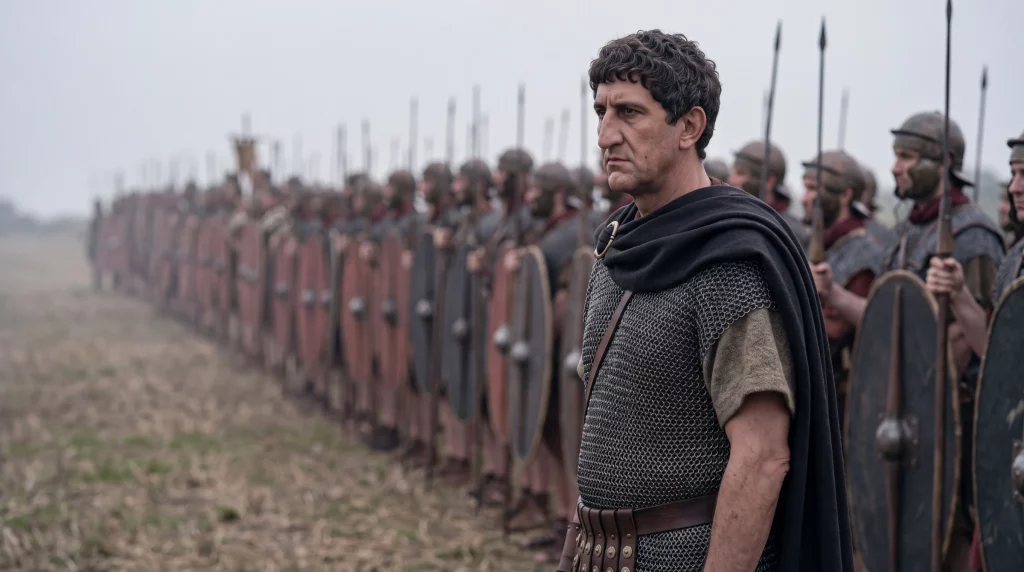
Mark Antony
Roman general, statesman and triumvir
Julius Caesar's right-hand man, whose funeral speech turned Rome against Caesar's killers[1], but who lost the Roman world to Octavian at Actium and died by his own hand[1].
Bio
Who they were
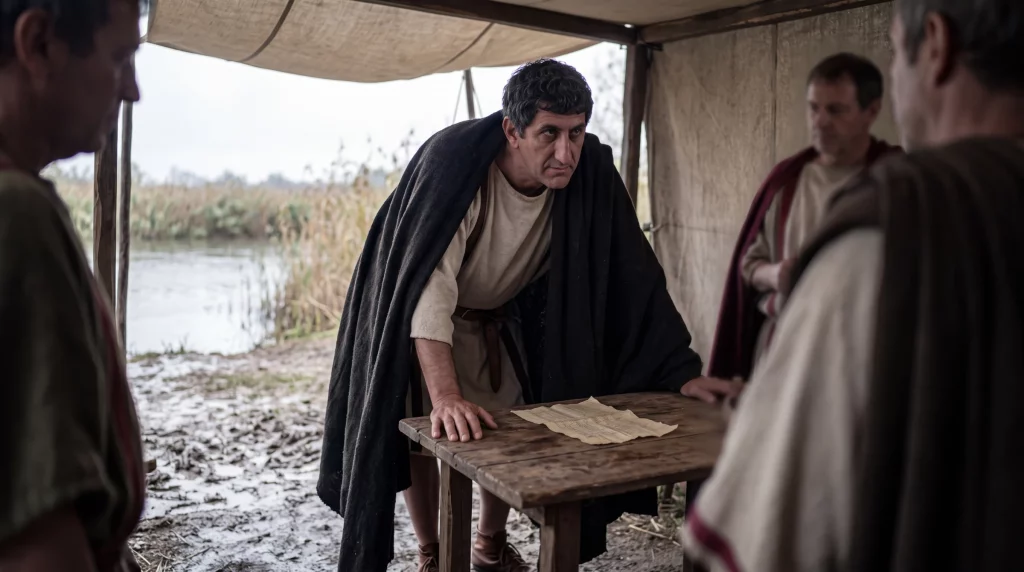
Marcus Antonius, known as Mark Antony, was born on 14 January 83 BC[1]. His father was Marcus Antonius Creticus. His mother, Julia, belonged to the family of the Caesars and was a cousin of Julius Caesar[1]. According to the biographer Arthur Weigall, the Antonii were of plebeian (commoner) stock but traced their line back to Hercules[2]. Weigall also wrote that news reached Rome that Antony's father was bungling a war against pirates[2]. His mother was the widow of Lentulus, whom Cicero had put to death as Catiline's chief agent[2]. As a young man Antony ran up a debt of 250 talents through drinking and extravagance[1]. He then slipped away to Greece to study public speaking and soldiering[1].
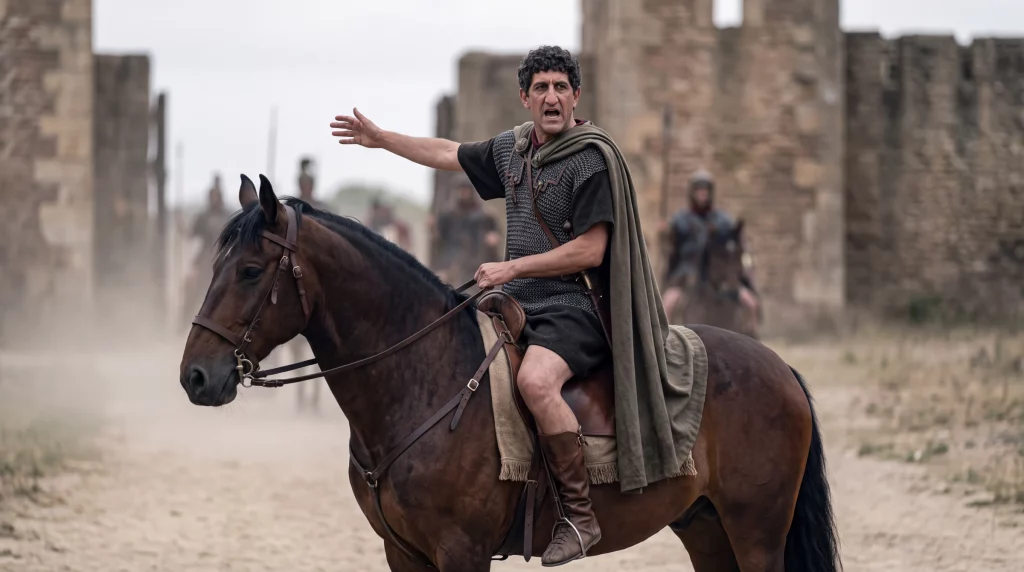
Antony joined the Roman general Aulus Gabinius on a campaign against Syria and proved an able cavalry commander[1]. In 54 BC Julius Caesar called him to join his army in Gaul[1]. In 50 BC Caesar backed his election as tribune[1]. A tribune, one of the Tribunes of the People, could use a veto to stop a bill becoming law[2]. In 49 BC Antony and his friend Curio fled Rome dressed as servants to join Caesar's camp[1]. Caesar then left Antony to rule the city[1]. At Pharsalus in 48 BC Antony commanded Caesar's left wing of cavalry[1]. He also served as Caesar's deputy, the Master of the Horse[2].
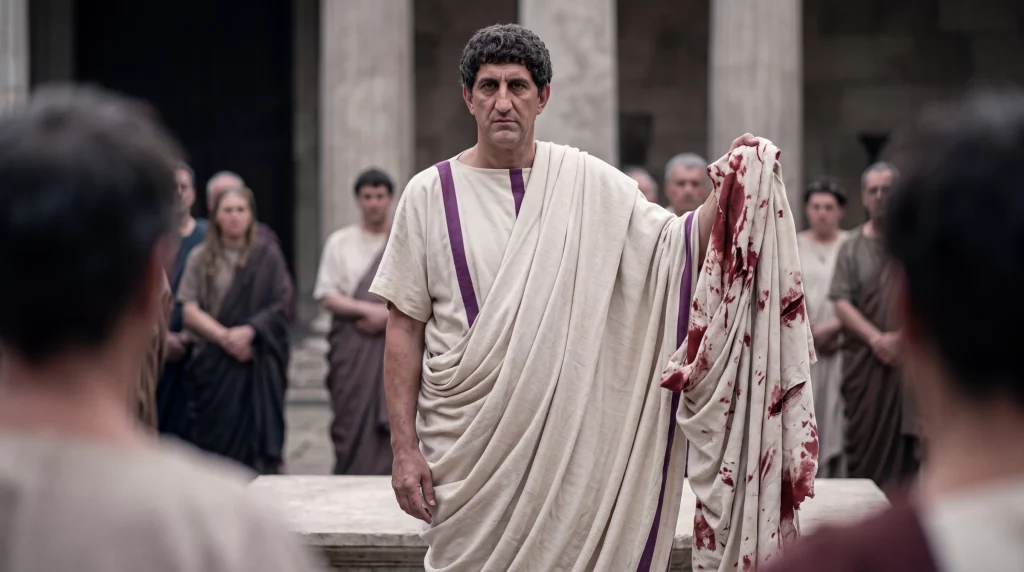
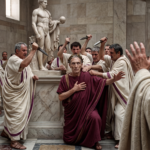
On the day Caesar was assassinated, the conspirator Trebonius kept Antony talking outside the senate door[3]. Antony later spoke at Caesar's funeral and turned the crowd against the killers[1]. Weigall describes him showing the crowd Caesar's bloodied clothes, torn by the daggers[4, p. 252]. In 43 BC he joined Octavian and Lepidus in the Second Triumvirate, a three-man ruling pact, and took charge of the east[1]. Cicero was killed in the purge that followed. Conyers Middleton's life of Cicero says Antony had his head fixed on the rostra, the speakers' platform, between his two hands[5]. In 42 BC Antony and Octavian defeated Brutus and Cassius at Philippi[1].
In 41 BC Antony summoned Cleopatra VII of Egypt to Tarsus, and the two began a famous love affair[1]. In 40 BC he agreed to marry Octavian's sister Octavia, but in 37 BC he sent her back to Rome[1]. In 34 BC he celebrated his Armenian victories with a triumph in Alexandria rather than Rome[1]. Octavian's general Agrippa defeated Antony and Cleopatra at Actium in 31 BC[1]. In 30 BC, told that Cleopatra was dead, Antony stabbed himself[1]. The report was false, and he died in her arms[1]. Plutarch says Octavian let Cleopatra bury him in royal style[3].
After Antony's death Octavian was the sole power in Rome[1]. In 27 BC he was given the title Augustus and became the first emperor[1]. Antony's children with Cleopatra were taken to Rome, where Octavia raised them with her own children by Antony[1]. One of Octavia's daughters by Antony, Antonia Major, later became the grandmother of the emperor Nero[1]. Octavian presented the war as Rome against Cleopatra and the East, not Roman against Roman[6]. Plutarch records that Antony's statues were pulled down, though Cleopatra's were spared after a friend paid Octavian 2,000 talents[3].
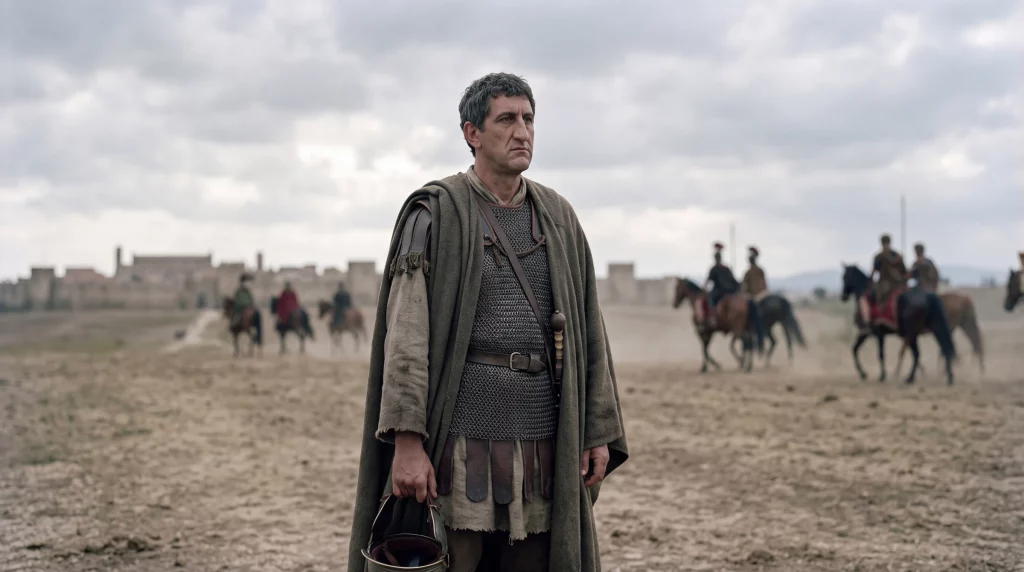
Plutarch says Antony liked to be seen in a tunic belted up to his thigh, with a large sword at his side and a heavy cloak over it[3]. He thought his build and dress confirmed the family tradition of descent from Heracles[3]. His jesting, boasting and habit of sitting beside soldiers at their meals won him great goodwill[3]. We are told he also harnessed lions to his chariot, in memory of that same ancestor[7].
Legacy & Reputation
What’s the verdict?
The Roman historian Cassius Dio judged that Antony had no superior in comprehending his duty, yet committed many acts of folly[8]. Plutarch, quoted by the World History Encyclopedia, called him too lazy to attend to the complaints of people who had been wronged[1]. The historian Jesse Sifuentes writes that Octavian’s propaganda portrayed Antony as un-Roman and ruled by Cleopatra[6], while noting that the propaganda was not one-sided[6].
Myth-buster
Think you know this one?
Quick Facts
The essentials
Quick Facts

Roger has found the crown…
At the Lupercalia festival it was Antony who twined a laurel wreath round a diadem, ran to the rostra and tried to put it on Caesar's head[3]. Caesar declined, but Plutarch says the stunt handed the conspirators their most convenient pretext.
Keith has checked the scoreboard…
Octavian is not the star of Philippi. Guglielmo Ferrero wrote that the credit for both victories there was Antony's alone, since Octavian gave no help[10]. Plutarch adds that Antony threw his own purple robe over the body of Brutus[11].
History gets strange here…
Fulvia's husbands were Clodius, then Curio, then Curio's friend Antony[12]. One grim story says she pierced the severed tongue of Cicero with a hairpin[12]. Another account has a knitting needle[13].
Roger has joined the club…
Antony and Cleopatra founded a dining society called the Inimitable Livers, and later a second one, the Companions in Death[11]. A visitor to the royal kitchens reportedly found eight wild boars roasting at once, because the cooks never knew when the pair would dine[2].
This sounds invented, but…
Antony, fishing badly in front of Cleopatra, had divers fasten already-caught fish to his hook. She spotted the trick and next day had a servant fasten on a salted Pontic herring, adding that his sport was hunting cities, realms and continents[3].
Keith found the sealed envelope…
Antony's will had been left with the Vestal Virgins in Rome, and the turncoats Plancus and Titius told Octavian what was inside[2]. Octavian had it seized, which Weigall calls sacrilege, and read the damaging clauses to the Senate[2].
The lift was not designed for this…
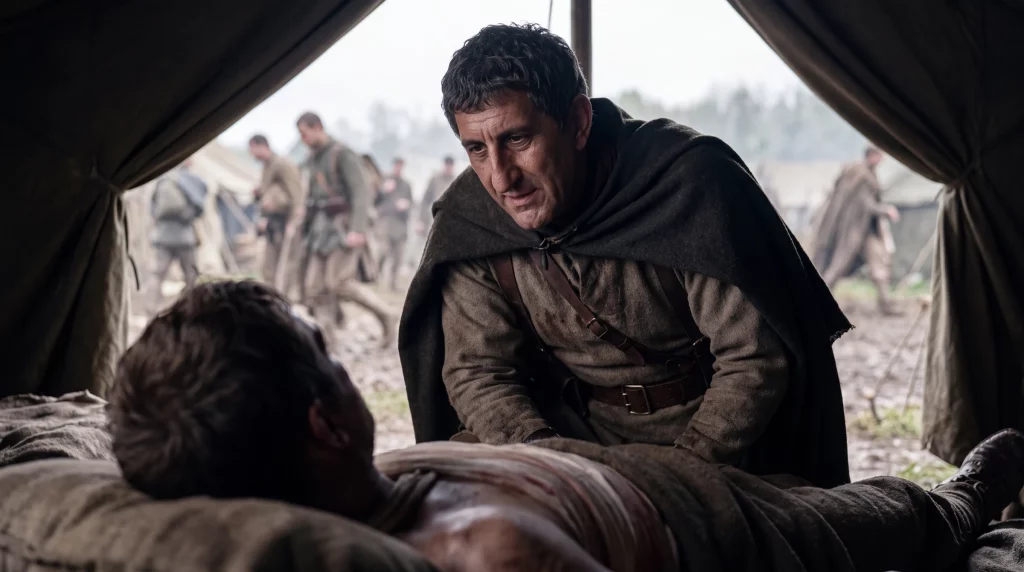
Dying of his wound, Antony was carried to Cleopatra's unfinished mausoleum, but its door would not open. Weigall describes him being laid on a stretcher and hauled up to the window on ropes the builders had left hanging, while Cleopatra and her attendants heaved[2].
History has added a footnote…
Ferrero lists what Rome decreed after the victory over Antony: his birthday was to be a dies nefastus, an ill-omened day, and every member of his family was forbidden to bear the name Marcus[10]. Even the calendar was told to forget him.
Roger says, “Hear me out…”
Antony's family tree reached the throne. His daughter Antonia married Drusus, and Plutarch says their sons were Germanicus and Claudius, who became emperor, while Germanicus's son Caius also reigned briefly[3]. Tacitus calls Claudius Antony's grandson[14].
Keith has listened for the famous line…
Plutarch says Antony gave the customary eulogy, then shook Caesar's bloody, sword-torn robe at the crowd and called the killers murderers[3]. That is a summary, not a script. In Shakespeare's Julius Caesar, one editor notes, the language is mostly Shakespeare's own[15].
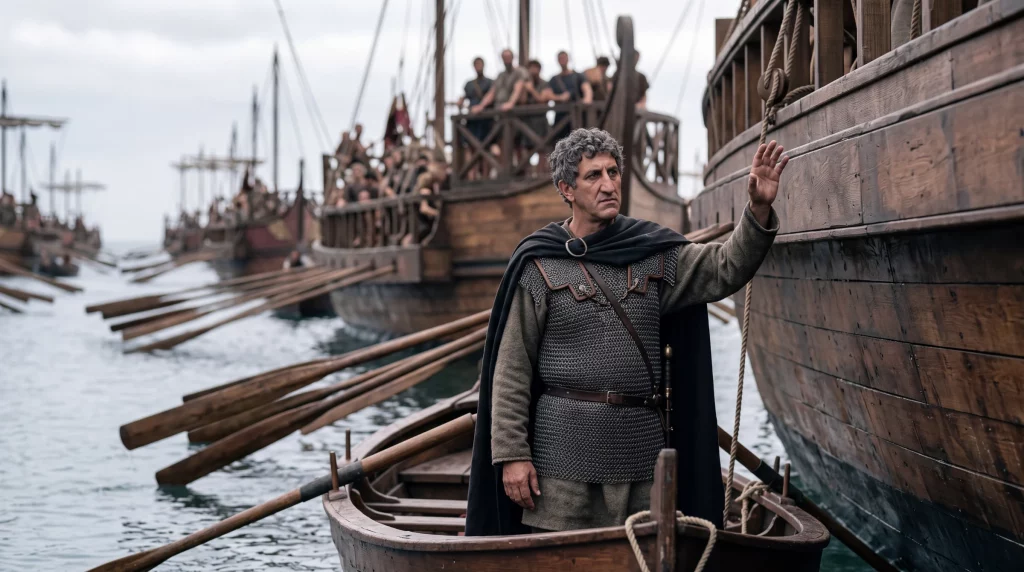
that she should think him the more fortunate for the former triumphs and honours he had received, considering that while he lived he was the noblest and greatest prince of the world, and that now he was overcome not cowardly, but valiantly, a Roman by another Roman.
Mark Antony, as reported by Plutarch in his Life of Antonius (Sir Thomas North's translation)
Plutarch says the dying Antony was carried to Cleopatra's monument. He asked her to save her own life with honour and not to mourn his fall, then spoke these words[15, p. 1131]. They are Plutarch's report of the scene, written long after the event, and the wording is North's English.
Timeline
How it unfolded
14 January 83 BC
Birth of Mark Antony
Marcus Antonius, known as Mark Antony, was born on 14 January 83 BC to Marcus Antonius Creticus and Julia, a cousin of Julius Caesar.[1]
January 49 BC
Antony Flees Rome to Join Caesar
As tribune Antony vetoed the Senate's decree ordering Caesar to give up his province, and Shuckburgh says he and Cassius were expelled and fled to join Caesar at Ravenna.[16, p. 284] They fled dressed as servants.[1]
48 BC
Antony Commands at Pharsalus
Antony joined Caesar in Greece and, at the Battle of Pharsalus, commanded Caesar's left wing of cavalry in the defeat of Pompey.[1]
15 February 44 BC
Antony Offers Caesar the Diadem
Plutarch says Antony, running at the Lupercalia festival, twined laurel round a diadem and put it on the seated Caesar's head.[3] Edwards dates the festival to 15 February, when Caesar refused the crown.[17]
March 44 BC
Caesar's Murder and Funeral Oration
On the day of the murder, Plutarch says, the conspirator Trebonius drew Antony into conversation and kept him outside the senate.[3] As speaker at Caesar's funeral, Antony then turned popular opinion against the conspirators.[1]
43 BC
The Second Triumvirate
Antony, Octavian and Lepidus formed the Second Triumvirate and divided Rome's holdings, with Antony taking the east.[1]
October 42 BC
Victory at Philippi
Arthur Weigall writes that in October 42 BC Antony defeated Brutus and Cassius at Philippi, Cassius being killed and Brutus committing suicide. He gives Antony most of the glory.[4, p. 252]
41 BC
Antony Summons Cleopatra to Tarsus
At Tarsus in 41 BC Antony summoned Cleopatra VII of Egypt, and the two began their famous love affair.[1]
2 September 31 BC
Defeat at Actium
Sergeant's chronology dates the battle of Actium to 2 September 31 BC.[12] Weigall says Antony fled, and that his remnant fleet fought on until sunset before withdrawing, and no one would believe he had gone.[4, p. 319]
Dig Deeper
Copy any prompt below into your favourite AI chat to keep exploring.
Explain how Octavian's propaganda turned Mark Antony's alliance with Cleopatra into a war of Rome against Egypt, and why that story worked so well on the Roman public.
Debate whether Antony abandoned Rome for Egypt or Rome abandoned Antony, and what it says about who gets to tell the story of the losing side.
Roleplay Mark Antony's press secretary in 31 BC, trying to persuade the Senate that 'a traitor controlled by a foreign queen' is just Octavian's unfair spin.
Further Reading
Where to read more
Mark Antony - Joshua J. Mark, World History Encyclopedia
A free, concise biography of Marcus Antonius, covering his rise under Julius Caesar, the Second Triumvirate, his partnership with Cleopatra VII and his defeat at Actium.
Why look at this: Quickly sets out the turning point of 41 BC, when Antony summoned Cleopatra to Tarsus intending to fine her for backing Brutus and Cassius, and ended up beginning the alliance that cost him Rome.
https://www.worldhistory.org/Mark_Antony/The Life and Times of Marc Antony - Arthur Weigall (Internet Archive)
A full-length biography of Antony by the Egyptologist Arthur Weigall, digitised on the Internet Archive and free to read or download.
Why look at this: Gives a scene-by-scene account of Antony's last hours in 30 BC, including the dying general being hauled on a stretcher up to the window of Cleopatra's unfinished mausoleum because its bolted door would not open.
https://archive.org/details/lifeandtimesofma017056mbpCassius Dio, Roman History, Book 50 (Loeb translation) - LacusCurtius, University of Chicago
The English text of Book 50 of Cassius Dio's Roman History, an ancient Roman source (written in the early 3rd century AD) on the breakdown between Antony and Octavian and the campaign that ended at Actium in 31 BC, hosted by Bill Thayer's LacusCurtius site.
Why look at this: Lets you read the ancient account of how Octavian seized Antony's will after Plancus and Titius defected to him, then read its clauses out in the Senate and the assembly, a key step in the propaganda war that turned the contest into Rome against Cleopatra.
https://penelope.uchicago.edu/Thayer/E/Roman/Texts/Cassius_Dio/50*.htmlRelated
Keep exploring
People
Can be seen in
Where this shows up

References
Sources
Sources
- WebsiteMark Antony - World History Encyclopedia (worldhistory.org) ↑
- BookTHE LIFE AND TIMES OF MARC ANTONY by ARTHUR WEIGALL ↑
- BookPlutarch, Lives ( LCL 11 Volumes In One; Perrin Trans) by Bernadotte Perrin ↑
- BookThe life and times of Cleopatra, queen of Egypt; a study in the origin of the Roman empire by Arthur E. P. Brome Weigall. Pages 252, 319. ↑
- BookCicero's Life and letters : The life of Cicero, by Dr. Middleton, Cicero's letters to his friends, translated… by Marcus Tullius Cicero and others ↑
- WebsiteThe Propaganda of Octavian and Mark Antony's Civil War - World History Encyclopedia (worldhistory.org) ↑
- BookDictionary of Greek and Roman biography and mythology by William Smith ↑
- BookDio's Rome, Volume 3 by Cassius Dio Cocceianus ↑
- WebsiteMark Antony - Wikipedia (en.wikipedia.org) ↑
- BookThe greatness and decline of Rome by Guglielmo Ferrero ↑
- BookPlutarch's Lives of Demetrius, Mark Antony, and Themistocles by J. and W. Langhorne ↑
- BookInternet Archive: cleopatraofegypt00sergiala ↑
- BookLetters of Cicero. Selected and edited, with introd. and notes by Marcus Tullius Cicero and John H. Muirhead ↑
- BookProject Gutenberg: 16927 ↑
- BookPlutarch's Lives of Coriolanus, Caesar, Brutus, and Antonius: In North's Translation by Plutarchus. Page 1131. ↑
- BookInternet Archive: augustuslifetime00shucuoft. Page 284. ↑
- BookInternet Archive: gallicwar00caes ↑