
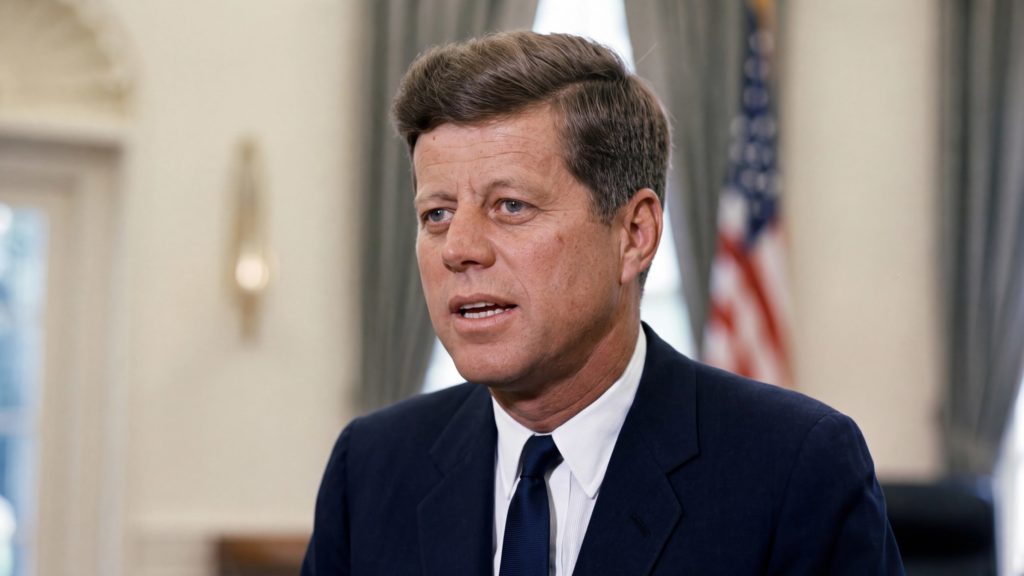
John F. Kennedy
President of the United States; United States Senator; Naval Officer
The wartime PT-boat lieutenant turned youngest elected president, whose thousand days in office were bookended by a stand-off over Soviet missiles in Cuba and a rifle shot in Dallas.[1][2][3, p. 13][4, p. 249][5, p. 6]
Bio
Who they were
John Fitzgerald Kennedy was born on 29 May 1917[4]. He went on to serve as a US naval officer in the Pacific during the Second World War[1], commanding the patrol torpedo boat PT-109. In August 1943 the boat was lost in action, and Kennedy -- then a lieutenant -- was later awarded the Navy and Marine Corps Medal for his conduct during the incident[6, p. 1][6, p. 2].
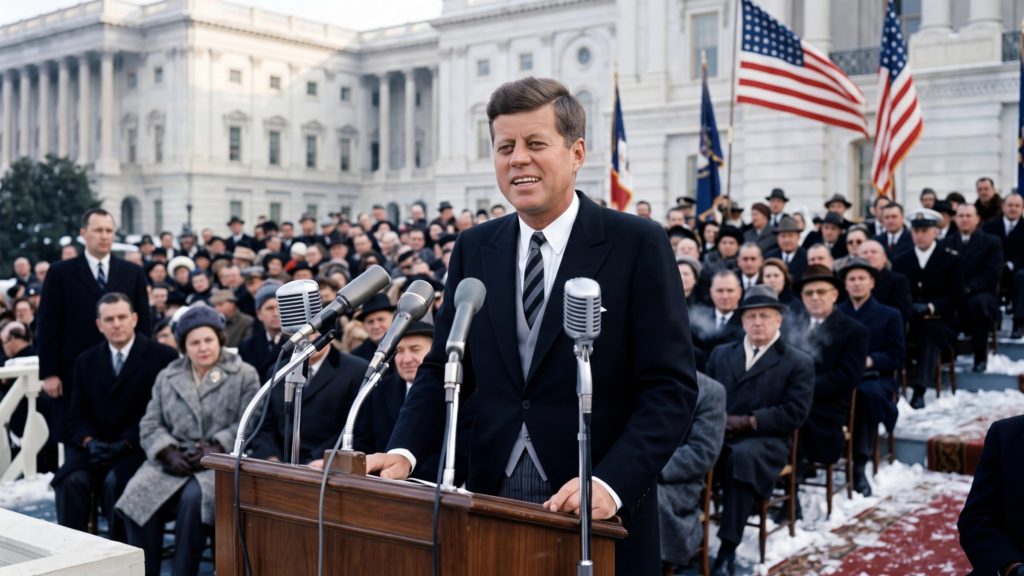
After the war, Kennedy moved into elected politics and went on to serve as a United States Senator before running for the presidency[1]. He was elected the 35th President of the United States on 8 November 1960[7, p. 4], becoming one of the youngest men ever to hold the office, and was inaugurated on 20 January 1961[5, p. 2]. His campaign and early presidency were shaped heavily by Cold War tensions with the Soviet Union, themes he addressed directly in his Inaugural Address[8].
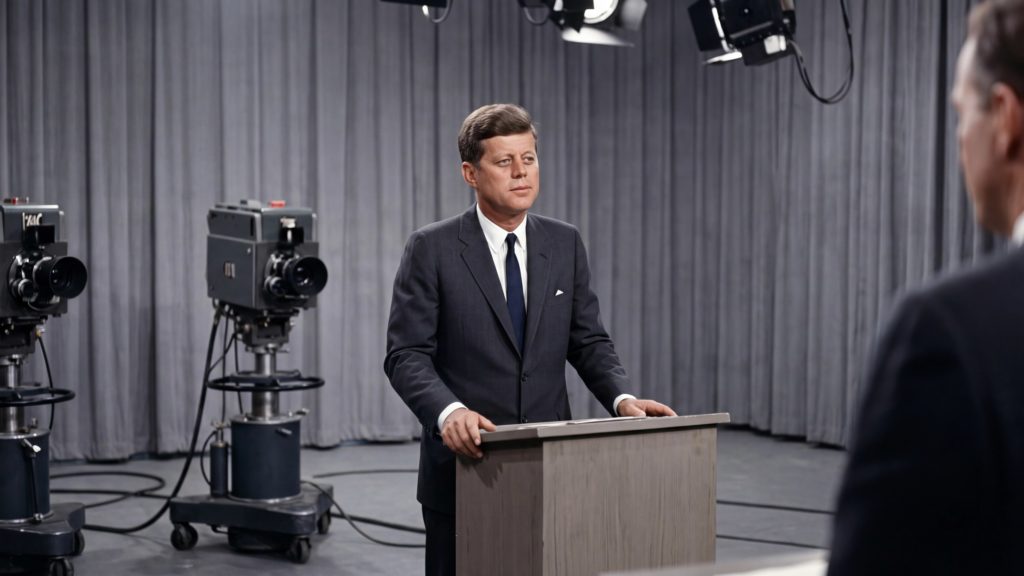
As president, Kennedy's defining crisis came in October 1962, when US intelligence discovered Soviet nuclear missiles being installed in Cuba, triggering the Cuban Missile Crisis, a tense standoff between the two Cold War superpowers[4, p. 249]. His administration also became associated with the civil rights movement; listeners who heard him speak during his presidency described him growing into a stronger advocate for civil rights over time[7, p. 5]. In June 1963 he travelled to divided Berlin and delivered his famous "Ich bin ein Berliner" speech in solidarity with West Berliners living beside the Iron Curtain[9, p. 1].
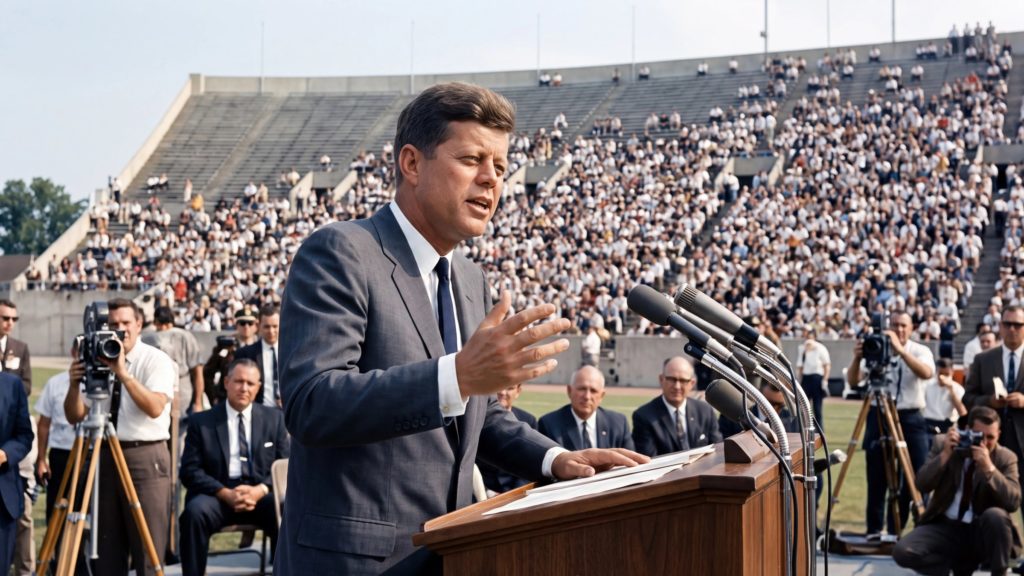
On 22 November 1963, Kennedy was shot while riding in a motorcade through Dealey Plaza in Dallas, Texas[5, p. 6]; Texas Governor John Connally, riding in the same car, was also wounded[4, p. 356]. Kennedy was rushed to Parkland Memorial Hospital, where he died of his injuries[10, p. 2]. Lee Harvey Oswald was identified and investigated as the rifleman responsible[11, p. 6][4, p. 356], and the President's Commission on the Assassination -- the Warren Commission -- produced an extensive report on the events[4, p. 249].
Kennedy's assassination remains one of the most exhaustively investigated events in American history, producing the multi-volume Warren Commission report and hearings addressing the shooting, Oswald's rifle, and the wider circumstances of that day in Dallas[4][4, p. 356]. His handling of the Cuban Missile Crisis is often cited as an example of careful crisis diplomacy that helped avert direct nuclear conflict with the Soviet Union[4, p. 249]. His Inaugural Address, including its call to civic duty, continues to be studied and quoted as a landmark of American political rhetoric[8].
Kennedy's wife, Jacqueline Kennedy, and their daughter, Caroline, both later gave recorded oral history interviews about their lives together, now held by the John F. Kennedy Library[12, p. 1]. Kennedy stayed in close contact with his family even from the war zone: two of his surviving letters home from the Pacific, dated August 1943, describe the aftermath of the loss of PT-109[6, p. 6][6, p. 7].
Legacy & Reputation
What’s the verdict?
Historians and the public alike have long ranked Kennedy among the most popular American presidents, a reputation shaped as much by the shock of his death as by his time in office. His navigation of the Cuban Missile Crisis is widely credited as a moment of careful, effective crisis leadership, while his assassination has generated decades of continued investigation and debate, including conspiracy theories outside the historical mainstream that the Warren Commission’s findings did not fully settle for everyone[4].
Myth-buster
Think you know this one?
It is sometimes assumed the Warren Commission simply declared Oswald guilty and moved on. In fact, its published hearings run to many volumes of testimony scrutinising details as granular as the exact capability of Oswald’s rifle, reflecting a lengthy formal investigation rather than a snap judgement[4, p. 249][11, p. 6].
Quick Facts
The essentials
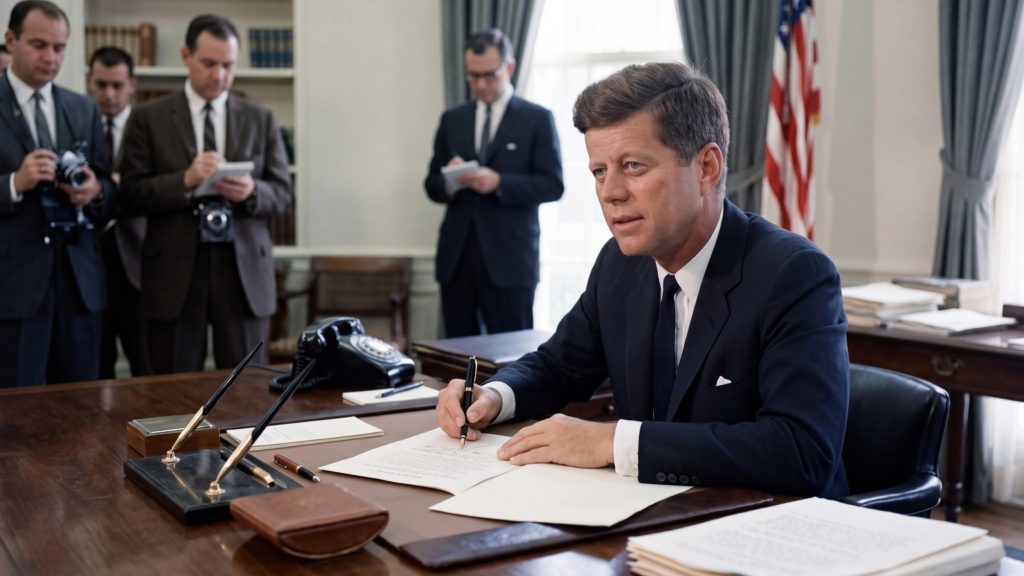
Quick Facts
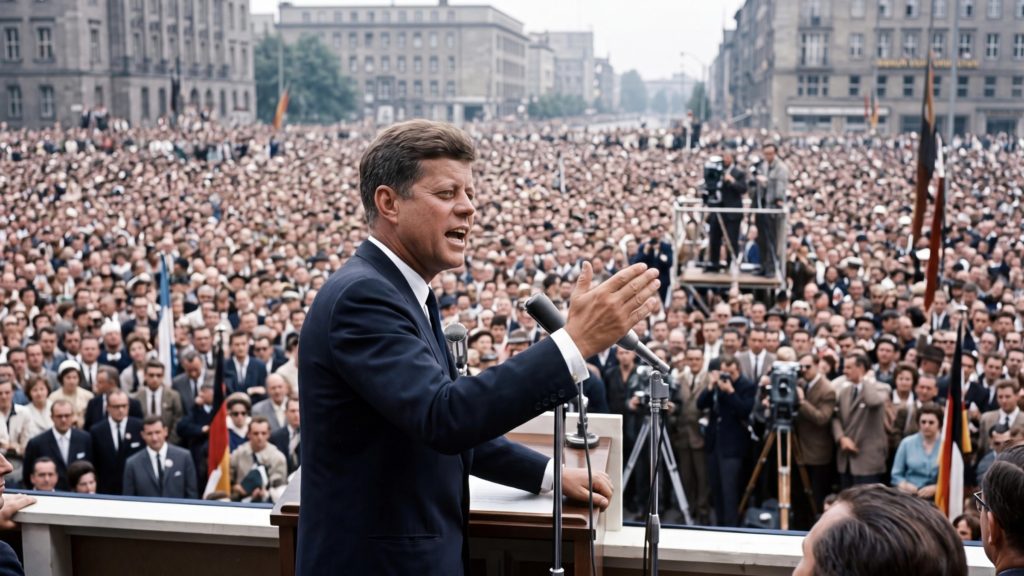
Roger has entered the historical rabbit hole...
Before he was ever president, John F. Kennedy served as a US Navy lieutenant in the Pacific during the Second World War, commanding the patrol boat PT-109. When it was lost in August 1943, his conduct earned him the Navy and Marine Corps Medal[6, p. 1].
Keith would like to clarify...
Kennedy was elected the 35th President of the United States on 8 November 1960 and took the oath of office on 20 January 1961[5, p. 2], becoming one of the youngest men ever to hold the role.
One for the Ageonauts...
Kennedy's Inaugural Address is still studied line by line for its rhetoric today; the JFK Library runs whole lesson plans dissecting its structure, built around the line "ask not what your country can do for you -- ask what you can do for your country"[8].
History gets strange here...
In October 1962, US intelligence discovered Soviet nuclear missiles being installed in Cuba, triggering the Cuban Missile Crisis -- a tense standoff that put Kennedy's White House and Moscow within sight of direct nuclear conflict[4, p. 249].
Roger says, "Hear me out..."
In June 1963 Kennedy travelled to a divided Berlin and delivered his famous "Ich bin ein Berliner" speech, standing near the wall to show solidarity with West Berliners living beside the Iron Curtain[9, p. 1].
Keith checked the sources...
On 22 November 1963, Kennedy was shot while riding in a motorcade through Dealey Plaza in Dallas; Texas Governor John Connally, riding in the same car, was wounded in the same volley of shots[4, p. 356].
This sounds invented, but...
The official investigation into Kennedy's assassination, the Warren Commission, produced a report and hearings running to many separate published volumes, scrutinising details down to the exact capability of the rifle recovered at the scene[4, p. 249].
Roger has misplaced the smoking gun...
Lee Harvey Oswald was identified by investigators as the rifleman in the Kennedy assassination, and the Warren Commission's hearings included direct questioning of witnesses -- including Oswald's own wife, Marina -- about the rifle used[4, p. 356].
Meanwhile, in history...
Kennedy's wife, Jacqueline, and their daughter, Caroline, both later recorded their own oral history interviews about their lives with him -- recordings now held and preserved by the John F. Kennedy Library[12, p. 1].
Keith has spotted the quotation problem...
The "ask not what your country can do for you" line is often treated as a spontaneous flourish, but the JFK Library's own rhetorical analysis shows it was a carefully built parallel structure at the heart of a speech drafted with real craft, not an ad-libbed aside[3, p. 5].
And so, my fellow Americans: ask not what your country can do for you -- ask what you can do for your country.[8]
John F. Kennedy
From his Inaugural Address, delivered 20 January 1961[5, p. 2][8].
Timeline
How it unfolded
29 May 1917
Birth of John F. Kennedy
John Fitzgerald Kennedy, later the 35th President of the United States, was born on this date.[4] He was the nation's first president born in the 20th century.[15]
2 August 1943
PT-109 Sunk in the Solomon Islands
A Japanese destroyer rammed and sliced in two the patrol torpedo boat PT-109 commanded by Lieutenant Kennedy; his efforts to save his crew later brought him the Navy and Marine Corps Medal.[16]
1952
Kennedy Elected to the US Senate
Kennedy ran for the US Senate in Massachusetts and defeated the Republican incumbent Henry Cabot Lodge Jr.[15]
8 November 1960
Kennedy Wins the 1960 Presidential Election
Kennedy won the popular vote over Richard Nixon by fewer than 120,000 of a record 68.8 million ballots, and carried the electoral college 303 votes to 219.[17]
20 January 1961
Kennedy's Inauguration
Kennedy took the oath of office as the nation's 35th president before more than twenty thousand people in 20-degree temperatures, and delivered what became a landmark inaugural address.[3, p. 5]
22 October 1962
Cuban Missile Crisis Address
Kennedy went on television at 7:00 p.m. to reveal the evidence of Soviet missiles in Cuba and announced a naval quarantine around the island until the Soviet Union dismantled the missile sites.[18]
22 November 1963
Assassination of John F. Kennedy
Shots were fired at the presidential motorcade as it passed Dealey Plaza in Dallas, Texas, and Kennedy was pronounced dead at 1 p.m. after doctors at Parkland Hospital tried to save him.[4, p. 356]
Dig Deeper
Copy any prompt below into your favourite AI chat to keep exploring.
Tell me what happened in the Cuban Missile Crisis and how close the world really came to nuclear war.
Is Kennedy remembered more for what he achieved, or for the image built around him after his assassination?
Pitch me the Kennedy family's rise in American politics as the ultimate underdog-to-dynasty story.
Further Reading
Where to read more
Life of John F. Kennedy -- JFK Library
The John F. Kennedy Presidential Library and Museum's own concise biography of Kennedy, covering his path from Navy lieutenant to the youngest elected US president.
Why look at this: A quick, official-source overview that puts Kennedy's PT-109 service and his rapid rise to the presidency in a single accessible narrative, straight from the institution built to preserve his record.
https://www.jfklibrary.org/learn/about-jfk/life-of-john-f-kennedyJohn F. Kennedy: Life in Brief -- Miller Center, University of Virginia
A fuller presidential-scholarship treatment from the Miller Center's American President series, covering Kennedy's family background, his House and Senate years, and the character of his presidency.
Why look at this: Goes deeper into the political career between PT-109 and the presidency -- the House and Senate years -- that a short biography skips past, giving real context for how a decorated Navy lieutenant became, in 1960, the youngest man elected to the office.
https://millercenter.org/president/kennedy/life-in-briefPresident John F. Kennedy Assassination Records Collection -- National Archives
The National Archives' collection of over six million pages of records, photographs, recordings and artifacts relating to Kennedy's assassination, including material tied to the Warren Commission's own investigation.
Why look at this: Puts a reader directly alongside the same category of evidence -- documents, photographs, recordings -- that the Warren Commission hearings drew on when questioning witnesses about Oswald's rifle and the events in Dealey Plaza.
https://www.archives.gov/research/jfkRelated
Keep exploring
People
Places
Can be seen in
Where this shows up
References
Sources
Sources
- DocumentStatement of Senator John F. Kennedy Announcing His Candidacy for the Presidency of the United States ↑
- BookBattling for the right; the life-story of Theodore Roosevelt, including his early life struggles and victorious public career… by Charles Morris ↑
- WebsiteAnalyzing the Rhetoric of JFK's Inaugural Address (JFK Library). Pages 5, 13. ↑
- BookReport of the President's Commission on the Assassination of President John F. Kennedy by United States. Warren Commission. Pages 249, 356. ↑
- BookWarren Commission (07 of 26): Hearings Vol. VII (of 15) by United States. Warren Commission. Pages 2, 6. ↑
- WebsitePT-109: Heroism and Leadership - lesson plan (JFK Library Foundation). Pages 1, 2, 6, 7. ↑
- WebsiteInterpreting JFK's Inaugural Address (JFK Library). Pages 4, 5. ↑
- BookJohn F. Kennedy's Inaugural Address by John F. Kennedy ↑
- Website"Ich bin ein Berliner" speech by President John F. Kennedy, 26 June 1963 (ETH Zurich, International Relations and…. Page 1. ↑
- BookWarren Commission (06 of 26): Hearings Vol. VI (of 15) by United States. Warren Commission. Page 2. ↑
- BookWarren Commission (01 of 26): Hearings Vol. I (of 15) by United States. Warren Commission. Page 6. ↑
- WebsiteJacqueline Kennedy Oral History Interview - JFK#2, 3/3/1964 (JFK Library). Pages 1, 5. ↑
- Websitenps.gov: Jofi / index ↑
- Websitearlingtoncemetery.mil: President john f kennedy gravesite ↑
- Websitemillercenter.org: Life before the presidency ↑
- Websitehistory.com: Pt 109 sinks lieutenant kennedy is instrumental in saving crew ↑
- Websitemillercenter.org: Campaigns and elections ↑
- Websitemicrosites.jfklibrary.org: Cmc / oct22 ↑