
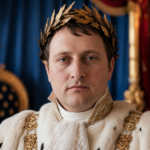
AI reconstruction based on Charles Lock Eastlake's "Napoleon Bonaparte on Board the 'Bellerophon' in Plymouth Sound" (1815), from the perspective of a man standing on the quarterdeck at real eye height, looking diagonally across it.
Napoleon surrendered to a British warship asking to "seek the hospitality of the British nation" - Britain answered by shipping him to the remotest rock in the South Atlantic and posting a governor to make sure he never left it[1].
What Happened
The story
After his defeat at Waterloo and second abdication, Napoleon chose to surrender to the British rather than face the restored Bourbon government or vengeful allies. He wrote to the Prince Regent seeking asylum: "I come, like Themistocles, to seek the hospitality of the British nation. I place myself under the protection of their laws"[1]. He gave himself up to Captain Frederick Maitland of HMS Bellerophon[2, p. 149], hoping to be treated as a guest. The British government, with the Congress of Vienna having already declared him an outlaw[3, p. 220], had other plans.
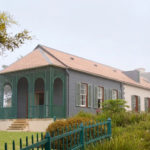
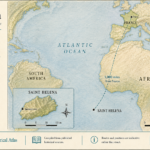
He arrived at Saint Helena under British naval escort[1], the Bellerophon herself having sailed from Plymouth Sound on 4 August 1815 to meet the ship that would carry him onward[4, p. 274]. Sir Hudson Lowe later landed and was installed as the island's governor[5], and the English government made clear it considered its captive not a deposed emperor but simply "a prisoner of war"[4, p. 274]. Sentinels ringed Longwood House, and no visitor could approach without the governor's own written pass[5].
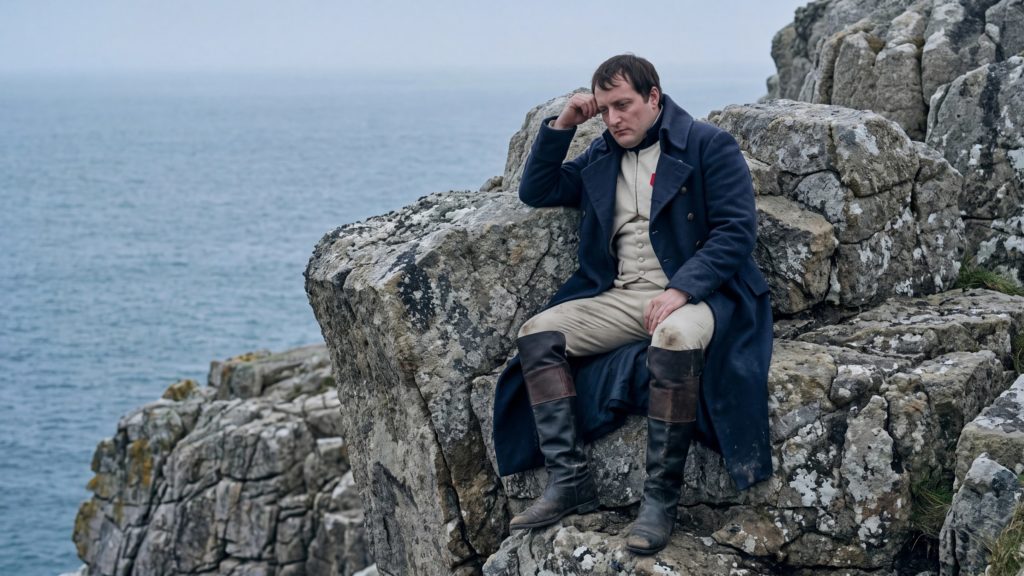
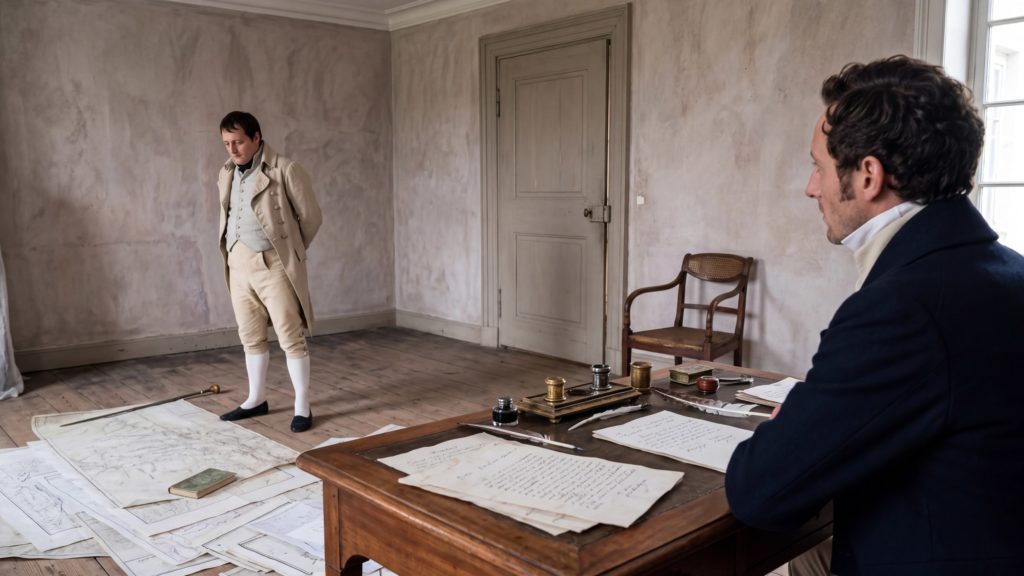
Within Longwood's confinement a routine took hold. Napoleon played chess most evenings after dinner[5], tended a garden he had planted around the house[6], and dictated his own account of his life and campaigns to the loyal Count de Las Cases[7, p. 291]. That arrangement did not last: British authorities had Las Cases removed from the island[3, p. 220], ending the closest working partnership of the captivity's early years and leaving Napoleon to rely on the physicians and companions who remained.
Napoleon's health slowly broke down in Longwood's damp, unhealthy climate[8], in a house also plagued by rats[9]. His physician Barry O'Meara was eventually dismissed from British service over an account judged too sympathetic to his patient[10, p. 8]. On 28 April 1821 Napoleon gave his last physician, Francesco Antommarchi, instructions for after his death[8]; he died on 5 May 1821[11, p. 300], his last distinguishable words reportedly "tete d'armee"[3, p. 220].
Quick Facts
The essentials
Quick Facts
The Bigger Picture
Part of the Allied powers' settlement after Waterloo: Britain, Austria, Prussia and Russia moved by convention to hold Napoleon as a permanent prisoner of state rather than risk a third escape and return[12, p. 108].
How It Came To This
Napoleon's second abdication after Waterloo, and his own decision to surrender to the Royal Navy and appeal to "seek the hospitality of the British nation" under the protection of its laws[1]; and the Allied powers' resolve, after the Congress of Vienna had already declared him an outlaw[3, p. 220], that he should never again be free to disturb the peace of Europe[13].
What Actually Happened
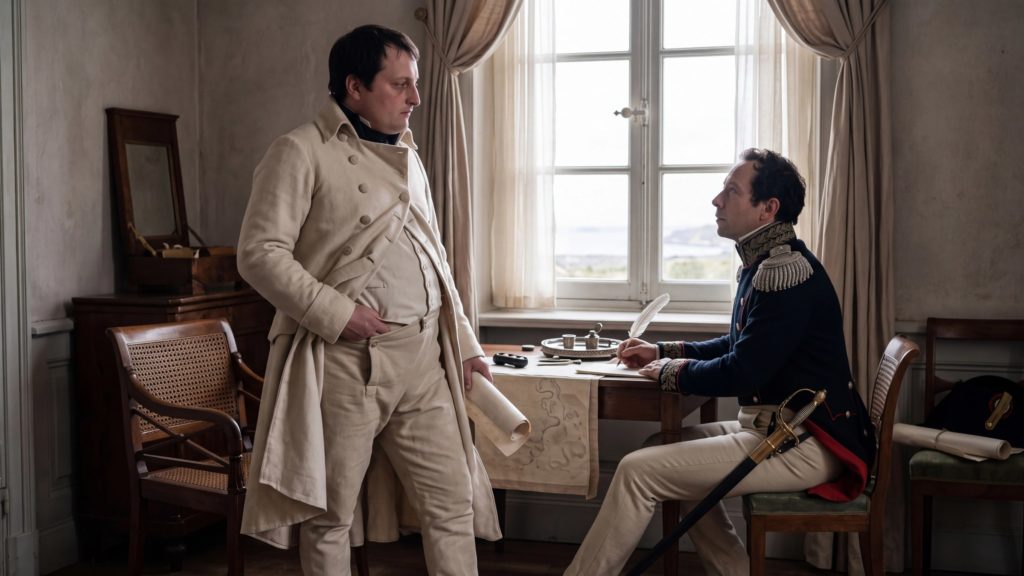
The exile's central tension was legal and reputational, not military. Britain held no formal war against Napoleon personally, yet the Congress of Vienna had already branded him an outlaw[3, p. 220], and the government resolved to hold him as a permanent state prisoner rather than risk the embarrassment of a trial or the danger of anything less than total confinement. That produced a running contest over status and treatment: additional sentinels ringed Longwood and no visitor could approach without a governor's pass[5], while Napoleon and his household built their own record of the captivity, feeding material to Count de Las Cases for a memoir designed to cast its subject as a martyr of British persecution rather than a defeated aggressor. The physicians caught between the two sides paid for it: Barry O'Meara was dismissed from British service for reporting on the captivity too sympathetically[10, p. 8]. When Napoleon's health finally failed, his last physician's post-mortem found disease near the pylorus[14], feeding decades of dispute over how much of his decline the climate and conditions of the captivity itself had caused.
Why It Still Matters
The Memorial de Sainte-Helene that Las Cases carried home built the Napoleonic legend, turning a defeated conqueror into a martyr-in-exile whose memory Bonapartist politics kept alive for decades - until his remains were finally returned to France in 1840[11, p. 300].
Quick Facts
Roger would like you to know...
Napoleon's opening move in exile was a history lesson. Writing to the Prince Regent, he compared himself to Themistocles, the Greek admiral who threw himself on a former enemy's mercy - Napoleon was appealing for shelter, not planning another campaign[1].
Keith checked the sources...
Britain never actually declared war on Napoleon personally - yet official policy still treated him "as a prisoner of war" rather than a fallen head of state, a legal fudge that let the Allies hold him without ever putting him on trial[4, p. 274].
One for the Ageonauts...
Most evenings at Longwood ended the same way: dinner, then a game of chess that could run late into the night - one of the few rituals of his old life the exile let him keep[5].
History gets strange here...
Longwood was no palace. By at least one account the house itself was infested with rats[9], one more daily indignity for a man who had recently ruled most of Europe.
Roger has entered the historical rabbit hole...
Bored and confined, Napoleon threw himself into gardening at Longwood, planting trees and flowerbeds around the house with his own hands[6].
Keith would like to clarify...
Napoleon's own doctor, Barry O'Meara, eventually lost his job over the captivity - his account of it was judged far too sympathetic to his patient for the British authorities to keep him on[10, p. 8].
The familiar story leaves this out...
Count de Las Cases, the companion who took down Napoleon's own account of his life, did not see the story through to the end - British authorities had him removed from the island well before Napoleon's death[3, p. 220].
Roger said it. Keith checked it...
The story that Napoleon's last words were the soldier's cry "tete d'armee" - head of the army - comes from his own physician's account of the deathbed itself[3, p. 220].
Meanwhile, in history...
While Napoleon settled into island life, the Congress of Vienna had already formally declared him an outlaw[3, p. 220] - a legal label that let the Allies hold him indefinitely without ever staging a trial.
A small fact with a very large consequence...
The manuscript Count de Las Cases carried home from Longwood, later published as the Memorial de Sainte-Helene, did more than any general or battle to turn a defeated conqueror into a legend[7, p. 291].
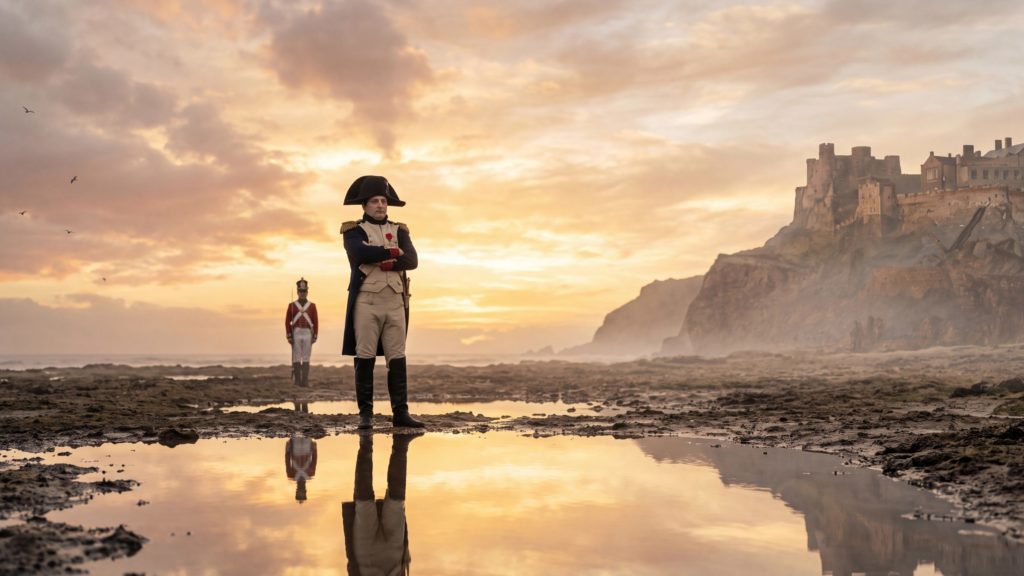
I come, like Themistocles, to seek the hospitality of the British nation. I place myself under the protection of their laws, which I claim.
Napoleon Bonaparte, letter to the Prince Regent, July 1815[1]
Napoleon's own appeal for asylum, written as he prepared to surrender to the Royal Navy rather than fall into Bourbon or Prussian hands after Waterloo.
Timeline
How it unfolded
22 June 1815
Abdication after Waterloo
Beaten by Wellington at Waterloo on the 18th, Napoleon signed his second abdication at about noon on 22 June, resigning his crown in favour of his son.[15][16]
15 July 1815
Surrender to HMS Bellerophon at Rochefort
With the coast blockaded by the English squadron, Napoleon left France on 15 July and gave himself up on board HMS Bellerophon, commanded by Captain Maitland, off Rochefort.[17, p. 135][3, p. 220]
31 July 1815
Exile announced aboard the Bellerophon
At Torbay, Lord Keith and Sir Henry Bunbury went on board the Bellerophon to tell Napoleon formally of the British government's decision on his future, and he appealed against it; newspapers had already reported that Saint Helena would be his place of exile.[6][17, p. 135]
7 August 1815
Transfer to HMS Northumberland
Napoleon and the suite he had chosen were moved from the Bellerophon to the Northumberland, the ship that Sir George Cockburn took out of the Start on 8 August for Saint Helena.[17, p. 135][10, p. 64]
15 October 1815
Arrival at Saint Helena
The Northumberland reached Saint Helena on 15 October, and Napoleon landed on the evening of the 17th before staying first at the Briars.[8][10, p. 8]
10 December 1815
Removal to Longwood
Napoleon moved from the Briars to Longwood, the house chosen for his residence, where he was lodged until his death.[17, p. 135][18]
14 April 1816
Arrival of Governor Hudson Lowe
Sir Hudson Lowe arrived as the new governor, and his coming marked the start of a long series of accusations and counter-accusations between the governor's side and Napoleon's household.[17, p. 135]
5 May 1821
Death of Napoleon at Longwood
Napoleon died at Longwood on Saturday 5 May 1821, ending the captivity that had begun with his arrival on the island in October 1815.[7, p. 301][18]
9 May 1821
Burial in the Valley of the Geraniums
Napoleon was buried four days after his death, in a valley at a spot he had chosen himself in case the authorities forbade the return of his body to France.[7, p. 101][11, p. 300]
15 October 1840
Exhumation of Napoleon's remains
Napoleon's remains were disinterred on Saint Helena and at last returned to France, ending his burial on the island.[11, p. 300]
Dig Deeper
Copy any prompt below into your favourite AI chat to keep exploring.
how Britain justified holding Napoleon prisoner without ever putting him on trial
a damp farmhouse 1,200 miles from anywhere, guarded by a fleet
the gravestone left blank because nobody could agree on the name
Further Reading
Where to read more
Napoleon's Exile on St Helena - Historic UK
A free, concise overview of the six years at Longwood, from arrival in 1815 to death in 1821.
Why look at this: Confirms the detail this page leans on hardest - Longwood itself described as cold and infested with rats - alongside the basic timeline of Lowe's governorship.
https://www.historic-uk.com/HistoryUK/HistoryofBritain/Napoleons-Exile-on-St-Helena/General Sir Hudson Lowe, KCB: Napoleon's Jailer - napoleon.org
A free, detailed reassessment of the governor whose restrictions defined the captivity's daily reality.
Why look at this: Goes deep on exactly why Lowe policed Longwood so rigidly - orders from London, not personal cruelty - the same tension behind this page's account of sentinels and passes.
https://www.napoleon.org/en/history-of-the-two-empires/articles/general-sir-hudson-lowe-kcb-napoleons-jailer/Napoleon in Exile, or, A Voice from St Helena - Barry Edward O'Meara (1822)
The freely digitised first-hand account by Napoleon's own physician on Saint Helena, held in this library.
Why look at this: The physician's-eye view behind several of this page's own details, from the chess games after dinner to Lowe's installation as governor.
https://archive.org/details/napoleoninexileo01omeauoftRelated
Keep exploring
People
Places




Can be seen in
Where this shows up

References
Sources
Sources
- BookMemorial de Sainte Helene : journal of the private life and conversations of the Emperor Napoleon at Saint… by Emmanuel-Auguste-Dieudonné Las Cases ↑
- BookThe history of the war : from the establishment of Louis XVIII on the throne of France by Hewson Clarke. Page 149. ↑
- BookLife of Napoleon Bonaparte, Volume V. by Walter Scott. Page 220. ↑
- BookHistory of the Captivity of Napoleon at St Helena Vol. 1 by William Forsyth. Page 274. ↑
- BookNapoleon in Exile or A Voice from St. Helena Vol. 1 by Barry E. O'Meara ↑
- BookThe Life of Napoleon Bonaparte. Vol. 4 (of 4) by William Milligan Sloane ↑
- BookA gift of Napoleon; being a sequel to Letters of Captain Engelbert Lutyens, orderly officer at Longwood, Saint… by Lees Knowles. Pages 101, 291, 301. ↑
- BookThe downfall of Napoleon : his escape from Elba, the battle of Waterloo, captivity in St. Helena, and… by Walter Scott ↑
- BookNapoleon's Appeal to the British Nation, on His Treatment at Saint Helena by Emperor of the French Napoleon I and comte de Charles-Tristan Montholon ↑
- BookA St. Helena who's who, or a directory of the island during the captivity of Napoleon by Arnold Chaplin. Pages 8, 64. ↑
- BookNapoleon and Waterloo, the emperor's campaign with the Armée du Nord, 1815; a strategical and tactical study by Archibald Frank Becke. Page 300. ↑
- BookHistory of Europe from the Fall of Napoleon in 1815 to the Accession of Louis Napoleon in 1852… by Archibald Alison. Page 108. ↑
- BookThe life of Arthur, first duke of Wellington : partly from the French of M. Brialmont, partly from… by G. R. Gleig ↑
- BookA dictionary of Napoleon and his times by Hubert N.B Richardson ↑
- BookNapoleon and the end of the French revolution by Charles F. Warwick ↑
- BookThe Bourbon restoration by John Richard Hall ↑
- BookMemoirs of Napoleon Bonaparte — Complete by Louis Antoine Fauvelet de Bourrienne. Page 135. ↑
- Document1911 Encyclopædia Britannica/St Helena ↑