
AI reconstruction of the Battle of Borodino, 7 September 1812, showing a wide view across the French lines as infantry, cavalry, and artillery press forward while smoke rises from the fighting on the captured Great Redoubt in the distance.
Napoleon marched into Russia with the largest army Europe had ever seen[1] - and marched most of it straight into the ground[2, p. 403].
What Happened
The story
By June 1812 Napoleon's alliance with Tsar Alexander I, sealed at Tilsit in 1807, had broken down over rival ambitions in Poland[3]. Napoleon crossed the Niemen River with more than six hundred thousand men of the Grande Armee, the largest army Europe had yet assembled[1]. Rather than risk a decisive battle they might lose, the Russian commanders retreated steadily eastward through Vitebsk and Smolensk, burning Smolensk's own suburbs to slow the French advance and leaving empty, abandoned towns behind them[4].
On 7 September a massive battle finally broke out at Borodino, and a week later the French reached Moscow itself, entering a city eerily silent and already abandoned by most of its people[4]. That night fires broke out across the city; Governor Rostopchin had removed the town's fire pumps beforehand, and for thirty-six hours French troops fought to contain blazes that kept reigniting elsewhere, shooting men caught deliberately setting new ones in a spot the soldiers grimly nicknamed the Place des Pendus[5]. Within days, most of Moscow lay in ashes.
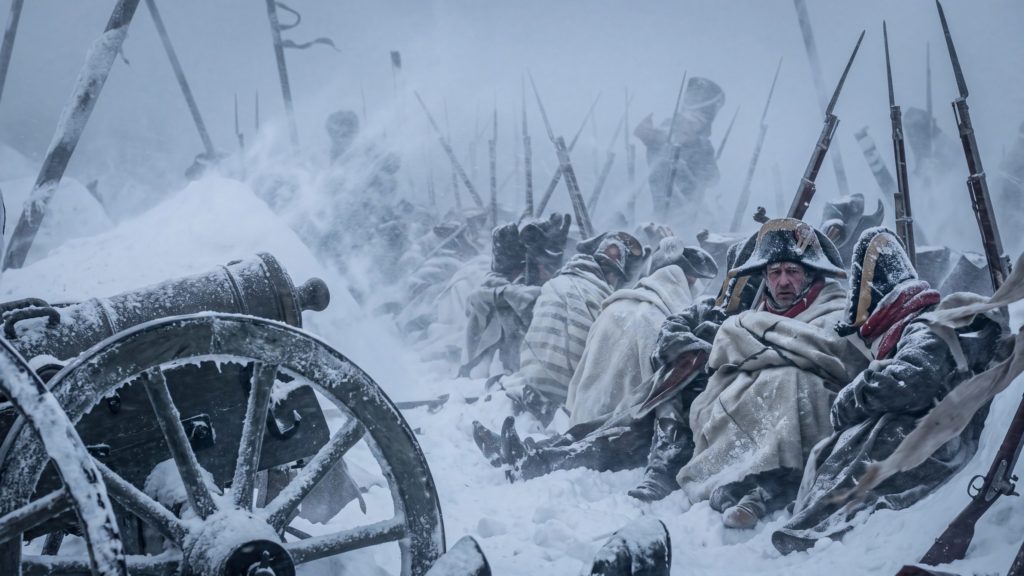
Napoleon lingered in the ruined city for over a month hoping Alexander would sue for peace, growing impatient enough to have workmen start dismantling the great cross of the Kremlin's Ivan the Great bell tower to send to Paris as a trophy[6]. When no peace came, he finally ordered the retreat on 19 October, dismissing a subordinate's warning of an early, severe winter with 'Do you not recognise my star?'[6]. Marshal Mortier's rearguard was left with orders to blow up the Kremlin as the army withdrew[6].
The retreat quickly became a catastrophe. Cossack raiders harried the strung-out columns[7, p. 95], and at the frozen Berezina river one of the two crossing bridges collapsed under the weight of artillery, leaving men, horses and wagons crushed together in the panic to reach the other[5]. By the time the last organised remnants struggled back across the Niemen in December, only a fraction of the six hundred thousand who had entered Russia remained - by one account barely a thousand men of the Guard reached Paris still in formation[2, p. 403].
Quick Facts
The essentials
Quick Facts
France (the Grande Armee)
Leadership
Emperor Napoleon I; Marshals including Ney, Murat and Mortier[1, p. 1]
Forces
Napoleon's multinational Grande Armee of over 600,000 men, including French, Polish, German and Italian contingents[1]
Objective
Force Tsar Alexander I back into compliance with the blockade against Britain by winning a decisive victory over the Russian army
The Russian Empire
Leadership
Tsar Alexander I; General Mikhail Kutuzov; General Barclay de Tolly[1, p. 1]
Forces
The Imperial Russian army under Barclay de Tolly and later Kutuzov, along with Cossack irregular cavalry[4]
Objective
Preserve the Russian army by avoiding a decisive battle, trading territory for time and letting distance and winter destroy the invaders
The Bigger Picture
Part of the wider Napoleonic Wars: the alliance sealed between Napoleon and Tsar Alexander I at Tilsit in 1807 had curdled into rivalry, rooted partly in unresolved disputes over Poland[3].
How It Came To This
Napoleon and Tsar Alexander I's alliance from the Treaty of Tilsit (1807) had broken down over rival ambitions in Poland[3]. In June 1812 Napoleon crossed the Niemen with more than six hundred thousand men of the Grande Armee, the largest single army Europe had yet seen assembled[1], while the Russian commanders chose to retreat rather than risk a decisive battle they might lose[4].
What Actually Happened
The invasion collapsed less from any single Russian victory than from a strategy that never required one. Russian commanders refused the decisive battle Napoleon's whole method of war depended on, retreating instead and letting distance, hunger and disease do work that muskets usually did[4]. By the time Napoleon reached Moscow he had won the campaign's hardest fighting - at Smolensk and Borodino - against an enemy that kept its main force intact and simply kept withdrawing. Occupying an abandoned, burning capital gave him nothing to negotiate over, because there was no government left in the city to negotiate with, and Alexander never sent the peace overture Napoleon spent weeks waiting for[6]. His own dismissal of warnings about an early winter, delivered with the confidence that had carried him through a decade of victories, meant the retreat began later than it safely could have[6]. Once it did begin, the same emptied, stripped countryside that had denied him supplies on the way in now starved his own retreating army, while Cossack cavalry picked off stragglers strung out along a single crowded road back to the Niemen[7, p. 95].
Why It Still Matters
Destroyed the Grande Armee as a fighting force, shattered Napoleon's aura of invincibility, and helped trigger the coalition of Russia, Prussia, Austria and Britain that would defeat him within two years - the campaign remains shorthand for the danger of a land war fought against distance, weather and an enemy who refuses to stand and fight[2, p. 403].
Quick Facts
Roger would like you to know...
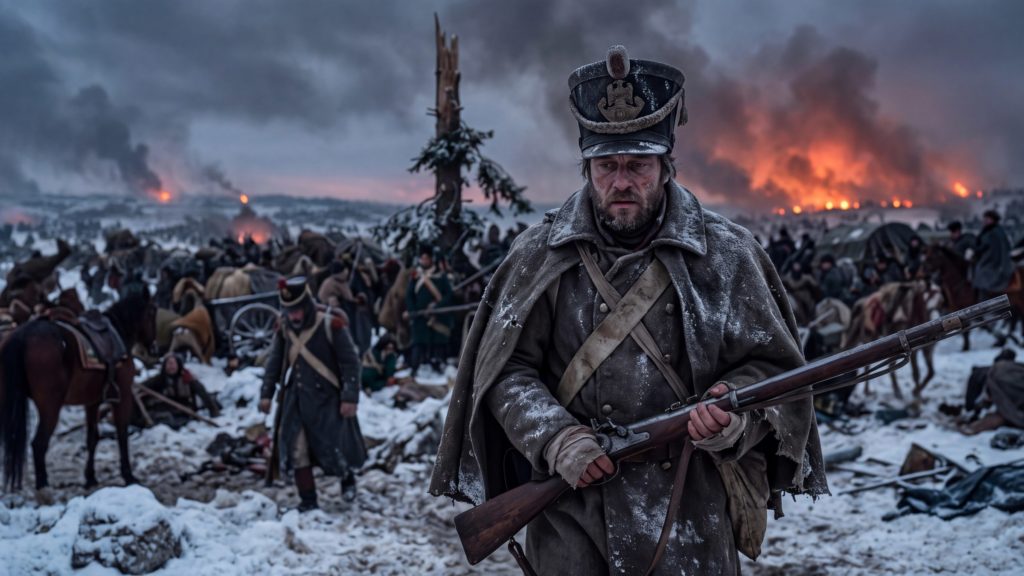
Napoleon crossed into Russia with more than 600,000 men - the largest army Europe had ever seen assembled in one place. By the time organised remnants recrossed the frontier in December, barely a thousand men of the Imperial Guard were still marching in formation[2, p. 403].
Keith checked the sources...
The Russians never tried to stop Napoleon's advance with one knockout blow. Barclay de Tolly and Kutuzov kept retreating instead, 'perpetually evading' a decisive battle and burning Smolensk's own suburbs to slow the French down[4].
One for the Ageonauts...
When the French finally reached Moscow, the city was already deserted and unnervingly silent - just neighing horses and marching boots, until fires broke out across it that same night[4].
History gets strange here...
Moscow's own governor, Rostopchin, is blamed for making the fire so devastating - he reportedly had the city's fire pumps removed before the French even arrived[5].
Keith would like to clarify...
Napoleon didn't blame himself for the disaster - he blamed the weather. Recalling the retreat afterwards, he insisted 'it's the winter that has been our undoing. We are victims of the climate,' rather than admit he had waited too long to leave Moscow[2, p. 403].
Roger has entered the historical rabbit hole...
While he waited in the ruined Kremlin for a peace offer that never came, Napoleon had workmen start dismantling the great cross from the Ivan the Great bell tower, intending to send it to Paris as a trophy[6].
Meanwhile, in history...
Warned that an unusually severe winter was coming, Napoleon waved the warning off with 'Do you not recognise my star?' - and delayed his retreat from Moscow until 19 October[6].
A small fact with a very large consequence...
As the army withdrew, Marshal Mortier was left with orders to blow up the Kremlin behind them - a final act of destruction on the way out of a campaign that was already a catastrophe[6].
Keith has spotted the problem...
The retreat wasn't brutal just because of the cold. Cossack cavalry harried the strung-out French columns the entire way back, picking off stragglers from an army that no longer had the strength to protect its own flanks[7, p. 95].
The familiar story leaves this out...
Marshal Ney earned his reputation as 'the bravest of the brave' by being the very last man of the Grande Armee to leave Russian soil, fighting a rearguard action at Kovno with only a handful of exhausted men[1, p. 1].
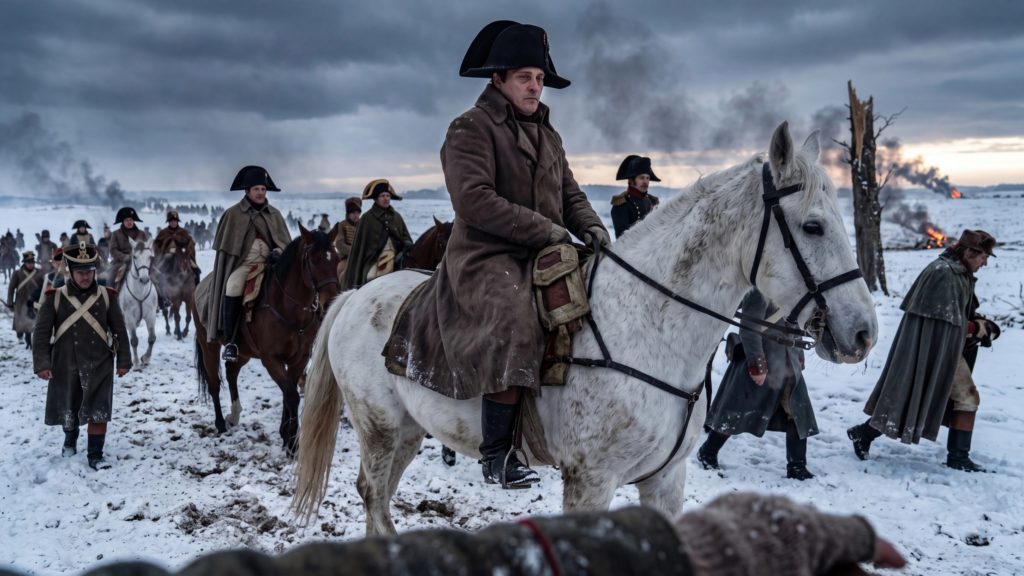
"The burning of Moscow was merely stupid... it's the winter that has been our undoing. We are victims of the climate."
Napoleon Bonaparte, recalled by his aide the Duke of Vicenza, Caulaincourt, during the retreat[2, p. 403]
Napoleon's own private verdict on the campaign, blaming an unusually early Russian winter rather than his own delayed departure from Moscow for the disaster that followed.
Timeline
How it unfolded
7 July 1807
Treaty of Tilsit
Peace was signed between France and Russia at Tilsit.[8] Ségur judged that the treaty marked the date of Russia's submission to the continental system, which by all Russians was felt to be ruinous to their interests.[1, p. 1]
24 June 1812
Grande Armee Crosses the Niemen
Napoleon declared war on Russia from his headquarters at Wilkowyszki on 22 June, and the French crossed the Niemen two days later, over 450,000 strong by one edition's chronology.[8] Marbot recalled three bridges of boats thrown across opposite Kowno, which the troops occupied without resistance.[9]
17-18 August 1812
Battle of Smolensk
Napoleon defeated Barclay de Tolly in the battle and capture of Smolensk, in which the Russians lost 12,000 men and the French less than half that number, according to a chronology in an edition of his letters.[8] Chuquet's collection of soldiers' accounts places the fight on 17 August, with Smolensk described as one of the most important towns in Russia.[4]
7 September 1812
Battle of Borodino
Napoleon fought the Russian army under Kutuzov at Borodino (La Moskowa), where Bagration was killed.[8] The Catholic Encyclopedia calls it an extremely bloody victory that opened the gates of Moscow.[10] It fell on 7 September in the Gregorian calendar, which is 26 August in the Julian calendar then used in Russia.[11]
14 September 1812
French Occupy Moscow
The French occupied Moscow, which was fired by emissaries of its late governor Rostopchin, and the fire lasted until 20 September.[8] Marbot gives 15 September for Napoleon's own entry into the city.[9]
19 October 1812
Retreat from Moscow Begins
Napoleon left Moscow on the morning of 19 October with the Old Guard and the main army by the road to Kaluga, while Mortier stayed with two divisions of the Young Guard to blow up the Kremlin.[9] Rapp, who accompanied the Emperor, remembered Mortier's orders to destroy the Kremlin on leaving the place.[6]
26-28 November 1812
Crossing of the Beresina
The French crossed the Beresina but lost 20,000 prisoners and nearly all their cannon, by one chronology's reckoning.[8] According to the 1911 Britannica, the river was not frozen when it was reached on 26 November, and Eble's pioneers worked in the water all through that day.[12]
5 December 1812
Napoleon Leaves the Army at Smorgoni
Having reached Smorgoni and seeing that nothing more could be done at the front, Napoleon handed the command to Murat and left for Paris to organise a fresh army, reaching the Tuileries on the 18th.[12] Caulaincourt's memoirs record headquarters at Smorgoni on the fifth, with the Emperor to leave at ten o'clock that night.[2, p. 403]
30 December 1812
Convention of Tauroggen
The Prussian general Yorck concluded the convention of Tauroggen with the Russians, by which the Prussians were declared neutral.[13][7, p. 95] Henderson calls it the point of departure for the whole war of liberation.[14]
Dig Deeper
Copy any prompt below into your favourite AI chat to keep exploring.
Explain why the Russians burned their own capital rather than let Napoleon occupy an intact Moscow in 1812.
What does the burning of Moscow teach us about the limits of winning battles when your enemy is willing to destroy what you're fighting for?
Roleplay as Napoleon walking into a burning Moscow, trying to convince his staff this is all going fine.
Further Reading
Where to read more
Napoleon's Invasion of Russia - World History Encyclopedia
A free overview of the whole 1812 campaign, from the Niemen crossing to the retreat.
Why look at this: Covers the whole campaign in one sitting, matching the scale of loss this page's facts describe.
https://www.worldhistory.org/Napoleon's_Invasion_of_Russia/Invasion of Russia - History of Western Civilization II (Lumen Learning)
A free, fuller course treatment of why the campaign failed logistically as much as militarily.
Why look at this: Explains why 'living off the land' - the tactic that worked in Italy and Austria - collapsed completely in Russia's sparse countryside, starving the Grande Armee before winter even set in.
https://courses.lumenlearning.com/suny-hccc-worldhistory2/chapter/invasion-of-russia/With Napoleon in Russia: The Memoirs of General de Caulaincourt, Duke of Vicenza
The free, first-hand memoir of the aide who rode beside Napoleon for the entire retreat, digitised on the Internet Archive.
Why look at this: This is the same memoir behind this page's quote of Napoleon blaming 'the winter' rather than himself for the disaster.
https://archive.org/details/in.ernet.dli.2015.58850Related
Keep exploring

Can be seen in
Where this shows up
References
Sources
Sources
- BookHistory of the Expedition to Russia Undertaken by the Emperor Napoleon in the Year 1812 by Philippe-Paul de Ségur. Page 1. ↑
- BookWith Napoleon in Russia: The Memoirs of General de Caulaincourt Duke of Vicenza by Armand-Augustin-Louis de Caulaincourt. Page 403. ↑
- BookLife of Napoleon Bonaparte, Volume IV. by Walter Scott ↑
- BookHuman voices from the Russian campaign of 1812 by Arthur Chuquet ↑
- BookMemoirs of Sergeant Bourgogne 1812-1813 by Adrien Jean Baptiste Francois Bourgogne ↑
- BookMemoirs of General Count Rapp First Aide-de-Camp to Napoleon by Jean Rapp ↑
- BookNapoleon's Russian campaign of 1812 by Edward A Foord. Page 95. ↑
- BookNapoleon's Letters to Josephine, 1796-1812 by Emperor of the French Napoleon I ↑
- BookThe Memoirs of Baron de Marbot by Jean-Baptiste-Antoine-Marcelin de Marbot ↑
- DocumentCatholic Encyclopedia (1913)/Napoleon I (Bonaparte) ↑
- Websitenapoleon-empire.org: Borodino ↑
- Document1911 Encyclopædia Britannica/Napoleonic Campaigns ↑
- BookThe Life of Napoleon Bonaparte. Vol. 3 (of 4) by William Milligan Sloane ↑
- BookBlücher and the uprising of Prussia against Napoleon, 1806-1815 by Ernest F. Henderson ↑