
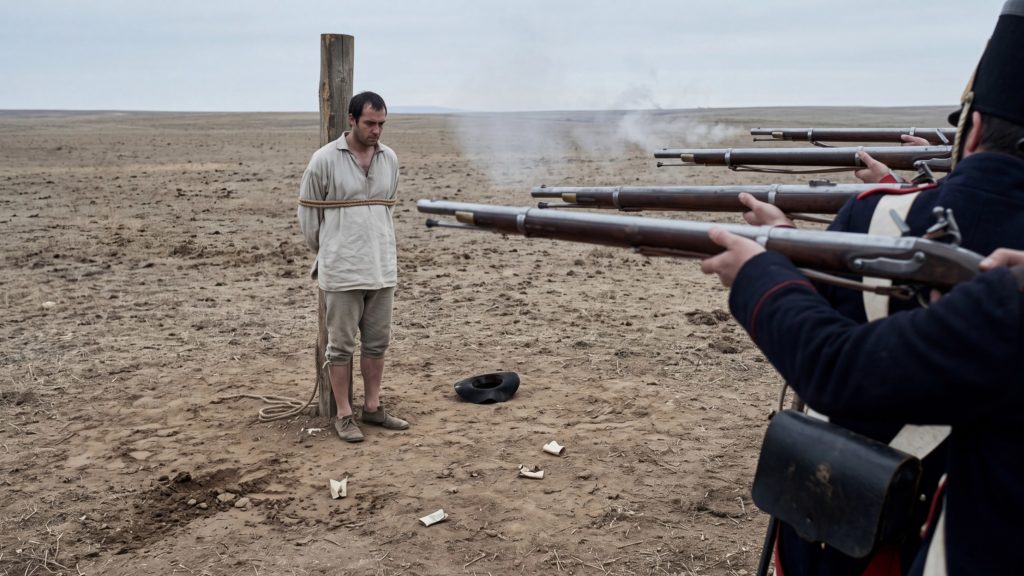
AI reconstruction based on Francisco de Goya's "The Third of May 1808 (El tres de mayo de 1808 en Madrid)" (1814), from the perspective of a condemned man kneeling among the prisoners on the hillside, waiting his turn as the French muskets are levelled.
Napoleon swapped a king Spain barely tolerated for a brother nobody had asked for[1] - and lit a war that outlasted his own patience[2, p. 28].
What Happened
The story
In 1807 Napoleon and Spain agreed to jointly conquer Portugal, Britain's last continental ally, but French troops then stayed on Spanish soil in growing numbers[3, p. 416]. In March 1808 a popular uprising at Aranjuez toppled the widely hated chief minister Manuel de Godoy, who was accused of treating young Prince Ferdinand as a personal enemy, and forced King Charles IV to abdicate in favour of his son[1]. Napoleon summoned both men to Bayonne to arbitrate between them, and instead browbeat Ferdinand, on 6 May 1808, into signing away the crown entirely[1].
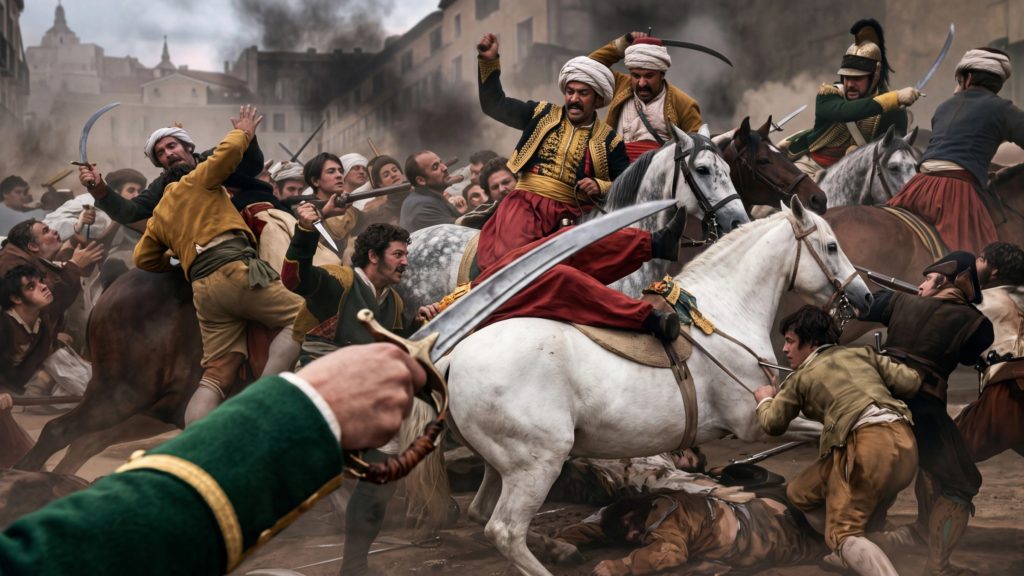
News of the Bayonne abdications reached Madrid, and on 2 May crowds rose against the French garrison. Murat's Mameluke cavalry cut through the insurgents in the Puerta del Sol, one officer in the escort recalling that 'a hundred heads' fell to their scimitars before French troops secured the square[4]. French armies pushed south, occupying Madrid and installing Napoleon's brother Joseph as king, but a British force under Arthur Wellesley landed in Portugal that August and beat the French at Vimeiro[5, p. 114].
Vimeiro should have driven Junot's army into the sea, but Wellesley's own superior, Sir Harry Burrard, arrived mid-battle and halted the pursuit; French forces were instead allowed to evacuate Portugal with their loot intact under the Convention of Cintra[5, p. 114]. Fighting then spread and dragged on for years: Wellington held the fortified Lines of Torres Vedras against Marshal Massena's invasion of Portugal in 1810[6], and his storming of Badajoz and victory at Salamanca opened the road that finally broke French power at Vitoria in 1813[5, p. 114].
By 1814 the last French armies had been pushed back across the Pyrenees, and Joseph Bonaparte's short reign in Madrid was over. Across six years the war had drawn in Spanish regulars, Portuguese and British armies, and constant guerrilla bands that harried French garrisons and supply columns far behind the front line[7, p. 366], at a cost in French manpower Napoleon would come to regret bitterly[2, p. 28].
Quick Facts
The essentials
Quick Facts
Napoleon's French Empire and King Joseph Bonaparte
Leadership
Napoleon Bonaparte; King Joseph Bonaparte; French marshals including Junot, Soult and Massena[8]
Forces
French Imperial armies under successive marshals including Junot, Soult and Massena; the government of the installed King Joseph Bonaparte in Madrid[8]
Objective
Install a reliable Bonaparte monarchy in Spain, close the Iberian Peninsula to British trade, and secure the route into Portugal
Spain, Portugal and Britain
Leadership
General Arthur Wellesley, later Duke of Wellington; Spanish juntas and generals; Portuguese commanders serving under British direction[5, p. 114]
Forces
Spanish regular armies and guerrilla partidas; the Portuguese army; a British expeditionary force under Sir Arthur Wellesley, later Lord Wellington[5, p. 114]
Objective
Expel the French, restore Ferdinand VII, and deny Napoleon control of the Iberian Peninsula
The Bigger Picture
Part of the wider Napoleonic Wars: an 1807 agreement to jointly conquer Portugal, Britain's last continental outlet, left French troops occupying Spain itself and set off six years of war[3, p. 416].
How It Came To This
In 1807 Napoleon and Spain agreed to jointly conquer Portugal, but French troops then stayed on in Spain in growing numbers[3, p. 416]. In March 1808 a popular uprising at Aranjuez toppled the hated chief minister Godoy and forced King Charles IV to abdicate in favour of his son Ferdinand[1]. Napoleon summoned both men to Bayonne to arbitrate between them, and instead browbeat Ferdinand, on 6 May 1808, into renouncing the crown entirely so that Napoleon could hand it to his own brother[1].
What Actually Happened
What made the Peninsular War different from Napoleon's other campaigns was that Spain never produced a single army he could defeat and be done with. Regular Spanish forces were repeatedly beaten in the field, but guerrilla bands - operating in a country that treated any accommodation with the French as treachery - kept reforming behind French lines, ambushing couriers and supply columns the moment troops were pulled away to fight elsewhere[7, p. 366]. This forced Napoleon's marshals to garrison the whole country simultaneously rather than simply hold the capital, tying down men who were needed elsewhere in Europe. British intervention compounded the problem: Wellington's army gave Spanish and Portuguese resistance a professional core capable of standing against French veterans in open battle, while his fortified Lines of Torres Vedras showed the French that even a successful invasion of Portugal could be starved into retreat rather than fought off[6]. Command mistakes compounded the drain on the other side too: British general Sir Harry Burrard threw away a decisive early victory at Vimeiro by halting the pursuit, prolonging a war a faster follow-up might have shortened[5, p. 114]. Napoleon himself later called the result his 'Spanish ulcer'[2, p. 28] - a wound that never closed.
Why It Still Matters
Tied down hundreds of thousands of French troops for six years, gave Wellington the veteran army and reputation he later brought to Waterloo, and became - by Napoleon's own later admission - the 'Spanish ulcer' that steadily drained resources his empire needed everywhere else[2, p. 28].
Quick Facts
Roger would like you to know...
Napoleon didn't conquer Spain by force at first - he conquered it by paperwork. He lured the royal family to Bayonne to 'arbitrate' a family dispute, then simply kept both crowns for himself[1].
Keith checked the sources...
The Madrid uprising of 2 May 1808 was put down by Napoleon's own bodyguard of Mamelukes, recruited years earlier in Egypt. One eyewitness in Murat's escort described them cutting a bloody path through the crowded Puerta del Sol with sabres and scimitars[4].
One for the Ageonauts...
Wellesley's first big Peninsular victory very nearly ended the war in 1808. He beat the French decisively at Vimeiro - and then his own superior officer, arriving mid-battle, ordered him to stop the pursuit[5, p. 114].
History gets strange here...
That halted pursuit let Junot's beaten army evacuate Portugal under the Convention of Cintra - meaning a French army that had just lost a battle sailed home with its loot, on British ships, instead of surrendering[5, p. 114].
Keith would like to clarify...
This wasn't one long war - it was hundreds of small ones. Guerrilla bands operating far behind French lines kept ambushing couriers and convoys, forcing Napoleon's marshals to garrison the whole country rather than just hold the capital[7, p. 366].
Roger has entered the historical rabbit hole...
Wellington's answer to a French invasion of Portugal wasn't a battle at all - it was the Lines of Torres Vedras, a chain of fortifications built in near-total secrecy that starved Marshal Massena's army into retreat without a major fight[6].
Meanwhile, in history...
Wellington's Spanish patrons weren't shy with titles. After his victory at Vitoria in 1813, the Spanish Cortes made him Duque de Vitoria and granted him lands to go with it[5, p. 114].
A small fact with a very large consequence...
Napoleon's own verdict on the whole campaign was blunt. Long after his fall he was recorded saying 'the Spanish ulcer destroyed me' - naming Spain, not Russia or Waterloo, as the wound that never healed[2, p. 28].
Keith has spotted the problem...
The 'Spanish ulcer' was never fought by Spain alone. British regulars under Wellington, Portuguese troops trained and led by British officers, and Spanish guerrillas all had to work together, however uneasily, to make the war unwinnable for France[5, p. 114].
The familiar story leaves this out...
Sir John Moore, the British general whose winter retreat to Corunna opened the war's first year, was mortally wounded within sight of the very ships that would evacuate his army, his death covering the escape he had organised[9, p. 298].
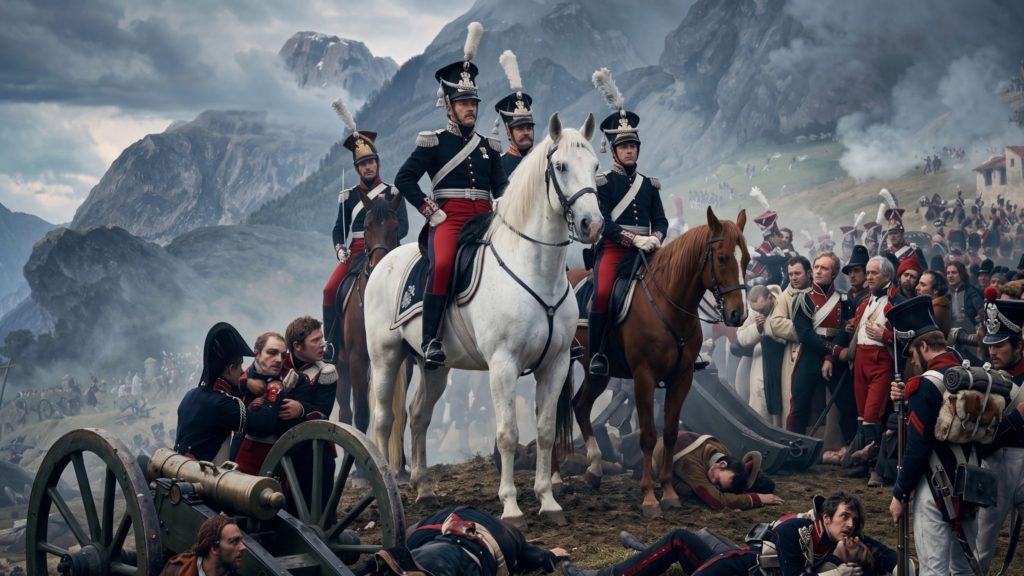
"The Spanish ulcer destroyed me."
Attributed to Napoleon Bonaparte, recalled after his fall[2, p. 28]
Recorded by the historian William Napier as 'an expression of deep anguish' that escaped Napoleon in his own later misfortune - his own verdict on how much the drawn-out Peninsular campaign had cost his empire.
Timeline
How it unfolded
21 November 1806
Berlin Decree Launches the Continental System
The publication of the Berlin Decree was the first step towards establishing the Continental System.[10] Bourrienne's edition lists the Berlin decrees as issued on the same day.[11]
27 October 1807
Treaty of Fontainebleau
France and Spain signed the Treaty of Fontainebleau,[12][10] which, according to Leslie, agreed the partition of Portugal, with a French army to enter Spain and proceed in combination with Spanish troops to Portugal.[13] Oman suggests that, read another way, its real use for Napoleon was as an excuse for marching French armies into Spain without exciting suspicion.[3, p. 416]
30 November 1807
Junot Enters Lisbon
Junot entered the Portuguese capital at the head of about 1,500 weary soldiers, the survivors of his march, and mastered the place without firing a shot, according to Oman.[14, p. 416] The chronology in an edition of Napoleon's letters likewise records him entering Lisbon on 30 November.[12]
2 May 1808
Madrid Rising of the Second of May
Murat subdued an insurrection in Madrid,[12] in which, according to Shand, the massacre of the French was revenged with great cruelty and summary military executions.[10] Oman's history treats the Second of May as the outbreak of the Spanish insurrection.[14, p. 416]
5 May 1808
Bourbon Abdications at Bayonne
By the Treaty of Bayonne Charles IV, and on the following day Ferdinand, surrendered their rights to the Spanish crown to Napoleon.[12][10] On 6 June Napoleon had his brother Joseph proclaimed King of Spain and the Indies.[12]
c. 22 July 1808
Capitulation of Baylen
The chronology in an edition of Napoleon's letters records Dupont capitulating at Baylen on 22 July,[12] and Napier says over eighteen thousand French soldiers laid down their arms on the 22nd.[2, p. 28] Oman dates the surrender of Dupont and his 20,000 men to 23 July, and calls Baylen the occasion on which the armies of Napoleon received their first great check.[14, p. 416]
22 July 1812
Battle of Salamanca
Shand's chronological summary lists the Battle of Salamanca on this day.[10] Wellington defeated Marmont, and the battle deterred the Spanish Regency, which had decided to submit to Joseph Bonaparte, while the French retired behind the Douro.[12]
21 June 1813
Battle of Vittoria
The allied army caught King Joseph's army and routed the French at Vittoria, where Marshal Jourdan's baton was found in his abandoned luggage.[15, p. 166] Bourrienne's edition records Joseph decisively defeated by Wellington on this day.[11]
Dig Deeper
Copy any prompt below into your favourite AI chat to keep exploring.
Explain how Spanish guerrilla fighters and scorched-earth tactics turned Napoleon's occupation of Spain into what he called his 'Spanish ulcer'.
Debate whether guerrilla resistance or Wellington's regular army did more to turn Spain into the war that bled Napoleon's empire dry.
Roleplay as the Spanish soldier explaining to a confused Roger why burning your own food is a legitimate tactic against the French.
Further Reading
Where to read more
Peninsular War - National Army Museum
A free, concise overview of the war from the museum that holds the British Army's own collection on the campaign.
Why look at this: Covers the British side of this page's story - Wellesley's landing in Portugal and the long campaign that grew out of it.
https://www.nam.ac.uk/explore/peninsular-warPeninsular War - World History Encyclopedia
A free, fuller narrative of the whole 1808-1814 conflict, from the Bayonne abdications to Wellington's final advance.
Why look at this: Traces the guerrilla warfare this page's dig-deeper prompt asks about, and explains how it tied down so many French troops that less than a third of the French army in Spain was ever free to face Wellington directly.
https://www.worldhistory.org/Peninsular_War/A History of the Peninsular War, Vol. 1 - Charles Oman (1902)
The free, classic seven-volume academic history of the war, freely digitised on the Internet Archive.
Why look at this: Oman's history is the same detailed source behind this page's account of Bayonne, Vimeiro and the fall of Charles IV - read the fuller campaign narrative in his own words.
https://archive.org/details/ahistorypeninsu01omangoogRelated
Keep exploring

Can be seen in
Where this shows up

References
Sources
Sources
- BookLife of Napoleon Bonaparte, Volume III. by Walter Scott ↑
- BookHistory of the war in the Peninsula and in the south of France from the year 1807 to… by William Francis Patrick Napier. Page 28. ↑
- BookA History of the peninsular war by Charles Oman. Page 416. ↑
- BookThe Memoirs of Baron de Marbot by Jean-Baptiste-Antoine-Marcelin de Marbot ↑
- BookThe life of Wellington : the restoration of the martial power of Great Britain by Herbert Maxwell. Page 114. ↑
- BookWellington's army, 1809-1814 by Charles William Chadwick Oman ↑
- BookA history of the Peninsular War, Vol. 2, Jan.-Sep. 1809 : From the battle of Corunna to the… by Charles Oman. Page 366. ↑
- BookThe history of the present war in Spain and Portugal : from its commencement to the battle of… by Theophilus Camden ↑
- BookThe diary of Sir John Moore by John Moore and John Frederick Maurice. Page 298. ↑
- BookThe war in the Peninsula, 1808-1814 by Alexander Innes Shand ↑
- BookMemoirs Of Napoleon Bonaparte - I And Ii by Louis Antoine Fauvelet De Bourrienne ↑
- BookNapoleon's Letters to Josephine, 1796-1812 by Emperor of the French Napoleon I ↑
- BookMilitary journal of Colonel Leslie, K.H., of Balquhain : whilst serving with the 29th Regt. in the Peninsula… by Charles Leslie ↑
- BookA history of the Peninsular War, Vol. 1, 1807-1809 : From the treaty of Fontainbleau to the battle… by Charles Oman. Page 416. ↑
- WebsitePeninsular War thesis (FSU repository). Page 166. ↑
- BookLife of Napoleon Bonaparte, Volume IV. by Walter Scott ↑
- BookThe Napoleon dynasty: or, The history of the Bonaparte family. An entirely new work by C. Edwards Lester and Edwin Williams ↑
- BookLetters of Colonel Sir Augustus Simon Frazer, K. C. B. commanding the Royal horse artillery in the army… by Augustus Simon Frazer and Edward Sabine ↑