
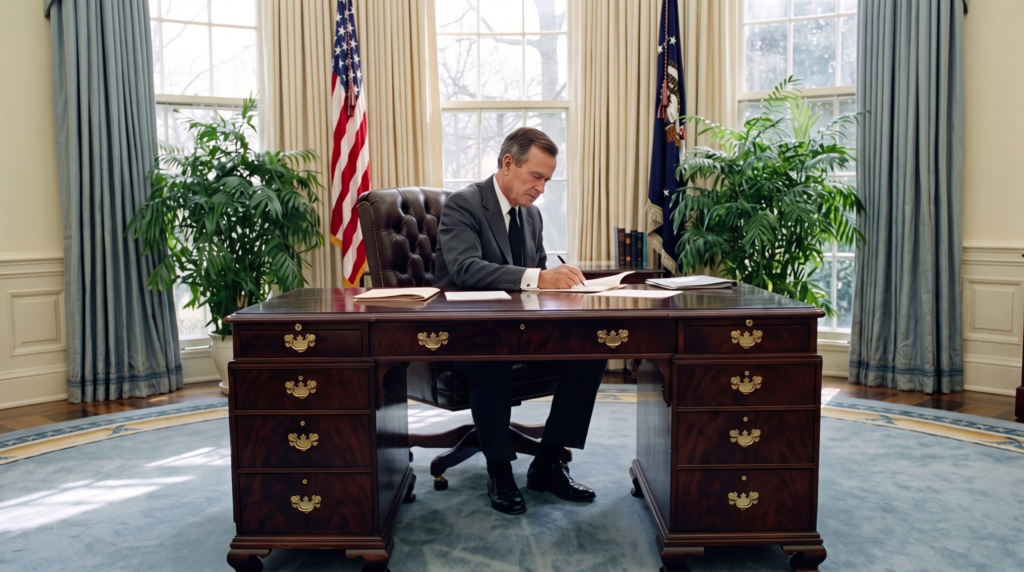
George H. W. Bush
41st President of the United States
The Navy pilot who bailed out over the Pacific in 1944, then led the United States as the Berlin Wall fell, Germany reunited and Iraq was driven out of Kuwait[1][2][3].
Bio
Who they were
George Herbert Walker Bush was born on 12 June 1924 in Milton, Massachusetts[4]. His parents, Prescott Sheldon Bush and Dorothy Walker Bush, moved the family to Greenwich, Connecticut[1]. His father, Prescott, served as a senator from Connecticut[5]. Bush attended Phillips Academy Andover, a boarding school in Massachusetts, from 1937 to 1941[4]. He was commissioned a Navy ensign in June 1942, at the age of eighteen[4]. On 2 September 1944 his plane was hit by Japanese fire during a mission to bomb a radio installation on Chichi Jima, and he bailed out over the sea[1][6]. The submarine USS Finback, on lifeguard duty, picked him up[6]. His two crewmen, John Delaney and Ted White, were lost[6].
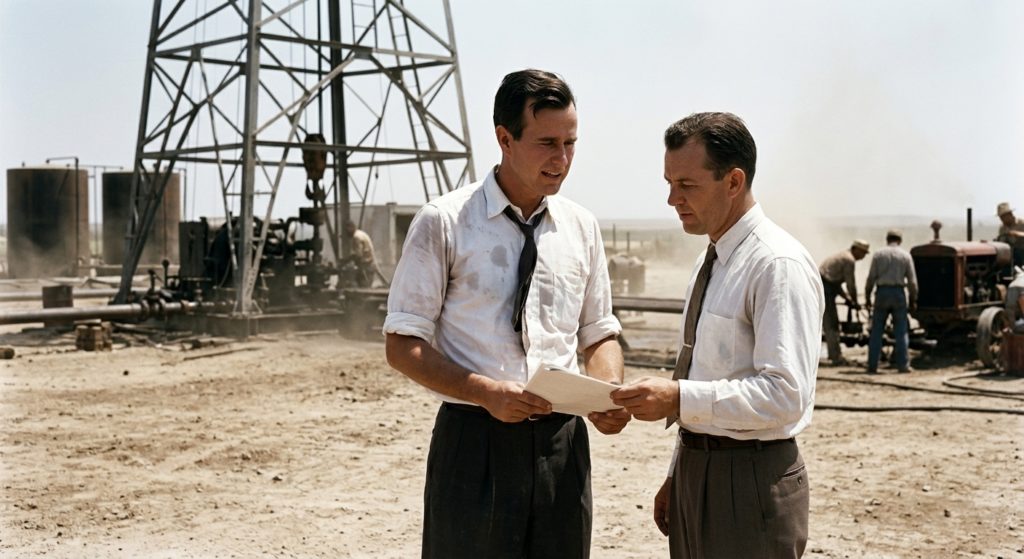
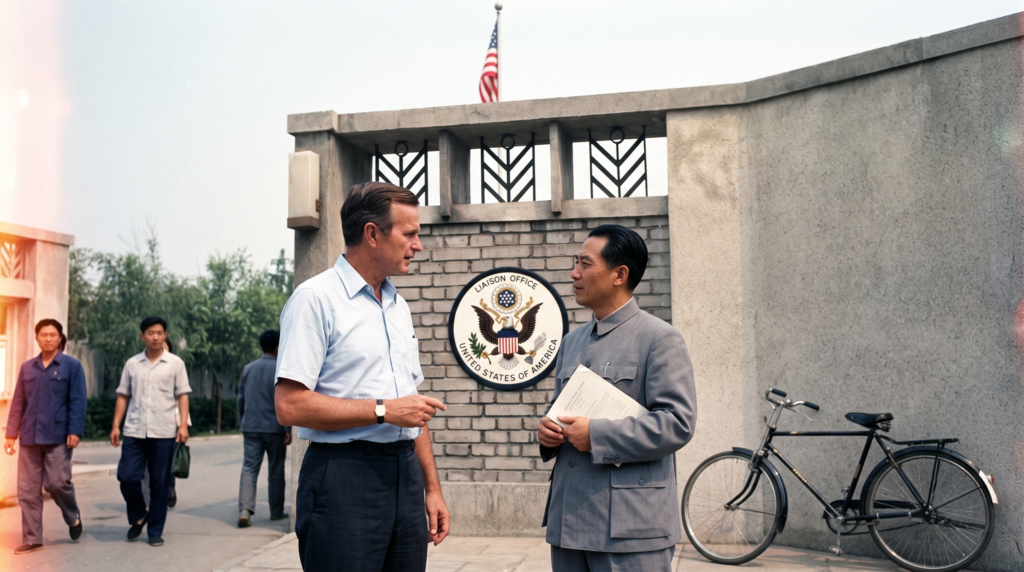
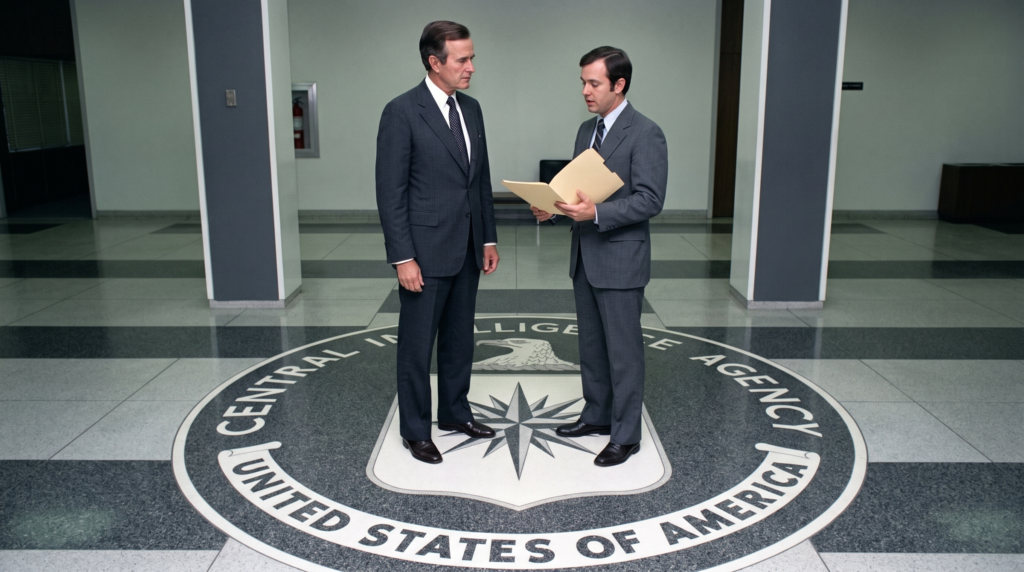
Bush married Barbara Pierce on 6 January 1945, while he was still in the Navy[4][1]. After Yale University, where he studied economics, he worked in Texas as an oil field supply salesman from 1948[4]. In 1951 he formed an oil development company in Midland, and in 1953 he co-founded Zapata Petroleum[4]. He was elected to the US House of Representatives for Texas's 7th district in November 1966[4]. He later served as US ambassador to the United Nations from 1971, chairman of the Republican National Committee from 1973, and chief of the US Liaison Office in Peking, China, from 1974[4]. In January 1976 he was sworn in as Director of Central Intelligence[7], and he held the post until January 1977[7].
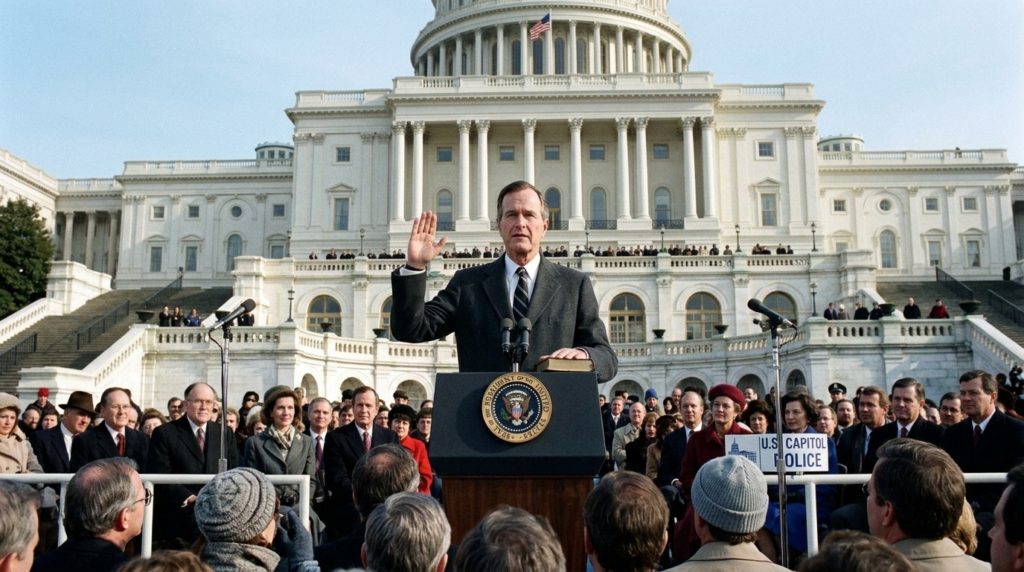
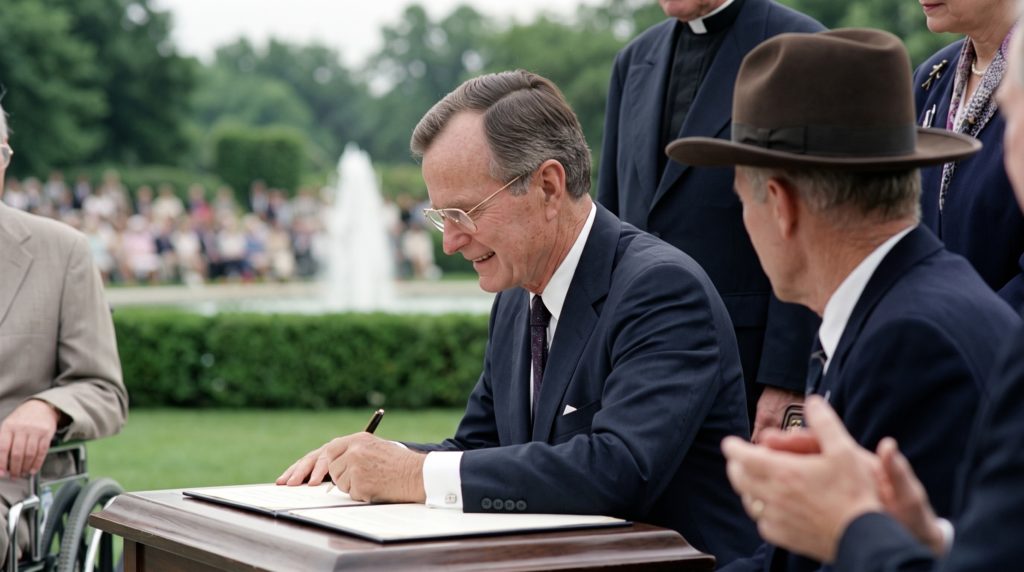
Reagan and Bush won their election, and Bush served as vice president, appearing among the dignitaries addressed at Reagan's inauguration[1][8]. In 1988 the Bush-Quayle ticket won with 53 percent of the vote and 426 electoral votes[9]. Bush took the oath of office on 20 January 1989, on the same Bible George Washington used in 1789[8]. The Berlin Wall fell on 9 November 1989, and the two German states were formally reunited on 3 October 1990[2]. In July 1990 Bush signed the Americans with Disabilities Act, which forbids discrimination in employment, public accommodations and transportation[2][10]. In his State of the Union address of 29 January 1991, he said twelve United Nations resolutions on Iraq's invasion of Kuwait were backed by forces from 28 countries[3][3]. Operation Desert Storm began on 17 January 1991, and Bush called off the ground offensive on 27 February[2].
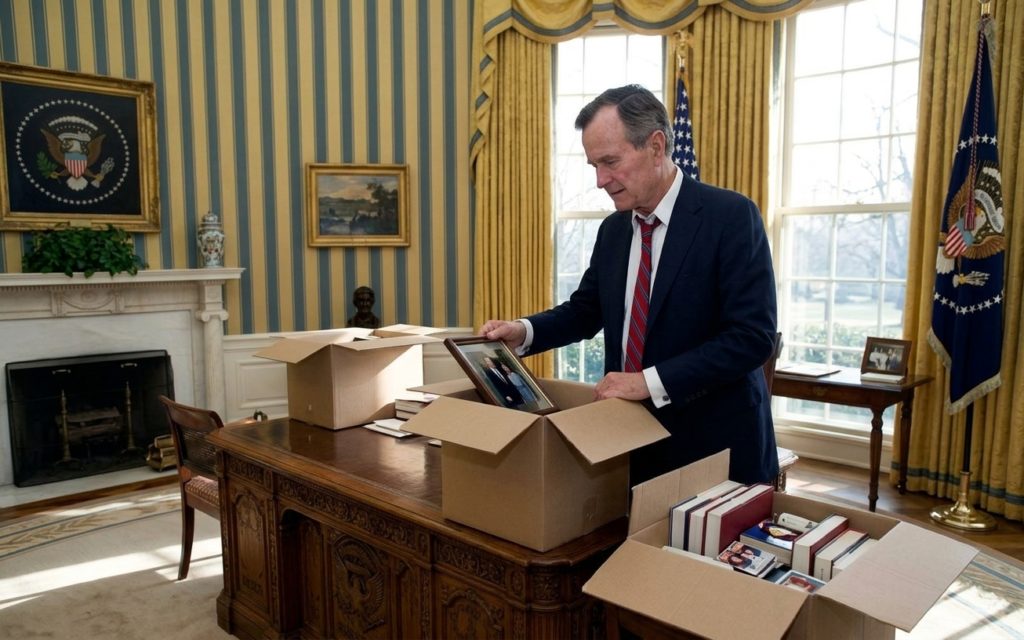
Bush lost the 1992 election to Bill Clinton. Clinton took 43 percent of the popular vote to Bush's 38 percent, and Perot took 19 percent[9]. Clinton won 370 electoral votes to Bush's 168[9]. The Miller Center says voters, concerned about the economy, voted for change[5]. Barbara Bush died on 17 April 2018, after 73 years of marriage[11]. George H. W. Bush died in Houston on 30 November 2018, aged 94[11]. He lay in state at the US Capitol for two days, followed by a state funeral at the National Cathedral[11]. He is buried beside Barbara and their daughter Robin at his presidential library in College Station, Texas[11].
Two of Bush's sons held high office. George W. Bush was governor of Texas from 1995 to 2000, and Jeb Bush was governor of Florida from 1999 to 2007[11]. When George W. was elected President in 2000, the Bushes became the first father and son to be elected President since John Quincy Adams was elected in 1824[11]. The Clean Air Act Amendments of 1990 aimed to reduce urban smog, curb acid rain and eliminate industrial emissions of toxic chemicals[10]. In his State of the Union address of 28 January 1992, Bush said that, by the grace of God, America won the Cold War[3]. The Soviet Union was dissolved on 31 December 1991[2].
Bush was an energetic, competitive sportsman, and he always enjoyed a game of horseshoes[12]. He had horseshoe courts built at both the White House and Camp David[12]. The Miller Center describes him as very loyal and known for his ability to connect with people on a personal level[12]. His second child, Robin, died of leukaemia in 1953, when she was four years old[12].
Legacy & Reputation
What’s the verdict?
The University of Virginia’s Miller Center says the Bush presidency is generally viewed as successful in foreign affairs but a disappointment in domestic affairs[13]. It says that, in the minds of voters, his foreign-policy achievements were not enough to overshadow the economic recession[13]. It lists the Americans with Disabilities Act and the Clean Air Act Amendments among his notable domestic achievements[13]. It adds that the historical assessment of “Bush 41” is still evolving, and that when a father and son both serve as President, comparisons are inevitable[13].
Myth-buster
Think you know this one?
It is often assumed that the 1991 Gulf War was fought to topple Saddam Hussein. Bush told Congress the aim was to drive Iraq out of Kuwait and restore Kuwait’s government, adding that the United States did not seek the destruction of Iraq[3]. The Miller Center agrees that the primary war aim was Iraqi withdrawal, which was achieved[14].
Quick Facts
The essentials
Quick Facts
Keith would like to clarify…
George H. W. Bush is often thought of as a Texan, but he was born in Milton, Massachusetts[4], and his father was a Connecticut senator[5]. He did not move to Texas until 1948, settling first in Odessa[1], then working in Midland[4].
Roger insists this matters…
At his inauguration the 200th anniversary of the presidency was marked, and Bush took the oath on the same Bible George Washington used in 1789[8]. Roger says that is the closest anyone gets to a Founding Father cameo.
A small fact with a very large consequence…
After bailing out over the sea on 2 September 1944, Bush was picked up by the submarine USS Finback[6]. He recalled seeing it surface and "a bunch of bearded guys standing there"[16]. His two crewmen, John Delaney and Ted White, were lost, and he later said it still plagued him[6][16].
File under: surprisingly true…
Bush's time as Director of Central Intelligence ran from January 1976 to January 1977, "just ten days shy of one full year"[7]. When Jimmy Carter won the presidency, Bush called and offered his resignation, and Carter accepted it on 10 January 1977[7].
Keith has spotted the problem…
"Read my lips: no new taxes" was Bush's pledge in the 1988 campaign[9]. In June 1990 he issued a written statement saying tax increases might be necessary to solve the deficit[10]. Keith observes that a slogan that memorable is very hard to retire.
Roger says, “Hear me out…”
In his inaugural address Bush said, "I have spoken of a thousand points of light, of all the community organizations that are spread like stars throughout the Nation, doing good"[8]. Roger says it is the only policy that reads like a night sky.
Meanwhile, in history…
Before the presidency, Bush's career read like a tour of government: Congress in 1966, UN ambassador from 1971 with a seat at Cabinet meetings, party chairman from 1973, chief of the US Liaison Office in Peking from 1974, then CIA director[4][7].
Roger would like you to know…
Bush always enjoyed a game of horseshoes and had courts built at both the White House and Camp David[12]. Roger would like to know whether any earlier president thought of it first.
One for the Ageonauts…
When George W. Bush was elected in 2000, the Bushes became the first father and son to be elected President since John Quincy Adams was elected in 1824[11]. George W. had been governor of Texas from 1995 to 2000, and Jeb governed Florida from 1999 to 2007[11].
The past has entered the chat…
In January 1992 Bush said that, by the grace of God, America won the Cold War. He also noted that the American taxpayer "bore the brunt of the burden, and deserves a hunk of the glory"[3].
We are not the sum of our possessions. They are not the measure of our lives. In our hearts we know what matters.
George H. W. Bush
Timeline
How it unfolded
12 June 1924
Birth of George H. W. Bush
George Herbert Walker Bush was born in Milton, Massachusetts, on 12 June 1924.[1]
2 September 1944
Navy Pilot Shot Down Over the Pacific
While flying a mission to bomb an enemy radio site, the young Navy pilot was shot down by Japanese fire, bailed out over the ocean and was rescued by a submarine.[1]
1966
Election to the House of Representatives
After moving to Odessa, Texas, in 1948 to work in the oil sector, Bush entered politics by winning a House seat from Houston's Seventh district in 1966 and served two terms.[1]
30 January 1976
Bush Takes Over the CIA
President Ford asked Bush to become the new director of the Central Intelligence Agency, and he served as Director of Central Intelligence from 30 January 1976 to 20 January 1977.[1][17]
20 January 1981
Bush Becomes Vice President
After the Republican victory in the 1980 election, Bush served as Ronald Reagan's vice president for eight years, from 20 January 1981 to 20 January 1989.[1][17] Reagan's first inaugural address, delivered that day, opens by greeting 'Vice President Bush'.[8]
20 January 1989
Bush's Presidential Inauguration
Having won the 1988 election with 53 percent of the vote and 426 electoral votes, Bush took the oath of office on the same Bible George Washington used in 1789, as the 200th anniversary of the Presidency was observed.[9][8]
17 January 1991
Operation Desert Storm Begins
The Persian Gulf War began with a massive American-led air attack on Iraq, and after Kuwait was liberated Bush called off the ground offensive on 27 February 1991.[2]
3 November 1992
Bush Defeated by Bill Clinton
Bush lost his bid for a second term to Arkansas Governor Bill Clinton, who won 370 electoral votes to Bush's 168 in a campaign dominated by economic worries.[2][9]
30 November 2018
Death of George H. W. Bush
Bush died in Houston on 30 November 2018 at the age of 94 and, after lying in state at the US Capitol and a state funeral at the National Cathedral, was buried at his presidential library in College Station, Texas.[11] His son George W. Bush's election in 2000 had made them the first father and son to be elected president since John Quincy Adams in 1824.[11]
Dig Deeper
Copy any prompt below into your favourite AI chat to keep exploring.
Explain why George H. W. Bush told Congress the 1991 Gulf War aimed to drive Iraq out of Kuwait rather than topple Saddam Hussein, and what that limit meant.
Debate whether father-and-son presidents like the Adamses and the Bushes show a republic's strength or its drift towards political dynasties.
Pitch George H. W. Bush's life as a film trilogy: a Navy pilot rescued in the Pacific, a Cold War finale, and a war with a deliberately limited goal.
Further Reading
Where to read more
George H. W. Bush: Life in Brief - Miller Center, University of Virginia
A short, free biographical summary of Bush's family, Navy service, business and political career, presidency and 1992 defeat, from the University of Virginia's presidential history centre.
Why look at this: Makes the father-and-son link with the Adamses explicit: George H. W. and George W. Bush were only the second father and son to become President, after John Adams and John Quincy Adams.
https://millercenter.org/president/bush/life-in-briefGeorge H.W. Bush - American Experience, PBS
A two-part PBS documentary on Bush's life, with interviews and a full transcript on the page, covering his wartime service, the end of the Cold War, the Gulf War and the 1992 election.
Why look at this: Includes Bush's own recollection of being picked up by the submarine USS Finback after his plane was shot down on 2 September 1944, and the "Read my lips, no new taxes" pledge that haunted his 1992 re-election bid.
https://www.pbs.org/wgbh/americanexperience/films/bush/Memcons and Telcons between President Bush and Helmut Kohl concerning the Fall of the Berlin Wall and the Reunification of Germany (FOIA 1999-0393-F) - George H.W. Bush Presidential Library and Museum
A finding aid from the Bush Presidential Library linking to scanned White House records of Bush's meetings and telephone calls with Chancellor Kohl between March 1989 and July 1990, hosted as PDFs in the National Archives Catalog.
Why look at this: Lets you read the actual conversation records from the months between the fall of the Berlin Wall on 9 November 1989 and German reunification on 3 October 1990, including the meeting with Kohl on 12 December 1989.
https://www.bush41library.gov/digital-research-room/finding-aid/foia/records-memcons-and-telcons-between-president-bush-andRelated
Keep exploring
Places
Can be seen in
Where this shows up
References
Sources
Sources
- Websitemillercenter.org: Life before the presidency ↑
- Websitemillercenter.org: Key events ↑
- BookState of the Union Addresses by George Bush ↑
- BookBIOGRAPHIC INFORMATION ON GEORGE H. W. BUSH by Central Intelligence Agency ↑
- Websitemillercenter.org: Life in brief ↑
- Websitepacificwrecks.com: Bush / index ↑
- Websitecia.gov: George h w bush the 11th director of central intelligence ↑
- BookUnited States Presidents' Inaugural Speeches: From Washington to George W. Bush by United States. Presidents ↑
- Websitemillercenter.org: Campaigns and elections ↑
- Websitemillercenter.org: Domestic affairs ↑
- Websitemillercenter.org: Life after the presidency ↑
- Websitemillercenter.org: Family life ↑
- Websitemillercenter.org: Impact and legacy ↑
- Websitemillercenter.org: Foreign affairs ↑
- Websitemillercenter.org: President / bush ↑
- Websitepbs.org: Films / bush ↑
- Websiteen.wikipedia.org: George H. W. Bush ↑